English
  简体中文
简体中文  Deutsch
  Español
  Français
  Italiano
  日本語
日本語  한국어
한국어  Polski
  Português
  Русский
  Türkçe
  Nederlands
  Tiếng Việt
  ไทย
ไทย 
Dotless RGB LED strips improve lighting quality by eliminating visible LED points and uneven color separation, producing a perfectly smooth, continuous line of light that delivers professional-grade color blending, visual comfort, and a refined architectural appearance that standard RGB LED strips cannot achieve.
Lighting quality today is judged not only by brightness but by uniformity, color accuracy, and visual comfort. Many installations fail to meet expectations because traditional RGB LED strips often reveal individual LED dots, create harsh hotspots, or show separated red, green, and blue colors—especially when the strip is directly visible. This instantly lowers the perceived quality of the entire space.
Dotless RGB LED strips solve these issues at the technology level. By using advanced COB (Chip-on-Board) construction, they transform RGB lighting from a decorative effect into a professional lighting solution suitable for modern interiors, commercial environments, and architectural applications.
In this article, we will clearly answer the following questions:
- What exactly are dotless RGB LED strips and why does “dotless” matter?
- How do RGB COB LED strips compare technically with standard RGB LED strips?
- Where does dotless lighting quality make the biggest real-world difference?
- How can you choose the right RGB LED strip to achieve flawless results?
What Are Dotless RGB LED Strips and Why Is “Dotless” a Game-Changer?
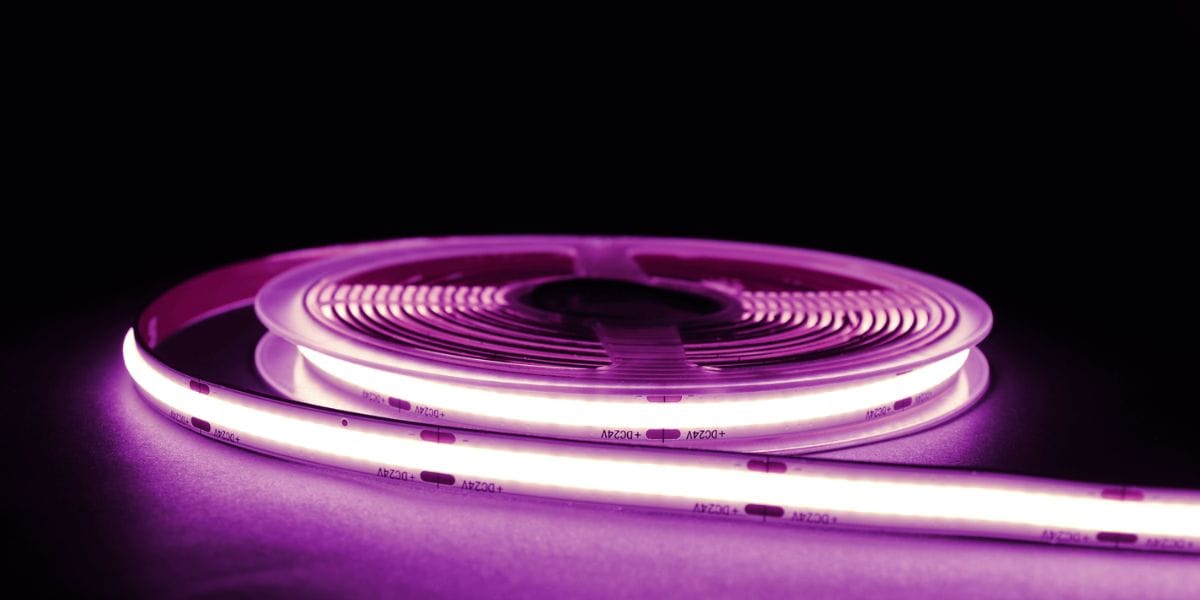
Dotless RGB LED strips are LED light strips that emit a continuous, uninterrupted line of RGB light without showing individual LED points. The term “dotless LED strip” refers specifically to this smooth visual output.
In most cases, dotless RGB LED strips are manufactured using COB (Chip-on-Board) technology, which is why they are commonly called RGB COB LED strips.
Dotless vs. Traditional RGB LED Strips
Traditional RGB LED strips use SMD LEDs placed at fixed distances along the strip. Even when covered by a diffuser, these LEDs often remain visible as:
- Individual light dots
- Uneven brightness spots
- Separated red, green, and blue colors
Dotless RGB LED strips work differently. Instead of spaced LEDs, they use hundreds of microscopic RGB chips packed tightly together and coated with a uniform phosphor layer. This structure blends light before it exits the strip.
Why COB Technology Makes RGB Lighting Better
COB technology improves lighting quality because:
- Micro LEDs are mounted directly on the PCB
- Extremely high chip density removes gaps
- The phosphor layer blends colors instantly
Immediate Benefits of Going Dotless
- Eliminates visible LED dots and hotspots
- Produces smooth and natural RGB color mixing
- Creates a clean, modern, architectural look
- Reduces glare and visual fatigue
Key Specifications: Dotless RGB COB LED Strips vs. Standard RGB LED Strips
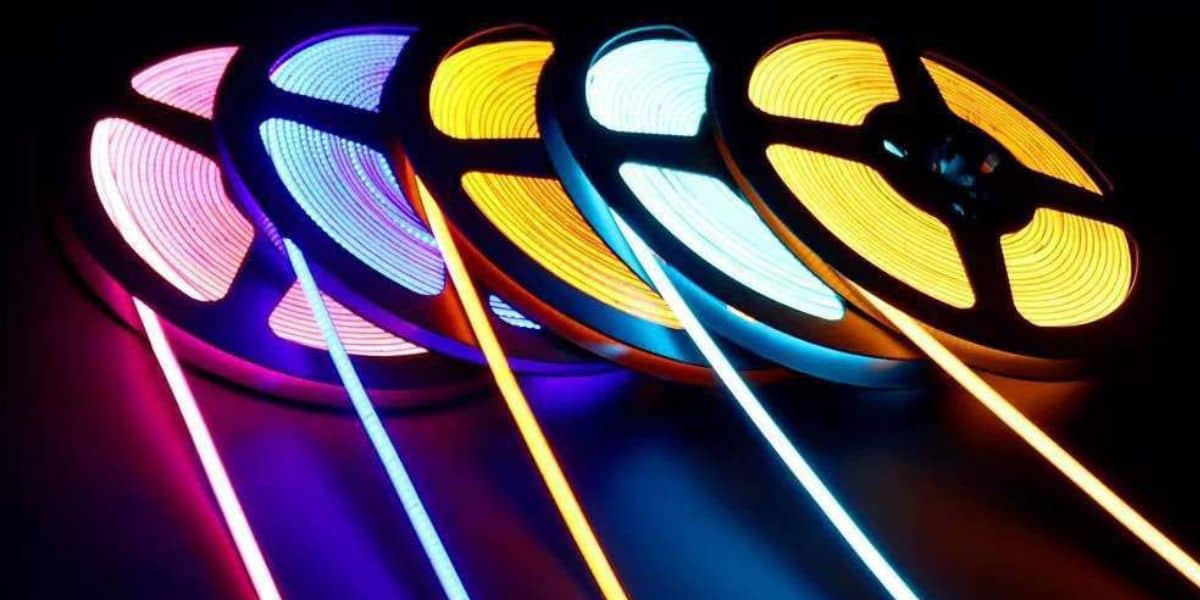
This comparison highlights why dotless RGB LED strips deliver higher lighting quality in real-world applications.
Technical Comparison Table
| Feature | Dotless RGB COB LED Strips | Standard RGB SMD LED Strips |
| Light Emission | Continuous, uniform light line | Separate visible LED dots |
| Color Blending | Perfectly smooth RGB mixing | Noticeable color separation |
| Visual Comfort | Soft and eye-friendly | Can cause glare |
| Viewing Angle | Wide and consistent | Narrower, uneven |
| Ideal Viewing Distance | Any distance, even direct view | Best when hidden |
| Aesthetic Quality | Premium, architectural | Decorative, basic |
Understanding COB Technology for RGB LED Strips
RGB COB LED strips typically contain 576–1080 LED chips per meter, using our product specification as the reference standard. This ultra-high LED density is the primary reason COB LED strips are able to deliver smooth, dot-free lighting compared to standard RGB LED strips.
Instead of relying on external diffusers to conceal individual LED points, COB LED strips generate uniform light inherently. This approach maintains visual smoothness while supporting consistent brightness and efficient light distribution.
Color Uniformity and Consistency
Uniform color output is essential for high-quality RGB lighting. Dotless RGB LED strips ensure:
- No bright or dark spots
- Even color across the full strip length
- Stable appearance when dimmed
Standard RGB LED strips often show uneven color when dimmed, making individual LEDs more noticeable at lower brightness levels.
Controller Compatibility: What You Need to Know
Most RGB COB LED strips are compatible with:
- Standard PWM RGB controllers
- DMX lighting systems
- Smart home RGB controllers (with correct voltage)
Expert Recommendation:
For any application where RGB LED strips are visible or viewed at close range, dotless RGB COB LED strips are the only option that delivers a truly professional finish.
Top Applications: Where Dotless RGB LED Strips Improve Results the Most
Dotless RGB LED strips provide the greatest visual improvement in applications where lighting quality directly affects aesthetics and comfort.
1. Home Theater and TV Backlighting
In home theaters, lighting must enhance immersion. Dotless RGB LED strips create smooth bias lighting behind screens, improving contrast perception and reducing eye strain without distracting light points.
2. Architectural Coving and Indirect Lighting
Dotless LED strips are ideal for ceiling coves, wall recesses, and floating architectural features. The absence of dots ensures clean lines and professional light washes.
3. Premium Retail and Commercial Displays
Retail lighting benefits from uniform color and brightness. Dotless RGB LED strips improve product presentation and elevate brand perception.
4. Gaming Setups and Streaming Studios
On-camera lighting quality matters. Dotless RGB LED strips eliminate visible dots, flicker, and uneven colors that appear unprofessional in video content.
5. Modern Kitchens and Furniture Lighting
Reflective surfaces magnify LED dots. Dotless LED strips provide clean under-cabinet and shelf lighting without visible points.
How to Choose the Right RGB LED Strip for Your Quality Goals
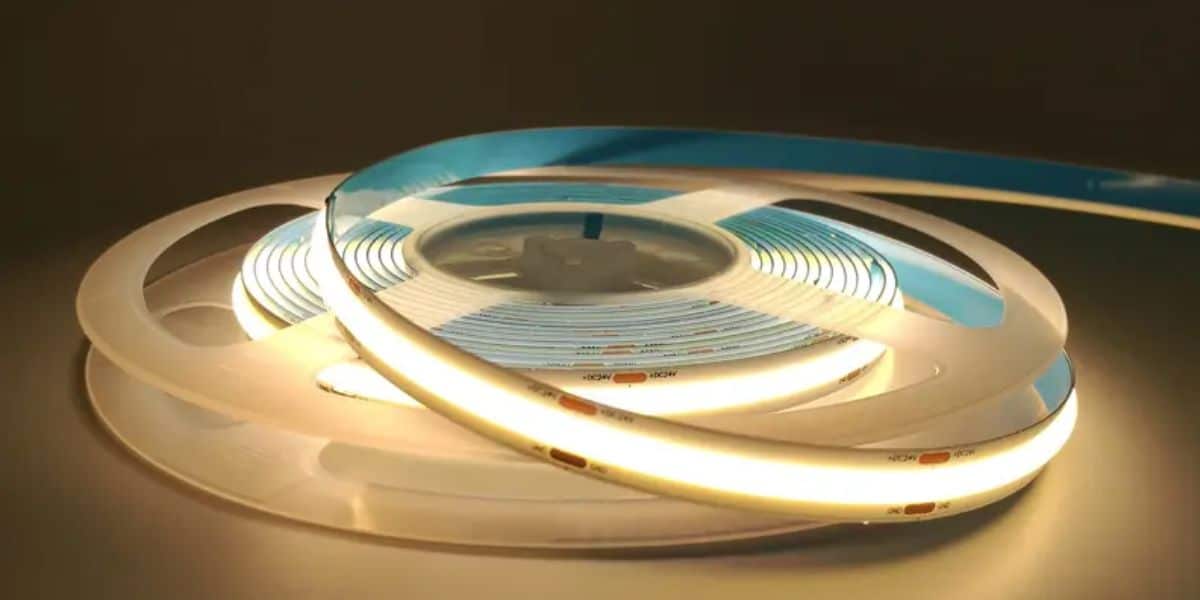
Selecting the correct RGB LED strip starts with understanding how the lighting will be used and seen.
Step-by-Step Decision Guide
Step 1: Evaluate Visibility
Will the LED strip be directly visible or installed in shallow channels?
Step 2: Define Your Quality Standard
Do you need a premium architectural finish or basic decorative lighting?
Step 3: Match Technology to Application
- Visible installations → Dotless RGB COB LED strip
- Deeply hidden lighting → Standard RGB LED strips may suffice
Step 4: Plan the Control System
Ensure voltage, wattage, and controller compatibility.
Final Quality Checklist
- Smooth, dotless light output
- Consistent RGB color blending
- Stable dimming performance
- Proper heat management
Achieve Flawless Color with SignliteLED’s Dotless RGB COB LED Strips
To achieve true dotless performance, SignliteLED offers advanced RGB LED strips built with COB technology for visible, high-quality installations.
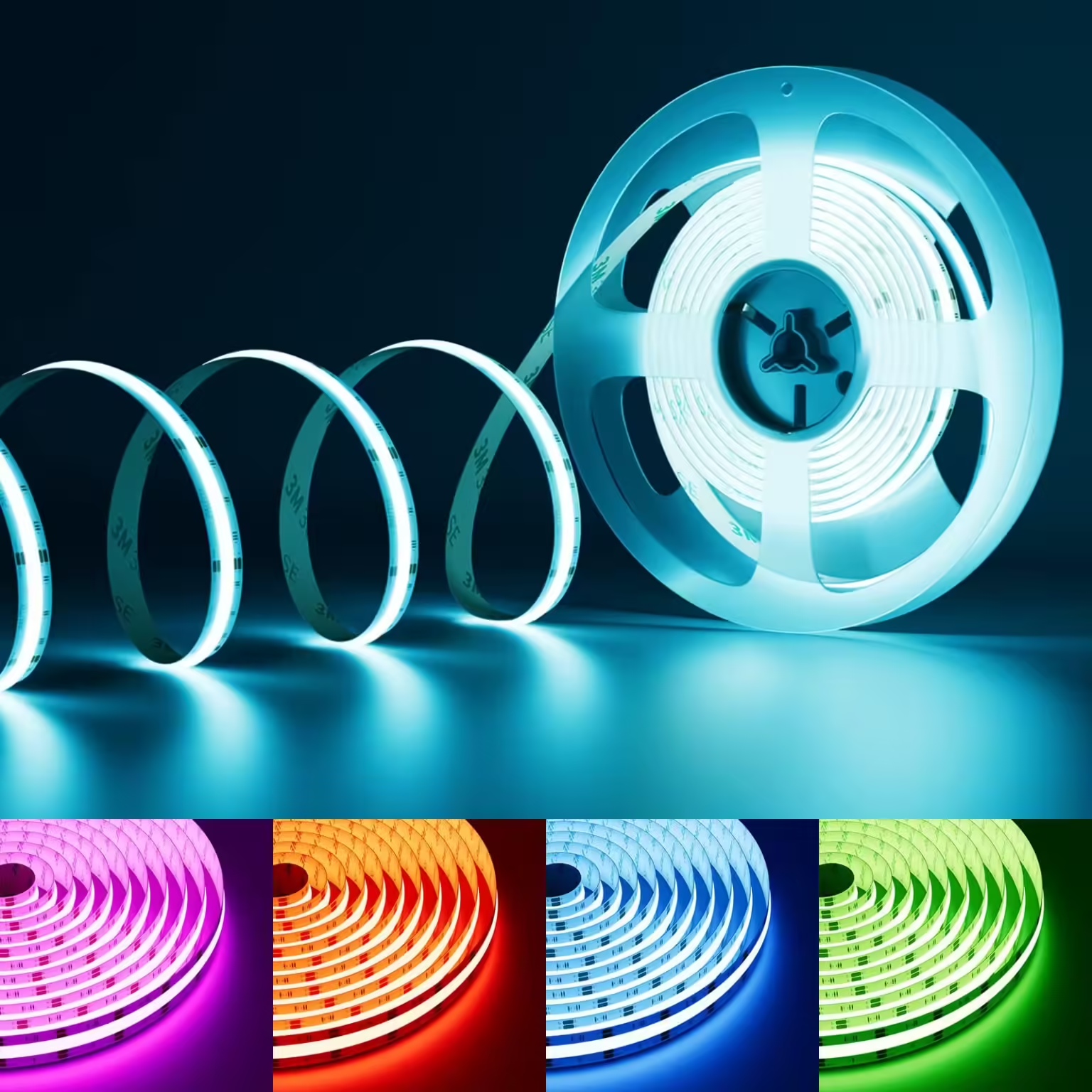
Color Changing COB RGB LED Strip Light
- Main Model: FYQ10T576C
- LED Chip QTY per Meter: 576chips, 810chips, 840chips (Sanan)
- CRI: N/A
- PCB Width: 576chips-10mm, 810chips-10mm, 840chips-10mm
- Color Temperature: RGB
- Input Voltage: DC12V, DC24V
- Power per Meter: 576chips-14W, 810chips-14W, 840chips-14W
- Cuttable Length: 576chips-31.25mm/62.5mm, 810chips-33.33mm, 840chips-50mm
- Waterproof Version: IP20/IP54/IP65/IP67/IP68
- Warranty: 3 years
Why SignliteLED Is a Trusted Choice
- 3-5 Year Warranty for long-term reliability
- OEM / ODM customization options
- Consistent production quality
- Expert technical support
- Designed for professional lighting projects
SignliteLED’s RGB COB LED strips are purpose-built to deliver clean aesthetics, smooth color blending, and dependable performance.
Conclusion
Dotless RGB LED strips significantly improve lighting quality by removing visible LED points, ensuring smooth color mixing, and delivering a refined, professional appearance.
Standard RGB LED strips often fall short in visible installations due to dotting and uneven color output. Dotless RGB COB LED strips solve these issues at the source through advanced COB technology.
For any project where lighting quality matters—especially architectural, commercial, and premium residential applications—dotless RGB LED strips are the correct and future-proof choice.
To achieve flawless RGB lighting with confidence, SignliteLED’s RGB COB LED strips provide a proven, high-quality solution.
FAQs
Related Posts