Deutsch
  English
  简体中文
简体中文  Español
  Français
  Italiano
  日本語
日本語  한국어
한국어  Polski
  Português
  Русский
  Türkçe
  Nederlands
  Tiếng Việt
  ไทย
ไทย 
Beim Beschaffen im Freien LED-Leuchtschriften Bei gewerblichen Gebäudefassaden, Restaurantterrassen oder architektonischen Beleuchtungsprojekten wird eine technische Spezifikation zum Mittelpunkt jeder Diskussion: die Eintrittsschutz-Bewertung (IP). Viele Käufer glauben jedoch fälschlicherweise, dass „wasserdichte Neonschilder“ einen einzigen universellen Standard einhalten - dies ist jedoch nicht der Fall. Die Wahl der falschen Schutzbewertung kann zu einer geringeren Kapitalrendite innerhalb weniger Monate führen.
Für die überwiegende Mehrheit der handelsüblichen LED-Neon-Projekte im Freien sind IP67-Strukturprodukte aus festem Silikon die optimale Wahl. Sie bieten den gleichen Staubschutz wie IP65 und bieten gleichzeitig einen echten Schutz gegen kurzes Eintauchen. Darüber hinaus sind ihre Kosten deutlich niedriger als bei den IP68-Produkten, die für nicht tauchbare Anwendungen häufig überspezifisiert sind.
Dieser Leitfaden bietet eine umfassende, technische Analyse dessen, was IP65, IP67 und IP68 wirklich für die LED-Neonbeleuchtung im Freien bedeuten, und konzentriert sich auf das Kernwissen, das kommerzielle Käufer und Projektingenieure verstehen müssen. Wir werden untersuchen, warum IP65 in realen Außenumgebungen häufig ausfällt: Der Silikon-Dichtungsprozess, der die langfristige Zuverlässigkeit eines Produkts bestimmt, warum der Fahrer genauso kritisch ist wie der Lichtstreifen selbst und wie optimale Entscheidungen getroffen werden können, die Schutz und Kosten auf der Grundlage der Projektanforderungen ausgleichen.
Nachdem Sie diesen Artikel gelesen haben, wissen Sie nicht mehr nur, was die IP-Nummern darstellen, sondern verstehen auch die technischen Gründe, die dahinter stehen - so dass Sie die angemessene Schutzbewertung für Ihr nächstes Projekt genau bestimmen können.
Was bedeutet die IP-Bewertung?
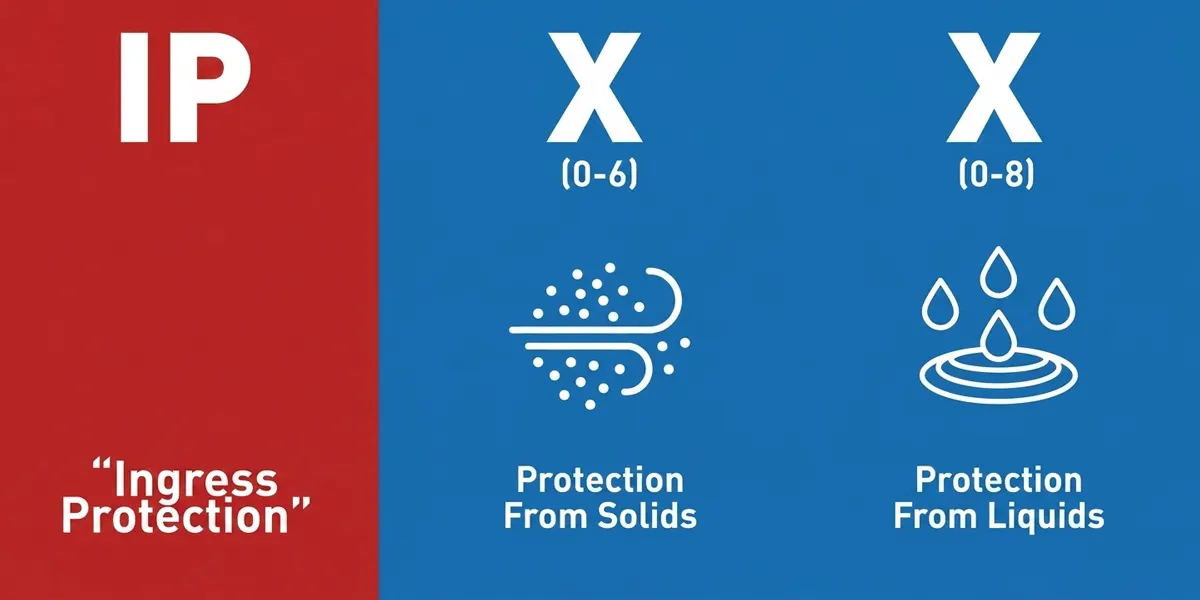
IP steht für Ingress Protection. Im Sinne der internationalen Norm IEC 60529, IP-Einstufung besteht aus zwei Ziffern:
- Erste Ziffer (0–6): Schutz gegen feste Gegenstände (Staub, Schmutz, versehentlicher Kontakt)
- Zweite Ziffer (0–9K): Schutz gegen Flüssigkeiten (Regen, Spritzer, Düsen, Eintauchen)
Bei LED-Neonschildern im Freien ist die erste Ziffer fast immer 6 - vollständiger Staubschutz, d. H. Der höchste Schutz gegen Festkörper. Der eigentliche Schwerpunkt der Entscheidung liegt in der zweiten Ziffer: der Wasserbeständigkeitsbewertung.
Nachfolgend ein klarer technischer Vergleich der relevanten Wasserdichtigkeitswerte:
| zweite Ziffer | Definition | Prüfverfahren | Realität |
| 5 (IP65) | Wasserstrahl | 12,5 l/min aus der Düse (6,3 mm), 3 m Abstand, mindestens 3 Minuten | Widerstand gegen Niederdruckstrahlen, starken Regen |
| 6 (IP66) | kraftvolle Jets | 100 l/min ab Düse (12,5 mm), 3 m Abstand | Widersteht kräftigen Wasserstrahlen, starkem Regen |
| 7 (IP67) | vorübergehendes Eintauchen | Bis zu 1 Meter Tiefe für 30 Minuten | Überlebt extreme Stürme, Überschwemmungen, Waschen |
| 8 (IP68) | Dauereintauchen | Tiefe und Dauer nach Hersteller eingestellt (kein einzelner Standard) | Langzeitunterwassernutzung |
Schlüsselnotiz: Es gibt keinen global einheitlichen Teststandard für IP68. Hersteller und Kunden müssen sich ausdrücklich auf bestimmte Eintauchtiefen und Dauerbedingungen einigen. Einige IP66-Produkte können auch grundlegende IP68-Tests bestehen. Daher hat die IP68-Bewertung selbst in Ermangelung expliziter Spezifikationen eine begrenzte Bedeutung.
IP65 vs. IP67 vs. IP68 – Eine vollständige Vergleichstabelle
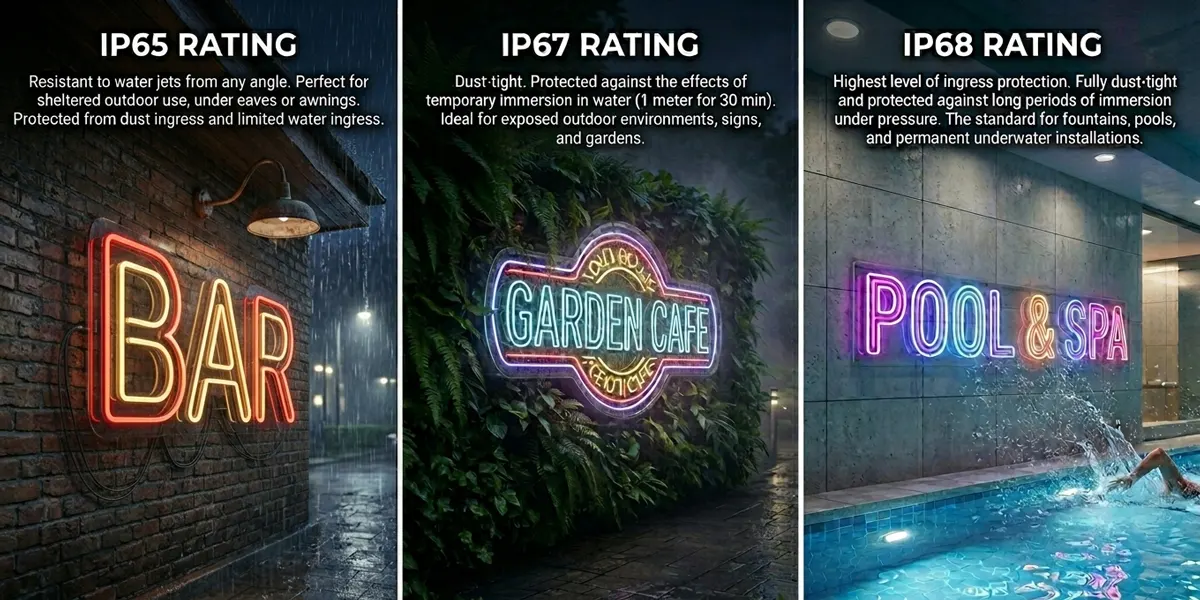
Für gewerbliche Käufer von LED-Neonschildern im Freien ist das Verständnis der Unterschiede zwischen diesen drei Bewertungen in Bezug auf Konstruktion, Haltbarkeit und Kosten von entscheidender Bedeutung.
| Aspekt | IP65 | IP67 | IP68 |
| Staubschutz | 6 (staubdicht) | 6 (staubdicht) | 6 (staubdicht) |
| Wasserschutz | Nur Niederdruckstrahlen | Temporäres Eintauchen (1m, 30 min) | Kontinuierliches Eintauchen (Hersteller-spezifiziert) |
| Bauweise | Oberflächenbeschichtung oder halbversiegelte Hülse | Volle Silikonextrusion / Solid-Potting | Hochwertige Silikon-Extrusion mit verstärkten Dichtungen |
| Kann untergetaucht werden? | ❌ Nein | ✔️ Ja (kurzfristig) | ✔️ Ja (kontinuierlich) |
| Typische Lebensdauer im Freien | 8.000–15.000 Stunden (PVC) | 50.000+ Stunden (Silikon) | 50.000+ Stunden (Silikon) |
| Relative Kosten | Haushalt | Moderat (15–30% höher als IP65) | Prämie |
| Geeignet für Küstengebiete? | Begrenzt (Salzspray-Korrosion) | Ja (UV-stabilisiertes Silikon) | ✔️ Ja |
| Am besten für | Geschützte Außenbereiche, unter Markisen | Volle Freilichtbelichtung, Fassaden, Schilder, Gärten | Brunnen, Pools, dauerhafte Unterwasseranlagen |
| Aspekt | IP65 | IP67 | IP68 |
| Staubschutz | 6 (staubdicht) | 6 (staubdicht) | 6 (staubdicht) |
Hauptunterschiede erklärt
- IP65 bietet vollständigen Schutz gegen Staub und hält Wasserstrahlen aus jeder Richtung aus. Es bietet jedoch keinen Schutz vor dem Eintauchen - eine Einschränkung, die sich in vielen realen Außeninstallationen als tödlich erwiesen hat.
- IP67 baut auf IP65 auf, indem es die Fähigkeit hinzufügt, dem kurzen Eintauchen standzuhalten (1 Meter unter Wasser für 30 Minuten). Dieser Schutz wird durch eine vollständig extrudierte Silikonkonstruktion erreicht: Die LED-Schaltung ist vollständig im Silikon eingekapselt, sodass keine Lücken für das Eindringen von Feuchtigkeit entstehen.
- IP68 erweitert diese Fähigkeit auf kontinuierliches Untertauchen, da IP67 jedoch aufgrund des Fehlens eines einheitlichen Standards bereits weit mehr Schutz bietet, als tatsächlich für die überwiegende Mehrheit der kommerziellen Außenschild- und Fassadenprojekte erforderlich ist (bei denen Lichtbänder vertikal installiert oder an der Außenseite von Gebäuden aufgehängt werden).
- Laut Branchenstatistiken stellt IP67 die optimale Bilanz für etwa 821 tp3t an Outdoor-Projekten dar – es hält saisonal rauem Wetter stand, ohne übermäßige Kosten zu verursachen.
Für die meisten Außenbeleuchtungsanwendungen (Signage, Patios und Gärten) bietet IP67 die ideale Balance: Es bietet zuverlässigeren Schutz vor Regen als IP65 und bleibt kostengünstiger als IP68.
Warum IP65 in Outdoor-Einstellungen fehlschlägt: Die versteckten Risiken
Sie könnten versucht sein, IP65 für LED-Neonschilder im Freien zu wählen - schließlich wird es oft als "wasserdicht" bezeichnet. Aber die Realität ist weit davon entfernt.
Eine Big-Data-Analyse von LED-Fixture-Ausfällen im Freien (die 4.200 Installationsaufzeichnungen über drei Jahre abdeckt) ergab, dass in regnerischen Regionen die jährliche Ausfallrate für IP65-Geräte auf 14,71 TP3T lag, während IP66-Geräte auf 7,91 TP3T sanken.
Viele Käufer gehen davon aus, dass IP65 bedeutet, dass das Produkt allen wasserbedingten Gefahren standhält. Das ist falsch. IP65 schützt nur vor Niederdruckwasserstrahlen. Bei schweren Taifunen, Hurrikanen oder Schneestürmen kann der windgetriebene Regen jedoch horizontal oder sogar nach oben wehen. Für extreme Wetterregionen bietet nur eine vollständig versiegelte Struktur, die den IP67-Standards entspricht, die einzige zuverlässige technische Garantie.
Drei Hauptgründe, die IP65 in Außenumgebungen ausfällt
1. Nur Schutz auf Oberflächenebene: Viele IP65-LED-Streifen verwenden nur eine einzige Schicht Silikonschlauch oder eine dünne Oberflächenbeschichtung. Wasser kann leicht durch abgeschnittene Enden, Verbindungsstellen oder beschädigte Schläuche eindringen.
2 . Langfristiges Eindringen von Feuchtigkeit: Feuchtigkeit und Kondensation durchdringen mikroskopische Lücken, die Oberflächenbehandlungen nicht abdichten können, was schließlich zu einem Schaltkreisausfall führt.
3. Null-Eintauchwiderstand: Bei stehenden Wasser, Regenwasser oder sogar Hochdruckwasserstrahlen in der Nähe der Beschilderung werden IP65-Produkte kurzschließen und ausfallen, sobald Wasser kurz den internen Schaltkreis berührt.
Für jede wirklich im Freien belichtete wasserdichte Neon-Schild - ob an Gebäudefassaden, an der Straße gerichtete Schaufenster oder Garteninstallationen in der Nähe von Sprinklern oder Wasserspielen - ist IP65 nicht ausreichend. Die geringen Kosteneinsparungen können das Risiko eines vorzeitigen Ausfalls nicht ausgleichen.
Der Silikon-Dichtungsprozess, der die wahre Schutzfähigkeit bestimmt
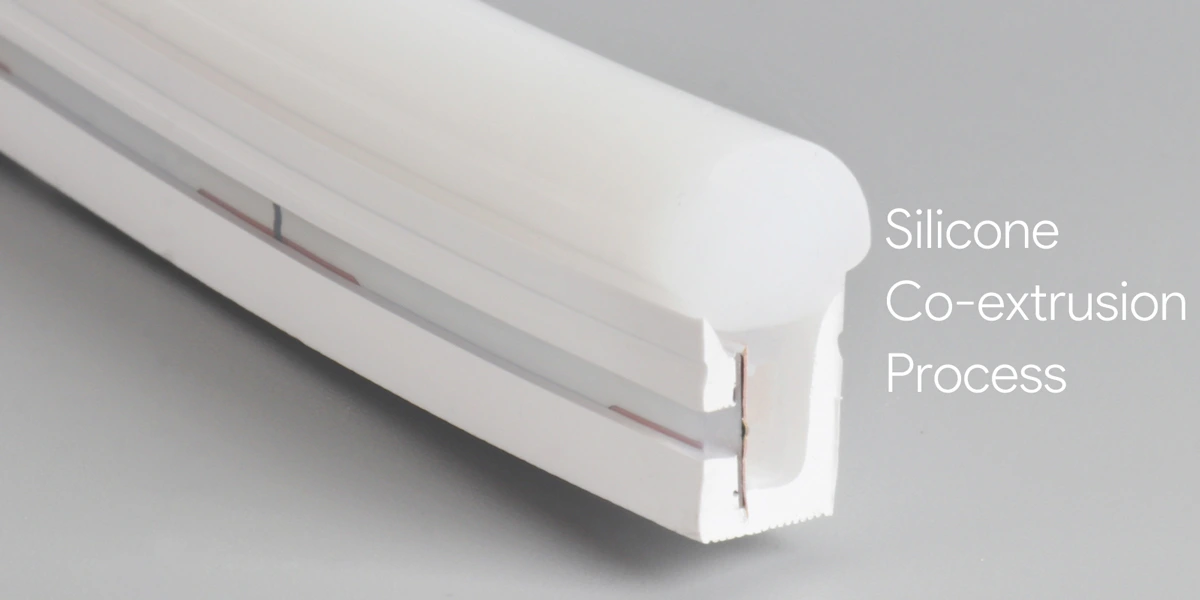
Nicht alle wasserdichten Neonlichter werden auf die gleiche Weise hergestellt. Das Verfahren zum Abdichten der LED-Schaltung bestimmt direkt, ob das Produkt seine beanspruchte IP-Bewertung erreichen kann.
gängige Abdichtungsmethoden im Vergleich
| Methode | IP erreichbar | Beschreibung | Schwäche |
| PVC-Hülse + Endkappen | IP65 | LED-Streifen in Hohlrohr eingelegt, Kappen abgedichtet | Wasser tritt an den Enden ein; PVC vergilbt im Freien |
| Silikonhülle + Endkappen | IP65–IP66 | Gleiches Design, aber mit Silikonhülle | Verlässt sich immer noch auf Endkappendichtungen; nicht vollständig vergossen |
| Oberflächenbeschichtung (Tropf-Kleber) | IP65–IP66 | Nur auf der Oberseite beschichtete LED-Platine | Rückseite verwundbar; keine vollständige Kapselung |
| Extrusionstopf / festes Silikon | IP67–IP68 | LED-Schaltung vollständig in festes Silikon über Extrusion ummantelt | Höhere Materialkosten; Premium-Haltbarkeit |
Warum Silikon kritisch ist
Die Materialauswahl ist ebenso kritisch. Unter den drei primären Neon-Rohr-Materialien (PVC, PU, Silikon) übertrifft Silikon die anderen in der Outdoor-Performance deutlich:
| Besitztum | PVC | PU | Silikon |
| UV-Beständigkeit | Schlecht (abbaut/gelb) | Mäßig | Ausgezeichnet |
| Temperaturbereich | –20°C bis 60°C | –20°C bis 80°C | –50°C bis 200°C+ |
| Lebensdauer im Freien | 8.000–15.000 Stunden | Mäßig | 50.000–100.000 Stunden |
| Flexibilität | Mäßig | Mäßig | Ausgezeichnet |
Festes Silikon und PU können hohe Wasserdichtigkeiten erreichen (IP67/IP68), während hohles PVC nur eine begrenzte Wasserbeständigkeit aufweist. Die Lebensdauer von Silikon-Neon-Schläuchen beträgt typischerweise etwa 50.000 Stunden, während PVC-Produkte unter Außenbedingungen nur etwa 8.000–15.000 Stunden dauern.
Silikon bietet auch eine hervorragende UV-Beständigkeit, wodurch die Probleme mit der Vergilbung und Rissen vermieden werden, die PVC-Produkte bei längerer Sonneneinstrahlung aufweisen. Für gewerbliche Käufer ist die explizite Festlegung von fester Silikonextrusion anstelle von PVC-Schläuchen während des Auswahlprozesses der effektivste Schritt, um die langfristige Zuverlässigkeit von LED-Neonröhren im Freien zu gewährleisten.
Signliteds IP67 LED Neon Flex Der Schlauch wird aus hochwertigem Silikon hergestellt, das auch bei extremen Temperaturen flexibel bleibt, es verwendet UV-beständige Materialien, die nach Jahren der Exposition nicht reißen oder vergilben werden, und es versiegelt die LED-Schaltung vollständig durch ein Extrusionsverfahren aus Silikon, das das Eindringen von Feuchtigkeit verhindert.
Wasserdichte LED-Treiber sind ebenso wichtig
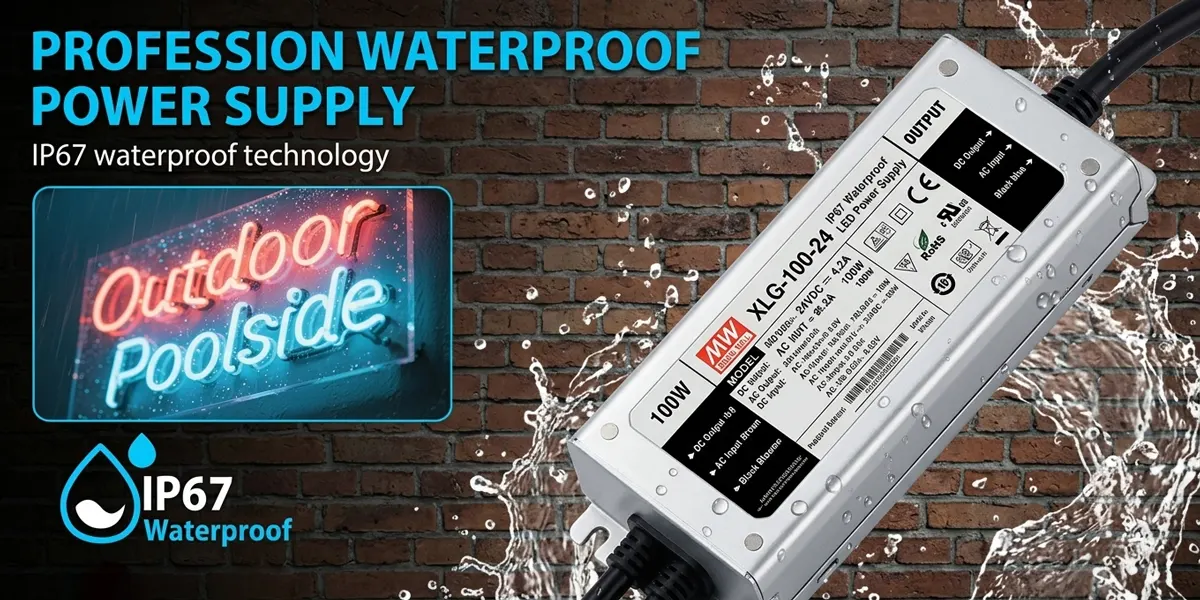
Hier ist eine Wahrheit, die Sie in vielen Produktspezifikationen nicht finden werden: Ein wasserdichter LED-Streifen ist wertlos, wenn der LED-Treiber nach sechs Monaten ausfällt.
Der Fahrer (LED-Stromversorgung) ist für die Umwandlung von Netzstrom in sichere, niedrige Gleichspannung (typisch 12 V oder 24 V) verantwortlich und muss genauso wasserdicht sein wie der Streifen selbst. Verwenden Sie niemals wasserdichte Innen-Fahrer in LED-Neonprojekten im Freien.
Mindestspezifikationen für kommerzielle Outdoor-Fahrer
| Bedingung | Warum es wichtig ist |
| IP67 bewertet oder höher | Verhindert, dass Feuchtigkeit in den internen Schaltkreis eindringt |
| Konstantstromdesign | Hält konsistente LED-Helligkeit und verhindert vorzeitige Verschlechterung |
| Überstrom-/Kurzschlussschutz | Schützt vor Stromstößen und Installationsfehlern |
| UL / CE / EN61347 zertifiziert | Gewährleistet die Einhaltung internationaler Sicherheitsstandards |
| 5 Jahre Garantie | Indikator für das Vertrauen der Hersteller in die Zuverlässigkeit |
Gemäß den Sicherheitsbestimmungen werden in Nordamerika nur UL 676-zertifizierte Geräte von NEC/NFPA 70 für den Einsatz in Schwimmbädern oder ähnlichen Umgebungen akzeptiert – dies unterstreicht, dass die Zertifizierung genauso wichtig ist wie die IP-Bewertung.
Bei der Bewertung von Lieferanten für Ihr IP67-Neon-Beleuchtungsprojekt sollten Sie die Fahrerspezifikationen separat anfordern. Ein hochwertiger IP67-Neonstreifen gepaart mit einem minderwertigen oder nicht zertifizierten LED-Treiber wird den Gesamtwert des Systems erheblich verringern.
Die beste Wahl für kommerzielle Projekte
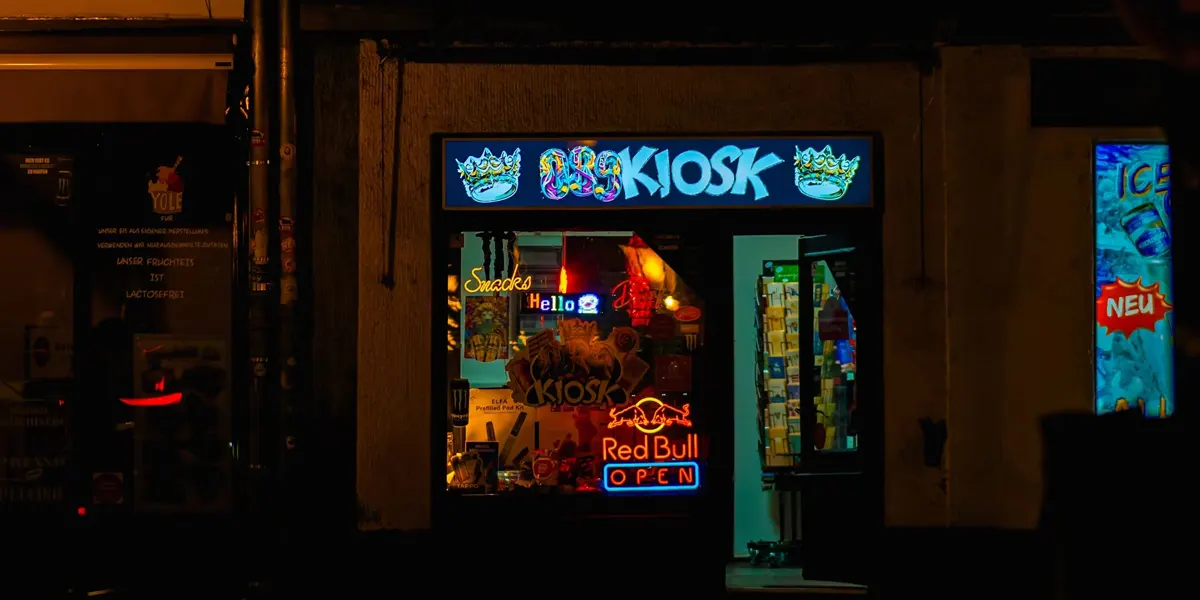
Entscheidungsmatrix nach Projekttyp
| Projekt / Umgebung | Empfohlene IP-Be | Material | Grund |
| Geschützte Markise / überdachte Terrasse | IP65 | Silikonhülle | Nur gelegentliche Regenexposition |
| Gebäudefassade (Standardbelichtung) | IP67 | Feste Silikonextrusion | Optimale Balance: Regenfest, staubdicht, kostengünstig |
| Einzelhandelsbeschilderung an der Straße | IP67 | Feste Silikonextrusion + UV-stabilisiert | Konstante Wetterexposition erfordert eine vollständige Abdichtung |
| Küstenanlage (innerhalb von 50 m vom Ufer) | IP67 oder IP68 | Silikon-Extrusion mit Korrosionsschutz | Salzspray korrodiert schnell niedrigere Grade |
| Gebiete mit häufigen Stürmen / Überschwemmungen | IP67 | Feste Silikonextrusion | Kann vorübergehendes Untertauchen überleben |
| Restaurant-Terrasse / Außenbar | IP67 | Feste Silikonextrusion | Behandelt Verschütten, Putzen und Regen |
| Brunnenrand / Wasserspiele | IP67 | Feste Silikonextrusion | Spritz- und Kurztauchschutz |
| Dauerunterwasser (Pool / Brunnen) | IP68 | Verstärkte Silikonextrusion | Kontinuierliches Eintauchen erfordert IP68 |
| Veranstaltung / temporäre Beschilderung im Freien | IP65 | kostenoptimiert | Kurzfristige Exposition kann niedrigere IP akzeptieren |
| Geschützte Markise / überdachte Terrasse | IP65 | Silikonhülle | Nur gelegentliche Regenexposition |
Engineering-Empfehl
Für die überwiegende Mehrheit der gewerblichen LED-Neon-Projekte im Freien - Gebäudefassaden, Einzelhandelsbeschilderungen, Restaurantterrassen, Gartenbeleuchtung und architektonische Akzentbeleuchtung - sind IP67-Strapideprodukte aus festem Silikon die optimale Wahl.
Warum IP67? Es bietet den gleichen Staubschutz wie IP65 und bietet gleichzeitig einen echten Schutz gegen kurzes Eintauchen. Die vollständig gefüllte Silikonkonstruktion eliminiert das Risiko des Wassereintritts, das bei IP65-Produkten nach längerer Anwendung unvermeidlich auftritt. Darüber hinaus sind die Kosten deutlich niedriger als bei den IP68-Produkten, die für nicht tauchbare Anwendungen häufig überspezifiziert sind.
Für die meisten Außenbeleuchtungsanwendungen (Signage, Patios und Gärten) ist IP67 die ideale Balance: Es bietet zuverlässigeren Schutz vor Regen als IP65, ist jedoch kostengünstiger als IP68.
Tiefenanalyse: Warum zeichnet sich Silikon in Outdoor-Anwendungen aus?
Bei der Auswahl von LED-Neonlichtern im Freien ist die Debatte zwischen Silikon und PVC nicht nur eine akademische Diskussion, sondern wirkt sich direkt auf die Lebensdauer des Projekts und die Gesamtbetriebskosten aus.
Umfassender Materialvergleich
| Material | Outdoor-Haltbarkeit | Flexibilität | Kosten | Beste Anwendung |
| PVC | ❌ Schlecht | Mäßig | Niedrig | Innen- / Kurzzeitd Innen- und Außenbereich |
| PU | Mäßig | Mäßig | Mittel | feuchte Innenumgebungen |
| Silikon | ✅ Ausgezeichnet | Ausgezeichnet | Höher (2–3 × PVC) | Außenwetter, High-End-Anwendungen |
Wichtige Gründe, warum Silikon eine lohnende Investition für kommerzielle Outdoor-Anwendungen ist:
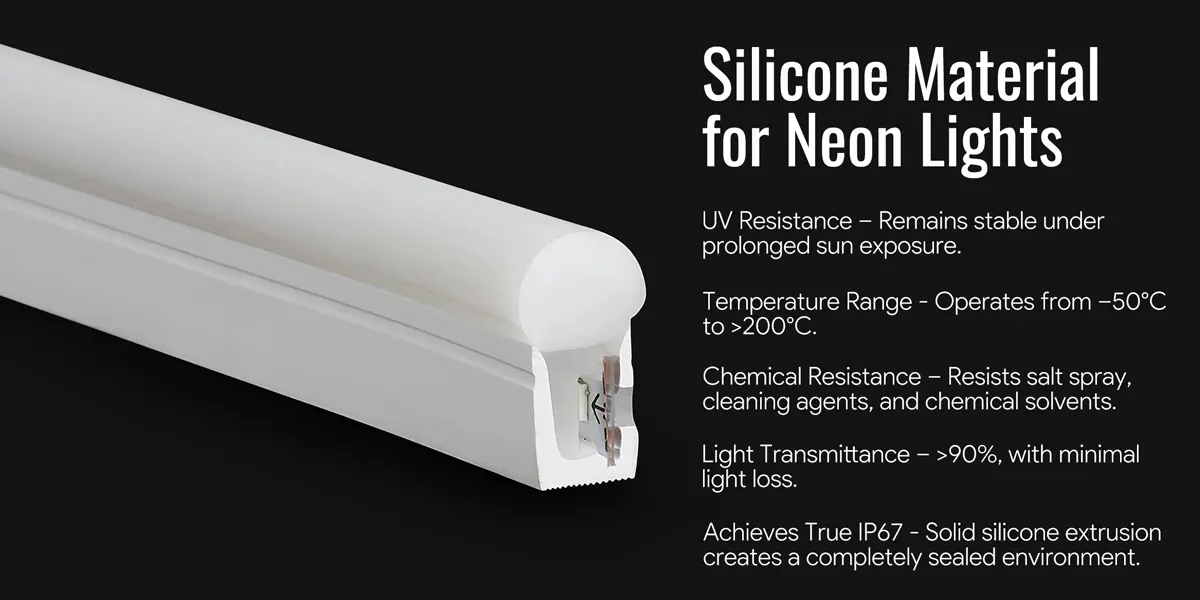
- UV-Beständigkeit – bleibt bei längerer Sonneneinstrahlung stabil, PVC vergilbt und wird spröde.
- Temperaturbereich – Funktioniert von –50°C bis >200°C, PVC versagt beim Einfrieren oder bei extremer Hitze.
- Chemische Beständigkeit – Resist gegen Salzspray, Reinigungsmittel und chemische Lösungsmittel.
- Lichtdurchlässigkeit – > 90%, mit minimalem Lichtverlust.
- Erzielt echte IP67 / IP68 – Feste Silikonextrusion schafft eine vollständig versiegelte Umgebung.
Für ein wasserdichtes Leuchtreklame, das jahrelang im Freien betrieben wird, ist Silikon nicht nur ein „Premium-Material“, sondern die kostengünstigste technische Wahl. Den höheren Materialkosten werden über den gesamten Lebenszyklus hinweg deutlich reduzierte Ersatz-, Wartungs- und Ausfallkosten ausgeglichen.
Best Practices zur Aufrechterhaltung der IP-Integrität während
Auch LED-Leuchtmittel mit den höchsten IP-Noten setzen aufgrund ihrer schützenden Wirksamkeit stark auf die Installationsqualität. Die folgenden Praktiken sind für die Wahrung der wasserdichten Integrität Ihrer LED-Neonlichter im Freien unerlässlich:
1. Verwenden Sie eine „Tropfenbiegung“ für Stromkabel: Wenn Stromkabel in eine Anschlussdose oder ein Treibergehäuse eintreten, erstellen Sie kurz vor dem Einstiegspunkt eine Abwärtsbiegung. Dadurch wird verhindert, dass Regenwasser entlang des Drahtes in die elektronischen Komponenten „Sog- ning“ wird.
2 . nie rEly sOlely auf innstischewasserfest tnachäffen: Die meisten wasserdichten Bänder haben keine IP-Zertifizierung und können dem Wasserdruck langfristig nicht standhalten. In begrabenen, unter Wasser oder dauerhaft feuchten Umgebungen kann das Band nicht die Integrität von IP67 / IP68 aufrechterhalten.
3. Verwenden Sie IP67 oder höher bewertete Gehäuse für Treiber und Steuerboxen: Der Fahrer ist Teil des Systems und muss entsprechend behandelt werden. Wird der Fahrer in einer Box mit geringerer Schutzart untergebracht, wird das gesamte IP67-System gefährdet.
4. Stellen Sie die richtige Enddichtung sicher: Verwenden Sie für Anschlüsse an geschnittenen Enden immer die vom Hersteller angegebenen wasserdichten Steckverbinder, anstatt vor Ort zu improvisieren.
5. Testen Sie vor der Installation: Führen Sie vor der Installation einen kurzen Einschalttest am Lichtstreifen durch. Wenn es beim ersten Einschalten fehlschlägt, deutet dies auf einen Defekt hin, der sich im Feld weiter verschlechtert.
Abschluss
Bei der Auswahl der passenden IP-Bewertung für LED-Neonschilder im Freien besteht nicht die Zielsetzung, die höchste Bewertung zu verfolgen, sondern den Schutzniveau an die tatsächlichen Umweltanforderungen anzupassen.
- IP65: Nur für geschützte oder intermittierende Verwendung geeignet. Nicht empfohlen für voll freiliegende gewerbliche Außenanlagen.
- IP67: Die ideale Wahl für die meisten kommerziellen Außenschild- und Fassadenprojekte: staubdicht, temporär tauchen, kostengünstig und zuverlässig über 50.000 Stunden bei der Herstellung aus festem Silikon.
- IP68: Nur für Anwendungen mit kontinuierlicher Unterwasserexposition (Brunnen, Schwimmbäder, Unterwasseranlagen) erforderlich. Oft überspezifiziert für Standard-Outdoor-Beschilderungen.
Für gewerbliche Einkäufer und Projektingenieure ist der Entscheidungsrahmen unkompliziert:
- Für Beschilderungen im Freien, Fassaden, Terrassen oder Gartenanlagen, die Regen, Schnee, Feuchtigkeit oder Reinigungsvorgängen ausgesetzt sind, geben Sie IP67-Silikonextrusionsprodukte an.
- Erfordern eine feste Silikonkonstruktion (anstelle von PVC-Schläuchen), um die UV-Beständigkeit und Temperaturtoleranz sicherzustellen.
- Stellen Sie sicher, dass der Treiber auch IP67-bewertet ist und die UL/CE/EN61347-Zertifizierung besitzt.
- Fragen Sie Lieferanten nach Materialspezifikationen, nicht nur nach IP-Bewertung. IP67, das durch PVC-Schläuche erreicht wird, ist nicht dasselbe wie IP67, das durch festes Silikonextrusion erreicht wird.
- Stellen Sie sicher, dass die Installationsbestspraxis eingehalten werden - Tropfschlaufen, versiegelte Steckverbinder und geeignete Gehäuse.
- Wenn Sie sich für eine IP67-Silikon-Neonröhre von einem Lieferanten mit Fachwissen in der Materialtechnik und der Umweltsicherheit entscheiden, kaufen Sie mehr als nur ein Zeichen. Sie investieren in ein langfristiges, zuverlässiges Beleuchtungsvermögen.
Für technische Spezifikationen, Benutzerdefiniertes Neon-Zeichen-Projekt Angebote oder Umweltbewertungen wenden sich an das signlited Engineering-Team, um Ihre spezifischen Anforderungen zu besprechen - einschließlich der örtlichen Klimabedingungen, des Installationsortes und der erwarteten Lebensdauer.
Häufig gestellte Fragen (FAQ)
Verwandte Artikel