Русский
  English
  简体中文
简体中文  Deutsch
  Español
  Français
  Italiano
  日本語
日本語  한국어
한국어  Polski
  Português
  Türkçe
  Nederlands
  Tiếng Việt
  ไทย
ไทย 
При поиске на открытом воздухе Светодиодные неоновые вывески Для коммерческих фасадов зданий, патио ресторанов или архитектурного освещения одна техническая спецификация становится центром каждого обсуждения: рейтинг Ingress Protection (IP). Однако многие покупатели ошибочно полагают, что «неоновые вывески» придерживаются единого универсального стандарта, но это не так. Выбор неправильного рейтинга защиты может привести к тому, что от снижения рентабельности инвестиций до крупной катастрофы технического обслуживания в течение нескольких месяцев.
Для подавляющего большинства коммерческих наружных светодиодных неоновых проектов оптимальным выбором являются экструдированные изделия из твердой силикона IP67. Они обеспечивают такую же защиту от пыли, как IP65, при этом добавляя подлинную защиту от кратковременного погружения. Кроме того, их стоимость значительно ниже, чем у продуктов IP68, которые часто переопределяются для непогружных приложений.
В этом руководстве представлен всесторонний инженерный анализ того, что на самом деле означают IP65, IP67 и IP68 для наружного светодиодного неонового освещения, уделяя особое внимание основным знаниям, которые должны понимать коммерческие покупатели и инженеры-проектировщики. Мы исследуем, почему IP65 часто выходит из строя в условиях реального мира; процесс уплотнения силикона, который определяет долгосрочную надежность продукта, почему водитель так же важен, как и сама световая полоса, и как принимать оптимальные решения, которые сбалансируют защиту и стоимость, исходя из требований проекта.
Прочитав эту статью, вы больше не будете просто знать, что представляют собой номера IP, но также поймете инженерное обоснование, стоящее за ними, позволяя вам точно определить соответствующий рейтинг защиты для вашего следующего проекта.
Что означает рейтинг IP?
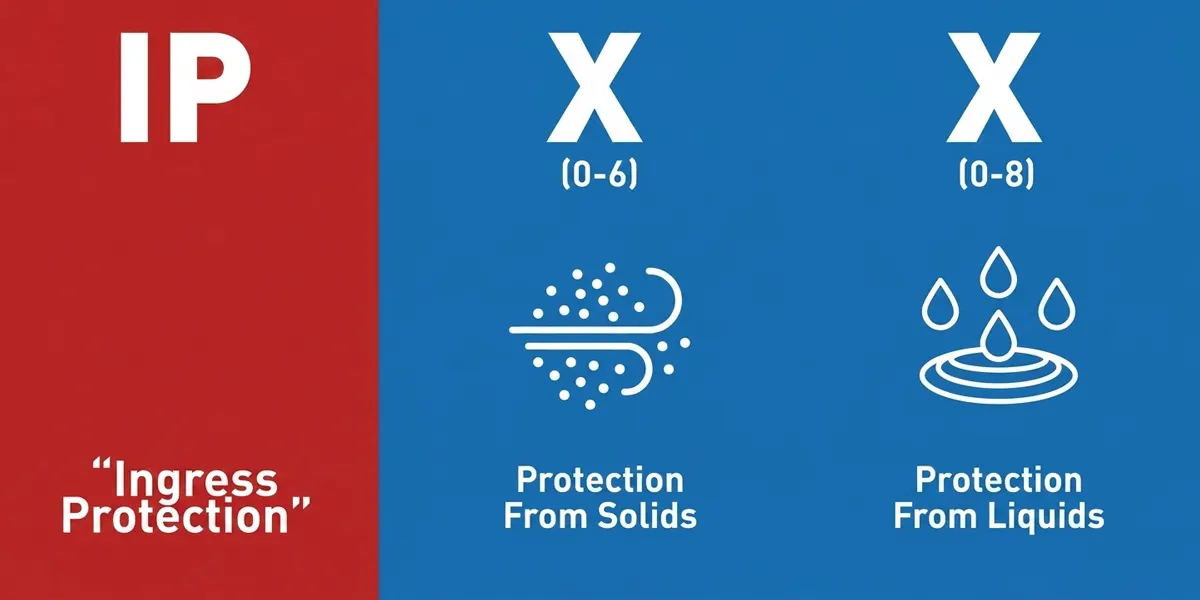
IP означает защиту от входа. Как определено международным стандартом IEC 60529, Степень защиты IP Состоит из двух цифр:
- Первая цифра (0–6): Защита от твердых предметов (пыль, мусор, случайный контакт)
- Вторая цифра (0–9K): Защита от жидкостей (дождь, брызги, струи, погружение)
Для наружных светодиодных неоновых вывесок первая цифра почти всегда равна 6 — полная защита от пыли, т. е. высочайший уровень защиты от твердых частиц. Настоящая цель решения находится во второй цифре: рейтинг водостойкости.
Ниже приведено четкое техническое сравнение соответствующих оценок водонепроницаемости:
| вторая цифра | Определение | Метод тестирования | реальный смысл |
| 5 (IP65) | струи воды | 12,5 л/мин от сопла (6,3 мм), 3 м расстояние, не менее 3 минут | Сопротивляется струям низкого давления, сильному дождю |
| 6 (IP66) | Мощные струи | 100 л/мин от сопла (12,5 мм), 3 м расстояние | Сопротивляется мощным струям воды, сильный дождь |
| 7 (IP67) | временное погружение | До 1 метра глубины 30 минут | Переживает сильные штормы, наводнения, стирка |
| 8 (IP68) | непрерывное погружение | Глубина и продолжительность, установленные производителем (не единый стандарт) | Длительное подводное использование |
основная нота: Не существует глобально унифицированного стандарта тестирования для IP68. Производители и клиенты должны четко согласовать конкретные условия погружения и длительности. Некоторые продукты IP66 также могут пройти базовые тесты IP68, поэтому при отсутствии явных спецификаций рейтинг IP68 сам по себе имеет ограниченное значение.
IP65 против IP67 против IP68 — полная сравнительная таблица
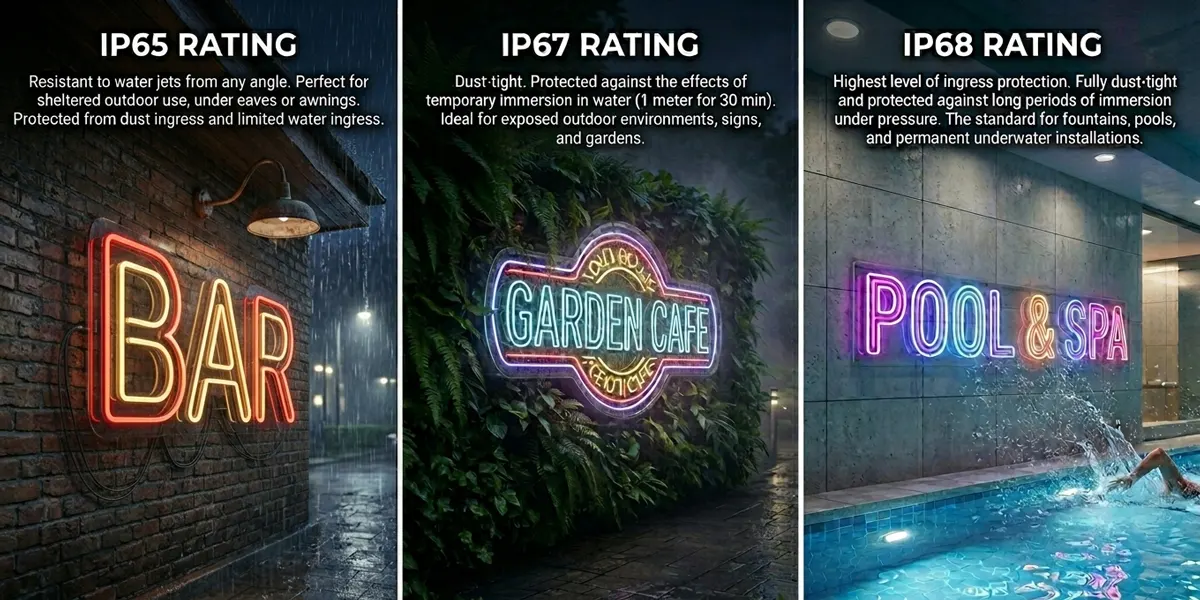
Для коммерческих покупателей неоновых вывесок на открытом воздухе понимание различий между этими тремя рейтингами с точки зрения конструкции, долговечности и стоимости имеет решающее значение.
| Аспект | IP65 | IP67 | IP68 |
| пылевые защиты | 6 (пыль-тяга) | 6 (пыль-тяга) | 6 (пыль-тяга) |
| защита от воды | Только струи низкого давления | Временное погружение (1 м, 30 мин) | Непрерывное погружение (указанное производителем) |
| Метод строительства | Поверхностное покрытие или полузапечатанная втулка | Полная силиконовая экструзия / твердая горшок | Высококачественная силиконовая экструзия с усиленными уплотнениями |
| Можно погрузить? | ❌ Нет | ✔️ Да (краткосрочный) | ✔️ Да (непрерывно) |
| Типичная продолжительность жизни на открытом воздухе | 8000–15 000 часов (ПВХ) | 50 000+ часов (силикон) | 50 000+ часов (силикон) |
| относительная стоимость | учебный | Умеренный (15–30% выше, чем IP65) | премиум |
| Подходит для прибрежных районов? | Ограничено (коррозия соли-распылителя) | Да (Силикон, стабилизированный УФ) | ✔️ Да |
| Лучшее для | Укрытая открытая площадка под навесами | Полная экспозиция на открытом воздухе, фасады, знаки, сады | Фонтаны, бассейны, постоянные подводные установки |
| Аспект | IP65 | IP67 | IP68 |
| пылевые защиты | 6 (пыль-тяга) | 6 (пыль-тяга) | 6 (пыль-тяга) |
Основные разногласия
- IP65 обеспечивает полную защиту от пыли и выдерживает струи воды низкого давления с любого направления. Однако он не обеспечивает защиты от погружения — это ограничение, которое оказалось фатальным во многих реальных установках для наружного использования.
- IP67 строится на IP65, добавляя возможность выдерживать кратковременное погружение (1 метр под водой 30 минут). Этот уровень защиты достигается за счет полностью экструдированного силикона: светодиодная схема полностью инкапсулирована в силикон, не оставляя зазоров для проникновения влаги.
- IP68 расширяет эту возможность до непрерывного погружения, однако из-за отсутствия единого стандарта IP67 уже обеспечивает гораздо большую защиту, чем это действительно требуется для большинства коммерческих наружных вывесок и фасадных проектов (где устанавливаются вертикальные или навесные ленты на наружные постройки).
- Согласно отраслевой статистике, IP67 представляет собой оптимальный баланс примерно для 82% проектов на открытом воздухе — он выдерживает сезонную суровую погоду без чрезмерных затрат.
Для большинства приложений наружного освещения (вывески, патио и сады) IP67 предлагает идеальный баланс: он обеспечивает более надежную защиту от дождя, чем IP65, при этом остается более экономичной, чем IP68.
Почему IP65 не работает в условиях наружного использования: скрытые риски
У вас может возникнуть соблазн выбрать IP65 для наружных светодиодных неоновых вывесок — в конце концов, его часто называют «водостойким». Но реальность далека от этого.
Анализ больших данных о неисправностях светодиодных светильников наружного освещения (охватывающих 4200 записей установки за три года) показал, что в дождливых регионах годовая частота отказов светильников IP65 достигала 14,7%, а светильники IP66 упали до 7,9%.
Многие покупатели предполагают, что IP65 означает, что продукт может выдерживать все связанные с водой опасности. Это неверно. IP65 защищает только от струй воды низкого давления. Однако во время тяжелых тайфунов, ураганов или метель, дождь, ведомый ветром, может дуть горизонтально или даже вверх. Для регионов, подверженных экстремальным погодным условиям, только полностью герметичная конструкция, которая действительно соответствует стандартам IP67, дает единственную надежную гарантию инженерного оборудования.
Три основные причины, по которым IP65 не работает в условиях наружной среды
1. Только защита на уровне поверхности: Многие светодиодные ленты IP65 используют только один слой силиконовой трубки или тонкое покрытие. Вода может легко проникать через срезанные концы, точки соединения или поврежденные трубки.
2 , длительное влагоудерживание: Влага и конденсация просачивается через микроскопические зазоры, которые не могут герметизировать обработка поверхности, что в конечном итоге вызывая неисправность цепи.
3. Нулевое сопротивление погружения: При воздействии стоячей воды, обратного потока дождевой воды или даже струй воды высокого давления вблизи указателей продукты IP65 будут закоротить и выходят из строя, как только вода ненадолго соприкасается с внутренней схемой.
Для любой поистине открытой водонепроницаемой неоновой вывески — будь то на фасадах зданий, на уличных витринах или в садовых установках рядом с разбрызгиватели или водные элементы — IP65 недостаточно. Незначительная экономия средств не может компенсировать риск преждевременного отказа.
Процесс уплотнения силикона, который определяет истинную защитную способность
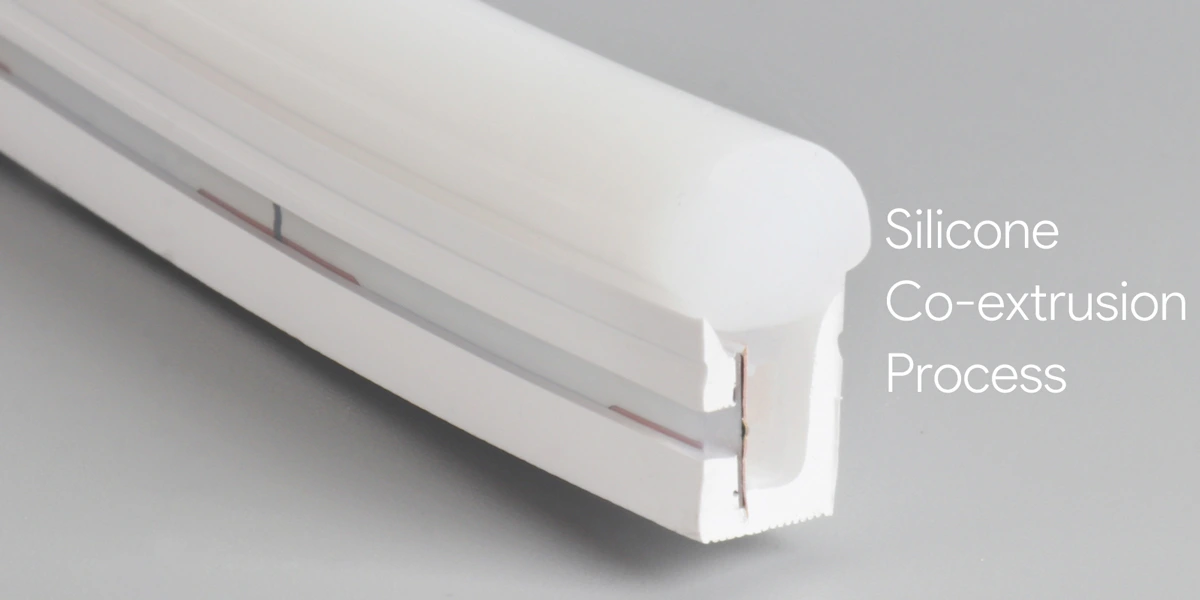
Не все водонепроницаемые неоновые лампы производятся одинаково. Метод, используемый для герметизации светодиодной схемы, напрямую определяет, может ли продукт достигать заявленного значения IP.
Распространенные методы гидроизоляции по сравнению
| метод | IP достижимый | Описание | неуверенность |
| ПВХ-рукава + торцевые колпа | IP65 | Светодиодная лента вставлена в полую трубку из ПВХ, заглушки запечатаны | Вода попадает с концами, ПВХ желтые на открытом воздухе |
| Силиконовая втулка + торцевые | IP65–IP66 | Тот же дизайн, но с силиконовым втул | По-прежнему полагается на уплотнения торцевых крышек, не полностью закрепленные |
| Поверхностное покрытие (капельное клей) | IP65–IP66 | Светодиодная печатная плата с покрытием только сверху | Задняя сторона уязвима; нет полной инкапсуляции |
| Экструзионный горшок / твердый силикон | IP67–IP68 | Светодиодная схема полностью заключена в твердый силикон с помощью экструзии | Более высокая стоимость материала, долговечность премиум-класса |
Почему силикон критичен
Выбор материала одинаково важен. Среди трех основных неоновых трубных материалов (ПВХ, ПУ, силикона) силикон значительно превосходит другие в наружных работах:
| имущество | ПВХ | ПУ | Силикон |
| Устойчивость к ультрафиолетовому излучению | Плохо (разрушается/желтая) | Умеренный | Превосходно |
| температурный диапазон | –20°C до 60°C | –20°C до 80°C | –50°C до 200°C+ |
| Продолжительность жизни на открытом воздухе | 8000–15 000 часов | Умеренный | 50 000–100 000 часов |
| Гибкость | Умеренный | Умеренный | Превосходно |
Твердый силикон и ПУ могут достигать высоких водонепроницаемых оценок (IP67/IP68), тогда как полый ПВХ имеет ограниченную водостойкость. Срок службы силиконовых неоновых трубок обычно составляет около 50 000 часов, а продукты из ПВХ служат всего около 8000–15000 часов в условиях наружного воздуха.
Силикон также обеспечивает превосходную устойчивость к ультрафиолетовому излучению, избегая проблем с пожелтением и растрескиванием, которые испытывают продукты из ПВХ при длительном пребывании на солнце. Для коммерческих покупателей явный выбор твердой силиконовой экструзии, а не труб из ПВХ в процессе выбора является наиболее эффективным шагом для обеспечения долгосрочной надежности наружных светодиодных неоновых трубок.
Signliteled IP67 LED неоновый флекс Трубка изготовлена из высококачественного силикона, который остается гибким даже при экстремальных температурах, в нем используются устойчивые к ультрафиолетовому излучению материалы, которые не трескаются или не желтеют после многих лет воздействия, и полностью герметизируют схему светодиода с помощью процесса экструзии силиконов, предотвращая попадание влаги.
Водонепроницаемые светодиодные драйверы одинаково важны
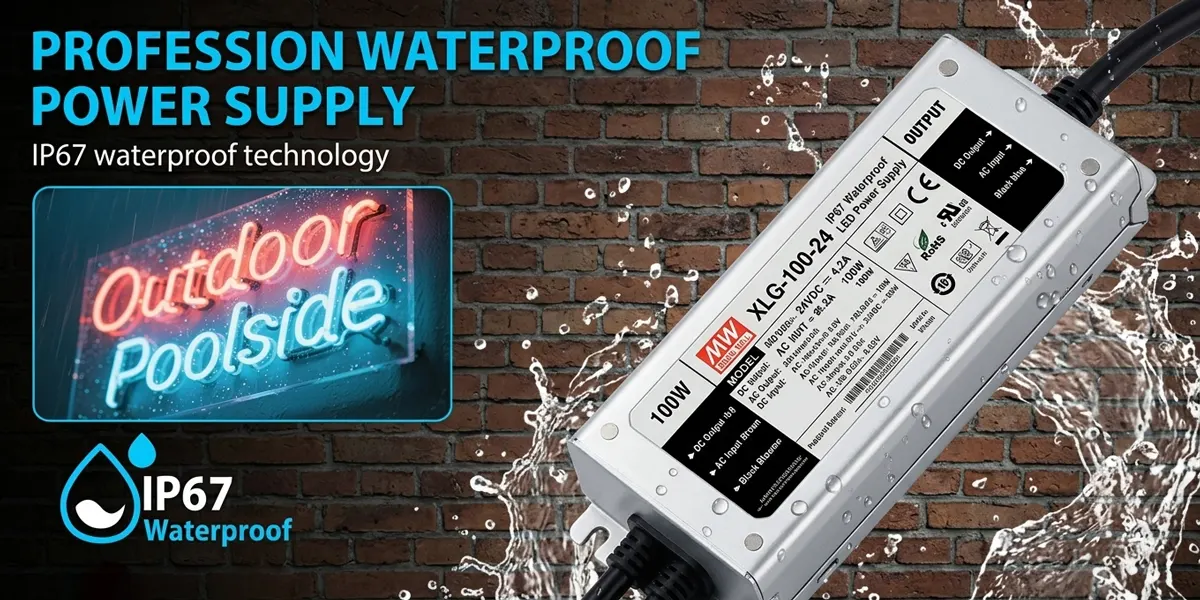
Вот правда, которую вы не найдете во многих спецификациях продукта: водонепроницаемая светодиодная лента бесполезна, если светодиодный драйвер выйдет из строя через шесть месяцев.
водитель (Светодиодный блок питания) отвечает за преобразование питания сети в безопасную низковольтную мощность постоянного тока (обычно 12 В или 24 В), и он должен быть таким же водонепроницаемым, как и сама лента. Никогда не используйте крытые, не водонепроницаемые водители в проектах LED-неонов.
Минимальные технические характеристики для коммерческих водителей на открытом воздухе
| требование | Почему это важно |
| IP67 Номинальный или выше | Предотвращает попадание влаги во внутреннюю схему |
| Конструкция постоянного тока | Поддерживает постоянную яркость светодиода и предотвращает преждевременную деградацию |
| Защита от перегрузки по току / короткому замыканию | Защищает от скачков напряжения и неисправностей установки |
| UL / CE / EN61347 сертифицировано | Обеспечивает соблюдение международных стандартов безопасности |
| 5-летняя гарантия | Показатель уверенности производителя в надежности |
В соответствии с правилами безопасности в Северной Америке только сертифицированные UL 676 приспособления принимаются NEC/NFPA 70 для использования в бассейнах или подобных условиях. Это подчеркивает, что сертификация так же важна, как и рейтинг IP.
При оценке поставщиков для вашего проекта неонового освещения IP67 обязательно запросите технические характеристики драйвера. Высококачественная неоновая полоса IP67 в паре с низкокачественной или несертифицированной светодиодной технологией значительно снижает общую стоимость системы.
Лучший выбор для коммерческих проектов
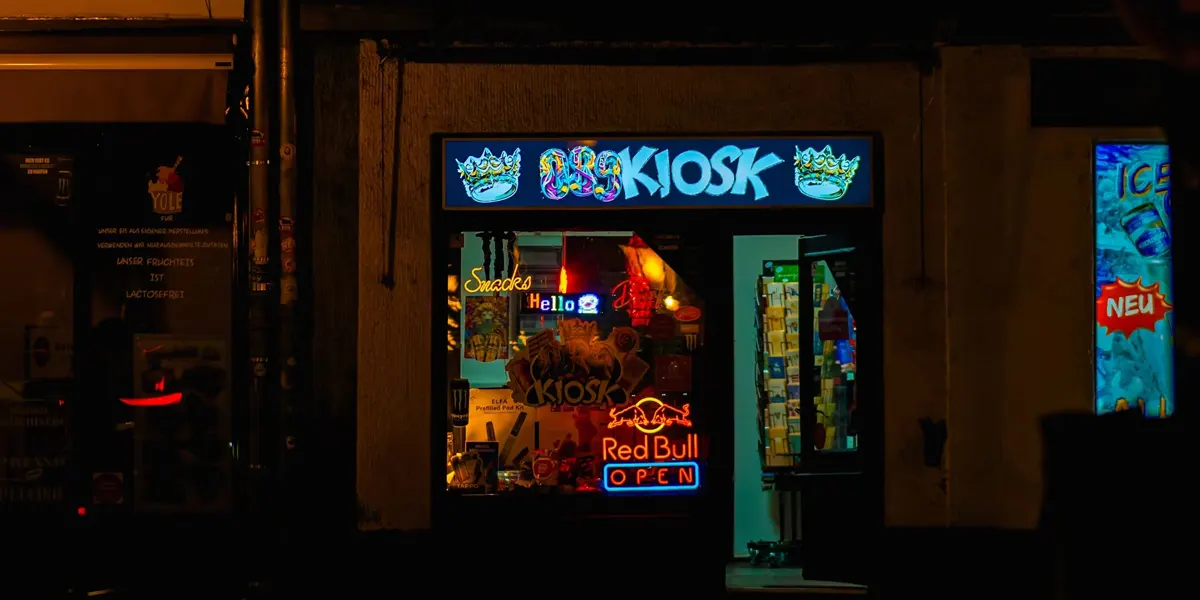
Матрица решений по типу проекта
| Проект / Окружающая среда | Рекомендуемое IP- | Материал | обоснование |
| Укрытая тент / крытая терраса | IP65 | Силиконовый вту | Только случайное воздействие дождя |
| Фасад здания (стандартная экспозиция) | IP67 | Твердая силиконовая экструзия | Оптимальный баланс: устойчивый к дождю, пыленепроницаемый, экономичный |
| Улица-передняя торговая вывеска | IP67 | Твердая силиконовая экструзия + УФ-стабилизированная | Постоянная погодная экспозиция требует полного уплотнения |
| Прибрежная установка (в пределах 50 м от берега) | IP67 или IP68 | Силиконовая экструзия с антикоррозийной стойкостью | Соляная спрей быстро разъедает более низкие сорта |
| Районы с частыми сильными штормами / наводнениями | IP67 | Твердая силиконовая экструзия | Может пережить временное погружение |
| Терраса ресторана / открытый бар | IP67 | Твердая силиконовая экструзия | Обрабатывает разливы, очистку и дождь |
| Фонтан Край / Возле воды | IP67 | Твердая силиконовая экструзия | Брызги и короткая защита от погружения |
| Постоянная подводная (бассейн/фонтан) | IP68 | Усиленная силиконовая экструзия | Непрерывное погружение требует IP68 |
| Событие / Временные наружные вывески | IP65 | оптимизированный для затрат | Краткосрочное воздействие может принимать более низкий IP |
| Укрытая тент / крытая терраса | IP65 | Силиконовый вту | Только случайное воздействие дождя |
Инженерные рекомендации
Для подавляющего большинства коммерческих светодиодных неоновых проектов на открытом воздухе — фасады зданий, торговые вывески, патио ресторанов, садовое освещение и архитектурное акцентное освещение — оптимальным выбором являются изделия из цельного силикона.
Почему IP67? Он обеспечивает такую же защиту от пыли, как IP65, при этом добавляя подлинную защиту от кратковременного погружения. Полностью заполненная силиконовая конструкция устраняет риск попадания воды, который неизбежно происходит в продуктах IP65 после длительного использования. Кроме того, его стоимость значительно ниже, чем у продуктов IP68, которые часто завышены для непогружных приложений.
Для большинства приложений наружного освещения (вывески, патио и сады) IP67 соответствует идеальному балансу: он обеспечивает более надежную защиту от дождя, чем IP65, но более рентабельна, чем IP68.
Углубленный анализ: почему силиконы превосходны в наружных приложениях?
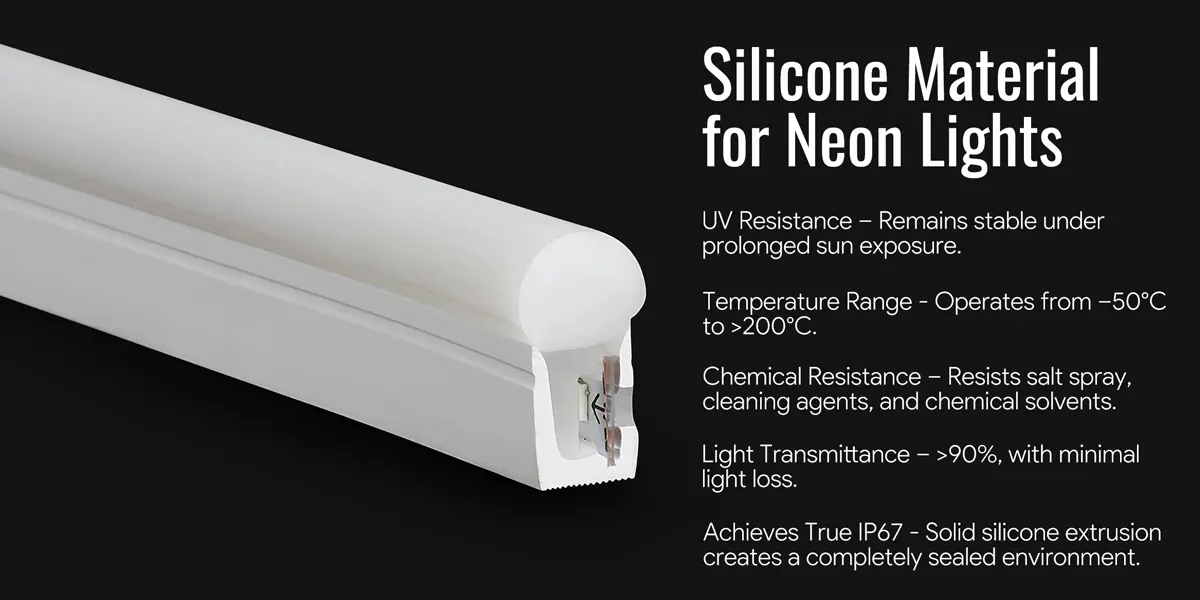
При выборе наружного светодиодного неонового освещения споры между силиконом и ПВХ — это не просто академическая дискуссия, а на продолжительность жизни проекта и общую стоимость владения.
Комплексное сравнение материалов
| Материал | долговечность на открытом | Гибкость | Стоимость | Лучшее приложение |
| ПВХ | ❌Бедный | Умеренный | Низкий | Внутренний / Кратковременный Крытый |
| ПУ | Умеренный | Умеренный | Средний | Влажные помещения |
| Силикон | ✅ отлично | Превосходно | Выше (2-3х ПВХ) | На открытом воздухе, экстремальные погодные условия, высококлассные приложения |
Основные причины, по которым силикон является достойным вложением в коммерческих наружных применениях:
- Устойчивость к ультрафиолетовому излучению – Остается стабильным при длительном воздействии солнца, ПВХ желтая и становится хрупкой.
- Диапазон температур – Работает от –50°C до >200°C, ПВХ не работает при замерзании или сильном нагреве.
- химическая стойкость - Сопротивляется солевым распылению, чистящим средствам и химическим растворителям.
- светопропускание – >90%, с минимальными потерями света.
- Достигает верный IP67/IP68 - Твердая силиконовая экструзия создает полностью герметизированную среду.
Для водонепроницаемой неоновой вывески, которая будет работать на открытом воздухе в течение многих лет, силикон — это не просто «премиальный материал», а наиболее экономичный инженерный выбор. Более высокая первоначальная стоимость материала компенсируется значительно сокращением затрат на замену, обслуживание и простои в течение всего жизненного цикла.
Лучшие практики для поддержания целостности IP во время установки
Даже светодиодные ленты с самыми высокими IP-классами в значительной степени зависят от качества установки для своей защиты. Для поддержания водонепроницаемой целостности светодиодных неоновых ламп необходимо следующее:
1. Используйте «капельный изгиб» для силовых кабелей: Когда силовые кабели входят в распределительную коробку или корпус драйвера, создайте изгиб вниз непосредственно перед точкой входа. Это предотвращает «перекачивание» дождевой воды по проводу в электронные компоненты.
2 , никогда rэл. sстарый с западнеустойчивый tобезьяна: Большинство водонепроницаемых лент не имеют сертификата IP и не могут выдерживать давление воды в долгосрочной перспективе. В скрытых, подводных или постоянно влажных средах лента не может поддерживать целостность IP67/IP68.
3. Используйте корпуса IP67 или более высокого класса для драйверов и блоков управления: Драйвер является частью системы и должен быть обработан соответствующим образом. Если драйвер помещается в коробку с более низким рейтингом защиты, вся система IP67 скомпрометирована.
4. Убедитесь, что надлежащее уплотнение торцевой: Для соединений на концах среза всегда используйте водонепроницаемые соединители, указанные производителем, вместо импровизации на месте.
5. Протестируйте перед установкой: Выполните краткий тест на включение световой полосы перед установкой. Если он выходит из строя при первом включении, это указывает на дефект, который еще больше ухудшится в поле.
Заключение
При выборе соответствующего рейтинга IP для наружных светодиодных неоновых знаков цель состоит не в том, чтобы слепо преследовать самую высокую оценку, а в том, чтобы сопоставить уровень защиты с фактическими требованиями к окружающей среде.
- IP65: Подходит только для защищенного или прерывистого использования. Не рекомендуется для полностью открытых коммерческих установок на открытом воздухе.
- IP67: Идеальный выбор для большинства коммерческих наружных вывесок и фасадных проектов: пылезащитный, способный к временному погружению, экономичен и надежный в течение более 50 000 часов при изготовлении из твердого силикона.
- IP68: Требуется только для приложений, связанных с непрерывной под водой (фонтаны, бассейны, погруженные в воду установки). Часто завышен для стандартных наружных вывесок.
Для коммерческих покупателей и инженеров-проектировщиков, принцип принятия решений прост:
- Для любых уличных вывесок, фасадов, патио или садовых установок, которые будут подвергаться воздействию дождя, снега, влаги или очистки, укажите продукты экструзии силикона IP67.
- Для обеспечения устойчивости к ультрафиолетовому излучению и термостойкости требуется прочная силиконовая конструкция (а не накидка из ПВХ).
- Убедитесь, что драйвер также имеет рейтинг IP67 и имеет сертификат UL/CE/EN61347.
- Спросите у поставщиков спецификации материалов, а не только рейтинг IP. IP67, достигаемый трубками из ПВХ, не совпадает с IP67, достигаемой при помощи твердой силиконовой экструзии.
- Убедитесь, что соблюдаются передовые методы установки: петли, герметичные соединители и соответствующие корпуса.
- Когда вы выбираете силиконовую неоновую трубку IP67 от поставщика, обладающего опытом в области инженерии материалов и экологической надежности, вы покупаете больше, чем просто знак. Вы инвестируете в долгосрочный и надежный световой актив.
по техническим характеристикам, Индивидуальный проект неоновой вывески Цитаты или экологические оценки обращайтесь в команду инженеров Signliteled, чтобы обсудить ваши конкретные требования, включая местные климатические условия, место установки и ожидаемый срок службы.
Часто задаваемые вопросы (FAQ)
Похожие посты