Português
  English
  简体中文
简体中文  Deutsch
  Español
  Français
  Italiano
  日本語
日本語  한국어
한국어  Polski
  Русский
  Türkçe
  Nederlands
  Tiếng Việt
  ไทย
ไทย 
Sinais de néon LED personalizados tornaram-se uma solução de iluminação amplamente adotada para aplicações comerciais e decorativas modernas. Eles são comumente usados em lojas de varejo, restaurantes, eventos e espaços internos, onde tanto o impacto visual quanto o desempenho de longo prazo são importantes.
Comparado ao neon de vidro tradicional, os leds de neon operam em baixa tensão e usam tecnologia de iluminação de estado sólido. Isso os torna mais seguros, eficientes em termos de energia e mais fáceis de instalar, ao mesmo tempo que reduzem os requisitos de manutenção ao longo do tempo. Além disso, seu design flexível permite uma personalização precisa para logotipos, texto e formas complexas.
Em aplicações práticas, esses sinais não são apenas usados para iluminação, mas também para branding e comunicação visual. Um sinal de néon bem projetado pode melhorar a visibilidade, melhorar a experiência do cliente e fortalecer a identidade da marca. Com base na experiência de fabricação e na implementação do projeto, selecionar os materiais e a abordagem de design certos é fundamental para alcançar um desempenho consistente e confiabilidade a longo prazo.
Este guia fornece uma visão estruturada dos sinais de néon LED personalizados, incluindo como eles funcionam, materiais usados, processos de design e fabricação, fatores de precificação e como escolher o fabricante certo para diferentes projetos.
resposta rápida
Sinais de néon LED personalizados são sinais flexíveis e iluminados feitos com tiras de LED de néon montadas em acrílico ou placas de metal. Eles replicam a aparência do neon tradicional enquanto operam em baixa tensão (12V/24V), consumindo menos energia (8–15 W/m) e com duração de até 50.000 horas.
Principais conclusões
- Sinais de néon LED consomem 60–70% menos energia que o neon de vidro
- A duração típica da vida varia entre 30.000 a 50.000 horas
- Operar em baixa tensão segura (12V/24V DC)
- Totalmente personalizável em tamanho, cor e forma
- Disponível nas versões IP20 (interior) e IP65 (externo)
- O custo de manutenção é significativamente menor do que o neon tradicional
- Adequado para aplicações comerciais e decorativas
O que são letreiros de néon LED personalizados

Sinais de néon LED personalizados São sistemas de iluminação modernos projetados para replicar o brilho visual do néon tradicional usando chips LED embutidos em difusores de silicone flexíveis. Ao contrário do Glass Neon, que usa descarga de gás e alta tensão, o LED Neon opera usando energia DC de baixa tensão, tornando-o mais seguro e eficiente.
Em um nível de sistema, um sinal de néon não é um único componente, mas uma combinação de vários elementos de engenharia trabalhando juntos.
| componente | Especificação típica | Função | Impacto prático |
| Chips de LED | SMD 2835 / 2216 | geração de luz | Eficiência (100–130 lm/W) |
| Tensão | 12 V / 24 Vcc | Alimentação eléctrica | segurança elétrica |
| Consumo de energia | 8–15 W/m | Uso de energia | custo de funcionamento |
| Tempo de vida | 30.000–50.000 horas | Durabilidade | vangloriar |
| Ângulo do feixe | 120°–180° | propagação da luz | brilho uniforme |
| Classificação IP | IP20–IP65 | Proteção | Uso interno/externo |
O difusor de silicone desempenha um papel crítico. Ele espalha a luz uniformemente, eliminando os hotspots e criando o efeito de brilho contínuo que se assemelha ao neon tradicional.
Para entender como a tecnologia moderna de néon LED funciona em comparação com os sistemas tradicionais, consulte nosso guia detalhado sobre Como o LED Neon Flex funciona em aplicações de iluminação do mundo real
Para uma explicação técnica mais profunda da estrutura do LED e dos princípios de trabalho, consulte nosso Guia Técnico completo do LED Neon Flex para profissionais
Como funcionam os letreiros de néon
Os sinais de néon LED funcionam passando corrente contínua de baixa tensão (12V ou 24V) através de chips LED embutidos dentro de um difusor de silicone flexível. Esses LEDs emitem luz uniformemente distribuída pelo difusor, criando um brilho contínuo semelhante ao neon tradicional.
Ao contrário do neon de vidro, que depende de descarga de gás e alta tensão, o LED Neon usa tecnologia de iluminação de estado sólido. Isso melhora a segurança, reduz o consumo de energia e garante uma saída de luz consistente sem tremular.
Sinais de néon LED versus neon de vidro tradicional
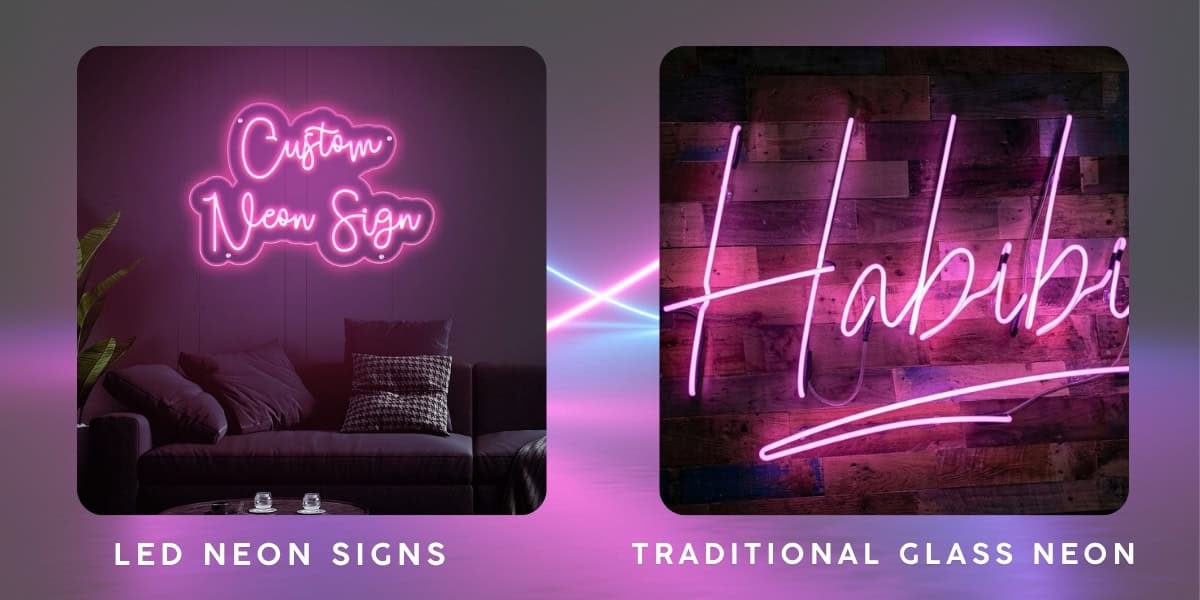
A mudança do neon de vidro para o néon LED é impulsionada pelo desempenho, segurança e eficiência de custos.
| Parâmetro | Néon LED | neon de vidro | Impacto no mundo real |
| Tensão | 12–24V | 3.000–15.000 V | Alto risco de segurança em vidro |
| Consumo de energia | 8–15 W/m | 20–30 W/m | Custo de eletricidade mais alto |
| Tempo de vida | 30.000–50.000h | 8.000–15.000h | Substituição frequente |
| fragilidade | Flexível | vidro quebrável | alta manutenção |
| Instalação | Simples | Complexo | custo de mão de obra |
| Saída de calor | Baixa | Elevado | Preocupação com |
O neon de vidro é visualmente atraente, mas operacionalmente ineficiente. requer:
- Transformadores de alta tensão
- instalação habilidosa
- Manutenção frequente
O LED Neon elimina esses problemas ao fornecer uma saída visual comparável. No uso comercial em larga escala, essa diferença se traduz em economias significativas de custos ao longo do tempo.
Você também pode explorar uma comparação detalhada entre as tecnologias em nosso guia sobre LED Neon Flex vs sistemas de iluminação convencionais
Componentes de um led de néon personalizado
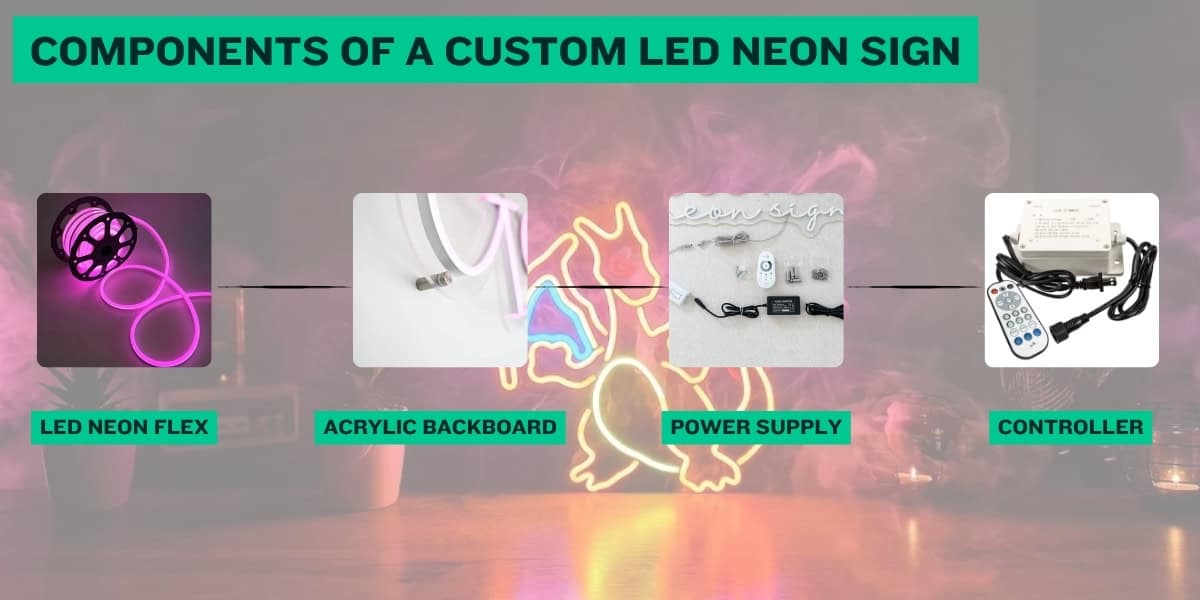
Um led de néon personalizado não é apenas um produto decorativo. É um sistema de iluminação integrado completo, composto por componentes elétricos, ópticos e estruturais. O desempenho, durabilidade e qualidade visual do sinal final dependem de quão bem esses componentes são selecionados e combinados.
Cada componente tem uma função de engenharia específica, e mesmo pequenas diferenças na qualidade podem afetar significativamente a consistência do brilho, a vida útil e a segurança.
1. LED Neon Flex (fonte de luz)
O LED Neon Flex é o elemento central de emissor de luz do sistema. Consiste em chips de LED embutidos dentro de um compartimento flexível de silicone ou PVC que difunde a luz para criar um efeito de néon contínuo.
Ao contrário das faixas de LED tradicionais, o Neon Flex foi projetado para produzir iluminação uniforme e sem pontos, o que é fundamental para aplicações de sinalização.
Detalhes técnicos:
| Parâmetro | Alcance típico | Impacto da engenharia |
| Consumo de energia | 8–15 W/m | Determina o uso de energia |
| Saída luminosa | 500–1200 lm/m | Controla o nível de brilho |
| Tensão | 12 V / 24 Vcc | Segurança e estabilidade |
| Densidade do LED | 120–240 LEDs/m | Afeta a uniformidade |
| Tipo de dobragem | dobra superior/lado | Flexibilidade do projeto |
Porque é que é importante:
O Neon Flex de baixa qualidade resulta em brilho irregular, pontos visíveis e inconsistência de cor. Flex de alta densidade e alta qualidade garante uma saída de luz suave e confiabilidade a longo prazo.
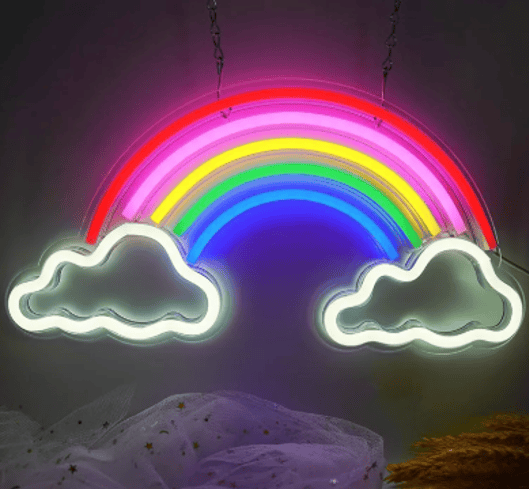
Faixa de néon LED de silicone para sinalização Side Bend S0612
- Tensão de entrada: DC12V/24V
- Watt:10W/m
- LED QTY: SMD2835 120LEDs/m
- Cor: Vermelho/verde/azul/amarelo/azul de gelo/rosa claro/rosa/roxo/limão
- amarelo/amarelo dourado/alaranjado/branco
- EUpgrade: IP67
- Comprimento cortável: 25mm/50mm
- Comprimento: 50 metros/rolo
2. Backboard acrílico (base estrutural)
A tabela de acrílico atua como a base estrutural do sinal de néon. Ele mantém o LED Neon Flex no lugar e define a forma geral e o design do sinal.
Geralmente é cortado com precisão usando máquinas de corte a laser ou CNC para combinar texto, logotipos ou formas personalizados.
Detalhes técnicos:
| Parâmetro | Alcance típico | Impacto da engenharia |
| espessura | 3–8 mm | resistência estrutural |
| Material | PMMA / acrílico | Transparência e durabilidade |
| método de corte | CNC / LASER | Precisão do projeto |
| acabamento | transparente/fosco/colorido | efeito visual |
Porque é que é importante:
Uma tabela fina ou de baixa qualidade pode distorcer com o tempo, especialmente em sinais maiores. A espessura e o material adequados garantem estabilidade, aparência limpa e durabilidade a longo prazo.
3. Fonte de alimentação (driver LED)
A fonte de alimentação converte entrada CA de alta tensão em saída CC de baixa tensão exigida pelo LED Neon Flex. É um dos componentes mais críticos para segurança e desempenho.
Um driver estável garante uma operação sem cintilação e protege os LEDs contra flutuações de tensão.
Detalhes técnicos:
| Parâmetro | Alcance típico | Impacto da engenharia |
| Tensão de entrada | AC 100–240V | Compatibilidade global |
| tensão de saída | 12 v/24 vc | Requisito do sistema |
| fator de potência | >0.9 | Eficiência energética |
| Eficiência | 85–92% | Redução de perda de calor |
| Proteção | Sobrecarga / curto-circuito | Segurança |
Porque é que é importante:
Drivers de baixa qualidade podem causar cintilação, superaquecimento ou falhas precoces. Uma fonte de alimentação confiável aumenta diretamente a vida útil e a estabilidade de todo o sistema.
4. Controlador / Dimmer (sistema de controle)
O controlador permite o ajuste de efeitos de brilho, cor e iluminação. É especialmente importante para sinais de néon dinâmicos ou RGB usados em aplicações comerciais e decorativas.
Detalhes técnicos:
| Parâmetro | Alcance típico | Impacto da engenharia |
| Tipo de controle | escurecimento do pwm | Controle de brilho suave |
| funcionamento | Remote / App / Interruptor de parede | Conveniência do usuário |
| Compatibilidade | Cor única / RGB / RGBW | Flexibilidade do aplicativo |
| Funções | Escurecimento/mudança de cor/efeitos | Personalização |
Porque é que é importante:
Sem sistemas de controle adequados, a iluminação permanece estática. Os controladores avançados permitem efeitos de iluminação dinâmicos, melhorando o apelo visual e a experiência do usuário.
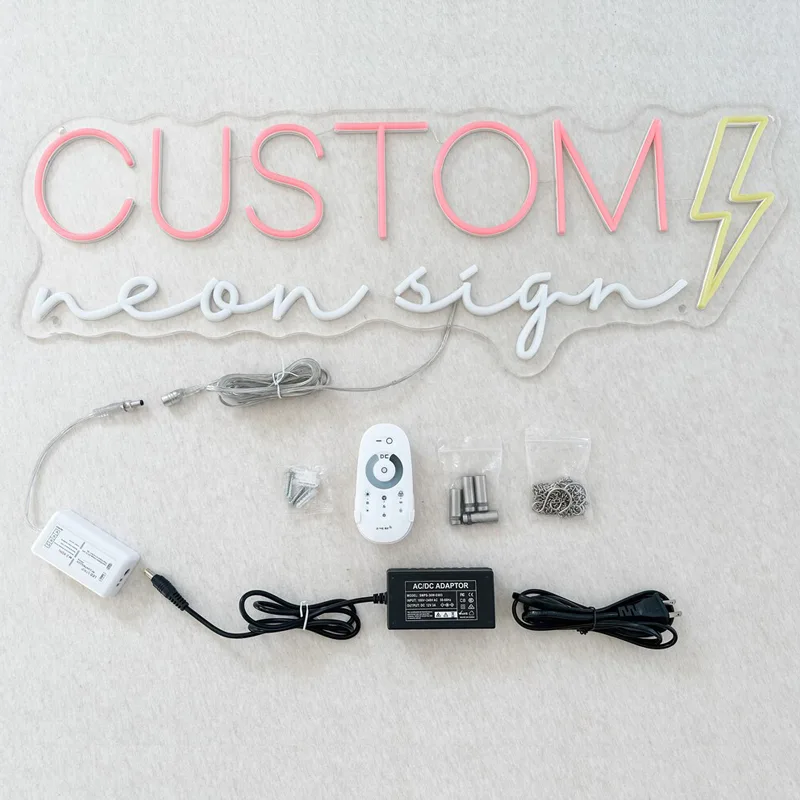
Adaptador LED/Fonte de alimentação LED com porta DC (DC12V/24V)
- Tensão de entrada: AC100-240V
- Tensão de saída: DC12V/DC24V
- Corrente de saída: 3A/4A/5A/6A/8A/10A
- Watt: 72W/96W/120W
- Dimensões: 120x55x30mm
- Certificação: EUA CE ROHS AU
- Grau IP: IP20
- Garantia: 2 anos
Tabela de desempenho do sistema integrado
| componente | Especificação da chave | função principal | Impacto no desempenho final |
| LED Neon Flex | 8–15 W/m, 500–1200 lm/m | geração de luz | Brilho e uniformidade |
| tabela de acrílico | 3–8 mm PMMA | suporte estrutural | Estabilidade e precisão de design |
| Fonte de alimentação | 12V/24V DC, PF >0,9 | regulamento de energia | Vida útil e segurança |
| Controlador | escurecimento do pwm | controle de luz | Flexibilidade e controle do usuário |
Insights de engenharia
O desempenho de um sinal de néon LED personalizado não é determinado por um único componente, mas pela integração de todos os componentes como um sistema.
Por exemplo, mesmo se o LED Neon Flex de alta qualidade for usado, uma fonte de alimentação de baixo grau pode causar cintilação e reduzir a vida útil. Da mesma forma, o suporte estrutural ruim pode levar a problemas de deformação ou instalação ao longo do tempo.
É por isso que os fabricantes profissionais se concentram no design em nível de sistema, garantindo que todos os componentes sejam compatíveis, testados e otimizados para aplicações do mundo real.
A seleção de materiais e a estrutura de LEDs impactam diretamente o desempenho. Para um detalhamento mais profundo, consulte nosso artigo sobre Fatores-chave na escolha do LED Neon Flex para projetos de grande escala
Tipos de letreiros de néon LED personalizados
Os sinais de néon LED personalizados são projetados com base nos requisitos do aplicativo, nas condições de instalação e nos objetivos visuais. Cada tipo difere em nível de brilho, tamanho, configuração de cores e sistema de controle, dependendo de onde e como ele será usado.
Selecionar o tipo correto é importante porque um sinal otimizado para decoração pode não fornecer visibilidade suficiente para uso comercial, enquanto um sinal de alto brilho pode ser muito intenso para ambientes internos.
Sinais de neon de negócios (uso comercial e de marca)
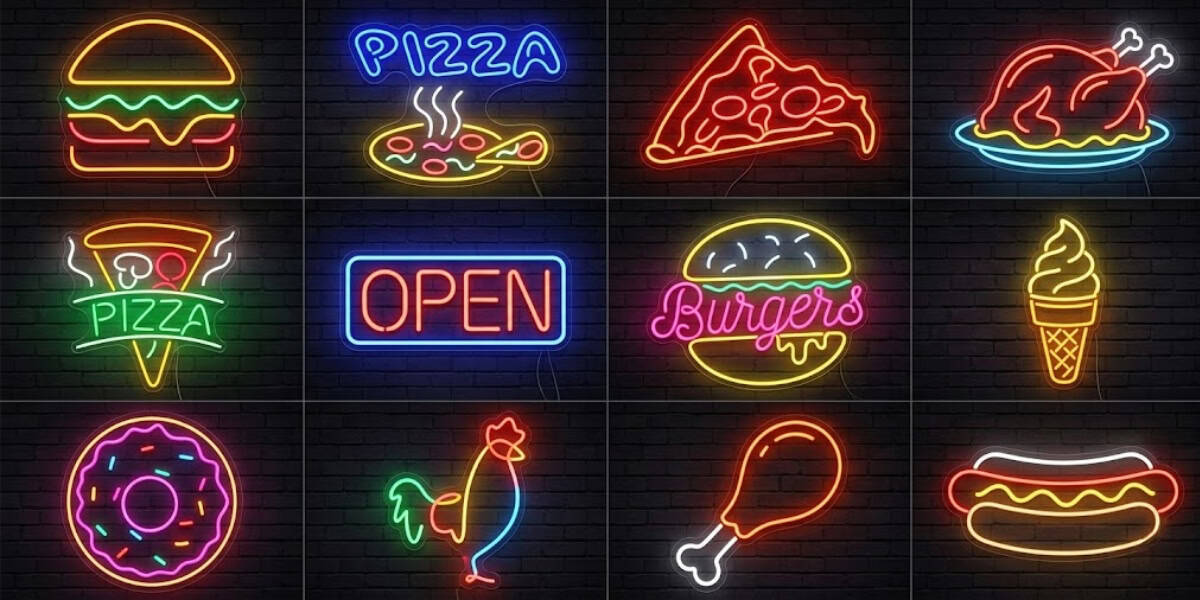
Os sinais de neon de negócios são usados para vitrines, logotipos e monitores de marca onde a visibilidade e o reconhecimento são críticos. Esses sinais são projetados para permanecerem claramente visíveis sob a iluminação ambiente e à distância.
Para conseguir isso, são necessários níveis mais altos de brilho e forte contraste de cores. Branco, vermelho e azul são comumente usados porque oferecem alta visibilidade em ambientes comerciais.
| Parâmetro | Alcance típico | Propósito de engenharia |
| Brilho | 800–1200 lm/m | Alta visibilidade |
| Temperatura de cor | 4000K–6500K | Saída clara e nítida |
| Tamanho | 50–150 cm+ | legibilidade de longa distância |
| Proteção | IP65 (opcional) | Uso ao ar livre |
Sinais de néon do evento (uso temporário e decorativo)
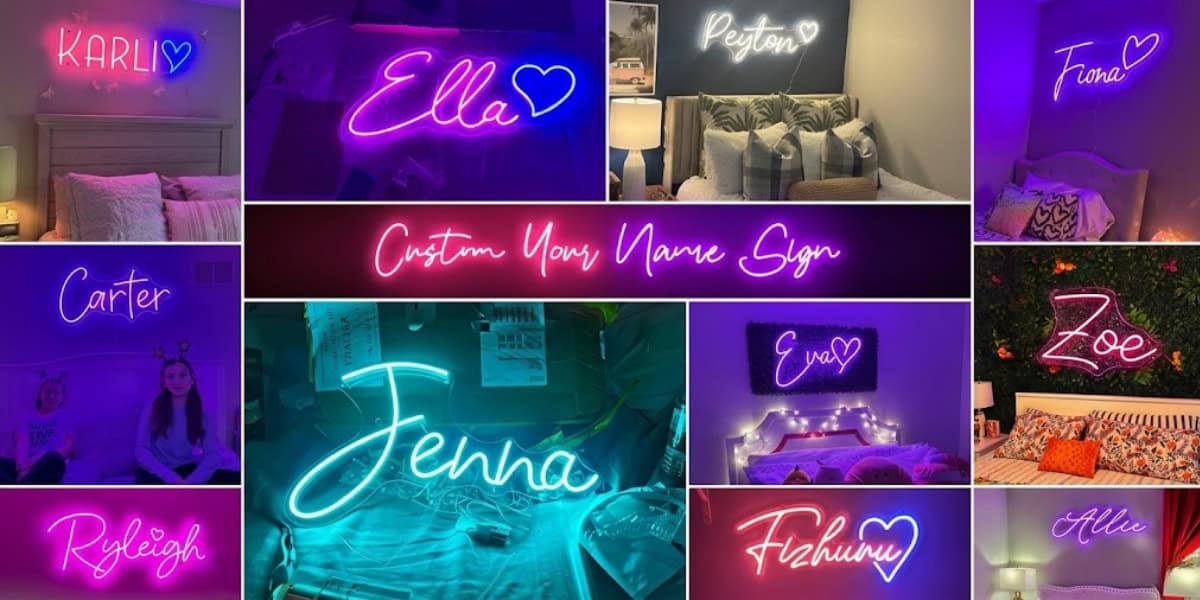
Os sinais de néon de eventos são projetados para aplicações de curto prazo, como casamentos, exposições e eventos promocionais. Esses sinais se concentram no apelo visual, na portabilidade e na instalação fácil.
O brilho é mantido moderado porque esses sinais são normalmente usados em ambientes de iluminação controlada.
| Parâmetro | Alcance típico | Propósito de engenharia |
| Brilho | 400–800 lm/m | Visibilidade equilibrada |
| Tamanho | 30–100 cm | Colocação flexível |
| Tensão | 12V DC | operação segura |
| Estrutura | acrílico leve | transporte fácil |
Sinais de néon decorativos interiores (uso em casa e ambiente)
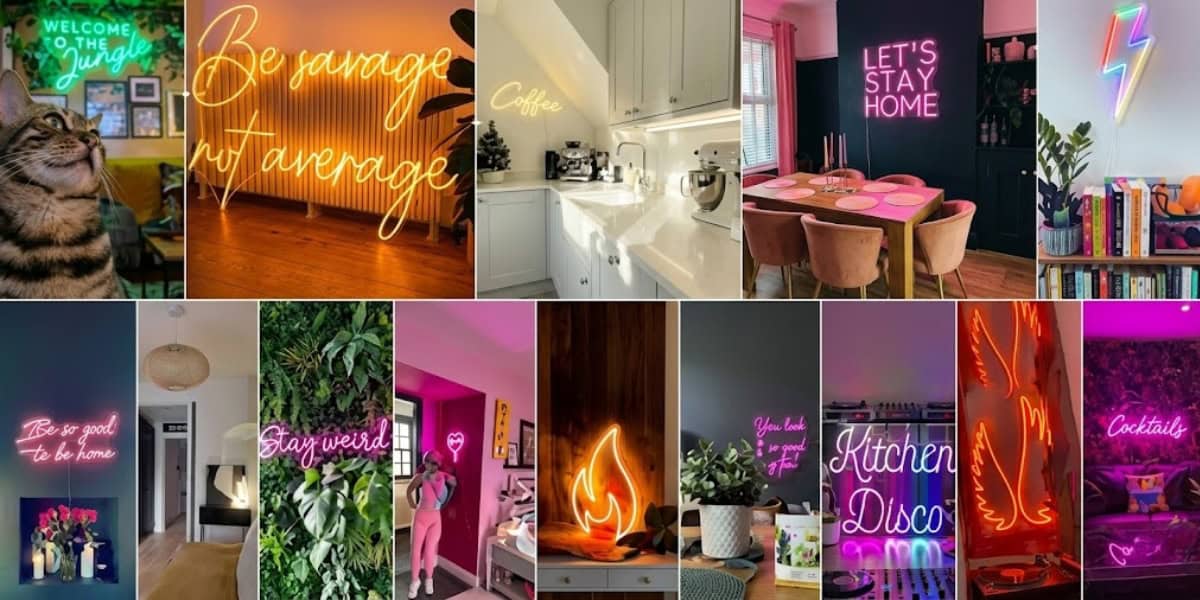
Sinais de néon interior são usados em espaços residenciais e decorativos, onde o objetivo é criar uma atmosfera em vez de uma iluminação forte.
Sinais de néon interior são usados em espaços residenciais e decorativos, onde o objetivo é criar uma atmosfera em vez de uma iluminação forte.
Baixo brilho e temperaturas quentes de cor são usadas para manter o conforto e evitar o brilho.
| Parâmetro | Alcance típico | Propósito de engenharia |
| Brilho | 300–600 lm/m | iluminação suave |
| Temperatura de cor | 2700K–3000K | ambiente quente |
| Tamanho | 20–80 cm | escala decorativa |
| Controlo | escurecimento opcional | humor ajustável |
Sinais de jogos e estúdios de neon (uso de iluminação dinâmica)
Os sinais de jogos e estúdio de neon são projetados para um alto impacto visual, especialmente em configurações de streaming e ambientes de criação de conteúdo. Esses sinais geralmente usam sistemas RGB ou RGBW para efeitos de cor dinâmicas.
O foco está na personalização, controle de cores e aprimoramento visual.
| Parâmetro | Alcance típico | Propósito de engenharia |
| tipo de iluminação | RGB / RGBW | cores dinâmicas |
| Controlo | app/remoto | Ajuste em tempo real |
| Brilho | regulável | Iluminação baseada em cenas |
| Aplicação | Estúdios/jogos | Impacto visual |
Comparação de tipos de letreiros de néon
| Tipo | Faixa de brilho | Tamanho típico | Aplicação | foco principal |
| negócio | 800–1200 lm/m | 50–150 cm+ | varejo / marca | Visibilidade |
| acontecimento | 400–800 lm/m | 30–100 cm | Casamentos/Eventos | portabilidade |
| interior | 300–600 lm/m | 20–80 cm | casa/decoração | Ambiente |
| jogo | RGD dinâmico | costume | estúdios | efeitos visuais |
Insights de engenharia
Cada tipo de led de néon personalizado é definido por sua aplicação. A seleção adequada de brilho, temperatura de cor e sistema de controle garante que o sinal tenha um desempenho eficaz sem causar brilho, desperdício de energia ou baixa visibilidade.
Explore soluções personalizadas
Se você precisar de um sinal de néon adaptado ao seu projeto, explore soluções de led de néon de LED personalizados, projetados para negócios, eventos e aplicações internas.
Diferentes tipos de sinais de néon são usados em vários setores. Explore os casos de uso reais em nosso guia sobre Principais aplicações de sistemas de iluminação LED de néon
Como são feitos os sinais de néon LED personalizados
O processo de fabricação de letreiros de néon LED personalizados é uma combinação de engenharia de design, processamento de precisão e controle de qualidade. Cada etapa afeta diretamente o desempenho final, a aparência e a durabilidade do sinal.
Ao contrário dos produtos de iluminação produzidos em massa, os sinais de néon personalizados exigem artesanato manual combinado com métodos de produção controlados para garantir a precisão e a consistência.
Passo 1: Engenharia de design e layout
O processo começa com a criação de um arquivo de design baseado em vetor (formato AI, SVG ou CAD). Este arquivo define a forma, o tamanho e o layout exatos do sinal de néon.
Nesta fase, os engenheiros também determinam caminhos de flexão, posições de montagem e roteamento elétrico para garantir que o projeto possa ser produzido fisicamente sem distorção.
| Parâmetro | valor típico | Impacto da engenharia |
| Formato do arquivo | AI / SVG / CAD | Precisão do projeto |
| tolerância | ±1–2 mm | Precisão dimensional |
| planejamento de layout | Manual + Software | Viabilidade da montagem |
Um arquivo de design preciso garante que todos os processos downstream permaneçam precisos e alinhados.
Passo 2: Corte Flex de Neon LED
O LED Neon Flex é cortado de acordo com o layout do projeto usando pontos de corte predefinidos. A precisão é fundamental aqui para garantir o alinhamento adequado durante a montagem.
O corte incorreto pode levar a problemas de iluminação ou elétricos desiguais.
| Parâmetro | Alcance típico | Impacto da engenharia |
| Precisão de corte | ±1 mm | Ajuste e alinhamento |
| intervalo de corte | 25–50 mm (baseado em segmentos) | integridade elétrica |
| ferramentas | Cortadores manuais/precisos | Bordas limpas |
Esta etapa garante que cada segmento se encaixe perfeitamente no design final.
Passo 3: Gravura CNC em acrílico
A tabela de acrílico é processada usando CNC ou máquinas de corte a laser para combinar com a forma exata do design.
As ranhuras ou caminhos de guia também podem ser gravados para auxiliar na colocação precisa do Neon Flex.
| Parâmetro | Alcance típico | Impacto da engenharia |
| espessura do material | 3–8 mm | resistência estrutural |
| método de corte | CNC / LASER | Precisão de borda |
| tolerância | ±0,5 mm | Precisão do projeto |
A gravação de alta precisão garante bordas limpas e um acabamento profissional.
Etapa 4: dobra e montagem manual
O LED Neon Flex é dobrado manualmente e fixado na tabela de acrílico seguindo o caminho do projeto. Esta etapa requer mão de obra qualificada para manter curvas suaves e espaçamento consistente.
Ao contrário dos processos automatizados, a modelagem manual permite flexibilidade para projetos complexos, mas exige um controle de qualidade rigoroso.
| Parâmetro | aspecto típico | Impacto da engenharia |
| método de dobra | modelagem manual | Precisão da curva |
| Método de fixação | clipes / adesivos | Estabilidade |
| alinhamento | Visual + modelo | Consistência da aparência |
O conjunto adequado garante que a saída de luz permaneça uniforme sem distorção.
Passo 5: Fiação e solda
As conexões elétricas são concluídas por meio de fios de solda entre segmentos de néon e conectando-os à fonte de alimentação.
Esta etapa garante um fluxo de corrente estável em todo o sinal.
| Parâmetro | Alcance típico | Impacto da engenharia |
| Tensão | 12 V / 24 Vcc | Segurança |
| qualidade de solda | sem chumbo / isolado | Fiabilidade |
| Tipo de conexão | Série / Paralelo | Balancete de carga |
A má fiação pode levar a quedas de tensão, tremulação ou falha parcial.
Passo 6: Teste de envelhecimento (teste de burn-in)
Após a montagem, o sinal passa por um teste de operação contínua (normalmente 24 a 48 horas). Esta é uma das etapas mais críticas do controle de qualidade.
Ajuda a identificar falhas precoces, como LEDs com defeito, drivers instáveis ou conexões ruins.
| Parâmetro | Alcance típico | Impacto da engenharia |
| duração do teste | 24–48 horas | Validação de confiabilidade |
| Condição de teste | Operação contínua | Teste de estresse |
| Detecção de falhas | visual + elétrico | garantia de qualidade |
O teste de envelhecimento garante que produtos estáveis e totalmente funcionais sejam entregues.
Passo 7: Inspeção final e embalagem
Antes do envio, o sinal é inspecionado quanto à qualidade visual, desempenho elétrico e integridade estrutural.
Em seguida, a embalagem é concluída com materiais de proteção para evitar danos durante o transporte.
| Parâmetro | Foco de inspeção | Impacto da engenharia |
| verificação visual | Alinhamento, brilho | qualidade estética |
| teste elétrico | tensão, estabilidade | desempenho |
| Embalagem | Espuma/camadas protetoras | segurança do transporte |
Visão geral do processo de fabricação
| degraus | processo | Tempo necessário | Impacto de qualidade |
| Conceção | criação de vetor | 1–2 horas | rigor |
| Corte | Corte flexível de LED | alta precisão | ataque |
| gravura | acrílico cnc | Automatizado | Estrutura |
| montagem | modelagem manual | mão de obra qualificada | Aparência |
| rede de ar | Soldadura | controlado | Estabilidade |
| prova | 24–48 horas | crítico | Fiabilidade |
| inspeção | Verificação final | estágio final | garantia de qualidade |
A qualidade de um letreiro de néon de LED personalizado é definida não apenas por materiais, mas pela precisão e controle do processo de fabricação. Entre todas as etapas, o teste de envelhecimento é o mais crítico, pois garante confiabilidade a longo prazo, identificando defeitos antes da entrega.
Um processo de produção bem controlado resulta em brilho consistente, desempenho estável e vida útil prolongada.
Como projetar um letreiro de néon LED personalizado
Projetar um letreiro de néon LED personalizado não é apenas sobre aparência. Cada escolha de design afeta a visibilidade, a legibilidade e a instalação. Um design bem planejado garante que o sinal tenha um desempenho eficaz para o uso pretendido, seja para a marca ou decoração de negócios.
| degraus | consideração do design | impacto técnico |
| texto/logotipo | Mensagem ou identidade da marca | Define o reconhecimento |
| pia de cha | Estilo e espessura | Afeta a legibilidade |
| Cor | cor led ou rgb | Influencia o humor e a visibilidade |
| Tamanho | 30–150 cm | Determina a distância de visualização |
| montagem | parede / pendurado | Afeta a instalação |
O texto ou logotipo deve ser simples e fácil de entender, especialmente para sinais comerciais onde o reconhecimento rápido é importante. A seleção de fontes deve combinar com o aplicativo, com estilos em negrito para visibilidade e estilos decorativos para estética.
A escolha da cor afeta tanto a aparência quanto a função. As cores vivas melhoram a visibilidade em ambientes de negócios, enquanto os tons quentes são melhores para decoração interna. O tamanho do sinal deve corresponder à distância de visualização, pois os sinais menores são adequados para uma visão próxima e são necessários sinais maiores para as vitrines.
O método de montagem deve ser selecionado com base no ambiente de instalação para garantir a estabilidade e o alinhamento adequado.
Um bom design equilibra o apelo visual com o desempenho técnico. Por exemplo, os sinais de varejo exigem maior brilho e fontes claras, enquanto os sinais internos se concentram mais no ambiente e na iluminação mais suave.
Materiais usados em leds de neon
A seleção de materiais é um fator chave para determinar a durabilidade, flexibilidade e qualidade geral de um letreiro de néon LED personalizado. Diferentes materiais são usados para difusão leve, suporte estrutural e proteção ambiental, e cada um afeta diretamente o desempenho e a vida útil.
Um sinal de néon bem projetado usa a combinação certa de materiais para garantir uma operação estável, uma saída de luz consistente e uma confiabilidade a longo prazo.
| Material | Vida útil típica | vantagem chave | Aplicação |
| Silicone | 5–8 anos | Alta flexibilidade, resistência aos raios UV | Sinais premium internos e externos |
| PVC | 3–5 anos | Custo-benefício, leve | Sinais internos/orçamentários |
| acrílico (PMMA) | 5+ anos | Forte, claro, fácil de moldar | estrutura de tabela |
| Alumínio | 8–10 anos | Alta resistência, resistência ao calor | Sinais grandes / ao ar livre |
Detalhes do material
Silicone (material de flexão de néon LED)
O silicone é usado em flexão de néon LED de alta qualidade, pois oferece excelente flexibilidade e durabilidade. Ele permite uma dobra suave para formas personalizadas, mantendo uma difusão leve uniforme. Ele também resiste à exposição aos raios UV e não amarela facilmente, tornando-o adequado para uso prolongado em ambientes externos.
PVC (cloreto de polivinil)
O PVC é comumente usado em aplicações sensíveis ao custo. Ele fornece flexibilidade básica e desempenho aceitável para uso interno. No entanto, é menos resistente ao calor e à exposição aos raios UV, o que pode reduzir a vida útil em condições externas.
Acrílico (material da placa)
O acrílico atua como a base estrutural do sinal de néon. É usado para montar e apoiar o LED Neon Flex, mantendo a forma do design. Oferece alta transparência, bordas limpas e é fácil de cortar em formas personalizadas usando máquinas CNC ou laser.
Alumínio (estrutura de suporte)
O alumínio é usado em sinais maiores ou pesados, onde é necessária uma resistência adicional. Melhora a estabilidade estrutural e ajuda a manter a forma ao longo do tempo, especialmente em instalações externas ou de alta carga.
Insights sobre a seleção de
A seleção de materiais deve sempre corresponder ao aplicativo. O silicone é preferido para projetos premium e ao ar livre devido à sua durabilidade e flexibilidade, enquanto o PVC é adequado para sinais decorativos internos, onde o custo é uma prioridade. O acrílico garante precisão estrutural e o alumínio é usado quando é necessário suporte adicional.
Uma combinação adequada desses materiais garante qualidade visual e desempenho a longo prazo.

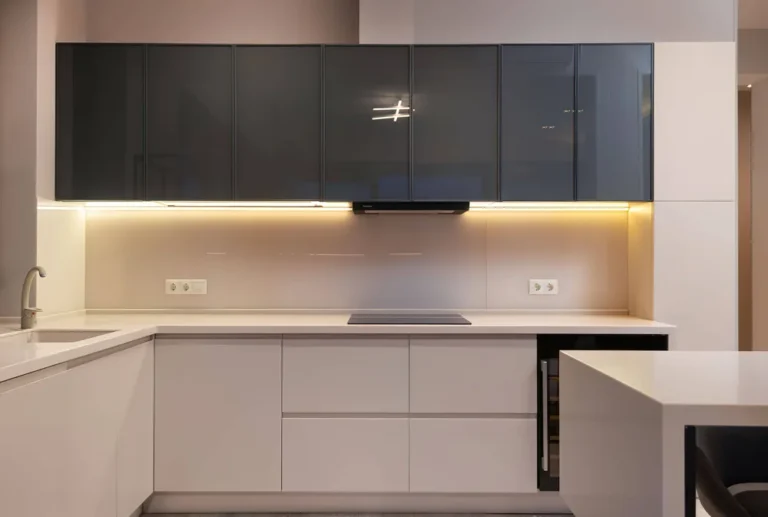
Aplicações de letreiros de néon LED personalizados
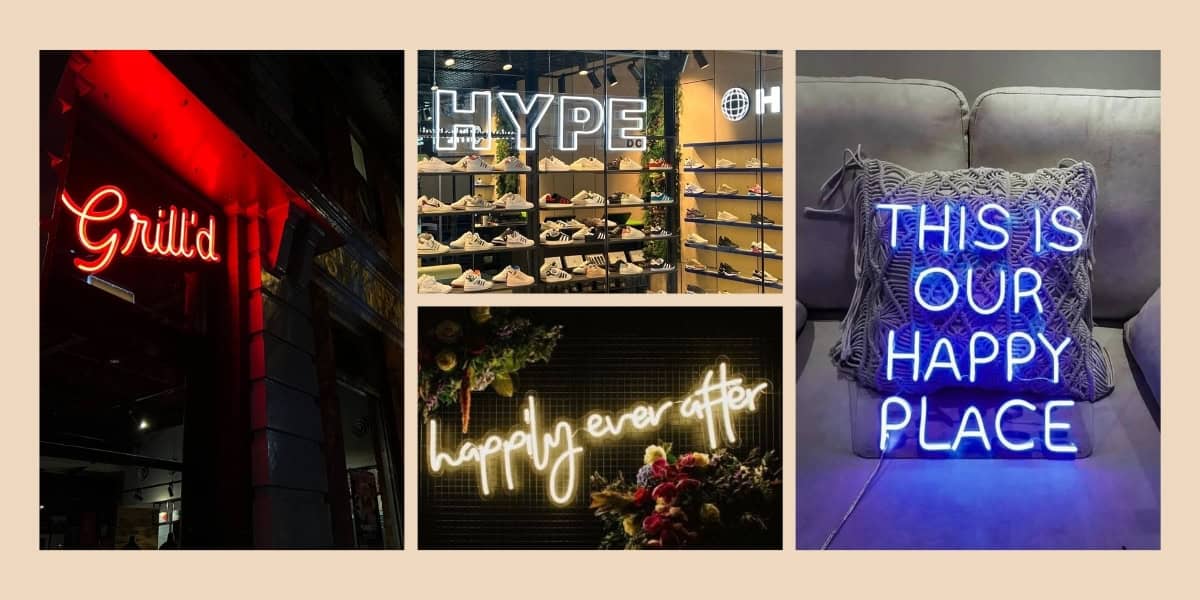
Sinais de néon LED personalizados são usados em ambientes comerciais e decorativos, onde sua função varia de acordo com o brilho, a cor e o propósito do design.
| Aplicação | Brilho recomendado | Objetivo | Foco de design |
| lojas de varejo | 300-500 lux | Branding e visibilidade | Fontes de alto contraste e claras |
| Restaurantes e bares | 200-400 lux | Atmosfera e humor | Tons quentes, brilho suave |
| Eventos e casamentos | 100-300 lux | decoração e tema | Formas personalizadas, nomes |
| decoração de casa | 100-200 lux | apelo estético | iluminação ambiente |
Detalhes do aplicativo
- lojas de varejo
Sinais de néon em ambientes de varejo são usados para branding, telas de vitrine e atração de clientes. Maior brilho e estilos de fonte claros garantem visibilidade mesmo em espaços comerciais bem iluminados. - Restaurantes e bares
Em ambientes de hospitalidade, os sinais de néon são usados para criar ambiente em vez de uma iluminação forte. Cores quentes e brilho moderado ajudam a melhorar a atmosfera sem causar brilho. - Eventos e casamentos
Para eventos, os sinais de néon atuam como elementos decorativos. Eles geralmente são personalizados com nomes, citações ou designs temáticos e são projetados para instalação temporária e fácil configuração. - decoração de casa
Em espaços residenciais, os sinais de néon são usados para melhorar a estética e criar um ambiente relaxante. O brilho inferior e os tons mais suaves são preferidos para o conforto visual.
Visão prática
É essencial escolher o brilho e o design certos para cada aplicação. Um sinal muito claro pode causar desconforto em ambientes fechados, enquanto o baixo brilho pode reduzir a visibilidade em ambientes comerciais.
Para aplicações comerciais e arquitetônicas avançadas, veja como o LED Neon é usado em projetos de grande escala, como Construindo iluminação de fachada com sistemas de controle de néon e DMX LED RGB
Fatores de precificação de letreiros de néon LED personalizados
O custo de um sinal de néon LED personalizado depende de múltiplas variáveis técnicas e de design. O preço não é fixo porque cada sinal é produzido com base em requisitos específicos, como tamanho, complexidade, materiais e recursos de controle.
Compreender esses fatores ajuda a estimar os custos com precisão e a evitar especificações excessivas ou excessivas.
Repartição de preços
| Fator | Alcance típico | Impacto de custo |
| Tamanho | $50–$300+ | Tamanho maior aumenta os requisitos de material e energia |
| Complexidade do projeto | +20–50% | Mais curvas e detalhes aumentam o tempo de trabalho |
| Iluminação RGB | +30% | Adiciona controlador e sistema avançado de LED |
| controlador / dimmer | $10–$50 | Permite o brilho e o controle de cores |
| expedição | variável | Depende do tamanho, peso e localização |
Explicação de custos
- O tamanho afeta diretamente o uso do material, o consumo de energia e a embalagem, tornando-o o principal fator de custo.
- Projetos complexos exigem mais tempo de flexão e montagem manual, aumentando o custo da mão de obra.
- Os sistemas RGB adicionam flexibilidade, mas exigem componentes adicionais, como controladores e fiação.
- Os controladores e os dimmers melhoram a usabilidade, mas aumentam o custo total do sistema.
- O custo de envio varia significativamente, especialmente para sinais grandes ou frágeis.
Insights sobre preços
Projetos maiores e mais complexos aumentam os custos de material e mão de obra. Um design equilibrado que atenda aos requisitos funcionais sem complexidade desnecessária é a abordagem mais econômica.
Vantagens dos sinais de néon LED
Os sinais de néon LED oferecem vantagens significativas sobre o neon de vidro tradicional, especialmente em termos de eficiência, durabilidade e segurança.
Principais vantagens
- Eficiência energética (economia 60–70%)
O LED Neon consome significativamente menos energia em comparação com o néon tradicional, reduzindo os custos operacionais de longo prazo. - Longa vida útil (30.000–50.000 horas)
A vida útil estendida minimiza os esforços de substituição e a frequência de substituição. - Manutenção reduzida
O design de estado sólido elimina problemas como vazamento de gás ou quebra do tubo. - Operação segura de baixa tensão (12V/24V)
Reduz o risco elétrico, tornando-o adequado para uso interno e externo. - Capacidade de design flexível
Pode ser moldado em designs complexos, logotipos e formulários personalizados sem limitações estruturais.
Impacto do desempenho
Essas vantagens melhoram diretamente a usabilidade, reduzem o custo operacional e aumentam a confiabilidade do sistema, tornando o LED neon a escolha preferida para aplicações modernas.
Para uma compreensão mais profunda dos benefícios de desempenho, consulte nosso artigo sobre Vantagens dos sistemas de iluminação flexível em néon LED
Como escolher um fabricante de letreiros de néon personalizados
A seleção do fabricante certo é fundamental porque a qualidade do produto, a capacidade de personalização e a confiabilidade a longo prazo dependem dos padrões de produção e da experiência.
Um fabricante profissional fornece não apenas o produto, mas também o suporte ao design, garantia de qualidade e serviço pós-venda.
Critérios de avaliação do fabricante
| Fator | Padrão recomendado | Porque é que é importante |
| experiência | 5+ anos | Capacidade comprovada de produção |
| Certificações | CE, RoHS | Cumprimento dos padrões de segurança |
| Suporte OEM/ODM | disponível | Capacidade de projeto personalizado |
| Garantia | 2–3 anos | Confiabilidade do produto |
| qualidade de produção | processo controlado | Desempenho consistente |
Como avaliar um fabricante
- Verifique a experiência do projeto
Os fabricantes com portfólios reais de projetos são mais confiáveis no tratamento de requisitos personalizados. - Verifique a qualidade do material
Silicone, acrílico e drivers de alta qualidade garantem um melhor desempenho e maior vida útil. - Avalie o recurso de personalização
A capacidade de produzir diferentes tamanhos, formas e efeitos de iluminação é essencial para projetos personalizados. - Revise os testes e o controle de qualidade
Processos como testes de envelhecimento e inspeções garantem a confiabilidade do produto antes da entrega. - Confirme o suporte pós-venda
Garantia e suporte técnico reduzem o risco em uso a longo prazo.
Insights de seleção
A escolha de um fabricante de baixo custo pode reduzir o custo inicial, mas pode levar a problemas como cintilação, baixa durabilidade ou brilho inconsistente. Um fabricante confiável garante um desempenho estável, melhores materiais e valor a longo prazo.
Se você estiver planejando um projeto, explore soluções de led de néon de LED personalizados com suporte a OEM/ODM, qualidade confiável e opções de personalização completas.
Lista de verificação de compra de letreiros de néon LED personalizados
Antes de finalizar um sinal de néon LED personalizado, é importante avaliar os principais parâmetros técnicos para garantir desempenho, segurança e consistência visual a longo prazo. Uma lista de verificação bem definida ajuda a evitar problemas comuns, como inconsistências de brilho, superaquecimento ou falha prematura.
Lista de verificação de compra técnica
| Parâmetro | Alcance ideal | Porque é que é importante |
| Tensão | 12 V / 24 Vcc | Garante uma operação segura de baixa tensão e estabilidade do sistema |
| Consumo de energia | 8–15 W/m | Determina o nível de brilho e eficiência energética |
| Saída luminosa | 500–1200 lm/m | Controla a visibilidade e o impacto visual |
| Tempo de vida | 30.000–50.000 horas | Indica durabilidade a longo prazo |
| Classificação IP | IP65 (ou superior) | Protege contra poeira e umidade |
| qualidade do material | Silicone / PVC de alta qualidade | Afeta a flexibilidade, resistência aos raios UV e longevidade |
| sistema de controle | Dimmer opcional / RGB | Melhora a usabilidade e a personalização |
Um sistema de letreiros de néon confiável não é definido por um único parâmetro, mas pelo equilíbrio da estabilidade elétrica, da qualidade do material e da precisão de fabricação. Ignorar até mesmo um fator pode reduzir o desempenho geral e a vida útil.
Para entender melhor os fatores de custo e a seleção de materiais, consulte nosso Guia detalhado sobre como comprar letreiros de néon personalizados e escolher os materiais certos
Hub de conhecimento de leds de led personalizado
Este guia faz parte de um hub de conhecimento de iluminação de néon de LED estruturado projetado para fornecer uma compreensão completa do design, materiais, desempenho e aplicativos do mundo real.
Para explorar cada área com mais profundidade, consulte os seguintes recursos:
- Saiba como os sistemas de néon funcionam em aplicativos reais
Como o LED Neon Flex funciona em aplicações de iluminação do mundo real - Compreender o design, os materiais e as decisões de compra
Como comprar letreiros de néon personalizados e escolher os materiais certos - Explore as especificações técnicas de desempenho e desempenho
Guia LED Neon Flex para profissionais de iluminação arquitetônica - Compare led neon com sistemas de iluminação tradicionais
LED Neon versus comparação de iluminação convencional - Descubra aplicativos do mundo real
Principais aplicações de sistemas de iluminação LED de néon - Aprenda sobre as vantagens do desempenho
Vantagens dos sistemas de iluminação flexível em néon LED - Compreender os requisitos do projeto em grande escala
Como escolher LED Neon Flex para grandes projetos - Explore aplicativos de iluminação arquitetônica
Iluminação de fachada de neon LED com controle RGB e DMX
Obtenha o letreiro de néon de LED personalizado certo para o seu projeto
Se você está planejando um projeto de letreiros de néon personalizados, escolher os materiais, design e fabricante certos é fundamental para o desempenho a longo prazo e o impacto visual.
Em SignliteLED, fornecemos soluções de led de néon LED personalizados OEM e ODM, adaptadas para aplicações comerciais, arquitetônicas e decorativas.
Explore nossas soluções de led de néon personalizados para obter suporte especializado, design preciso e fabricação confiável para o seu projeto.
Conclusão
Sinais de néon LED personalizados transformaram os aplicativos modernos de iluminação, combinando flexibilidade de design com alta eficiência e durabilidade.
Por entender os componentes do sistema, materiais, princípios de design e fatores de precificação, empresas e indivíduos podem tomar decisões informadas e atingir objetivos estéticos e funcionais.
FAQs
Postagens relacionadas