Nederlands
  English
  简体中文
简体中文  Deutsch
  Español
  Français
  Italiano
  日本語
日本語  한국어
한국어  Polski
  Português
  Русский
  Türkçe
  Tiếng Việt
  ไทย
ไทย 
Op maat gemaakte LED-neonborden zijn een algemeen gebruikte verlichtingsoplossing geworden voor moderne commerciële en decoratieve toepassingen. Ze worden vaak gebruikt in winkels, restaurants, evenementen en binnenruimtes waar zowel visuele impact als langetermijnprestaties belangrijk zijn.
Vergeleken met traditionele glazen neon, werken LED-neonborden op laagspanning en gebruiken ze solid-state verlichtingstechnologie. Dit maakt ze veiliger, energiezuiniger en gemakkelijker te installeren, terwijl ze ook de onderhoudsvereisten in de loop van de tijd verminderen. Bovendien maakt hun flexibele ontwerp nauwkeurige aanpassingen voor logo's, tekst en complexe vormen mogelijk.
In praktische toepassingen worden deze tekens niet alleen gebruikt voor verlichting, maar ook voor branding en visuele communicatie. Een goed ontworpen neonbord kan de zichtbaarheid verbeteren, de klantervaring verbeteren en de merkidentiteit versterken. Op basis van real-world productie-ervaring en projectimplementatie is het selecteren van de juiste materialen- en ontwerpbenadering van cruciaal belang voor het bereiken van consistente prestaties en betrouwbaarheid op lange termijn.
Deze gids biedt een gestructureerd overzicht van op maat gemaakte LED-neonborden, waaronder hoe ze werken, gebruikte materialen, ontwerp- en productieprocessen, prijsfactoren en hoe u de juiste fabrikant voor verschillende projecten kiest.
snel antwoord
Aangepaste LED-neonborden zijn flexibele verlichte borden gemaakt met behulp van LED-neonflexstrips die op acryl- of metalen borden zijn gemonteerd. Ze repliceren het uiterlijk van traditionele neon terwijl ze werken op laagspanning (12V/24V), minder stroom verbruiken (8-15 W/m) en tot 50.000 uur duren.
Belangrijkste afhaalmaaltijden
- LED-neonborden verbruiken 60-70% minder energie dan glazen neon
- Typische levensduur varieert tussen 30.000 tot 50.000 uur
- Werken op veilige laagspanning (12V/24V DC)
- Volledig aanpasbaar in grootte, kleur en vorm
- Verkrijgbaar in IP20 (binnen) en IP65 (buiten) versies
- Onderhoudskosten zijn aanzienlijk lager dan traditionele neon
- Geschikt voor zowel commerciële als decoratieve toepassingen
Wat zijn op maat gemaakte LED-neonborden?

Aangepaste LED-neonborden zijn moderne verlichtingssystemen die zijn ontworpen om de visuele gloed van traditionele neon te repliceren met behulp van LED-chips die zijn ingebed in flexibele siliconendiffusers. In tegenstelling tot Glass Neon, dat gasontlading en hoogspanning gebruikt, werkt LED Neon met laagspannings-DC-vermogen, waardoor het veiliger en efficiënter wordt.
Op systeemniveau is een neonteken geen enkel onderdeel, maar een combinatie van meerdere gemanipuleerde elementen die samenwerken.
| samenstellend | Typische specificatie | Functie | Praktische impact |
| LED-chips | SMD 2835 / 2216 | Lichte generatie | Efficiëntie (100-130 lm/W) |
| Spanning | 12V / 24V DC | Stroomvoorziening | elektrische veiligheid |
| Stroomverbruik | 8-15 W/m | energieverbruik | Loopkosten |
| Levensduur | 30.000-50.000 uur | Duurzaamheid | riflobus |
| Stralingshoek | 120°–180° | Lichte verspreiding | uniforme gloed |
| IP-classificatie | IP20-IP65 | Bescherming | Binnen/buiten gebruik |
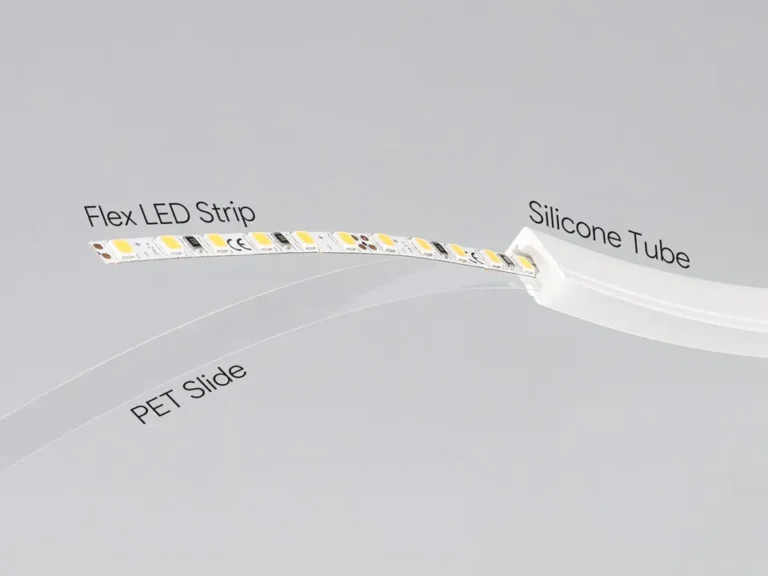
De siliconen diffuser speelt een cruciale rol. Het verspreidt het licht gelijkmatig, elimineert hotspots en creëert het continue glow-effect dat lijkt op traditionele neon.
Zie onze gedetailleerde gids over hoe moderne LED-neontechnologie werkt in vergelijking met traditionele systemen Hoe LED Neon Flex werkt in toepassingen in de echte verlichting
Voor een diepere technische uitleg van de LED-neonstructuur en werkprincipes, zie onze Complete LED NEON FLEX Technische gids voor professionals
Hoe LED-neonborden werken
LED-neonborden werken door laagspannings gelijkstroom (12V of 24V) door te laten door LED-chips die zijn ingebed in een flexibele siliconendiffuser. Deze LED's stralen licht uit dat gelijkmatig wordt verdeeld door de diffuser, waardoor een continue gloed ontstaat die vergelijkbaar is met traditionele neon.
In tegenstelling tot Glass Neon, dat afhankelijk is van gasontlading en hoogspanning, maakt LED NEON gebruik van solid-state verlichtingstechnologie. Dit verbetert de veiligheid, vermindert het energieverbruik en zorgt voor een consistente lichtopbrengst zonder te flikkeren.
LED neonreclames versus traditionele glazen neon
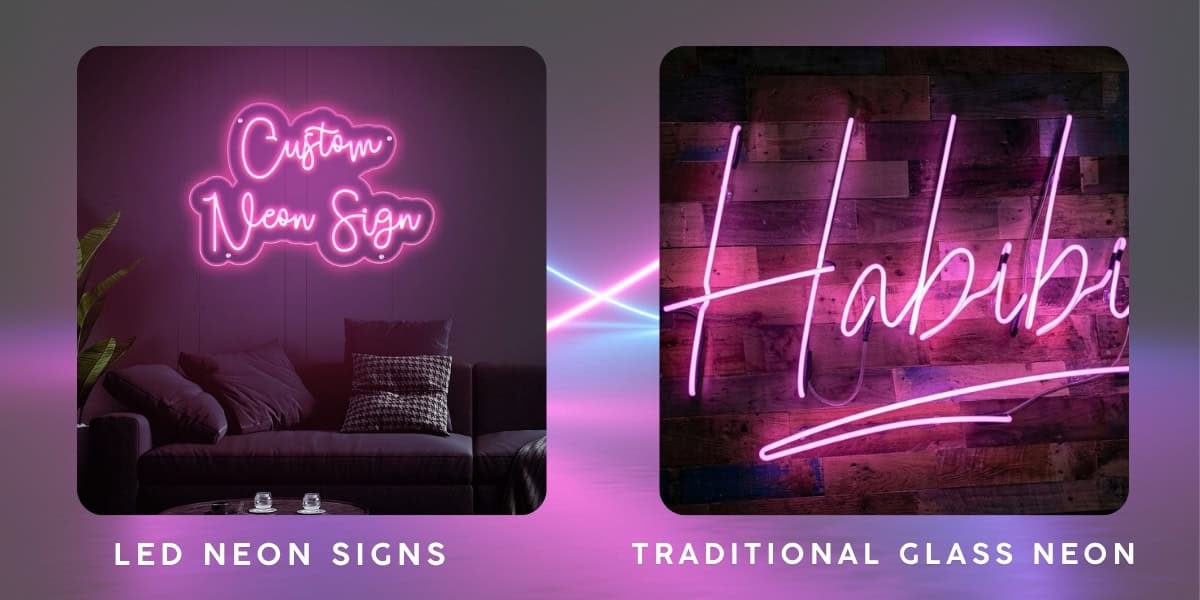
De verschuiving van glasneon naar LED-neon wordt aangedreven door prestaties, veiligheid en kostenefficiëntie.
| Parameter | LED Neon | glas neon | Impact in de echte wereld |
| Spanning | 12-24V | 3.000-15.000 V | Hoog veiligheidsrisico in glas |
| Stroomverbruik | 8-15 W/m | 20-30 W/m | Hogere elektriciteitskosten |
| Levensduur | 30.000-50.000 uur | 8.000-15.000 uur | Frequente vervanging |
| brosheid | Flexibel | breekbaar glas | hoog onderhoud |
| Installatie | Eenvoudig | Complex | arbeidskosten |
| Warmteafgifte | Laag | Hoog | Veiligheidszorg |
Glass Neon is visueel aantrekkelijk maar operationeel inefficiënt. het vereist:
- Transformatoren voor hoogspanning
- Bekwame installatie
- Frequent onderhoud
LED Neon elimineert deze problemen en levert vergelijkbare visuele output. Bij grootschalig commercieel gebruik vertaalt dit verschil zich in de tijd aanzienlijk in kostenbesparingen.
U kunt ook een gedetailleerde vergelijking tussen technologieën verkennen in onze gids over LED Neon Flex versus conventionele verlichtingssystemen
Onderdelen van een aangepast LED-neonteken
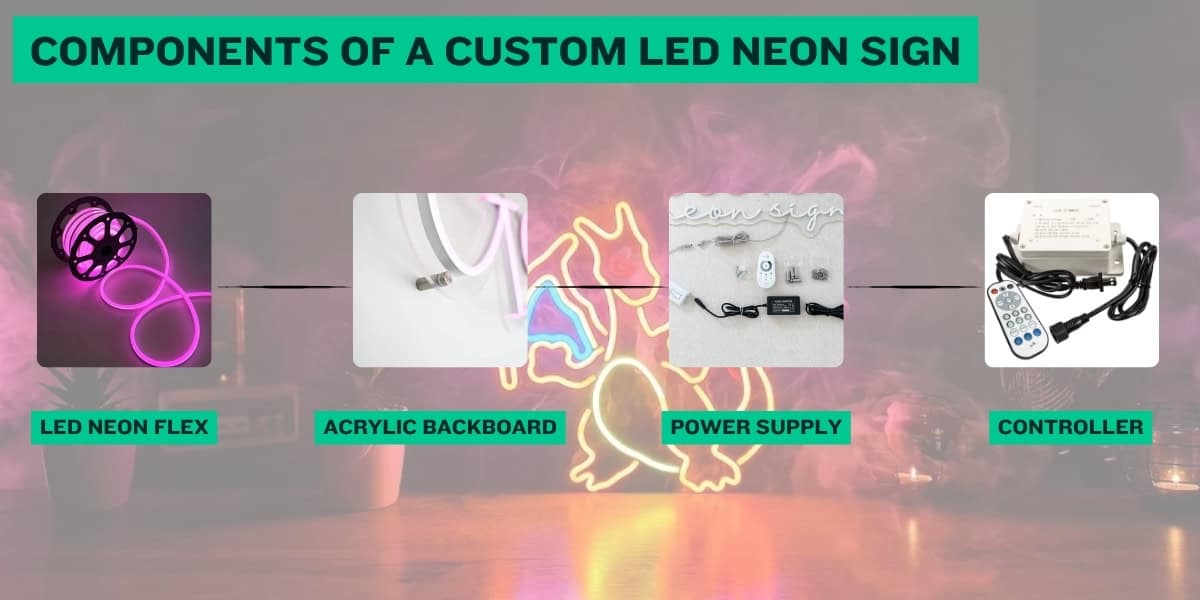
Een op maat gemaakt neonbord is niet alleen een decoratief product. Het is een compleet geïntegreerd verlichtingssysteem dat bestaat uit elektrische, optische en structurele componenten. De prestaties, duurzaamheid en visuele kwaliteit van het uiteindelijke teken zijn afhankelijk van hoe goed deze componenten zijn geselecteerd en gecombineerd.
Elk onderdeel heeft een specifieke technische rol en zelfs kleine verschillen in kwaliteit kunnen de consistentie, levensduur en veiligheid van de helderheid aanzienlijk beïnvloeden.
1. LED Neon Flex (lichtbron)
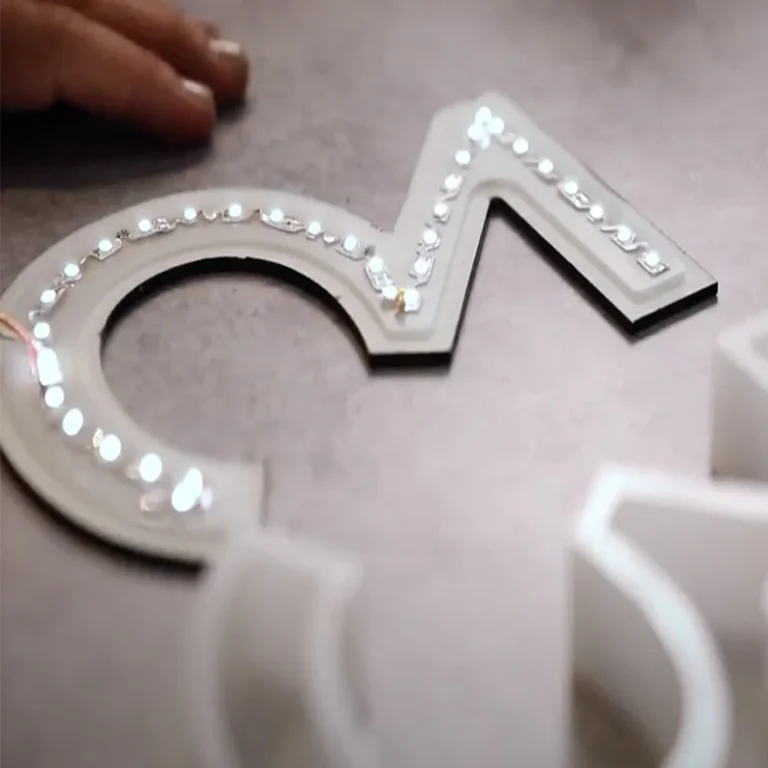
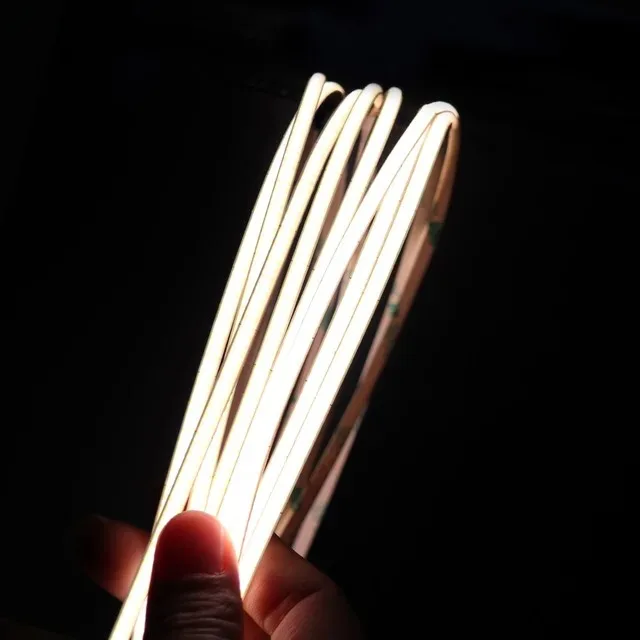
LED Neon Flex is het kernlichtemissie van het systeem. Het bestaat uit LED-chips ingebed in een flexibele siliconen of PVC-behuizing die licht diffuus maakt om een continu neonachtig effect te creëren.
In tegenstelling tot traditionele LED-strips, is Neon Flex ontworpen om stippenvrije, uniforme verlichting te produceren, wat van cruciaal belang is voor bewegwijzering.
Technische details:
| Parameter | Typisch bereik | Technische impact |
| Stroomverbruik | 8-15 W/m | bepaalt energieverbruik |
| lichtgevende output | 500–1200 lm/m | Regelt het helderheidsniveau |
| Spanning | 12V / 24V DC | Veiligheid en stabiliteit |
| LED Dichtheid | 120–240 LED's/m | beïnvloedt uniformiteit |
| Buigtype | Boven/zij buigen | Ontwerpflexibiliteit |
Waarom het belangrijk is:
Neonflex van lage kwaliteit resulteert in ongelijke helderheid, zichtbare stippen en kleurinconsistentie. Hoge dichtheid, hoogwaardige flex zorgt voor een soepele lichtopbrengst en betrouwbaarheid op lange termijn.
Side Bend S0612 Silicone LED Neon Strip voor Sign
- Ingangsspanning: DC12V/24V
- Watt:10W/m
- LED AANTAL: SMD2835 120LEDs/m
- Kleur: Rood/groen/blauw/geel/ijsblauw/lichtroze/roze/paars/citroen
- Geel/Gouden Geel/Oranje/Wit
- IPGrade: IP67
- Snijbare lengte: 25mm/50mm
- Lengte: 50 meter/rol
2. Acryl-bord (structurele basis)
Het acrylbord fungeert als de structurele basis van het neonteken. Het houdt de LED-neonflex op zijn plaats en definieert de algehele vorm en het ontwerp van het bord.
Het wordt meestal nauwkeurig gesneden met behulp van CNC- of lasersnijmachines om aangepaste tekst, logo's of vormen aan te passen.
Technische details:
| Parameter | Typisch bereik | Technische impact |
| lijvigheid | 3–8 mm | Structurele |
| Materiaal | PMMA / acryl | Transparantie & Duurzaamheid |
| Snijmethode | CNC / laser | Precisie van ontwerp |
| afdoen | Helder / Frosted / Gekleurd | visueel effect |
Waarom het belangrijk is:
Een dunne of lage kwaliteit backboard kan na verloop van tijd kromtrekken, vooral bij grotere tekens. De juiste dikte en materiaal zorgen voor stabiliteit, schoon uiterlijk en duurzaamheid op lange termijn.
3. Voeding (LED-driver)
De voeding zet hoogspannings-AC-ingang om in laagspannings-DC-uitgang die vereist is door LED Neon Flex. Het is een van de meest kritieke componenten voor veiligheid en prestaties.
Een stabiele driver zorgt voor flikkervrije werking en beschermt de LED's tegen spanningsschommelingen.
Technische details:
| Parameter | Typisch bereik | Technische impact |
| Ingangsspanning | AC 100-240V | Wereldwijde compatibiliteit |
| uitgangsspanning | DC 12V / 24V | Systeemverei |
| vervalsmeter | >0.9 | Energie-efficiëntie |
| Efficiëntie | 85–92% | Minder warmteverlies |
| Bescherming | Overbelasting / kortsluiting | Veiligheid |
Waarom het belangrijk is:
Stuurprogramma's van slechte kwaliteit kunnen flikkeren, oververhitting of vroege storing veroorzaken. Een betrouwbare stroomvoorziening verlengt direct de levensduur en stabiliteit van het hele systeem.
4. Controller/dimmer (besturingssysteem)
De controller maakt het mogelijk om helderheid, kleur en lichteffecten aan te passen. Het is vooral belangrijk voor RGB of dynamische neonreclames die worden gebruikt in commerciële en decoratieve toepassingen.
Technische details:
| Parameter | Typisch bereik | Technische impact |
| Besturingstype | PWM-dimmen | Gladde helderheidsregeling |
| uitwerking | Afstandsbediening / App / Wandschakelaar | Gebruikersgemak |
| Compatibiliteit | Enkele kleur / RGB / RGBW | Toepassingsflexibil |
| Functies | Dimmen / Kleurverandering / Effecten | Aanpassing |
Waarom het belangrijk is:
Zonder de juiste besturingssystemen blijft de verlichting statisch. Geavanceerde controllers maken dynamische lichteffecten mogelijk, waardoor de visuele aantrekkingskracht en gebruikerservaring worden verbeterd.
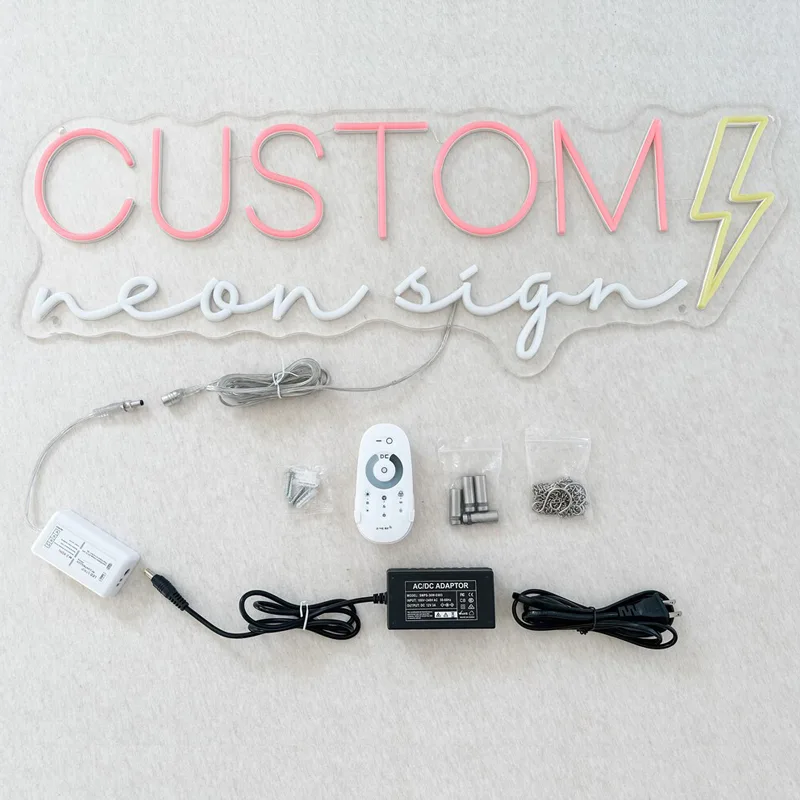
LED-adapter/LED-voeding met DC-poort (DC12V/24V)
- Ingangsspanning: AC100-240V
- Uitgangsspanning: DC12V/DC24V
- Uitgangsstroom: 3A/4A/5A/6A/8A/10A
- Watt: 72W/96W/120W
- Afmetingen: 120x55x30mm
- Certificering: VS CE ROHS AU
- IP-klasse: IP20
- Garantie: 2 jaar
Geïntegreerde systeemprestatiet
| samenstellend | Sleutelspecificatie | primaire rol | Impact op de uiteindelijke prestaties |
| LED Neon Flex | 8–15 W/m, 500–1200 lm/m | Lichte generatie | Helderheid & Uniformiteit |
| acryl bord | 3-8 mm PMMA | Structurele ondersteuning | Stabiliteit & ontwerpprecisie |
| Voeding | 12V/24V DC, PF >0,9 | Vermogensregulering | Levensduur & veiligheid |
| Controller | PWM-dimmen | lichtregeling | Flexibiliteit en gebruikerscontrole |
Technisch inzicht
De prestaties van een aangepast LED-neonteken worden niet bepaald door een enkel onderdeel, maar door de integratie van alle componenten als een systeem.
Zelfs als er bijvoorbeeld hoogwaardige LED Neon Flex wordt gebruikt, kan een laagwaardige stroomvoorziening flikkeren en de levensduur verkorten. Evenzo kan slechte structurele ondersteuning in de loop van de tijd leiden tot vervorming of installatieproblemen.
Dit is de reden waarom professionele fabrikanten zich richten op ontwerp op systeemniveau, zodat alle componenten compatibel, getest en geoptimaliseerd zijn voor toepassingen in de echte wereld.
Materiaalselectie en LED-structuur hebben een directe invloed op de prestaties. Voor een diepere afbraak, zie ons artikel over Belangrijkste factoren bij het kiezen van LED Neon Flex voor grootschalige projecten
Soorten aangepaste LED-neonborden
Aangepaste LED-neonborden zijn ontworpen op basis van toepassingsvereisten, installatieomstandigheden en visuele doelstellingen. Elk type verschilt in helderheidsniveau, grootte, kleurconfiguratie en besturingssysteem, afhankelijk van waar en hoe het zal worden gebruikt.
Het selecteren van het juiste type is belangrijk omdat een voor decoratie geoptimaliseerd bord mogelijk niet voldoende zichtbaarheid biedt voor commercieel gebruik, terwijl een teken met hoge helderheid te intens kan zijn voor binnenomgevingen.
Zakelijke neonreclames (commercieel gebruik en branding)
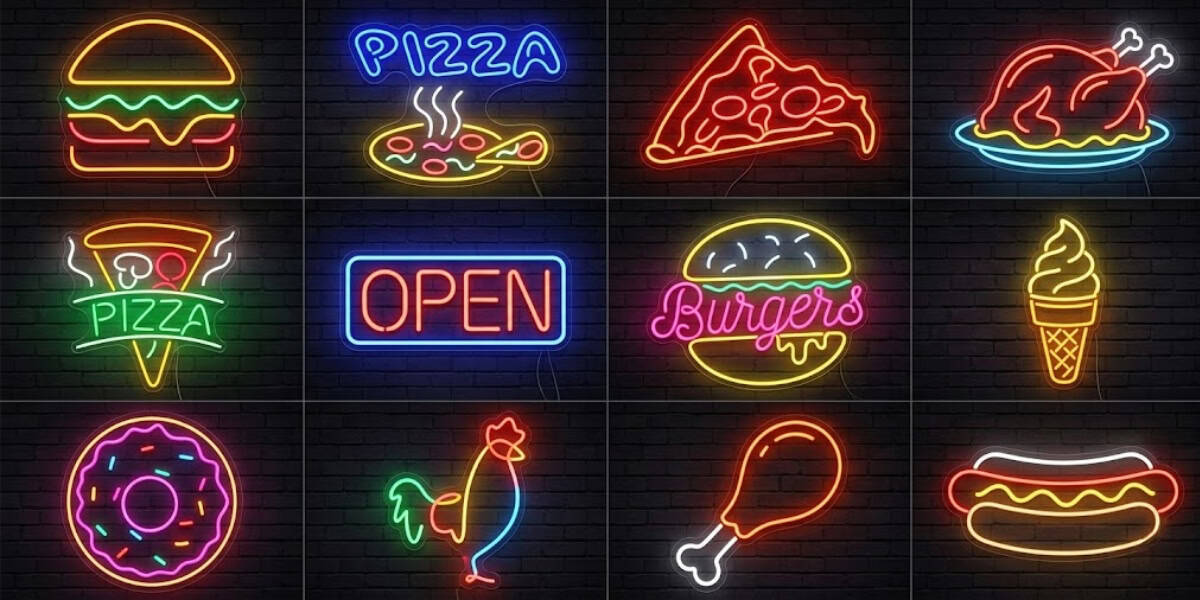
Zakelijke neonborden worden gebruikt voor etalages, logo's en merkdisplays waar zichtbaarheid en herkenning van cruciaal belang zijn. Deze borden zijn ontworpen om duidelijk zichtbaar te blijven onder omgevingslicht en van een afstand.
Om dit te bereiken zijn hogere helderheidsniveaus en een sterk kleurcontrast vereist. Wit, rood en blauw worden vaak gebruikt omdat ze een hoge zichtbaarheid bieden in commerciële omgevingen.
| Parameter | Typisch bereik | Technisch doel |
| Helderheid | 800–1200 lm/m | Hoge zichtbaarheid |
| Kleurtemperatuur | 4000K-6500K | Duidelijke en scherpe output |
| Maat | 50–150 cm+ | Leesbaarheid over lange afstand |
| Bescherming | IP65 (optioneel) | Buitengebruik |
Evenement neonreclames (tijdelijk en decoratief gebruik)
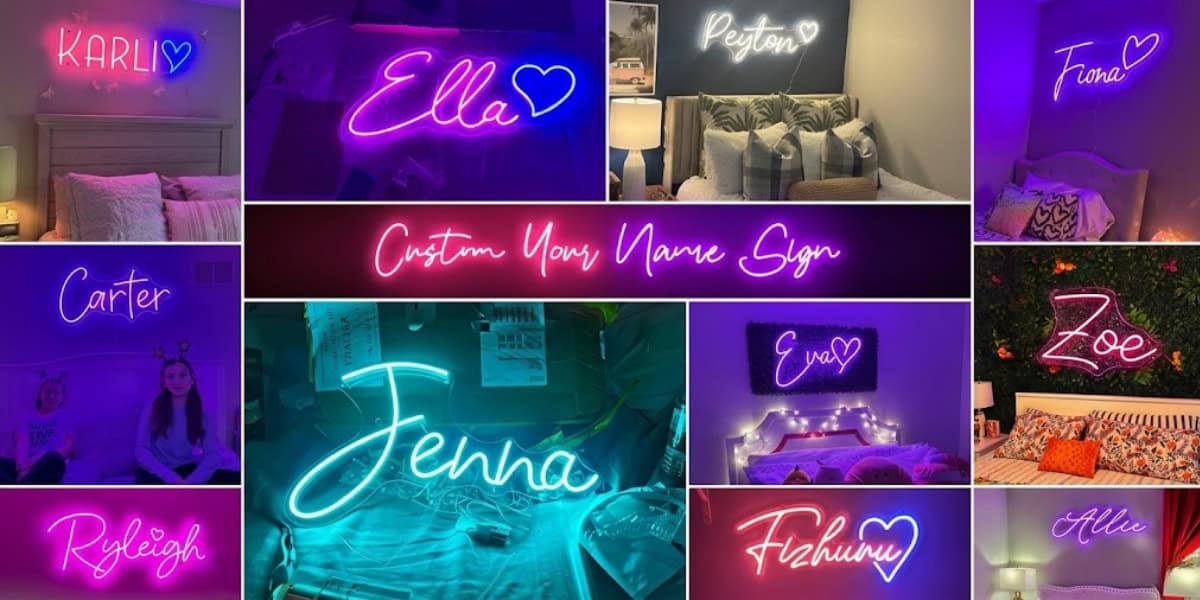
Neonreclames voor evenementen zijn ontworpen voor kortetermijntoepassingen zoals bruiloften, tentoonstellingen en promotie-evenementen. Deze tekens richten zich op visuele aantrekkingskracht, draagbaarheid en eenvoudige installatie.
De helderheid wordt gematigd gehouden omdat deze tekens meestal worden gebruikt in gecontroleerde verlichtingsomgevingen.
| Parameter | Typisch bereik | Technisch doel |
| Helderheid | 400-800 lm/m | Gebalanceerde zichtbaarheid |
| Maat | 30-100 cm | Flexibele plaatsing |
| Spanning | 12V DC | Veilige werking |
| Structuur | Lichtgewicht acryl | Gemakkelijk transport |
Interieur decoratieve neonreclames (thuis en omgevingsgebruik)
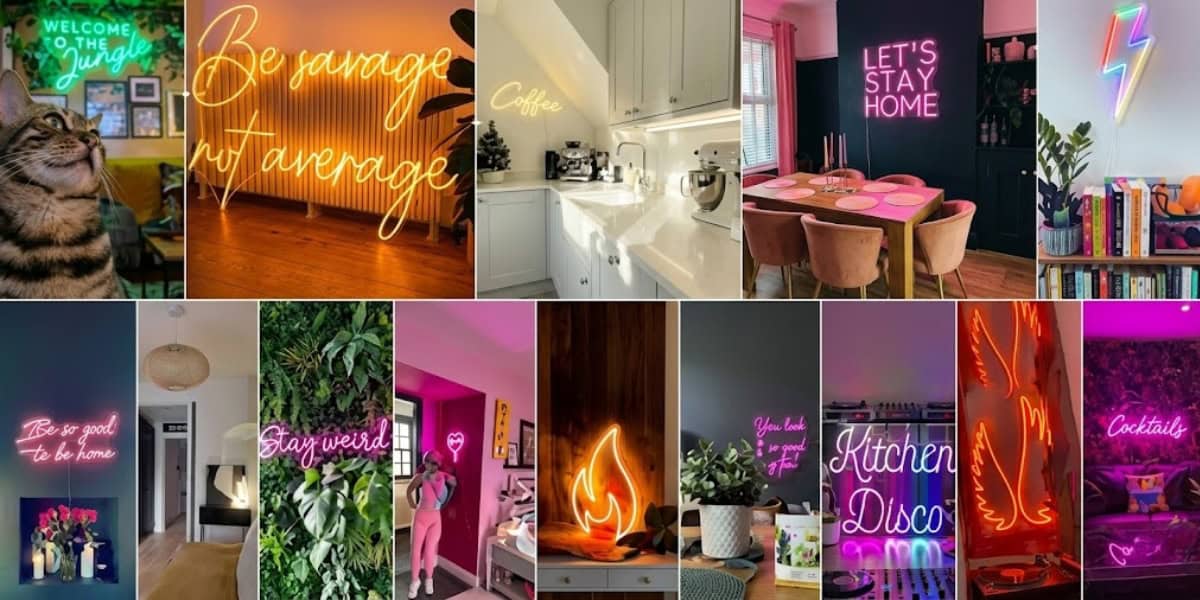
Binnenste neonborden worden gebruikt in residentiële en decoratieve ruimtes waar het doel is om sfeer te creëren in plaats van sterke verlichting.
Binnenste neonborden worden gebruikt in residentiële en decoratieve ruimtes waar het doel is om sfeer te creëren in plaats van sterke verlichting.
Lagere helderheid en warme kleurtemperaturen worden gebruikt om het comfort te behouden en verblinding te voorkomen.
| Parameter | Typisch bereik | Technisch doel |
| Helderheid | 300-600 lm/m | Zachte verlichting |
| Kleurtemperatuur | 2700K-3000K | Warme sfeer |
| Maat | 20-80 cm | Decoratieve schaal |
| Controle | Optioneel dimmen | Verstelbare stemming |
Gaming en studio neonreclames (dynamisch lichtgebruik)
Gaming- en studioneonborden zijn ontworpen voor een hoge visuele impact, vooral in streaming-setups en contentcreatieomgevingen. Deze tekens gebruiken vaak RGB- of RGBW-systemen voor dynamische kleureffecten.
De focus ligt op maatwerk, kleurbeheersing en visuele verbetering.
| Parameter | Typisch bereik | Technisch doel |
| Type verlichting | RGB / RGBW | Dynamische kleuren |
| Controle | App / afstandsbediening | Realtime aanpassing |
| Helderheid | verstelbaar | Scène-gebaseerde verlichting |
| Toepassing | Studio's / gamen | Visuele impact |
Vergelijking van neontekentypes
| Type | Helderheid bereik | Typische grootte | Toepassing | Belangrijkste focus |
| karwei | 800–1200 lm/m | 50–150 cm+ | Detailhandel / branding | Zichtbaarheid |
| evenement | 400-800 lm/m | 30-100 cm | Bruiloften / Evenementen | draagbaarheid |
| interlijke | 300-600 lm/m | 20-80 cm | Huis / Decor | Ambiance |
| hazardspel | Dynamische RGB | gewoonte | studio's | Visuele effecten |
Technisch inzicht
Elk type aangepaste LED neonteken wordt bepaald door de toepassing. Een goede selectie van helderheid, kleurtemperatuur en controlesysteem zorgt ervoor dat het bord effectief presteert zonder verblinding, energieverspilling of slecht zicht te veroorzaken.
Ontdek aangepaste oplossingen
Als u een neonbord nodig heeft dat op uw project is afgestemd, kunt u op maat gemaakte LED-oplossingen voor LED-neonborden verkennen die zijn ontworpen voor zakelijke, evenementen en interieurtoepassingen.
Verschillende soorten neonborden worden gebruikt in verschillende industrieën. Ontdek echte use-cases in onze gids over Belangrijkste toepassingen van LED-neonverlichtingssystemen
Hoe op maat gemaakte LED-neonborden worden gemaakt
Het productieproces van op maat gemaakte LED-neonborden is een combinatie van ontwerptechniek, precisieverwerking en kwaliteitscontrole. Elke stap heeft direct invloed op de uiteindelijke prestaties, het uiterlijk en de duurzaamheid van het teken.
In tegenstelling tot in massa geproduceerde verlichtingsproducten, vereisen aangepaste neonborden handmatig vakmanschap in combinatie met gecontroleerde productiemethoden om nauwkeurigheid en consistentie te garanderen.
Stap 1: Ontwerp en lay-out engineering
Het proces begint met het maken van een op vector gebaseerd ontwerpbestand (AI, SVG of CAD-formaat). Dit bestand definieert de exacte vorm, grootte en lay-out van het neonteken.
In dit stadium bepalen ingenieurs ook buigpaden, montageposities en elektrische geleiding om ervoor te zorgen dat het ontwerp fysiek kan worden geproduceerd zonder vervorming.
| Parameter | Typische waarde | Technische impact |
| Bestandsindeling | AI / SVG / CAD | Ontwerpnauwkeurigheid |
| verdragen | ±1–2 mm | Dimensionale precisie |
| Layout planning | Handmatig + software | haalbaarheid van de montage |
Een nauwkeurig ontwerpbestand zorgt ervoor dat alle stroomafwaartse processen nauwkeurig en uitgelijnd blijven.
Stap 2: LED Neon Flex Cutting
De LED Neon Flex wordt volgens de ontwerplay-out gesneden met behulp van vooraf gedefinieerde snijpunten. Precisie is hier van cruciaal belang om een goede uitlijning tijdens de montage te garanderen.
Onjuist snijden kan leiden tot oneffen verlichting of elektrische problemen.
| Parameter | Typisch bereik | Technische impact |
| Snijden nauwkeurigheid | ±1 mm | Pasvorm en uitlijning |
| Snij-interval | 25-50 mm (segment-gebaseerd) | Elektrische integriteit |
| gereedschap | Handmatige / precisiefrees | Schone randen |
Deze stap zorgt ervoor dat elk segment perfect in het uiteindelijke ontwerp past.
Stap 3: Acryl backboard CNC-graveren
Het acrylbord wordt verwerkt met behulp van CNC- of lasersnijmachines om de exacte vorm van het ontwerp te matchen.
Groeven of geleidepaden kunnen ook worden gegraveerd om te helpen bij een nauwkeurige plaatsing van de neonflex.
| Parameter | Typisch bereik | Technische impact |
| Materiaaldikte | 3–8 mm | Structurele |
| Snijmethode | CNC / laser | rand precisie |
| verdragen | ±0,5 mm | Ontwerpnauwkeurigheid |
De zeer nauwkeurige gravure zorgt voor schone randen en een professionele afwerking.
Stap 4: Handmatig buigen en assembleren
De LED Neon Flex wordt handmatig gebogen en op het acrylbord gebogen, het ontwerppad volgend. Deze stap vereist geschoolde arbeid om vloeiende rondingen en consistente afstand te behouden.
In tegenstelling tot geautomatiseerde processen, biedt handmatige vormgeving flexibiliteit voor complexe ontwerpen, maar vereist strikte kwaliteitscontrole.
| Parameter | Typisch aspect | Technische impact |
| buigmethode | Handvormen | Curve nauwkeurigheid |
| Bevestigingsmethode | clips / lijm | Stabiliteit |
| het richten | Visueel + sjabloon | Uiterlijk consistentie |
Een goede montage zorgt ervoor dat de lichtopbrengst uniform blijft zonder vervorming.
Stap 5: Bedrading en solderen
Elektrische verbindingen worden voltooid door draden tussen neonsegmenten te solderen en deze op de stroomvoorziening te verbinden.
Deze stap zorgt voor een stabiele stroomstroom over het hele teken.
| Parameter | Typisch bereik | Technische impact |
| Spanning | 12V / 24V DC | Veiligheid |
| soldeerkwaliteit | Loodvrij / geïsoleerd | Betrouwbaarheid |
| Verbindingstype | Serie / Parallel | loadbalance |
Slechte bedrading kan leiden tot spanningsdaling, flikkeren of gedeeltelijke storing.
Stap 6: Verouderingstest (inbrandtest)
Na de montage ondergaat het bord continue werking testen (meestal 24-48 uur). Dit is een van de meest kritische kwaliteitscontrolestappen.
Het helpt bij het identificeren van vroege storingen zoals defecte LED's, onstabiele stuurprogramma's of slechte verbindingen.
| Parameter | Typisch bereik | Technische impact |
| Testduur | 24-48 uur | Betrouwbaarheidsvalidatie |
| Testvoorwaarde | Continue werking | Stress testen |
| Storingsdetectie | Visueel + elektrisch | Kwaliteitsborging |
De verouderingstest zorgt ervoor dat alleen stabiele en volledig functionele producten worden geleverd.
Stap 7: Eindinspectie en verpakking
Vóór verzending wordt het bord geïnspecteerd op visuele kwaliteit, elektrische prestaties en structurele integriteit.
Verpakkingen worden vervolgens met behulp van beschermende materialen voltooid om schade tijdens het transport te voorkomen.
| Parameter | Inspectie focus | Technische impact |
| Visuele controle | Uitlijning, helderheid | Esthetische kwaliteit |
| elektrische test | Spanning, stabiliteit | optreden |
| Verpakking | Schuim/beschermende lagen | Veiligheid van het vervoer |
Overzicht van productieproces
| schrede | conserveren | Tijd nodig | Kwaliteitsimpact |
| Ontwerp | Vector creatie | 1-2 uur | nauwkeurigheid |
| Snijden | LED flex snijden | Hoge precisie | adapteren |
| graveerkunst | acryl cnc | geamuseerd | Structuur |
| verzamelen | Handmatig vormgeven | vakman | Uiterlijk |
| draadwerk | Solderen | gereguleerd | Stabiliteit |
| proeven | 24-48 uur | bedillerig | Betrouwbaarheid |
| schouw | laatste check | slotfase | Kwaliteitsborging |
De kwaliteit van een op maat gemaakt neonteken wordt niet alleen bepaald door materialen, maar ook door de precisie en controle van het productieproces. Van alle stappen is de verouderingstest het meest kritisch, omdat het de betrouwbaarheid op lange termijn garandeert door defecten vóór de levering te identificeren.
Een goed gecontroleerd productieproces resulteert in consistente helderheid, stabiele prestaties en een langere levensduur.
Hoe een aangepast LED-neonbord te ontwerpen
Het ontwerpen van een op maat gemaakt neonbord gaat niet alleen over uiterlijk. Elke ontwerpkeuze beïnvloedt zichtbaarheid, leesbaarheid en installatie. Een goed gepland ontwerp zorgt ervoor dat het bord effectief presteert voor het beoogde gebruik, of het nu gaat om zakelijke branding of decoratie.
| schrede | Ontwerp overweging | Technische impact |
| Tekst / logo | bericht of merkidentiteit | definieert herkenning |
| oliehouder van | Stijl en dikte | beïnvloedt de leesbaarheid |
| Kleur | LED-kleur of RGB | Beïnvloedt stemming en zichtbaarheid |
| Maat | 30-150 cm | Bepaalt kijkafstand |
| opstelling | Muur / Opknoping | beïnvloedt installatie |
De tekst of het logo moet eenvoudig en gemakkelijk te begrijpen zijn, vooral voor commerciële tekens waar snelle herkenning belangrijk is. Lettertypeselectie moet overeenkomen met de applicatie, met gedurfde stijlen voor zichtbaarheid en decoratieve stijlen voor esthetiek.
Kleurkeuze beïnvloedt zowel uiterlijk als functie. Heldere kleuren verbeteren de zichtbaarheid in zakelijke omgevingen, terwijl warme tonen beter zijn voor binnendecoratie. De grootte van het bord moet overeenkomen met de kijkafstand, omdat kleinere borden geschikt zijn voor nauwe weergave en grotere borden vereist zijn voor winkelpuien.
De montagemethode moet worden geselecteerd op basis van de installatieomgeving om stabiliteit en goede uitlijning te garanderen.
Een goed ontwerp balanceert visuele aantrekkingskracht met technische prestaties. Retailborden vereisen bijvoorbeeld een hogere helderheid en duidelijke lettertypen, terwijl interieurborden meer gericht zijn op sfeer en zachtere verlichting.
Materialen die worden gebruikt in LED-neonborden
Materiaalselectie is een belangrijke factor bij het bepalen van de duurzaamheid, flexibiliteit en algehele kwaliteit van een op maat gemaakt neonreclame. Verschillende materialen worden gebruikt voor lichtdiffusie, structurele ondersteuning en milieubescherming, en elk ervan heeft rechtstreeks invloed op de prestaties en levensduur.
Een goed ontworpen neonbord maakt gebruik van de juiste combinatie van materialen om een stabiele werking, een consistente lichtopbrengst en betrouwbaarheid op lange termijn te garanderen.
| Materiaal | Typische levensduur | Belangrijkste voordeel | Toepassing |
| Silicone | 5-8 jaar | Hoge flexibiliteit, UV-bestendigheid | Premium binnen- en buitenborden |
| PVC | 3-5 jaar | Kosteneffectief, lichtgewicht | Binnen- / budgetborden |
| Acryl (PMMA) | 5+ jaar | Sterk, helder, gemakkelijk te vormen | Structuur van het bord |
| Aluminium | 8-10 jaar | Hoge sterkte, hittebestendigheid | Grote / buitentekens |
Materiaaldetails
Siliconen (LED Neon Flex-materiaal)
Siliconen worden gebruikt in hoogwaardige LED Neon Flex omdat het een uitstekende flexibiliteit en duurzaamheid biedt. Het maakt het mogelijk om soepel te buigen voor aangepaste vormen met behoud van een uniforme lichtdiffusie. Het is ook bestand tegen UV-blootstelling en wordt niet gemakkelijk geel, waardoor het geschikt is voor langdurig gebruik in buitenomgevingen.
PVC (polyvinylchloride)
PVC wordt vaak gebruikt in kostengevoelige toepassingen. Het biedt basisflexibiliteit en acceptabele prestaties voor gebruik binnenshuis. Het is echter minder bestand tegen hitte en UV-blootstelling, wat de levensduur in buitenomstandigheden kan verminderen.
Acryl (Achterbordmateriaal)
Acryl fungeert als de structurele basis van het neonteken. Het wordt gebruikt om de LED Neon Flex te monteren en te ondersteunen met behoud van de vorm van het ontwerp. Het biedt hoge transparantie, schone randen en is gemakkelijk in aangepaste vormen te snijden met behulp van CNC- of lasermachines.
Aluminium (ondersteuningsstructuur)
Aluminium wordt gebruikt in grotere of zware borden waar extra sterkte vereist is. Het verbetert de structurele stabiliteit en helpt de vorm na verloop van tijd te behouden, vooral in buiten- of hoge belastinginstallaties.
Inzicht in materiaalkeuze
Materiaalselectie moet altijd overeenkomen met de toepassing. Siliconen hebben de voorkeur voor premium- en buitenprojecten vanwege de duurzaamheid en flexibiliteit, terwijl PVC geschikt is voor decoratieve binnenshuisborden waar de kosten een prioriteit zijn. Acryl zorgt voor structurele precisie en aluminium wordt gebruikt wanneer extra ondersteuning nodig is.
Een goede combinatie van deze materialen zorgt voor zowel visuele kwaliteit als langetermijnprestaties.

Toepassingen van aangepaste LED-neonborden
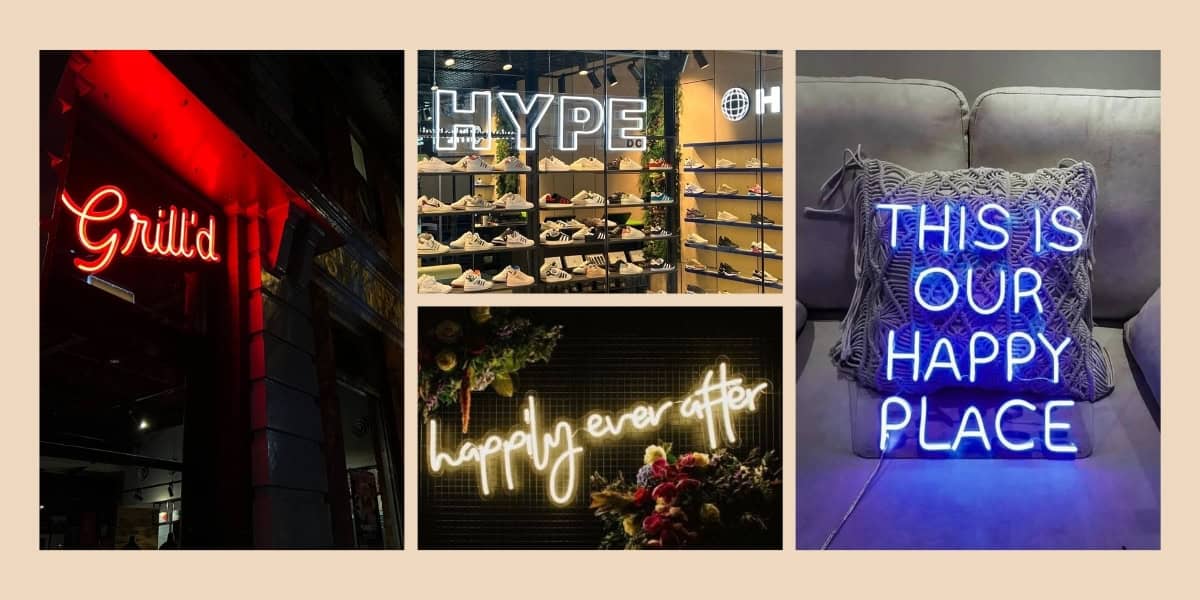
Op maat gemaakte LED-neonborden worden gebruikt in zowel commerciële als decoratieve omgevingen, waar hun rol varieert op basis van helderheid, kleur en ontwerpdoel.
| Toepassing | Aanbevolen helderheid | Doel | Ontwerp focus |
| kleinhandel | 300-500 lux | Branding & zichtbaarheid | Hoog contrast, duidelijke lettertypen |
| Restaurants & bars | 200-400 lux | Sfeer & Stemming | Warme tonen, zachte gloed |
| Evenementen & bruiloften | 100-300 lux | Decoratie & thema | Aangepaste vormen, namen |
| huisdecoratie | 100-200 lux | Esthetische aantrekking | omgevingslicht |
Toepassingsdetails
- kleinhandel
Neonborden in winkelomgevingen worden gebruikt voor branding, winkeluit displays en het trekken van klantaandacht. Hogere helderheid en duidelijke lettertypestijlen zorgen voor zichtbaarheid, zelfs in goed verlichte commerciële ruimtes. - Restaurants & bars
In de horeca worden neonreclames gebruikt om sfeer te creëren in plaats van sterke verlichting. Warme kleuren en matige helderheid helpen de atmosfeer te verbeteren zonder verblinding te veroorzaken. - Evenementen & bruiloften
Voor evenementen fungeren neonreclames als decoratieve elementen. Ze zijn meestal aangepast met namen, offertes of thema-ontwerpen en zijn ontworpen voor tijdelijke installatie en eenvoudige installatie. - huisdecoratie
In woonruimtes worden neonborden gebruikt om de esthetiek te verbeteren en een ontspannende omgeving te creëren. Voor het visuele comfort hebben een lagere helderheid en zachtere tonen de voorkeur.
Praktisch inzicht
Het kiezen van de juiste helderheid en ontwerp voor elke toepassing is essentieel. Een te helder teken kan binnenshuis ongemak veroorzaken, terwijl een lage helderheid de zichtbaarheid in commerciële omgevingen kan verminderen.
Zie voor geavanceerde commerciële en architecturale toepassingen hoe LED Neon wordt gebruikt in grootschalige projecten zoals Gevelverlichting bouwen met RGB LED-neon- en DMX-besturingssystemen
Prijsfactoren van op maat gemaakte LED-neonborden
De kosten van een op maat gemaakt neonreclame zijn afhankelijk van meerdere technische en ontwerpvariabelen. De prijzen zijn niet vast omdat elk teken wordt geproduceerd op basis van specifieke vereisten zoals grootte, complexiteit, materialen en besturingsfuncties.
Het begrijpen van deze factoren helpt bij het nauwkeurig inschatten van de kosten en het vermijden van onder- of overspecificatie.
Uitsplitsing van de prijs
| Factor | Typisch bereik | Kostenimpact |
| Maat | $50–$300+ | Grotere maat verhoogt de materiaal- en stroomvereisten |
| Ontwerpcomplexiteit | +20–50% | Meer curven en details verlengen de arbeidstijd |
| RGB-verlichting | +30% | Voegt controller en geavanceerd LED-systeem toe |
| Controller / dimmer | $10–$50 | Maakt helderheid en kleurcontrole mogelijk |
| inscheping | veranderlijke groot | Afhankelijk van grootte, gewicht en locatie |
Kosten Toelichting
- Grootte heeft een directe invloed op het materiaalgebruik, het stroomverbruik en de verpakking, waardoor het de primaire kostenfactor is.
- Complexe ontwerpen vereisen meer handmatige buig- en montagetijd, waardoor de arbeidskosten stijgen.
- RGB-systemen voegen flexibiliteit toe, maar vereisen extra componenten zoals controllers en bedrading.
- Controllers en dimmers verbeteren de bruikbaarheid, maar dragen bij aan de totale systeemkosten.
- De verzendkosten variëren aanzienlijk, vooral voor grote of fragiele tekens.
Prijsinzicht
Grotere en complexere ontwerpen verhogen zowel de materiaal- als de arbeidskosten. Een uitgebalanceerd ontwerp dat voldoet aan functionele eisen zonder onnodige complexiteit is de meest kostenefficiënte benadering.
Voordelen van LED-neonborden
LED-neonborden bieden aanzienlijke voordelen ten opzichte van traditionele glazen neon, vooral op het gebied van efficiëntie, duurzaamheid en veiligheid.
Belangrijkste voordelen
- Energie-efficiëntie (60-70%-besparingen)
LED NEON verbruikt aanzienlijk minder stroom in vergelijking met traditionele neon, waardoor de bedrijfskosten op lange termijn worden verlaagd. - Lange levensduur (30.000-50.000 uur)
Langere levensduur minimaliseert vervangingsfrequentie en onderhoudsinspanningen. - Weinig onderhoud
Solid-state ontwerp elimineert problemen zoals gaslekkage of buisbreuk. - Veilig laagspanningsbedrijf (12V/24V)
Vermindert het elektrische risico, waardoor het geschikt is voor zowel binnen als buiten. - Flexibel ontwerpvermogen
Kan worden gevormd tot complexe ontwerpen, logo's en aangepaste formulieren zonder structurele beperkingen.
Prestatie-impact
Deze voordelen verbeteren direct de bruikbaarheid, verlagen de operationele kosten en verhogen de systeembetrouwbaarheid, waardoor LED Neon de voorkeurskeuze is voor moderne toepassingen.
Voor een beter begrip van prestatievoordelen, raadpleeg ons artikel over: Voordelen van LED-neon flexibele verlichtingssystemen
Hoe een aangepaste neontekenfabrikant te kiezen
Het selecteren van de juiste fabrikant is van cruciaal belang, omdat productkwaliteit, maatwerkcapaciteit en betrouwbaarheid op lange termijn allemaal afhankelijk zijn van productienormen en ervaring.
Een professionele fabrikant biedt niet alleen het product, maar ook ontwerpondersteuning, kwaliteitsborging en service na verkoop.
Evaluatiecriteria van de fabrikant
| Factor | Aanbevolen standaard | Waarom het belangrijk is |
| belevenis | 5+ jaar | Bewezen productiecapaciteit |
| Certificeringen | CE, RoHS | Naleving van veiligheidsnormen |
| OEM / ODM-ondersteuning | nuttig | Aangepaste projectcapaciteit |
| Garantie | 2-3 jaren | Productbetrouwbaarheid |
| Productiekwaliteit | Gecontroleerd proces | Consistente prestaties |
Hoe een fabrikant te evalueren
- Controleer projectervaring
Fabrikanten met echte projectportfolio's zijn betrouwbaarder in het omgaan met aangepaste vereisten. - Verifieer de materiaalkwaliteit
Hoogwaardige siliconen, acryl en drivers zorgen voor betere prestaties en een langere levensduur. - Beoordeel aanpassingsmogelijkheden
De mogelijkheid om verschillende maten, vormen en lichteffecten te produceren is essentieel voor aangepaste projecten. - Beoordeel testen en kwaliteitscontrole
Processen zoals verouderingstests en inspecties zorgen voor de betrouwbaarheid van het product vóór levering. - Bevestig ondersteuning na verkoop
Garantie en technische ondersteuning verminderen het risico bij langdurig gebruik.
Selectie Inzicht
Het kiezen van een goedkope fabrikant kan de initiële kosten verlagen, maar kan leiden tot problemen zoals flikkering, slechte duurzaamheid of inconsistente helderheid. Een betrouwbare fabrikant zorgt voor stabiele prestaties, betere materialen en waarde op lange termijn.
Als u een project plant, verken dan op maat gemaakte LED-oplossingen voor LED-neonborden met OEM/ODM-ondersteuning, betrouwbare kwaliteit en volledige aanpassingsopties.
Checklist kopen voor aangepaste LED-neonborden
Voordat u een aangepast LED-neonteken afrondt, is het belangrijk om de belangrijkste technische parameters te evalueren om prestaties, veiligheid en visuele consistentie op lange termijn te garanderen. Een goed gedefinieerde checklist helpt veelvoorkomende problemen te voorkomen, zoals inconsistentie in helderheid, oververhitting of voortijdig falen.
Technische aankoop checklist
| Parameter | Ideal assor | Waarom het belangrijk is |
| Spanning | 12V / 24V DC | Zorgt voor een veilige laagspanningswerking en systeemstabiliteit |
| Stroomverbruik | 8-15 W/m | Bepaalt helderheidsniveau en energie-efficiëntie |
| lichtgevende output | 500–1200 lm/m | Beheers zichtbaarheid en visuele impact |
| Levensduur | 30.000-50.000 uur | Geeft duurzaamheid op lange termijn aan |
| IP-classificatie | IP65 (of hoger) | Beschermt tegen stof en vocht |
| Materiaalkwaliteit | Siliconen / hoogwaardig PVC | Beïnvloedt flexibiliteit, UV-bestendigheid en levensduur |
| controlesysteem | Optionele dimmer / RGB | Verbetert bruikbaarheid en maatwerk |
Een betrouwbaar neontekensysteem wordt niet gedefinieerd door een enkele parameter, maar door de balans van elektrische stabiliteit, materiaalkwaliteit en productieprecisie. Het negeren van zelfs maar één factor kan de algehele prestaties en levensduur verminderen.
Zie onze om meer inzicht te krijgen in de kostenfactoren en materiaalselectie. Gedetailleerde gids over het kopen van aangepaste neonreclames en het kiezen van de juiste materialen
Aangepaste LED-neonborden Knowledge Hu
Deze gids maakt deel uit van een gestructureerde LED-knowledgehub voor LED-verlichting die is ontworpen om een volledig begrip te bieden van ontwerp, materialen, prestaties en toepassingen in de echte wereld.
Raadpleeg de volgende bronnen om elk gebied dieper te verkennen:
- Leer hoe neonsystemen werken in echte toepassingen
Hoe LED Neon Flex werkt in toepassingen in de echte verlichting - Begrijpen van ontwerp, materialen en aankoopbeslissingen
Hoe u op maat gemaakte neonreclames koopt en de juiste materialen kiest - Verken prestatie en technische specificaties
LED Neon Flex-gids voor professionals in architecturale verlichting - Vergelijk LED-neon met traditionele verlichtingssystemen
LED neon versus conventionele verlichting vergelijking - Ontdek toepassingen in de echte wereld
Belangrijkste toepassingen van LED-neonverlichtingssystemen - Meer informatie over prestatievoordelen
Voordelen van LED-neon flexibele verlichtingssystemen - Begrijp de projectvereisten van grootschalige projecten
Hoe LED Neon Flex te kiezen voor grote projecten - Verken architecturale verlichtingstoepassingen
LED-neon gevelverlichting met RGB en DMX-besturing
Ontvang het juiste aangepaste LED-neonbord voor uw project
Als u een op maat gemaakt neonbordproject plant, is het kiezen van de juiste materialen, het ontwerp en de fabrikant van cruciaal belang voor prestaties op lange termijn en visuele impact.
Op SignliteLED, Wij bieden OEM en ODM op maat gemaakte LED-neonreclameoplossingen die zijn afgestemd op commerciële, architecturale en decoratieve toepassingen.
Ontdek onze op maat gemaakte LED-oplossingen voor neonborden om deskundige ondersteuning, nauwkeurig ontwerp en betrouwbare productie voor uw project te krijgen.
Conclusie
Op maat gemaakte LED-neonborden hebben moderne verlichtingstoepassingen getransformeerd door ontwerpflexibiliteit te combineren met hoge efficiëntie en duurzaamheid.
Door systeemcomponenten, materialen, ontwerpprincipes en prijsfactoren te begrijpen, kunnen bedrijven en individuen weloverwogen beslissingen nemen en zowel esthetische als functionele doelen bereiken.
FAQs
Gerelateerde berichten