Português
  English
  简体中文
简体中文  Deutsch
  Español
  Français
  Italiano
  日本語
日本語  한국어
한국어  Polski
  Русский
  Türkçe
  Nederlands
  Tiếng Việt
  ไทย
ไทย 
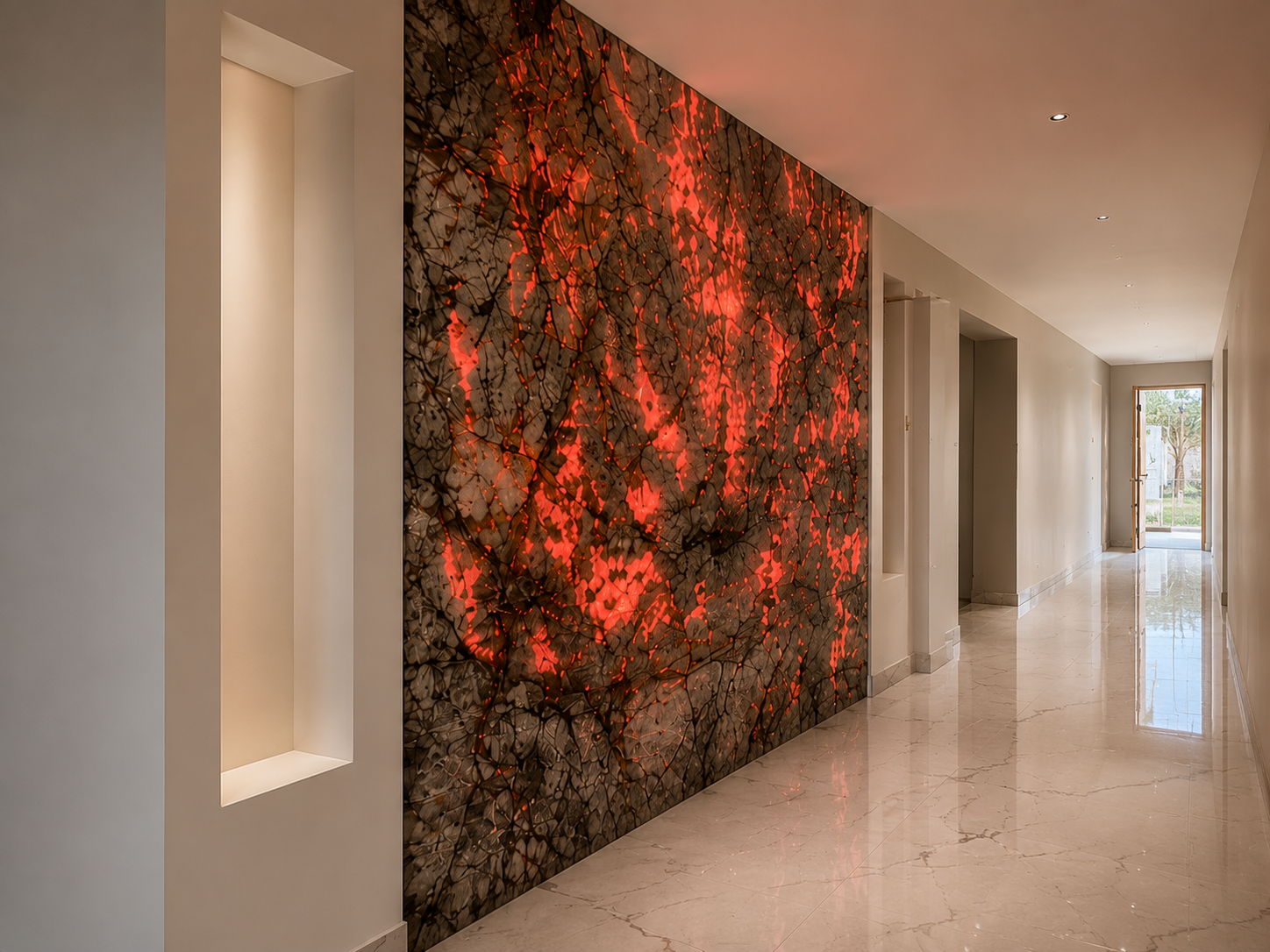
- As folhas de LED oferecem iluminação uniforme e sem pontos atrás de pedra translúcida — mais fina e uniforme do que tiras ou painéis.
- Mantenha um espaço de 20 a 50 mm entre a folha de LED e a superfície da pedra para uma difusão suave.
- Escolha RGBW (não apenas RGB) se precisar de luz branca verdadeira quando os efeitos de cor estiverem apagados.
- Combine o controlador com o projeto: RF Remote for Homes, Wall Panel for Hotels, DMX512 para grandes instalações.
- Dimensione a fonte de alimentação em 120% de potência total e use um fio de 18 a 20 AWG para evitar queda de tensão.
- Teste o brilho, a cor e a fiação antes da montagem final — a pedra já está instalada, portanto, não há espaço para retrabalhar.
Um verdadeiro projeto de pedra iluminada
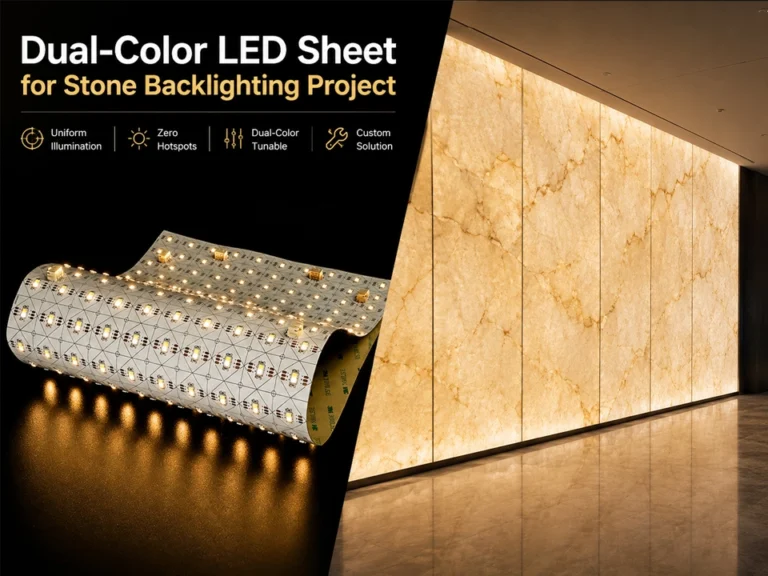
Um empreiteiro de iluminação arquitetônica veio até nós com um breve comum em hospitalidade e ajustes comerciais: instale uma parede de pedra translúcida - uma mistura de ônix e mármore fino, já ajustada - e faça com que ela brilhe com cores que mudam de acordo com a demanda. A cavidade atrás da pedra tinha apenas 35 mm de profundidade, e o cliente queria o sistema completamente invisível: sem fiação, sem fiação, sem caixas de controle. As caixas fluorescentes eram muito volumosas, os módulos de LED criavam pontos quentes e tiras que precisavam de dias de fiação para esconder. Folhas de LED foram a única tecnologia que marcou cada caixa.
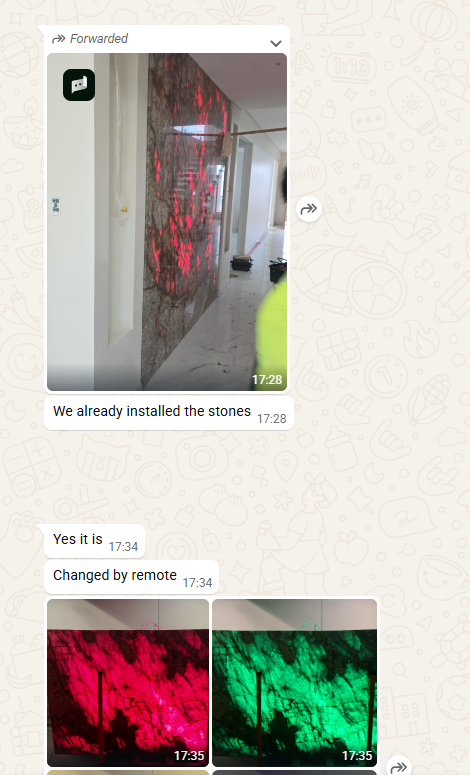
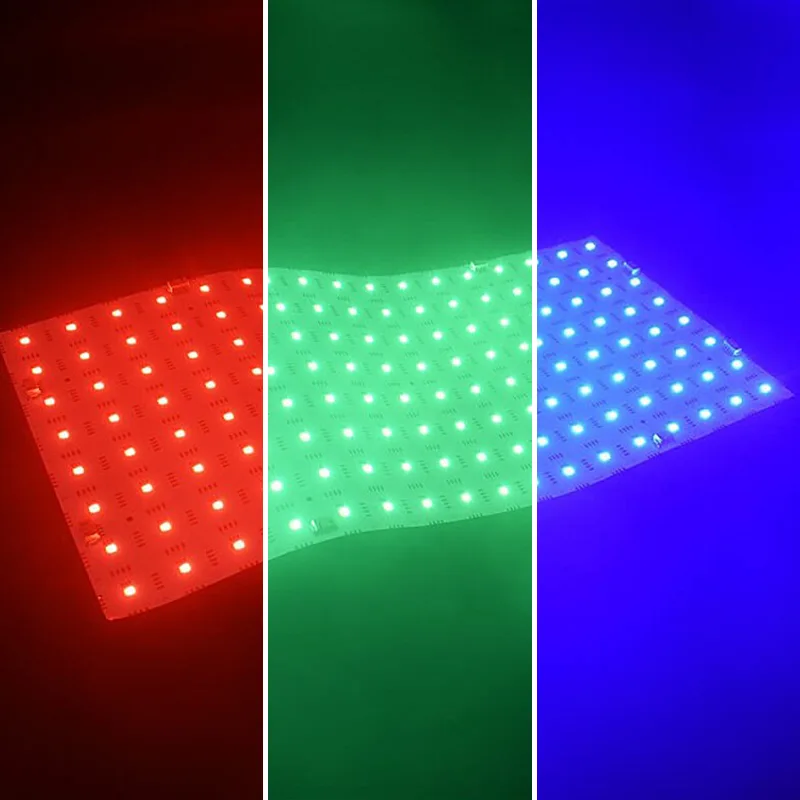
A instalação levou um único dia: folhas cortadas no tamanho, montadas 30 mm atrás da pedra com adesivo 3M embutido, conectados a um driver de 24 V e combinados com um controle remoto RF portátil. Um pressionamento de botão desloca a parede de vermelho quente para verde frio.
“Já instalamos as pedras.”
“Sim é. alterado por controle remoto.”
Essa troca captura o que é a iluminação arquitetônica moderna: hardware invisível, impacto visível, controle sem esforço.
Arquivo do projeto: em um relance
| campo | detalhe |
|---|---|
| Tipo de projeto | Luz de fundo translúcida da parede de pedra |
| Status da pedra | Já instalado — folhas de LED montadas por trás |
| profundidade da cavidade | 35mm |
| Método de controle | Remoto portátil (RF 2.4G) — a cor mudou instantaneamente |
| Efeitos de cor | Comutação dinâmica: vermelho quente, verde frio e além |
| Produto recomendado | Folha de LED RGB / RGBW (5050 SMD, DC 24V) |
O que é uma luz de folha de LED?
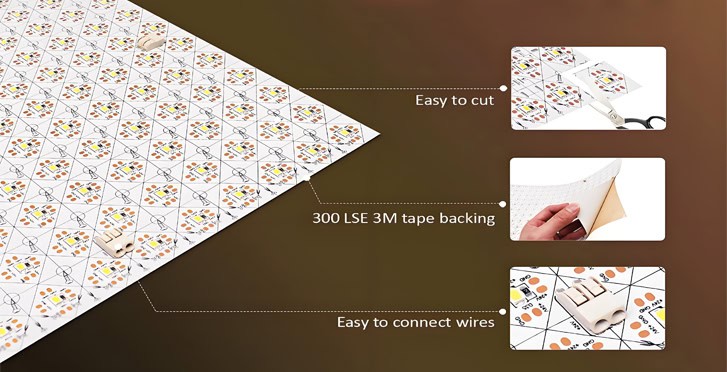
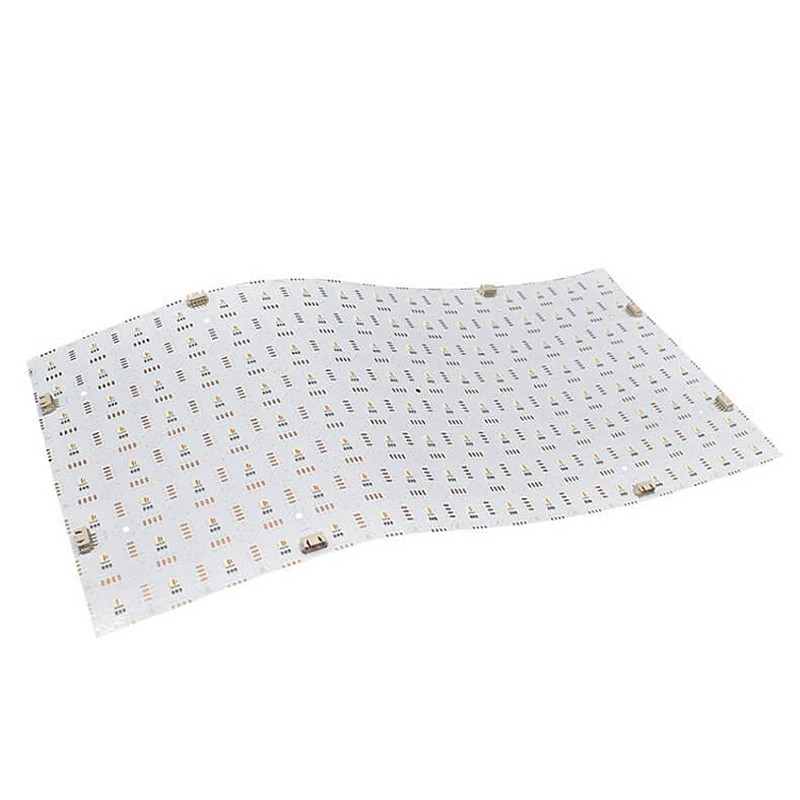
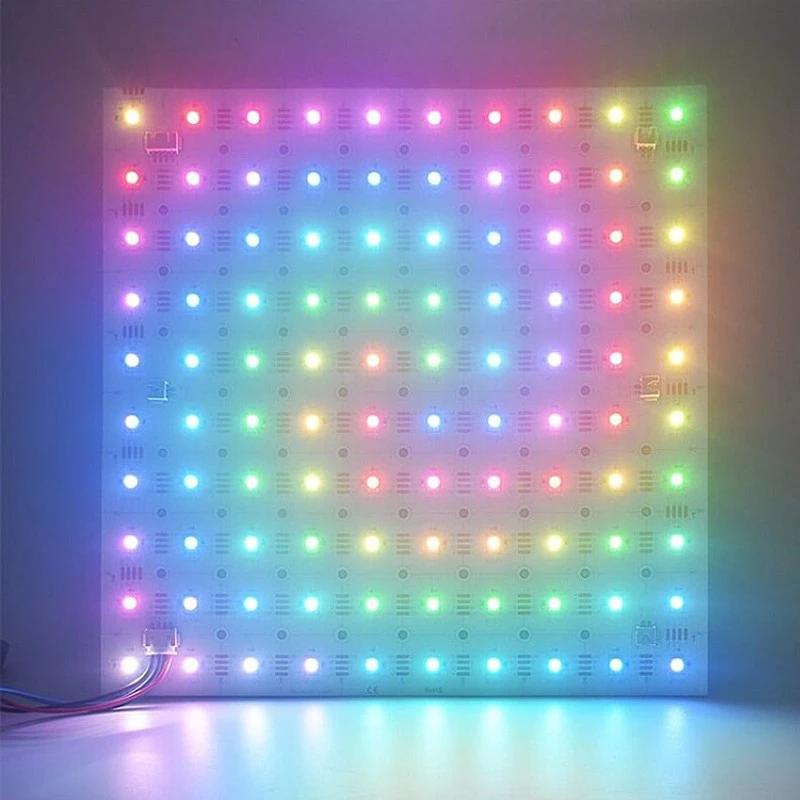
Uma luz de folha LED é um painel de PCB flexível com uma variedade de LEDs densa e uniformemente distribuída. Quando uma tira produz uma linha de luz e um módulo um ponto de luz, uma folha produz uma luz de área uniforme contínua. O PCB tem tipicamente 0,3 a 0,5 mm de espessura — fino o suficiente para uma cavidade de pedra estreita e livre do escurecimento da queda de tensão que assola as longas tiras.
As folhas funcionam em 12V ou 24V DC, em tamanhos padrão de 250 × 250 mm a 500 × 250 mm, cortes a cada 20 a 50 mm ao longo de linhas marcadas. A densidade do LED determina a uniformidade: uma folha de alta densidade (128 LEDs por painel de 490 × 245 mm) elimina os pontos visíveis, mesmo atrás de pedra fina; densidades mais baixas mostram “pontos quentes”.
Como as folhas de LED se comparam às alternativas
| critério | folha led | fita LED | Módulo LED | painel de led |
|---|---|---|---|---|
| Saída de luz | Luz da área uniforme | luz linear | Luz de ponto | Luz da área uniforme |
| espessura | ultrafino (~0,5 mm) | ultrafino (~3mm com fita adesiva) | Médio (10–20mm) | Espessa (rígida, 8–25 mm) |
| Cortável | Sim (unidades de 20–50 mm) | Sim (25–50mm) | Não | Não |
| Flexível | Sim - está em conformidade com as curvas | Sim | limitado | Não - quadro rígido |
| Eficiência da cobertura | Alta - uma folha cobre uma área de parede | Baixo — muitas execuções paralelas necessárias | Baixo — necessário difusor | Médio |
| Melhor para | Luz de fundo em pedra, paredes de recursos, sinais com iluminação de fundo | Acentos lineares, iluminação da enseada | Letras do canal, pequenos sinais | Painéis de teto, troffers |
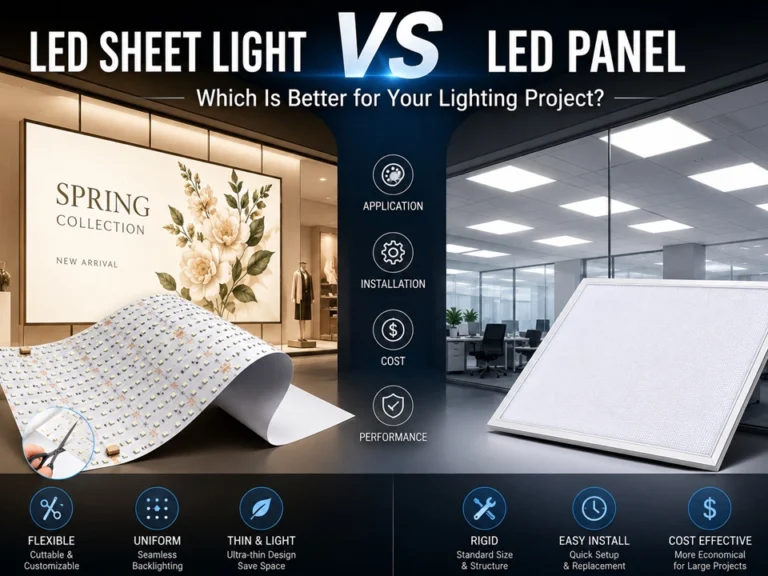
Na prática: as tiras precisam de muitas corridas paralelas com injeção de energia separada; módulos precisam de difusores que ocultem pontos quentes - inaceitáveis atrás da pedra translúcida; os painéis são rígidos e não podem ser cortados. As folhas fornecem luz uniforme sem pontos, sem sombras e sem escurecimento. Veja nossas comparações de Folha de LED vs painel de LED e Folha de LED vs tira de LED.
Por que as folhas de LED são o padrão para iluminação de fundo em pedra
Os métodos tradicionais ficam aquém: as caixas fluorescentes têm 50 a 100 mm de profundidade, geram calor e não oferecem controle de cores; os módulos de LED precisam de difusores espessos e ainda apresentam padrões irregulares através da pedra. As folhas de LED resolvem tudo isso - PCB fino se adapta a cavidades de 20 mm, arranjos densos criam luz de área verdadeira sem difusor e DC de estado sólido significa que não há cintilação, zumbido ou calor prejudicial.
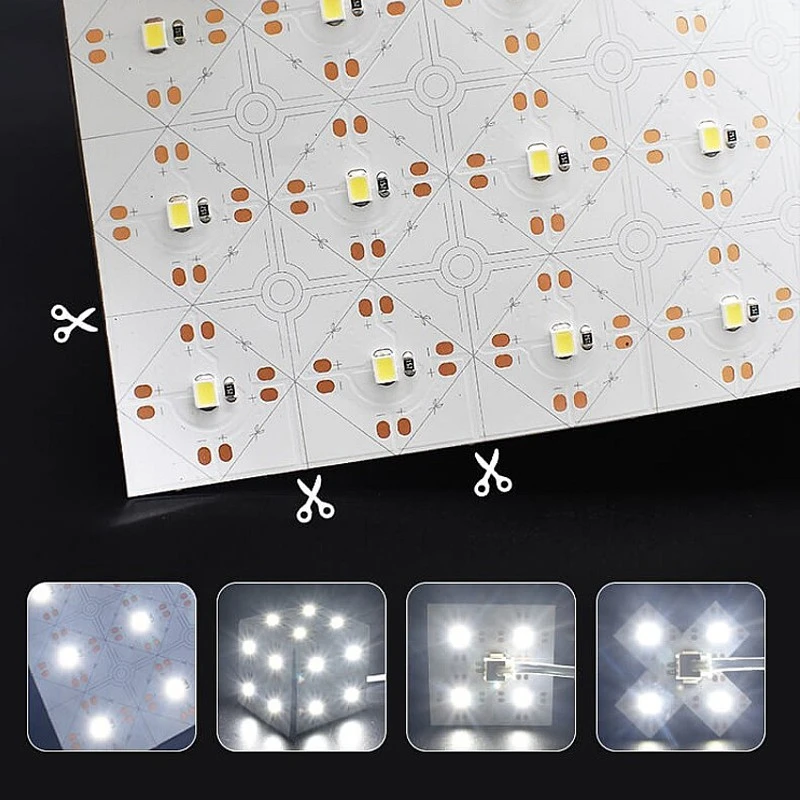
- Brilho de superfície uniforme — 128 LEDs por painel criam uma luminância perfeita mesmo atrás de ônix de 3 a 5 mm; nenhum difusor necessário.
- Perfil ultrafino — ~0,5 mm se encaixa nas cavidades 20–50mm, críticas para retrofit onde a profundidade é fixada.
- Cuttável para qualquer geometria - retângulos, círculos ou formas irregulares, aparadas no local com tesoura; unidades tão pequenas quanto 20,4 × 122,5 mm.
- Opções de cores dinâmicas — branco estático, branco ajustável (2700–6.500K), RGB, RGBW, RGB+CCT ou efeitos de pixel.
- Múltiplas vias de controle — RF remoto, painel de parede, DMX512, DALI, TRIAC, 0-10V ou PWM.
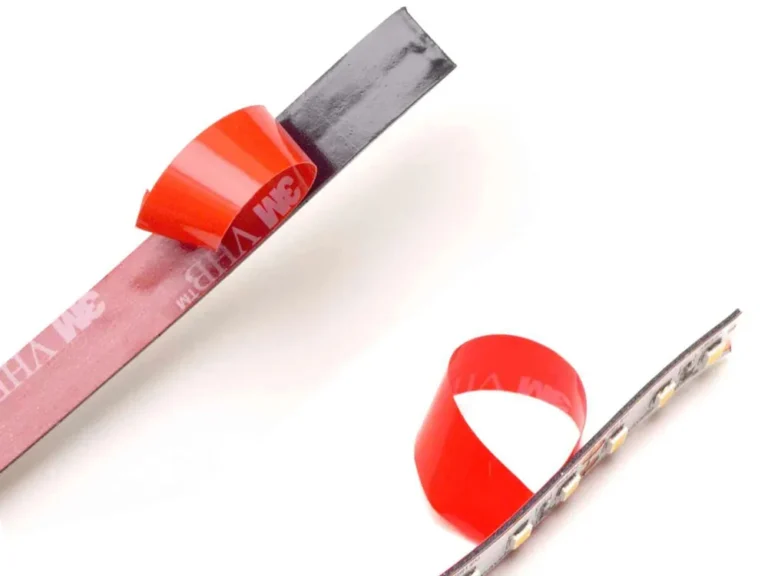
- Montagem simples — suporte adesiva 3M ou orifícios de parafusos pré-perfurados; sem suportes, trilhos ou extrusões de canal.
Especificações do produto: qual folha de LED fortalece esse visual
Para uma parede de pedra que muda de cor, você precisa de uma folha de LED RGB ou RGBW com controle remoto - a escolha determina se a parede funciona como iluminação branca ou apenas decorativo.
RGB x RGBW: Qual você precisa?
RGB mistura canais vermelhos, verdes e azuis para se aproximar do branco, mas o resultado é visivelmente “lamacento” – CRI cai abaixo de 60. RGBW adiciona um chip branco dedicado que produz um verdadeiro branco independentemente: CRI acima de 90, temperatura natural da cor e iluminação diária quando os efeitos de cor não são necessários.
Folha de LED RGB (5050 SMD, 24V)
| especificação | apreço |
|---|---|
| Tamanho | 490 × 245 mm (tamanhos personalizados disponíveis) |
| tipo led | 5050 SMD |
| contagem de leds | 128 por folha |
| Tensão de operação | DC 24V |
| Potência | 45w |
| Unidade de corte mínimo | 39,6 mm |
| Vida útil avaliada | > 35.000 horas |
Folha de LED RGBW (5050 RGBW 4 em 1, 24 V) — recomendado para a maioria dos projetos
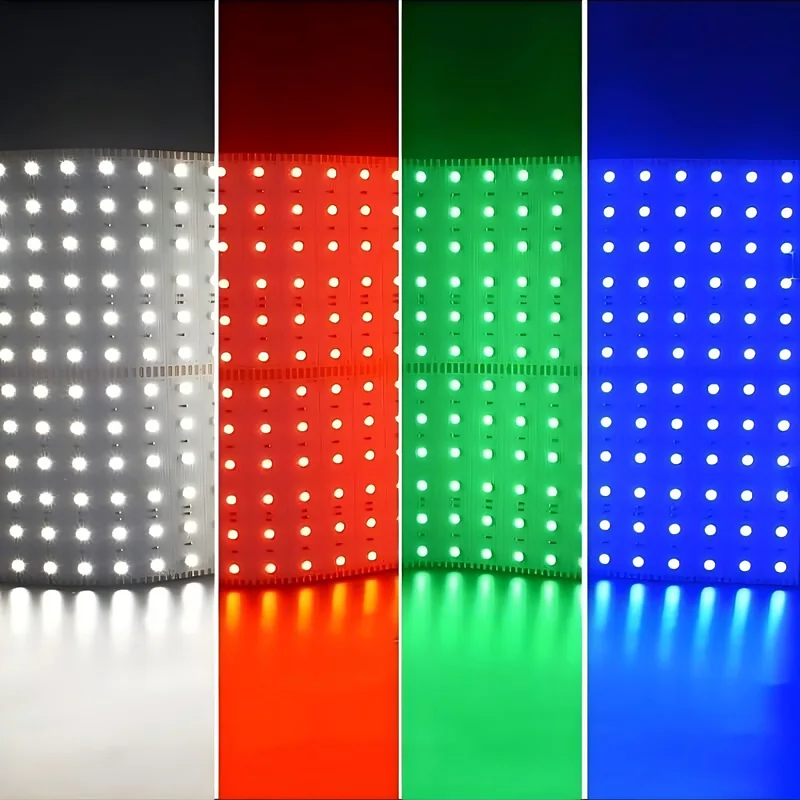
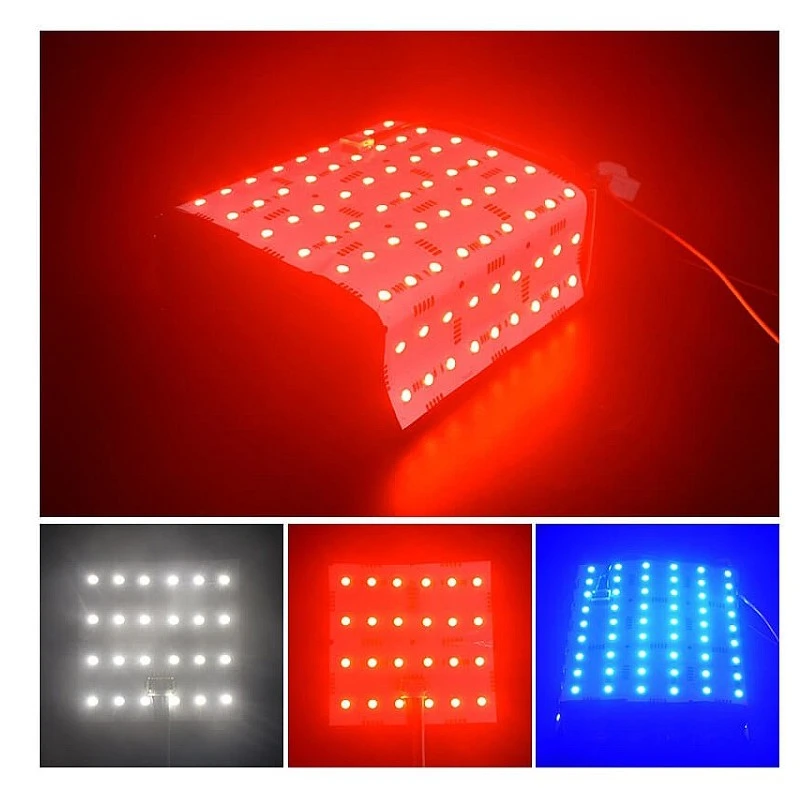
| especificação | apreço |
|---|---|
| Tamanho | 250 × 250 mm / 490 × 250 mm |
| tipo led | 5050 RGBW 4 em 1 SMD |
| Cores | RGB + 3000K / 4000K / 6500K Branco |
| Potência | 24W / 48W |
| Eficácia luminosa | 90 lm/w |
| Unidade de corte mínimo | 50 × 50 mm / 20,4 × 122,5 mm |
Exemplo de cálculo de potência
Para uma parede de 2,4 × 1,5 m (3,6 m²) de folhas RGBW de 490 × 245 mm em 48W cada: cerca de 6–7 folhas; total de 7 × 48W = 336W; adicione 20% Headroom → 400–450W 24V DC Driver. Os gráficos de dimensionamento de drivers vêm com todos os pedidos, e os diagramas de fiação são gratuitos para layouts complexos.
Como instalar folhas de LED atrás de pedra: 6 etapas
A pedra é cara e difícil de remover uma vez instalada - então a ordem é importante; pular o pré-teste é a causa mais comum de falha.
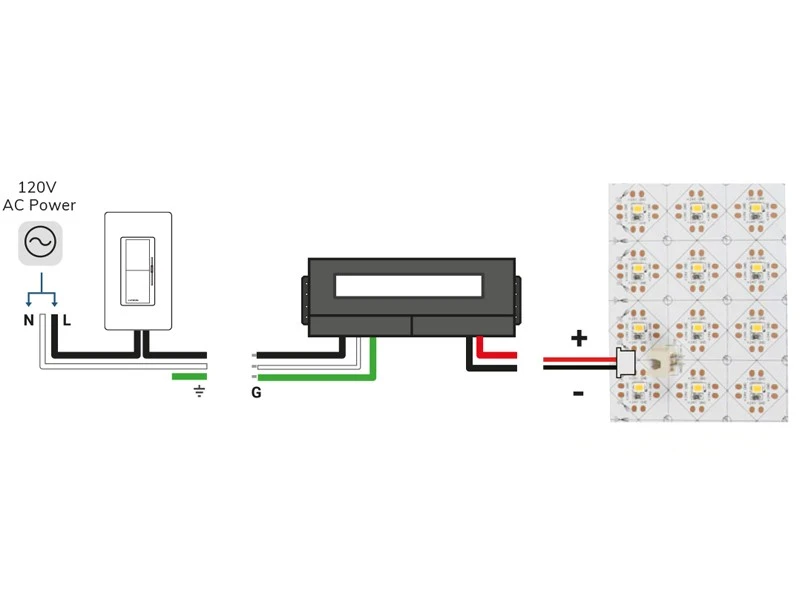
Passo 1: teste tudo primeiro
Conecte a energia e o controlador em uma bancada; faça ciclo de todas as cores e níveis de brilho e confirme que cada segmento responde antes Montagem. Um segmento morto – geralmente um traço interrompido – é encontrado aqui, não depois que a pedra está no lugar.
Passo 2: Prepare a superfície
Remova o pó, o óleo e a umidade; limpe as superfícies com álcool isopropílico. No concreto irregular, adicione fita de alumínio ou uma placa de apoio plana para que o adesivo 3M obtenha contato total - as lacunas enfraquecem a adesão e criam bolsas de ar de fundição de sombra.
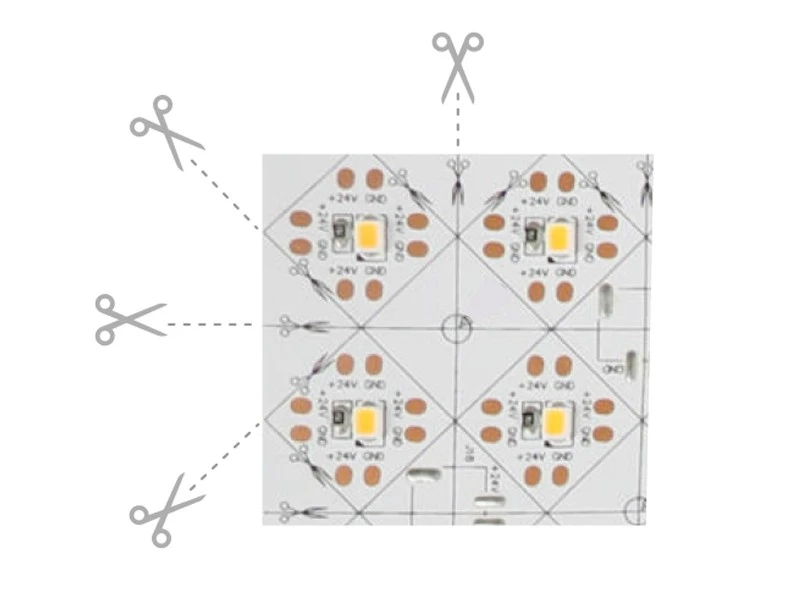
Passo 3: Corte no tamanho
Corte com uma tesoura afiada apenas nas linhas marcadas - cortar contra eles corta traços de cobre e cria zonas mortas. Para paredes grandes, as folhas de bumbum de ponta a ponta com um espaço de 2 a 3 mm; a difusão da pedra esconde pequenos espaços.
Etapa 4: monte as folhas
Descasque o suporte de 3m e pressione a folha 20 a 50 mm atrás da pedra, trabalhando de um canto para fora para eliminar as bolhas de ar. Para builds permanentes, adicione parafusos nos orifícios pré-perfurados - as cabeças ficam niveladas e não projetam sombras.
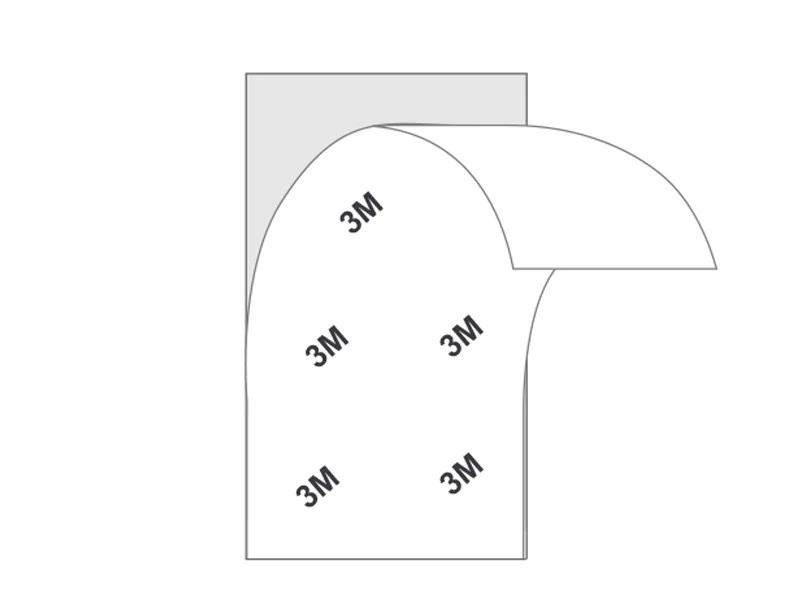
Etapa 5: conectar energia e controle
Use o fio 20AWG para uma única folha, 18AWG para múltiplos. A maioria dos controladores de RF lida com até 10 A — além disso, adicione um amplificador de sinal a cada 5 a 10 folhas. Conectores de correspondência: RGB de 4 pinos, RGBW de 5 pinos, XLR/DMX para DMX512. Etiqueta cada fio.
Passo 6: Ligue e ajuste fino
Restaure a energia, ciclo de cores e bloqueie cenas predefinidas. Caminhe na parede em busca de pontos irregulares: pontos quentes significam aumentar a diferença ou adicionar filme difusor; cores lavadas geralmente significam que o perfil do controlador está errado.
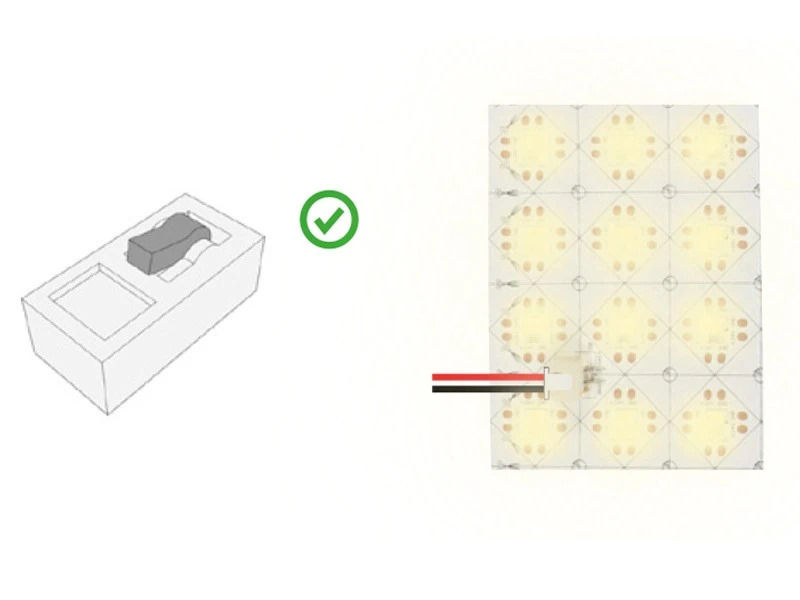
Lista de verificação de ferramentas
- tesoura afiada
- 18–20AWG de fios + decapantes de arame
- Fonte de alimentação — DC 12V/24V, com tamanho de potência + 20% Headroom
- Controlador/Remote (RF 2.4G, Painel de Parede, DMX512 ou DALI)
- Toalhetes de álcool isopropílico
- Multímetro para verificação de tensão antes da inicialização final
Para diagramas de fiação de várias folhas e posicionamento do amplificador, consulte Como cortar, instalar e configurar luzes de folha de LED.

Vídeo: Luz de folha LED monocromática para pedra com luz de fundo — flexível e sem costura (signlited youtube).
sistemas de controle comparados
O controlador correto depende de quem opera as luzes e com que frequência as configurações mudam: um controle remoto portátil se adapta a uma parede trocada algumas vezes por semana; o DMX512 é adequado para um lobby de hotel com dez cenas programadas.
| Controlador | Melhor para | Principais características |
|---|---|---|
| RF 2.4G remoto | Projetos de pequeno e médio porte | Toque na roda de cores, cenas predefinidas, controle de velocidade/velocidade |
| Painel de toque de parede | Instalações permanentes | Escurecimento RGBW, controle de zona, estética limpa |
| DMX512 | Grandes projetos arquitetônicos | Mapeamento de pixels, cenas programadas, sincronização em todo o edifício |
| dáli | Integração inteligente de construção | Ajustável branco, agendamento, integração com BMS |
| SPI / endereçável | Efeitos dinâmicos | Controle de pixel por pixel, perseguição de padrões, sincronização de vídeo |
RF 2.4G Remote - a escolha real do projeto
Não é necessária nenhuma linha de visão – RF funciona através de pedra e drywall – com uma roda de cores, controle deslizante de brilho e cenas predefinidas (flash, fade, estrobo, suave). O alcance é de 20 a 30 metros em ambientes fechados; um remoto pode controlar várias zonas.
Painéis de toque na parede — padrão de hotel e varejo
Controladores com face de vidro com escurecimento RGBW, memória de cena e seleção de zonas — hardware arquitetônico, não eletrônicos de consumo. Disponível em alumínio preto, branco e escovado.
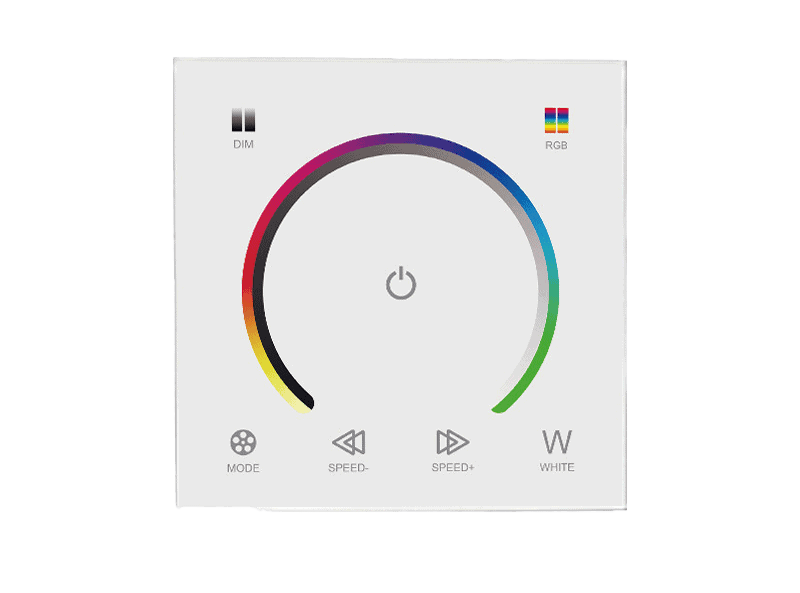
DMX512 e DALI — Controle de escala de construção
Para mais de 20 folhas, ou iluminação sincronizada com HVAC, persianas ou AV: DMX512 oferece 512 canais por universo com mapeamento de pixels via Madmapper ou Resolume; Dali se integra aos sistemas de gerenciamento de edifícios para coleta de luz do dia e escurecimento programado.
SPI endereçável — quando cada pixel conta
Folhas endereçáveis controlam cada LED individualmente – perseguindo padrões, ondas de cores, mapeamento de vídeo. O trade-off é a complexidade: mais canais, tempo correto do sinal e fiação cuidadosa em longas distâncias.
Nossa visão: Para uma parede de pedra com mudanças ocasionais de cores, um controle remoto RF ou um painel de parede é suficiente. Para cenas programadas, invista em DMX512 ou SPI. Veja nosso mergulho profundo Iluminação de pixels endereçável com DMX512 e SPI.

Vídeo: Luz de folha LED de duas cores — o efeito exato da mudança de cor usado em nosso projeto de pedra real.
Escolhendo a pedra translúcida certa
Nem toda pedra transmite luz igualmente: um painel de resina de 2 mm passa quase toda a luz; uma laje de granito de 20 mm bloqueia quase tudo. As variáveis-chave são espessura, densidade mineral e acabamento superficial — as faces polidas refletem a luz antes de entrar na pedra, enquanto os acabamentos afiados dão um brilho mais quente e difuso.
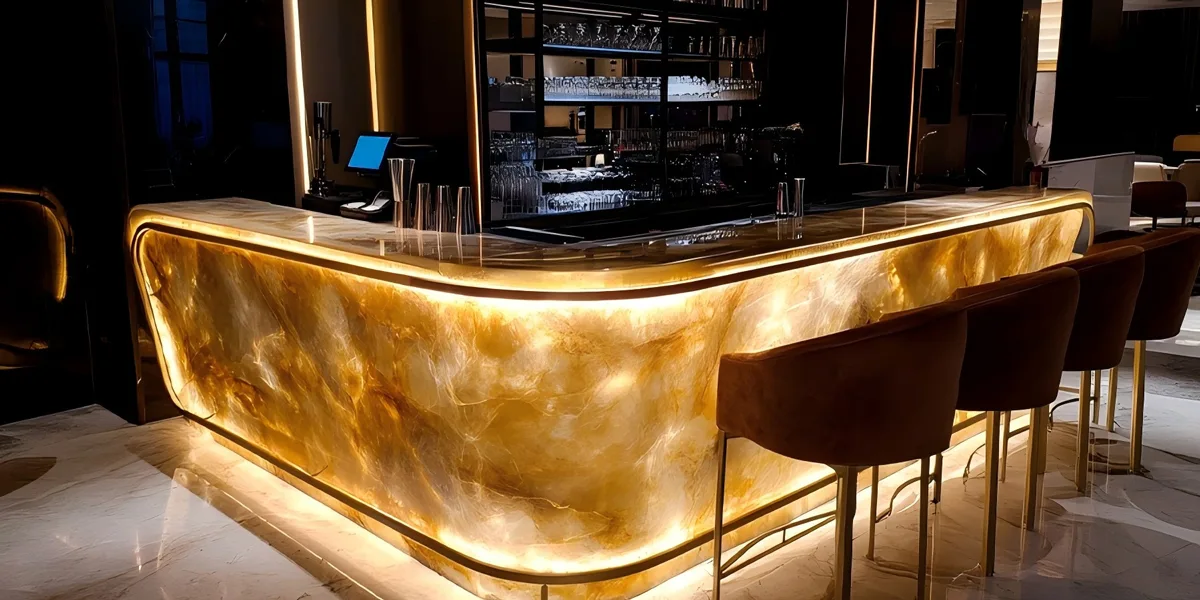
Com base nos resultados de campo, incluindo projetos em nosso Guia de design de mármore retroiluminado — Os materiais têm uma classificação assim:
| Material | translucência | Espessura | Melhor para |
|---|---|---|---|
| ônix | Excelente | 6–12mm | Paredes de luxo, bares, balcões de recepção |
| alabastro | Excelente | 8–15mm | Brilho difuso e quente em spas e centros de bem-estar |
| mármore fino | Bom | 5–10mm | Elegante e sutil iluminação em hotéis e escritórios |
| Painéis de resina | Excelente | 3–8mm | Cor consistente, aparência moderna, econômica |
| acrílico | muito alto | 3–10mm | Difusão acessível, fácil de fabricar, fácil de fabricar |
Onyx - o padrão-ouro
ônix É uma pedra natural com dramática veias e alta translucência. Uma laje de 6 a 8 mm com uma folha de 30 mm atrás revela cada veia - use uma lacuna de 35 a 40 mm para evitar pontos quentes em áreas finas. Caro e frágil, mas incomparável.
Alabastro – caloroso e perdoador
Translucência mais suave e leitosa que difunde a luz uniformemente – perdoando as distâncias do gap e fácil de cortar no campo. Combina bem com lençóis brancos de 3000K.
Mármore fino — elegância sutil
Menos translúcido, por isso precisa de uma folha mais brilhante ou de um espaço menor. Uma laje de 5 mm com uma folha RGBW de alta densidade em 20 mm oferece uma luminosidade suave adequada para lobbies e residências corporativas.
Referência de brilho: para a maioria dos painéis de ônix e resina, uma folha de 12 a 28 W (1200–2.800 lm) com um espaço de 30 mm oferece um brilho equilibrado. Para um alabastro fino, solte para 20 mm com um driver regulável; para mármore grosso, vá 40–50 mm ou adicione uma segunda camada.
OEM e personalização do seu projeto
Os projetos de pedra raramente são padrão: um lobby de hotel precisa de folhas cortadas para 487 × 243 mm, uma barra úmida precisa de impermeabilização IP54, uma rede de varejo precisa de 5.000 folhas idênticas com chicotes personalizados. Como fabricante de OEM/ODM, a Signliteld customiza em seis parâmetros — consulte Opções de design de folha de LED personalizadas:
- Tamanho e forma: retângulos, círculos, arcos e polígonos personalizados de um desenho CAD; layout em 48 horas.
- Densidade LED — 128 LEDs padrão por painel de 490 × 245 mm; até 192 para mármore grosso, aproximadamente +50% saída sem espessura extra.
- Tensão — padrão de 24V (corrente inferior, corridas mais longas); 12 V para instalações automotivas, marítimas ou a bateria.
- Temperatura da cor — 2.700K–6500K ou RGB/RGBW completo. 3000K é mais popular para ambientes de hotel quentes.
- Impermeabilização — IP54/IP65 Revestimento conforme e conectores selados para banheiros, spas e sinalização externa (folhas padrão são IP20).
- Conectores — Soldados para one-offs; Os chicotes plug-and-play reduzem o tempo de instalação em até 60%.
Fluxo de trabalho de personalização
Fluxo típico: requisitos (dimensões, pedra, brilho, cor, controle) → Design de layout com dimensionamento do driver e diagrama de fiação (2–3 dias) → Amostras de protótipo para aprovação (1–2 semanas) → Produção com teste de CQ (2–4 semanas) → Suporte contínuo para instalação e garantia.
Pronto para solicitar um orçamento? Inclui seis detalhes para uma resposta precisa: ① dimensões de montagem, ② material e espessura de pedra, ③ brilho necessário (LM/m²), temperatura de cor ④ ou RGB/RGBW, ⑤ método de escurecimento/controle, ⑥ quantidade alvo. Veja também o Lista de verificação técnica de 7 pontos do comprador B2B.

Vídeo: Folhas de LED com iluminação de pedra de luxo em produção na fábrica da Signliteled.
FAQ
O que é uma luz de folha de LED?
Um painel de PCB fino e flexível com uma densa variedade de LEDs distribuídos uniformemente. Ao contrário das tiras (lineares) ou módulos (ponto), as folhas produzem iluminação uniforme da área sem pontos visíveis ou pontos quentes - ideais para iluminar os painéis de ônix, mármore, acrílico e resina.
Podem as folhas de LED iluminar paredes de pedra?
Sim. Monte-os 20–50 mm atrás da pedra com adesivos ou parafusos 3M; densos 2835/5050 arrays proporcionam um brilho uniforme; as versões RGB/RGBW mudam de cor via RF Remote, painel de parede, DMX512 ou DALI.
RGB ou RGBW — Qual é melhor para retroiluminação de pedra?
RGBW. O chip branco dedicado oferece CRI > 90 e temperatura de cor natural ao lado dos efeitos de cor. Use RGB simples apenas para paredes puramente decorativas.
A que distância as folhas de LED devem estar na pedra?
20–50mm. Materiais mais finos ou translúcidos precisam de uma lacuna maior; a saída mais brilhante permite uma mais curta. Sempre teste com amostras de pedra reais primeiro.
As folhas de LED podem ser cortadas no tamanho?
Sim — corte ao longo das linhas marcadas com uma tesoura afiada em qualquer formato. As unidades de corte mínimo variam de um LED a 50 × 50 mm. re -Teste cada segmento após o corte.
Quanto tempo duram as luzes de folha de LED?
35.000–50.000+ horas, dependendo do modelo e das condições. Monte em superfícies metálicas para melhor dissipação de calor. Signlitelded cobre folhas padrão com garantia de 3 anos.
Conclusão
A luz de fundo da pedra translúcida não se trata de adicionar luz a uma parede – trata-se de transformar a parede em uma superfície viva. Como mostra o projeto real acima, a tecnologia é acessível e simples de instalar: as folhas de LED oferecem o uniforme, sem pontos, sem brilho; os controladores RGB/RGBW oferecem o controle de cores que as demandas de arquitetura moderna; e o espaço de 20 a 50 mm se adapta a quase todas as cavidades, incluindo retrofit onde a pedra já está instalada.
As instalações bem-sucedidas se resumem a três coisas: testar antes da montagem, combinar a densidade do LED com a espessura da pedra e o dimensionamento da fonte de alimentação corretamente. Faça isso direito e a parede muda de vermelho quente para verde frio ao pressionar um botão - sem hardware visível, sem dores de cabeça de manutenção por anos.
Planejando um projeto de luz de fundo em pedra? O Signliteld pode ajudar no design do layout, na seleção de produtos, no dimensionamento do driver e na fabricação personalizada. Entre em contato com suas dimensões, tipo de pedra e requisitos de cor para uma proposta completa com diagramas de fiação e lista de materiais.
Pronto para iluminar seu próximo projeto de pedra?
navegue no coleção de luzes de folha de led, ou contactar-nos Para tamanho personalizado, design de layout e fabricação OEM.
Postagens relacionadas