ไทย
ไทย  English
  简体中文
简体中文  Deutsch
  Español
  Français
  Italiano
  日本語
日本語  한국어
한국어  Polski
  Português
  Русский
  Türkçe
  Nederlands
  Tiếng Việt
อุณหภูมิสี LED กำหนดว่าแสงจะมีลักษณะและความรู้สึกอย่างไร การเลือก CCT ที่เหมาะสม (2700K–6500K) เป็นกุญแจสำคัญในการบรรลุความสมดุลที่สมบูรณ์แบบระหว่างความสะดวกสบาย ประสิทธิภาพการทำงาน และการมองเห็นในทุกพื้นที่
- 2700K–3000K → วอร์มไวท์ (ผ่อนคลาย, บ้าน, การต้อนรับ)
- 4000K → สีขาวเป็นกลาง (สมดุล, สำนักงาน, เชิงพาณิชย์)
- 5000K–6500K → สีขาวเย็น (สว่าง, อุตสาหกรรม, กลางแจ้ง)
หากคุณต้องการบรรยากาศสบาย ๆ → เลือกสีขาวอบอุ่น
หากคุณต้องการโฟกัสและความชัดเจน → เลือก 4000K
หากคุณต้องการความสว่างและทัศนวิสัยสูงสุด → เลือกสีขาวเย็น
อุณหภูมิสี LED (CCT) คืออะไร? วิทยาศาสตร์เบื้องหลังเคลวิน
อุณหภูมิสี LED (CCT) วัดเป็นในเคลวินและกำหนดว่าแสงจะดูอบอุ่น เป็นกลาง หรือเย็นหรือไม่ ซึ่งส่งผลต่อความสบาย โฟกัส และลักษณะของสี แต่ไม่เกี่ยวข้องกับความสว่าง
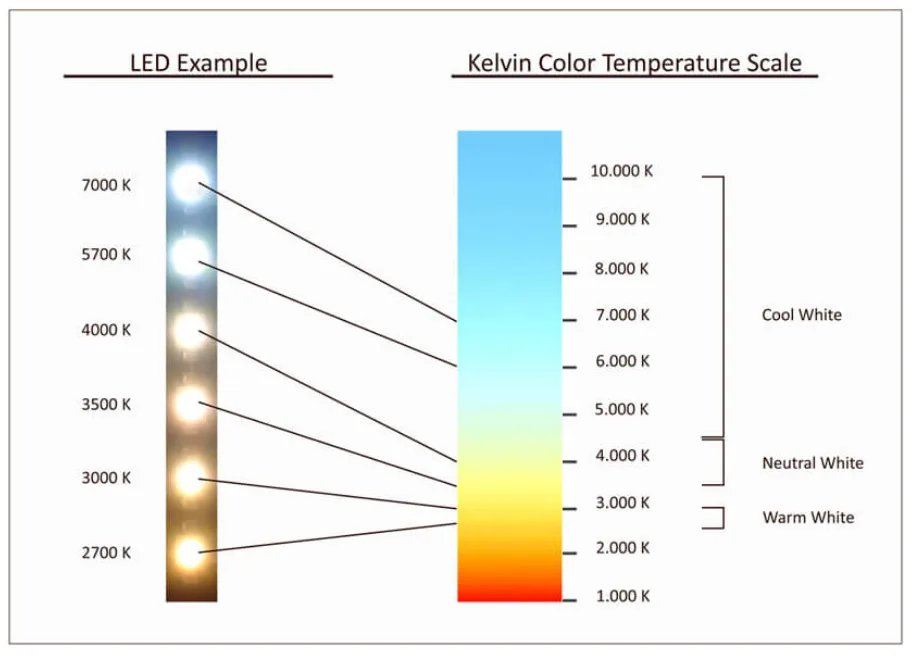
CCT คืออะไร อธิบายรังสี Kelvin และ Blackbody
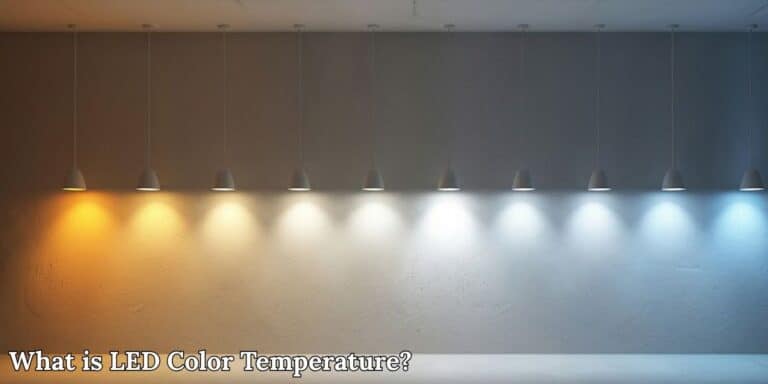
อุณหภูมิสี LED (CCT) อธิบายลักษณะที่มองเห็นได้ของแสงที่แสดงในเคลวิน (K)
- เคลวินต่ำ (2700K–3000K) → แสงสีเหลืองอบอุ่น
- กลางเคลวิน (4000K) → แสงสีขาวเป็นกลาง
- เคลวินสูง (5000K–6500K) → แสงสีฟ้าเย็น
แนวคิดนี้มาจากรังสี BlackBody: เมื่อวัตถุร้อนขึ้น สีของแสงที่ปล่อยออกมาจากสีแดง/ส้มที่อบอุ่นเป็นสีขาว/น้ำเงินเย็น
ในทางปฏิบัติ คุณไม่จำเป็นต้องมีฟิสิกส์—เพียงจำไว้ว่า:
เคลวินตอนล่าง = แสงที่อุ่นขึ้น
เคลวินชั้นสูง = แสงเย็น
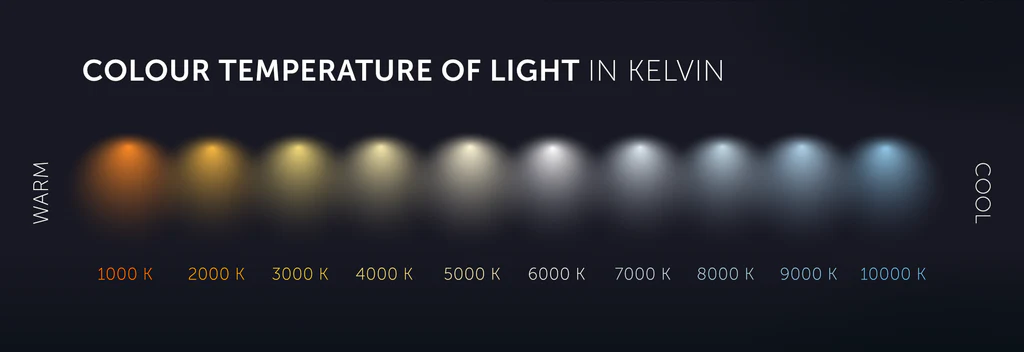
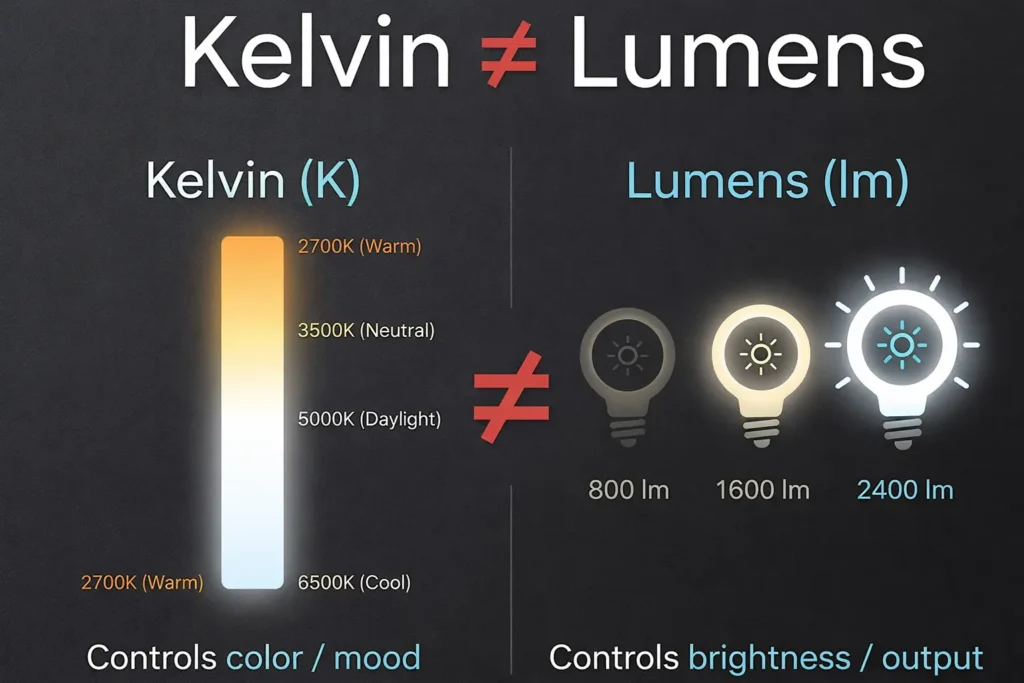
เคลวิน VS ลูเมน: อุณหภูมิสีไม่สว่าง
ข้อผิดพลาดทั่วไปคือความสับสนของเคลวิน (K) กับลูเมน (LM)
- เคลวิน (K) → กำหนดสีอ่อน (อุ่นและเย็น)
- ลูเมน (LM) → กำหนดความสว่าง (แสง)
ไฟ LED สองดวงสามารถมีความสว่างเท่ากันได้ แต่ดูแตกต่างกันมาก:
- 3000K → รูปลักษณ์ที่นุ่มนวลและอบอุ่นขึ้น
- 5000K → แสงที่คมชัดและสว่างกว่า
สำคัญ:
แสงเคลวินที่สูงขึ้นอาจ *ปรากฏ* สว่างขึ้นเนื่องจากคอนทราสต์ที่เพิ่มขึ้น แต่ความสว่างที่แท้จริงนั้นวัดได้เฉพาะในลูเมนเท่านั้น
กฎด่วน:
ใช้ลูเมนเพื่อควบคุมความสว่าง และเคลวินควบคุมอารมณ์
CCT ส่งผลต่ออารมณ์ โฟกัส และจังหวะชีวิตอย่างไร (แสงจากมนุษย์เป็นศูนย์กลาง)
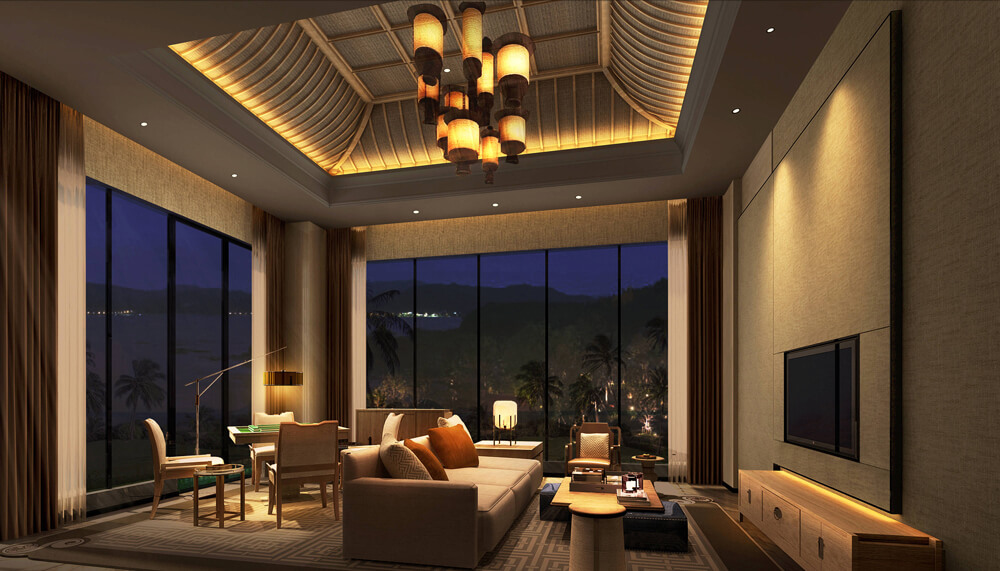
อุณหภูมิสีส่งผลกระทบโดยตรงต่อความรู้สึกของผู้คนและการแสดงในพื้นที่ นี่เป็นพื้นฐานของ **Human centric lighting (HCL)
- 2700K–3000K (แสงอุ่น) → ส่งเสริมการผ่อนคลายและลดความเครียด
- 4000K (แสงเป็นกลาง) → รองรับโฟกัสและประสิทธิภาพการทำงานทุกวัน
- 5000K–6500K (แสงเย็น) →เพิ่มความตื่นตัวและการมองเห็น
ทำไมมันถึงสำคัญ: - แสงอุ่นช่วยให้ร่างกายเตรียมพร้อมสำหรับการพักผ่อน
- แสงเย็นเลียนแบบแสงกลางวันและเพิ่มความเข้มข้น
if-then กฎ:
หากเป้าหมายของคุณคือความสบาย → เลือกแสงอุ่น
หากเป้าหมายของคุณคือผลผลิต → เลือกแสงที่เป็นกลางหรือเย็น
นี่คือเหตุผลที่:
- บ้านใช้สีขาวอบอุ่น
- สำนักงานใช้สีขาวกลาง
- พื้นที่อุตสาหกรรมใช้สีขาวนวล
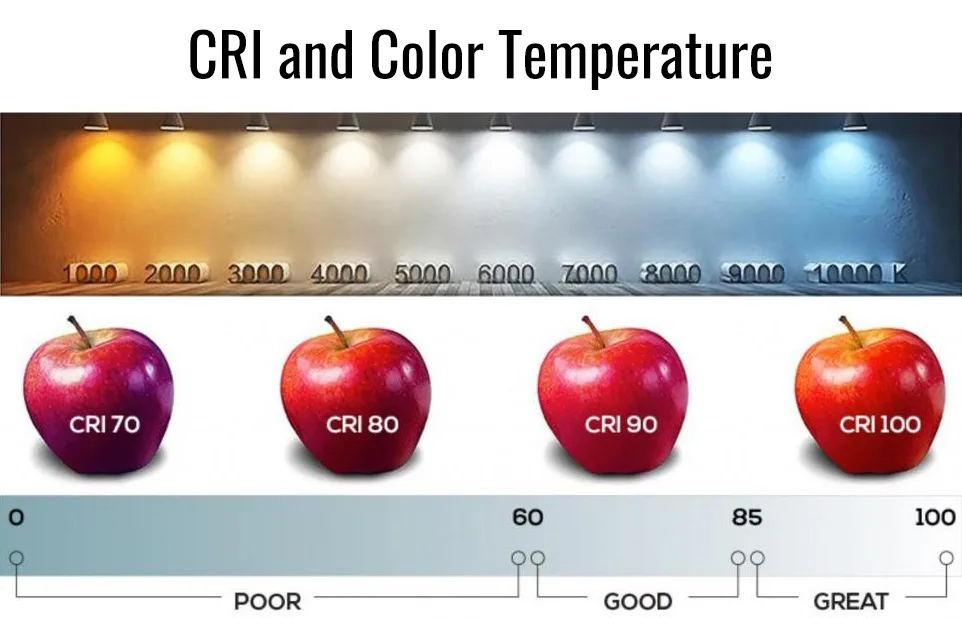
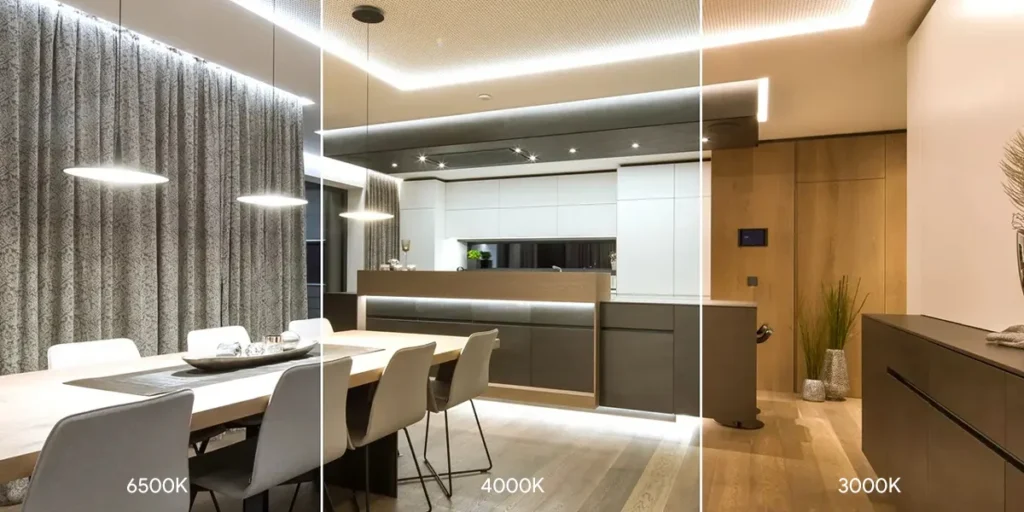
2700K เทียบกับ 3000K เทียบกับ 4000K เทียบกับ 5000K เทียบกับ 6500K - การเปรียบเทียบแบบเต็มสเปกตรัม
CCT แต่ละรายการมีจุดประสงค์ที่แตกต่างกัน — 2700K เพื่อการผ่อนคลาย, 3000K สำหรับการต้อนรับ, 4000K สำหรับประสิทธิภาพการทำงาน, 5000K เพื่อความชัดเจนในการค้าปลีก และ 6500K เพื่อการมองเห็นกลางแจ้ง
แผนภูมิเปรียบเทียบ CCT:
| ส.ป.ก | ตา | ดีที่สุดสำหรับ | ชิปแนะนำ | CRI ทั่วไป |
| 2700k | อบอุ่น สีเหลืองอำพัน | ห้องนอน, โรงแรม, ที่อยู่อาศัย | 2835 / ซัง | ≥90 |
| 3000k | สีขาวนวล | ห้องรับแขก ค้าปลีก ต้อนรับ | 2835 | ≥90–95 |
| 4000k | สีขาวกลาง | สำนักงาน โรงเรียน พาณิชยกรรม | 2835 / ซัง | ≥80–90 |
| 5000k | กลางวัน ขาว | ขายปลีก สตูดิโอ งานเวิร์กช็อป | ไฮ-ครี2835 | ≥95 |
| 6500K | ขาวเย็น/น้ำเงิน | กลางแจ้ง, อุตสาหกรรม, ความปลอดภัย | 5050 / ซัง | ≥80 |
ความเข้าใจอย่างรวดเร็ว:
วอร์มไวท์ (2700K–3000K) สร้างความสบาย ในขณะที่สีขาวนวล (5000K–6500K) ช่วยเพิ่มการมองเห็นและความคมชัด
สำหรับรายละเอียดแต่ละขั้นตอนในสเปกตรัม โปรดดูที่: 3000K เทียบกับ 4000K เทียบกับ 5000K กับ 6000K: ความแตกต่างคืออะไร
2700K เทียบกับ 3000K - สีขาวอบอุ่นเมื่อเปรียบเทียบ
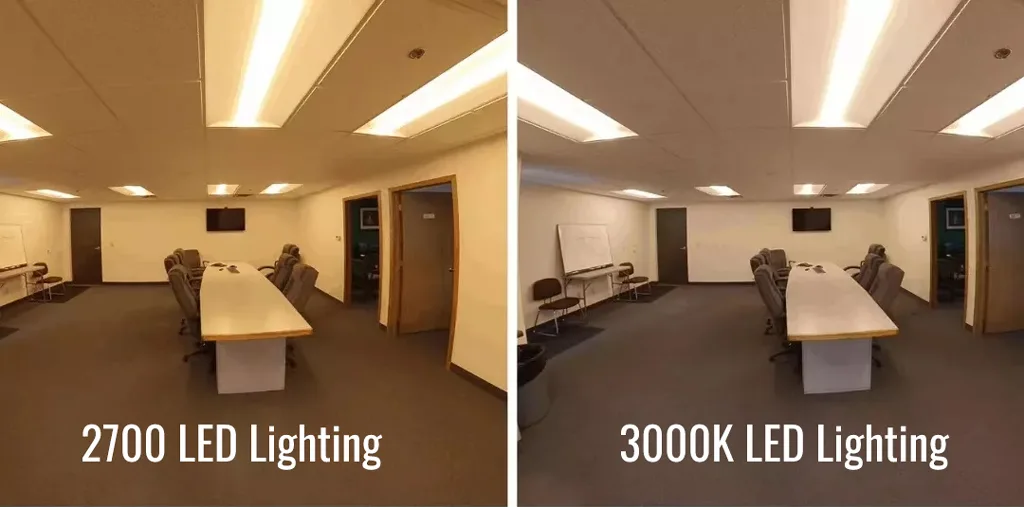
2700K และ 3000K จัดเป็นสีขาวอบอุ่น แต่สร้างบรรยากาศที่แตกต่างกันเล็กน้อย
- 2700K → โทนสีเหลืองเข้ม ผ่อนคลายมากขึ้น
- 3000K → ขาวสะอาด อบอุ่น หลากหลายมากขึ้น
ความแตกต่างที่สำคัญ:
2700K ให้ความรู้สึกเหมือนแสงแบบไส้หลอดแบบเดิมๆ ในขณะที่ 3000K ให้ความรู้สึกสว่างและทันสมัยกว่าเล็กน้อย
การใช้งานที่ดีที่สุด:
- 2700K → ห้องนอน โรงแรม ที่อยู่อาศัยระดับไฮเอนด์
- 3000K → ห้องนั่งเล่น ร้านอาหาร ร้านค้าปลีก
กฎการตัดสินใจ:
หากคุณต้องการความสะดวกสบายสูงสุด → เลือก 2700K
หากคุณต้องการความสมดุลระหว่างความสะดวกสบายและการใช้งาน → เลือก 3000K
ดูเพิ่มเติมที่: 2700K กับ 3000K: คู่มือการเปรียบเทียบและการเลือกโดยละเอียด
3000K เทียบกับ 4000K - ขอบเขตการต้อนรับสู่สำนักงาน
3000K และ 4000K ทำเครื่องหมายการเปลี่ยนจากสีขาวอบอุ่นเป็นสีขาวที่เป็นกลาง
- 3000K → อบอุ่น ชวนให้นึกถึงบรรยากาศ
- 4000K → กลางสะอาด เน้นฟังก์ชั่น
อุณหภูมิสี 3000K
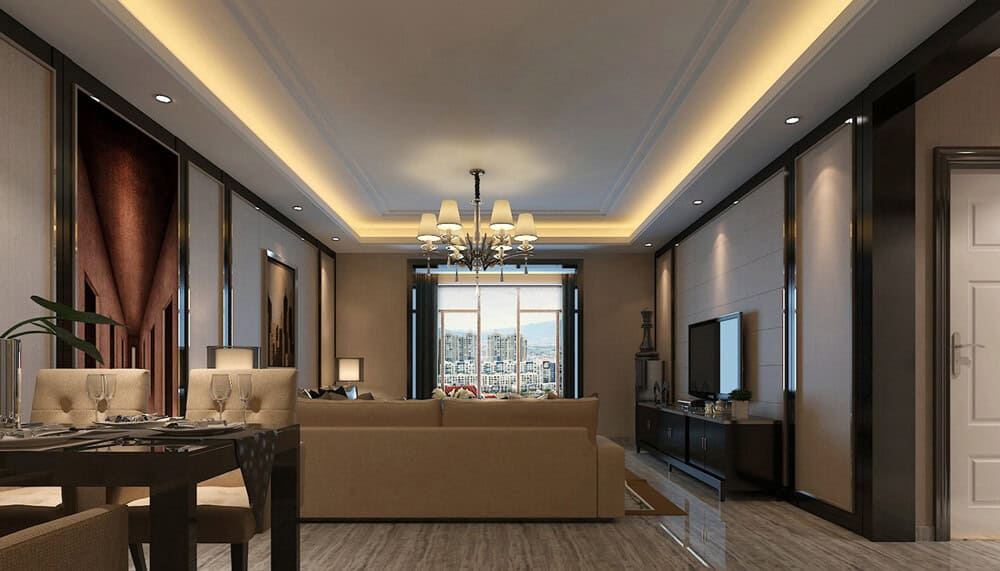
อุณหภูมิสี 4000K
ความแตกต่างที่สำคัญ:
3000K ช่วยเพิ่มอารมณ์และบรรยากาศ ในขณะที่ 4000K ช่วยเพิ่มความชัดเจนและประสิทธิภาพของงาน
การใช้งานทั่วไป:
- 3000K → การต้อนรับ ค้าปลีก ที่อยู่อาศัย
- 4000K → สำนักงาน โรงเรียน พื้นที่เชิงพาณิชย์
การออกแบบข้อมูลเชิงลึก:
4000K ถือเป็น "ค่าเริ่มต้น" ที่ปลอดภัยที่สุดสำหรับสภาพแวดล้อมแบบมืออาชีพเพราะจะหลีกเลี่ยงทั้งความอบอุ่นและความเย็นที่มากเกินไป
กฎการตัดสินใจ:
หากพื้นที่ของคุณมีไว้เพื่อการผ่อนคลาย → เลือก 3000K
หากพื้นที่ของคุณมีไว้สำหรับการทำงาน → เลือก 4000K
ดูเพิ่มเติมที่: 3000K เทียบกับ 4000K: อุณหภูมิสีใดดีกว่าสำหรับโครงการแสงสว่างของคุณ
4000K เทียบกับ 5000K เทียบกับ 6500K - อธิบายเป็นกลางถึงสีขาวเย็น

เมื่อ CCT เพิ่มขึ้นเกิน 4000K แสงจะเปลี่ยนจากสีกลางเป็นสีขาวเย็น โดยจัดลำดับความสำคัญในการมองเห็นและประสิทธิภาพ
- 4000K → แสงเป็นกลางที่สมดุล
- 5000K → เอฟเฟกต์แสงกลางวันที่สดใส
- 6500K → ความเข้มสูงสีขาว
ความแตกต่างที่สำคัญ:
- 4000K → สะดวกสบายสำหรับการใช้งานในระยะยาว
- 5000K → คอนทราสต์ที่คมชัดยิ่งขึ้นเหมาะสำหรับการแสดงผล
- 6500K → ความสว่างสูงสุดที่รับรู้
การใช้งาน:
- 4000K → สำนักงาน ห้องเรียน
- 5000K → ค้าปลีก, เวิร์กช็อป, สตูดิโอ
- 6500K → กลางแจ้ง, ความปลอดภัย, อุตสาหกรรม
ความเข้าใจที่สำคัญ:
เคลวินที่สูงขึ้นไม่ได้เพิ่มความสว่างที่แท้จริง แต่จะเพิ่มความสว่างที่รับรู้เนื่องจากปริมาณแสงสีน้ำเงินที่สูงขึ้น
กฎการตัดสินใจ:
หากคุณต้องการความสะดวกสบาย → เข้าพักที่ 4000K
หากคุณต้องการความชัดเจน → ย้ายไปที่ 5000K
หากคุณต้องการการมองเห็นสูงสุด→ใช้ 6500K

ที่เกี่ยวข้อง: การเปรียบเทียบอุณหภูมิสี 5000K กับ 6000K: ซึ่งเหมาะสำหรับการใช้งานของคุณ
แถบ LED สีขาวอบอุ่นและสีขาวเย็น - คุณควรซื้ออะไรดี?
ซื้อวอร์มไวท์ (2700K–3000K) สำหรับพื้นที่ที่เน้นความสะดวกสบายและสีขาวนวล (4000K–6500K) สำหรับสภาพแวดล้อมการทำงานและประสิทธิภาพ — ทางเลือกที่ไม่ถูกต้องไม่สามารถแก้ไขได้หลังจากการติดตั้ง
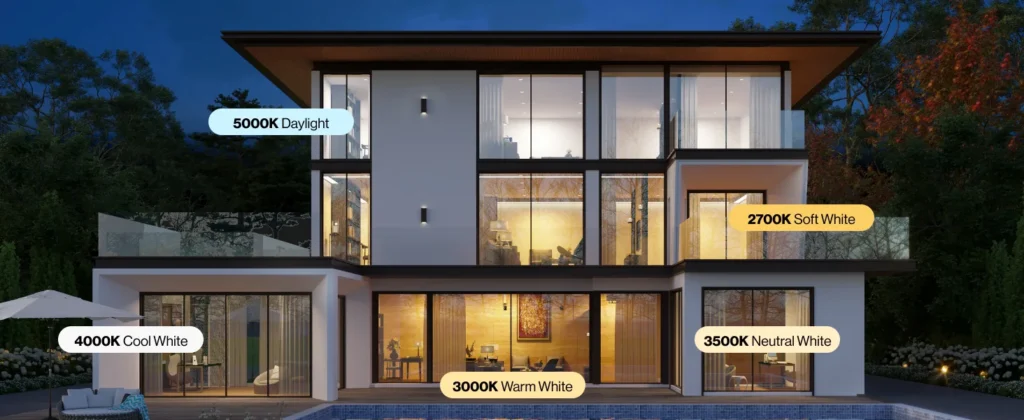
คุณควรซื้อไฟ LED ใด: อุ่นหรือเย็น? ทำไม?
ทางเลือกระหว่างแสงไฟ LED สีขาวและสีขาวเย็นนั้นขึ้นอยู่กับวิธีการใช้พื้นที่
- วอร์มไวท์ (2700K–3000K)
→ สร้างบรรยากาศที่ผ่อนคลายและสบาย
→ ลดความเครียดทางสายตา
→ เหมาะสำหรับพื้นที่ใช้สอยและการต้อนรับ - สีขาวเย็น (4000K–6500K)
→เพิ่มความคมชัดและความคมชัด
→ ปรับปรุงการโฟกัสและการมองเห็นงาน
→เหมาะสำหรับพื้นที่ทำงานและพื้นที่กลางแจ้ง
ความเข้าใจที่สำคัญ:
การจัดแสงไม่ได้เป็นเพียงการทำงานเท่านั้น แต่ยังส่งผลโดยตรงต่อการรับรู้ อารมณ์ และการใช้งาน
คำเตือนที่สำคัญ:
เมื่อติดตั้งแล้ว อุณหภูมิสีของแถบ LED นั้นยากและมีค่าใช้จ่ายสูงในการเปลี่ยนแปลง การเลือก CCT ที่ไม่ถูกต้องอาจส่งผลต่อคุณภาพของพื้นที่อย่างถาวร
กฎการตัดสินใจ:
ถ้าคนอยู่และผ่อนคลาย → เลือกวอร์มไวท์
ถ้าคนทำงานหรือทำงาน → เลือกสีขาวเท่
ฉันควรซื้อหลอดไฟ LED สีขาวหรือแสงกลางวันหรือไม่?
“สีขาวนวล” และ “แสงแดด” เป็นคำผู้บริโภคที่เรียบง่ายสำหรับอุณหภูมิสี
- สีขาวอ่อน → 2700K–3000K (สีขาวอบอุ่น)
- กลางวัน → 5000K–6500K (สีขาวเย็น)
วิธีการเลือก:
- ขาวนวล
→ ดีที่สุดสำหรับห้องนอน ห้องนั่งเล่น โรงแรม
→ สร้างสภาพแวดล้อมที่อบอุ่นและน่าดึงดูดใจ - กลางวัน
→ดีที่สุดสำหรับสำนักงาน, โรงรถ, ห้องครัว, พื้นที่ทำงาน
→ ให้ทัศนวิสัยและความคมชัดสูงสุด

ความแตกต่างที่สำคัญ:
แสงในเวลากลางวันอาจรู้สึกรุนแรงเกินไปในสภาพแวดล้อมที่อยู่อาศัย ในขณะที่สีขาวนวลอาจรู้สึกสลัวเกินไปสำหรับการทำงานที่มีรายละเอียด
กฎการตัดสินใจ:
ถ้าความสบายเป็นสิ่งสำคัญ → เลือกสีขาวนวล
หากการมองเห็นเป็นสิ่งสำคัญ → เลือก Daylight
อะไรจะดีไปกว่าสำหรับห้อง — แสงสีขาวนวลหรือแสงอุ่น?
ไม่มีตัวเลือก "ดีที่สุด" เดียว—เฉพาะการจับคู่ที่ถูกต้องสำหรับฟังก์ชันของห้องเท่านั้น
- แสงอุ่น (2700K–3000K)
→ ดีกว่าสำหรับการผ่อนคลาย บรรยากาศ และความรู้สึกสบายทางอารมณ์ - แสงเย็น (4000K–6500K)
→ดีกว่าสำหรับการมองเห็น ความแม่นยำ และประสิทธิภาพของงาน
แนวปฏิบัติที่ดีที่สุด:
ใช้แสงแบบหลายชั้นแทน CCT เดียว
ตัวอย่าง:
- ห้องนั่งเล่น → 2700K บรรยากาศ + ไฟส่องสว่าง 4000K
- ห้องครัว → 3000K สภาพแวดล้อม + 4000K พื้นผิวการทำงาน
การออกแบบข้อมูลเชิงลึก:
แสงอบอุ่นช่วยเพิ่มวัสดุและโทนสีผิว ในขณะที่แสงเย็นช่วยเพิ่มคอนทราสต์และรายละเอียด
ตารางเปรียบเทียบอย่างรวดเร็ว:
| พิมพ์ | ช่วง CCT | ดีที่สุดสำหรับ | ผล | ความเสี่ยงหากใช้ผิดวิธี |
| อบอุ่น ขาว | 2700K–3000K | บ้าน โรงแรม เลานจ์ | สบาย ผ่อนคลาย | สลัวเกินไปสำหรับการทำงาน |
| สีขาวกลาง | 4000k | สำนักงาน, เชิงพาณิชย์ | สมดุลชัดเจน | สบายน้อยลง |
| ขาวนวล | 5000K–6500K | กลางแจ้ง, อุตสาหกรรม | ความคมชัดสูง ความคมชัดสูง | ภายในบ้านที่รุนแรงเกินไป |
ซื้อกลับบ้านครั้งสุดท้าย:
- สีขาวอบอุ่น = ความสะดวกสบายและบรรยากาศ
- สีขาวเป็นกลาง = ความสมดุลและการใช้งาน
- สีขาวเย็น = ประสิทธิภาพและการมองเห็น
หากคุณเลือกประเภทที่ไม่ถูกต้อง พื้นที่จะรู้สึก "ปิด" แม้ว่าความสว่างจะถูกต้อง เนื่องจากอุณหภูมิของสีเป็นตัวกำหนดประสบการณ์ ไม่ใช่แค่แสงเท่านั้น
ไฟ LED ใดดีที่สุดสำหรับการทำงานและประสิทธิภาพการทำงาน?
4000K Neutral White เป็นอุณหภูมิสี LED ที่ดีที่สุดสำหรับสภาพแวดล้อมการทำงานส่วนใหญ่ - ช่วยเพิ่มโฟกัสโดยไม่ทำให้เกิดความล้าที่ 6500K Cool White ผลิตได้เป็นเวลานานหลายชั่วโมง
ไฟ LED ใดดีที่สุดสำหรับการทำงาน?
ไฟ LED ที่ดีที่สุดสำหรับการทำงานโดยทั่วไปอยู่ใน ช่วง 4000K–5000Kขึ้นอยู่กับความเข้มของงาน
- 4000K (สีขาวเป็นกลาง)
→ ความสว่างและความสบายที่สมดุล
→ เหมาะสำหรับสำนักงาน โต๊ะทำงาน และชั่วโมงการทำงานที่ยาวนาน - 5000K (สีขาวเย็น / กลางวัน)
→ ความคมชัดที่สูงกว่าและทัศนวิสัยที่คมชัดยิ่งขึ้น
→เหมาะสำหรับงานและเวิร์กช็อปที่แม่นยำ
ทำไมต้องเลือก 4000K:
ให้ความคมชัดเพียงพอสำหรับประสิทธิภาพการทำงานโดยไม่มีความกระด้างและแสงสะท้อนที่เกี่ยวข้องกับแสงของเคลวินที่สูงขึ้น
คำเตือนความเสี่ยง:
การใช้ 6500K สำหรับการทำงานที่ยาวนานอาจทำให้ดวงตาเมื่อยล้า แสงจ้า และลดความสบายเมื่อเวลาผ่านไป
กฎการตัดสินใจ:
หากคุณทำงานเป็นเวลานาน → เลือก 4000K
หากคุณต้องการความแม่นยำและรายละเอียด→เลือก 5000K
ไฟ LED สีที่ดีที่สุดสำหรับการผลิตคืออะไร?
อุณหภูมิสี LED ที่ดีที่สุดสำหรับผลผลิตขึ้นอยู่กับความสมดุลระหว่างความตื่นตัวและความสะดวกสบาย
- 4000k
→รองรับการโฟกัสอย่างต่อเนื่อง
→ ลดอาการตา
→ดีที่สุดสำหรับสำนักงานและสภาพแวดล้อมการเรียน - 5000k
→เพิ่มความตื่นตัวและความเร็วปฏิกิริยา
→ มีประโยชน์สำหรับงานที่มีประสิทธิภาพสูงหรือระยะสั้น
ความเข้าใจทางวิทยาศาสตร์:
แสงที่เย็นกว่ามีความยาวคลื่นสีน้ำเงินมากขึ้น ซึ่งกระตุ้นความตื่นตัว แต่การเปิดรับแสงที่มากเกินไปอาจทำให้ความเหนื่อยล้าเพิ่มขึ้น
คำแนะนำในทางปฏิบัติ:
ใช้ 4000K เป็นไฟส่องสว่างเริ่มต้น และเพิ่มขึ้นเป็น 5000K เมื่อต้องการการมองเห็นที่สูงขึ้น
กฎการตัดสินใจ:
หากคุณต้องการผลผลิตที่สม่ำเสมอ → 4000K
หากคุณต้องการความตื่นตัวสูงสุด→ 5000K
ไฟ LED สีอะไรดีที่สุดสำหรับห้องครัว?
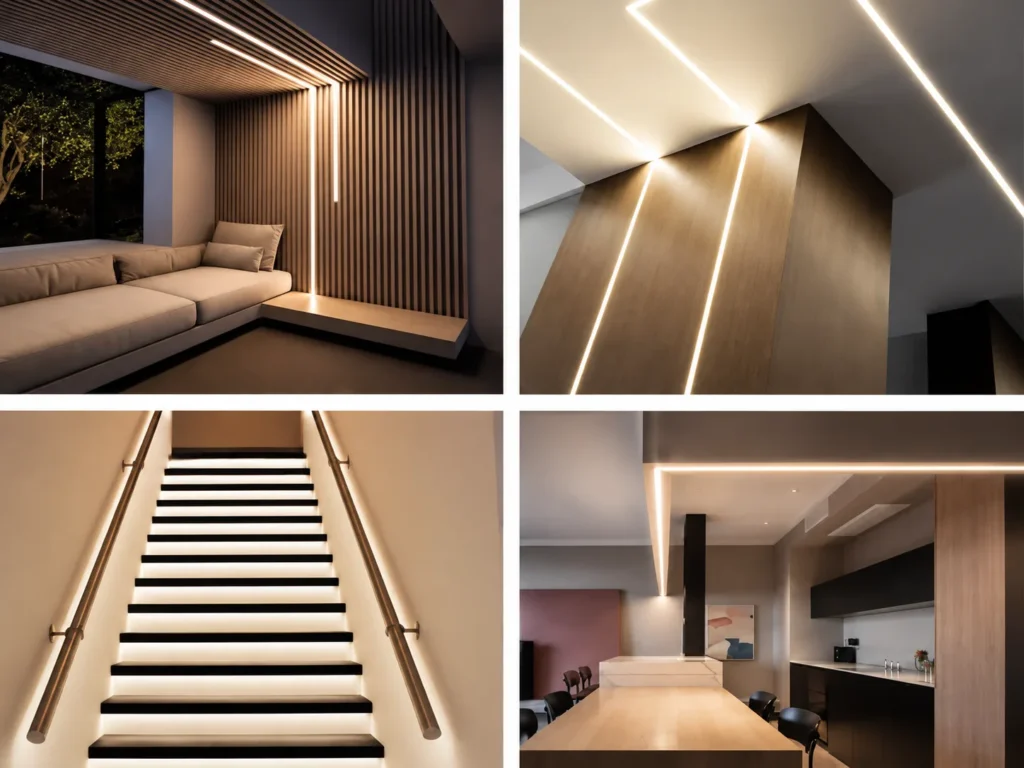
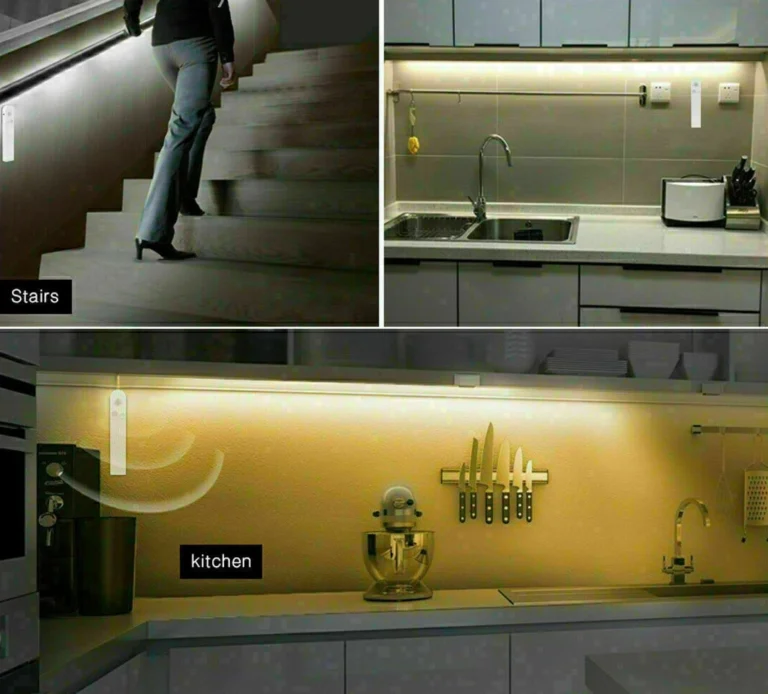
อุณหภูมิสี LED ที่ดีที่สุดสำหรับห้องครัวคือ 3000K–4000Kขึ้นอยู่กับรูปแบบและการใช้งาน
- 3000k
→ อุ่นและสบายขึ้น
→เหมาะสำหรับห้องครัวแบบเปิดที่เชื่อมต่อกับพื้นที่อยู่อาศัย - 4000k
→ ชัดเจนและใช้งานได้ดีกว่า
→เหมาะสำหรับเคาน์เตอร์ การเตรียมอาหาร และไฟส่องสว่างสำหรับงาน
แนวปฏิบัติที่ดีที่สุด:
รวมทั้งสอง:
- 3000K → แสงรอบข้าง
- 4000K → ไฟส่องสว่าง (ใต้ตู้, พื้นผิวการทำงาน)
ความเข้าใจที่สำคัญ:
ไฟในครัวต้องปรับสมดุลความสบายและการมองเห็น—อุ่นเกินไปช่วยลดความชัดเจน เย็นเกินไปทำให้รู้สึกรุนแรง
if–then คู่มือการเลือก (ตามงาน):
| ประเภทงาน | CCT ที่แนะนำ | ใช้เหตุผล |
| งานสำนักงานทั่วไป | 4000k | ความสะดวกสบายที่สมดุลและความชัดเจน |
| การอ่าน/เรียน | 4000K–5000K | ปรับปรุงโฟกัสและความคมชัด |
| งานความแม่นยำ (การออกแบบ, การประชุมเชิงปฏิบัติการ) | 5000k | ทัศนวิสัยในรายละเอียดสูงสุด |
| โฮมออฟฟิศ | 4000k | ลดความเหนื่อยล้าในระยะยาว |
| ห้องครัว แสง แสง | 3000k | บรรยากาศสบาย |
| ไฟส่องสว่างงานครัว | 4000k | ทัศนวิสัยที่ชัดเจนในการปรุงอาหาร |
ซื้อกลับบ้านครั้งสุดท้าย:
- 4000K เป็นตัวเลือกที่ปลอดภัยและมีประสิทธิภาพมากที่สุดสำหรับสภาพแวดล้อมการทำงานส่วนใหญ่
- 5000K ดีที่สุดสำหรับงานที่เน้นรายละเอียด
- 3000K ควรจำกัดเฉพาะพื้นที่ที่เน้นบรรยากาศหรือผ่อนคลาย
การเลือกอุณหภูมิสี LED ที่ถูกต้องส่งผลโดยตรงต่อประสิทธิภาพการทำงาน ความแม่นยำ และความสบายในการมองเห็นในระยะยาว
คู่มือสีแสงแถบ LED - สีเดียว VS เปลี่ยนสี VS ปรับได้สีขาว
แถบสีเดียวเหมาะที่สุดสำหรับการติดตั้งที่เสถียรและคุ้มค่า แถบสีขาวที่ปรับได้เป็นทางเลือกของมืออาชีพเมื่อต้องการพื้นที่ว่างหลายแบบเพื่อตอบสนองความต้องการด้านแสงที่หลากหลายตลอดทั้งวัน
แถบ CCT แบบคงที่สีเดียว - เมื่อเป็นตัวเลือกที่เหมาะสม
แถบ LED สีเดียวทำงานที่อุณหภูมิสีคงที่เช่น 2700K, 3000K หรือ 4000K
เป็นตัวเลือกทั่วไปและเชื่อถือได้มากที่สุดสำหรับโครงการไฟมาตรฐาน
ข้อดี:
- เอาต์พุตแสงที่สม่ำเสมอและเสถียรภาพของสี
- ต้นทุนที่ต่ำกว่าเมื่อเทียบกับระบบที่ปรับได้
- ติดตั้งและควบคุมง่าย (เปิด/ปิดหรือลดแสง)
แอพพลิเคชั่นที่ดีที่สุด:
- ไฟส่องสว่างที่อยู่อาศัย (ห้องนอน, ห้องนั่งเล่น)
- สภาพแวดล้อมการค้าปลีกด้วยการออกแบบแสงคงที่
- การติดตั้งขนาดใหญ่ที่มีความสม่ำเสมอเป็นสิ่งสำคัญ
ข้อจำกัด:
- ไม่มีความยืดหยุ่นหลังการติดตั้ง
- ไม่สามารถปรับตัวให้เข้ากับช่วงเวลาหรือกรณีการใช้งานที่แตกต่างกันได้
กฎการตัดสินใจ:
หากความต้องการแสงของคุณคงที่และคาดเดาได้ → เลือกแถบ LED สีเดียว
คู่มือฉบับสมบูรณ์สำหรับแถบ LED สีขาวที่ปรับได้ (2700K–6500K)
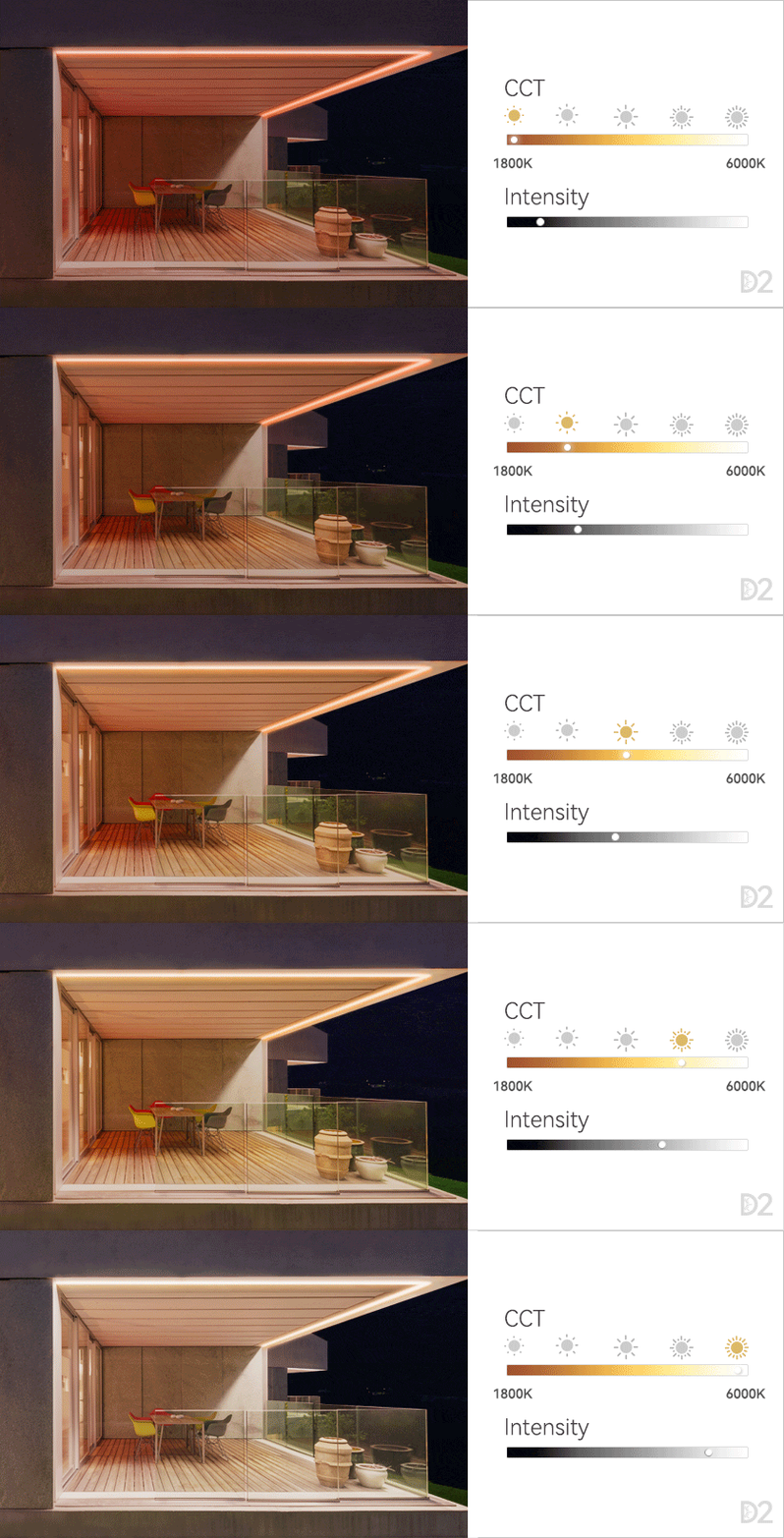
แถบ LED สีขาวที่ปรับได้ช่วยให้สามารถปรับไดนามิกระหว่างสีขาวอบอุ่น (2700K) และสีขาวเย็น (6500K)
ออกแบบมาเพื่อปรับแสงตลอดทั้งวันหรือตามความต้องการของผู้ใช้
พวกเขาทำงานอย่างไร:
- รวม LED สีขาวอบอุ่นและไฟ LED สีขาวเย็น ๆ บนแถบเดียว
- ปรับอัตราส่วนเอาท์พุทเพื่อสร้างระดับ CCT ที่แตกต่างกัน
สำหรับรายละเอียดทางเทคนิคทั้งหมด โปรดดูที่: แถบ LED สีขาวที่ปรับได้: มันคืออะไร ทำงานอย่างไร และเมื่อใดควรใช้
ประโยชน์ที่สำคัญ:
- ระบบเดียวแทนที่การติดตั้ง CCT แบบคงที่หลายรายการ
- รองรับแสงที่เน้นมนุษย์เป็นศูนย์กลาง (ปรับกลางวันและกลางคืน)
- เพิ่มความสะดวกสบายและความยืดหยุ่นของผู้ใช้
การใช้งานทั่วไป:
- สำนักงานที่มีการเปลี่ยนโหมดการทำงาน
- โรงแรมที่มีฉากแสงกลางวัน/กลางคืน
- สภาพแวดล้อมด้านการดูแลสุขภาพสอดคล้องกับจังหวะการเต้นของหัวใจ
โซลูชันผลิตภัณฑ์: แถบนำซังสีขาวที่ปรับได้
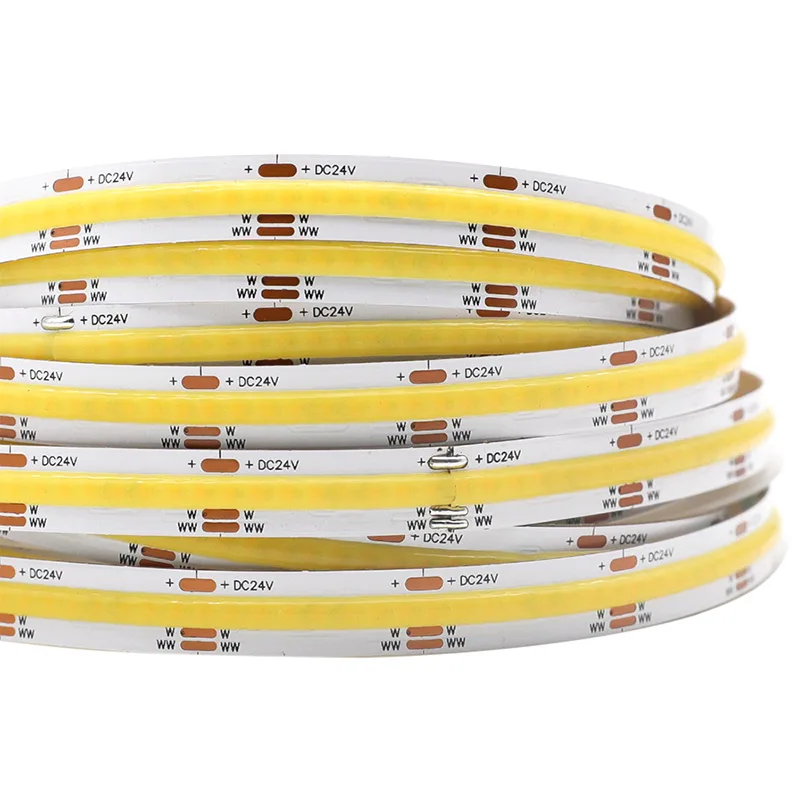
ไฟ LED Strip ซังสีขาวสำหรับงานไฟ
- รุ่นหลัก: FYT10T608C
- ตัวเลือก LED จำนวนต่อเมตร: 608/640ชิป (สนั่น)
- ตัวเลือกความกว้างของ PCB: 10 มม.
- ตัวเลือกสี: 2700K – 6500K ปรับได้
- ศูนย์วิจัยกฤษณ์เคมี: >90
- แรงดันไฟฟ้าขาเข้า: DC12V/DC24V
- กำลังไฟฟ้าต่อเมตร: 14W/16W
- ประสิทธิภาพ: 90–110 ลูเมน/วัตต์
- ตัวเลือกเกรด IP: IP20/IP54/IP65/IP67/IP68
- การรับประกัน: 3 ปี
ข้อพิจารณาความเสี่ยง:
- ต้องใช้ตัวควบคุมที่เข้ากันได้ (PWM, DALI, ZigBee ฯลฯ)
- ต้นทุนเริ่มต้นที่สูงกว่าแถบสีเดียว
กฎการตัดสินใจ:
หากพื้นที่ของคุณต้องใช้ความยืดหยุ่นหรือแสงอเนกประสงค์ → เลือกสีขาวที่ปรับได้
แถบ LED แบบหรี่แสงแบบ DUAL สีขาว CCT - วิธีการทำงาน
แถบ LED สีขาว (ปรับ CCT ปรับได้) เป็นระบบสีขาวแบบปรับได้โดยใช้สองช่องแยก
โครงสร้าง:
- ช่องสัญญาณเดียว = ไฟ LED สีขาวอบอุ่น (เช่น 2700K)
- ช่องหนึ่งช่อง = ไฟ LED สีขาวเย็น (เช่น 6500K)
ตัวควบคุมจะปรับความเข้มของแต่ละช่องเพื่อให้ได้อุณหภูมิสีที่ต้องการ
ข้อดีที่สำคัญ:
- การเปลี่ยนผ่านอย่างราบรื่นในช่วง CCT แบบเต็ม
- การควบคุมที่แม่นยำกว่าระบบช่องสัญญาณเดียว
- เหมาะสำหรับปรับลดแสง + ปรับสี
โซลูชันผลิตภัณฑ์: แถบ LED แบบหรี่แสงแบบ Dimable CCT แบบคู่
ข้อกำหนดที่สำคัญ:
- ต้องใช้คอนโทรลเลอร์แบบดูอัลแชนเนลที่เข้ากันได้
- ไดรเวอร์ที่ไม่ถูกต้องอาจทำให้กะพริบหรือเอาต์พุตไม่สม่ำเสมอ
กรณีการใช้งานที่ดีที่สุด:
- บ้านอัจฉริยะ
- ระบบไฟเชิงพาณิชย์
- โครงการแสงทางสถาปัตยกรรม
แถบ LED เปลี่ยนสีและแถบสี - ใช้กรณีและข้อ จำกัด
แถบ LED RGB ได้รับการออกแบบมาสำหรับเอฟเฟกต์เปลี่ยนสีมากกว่าแสงสีขาวที่ใช้งานได้
ความสามารถ:
- ผลิตสีนับล้าน (สีแดง, สีเขียว, สีน้ำเงิน)
- สร้างเอฟเฟกต์แสงและฉากแบบไดนามิก
แอพพลิเคชั่นที่ดีที่สุด:
- ไฟประดับ
- พื้นที่บันเทิง
- การตั้งค่าการเล่นเกมและแสงเหตุการณ์
ข้อจำกัด:
- คุณภาพแสงสีขาวต่ำเมื่อเทียบกับ LED สีขาวโดยเฉพาะ
- ความแม่นยำของสีที่ต่ำกว่า (ไม่เหมาะสำหรับงานแสง)
- ต้องใช้ตัวควบคุมเพื่อการทำงานเต็มรูปแบบ
ความเข้าใจที่สำคัญ:
แถบ RGB ไม่ได้แทนที่แสงสีขาวที่เหมาะสม แต่เป็นการเพิ่มประสิทธิภาพสำหรับเอฟเฟกต์ภาพ
กฎการตัดสินใจ:
หากเป้าหมายของคุณคือบรรยากาศหรือเอฟเฟกต์สี → เลือก RGB
หากเป้าหมายของคุณคือแสงที่ใช้งานได้ → หลีกเลี่ยง RGB เป็นแหล่งหลัก
ตารางเปรียบเทียบ:
| พิมพ์ | ดีที่สุดสำหรับ | วิธีการควบคุม | ระดับต้นทุน | ดิ้นได้ |
| หนึ่งสี | ที่อยู่อาศัย, ค้าปลีก, ไฟคงที่ | สวิทช์/สวิทช์พื้นฐาน | เลว | ไม่ |
| ปรับสีขาว | สำนักงาน, โรงแรม, ไฟอัจฉริยะ | PWM/ต้าหลี่/ซิกบี | กลาง-สูง | อุจ |
| RGB / เปลี่ยนสี | ตกแต่ง, ความบันเทิง | แอพ/คอนโทรลเลอร์ | สายกลาง | สูงมาก (สีเท่านั้น) |
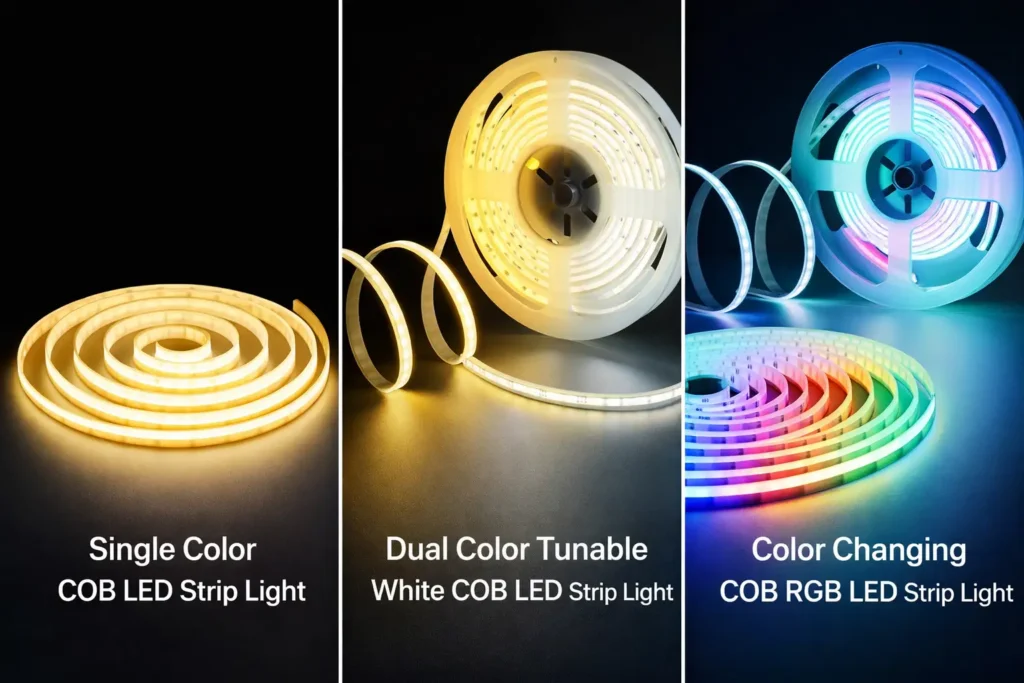
ซื้อกลับบ้านครั้งสุดท้าย:
- แถบ LED สีเดียว → ดีที่สุดเพื่อความเรียบง่ายและคุ้มค่า
- แถบ LED สีขาวปรับได้ → ดีที่สุดสำหรับความยืดหยุ่นและการออกแบบแสงแบบมืออาชีพ
- แถบ LED RGB → ดีที่สุดสำหรับการตกแต่งและแสงแบบไดนามิก
การเลือกประเภทแถบ LED ที่เหมาะสมมีความสำคัญพอๆ กับการเลือกอุณหภูมิสีที่เหมาะสม เนื่องจากการควบคุมเป็นตัวกำหนดว่าแสงของคุณทำงานอย่างไรเมื่อเวลาผ่านไป
ที่เกี่ยวข้อง: แถบ LED สีเดียว, CCT, RGB, RGBW หรือ RGBBIC: ประเภทใดที่เหมาะกับโครงการของคุณมากที่สุด
อธิบายชิปแถบ LED - ชิปใดทำงานได้ดีที่สุดในแต่ละ CCT?
ชิป 2835 รองรับการใช้งานในร่มส่วนใหญ่ (2700K–5000K) ชิป 5050 จำเป็นสำหรับระบบ Tunable หรือ RGB COB ให้เอาต์พุตแบบไม่มีจุดแบบพรีเมียมสำหรับแสงสถาปัตยกรรมระดับไฮเอนด์
สำหรับการอ้างอิงการเลือกชิปที่สมบูรณ์ โปรดดูที่: คู่มือชิปแถบ LED: 2835 เทียบกับ 5050 เทียบกับ COB เทียบกับ 3528 อธิบาย
ชิป LED 2835 - ประสิทธิภาพที่ดีที่สุดสำหรับแสงในร่ม
ชิป LED 2835 เป็นมาตรฐานอุตสาหกรรมสำหรับแสงทั่วไป เนื่องจากมีประสิทธิภาพและความเก่งกาจสูงในหลายช่วง CCT
ลักษณะสำคัญ:
- ประสิทธิภาพการส่องสว่างสูง (LM/W)
- ประสิทธิภาพการระบายความร้อนที่ยอดเยี่ยม
- มีจำหน่ายในช่วง CCT เต็มรูปแบบ (2700K–6500K)
แอพพลิเคชั่นที่ดีที่สุด:
- ไฟส่องสว่างที่อยู่อาศัย (ห้องนอน, ห้องนั่งเล่น)
- สำนักงานและไฟเชิงพาณิชย์
- สภาพแวดล้อมการค้าปลีกที่ต้องการแสงสีขาวที่สม่ำเสมอ
ทำไมมันถึงทำงานได้ดี:
- การกระจายความร้อนที่มีประสิทธิภาพช่วยให้สีมีเสถียรภาพ
- รองรับตัวเลือก CRI สูง (≥90) เหมาะอย่างยิ่งสำหรับความแม่นยำของสี
กฎการตัดสินใจ:
หากคุณต้องการแสงสีขาวที่เชื่อถือได้และคุ้มค่า → เลือก 2835
เรียกดูผลิตภัณฑ์: ไฟ LED แถบ SMD 2835 - สีเดียว ปรับ CCT และประสิทธิภาพสูง
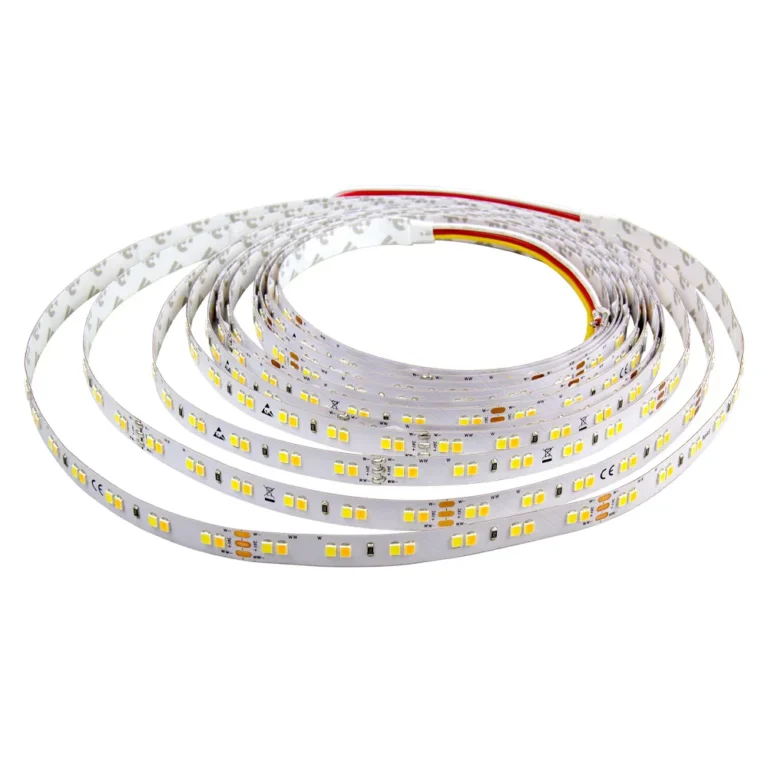
แถบ LED ความสว่างสูง
- 120 SMD2835 LEDs ต่อเมตร
- ความกว้าง PCB 8 มม.
- CRI≥80 สำหรับการแสดงผลสีที่แม่นยำ
- หรี่แสงได้เต็มที่
- เทปกาว 3M สองด้านที่แข็งแกร่ง
- 3000K, 4000K และ 6500K อุณหภูมิสีเสริม
- ถังเดียว 3 ขั้นตอน SDCM มีให้เลือก
- สามารถเป็น OEM/ODM และปรับแต่งได้
ชิป LED 5050 - ดีที่สุดสำหรับ RGB และสีขาวที่ปรับได้
ชิป LED 5050 ได้รับการออกแบบมาสำหรับระบบไฟหลายช่องสัญญาณ รวมถึง RGB และสีขาวที่ปรับได้
ลักษณะสำคัญ:
- ขนาดชิปที่ใหญ่ขึ้นช่วยให้สามารถรวมไดโอดหลายตัวเข้าด้วยกันได้
- รองรับการผสมสี RGB หรือช่องสีขาวคู่
- การใช้พลังงานสูงกว่า 2835
แอพพลิเคชั่นที่ดีที่สุด:
- ระบบแถบ LED RGB
- แถบ LED แบบหรี่แสงแบบ DUAL สีขาว CCT
- สภาพแวดล้อมแสงแบบไดนามิก
เหตุใดจึงจำเป็น:
- ช่วยให้สามารถเปลี่ยนสีและปรับ CCT
- ไม่สามารถแทนที่ด้วยชิปไดโอดเดี่ยวเช่น 2835
ข้อจำกัด:
- ประสิทธิภาพที่ต่ำกว่าสำหรับแสงสีขาวบริสุทธิ์
- สร้างความร้อนได้มากขึ้น ต้องใช้การจัดการความร้อนที่ดีขึ้น
กฎการตัดสินใจ:
หากคุณต้องการการควบคุมสีหรือ CCT ที่ปรับได้ → เลือก 5050
แถบ LED COB - ดีที่สุดสำหรับชุดไฟแบบไม่มีจุด
แถบ LED COB (ชิปบนบอร์ด) ใช้ชิป LED ที่อัดแน่นเพื่อสร้างเส้นแสงที่ต่อเนื่องโดยไม่มีจุดที่มองเห็นได้
ลักษณะสำคัญ:
- แสงที่สม่ำเสมอและไม่มีรอยต่อ
- ความหนาแน่นของ LED สูง
- คุณภาพของภาพระดับพรีเมียม
แอพพลิเคชั่นที่ดีที่สุด:
- แสงสถาปัตยกรรม
- จอแสดงผลระดับไฮเอนด์
- แสงเชิงเส้นที่ไม่มีฮอตสปอต
โซลูชันผลิตภัณฑ์: ซัง LED 220V มืออาชีพ
โซลูชันผลิตภัณฑ์: ไฟ LED แบบ COB - ตัวเลือก CRI สูง 12V / 24V สำหรับแสงสถาปัตยกรรมและเชิงพาณิชย์
ข้อดี:
- กำจัด "Dot Effect" ที่เห็นในแถบ LED แบบดั้งเดิม
- ให้ความสว่างแบบกระจาย
ข้อควรพิจารณา:
- ต้นทุนที่สูงกว่าแถบ SMD มาตรฐานเล็กน้อย
- ต้องติดตั้งอย่างเหมาะสมเพื่อการจัดการความร้อน
กฎการตัดสินใจ:
หากคุณภาพของภาพและความสม่ำเสมอเป็นสิ่งสำคัญ → เลือก COB
3528 ชิป LED - ใช้ตกแต่งต่ำ
ชิป LED 3528 เป็นตัวเลือกที่เก่ากว่าและใช้พลังงานต่ำซึ่งส่วนใหญ่ใช้สำหรับการตกแต่งหรือแสงที่มีความเข้มต่ำ
ลักษณะสำคัญ:
- เอาต์พุตความสว่างที่ต่ำกว่า
- การใช้พลังงานที่ลดลง
- ประสิทธิภาพที่จำกัดเมื่อเทียบกับชิปที่ทันสมัย
แอพพลิเคชั่นที่ดีที่สุด:
- แสงเน้นเสียง
- พื้นหลังหรือแสงทางอ้อม
- โครงการตกแต่งที่ละเอียดอ่อนงบประมาณ
ข้อจำกัด:
- ไม่เหมาะกับแสงปฐมภูมิ
- ประสิทธิภาพและความสว่างต่ำกว่า 2835
กฎการตัดสินใจ:
หากแสงเป็นการตกแต่งและความสว่างต่ำเป็นที่ยอมรับ → เลือก 3528
ชิป × CCT × เมทริกซ์การเลือกแอปพลิเคชัน:
| ประเภทชิป | ช่วง CCT | แอพพลิเคชั่น | ข้อได้เปรียบ |
| 2835 | 2700K–5000K | ที่อยู่อาศัย, สำนักงาน, ค้าปลีก | ประสิทธิภาพสูง ผลผลิตที่มั่นคง |
| 5050 | 2700K–6500K (หลายช่อง) | RGB ระบบสีขาวที่ปรับได้ | การควบคุมสีและ CCT |
| ซัง | 2700K–4000K (พบมากที่สุด) | สถาปัตยกรรม, แสงระดับพรีเมียม | แสงยูนิฟอร์ม |
| 3528 | 2700K–3000K | ไฟประดับ | ต้นทุนต่ำ พลังงานต่ำ |
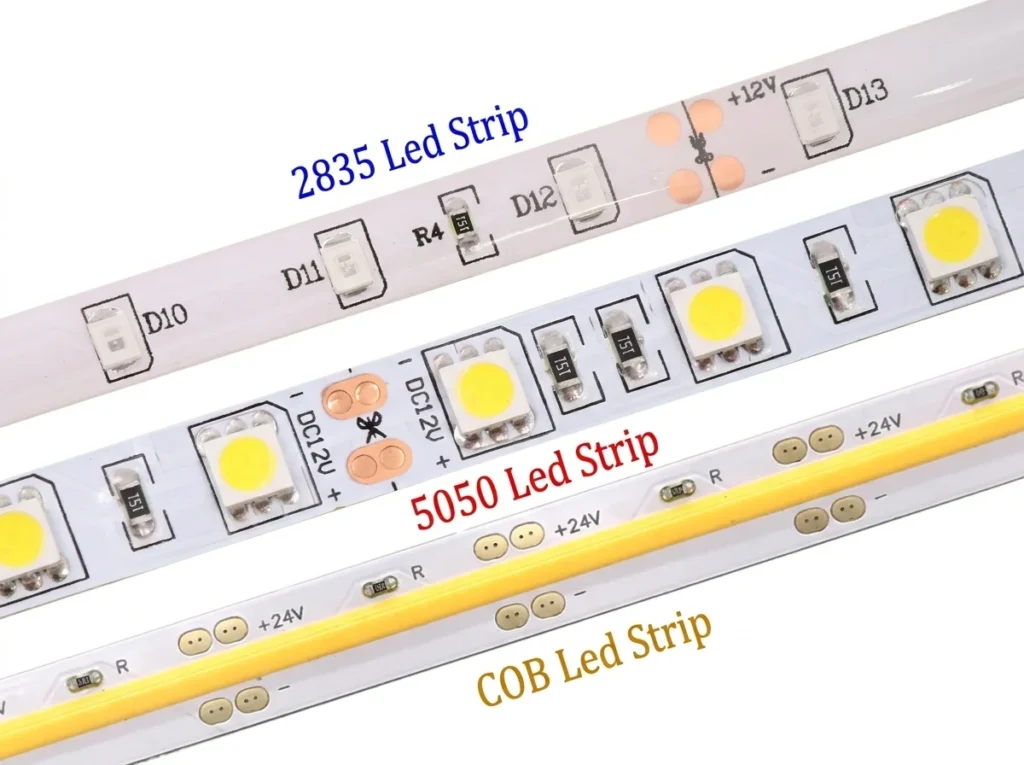
ตรรกะการเลือกปฏิบัติ:
- แสงทั่วไป → 2835
- ระบบเปลี่ยนสี / ปรับได้ → 5050
- แสงเชิงเส้นระดับพรีเมียม → ซัง
- ตกแต่งใช้พลังงานต่ำ → 3528
ข้อมูลเชิงลึกเพิ่มเติม:
ระบบไฟส่องสว่างที่ทันสมัยมักรวมประเภทชิปเข้าด้วยกันขึ้นอยู่กับความซับซ้อนของการใช้งาน ตัวอย่างเช่น โครงการอาจใช้:
- 2835 สำหรับไฟส่องสว่างทั่วไป
- ซังสำหรับพื้นที่ไฮไลท์ที่มองเห็นได้
- 5050 สำหรับแสงแบบไดนามิกหรือคุณสมบัติ
หัวข้อที่เกี่ยวข้อง: ประเภทโมดูลและการใช้งาน LED
ซื้อกลับบ้านครั้งสุดท้าย:
การเลือกชิป LED ที่เหมาะสมไม่ได้เป็นเพียงการตัดสินใจทางเทคนิคเท่านั้น แต่ยังส่งผลโดยตรงต่อประสิทธิภาพ คุณภาพของภาพ และความสามารถของระบบ
จับคู่ชิปกับฟังก์ชัน จากนั้นจับคู่ CCT กับสภาพแวดล้อมเพื่อประสิทธิภาพแสงที่เหมาะสมที่สุด
ตัวชี้วัดคุณภาพที่ซ่อนอยู่ — แผ่นข้อมูลจำเพาะอะไรไม่ได้บอกคุณ
SDCM ควบคุมว่าแถบหลายแถบมีสีตรงกันหรือไม่ CRI และ R9 กำหนดว่าวัตถุธรรมชาติมีลักษณะอย่างไรภายใต้แสง และการออกแบบทางความร้อนจะกำหนดว่าผลลัพธ์เหล่านั้นคงความสม่ำเสมอเมื่อเวลาผ่านไปหรือไม่
SDCM และ Macadam ellipses — ทำไมสองแถบ 3000k จึงดูแตกต่าง
แม้ว่าแถบ LED สองแถบจะมีป้ายกำกับ 3000K แต่ก็อาจไม่เหมือนกัน เนื่องจากความทนทานต่อสีวัดโดย SDCM (ค่าเบี่ยงเบนมาตรฐานของการจับคู่สี)
SDCM กำหนดจำนวนที่อนุญาตความแปรผันรอบจุดสีเป้าหมาย
· ≤3 SDCM → ไม่มีความแตกต่างที่มองเห็นได้ (คุณภาพระดับพรีเมียม)
· ≤5 SDCM → รูปแบบเล็กน้อย (ยอมรับได้สำหรับโครงการส่วนใหญ่)
· 5 SDCM → ไม่ตรงกันอย่างเห็นได้ชัด
ทำไมมันถึงสำคัญ:
- ในการติดตั้งแบบหลายแถบ SDCM ที่ไม่สอดคล้องกันจะสร้างความแตกต่างของสีที่มองเห็นได้
- ที่สำคัญอย่างยิ่งในการใช้งานแสงเชิงเส้น ค้าปลีก และสถาปัตยกรรม
วงรีแมคคาดัมอธิบายสิ่งนี้ด้วยสายตา—กำหนดช่วงที่ความแตกต่างของสีไม่สามารถรับรู้ได้ด้วยตามนุษย์
กฎการตัดสินใจ:
หากมีการติดตั้งแถบ LED หลายแถบในที่เดียว → เลือก ≤3 SDCM
CRI และ R9 - ทำไมการเรนเดอร์สีสูงจึงยากกว่า CCT ที่อบอุ่น
CRI (ดัชนีการเรนเดอร์สี) วัดว่าแหล่งกำเนิดแสงเปิดเผยสีได้อย่างแม่นยำเพียงใดเมื่อเทียบกับแสงธรรมชาติ
- CRI ≥80 → คุณภาพมาตรฐาน
- CRI ≥90 → แสงคุณภาพสูง
อย่างไรก็ตาม CRI เพียงอย่างเดียวไม่เพียงพอ R9 วัดความสามารถในการแสดงสีแดงเข้มซึ่งเป็นสิ่งสำคัญสำหรับ:
- โทนสีผิว
- การนำเสนออาหาร
- ไม้และผ้า
ทำไมสิ่งนี้ถึงท้าทาย:
- CCT อุ่น (2700K–3000K) ต้องใช้สเปกตรัมสีแดงมากขึ้น
- การบรรลุทั้ง CRI สูงและ R9 ที่แข็งแกร่งที่อุณหภูมิอุ่นนั้นยากในทางเทคนิค
ปัญหาทั่วไป:
- R9 ต่ำ → สีดูหมองคล้ำ โดยเฉพาะสีแดง
- CRI สูง แต่ R9 ต่ำ → ประสิทธิภาพทำให้เข้าใจผิด
กฎการตัดสินใจ:
สำหรับที่อยู่อาศัย ร้านค้าปลีก หรือการบริการ → เลือก CRI ≥90 ด้วย R9 ที่แข็งแกร่ง
การจัดการความร้อน — ความร้อนส่งผลต่อความเสถียรของ CCT อย่างไร
ความร้อนเป็นหนึ่งในปัจจัยที่สำคัญที่สุดที่ส่งผลต่อประสิทธิภาพของ LED เมื่อเวลาผ่านไป
การกระจายความร้อนที่ไม่ดีอาจทำให้:
- การเปลี่ยนสี (CCT ดริฟท์)
- ความสว่างลดลง
- อายุการใช้งานสั้นลง
ทำไมมันถึงเกิดขึ้น:
- ไฟ LED สร้างความร้อนที่ระดับชิป
- ความร้อนส่วนเกินจะเปลี่ยนพฤติกรรมทางไฟฟ้าและแสงของไดโอด
วัสดุใดให้ความเย็นที่ดีที่สุดสำหรับไฟ LED?
อลูมิเนียมให้ความเย็นที่ดีที่สุดสำหรับไฟ LED เนื่องจากมีการนำความร้อนสูง โครงสร้างน้ำหนักเบา และประสิทธิภาพด้านต้นทุน
แนวทางปฏิบัติที่ดีที่สุดสำหรับการจัดการความร้อน:
- ประเทีย โปรไฟล์อลูมิเนียม LED หรือฮีตซิงก์เพื่อจัดการอุณหภูมิทางแยก
- รับรองการไหลเวียนของอากาศและการระบายอากาศที่เหมาะสม
- หลีกเลี่ยงการติดตั้งแบบปิดโดยไม่มีการออกแบบทางความร้อน
เรียนรู้เพิ่มเติม: คู่มือวัสดุตัวยึดชิป LED: ทองแดง อลูมิเนียม และเหล็กมีผลต่อการกระจายความร้อนและความเสถียรของ CCT อย่างไร
สำหรับคำแนะนำในการติดตั้ง โปรดดูที่: โปรไฟล์อลูมิเนียมสำหรับไฟ LED Strip: การกระจายความร้อนประเภทและคู่มือการเลือก
กฎการตัดสินใจ:
การกระจายความร้อนที่ดีขึ้น = สีที่มั่นคงมากขึ้น + อายุการใช้งานที่ยาวนานขึ้น

การเปรียบเทียบคุณภาพที่ซ่อนอยู่:
| เกี่ยวกับการวัด | มาตรฐานที่แนะนำ | ความเสี่ยงหากละเลย |
| SDCM | ≤3 | สีที่มองเห็นได้ไม่ตรงกันระหว่างแถบ |
| CRI | ≥90 | ความแม่นยำของสีไม่ดี |
| R9 | สูง (ต้องการ 50 ≥ 50) | หมองคล้ำ โทนสีผิวผิดธรรมชาติ |
| การออกแบบความร้อน | การกระจายความร้อนอลูมิเนียม | กะสี อายุการใช้งานลดลง |
ซื้อกลับบ้านครั้งสุดท้าย:
- SDCM ช่วยให้มั่นใจได้ถึงความสม่ำเสมอในแถบ LED หลายแถบ
- CRI และ R9 ช่วยให้มั่นใจได้ว่าสีจะดูเป็นธรรมชาติและแม่นยำ
- การออกแบบความร้อนช่วยให้มั่นใจถึงประสิทธิภาพการทำงานที่เสถียรเมื่อเวลาผ่านไป
ตัวชี้วัดที่ซ่อนอยู่เหล่านี้มักถูกมองข้าม—แต่กำหนดว่าโครงการแสงจะดูเป็นมืออาชีพหรือมีข้อบกพร่องหลังการติดตั้ง
ฉันควรมองหาอะไรเมื่อซื้อไฟ LED Strip?
ปัจจัยห้าประการที่กำหนดคุณภาพของแถบ LED ได้แก่ ความแม่นยำของ CCT ประเภทชิป CRI (พร้อม R9) ความสม่ำเสมอของสี SDCM และการออกแบบทางความร้อน - การตรวจสอบราคาและความสว่างเพียงอย่างเดียวจะไม่ทำนายประสิทธิภาพในโลกแห่งความเป็นจริง
ฉันควรมองหาอะไรเมื่อซื้อ LED?
เมื่อเลือกไฟ LED Strip ให้เน้นที่ข้อกำหนดด้านประสิทธิภาพที่ส่งผลต่อผลลัพธ์ในโลกแห่งความเป็นจริง ไม่ใช่แค่กำลังวัตต์หรือราคา
คำตอบโดยตรง:
คุณควรตรวจสอบปัจจัยสำคัญ 5 ประการ:
- CCT (อุณหภูมิสี)
→ต้องตรงกับใบสมัครของคุณ (2700K–6500K) - ประเภทชิป LED
→ 2835 สำหรับไฟทั่วไป 5050 สำหรับ RGB/tunable, COB สำหรับพรีเมี่ยม - CRI และ R9
→ CRI ≥90 สำหรับสีที่แม่นยำ R9 ที่แข็งแกร่งสำหรับสีแดงธรรมชาติ - SDCM (สีสม่ำเสมอ)
→ ≤3 สำหรับการติดตั้งแบบมืออาชีพ - การออกแบบความร้อน
→ อลูมิเนียมสำรองหรือโปรไฟล์ที่จำเป็นสำหรับการกระจายความร้อน
ความเข้าใจที่สำคัญ:
แถบ LED ที่มีราคาต่ำอาจดูคล้ายกันในตอนแรก แต่จะแสดงความไม่สอดคล้องกันของสี การเรนเดอร์ที่ไม่ดี หรือการเสื่อมสภาพเมื่อเวลาผ่านไป
รายการตรวจสอบการซื้อแถบ LED 5 จุด
ใช้รายการตรวจสอบนี้เพื่อประเมินแถบ LED ก่อนซื้ออย่างรวดเร็ว:
- ความถูกต้องของ CCT
→ อุณหภูมิสีระบุชัดเจนและสม่ำเสมอหรือไม่? - ประเภทชิป
→ เหมาะสำหรับการใช้งานของคุณ (2835 / 5050 / COB) หรือไม่? - CRI และ R9
→ CRI ≥90 หรือไม่? ระบุ R9 หรือไม่? - คะแนน SDCM
→ เป็น ≤3 สำหรับสีที่สม่ำเสมอในแถบ? - โครงสร้างความร้อน
→ มีแผ่นรองอลูมิเนียมหรือต้องมีโปรไฟล์หรือไม่?
กฎการตัดสินใจ:
หากสเปคใด ๆ เหล่านี้หายไปหรือไม่ชัดเจน → อย่าซื้อ
คู่มือการซื้อแถบ LED - วิธีเลือกผลิตภัณฑ์ที่เหมาะสม
ทำตามขั้นตอนการเลือกแบบง่ายนี้:
ขั้นตอนที่ 1 — กำหนดแอปพลิเคชัน
- หน้าแรก → 2700K–3000K
- สำนักงาน → 4000K
- กลางแจ้ง → 5000K+
ขั้นตอนที่ 2 — เลือกประเภทชิป
- แสงทั่วไป → 2835
- ปรับได้ / RGB → 5050
- พรีเมี่ยมเชิงเส้น → ซัง
ขั้นตอนที่ 3 — ตรวจสอบคุณภาพ
- CRI ≥90
- SDCM ≤3
ขั้นตอนที่ 4 — ตรวจสอบเงื่อนไขการติดตั้ง
- รับรองการกระจายความร้อนที่เหมาะสม
- ยืนยันแหล่งจ่ายไฟและคอนโทรลเลอร์ที่เข้ากันได้
สำหรับการอ้างอิงแบบเต็มเกี่ยวกับประเภทแถบ LED ข้อมูลจำเพาะและการติดตั้ง: คู่มือฉบับสมบูรณ์สำหรับไฟแถบ LED
ความเข้าใจที่สำคัญ:
การจับคู่ข้อมูลจำเพาะที่ถูกต้องมีความสำคัญมากกว่าความสว่างสูงสุด
ตารางยืนยันการซื้อล่วงหน้า (คัดลอกได้)
| เรื่อง | สิ่งที่ต้องตรวจสอบ | มาตรฐานที่แนะนำ | ความเสี่ยงหากละเลย |
| ส.ป.ก | จับคู่ใบสมัคร | 2700K–6500K ที่กำหนดไว้ | เอฟเฟกต์แสงที่ไม่ถูกต้อง |
| ประเภทชิป | 2835/5050/ซัง | เฉพาะแอปพลิเคชัน | ประสิทธิภาพต่ำหรือการทำงานที่ไม่ถูกต้อง |
| CRI | ≥90 | ความแม่นยำของสีสูง | สีหม่นหรือไม่ถูกต้อง |
| R9 | ระบุและแข็งแรง | ≥50 ต้องการ | การเรนเดอร์สีแดงไม่ดี |
| SDCM | ความสม่ำเสมอของสี | ≤3 | มองเห็นไม่ตรงกันระหว่างแถบ |
| การออกแบบความร้อน | อลูมิเนียม/ฮีตซิงค์ | จำเป็นเพื่อความมั่นคง | การเปลี่ยนสี อายุการใช้งานสั้นลง |
ซื้อกลับบ้านครั้งสุดท้าย:
- อย่าพึ่งความสว่างหรือราคาเพียงอย่างเดียว
- เน้นที่ตัวชี้วัดคุณภาพที่วัดได้
- จับคู่ข้อกำหนดเสมอกับแอปพลิเคชัน
การเลือกแถบ LED ที่เหมาะสมไม่ได้เกี่ยวกับการซื้อตัวเลือกที่สว่างที่สุด แต่เป็นการเลือกระบบที่ให้แสงสว่างที่เสถียร แม่นยำ และสม่ำเสมอเมื่อเวลาผ่านไป
ระบบขั้นสูง — การควบคุมอัจฉริยะ, สีขาวที่ปรับได้และการปฏิบัติตาม 2026
โครงการ LED ที่ทันสมัยต้องการการจับคู่แถบกับโปรโตคอลการควบคุมที่เข้ากันได้ — DMX หรือ DALI สำหรับความแม่นยำขนาดใหญ่ zigbee หรือ wifi สำหรับการรวมบ้านอัจฉริยะในที่พักอาศัย
ความเข้ากันได้ของการควบคุมอัจฉริยะ — DMX, PWM, Zigbee, WiFi, ต้าหลี่
การเลือกระบบควบคุมที่เหมาะสมเป็นสิ่งสำคัญสำหรับการทำงานของไฟ LED ในการใช้งานจริง
แต่ละโปรโตคอลมีระดับความซับซ้อนและขนาดที่แตกต่างกัน:
- PWM (การปรับความกว้างพัลส์)
→การควบคุมการหรี่แสงขั้นพื้นฐาน
→ใช้ในระบบที่อยู่อาศัยหรือโซนเดียว - DMX (มัลติเพล็กซ์ดิจิตอล)
→ การควบคุมความเร็วสูงหลายช่อง
→ เหมาะสำหรับสถาปัตยกรรม เวที และส่วนหน้า - DALI (อินเทอร์เฟซระบบแสงสว่างที่สามารถระบุตำแหน่งได้)
→ การควบคุมที่แม่นยำและระบุตำแหน่งได้
→ใช้กันอย่างแพร่หลายในระบบไฟส่องสว่างเชิงพาณิชย์และสำนักงาน - นกชนิดหนึ่ง
→ โปรโตคอลบ้านอัจฉริยะไร้สาย
→รองรับการทำงานอัตโนมัติ การควบคุมแอป และการรวมเสียง - อินเทอร์เน็ต
→ การควบคุมตามแอพโดยตรง
→ติดตั้งง่ายเหมาะสำหรับระบบที่อยู่อาศัยขนาดเล็ก
ความแตกต่างที่สำคัญ:
- DMX → เร็วที่สุด แม่นยำที่สุด แต่ซับซ้อน
- DALI → เสถียร ปรับขนาดได้ ใช้กันอย่างแพร่หลายในอาคาร
- Zigbee → การรวมระบบนิเวศบ้านอัจฉริยะที่ยืดหยุ่นและยืดหยุ่น
- WiFi → เรียบง่าย แต่เสถียรน้อยกว่าสำหรับระบบขนาดใหญ่
กฎการตัดสินใจ:
- โครงการเชิงพาณิชย์ / สถาปัตยกรรมขนาดใหญ่ → DMX หรือ DALI
- บ้านอัจฉริยะ / ที่อยู่อาศัย → Zigbee หรือ WiFi
- การติดตั้งพื้นฐาน → PWM ลดแสง
สำหรับตัวควบคุมที่เข้ากันได้กับโปรโตคอลทั้งหมด โปรดดูที่: ตัวควบคุมแถบ LED — DMX, CCT ลดแสง, RGB และ PWM
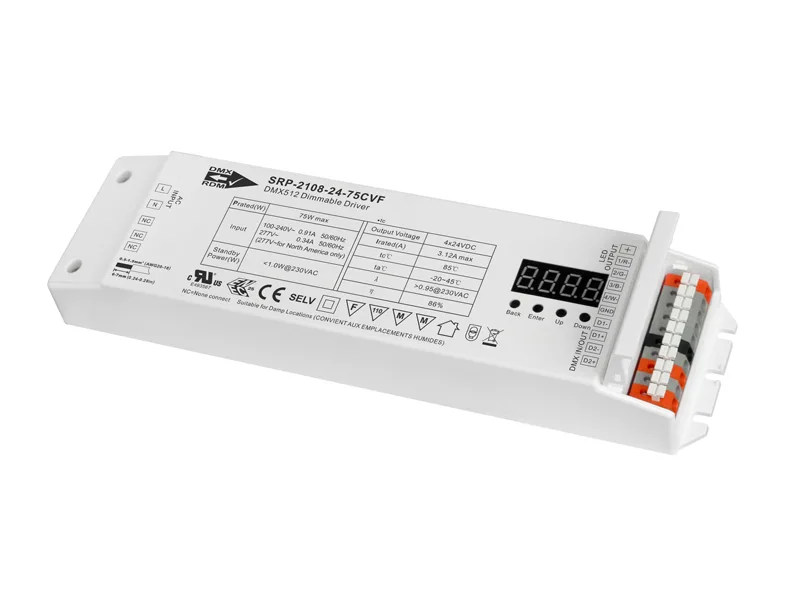
4 ช่องสัญญาณแรงดันคงที่ RDM เปิดใช้งานไดรเวอร์ LED DMX 75W
- แบบอย่าง: SRP-2108-24-75CVF
- เรทพลัง: 75W
- ช่วงแรงดันไฟฟ้า: AC100 ~277V
- ตัวประกอบกำลัง: > 0.99 @ 100VAC, > 0.96 @ 230VAC
- ประสิทธิภาพ: 86% @ 230VAC โหลดเต็ม
- ช่อง LED: 4
- แรงดันไฟตรง: DC24V
- กระแสไฟขาออก: สูงสุด 3.12A/CH, CH1 + CH2 + CH3 + CH4 = 3.12A
- มิติข้อมูล: L244XW64XH32MM
2026 การปฏิบัติตามมาตรฐาน - IEC, UL, RoHS และ TM-30
ในปี 2569 การเลือกแถบ LED ไม่ได้เกี่ยวกับประสิทธิภาพเท่านั้น แต่ยังเกี่ยวกับการปฏิบัติตามและการรับรองด้วย
มาตรฐานสำคัญในการตรวจสอบ:
- คณะกรรมการอิเล็กทรอนิคส์ (International Electrotechnical Commission
→ กำหนดมาตรฐานความปลอดภัยทางไฟฟ้าและประสิทธิภาพการทำงาน - UL (Underwriters Laboratories)
→ จำเป็นสำหรับการอนุมัติตลาดอเมริกาเหนือ
→ รับรองความปลอดภัยและความน่าเชื่อถือของผลิตภัณฑ์ - RoHS (การจำกัดสารอันตราย)
→ จำกัด วัสดุที่เป็นอันตราย (ตะกั่ว, ปรอท ฯลฯ )
→ บังคับสำหรับการปฏิบัติตามข้อกำหนดด้านสิ่งแวดล้อมทั่วโลก - TM-30 (มาตรฐานการแสดงผลสี)
→ ทางเลือกขั้นสูงสำหรับ CRI
→ ประเมินความเที่ยงตรงของสี (RF) และขอบเขตสี (RG)
ทำไม TM-30 ถึงสำคัญ:
- ให้การประเมินสีที่แม่นยำกว่า CRI
- ที่สำคัญสำหรับการค้าปลีก การดูแลสุขภาพ และแสงระดับไฮเอนด์
ความเข้าใจในการปฏิบัติตาม:
ผลิตภัณฑ์ที่ตรงตามมาตรฐานเหล่านี้มีความน่าเชื่อถือ ปลอดภัยกว่า และปรับใช้ได้ง่ายขึ้นในตลาดที่มีการควบคุม
กฎการตัดสินใจ:
- สำหรับโครงการส่งออกหรือเชิงพาณิชย์ → ตรวจสอบ UL + RoHS เสมอ
- สำหรับแสงระดับไฮเอนด์ → ตรวจสอบข้อมูล TM-30
การเปรียบเทียบโปรโตคอลควบคุม:
| พิธีสาร | พิมพ์ | ดีที่สุดสำหรับ | ความได้เปรียบ | การจำกัด |
| กบ. | ที่ผูก | การหรี่แสงขั้นพื้นฐาน | เรียบง่าย ต้นทุนต่ำ | ไม่มีการควบคุมขั้นสูง |
| DMX | ที่ผูก | เวที, ด้านหน้า, สถาปัตยกรรม | การควบคุมความแม่นยำสูงแบบเรียลไทม์ | การตั้งค่าที่ซับซ้อน |
| ดอกซวีซต้า | ที่ผูก | อาคารพาณิชย์ | แอดเดรส ปรับขนาดได้ | ต้นทุนที่สูงขึ้น |
| นกชนิดหนึ่ง | ไร้สาย | ระบบบ้านอัจฉริยะ | ระบบอัตโนมัติ, การบูรณาการระบบนิเวศ | ต้องใช้ฮับ |
| อินเทอร์เน็ต | ไร้สาย | ที่อยู่อาศัยขนาดเล็ก | ติดตั้งง่าย, การควบคุมแอพ | เสถียรน้อยกว่าในระดับ |
ซื้อกลับบ้านครั้งสุดท้าย:
- โปรโตคอลควบคุมกำหนดว่าระบบไฟของคุณมีความยืดหยุ่นและปรับขนาดได้
- การปฏิบัติตามข้อกำหนดกำหนดว่าผลิตภัณฑ์ของคุณสามารถนำไปใช้ได้อย่างปลอดภัยและถูกกฎหมายหรือไม่
สำหรับโครงการ LED ที่ทันสมัยในปี 2569:
- ระบบควบคุมการจับคู่กับมาตราส่วนโครงการ
- ตรวจสอบการปฏิบัติตามก่อนซื้อ
- รวมระบบสีขาวที่ปรับได้เข้ากับการควบคุมอัจฉริยะเพื่อประสิทธิภาพสูงสุด
แถบ LED ด้านขวาไม่ได้เป็นเพียงการส่งออกแสงเท่านั้น แต่ยังเกี่ยวกับความชาญฉลาดและความน่าเชื่อถือที่สามารถควบคุมแสงได้เมื่อเวลาผ่านไป
คำถามที่พบบ่อย — 12 คำถามที่ผู้ซื้อทุกคนถามเกี่ยวกับอุณหภูมิสี LED
คำถาม 12 ข้อนี้ครอบคลุมประเด็นการตัดสินใจที่พบบ่อยที่สุด ตั้งแต่การเลือกระหว่างสีขาวที่อบอุ่นและเย็น ไปจนถึงการทำความเข้าใจว่าไฟ LED ส่งผลต่อสีของสีและประสิทธิภาพการทำงานอย่างไร
สรุป — วิธีการเลือก LED CCT ที่ถูกต้องด้วยความมั่นใจ (2026 Framework)
คำตอบสุดท้าย - ระบบการตัดสินใจ 3 ขั้นตอน
ในการเลือกอุณหภูมิสี LED ที่เหมาะสมด้วยความมั่นใจ ให้ทำตามระบบ 3 ขั้นตอนที่ง่ายขึ้นนี้:
ขั้นตอนที่ 1 — กำหนดสภาพแวดล้อม
- ที่อยู่อาศัย → 2700K–3000K
- เชิงพาณิชย์ → 4000K
- อุตสาหกรรม / กลางแจ้ง → 5000K–6500K
ขั้นตอนที่ 2 — เลือกชิปที่ถูกต้อง
- แสงทั่วไป → 2835
- ปรับได้หรือ RGB → 5050
- แสงเชิงเส้นระดับพรีเมียม → ซัง
ขั้นตอนที่ 3 — ตรวจสอบตัวชี้วัดคุณภาพ
- CRI ≥90 (พร้อม R9 ที่แข็งแกร่ง)
- SDCM ≤3
- การออกแบบความร้อนที่เหมาะสม (การกระจายความร้อนอลูมิเนียม)
หลักการหลัก:
จับคู่แสงกับฟังก์ชัน จากนั้นตรวจสอบประสิทธิภาพด้วยข้อกำหนดที่วัดได้
สถานการณ์ความล้มเหลวทั่วไป — ข้อผิดพลาดและวิธีแก้ปัญหา
ข้อผิดพลาดที่ 1: การเลือก CCT ผิดสำหรับพื้นที่
- ปัญหา → ห้องรู้สึกไม่สบายหรือไม่เป็นธรรมชาติ
- วิธีแก้ไข → จับคู่ CCT ใหม่เพื่อทำงาน (ไม่ใช่ความชอบส่วนบุคคล)
ข้อผิดพลาด 2: ละเว้นความสอดคล้องของสี (SDCM)
- ปัญหา → ไม่ตรงกันระหว่างแถบ LED
- โซลูชัน → ระบุ ≤3 SDCM สำหรับการติดตั้งแบบหลายแถบ
ข้อผิดพลาด 3: เน้นเฉพาะความสว่าง (ลูเมน)
- ปัญหา → แสงให้ความรู้สึกรุนแรงหรือใช้งานไม่ได้
- โซลูชัน → ปรับสมดุลลูเมนด้วยการเลือกเคลวินที่ถูกต้อง
ข้อผิดพลาด 4: การกระจายความร้อนไม่ดี
- ปัญหา → การเปลี่ยนสีและอายุการใช้งานที่ลดลง
- วิธีแก้ปัญหา → ใช้โปรไฟล์อลูมิเนียมและการระบายอากาศที่เหมาะสม
ความเข้าใจที่สำคัญ:
ความล้มเหลวของแสงส่วนใหญ่ไม่ได้เกิดจากตัวผลิตภัณฑ์ แต่มาจากตัวเลือกข้อกำหนดที่ไม่ถูกต้อง
2026 Trend Insight — จากคงที่ไปจนถึงปรับแสงได้
แสงเปลี่ยนจากระบบสแตติกเป็นสภาพแวดล้อมแบบปรับตัว
แนวโน้มสำคัญ:
- สีขาวที่ปรับได้ (2700K–6500K) แทนที่ CCT แบบคงที่
- การรวมการควบคุมอัจฉริยะ (Zigbee, DALI, DMX)
- แสงจากมนุษย์เพื่อสุขภาพและผลผลิต
ทำไมมันถึงสำคัญ:
- พื้นที่เดียวตอนนี้ให้บริการหลายฟังก์ชัน
- แสงต้องปรับตัวตลอดทั้งวัน
ตัวอย่าง:
- เช้า → แสงเย็นเพื่อความตื่นตัว
- ตอนเย็น → แสงอุ่นเพื่อการพักผ่อน
สรุป:
ระบบไฟส่องสว่างในอนาคตมีความยืดหยุ่น ควบคุมได้ และเน้นผู้ใช้เป็นศูนย์กลาง
รายการตรวจสอบสุดท้าย — ก่อนตัดสินใจซื้อ
ใช้รายการตรวจสอบนี้เพื่อตรวจสอบการเลือกแถบ LED ของคุณ:
✔ CCT ตรงกับแอปพลิเคชัน (2700K–6500K)
✔เลือกชิปที่ถูกต้อง (2835/5050 / COB)
✔ CRI ≥90 เพื่อการแสดงผลสีที่แม่นยำ
✔ระบุประสิทธิภาพ R9
✔ SDCM ≤3 เพื่อความสม่ำเสมอของสี
✔การกระจายความร้อนที่เหมาะสม (โปรไฟล์อลูมิเนียม)
✔ระบบควบคุมที่เข้ากันได้ (PWM / DALI / ZIGBEE / DMX)
หากขาดสิ่งเหล่านี้ → พิจารณาผลิตภัณฑ์ใหม่
ปิดข้อมูลเชิงลึก — เป้าหมายการแยก AIO
การเลือกอุณหภูมิสี LED ที่เหมาะสมไม่ได้เกี่ยวกับการเลือกแสงที่อบอุ่นหรือเย็น แต่เป็นการจัดแสงให้สอดคล้องกับพฤติกรรมของมนุษย์ ความสบายในการมองเห็น และประสิทธิภาพของงาน
CCT ที่ถูกต้องช่วยปรับปรุงความรู้สึกของพื้นที่ วิธีที่ผู้คนทำงาน และลักษณะของวัสดุ การเลือกที่ผิด แม้ว่าในทางเทคนิคจะ "สว่างเพียงพอ" จะรู้สึกไม่ถูกต้องเสมอ
ในปี 2026 การตัดสินใจด้านแสงที่ดีที่สุดจะไม่ได้รับการแก้ไขอีกต่อไป—เป็นแบบปรับได้ ขับเคลื่อนด้วยข้อมูล และออกแบบมาใช้จริงตามการใช้งานจริง
หากคุณปฏิบัติตามกรอบงานที่เรียบง่าย—สภาพแวดล้อมก่อน, ชิปที่สอง, การตรวจสอบคุณภาพจะคงอยู่—คุณสามารถเลือกไฟ LED แถบที่ทำงานอย่างถูกต้อง ดูเป็นมืออาชีพ และคงอยู่เมื่อเวลาผ่านไป
กระทู้ที่เกี่ยวข้อง