English
  简体中文
简体中文  Deutsch
  Español
  Français
  Italiano
  日本語
日本語  한국어
한국어  Polski
  Português
  Русский
  Türkçe
  Nederlands
  Tiếng Việt
  ไทย
ไทย 
At present, there are mainly two kinds of lens materials used in LED injection modules, namely PMMA and PC, both of which are optical grade materials. In the eyes of ordinary people, there is not much difference between the two, and they are very similar. They can also be used in some ordinary LED lenses, but after all, the two materials are different, and the difference is still relatively large. A simple analysis is given below.
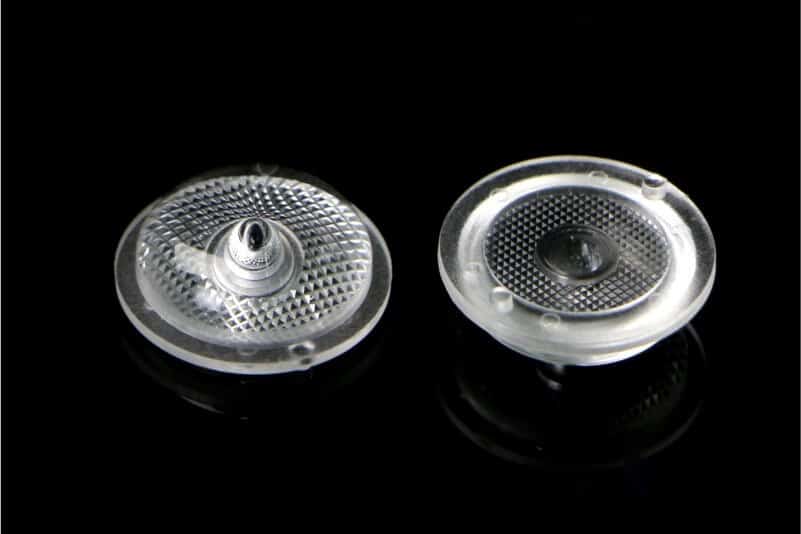
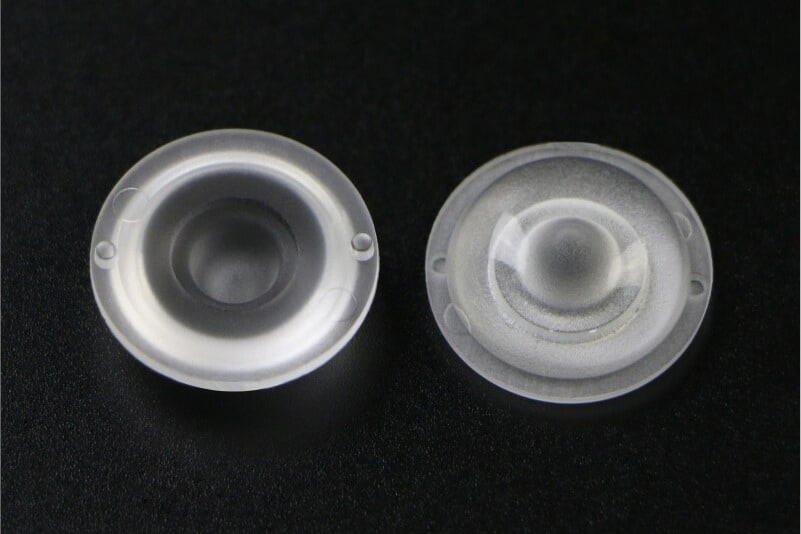
PMMA is commonly known as acrylic. It is a chemical material, the chemical name is polymethacrylate. In the application industry, acrylic raw materials generally appear in the form of granules, plates, pipes, etc. Acrylic, also known as specially treated plexiglass, is a substitute for plexiglass. The LED injection module made of acrylic has the characteristics of good light transmission, pure color, rich color, beautiful and smooth, taking into account both day and night effects, and long service life.
The following are some characteristics of PMMA:
1. Excellent transparency: colorless and transparent plexiglass, with a light transmittance of over 92% (up to 95% for high-grade imported materials).
2. Excellent weather resistance: It is highly adaptable to the natural environment, even if it is exposed to sunlight, wind and rain for a long time, its performance will not change, and its anti-aging performance is good.
3. Good processing performance: easy to thermoform and easy to design.
4. Non-toxic and environmentally friendly: It is harmless even if it is in contact with people for a long time, but it will produce formaldehyde and carbon monoxide when the combustion is incomplete.
PC is mainly composed of polycarbonate. PC material is resistant to neutral oil, not resistant to strong acid, not resistant to alkali, and needs to be coated with UV. However, it is resistant to high temperature, and has the characteristics of high transparency, light weight, impact resistance, sound insulation, heat insulation, flame retardant, anti-aging, etc. It is a high-tech, excellent comprehensive performance, energy-saving and environmentally friendly material.
The following are some characteristics of PC:
1. Impact resistance: Its impact resistance can reach up to 3kg/cm3, and its specific gravity is 1.34g/cm3, which is 200 times that of ordinary glass and 8 times stronger than PMMA. The impact resistance is particularly obvious.
2. Transparency: Excellent lighting, light transmittance as high as 75~89%, and its transparency is comparable to ordinary glass.
3. Weather resistance: Adding UV agent (anti-ultraviolet) on the surface can absorb ultraviolet rays and convert them into visible light, which can guarantee ten years of non-fading outdoors.
4. Flame resistance: The material itself does not spontaneously combust and has excellent self-extinguishing properties.
5. Heat resistance and cold resistance: Generally, the product will not deform within the test range of minus 30°C to 120°C.
Related Posts