English
  简体中文
简体中文  Deutsch
  Español
  Français
  Italiano
  日本語
日本語  한국어
한국어  Polski
  Português
  Русский
  Türkçe
  Nederlands
  Tiếng Việt
  ไทย
ไทย 
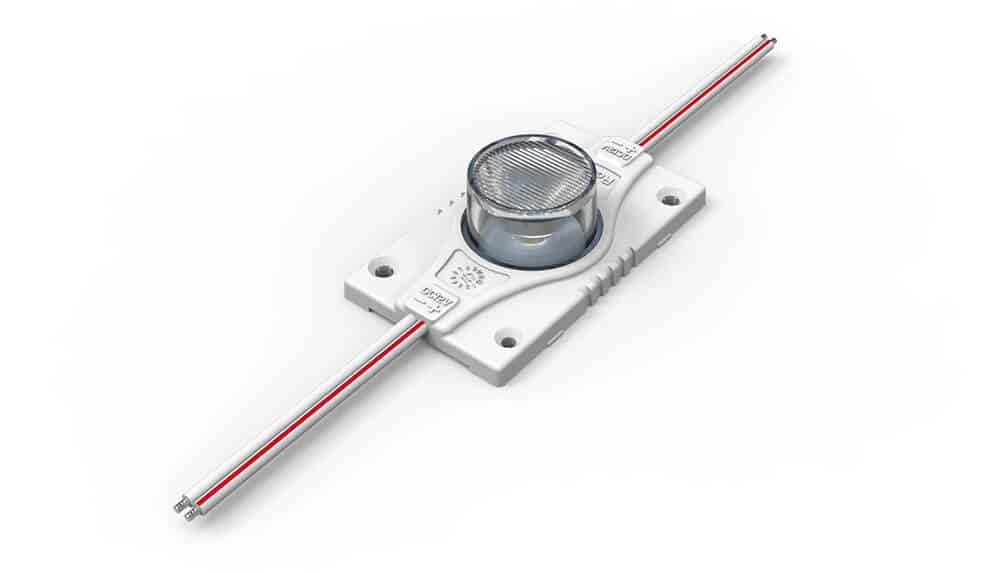
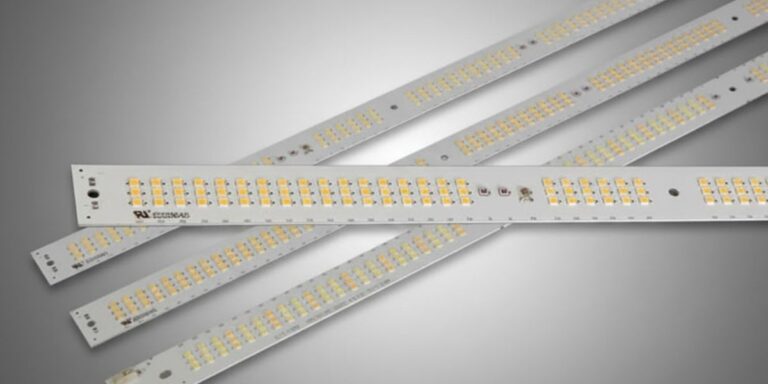
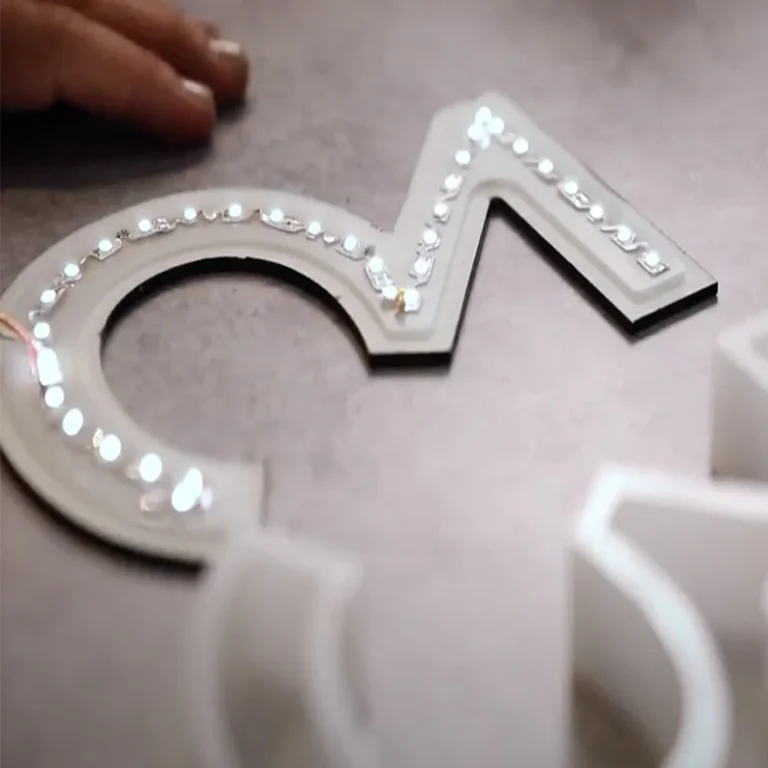
LED injection molding modules are commonly used lighting products that we often see, such as luminous products in subway light boxes, luminous products in airport signs, and various signboards in streets and alleys use LED injection molding modules. He has brought infinite light and fun to our cities and villages! This is what we can feel. If we need a more in-depth understanding of LED injection molding modules, we need to start learning from its professional terms.
1. The spectral distribution of light radiation of LED injection molding modules has its unique side. It is not monochromatic light (like a laser), nor is it broad-spectrum radiation (like an incandescent lamp), but something in between: with a bandwidth of tens of nanometers, and a peak wavelength in the visible or near-infrared region. The spectral characteristics of LED characterize the quality of its monochromaticity and the purity of its main color.
2. The relative spectral energy of the LED injection molding module. The general light source is a polychromatic light mixed with different wavelengths of colored light. If the intensity of each colored light in its spectrum is measured by a sensor, the radiation of different wavelengths of colored light can be obtained. able value. If φe represents the radiant energy of light, and λ represents the wavelength of the spectral color, then it is defined that the ratio of the radiant energy in the small wavelength range centered on wavelength λ to the width of this wavelength is called spectral density. Written in mathematical form: φe(λ)=dφe∕dλ (W/nm) Spectral density represents the size of radiant energy in a unit wavelength interval. Generally, the radiant energy of different wavelengths of light in a light source varies with the wavelength, so the spectral density is a function of wavelength. The functional relationship between spectral density and wavelength is called spectral distribution.
3. The peak wavelength (λp) of the LED injection molding module, unit: nm, the light emitted by the LED is not a single wavelength, the wavelength corresponding to the maximum spectral luminous intensity or radiant power is the peak wavelength, expressed by λp.
4. The dominant wavelength (λd) of the LED injection molding module, unit: nm, is obtained by mixing a certain spectral color with a certain standard illuminant (such as CIE standard illuminant A, B, C or D65) in a certain proportion. Match the sample color, the wavelength of the spectral color is the dominant wavelength of the sample color. In the CIE1931 horseshoe-shaped coordinates, the extension line from point E (0.33, 0.33) to the measured object has an intersection point with the horseshoe-shaped curve, and the wavelength corresponding to the intersection point is the dominant wavelength of the sample. The dominant wavelength of a color is equivalent to the hue (psychological quantity) of the color observed by the human eye.
5. The half-width (△λ) of the LED injection molding module, unit: nm, at ±△λ on both sides of the peak of the LED spectral line, there are two points where the radiant power is equal to half of the peak (maximum light intensity), these two points Corresponding to λp-△λ and λp+△λ respectively, the width between them is called spectral line width, also called half power width or half maximum width. The half-height width is a parameter that reflects the monochromaticity of the LED.
6. The luminous flux (Φ) of the LED injection molding module, unit: lumen/Lm, is the rate of light energy emitted by a light source or the flow rate of light. The total amount of visible light.
7. The luminous intensity (Iv) of the LED injection molding module, unit: candela (cd), the visible light emitted by the light source in each direction, in a certain direction, the luminous flux emitted within the unit solid angle dΩ is dΦ, then the point light source in this The luminous intensity Iv in the direction is: Iv=dΦ/dΩ.
8. The illuminance (E) of the LED injection molding module, unit: lux (lx), the luminous flux received per unit of the illuminated area: E=dΦ/dA 1lx=1lm/m2.
9. The luminance (L) of the LED injection molding module, unit: candela/square meter (cd/m2), describes the distribution of visible light emitted by a luminous body with a limited size in space. Definition: The ratio of the luminous intensity Iv of the unit luminous area dA in the θ direction to the projection cos θdA of the unit area on the plane perpendicular to the direction: L=Iv/cos θdA.
Related Posts