Deutsch
  English
  简体中文
简体中文  Español
  Français
  Italiano
  日本語
日本語  한국어
한국어  Polski
  Português
  Русский
  Türkçe
  Nederlands
  Tiếng Việt
  ไทย
ไทย 
LED-Neonstreifen sind zum Industriestandard für architektonische Umrisse, kommerzielle Beschilderung, Landschaftsbeleuchtung und Veranstaltungsdesign geworden. Sie liefern den kontinuierlichen, gleichmäßigen Glanz von traditionellem Glasneon ohne Zerbrechlichkeit oder Hochspannung.
Eine überraschende Anzahl von LED-Neonstreifen versagt jedoch innerhalb von Monaten - nicht weil die LEDs selbst defekt sind, sondern aufgrund der versteckten Zuverlässigkeitsfaktoren, die die meisten Datenblätter nie nennen.
Zu diesen Faktoren gehören:
- PCB-Substratqualität
- Integrität der Lötmaske
- Fehlanpassungen bei der Wärmeausdehnung
- Kupfertyp (RA vs. ED)
- Zinn-Whisker-Prävention
Dieser Artikel untersucht diese technischen Details und erklärt, warum einige LED-Neonstreifen in rauen Außenumgebungen 5 Jahre lang halten, während andere in einer einzigen Saison ausfallen.
Warum LED-Neonstreifen in realen Anwendungen ausfallen

Laut Angaben der Branchenfehleranalyse machen LEDs weniger als 101 tp3T an Feldfehlern aus. Die wahren Schuldigen sind thermische und mechanische Belastung.
Das Problem des thermischen Zyklus
Außenanlagen sind täglich und saisonal schwankend – von -20°C bis +60°C oder mehr. Jeder thermische Zyklus bewirkt, dass sich Materialien ausdehnen und sich mit unterschiedlichen Raten zusammenziehen.
Nach wiederholten Zyklen sammelt sich Spannung an den Materialgrenzflächen, was zu:
- Mikrorisse in Kupferspuren
- Ermüdung der Lötverbindung
- Delamination zwischen Leiterplatten-Schichten
- Verlust der Unversehrtheit
Warum flexible Streifen anfälliger sind
Flexible LED-Neonstreifen kombinieren mehrere Materialien mit verschiedenen Wärmeausdehnungskoeffizienten (CTE).
| Material | CTE (ppm/°C) |
| Kupfer | 16–17 |
| Polyimid-Substrat | 20–30 |
| Lötmaske | ~50 |
| Silikon-Kapselung | 200–300 |
Jedes Mal, wenn der Streifen erhitzt oder abkühlt, dehnen sich diese Materialien mit unterschiedlichen Geschwindigkeiten aus. Im Laufe der Zeit reißt die innere Spannung Lötverbindungen und bricht Kupferspuren - insbesondere an Biegepunkten.
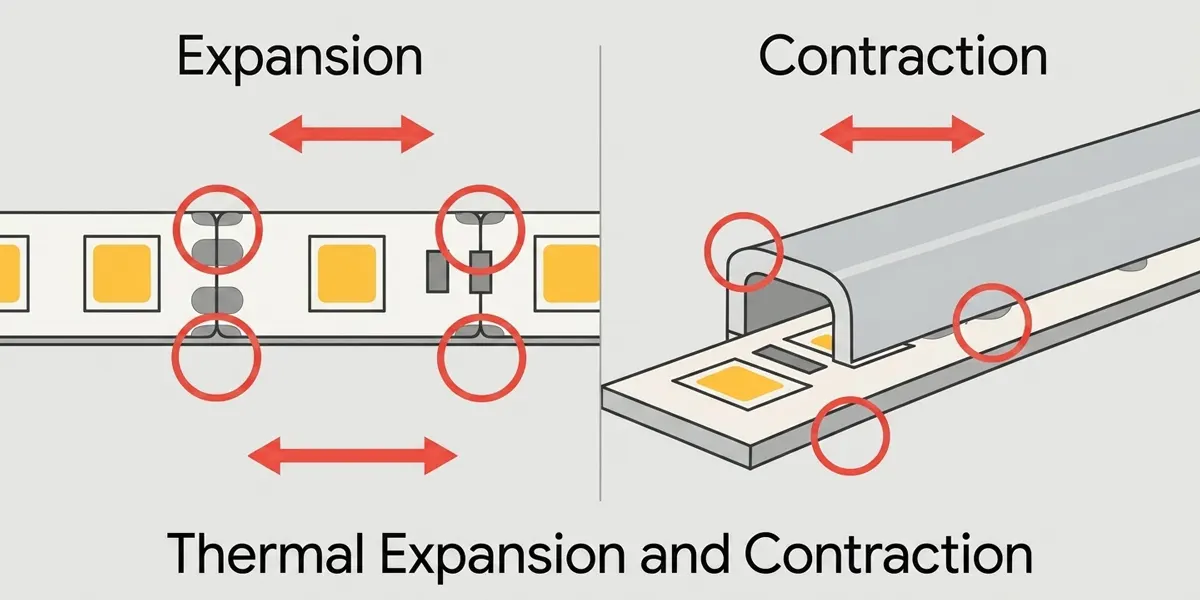
Häufige Feldfehlermuster
| Fehlermodus | Grund |
| zeitweise Flackern | Mikrorisse in Lötstellen öffnen/schließen mit Temperatur |
| tote Segmente | Gebrochene Kupferspuren durch wiederholtes Biegen oder thermische Belastung |
| Feuchtigkeitseintritt | Risse in Silikon oder entlang der Leiterplatte, die Wasser zuspurt |
| Farbverschiebung / Gelbfärbung | UV-Abbau der Kapselung von geringer Qualität (nicht die LEDs) |
Warum Feldfehler auftreten?
Branchendaten bestätigen, dass LED-Chips <10% von Fehlern ausmachen. Die Hauptursache ist thermische und mechanische Belastung aus realen Temperaturzyklen.
Außenbedingungen Strips auf -20°C bis +60°C täglich/saisonal schwingen.Wiederholte Heizung/Kühlung erzeugt eine nicht übereinstimmende Expansion zwischen den Materialien, was zu folgenden Themen führt:
- Mikrorisse in Kupferspuren
- Ermüdung der Lötverbindung
- PCB-Deaminierung
- Verlust der Imprägnierung
Kritische materielle Herausforderung: CTE-Fehlanpassung
Flexible Neonstreifen kombinieren Materialien mit sehr unterschiedlichen Wärmeausdehnungsraten (ppm/°C):
- Kupfer: 16–17
- Polyimid: 20–30
- Lötmaske: ~ 50
- Silikon: 200–300
Diese Fehlanpassung erzeugt interne Spannungen → Risse, Brüche und Feldfehler.
Wie wir Zuverlässigkeit validieren
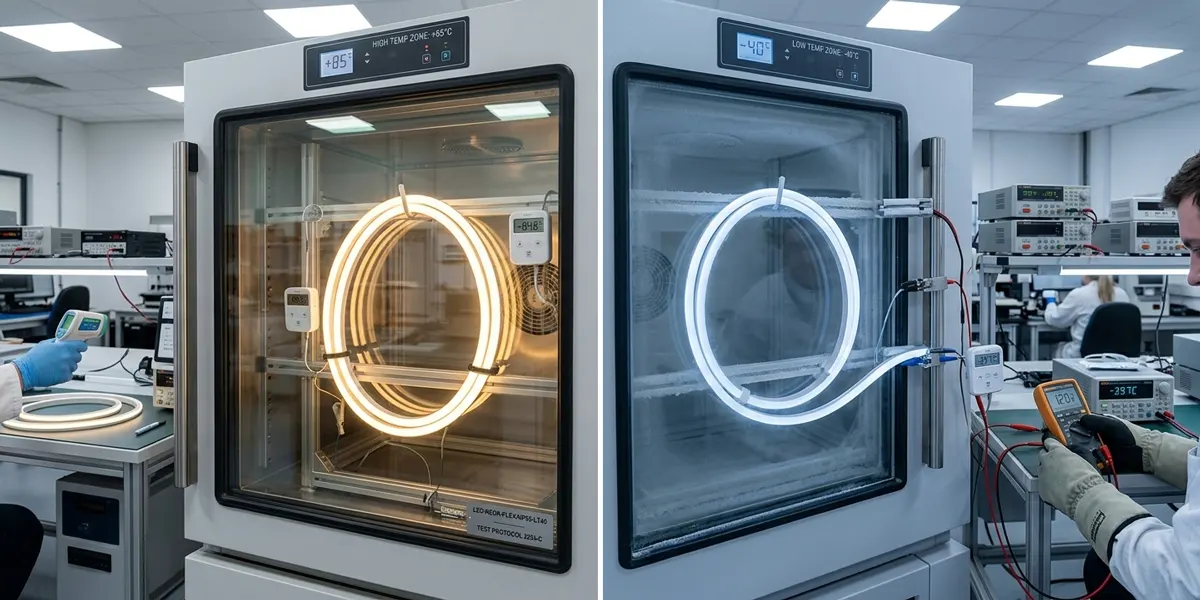
Validierung des ThermozyklustestsTestbedingungen:
- Temperaturbereich: -40°C ↔ +85°C
- Gesamtzyklen: 500 Zyklen
- Verweilzeit: 30 min pro Phase
- Zweck: Simulieren und beschleunigen Sie die thermische Belastung
Zusammenfassung der Testergebnisse (nach 500 extremen Zyklen)
| Artikel | Ausgang | verstreichen |
| Visuelles Erscheinungsbild | Kein Riss, Vergilbung, Delamination | ✅ Pass |
| Elektrische Leistung | Kein Flimmern / tote Segmente | ✅ Pass |
| Spannungsverschiebung (ΔVF) | <3% | ✅ Pass |
| Lumenpflege | > 98% | ✅ Pass |
| Wasserdicht (IP67) | Kein Feuchtigkeitseintritt | ✅ Pass |
| Löten & Spuren | Keine Ermüdung / Mikrorisse | ✅ Pass |
Durch die Durchführung von 500 Zyklen von -40 ° C ~ + 85 ° C thermische Prüfung widerstehen signlited Neon-Streifen CTE-Fehlanpassung, thermischer Belastung und üblichen Fehlermodi. Sie liefern auch unter -20°C bis +60°C im Freien stabile, langlebige Leistung.
Was ist in einer LED-Neonstreifen-Leiterplatte?
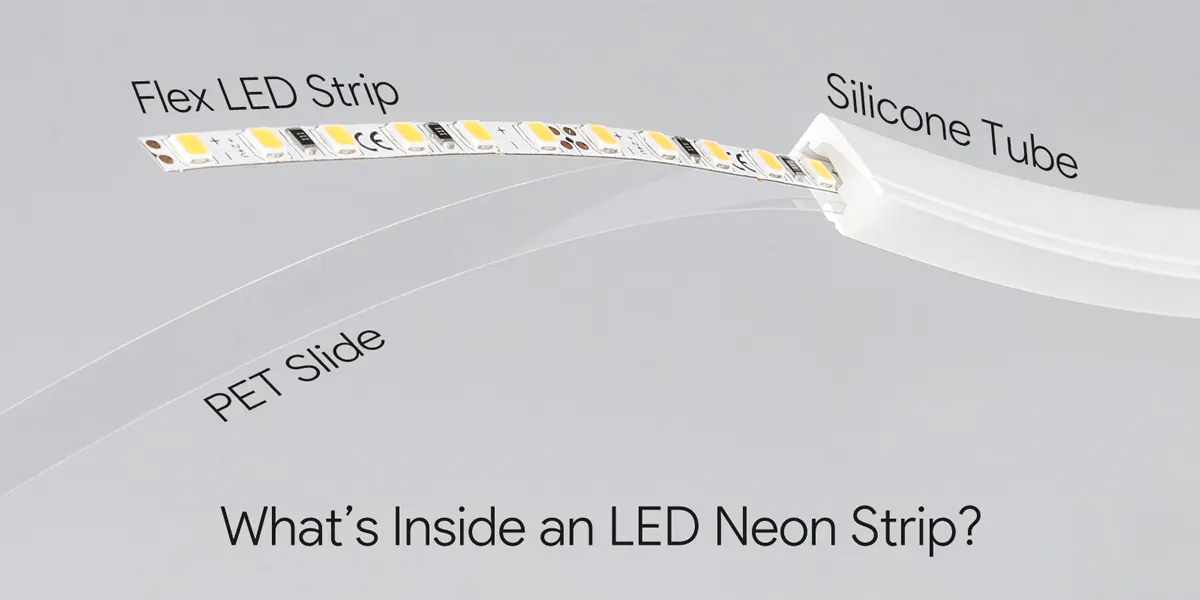
Eine typische flexible Leiterplatte (FPCB) für LED-Neonstreifen besteht aus mehreren Schichten, die jeweils eine kritische Funktion haben.
Schichtstruktur
| Schicht | Material | Funktion |
| Untergrund | Polyimid (PI) oder PET | Mechanische Basis |
| klebend | Acryl oder Epoxid | Verbindet Kupfer mit Substrat |
| Kupferschicht | gerollt geglüht (RA) oder elektrolytisch (ED) | Elektrische Spuren |
| Lötmaske | Flexibles Polymer | Isolierung und Schutz |
| Silikon-Kapselung | Silikon | Wetterschutz + Lichtstreuung |
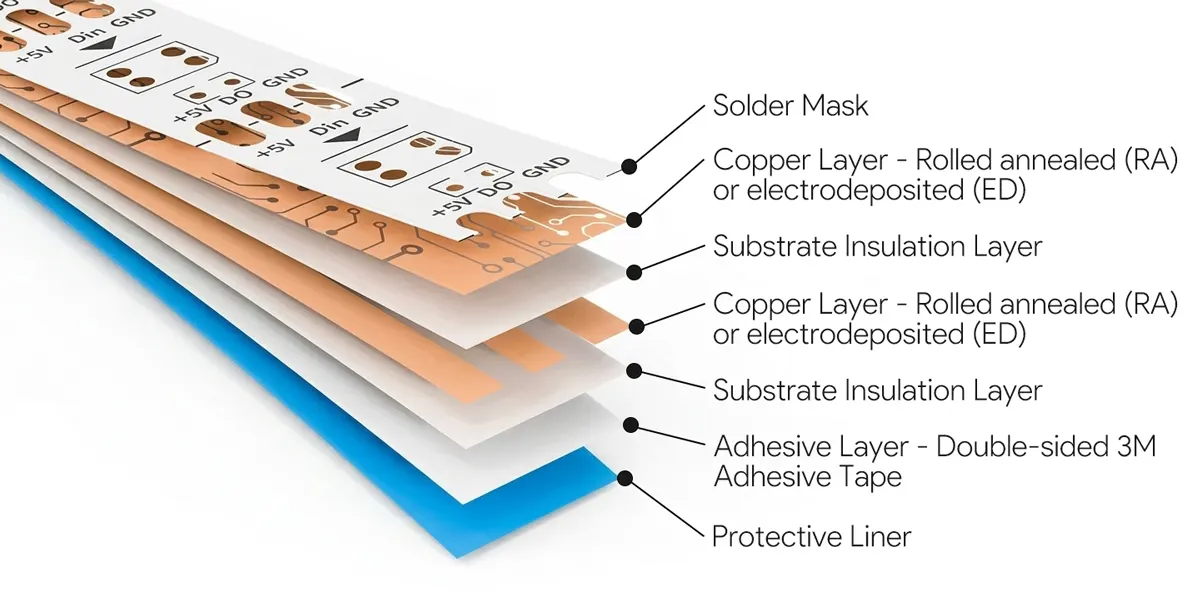
Materialentscheidungen, die wichtig sind
Polyimid vs. PET:
- Polyimid (PI): Stand während des Lötens bis zu 400 ° C; langlebig für den Außenbereich.
- streicheln: Verbesserte, aber geringere Hitzebeständigkeit; nicht für Anwendungen im Außenbereich empfohlen.
Gerollt geglüht (RA) vs. Elektrodenabscheider (ED) Kupfer:
- randeln Copter: : · · · · ermüdungsbeständiger – ideal für Streifen, die sich während der Installation biegen.
- ed COPER: Anfällig für Risse bei wiederholtem Biegen.
- Kupferdicke: 1 Unzen (35 µm) bis 2 Unzen (70 µm). Dickeres Kupfer verarbeitet höhere Strom, verringert jedoch die Flexibilität.
Was macht eigentlich Lötmaske?
Die Lötmaske ist eine dünne Polymerschicht, die über Kupferspuren aufgetragen wird. In LED-Neonstreifen erfüllt es fünf wesentliche Funktionen:
- Verhindert Lötbrücken während der Herstellung
- Schützt vor Oxidation (kritisch für den Außenbereich)
- Bietet elektrische Isolation zwischen Spuren
- Fungiert als Feuchtigkeitsbarriere für IP-bewertete Produkte
- Unterstützt das Thermomanagement in Hochtemperaturanwendungen
Trockenfilm vs. flüssige Lötmaske
| Besitztum | Trockenfilm | Flüssigkeit (LPSM) |
| Gleichmäßigkeit der Dicke | Ausgezeichnet | Gut |
| Feinpitch-Fähigkeit | Gut | überragend |
| Produktionskosten | höher für kleine Läufe | im Maßstab niedriger |
| Schwierigkeitsgrad nacharbeiten | Mäßig | leichter |
| Am besten für | Konsequente Produktion in hohem Volumen | Komplexe Designs |
Beide Typen funktionieren gut, wenn sie richtig angewendet werden. Billigstreifen überspringen jedoch häufig die Lötmaske vollständig - ein Fehler für jede Outdoor-Anwendung.
Weiße Lötmaske vs. Keine Lötmaske
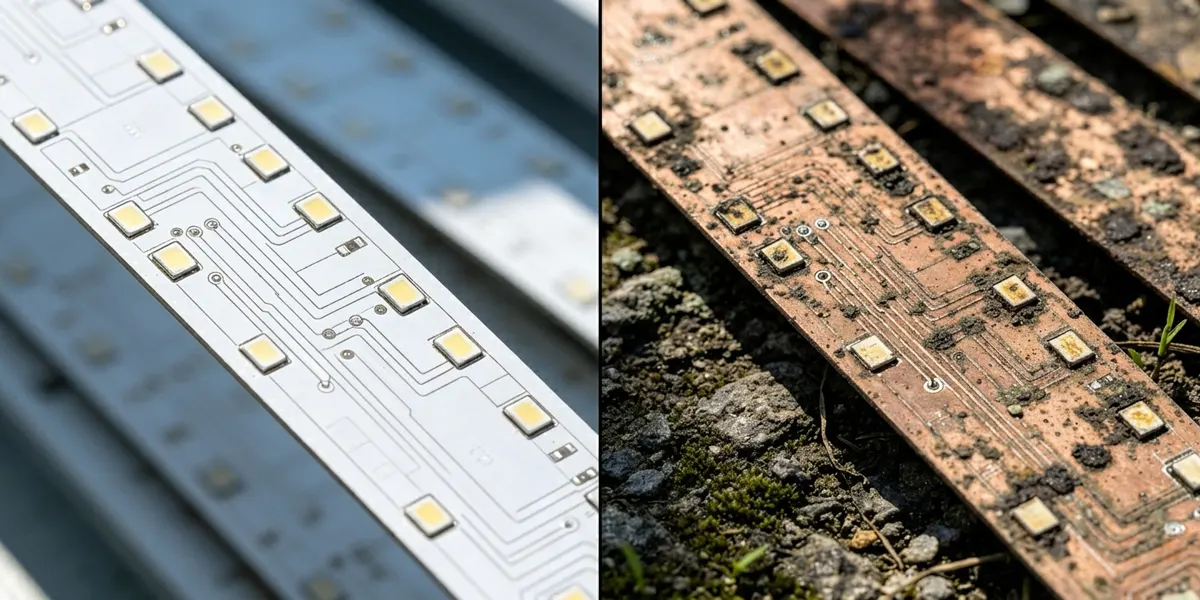
Einige preisgünstige LED-Neonstreifen lassen die Lötmaske vollständig weg, um Geld zu sparen oder eine bessere Wärmeableitung zu beanspruchen. Dies ist ein kritischer Fehlerpunkt für Außen- oder Langzeitanwendungen.
| Merkmal | Weiße Lötmaske | Keine Lötmaske |
| Oxidationsschutz | Ja | keine |
| Lötbrückenprävention | Ja | Nein |
| Lichtreflexion | Hoch (85-90%) | Niedrig |
| Wärmeableitung | Mäßig | etwas besser (vernachlässigbar) |
| Langfristige Zuverlässigkeit | Bewährt (5+ Jahre) | Sehr arm (Wochen bis Monate) |
Warum „No Loder Mask“ ein schlechter Kompromiss ist
Freiliegendes Kupfer oxidiert innerhalb von Wochen in feuchter Umgebung. Der kleine thermische Nutzen (typischerweise <5% Verbesserung) ist im Vergleich zum Risiko eines korrosionsinduzierten Versagens vernachlässigbar.
Für jede professionelle Außeninstallation ist eine ordnungsgemäß aufgebrachte Lötmaske - insbesondere eine weiße Lötmaske - nicht verhandelbar.
Weiße Lötmasken reflektieren mehr Licht nach oben und verbessern die optische Effizienz um 15-20%, erfordern jedoch eine sorgfältige Prozesskontrolle.
Thermische Zuverlässigkeit: Warum Materialien wichtiger sind als der Preis
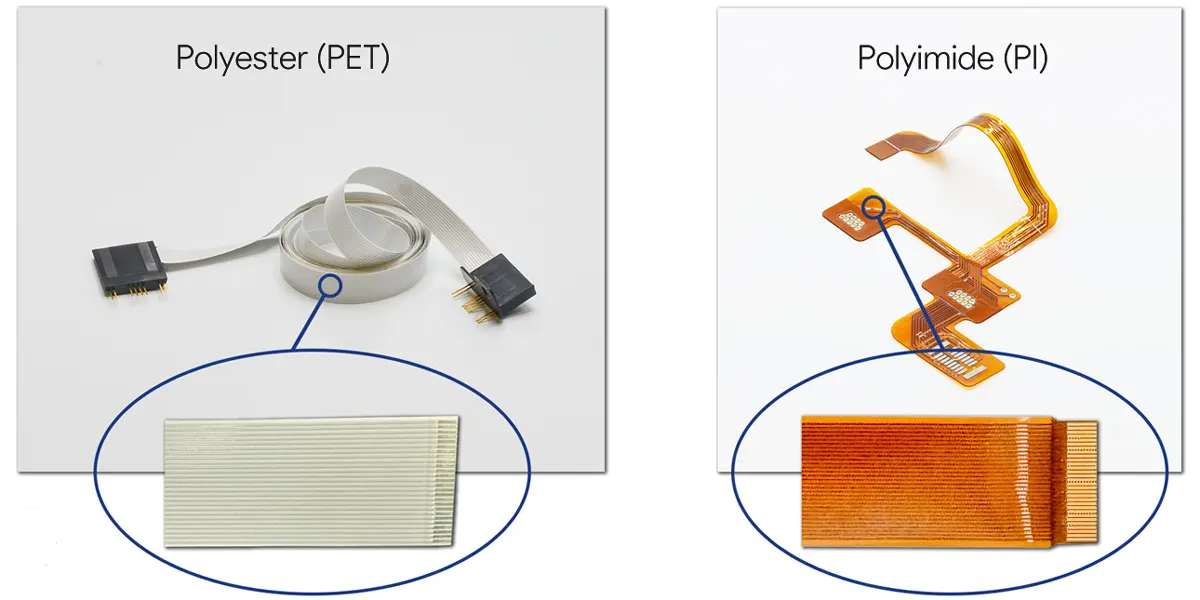
Die thermische Zuverlässigkeit ist der am meisten unterschätzte Faktor im LED-Neon-Streifen-Engineering. Die Frage ist nicht, ob der Streifen bei Raumtemperatur arbeitet - sondern ob er nach 500 thermischen Zyklen immer noch funktioniert.
Das CTE-Mismatch-Problem
Wenn Materialien mit unterschiedlichen CTEs miteinander verbunden werden, erzeugen Temperaturänderungen an ihren Grenzflächen innere Spannung.
| Materialschnittstelle | CTE-Mischpass | Ausfallrisiko |
| Kupfer (17) vs. Polyimid (20-30) | Mäßig | Mikrorisse im Laufe der Zeit |
| Lötmaske (~50) vs. Kupfer (17) | Hoch | Rissbildung oder Delamination |
| Silikon (200-300) vs. PCB | Extrem | Erfordert mechanische Verankerung |
Materialien für die Hochtemperatur-Lötmaske
Für Außenanwendungen, die direktem Sonnenlicht und starken Temperaturschwankungen ausgesetzt sind, versagen Standard-Lötmasken. Hochtemperaturformulierungen bieten:
- Glasübergangstemperatur (Tg) über 130°C (einige erreichen 170-180°C)
- Widerstand gegen thermische Zyklen (z. B. 1000 Stunden von -40°C bis 125°C)
- Bessere Chemikalien- und UV-Beständig
Kosten- vs. Zuverlässigkeit: Vergleich der realen Welt
| Qualitätsniveau | Materialspezifikation | Erwartetes Leben im Freien | Typischer Fehlerpunkt |
| preiswerte / Rohstoffe | PET-Substrat, ED-Kupfer, keine Maske | 3-6 Monate | Risse oder Spurenkorrosion |
| Mittelklasse | PI-Substrat, RA-Kupfer, Flüssigkeitsmaske | 1-2 Jahre | Lötmaske Delamination |
| Premium (signeliert) | High-Tg PI, RA Kupfer, weiße Hochtemperaturmaske | 5-8 Jahre | LED-Lumenabschreibung (nicht strukturell) |
Der Unterschied zwischen einem 6-Monats-Streifen und einem 5-Jahres-Streifen ist auf einem Datenblatt oft unsichtbar, wird jedoch auf dem Gebiet offensichtlich.
SignLiteLed veröffentlicht die Validierungsdaten für Wärmezyklus für jede Neon-Streifenserie im Freien. Lesen Sie lesen → NEON LED-Streifen-Testbericht – Zuverlässigkeit, Lumenzerfall und Farbstabilitätsanalyse.
Flexible Leiterplatten-Herausforderungen im Neon-Streifen-Design
Flexibilität ist das bestimmende Merkmal von LED-Neon-Streifen – und auch die Quelle mehrerer einzigartiger Fehlermodi.
1. Haftung und Laminierung
Wiederholtes Biegen oder Thermoradfahren kann verursachen:
- Delamination – Trennung zwischen Lötmaske und Kupfer
- Rissbildung an Biegepunkten – insbesondere, wenn sich die Komponenten in der Nähe von Biegezonen befinden
- Angehobene Pads – Lötpads vom Substrat lösen
2. Grenzen des Biegeradius
Jede flexible Leiterplatte hat einen minimalen Biegeradius. Das Überschreiten - auch einmal - verursacht unsichtbare Schäden, die zu einem späteren Ausfall führen.
| Biegetyp | Minimaler Biegeradius | Anwendungsbeispiel |
| Dynamic (wiederholte Biegung) | 100 × Materialstärke | Umzugsanlagen |
| Statisch (einmal während der Installation gebogen) | 10 × Materialstärke | Eckverpackung |
Best Practice: Steife unter LED- und Widerstandspositionen verhindern das Biegen dort, wo Komponenten montiert werden, und ermöglichen gleichzeitig Flexibilität zwischen den Segmenten.
3. Der Kompromiss: Flexibilität vs. Stabilität
| Designansatz | Flexibilität | Wärmebeständigkeit | am besten für |
| Klebeloses Kupfer-Polyimid | Mäßig | Ausgezeichnet | Außenbereich, weite Temperaturbereiche |
| klebstoffbasiert | Hoch | Mäßig | Innenraum, kontrollierte Umgebung |
Signlited verwendet eine klebenlose Verbindung für Serien mit Außenbereichen, die die thermische Stabilität gewährleisten, ohne die Flexibilität zu beeinträchtigen.
Zinn-Whiskers: Das versteckte Risiko bei preiswerten LED-Streifen
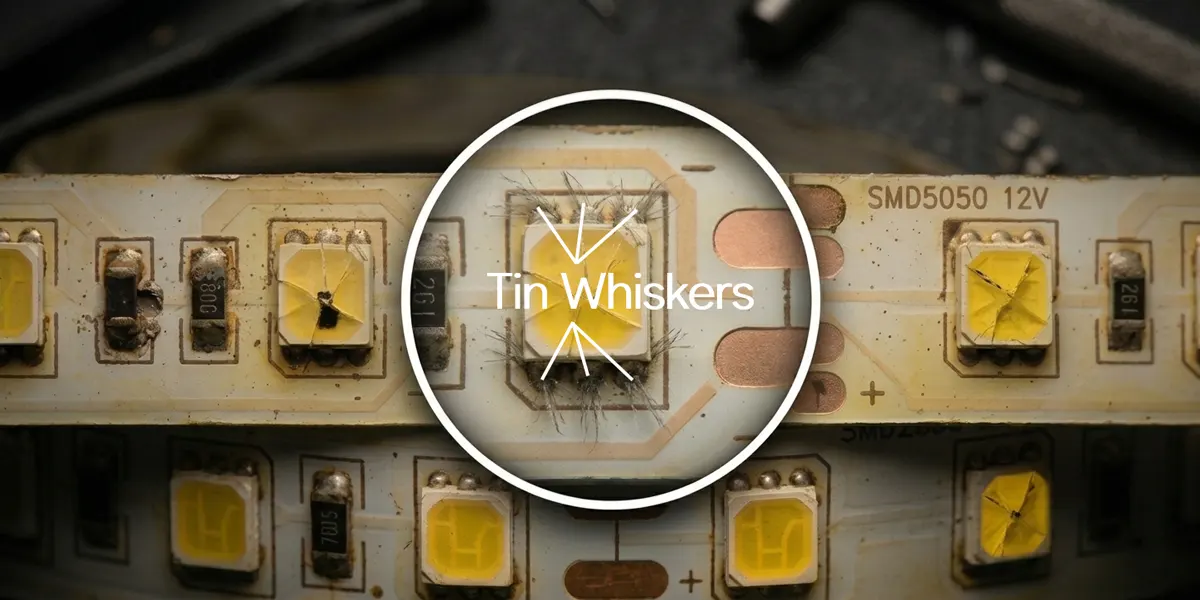
Zinnwhisker sind mikroskopische, nadelartige Metallkristalle, die spontan aus verzinnten Oberflächen wachsen. Sie können mehrere Millimeter lang werden und Kurzschlüsse zwischen eng beabstandeten Kupferspuren verursachen.
Warum dies für LED-Neonstreifen wichtig ist
Nach der RoHS-Richtlinie wurde das Blei im Lot eingeschränkt, reines Zinnplattieren wurde üblich. Ohne das Wachstum zu unterdrücken, haben Zinnwhisker in vielen elektronischen Produktkategorien - einschließlich LED-Streifen - Feldfehler verursacht.
In einer flexiblen Leiterplatte können die Whisker zwischen Spuren mit einer Größe von bis zu 0,5 mm wachsen, wodurch intermittierende oder dauerhafte Shorts entstehen.
Risikofaktoren:
- Verzinnte Verzinnte von schlechter Qualität
- Unzureichende Prozesskontrollen
- Mangel an Nachplattieren
- Low-Cost-Herstellung
Whisker-Minderungsstrategien
| Strategie | Billigstreifen | Premium (signeliert) |
| Optimierter Beschichtungsprozess | ❌Nr | ✅ Ja |
| Nachplattieren Wärmebehandlung (Glühen) | ❌Nr | ✅ Ja |
| Konforme Beschichtung über kritische Bereiche | ❌Nr | ✅ Ja |
| Zinnlegierung mit Whisker Suppressoren | ❌ Manchmal | ✅ Ja |
Zinnwhisker sind ein selten diskutierter, aber wichtiger Unterscheidungsmerkmal zwischen Rohstoffprodukten und Engineering-Qualitätslösungen.
Wie hochwertige LED-Neonstreifen konstruiert werden
Die oben genannten Zuverlässigkeitsfaktoren erfordern einen systematischen Ansatz in Bezug auf Material, Prozesskontrolle und Design.
Materialauswahl Zusammenfassung
| Komponente | Bevorzugte Spezifikation (Signlited Standard) | vermeiden |
| Untergrund | Polyimid mit hohem Tg | Haustier oder minderwertiger PI |
| Kupfer | Gerollt geglüht (RA) | Elektroabgeschieden (ED) |
| Lötmaske | Flexible weiße Maske mit hoher Temperatur | Standard-LPI oder keine Maske |
| Verkapselung | UV-stabilisiertes Silikon | PVC- oder Nicht-UV-Silikon |
| Zinn | Schnurrhaarprozess | unkontrollierte reine Zinn |
Schlüsselprozesssteuerungen
| verfahren | Zweck |
| Lötmasken-Dickenkontrolle | Verhindert „virtuelles Löten“ (schlechtes Benetzen) |
| Reflow-Profilverwaltung | Vermeidt spröde Lotpaste bei niedriger Temperatur |
| Automatische optische Inspektion (AOI) | Erkennt Lötfehler vor der Einkapselung |
| Validierung des thermischen Radfahrens | Simuliert reale Schwingungen (-40°C bis +85°C, 500+ Zyklen) |
Outdoor-Ready-Design-Features
- IP67- oder IP68-Abdichtung mit geformten Endkappen und doppelten Dichtungen
- UV-stabilisiertes Silikon mit 3.000-stündigem beschleunigten UV-Test (entspricht mehr als 9 Jahren im Freien)
- Betriebstemperaturbereich von -40°C bis +60°C
- Mechanische Spannungsentlastung bei Kabeleinführungen und zwischen Segmenten
Wie hochwertige LED-Co-extrudierte Neonstreifen hergestellt werden

Abschluss
Die Zuverlässigkeit der LED-Neonstreifen wird nicht von der Marke LED oder dem Preis pro Meter bestimmt. Es wird durch versteckte technische Details bestimmt:
- PCB-Substratqualität (Polyimid vs. PET)
- Kupfertyp (RA vs. ED)
- Integrität der Lötmaske (weiße Maske vs. keine Maske)
- CTE-Management
- Zinn-Whisker-Prävention
- Prozesskontrollen, die die meisten Käufer nie sehen
Außenumgebungen sind unversöhnlich. Temperaturschwankungen, UV-Exposition, Feuchtigkeit und mechanische Belastung akkumulieren sich im Laufe der Zeit. Streifen, die beim Kauf identisch aussehen, können sich aufgrund der Materialauswahl, die in Marketingmaterialien selten hervorgehoben werden, in ihrer Langlebigkeit dramatisch unterscheiden.
Für Spezifizierer und Beleuchtungsfachleute sind die niedrigsten Vorlaufkosten selten die niedrigsten Gesamtbetriebskosten.
Bei der Bewertung von LED-Neonstreifen für Außen- oder Langzeitanwendungen können Sie über die Helligkeit hinaus nach technischen Details fragen. Der Unterschied zwischen einem Streifen, der in sechs Monaten ausfällt und einem, der fünf Jahre dauert, liegt nicht in den LEDs - sondern in den Schichten darunter.
Warum Spezifizierer Signlited wählen
| Bedingung | Signlited Standard |
| Untergrund | Polyimid mit hohem Tg |
| Kupfer | Gerollt geglüht (RA) |
| Lötmaske | Weiße Hochtemperatur-Maske |
| Verkapselung | UV-stabilisiertes Silikon |
| Thermische Validierung | 500 Zyklen, -40°C bis +85°C |
| Whisker-Mitigation | Ja (Postplatting-Glühen) |
| Garantie | 5 Jahre begrenzt |
Bereit, zuverlässige LED-Neonstreifen für Ihr nächstes Projekt anzugeben? Signlited Outdoor LED Neon Flex.
FAQs
Verwandte Artikel