Nederlands
  English
  简体中文
简体中文  Deutsch
  Español
  Français
  Italiano
  日本語
日本語  한국어
한국어  Polski
  Português
  Русский
  Türkçe
  Tiếng Việt
  ไทย
ไทย 
LED-neonstrips zijn de industriestandaard geworden voor architecturale contouren, commerciële bewegwijzering, landschapsverlichting en evenementontwerp. Ze leveren de continue, gelijkmatige gloed van traditionele glazen neon zonder de kwetsbaarheid of hoge spanning.
Een verrassend aantal LED-neonstrips faalt echter binnen enkele maanden in het veld - niet omdat de LED's zelf defect zijn, maar vanwege verborgen betrouwbaarheidsfactoren die de meeste datasheets nooit noemen.
Deze factoren omvatten:
- PCB-substraatkwaliteit
- Soldeermasker integriteit
- Thermische uitzetting mismatches
- Kopertype (RA vs. ED)
- tinnen snorhaar preventie
Dit artikel onderzoekt deze technische details en legt uit waarom sommige LED-neonstrips 5+ jaar meegaan in ruwe buitenomgevingen, terwijl andere in één seizoen falen.
Waarom LED-neonstrips falen in echte toepassingen
Volgens gegevens over falende analyses in de sector, zijn LED's zelf verantwoordelijk voor minder dan 101 TP3T aan veldstoringen. De echte boosdoeners zijn thermisch en mechanische stress.
Het thermische cyclusprobleem
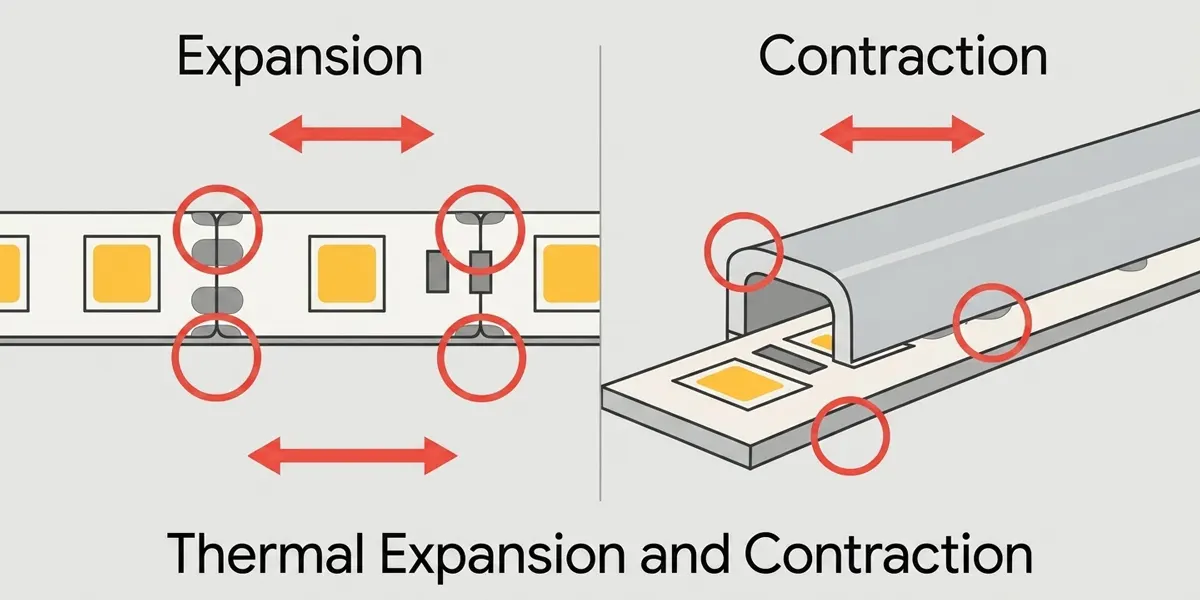
Buiteninstallaties worden dagelijks en seizoensgebonden temperatuurschommelingen ondergaan - van -20°C tot +60°C of meer. Elke thermische cyclus zorgt ervoor dat materialen uitzetten en samentrekken met verschillende snelheden.
Na herhaalde cycli hoopt de spanning zich op aan materiaalinterfaces, wat leidt tot:
- Microscheuren in kopersporen
- Soldeer gezamenlijke vermoeidheid
- Delaminatie tussen PCB-lagen
- Verlies van waterdichting integriteit
Waarom flexibele strips kwetsbaarder zijn
Flexibele LED-neonstrips combineren meerdere materialen met verschillende coëfficiënten van thermische uitzetting (CTE).
| Materiaal | CTE (ppm/°C) |
| koperen | 16-17 |
| polyimide substraat | 20-30 |
| soldeermasker | ~50 |
| Siliconen inkapseling | 200-300 |
Elke keer dat de strip verwarmt of afkoelt, zetten deze materialen uit met verschillende snelheden. Na verloop van tijd barsten interne spanningsverbindingen soldeerverbindingen en breekt kopersporen, vooral op buigpunten.
Veelvoorkomende veldstoringspatronen
| Falende modus | onderliggende oorzaak |
| Intermitterend flikkeren | Microscheurtjes in soldeerverbindingen openen/sluiten met temperatuur |
| Dode segmenten | Gebroken kopersporen van herhaalde buiging of thermische stress |
| vocht binnendringen | Scheuren in siliconen of langs PCB waardoor water sporen kan corroderen |
| Kleurverschuiving / geel worden | UV-degradatie van inkapseling van lage kwaliteit (niet de LED's) |
Waarom veldstoringen plaatsvinden?
Industriegegevens bevestigen dat LED-chips verantwoordelijk zijn voor <10% van storingen. De hoofdoorzaak is thermische en mechanische stress van temperatuurcycli in de echte wereld.
Buitenomstandigheden stellen strips bloot aan -20°C tot +60°C per dag/seizoenszwaaien. Herhaalde verwarming/koeling zorgt voor een niet-overeenkomende uitbreiding tussen materialen, wat leidt tot:
- Microscheuren in kopersporen
- Soldeer gezamenlijke vermoeidheid
- PCB-delaminatie
- Verlies van waterdichting
Kritische materiaaluitdaging: CTE-mismatch
Flexibele neonstrips combineren materialen met zeer verschillende thermische uitzettingssnelheden (PPM/°C):
- Koper: 16-17
- Polyimide: 20-30
- Soldeermasker: ~50
- Siliconen: 200-300
Deze mismatch genereert interne spanning → scheuren, breuken en veldstoringen.
Hoe we betrouwbaarheid valideren
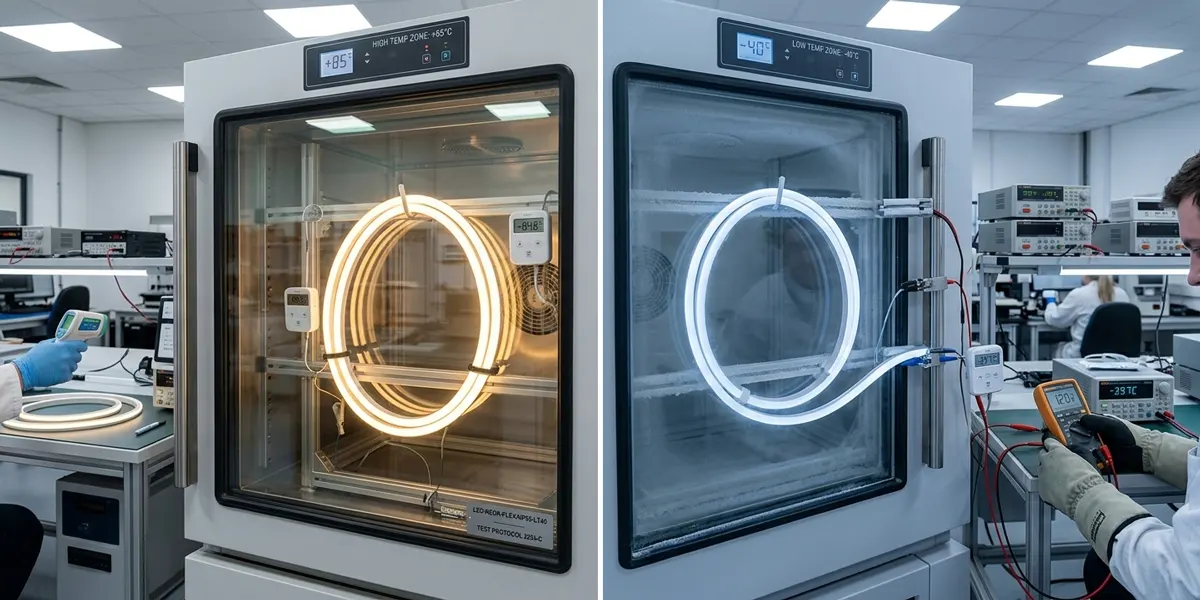
Thermische cyclustestvalidatietestvoorwaarden:
- Temperatuurbereik: -40°C ↔ +85°C
- Totaal aantal cycli: 500 cycli
- verblijftijd: 30 min per fase
- Doel: Simuleer en versnel thermische stress op lange termijn
Samenvatting van de testresultaten (na 500 extreme cycli)
| Item | uitkomst | voorbijlopen |
| Visuele verschijning | Geen scheur, geel, delaminatie | ✅ PASSEN |
| elektrische prestaties | Geen flikkering / dode segmenten | ✅ PASSEN |
| Spanningsverschuiving (ΔVF) | < 3% | ✅ PASSEN |
| Lumen onderhoud | > 98% | ✅ PASSEN |
| Waterdicht (IP67) | Geen vochtintrede | ✅ PASSEN |
| Soldeer & sporen | Geen vermoeidheid / microscheurtjes | ✅ PASSEN |
Door 500 cycli van -40°C~+85°C thermische tests te doorlopen, zijn gesigneerde neonstrips bestand tegen CTE-mismatch, thermische spanning en veelvoorkomende faalwijzen. Ze leveren stabiele, langdurige prestaties, zelfs onder -20°C ~ +60°C buitenomstandigheden.
Wat zit er in een LED-neonstrip-PCB?
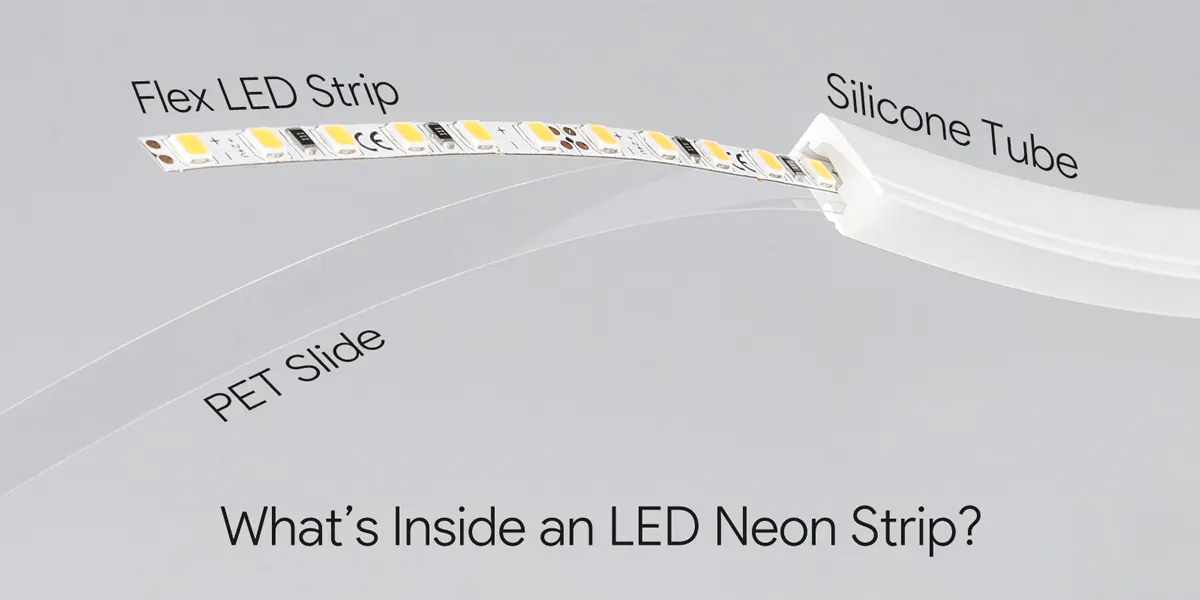
Een typische flexibele PCB (FPCB) voor LED-neonstrips bestaat uit meerdere lagen, elk met een kritieke functie.
Laagstructuur
| oesterbed | Materiaal | Functie |
| substraat | polyimide (PI) of PET | mechanische basis |
| kleverig | acryl of epoxy | verbindt koper aan substraat |
| koperlaag | gerold gegloeid (RA) of elektrodeposited (ED) | Elektrische sporen |
| soldeermasker | Flexibel polymeer | Isolatie en bescherming |
| Siliconen inkapseling | Optische siliconen | Weerbestendig + lichtdiffusie |
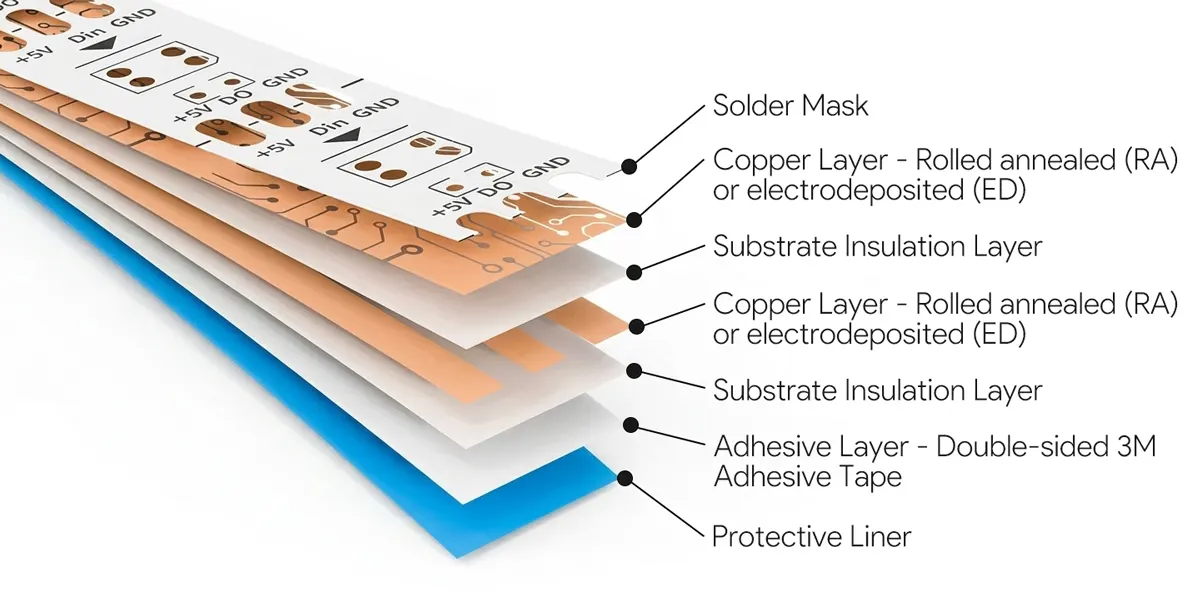
Materiële keuzes die ertoe doen
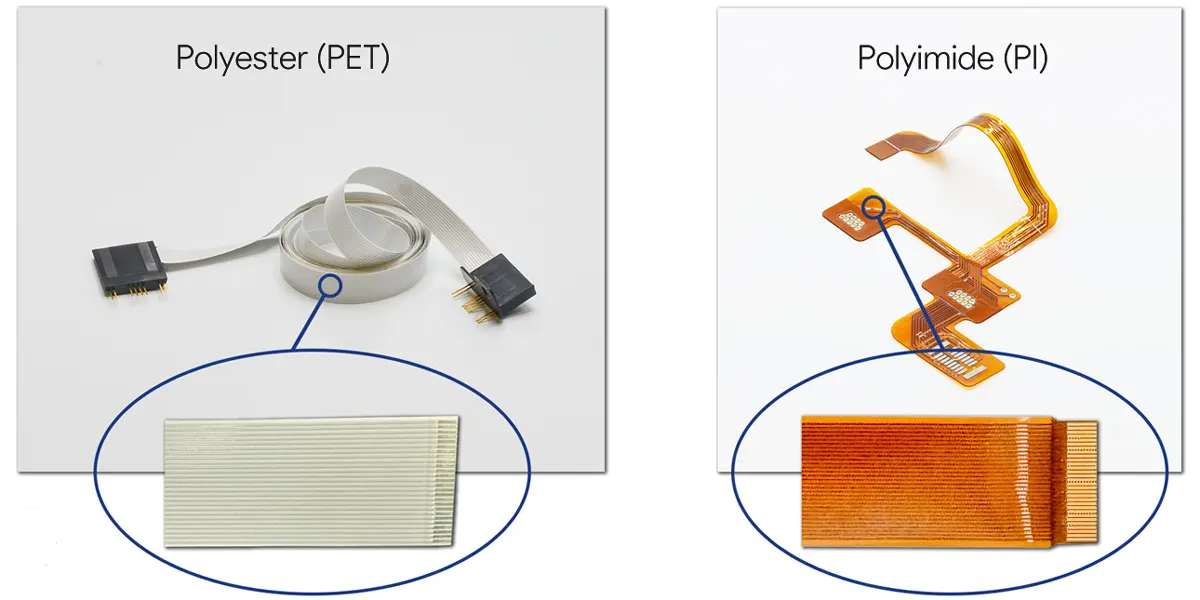
Polyimide versus huisdier:
- Polyimide (PI): staat tot 400 °C tijdens het solderen; duurzaam voor gebruik buitenshuis.
- troetelen: goedkoper maar lagere hittebestendigheid; niet aanbevolen voor buitentoepassingen.
Gerold gegloeid (RA) vs. elektrodeposited (ED) koper:
- Ra Cbehendig: Knoebel en vermoeidheidsbestendiger—Ideaal voor stroken die tijdens de installatie buigen.
- ed CdwergR: Volg scheuren onder herhaaldelijk buigen.
- dikte koper: 1oz (35µm) tot 2oz (70µm). Dikker koper hanteren hogere stroom, maar vermindert flexibiliteit.
Wat doet Soldeer Mask eigenlijk?
Soldeermasker is een dunne polymeerlaag die wordt aangebracht over kopersporen. In LED-neonstrips heeft het vijf essentiële functies:
- Voorkomt soldeerbruggen tijdens productie
- Beschermt tegen oxidatie (kritiek voor gebruik buitenshuis)
- Biedt elektrische isolatie tussen sporen
- fungeert als een vochtbarrière voor producten met IP-rating
- Ondersteunt thermisch beheer in toepassingen bij hoge temperaturen
Droge film versus vloeibaar soldeermasker
| hoedanigheid | droge film | Vloeibaar (LPSM) |
| Dikte uniformiteit | Uitstekend | Goed |
| Fijne toonhoogte | Goed | arrogant |
| productiekosten | hoger voor kleine runs | Lager op schaal |
| moeilijkheid herwerken | Matig | maasbeer |
| Geschikt voor | Consistente productie met hoog volume | Complexe ontwerpen |
Beide typen werken goed als ze op de juiste manier worden aangebracht. Low-cost strips slaan echter vaak het soldeermasker helemaal over - een fout voor elke buitentoepassing.
Wit soldeermasker versus geen soldeermasker
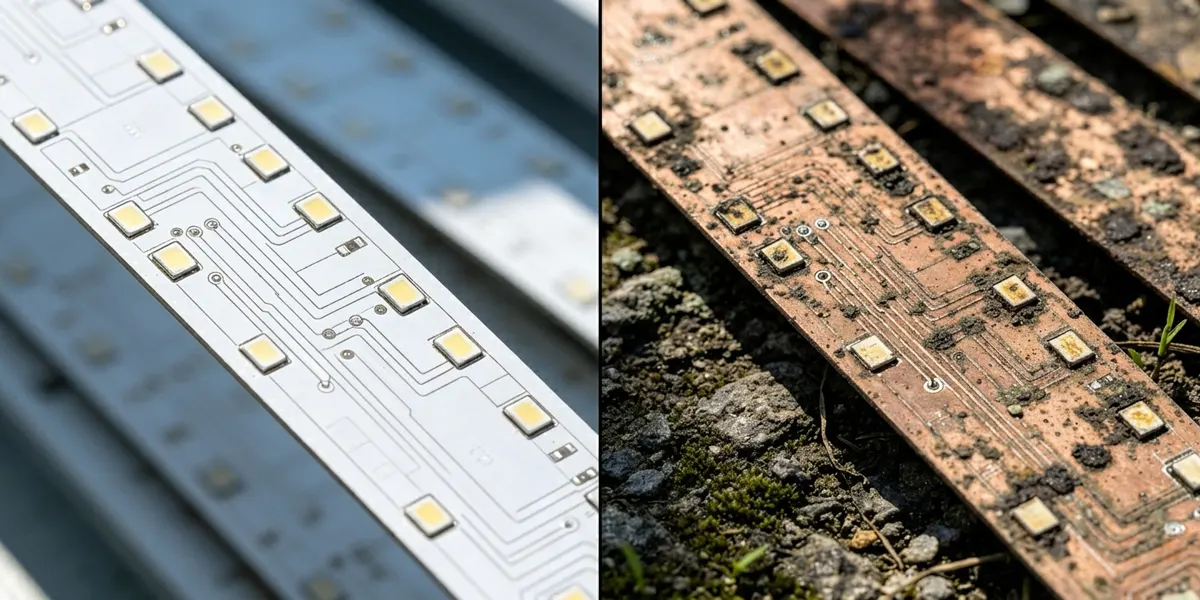
Sommige goedkope LED-neonstrips laten het soldeermasker volledig weg om geld te besparen of betere warmteafvoer te claimen. Dit is een kritiek storingspunt voor toepassingen buiten of met een lange levensduur.
| Functie | wit soldeermasker | Geen soldeermasker |
| Oxidatiebescherming | Ja | niet een |
| Soldeerbrug preventie | Ja | Geen |
| lichtreflectie | Hoog (85-90%) | Laag |
| Thermische dissipatie | Matig | Iets beter (verwaarloosbaar) |
| Betrouwbaarheid op lange termijn | Bewezen (5+ jaar) | Zeer slecht (weken tot maanden) |
Waarom "Geen soldeermasker" een slechte afweging is
Blootgesteld koper oxideert binnen enkele weken in vochtige omgevingen. Het kleine thermische voordeel (meestal <5%-verbetering) is verwaarloosbaar in vergelijking met het risico op door corrosie veroorzaakte storingen.
Voor elke professionele buiteninstallatie is een goed aangebracht soldeermasker, vooral een wit soldeermasker, niet onderhandelbaar.
Witte soldeermaskers reflecteren meer licht naar boven, waardoor de optische efficiëntie met 15-20% wordt verbeterd, maar ze vereisen een zorgvuldige procesbeheersing.
Thermische betrouwbaarheid: waarom materialen belangrijker zijn dan prijs
Thermische betrouwbaarheid is de meest onderschatte factor in de techniek van LED-neonstrips. De vraag is niet of de strip bij kamertemperatuur werkt, maar of hij nog steeds werkt na 500 thermische cycli.
Het CTE-fout bij de overeenkomst
Wanneer materialen met verschillende CTE's aan elkaar worden gehecht, veroorzaken temperatuurveranderingen interne stress op hun grensvlakken.
| Materiaalinterface | cte komt niet overeen | Fout in het spel |
| Koper (17) vs. polyimide (20-30) | Matig | Microscheurtjes in de loop van de tijd |
| Soldeermasker (~ 50) vs. koper (17) | Hoog | kraken of delamineren |
| Siliconen (200-300) versus PCB | Extreem | Vereist mechanische verankering |
soldeermasker op hoge temperatuur
Voor buitentoepassingen die worden blootgesteld aan direct zonlicht en brede temperatuurschommelingen, falen standaard soldeermaskers. Formuleringen voor hoge temperaturen bieden:
- Glasovergangstemperatuur (TG) boven 130°C (sommige bereiken 170-180°C)
- Weerstand tegen thermische cycli (bijv. 1000 uur van -40°C tot 125°C)
- Betere chemische en UV-bestendigheid
Kosten versus betrouwbaarheid: real-world vergelijking
| Kwaliteitsniveau | Materiaal Specificaties | Verwacht buitenleven | Typisch faalpunt |
| Goedkoop / Goed | PET-substraat, ED-koper, geen masker | 3-6 maanden | Soldeerverbindingsscheuren of sporencorrosie |
| middelbereik | PI-substraat, RA-koper, vloeibaar masker | 1-2 jaar | Soldeermasker delaminatie |
| Premium (gemerkt) | High-TG Pi, RA koper, high-temp wit masker | 5-8 jaar | Led-lumen afschrijving (niet structureel) |
Het verschil tussen een strip van 6 maanden en een strip van 5 jaar is vaak onzichtbaar op een datasheet, maar wordt duidelijk in het veld.
SignLiteled publiceert thermische validatiegegevens voor cycli voor elke neonstripserie voor buiten. Rapporteren → Neon LED Strip Aging Test Report - Betrouwbaarheid, lumenverval en analyse van kleurstabiliteit.
Flexibele PCB-uitdagingen in neonstripontwerp
Flexibiliteit is het bepalende kenmerk van LED-neonstrips - en ook de bron van verschillende unieke faalwijzen.
1. Adhesie en lamineren
Herhaaldelijk buigen of thermisch fietsen kan leiden tot:
- Delaminatie – Scheiding tussen soldeermasker en koper
- scheuren op buigpunten - vooral als componenten in de buurt van buigzones zijn
- Opgetilde pads – Soldeerpads maken los van het substraat
2. Buigstraalgrenzen
Elke flexibele PCB heeft een minimale buigradius. Overschrijding - zelfs één keer - veroorzaakt onzichtbare schade die leidt tot latere mislukking.
| buigtype | Minimale buigradius | Toepassingsvoorbeeld |
| Dynamisch (herhaald buigen) | 100× materiaaldikte | Verplaatsen van installaties |
| Statisch (eenmaal gebogen tijdens installatie) | 10 × materiaaldikte | Hoekverpakking |
Beste praktijk: Stiffeners onder LED- en weerstandslocaties voorkomen buigen waar componenten worden gemonteerd, terwijl flexibiliteit tussen segmenten mogelijk is.
3. De afweging: flexibiliteit versus stabiliteit
| Ontwerpbenadering | Flexibiliteit | Thermische stabiliteit | het beste voor |
| Kleefvrij koper-polyimide | Matig | Uitstekend | Buiten, breed temperatuurbereik |
| op klevende basis | Hoog | Matig | Binnen, gecontroleerde omgeving |
Siglitetled maakt gebruik van kleefarme hechting voor series die buiten de rating staan, waardoor thermische stabiliteit wordt gegarandeerd zonder in te boeten aan flexibiliteit.
Tin snorharen: het verborgen risico in goedkope LED-strips
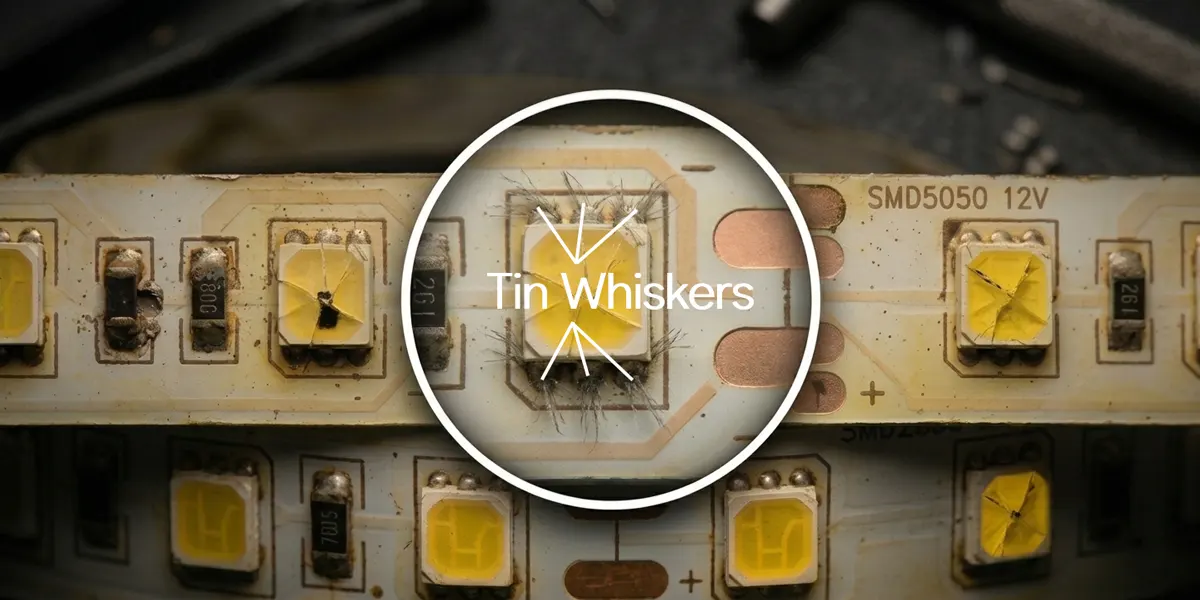
Tin snorharen zijn microscopische, naaldachtige metalen kristallen die spontaan groeien van vertind oppervlakken. Ze kunnen enkele millimeters lang worden en kortsluiting veroorzaken tussen dicht bij elkaar gelegen kopersporen.
Waarom dit belangrijk is voor LED-neonstrips
Nadat de RoHS-richtlijn lood in soldeer beperkte, werd zuivere vertindbeplating gebruikelijk. Zonder te leiden tot onderdrukking van de groei, hebben tin snorharen veldstoringen veroorzaakt in veel elektronische productcategorieën, waaronder LED-strips.
In een flexibele PCB kunnen snorharen groeien tussen sporen met toonhoogtes van slechts 0,5 mm, waardoor intermitterende of permanente shorts ontstaan.
Risicofactoren:
- Vertind vertering van slechte kwaliteit
- Onvoldoende procescontroles
- Gebrek aan na het plateren van het gloeien
- Goedkope productie
Whisker mitigatie strategieën
| krijgskunde | goedkope strips | Premium (gemerkt) |
| Geoptimaliseerd platingproces | ❌Nee | ✅ Ja |
| Na het plateren van warmtebehandeling (gloeien) | ❌Nee | ✅ Ja |
| Conforme coating over kritieke gebieden | ❌Nee | ✅ Ja |
| Tinlegering met snorhaardempers | Soms | ✅ Ja |
Tin snorharen zijn een zelden besproken maar belangrijke differentiator tussen grondstoffenproducten en technische oplossingen.
Hoe hoogwaardige LED-neonstrips zijn ontworpen
Het aanpakken van de bovenstaande betrouwbaarheidsfactoren vereist een systematische benadering van materialen, procesbeheersing en ontwerp.
Samenvatting van materiaalselectie
| samenstellend | Voorkeursspecificatie (gesigneerde standaard) | vermijden |
| substraat | Hoog-TG-polyimide | PET of low-grade PI |
| koperen | gerold gegloeid (ra) | Elektrogeponeerd (ED) |
| soldeermasker | Flexibel wit masker op hoge temperatuur | Standaard LPI of geen masker |
| inkapseling | UV-gestabiliseerd siliconen | PVC of niet-UV-siliconen |
| vertinnen | Whisker-gemitigeerd proces | ongecontroleerd puur blik |
Belangrijke procesbesturing
| conserveren | Doel |
| Soldeermasker dikte controle | Voorkomt “virtueel solderen” (slechte bevochtiging) |
| Beheer van herstroomprofielen | Vermijdt broze soldeerpasta bij lage temperatuur |
| Geautomatiseerde optische inspectie (AOI) | Detecteert soldeerfouten vóór inkapseling |
| Thermische fietsen validatie | Simuleert echte schommels (-40°C tot +85°C, 500+ cycli) |
Outdoor-klare ontwerpkenmerken
- IP67 of IP68 waterdichting met gegoten einddoppen en dubbele afdichtingen
- UV-gestabiliseerde siliconen met 3000 uur versnelde UV-tests (equivalent aan 9+ jaar buiten)
- Bedrijfstemperatuurbereik van -40°C tot +60°C
- Mechanische spanningsaftrek bij kabelingangen en tussen segmenten
Hoe worden hoogwaardige LED-geëxtrudeerde neonstrips gemaakt

Conclusie
De betrouwbaarheid van de LED-neonstrip wordt niet bepaald door het merk LED-merk of prijs per meter. Het wordt bepaald door verborgen technische details:
- PCB-substraatkwaliteit (polyimide vs. PET)
- Kopertype (RA vs. ED)
- Soldeermasker integriteit (wit masker versus geen masker)
- CTE-beheer
- tinnen snorhaar preventie
- procescontroles die de meeste kopers nooit zien
Buitenomgevingen zijn meedogenloos. Temperatuurschommelingen, UV-blootstelling, vocht en mechanische stress hopen zich in de loop van de tijd op. Strips die er bij aankoop identiek uitzien, kunnen dramatisch afwijken in een lang leven op basis van materiële keuzes die zelden worden benadrukt in marketingmateriaal.
Voor bestekschrijvers en lichtprofessionals zijn de laagste initiële kosten zelden de laagste totale eigendomskosten.
Kijk bij het evalueren van LED-neonstrips voor buiten- of lange levensduur toepassingen verder dan helderheid en vraag om technische details. Het verschil tussen een strip die in zes maanden faalt en een die vijf jaar meegaat, wordt niet gevonden in de LED's, maar in de lagen eronder.
Waarom specificaties kiezen voor SignLiteled
| vereiste | SignLiteLed-standaard |
| substraat | Hoog-TG-polyimide |
| koperen | gerold gegloeid (ra) |
| soldeermasker | High-temp wit masker |
| inkapseling | UV-gestabiliseerd siliconen |
| Thermische validatie | 500 cycli, -40°C tot +85°C |
| Whisker-verzachting | Ja (na het uitgloeien) |
| Garantie | 5 jaar beperkt |
Klaar om betrouwbare LED-neonstrips te specificeren voor uw volgende project? Signlitetled outdoor led neon flex.
FAQs
Gerelateerde berichten