Português
  English
  简体中文
简体中文  Deutsch
  Español
  Français
  Italiano
  日本語
日本語  한국어
한국어  Polski
  Русский
  Türkçe
  Nederlands
  Tiếng Việt
  ไทย
ไทย 
As tiras de néon LED se tornaram o padrão da indústria para contornos arquitetônicos, sinalização comercial, iluminação paisagística e design de eventos. Eles fornecem o brilho contínuo e uniforme do neon de vidro tradicional sem fragilidade ou alta tensão.
No entanto, um número surpreendente de tiras de néon de LED falha em meses, não porque os LEDs estejam com defeito, mas por causa de fatores de confiabilidade ocultos que a maioria das folhas de dados nunca menciona.
Esses fatores incluem:
- Qualidade do substrato PCB
- integridade da máscara de solda
- Descasamentos de expansão térmica
- Tipo de cobre (RA vs. ED)
- Prevenção de bigode de estanho
Este artigo examina esses detalhes de engenharia e explica por que algumas tiras de néon de LED duram mais de 5 anos em ambientes externos agressivos, enquanto outras falham em uma única temporada.
Por que as tiras de neon de LED falham em aplicativos reais

De acordo com os dados de análise de falhas do setor, os próprios LEDs representam menos de 10% de falhas de campo. Os verdadeiros culpados são estresse térmico e mecânico.
O problema do ciclo térmico
As instalações externas enfrentam oscilações diárias e sazonais da temperatura — de -20°C a +60°C ou mais. Cada ciclo térmico faz com que os materiais se expandam e se contraiam em taxas diferentes.
Após ciclos repetidos, a tensão se acumula nas interfaces do material, levando a:
- Micro-batedas em traços de cobre
- solda fadiga da junta
- delaminação entre as camadas de PCB
- Perda de integridade da impermeabilização
Por que as tiras flexíveis são mais vulneráveis
As tiras de néon LED flexíveis combinam vários materiais com coeficientes diferentes de expansão térmica (CTE).
| Material | CTE (ppm/°C) |
| cobre | 16–17 |
| Substrato de poliimida | 20–30 |
| máscara de solda | ~50 |
| encapsulamento de silicone | 200–300 |
Toda vez que a tira aquece ou esfria, esses materiais se expandem a taxas diferentes. Com o tempo, a tensão interna quebra juntas de solda e quebra traços de cobre, especialmente nos pontos de dobra.
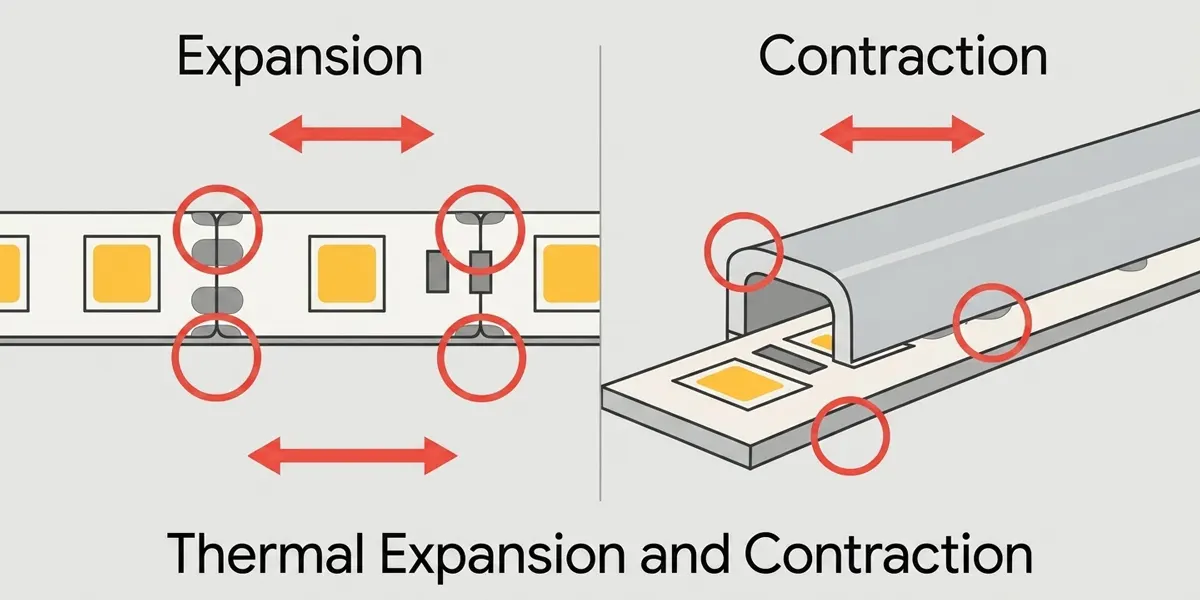
Padrões de falha de campo comuns
| Modo de falha | causa raiz |
| cintilação intermitente | Micro-batedas nas juntas de solda que se abrem/fecham com a temperatura |
| segmentos mortos | Traços de cobre quebrados de flexão repetida ou estresse térmico |
| entrada de umidade | Rachaduras em silicone ou ao longo de PCB permitindo que a água corra traços |
| Deslocamento de cor / amarelecimento | Degradação por UV de encapsulamento de baixa qualidade (não os LEDs) |
Por que as falhas de campo acontecem?
Os dados do setor confirmam a conta do LED Chips para <10% de falhas. A causa raiz é o estresse térmico e mecânico dos ciclos de temperatura do mundo real.
As condições externas expõem as faixas de -20°C a +60°C diariamente/balanços sazonais. O aquecimento/resfriamento repetido cria uma expansão incompatível entre os materiais, levando a:
- Micro-batedas em traços de cobre
- solda fadiga da junta
- delaminação de pcb
- Perda de impermeabilização
Desafio crítico de material: incompatibilidade de CTE
As tiras de néon flexíveis combinam materiais com taxas de expansão térmica altamente diferentes (ppm/°C):
- Cobre: 16–17
- Poliimida: 20–30
- Máscara de solda: ~ 50
- Silicone: 200–300
Essa incompatibilidade gera estresse interno → rachaduras, quebras e falhas de campo.
Como validamos a confiabilidade
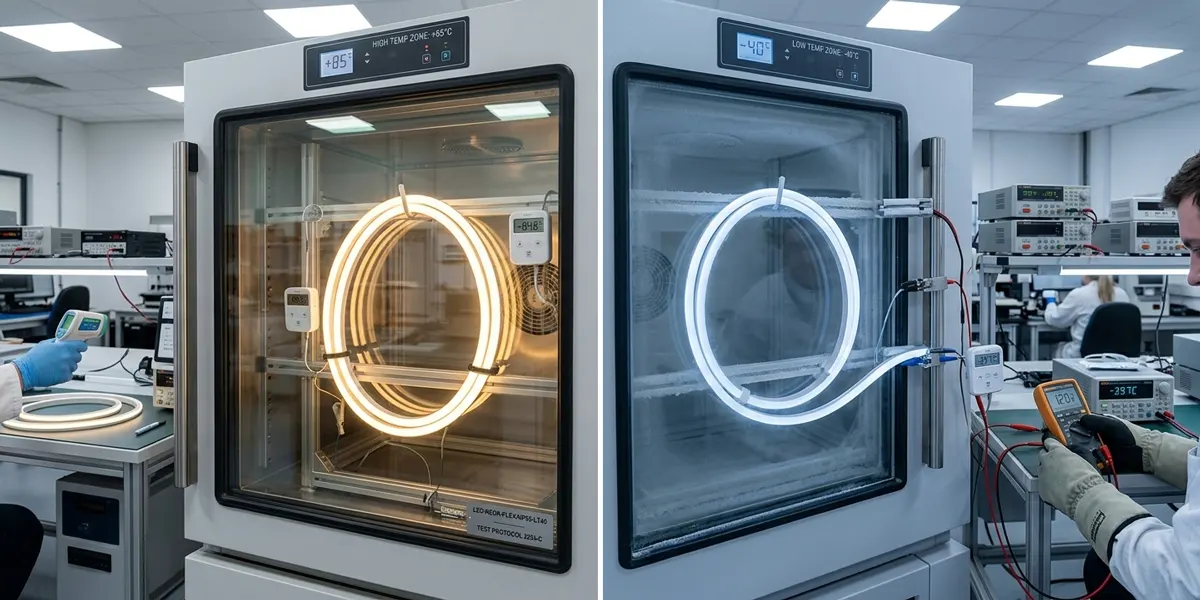
Condições de validação do teste do ciclo térmico:
- Gama de temperaturas: -40°C ↔ +85°C
- Ciclos totais: 500 ciclos
- tempo de permanência: 30 minutos por fase
- Objetivo: Simular e acelerar o estresse térmico a longo prazo
Resumo dos resultados dos testes (após 500 ciclos extremos)
| Item | conseqüência | passar |
| Aspeto visual | Sem rachaduras, amarelecimento, delaminação | ✅ Passe |
| desempenho elétrico | Sem cintilação / segmentos mortos | ✅ Passe |
| Deslocamento de tensão (ΔVF) | < 3% | ✅ Passe |
| Manutenção do lúmen | > 98% | ✅ Passe |
| Impermeável (IP67) | Sem entrada de umidade | ✅ Passe |
| Solda e traços | Sem fadiga / micro-rachaduras | ✅ Passe |
Ao passar 500 ciclos de -40°C~+85°C, as tiras de néon sinalizadas resistem ao incompatibilidade CTE, estresse térmico e modos de falha comuns. Eles oferecem um desempenho estável e duradouro, mesmo abaixo de -20°C ~ +60°C condições externas.
O que há dentro de um PCB de tiras de neon LED?
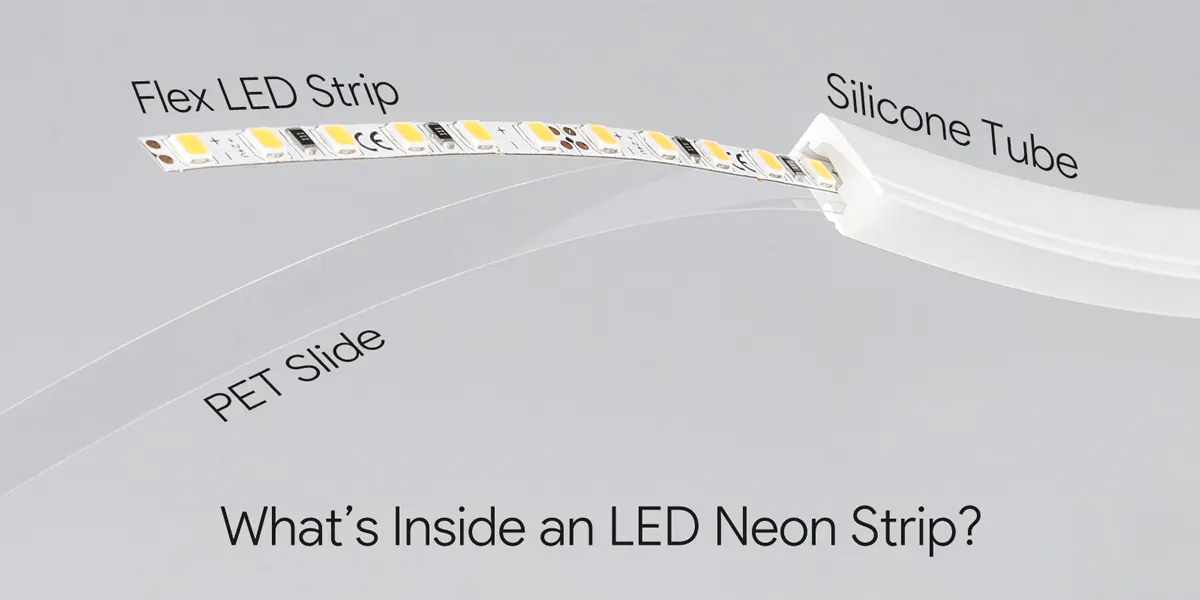
Um PCB flexível típico (FPCB) para tiras de néon de LED consiste em várias camadas, cada uma com uma função crítica.
estrutura da camada
| camada | Material | Função |
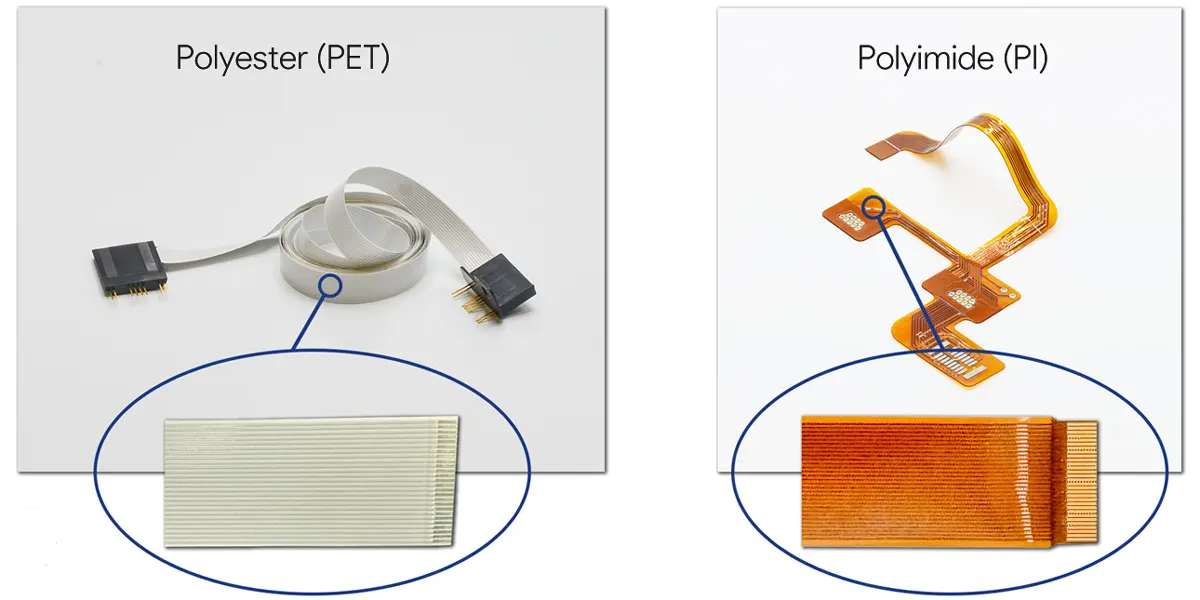
| substrato | Poliimida (PI) ou PET | base mecânica |
| adesivo | acrílico ou epóxi | Liga o cobre ao substrato |
| camada de cobre | Recozido laminado (RA) ou eletrodepositado (ED) | traços elétricos |
| máscara de solda | polímero flexível | Isolamento e proteção |
| encapsulamento de silicone | silicone de grau óptico | À prova de intempéries + difusão leve |
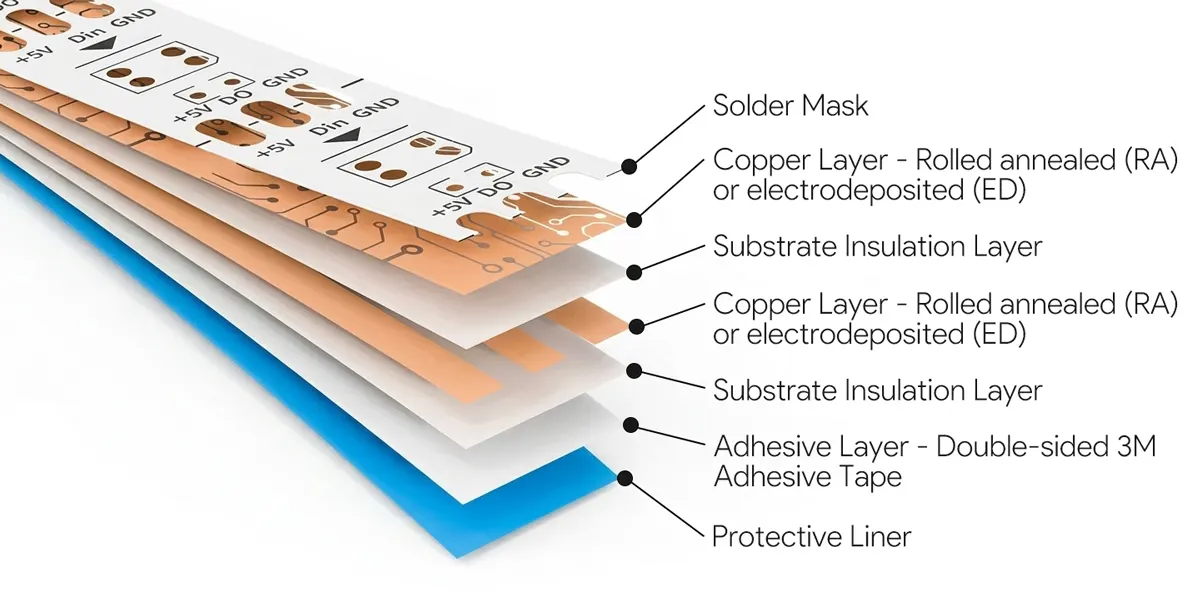
escolhas materiais que importam
Poliimida vs. Animal de Estimação:
- Poliimida (PI): Resiste a 400°C durante a soldagem; durável para uso externo.
- despeito: Mais barato, mas menor resistência ao calor; não é recomendado para aplicações externas.
Recozido laminado (RA) vs. Eletrodepositado (ED) Cobre:
- ra Copper: Mais dúctil e resistente à fadiga - Ideal para tiras que se dobram durante a instalação.
- eda CopeR: Propenso a rachaduras sob flexões repetidas.
- espessura de cobre: 1oz (35µm) a 2 onças (70µm). O cobre mais grosso lida com uma corrente mais alta, mas reduz a flexibilidade.
O que realmente faz a máscara de solda?
A máscara de solda é uma fina camada de polímero aplicada sobre traços de cobre. Em tiras de neon LED, ele serve cinco funções essenciais:
- Previne pontes de solda durante a fabricação
- Protege contra a oxidação (crítico para uso externo)
- Fornece isolamento elétrico entre os traços
- Atua como uma barreira à umidade para produtos com classificação IP
- Suporta gerenciamento térmico em aplicativos de alta temperatura
Filme seco versus máscara de solda líquida
| propriedade | filme seco | Líquido (LPSM) |
| Uniformidade de espessura | Excelente | Bom |
| Capacidade de passo fino | Bom | superior |
| custo de produção | Maior para pequenas corridas | Baixe em escala |
| Dificuldade de retraba | Moderado | mais fácil |
| Melhor para | Produção consistente de alto volume | desenhos complexos |
Ambos os tipos funcionam bem quando aplicados adequadamente. No entanto, as tiras de baixo custo geralmente pulam completamente a máscara de solda - um erro para qualquer aplicação externa.
Máscara de solda branca versus sem máscara de solda
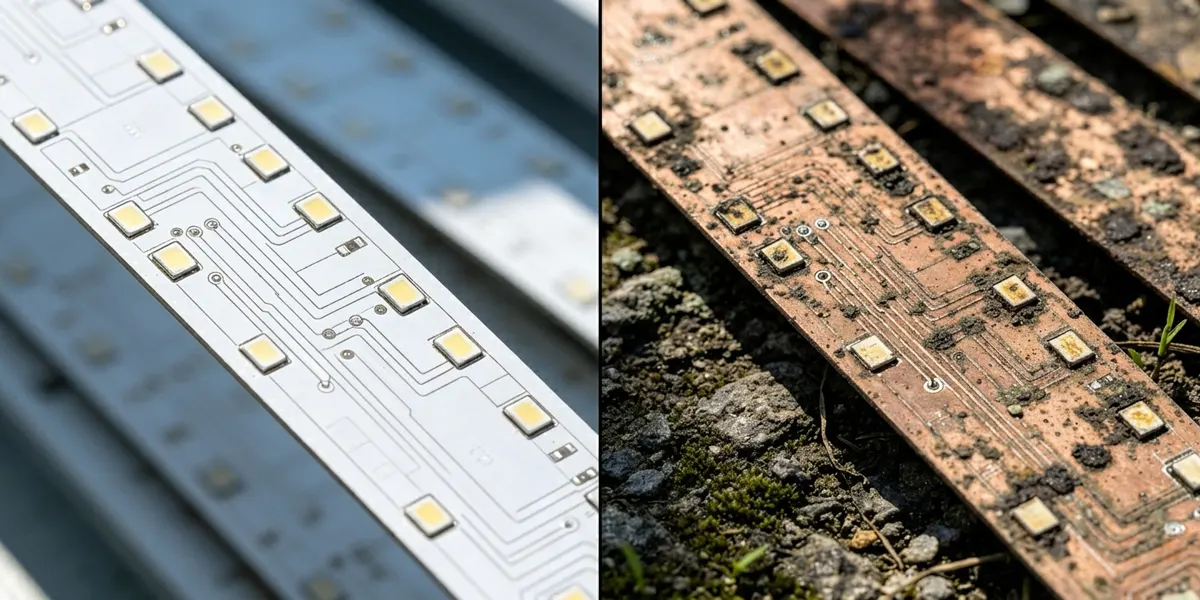
Algumas tiras de neon LED de baixo custo omitem a máscara de solda inteiramente para economizar dinheiro ou reivindicar uma melhor dissipação de calor. Este é um ponto crítico de falha para aplicativos externos ou de longa vida.
| Caraterística | máscara de solda branca | sem máscara de solda |
| Proteção contra oxidação | Sim | nenhum |
| prevenção de pontes de solda | Sim | Não |
| reflexo de luz | Alta (85-90%) | Baixa |
| dissipação térmica | Moderado | Um pouco melhor (insignificante) |
| confiabilidade a longo prazo | Comprovado (mais de 5 anos) | Muito ruim (semanas a meses) |
Por que “nenhuma máscara de solda” é uma má negociação
O cobre exposto oxida dentro de semanas em ambientes úmidos. O pequeno benefício térmico (normalmente <5% melhora) é insignificante em comparação com o risco de falha induzida por corrosão.
Para qualquer instalação externa profissional, uma máscara de solda aplicada corretamente, especialmente máscara de solda branca, não é negociável.
As máscaras de solda branca refletem mais luz para cima, melhorando a eficiência óptica em 15-20%. No entanto, elas exigem um controle cuidadoso do processo.
Confiabilidade térmica: por que os materiais são mais importantes do que o preço
A confiabilidade térmica é o fator mais subestimado na engenharia de tiras de néon LED. A questão não é se a tira funciona em temperatura ambiente, mas se ela ainda funciona após 500 ciclos térmicos.
O problema de incompatibilidade do CTE
Quando materiais com diferentes CTEs estão ligados, as mudanças de temperatura criam estresse interno em suas interfaces.
| Interface de material | incompatibilidade de cte | Risco de falha |
| Cobre (17) vs. poliimida (20-30) | Moderado | Micro-batedas ao longo do tempo |
| Máscara de solda (~50) vs. cobre (17) | Elevado | rachaduras ou delaminação |
| Silicone (200-300) vs. PCB | Extremo | Requer ancoragem mecânica |
Materiais de máscara de solda de alta temperatura
Para aplicações externas expostas à luz direta do sol e amplas oscilações de temperatura, as máscaras de solda padrão falham. Formulações de alta temperatura oferecem:
- Temperatura de transição vítrea (TG) acima de 130°C (alguns atingem 170-180°C)
- Resistência à ciclagem térmica (por exemplo, 1000 horas de -40°C a 125°C)
- Melhor resistência a produtos químicos e UV
Custo x Confiabilidade: Comparação do mundo real
| nível de qualidade | especificações do material | Vida ao ar livre esperada | Ponto de falha típico |
| de baixo custo/mercadoria | Substrato de animal de estimação, ed cobre, sem máscara | 3-6 meses | Rascas de juntas de solda ou corrosão de traços |
| de médio alcance | Substrato de PI, cobre, máscara líquida | 1-2 anos | delaminação da máscara de solda |
| Premium (signlilAlted) | Máscara branca de alta TG, cobre, cobre, RA e branco de alta temperatura | 5-8 anos | Depreciação do lúmen do LED (não estrutural) |
A diferença entre uma tira de 6 meses e uma tira de 5 anos geralmente é invisível em uma folha de dados, mas se torna óbvia em campo.
A Signliteld publica dados de validação do ciclo térmico para todas as séries de tiras de néon ao ar livre. Leitura do relatório → Relatório de teste de envelhecimento em LED para néon – confiabilidade, decaimento do lúmen e análise de estabilidade de cores.
Desafios flexíveis de PCB no design de tiras de néon
Flexibilidade é a característica definidora das tiras de néon LED — e também a fonte de vários modos de falha exclusivos.
1. Adesão e laminação
A flexão repetida ou o ciclo térmico podem causar:
- delaminação - separação entre máscara de solda e cobre
- Rachaduras nos pontos de dobra, especialmente se os componentes estiverem próximos às zonas de flexão
- Pastilhas levantadas - as almofadas de solda se soltam do substrato
2. Limites de raio de dobra
Cada PCB flexível possui um raio de curvatura mínimo. Exceder-lo - mesmo uma vez - causa danos invisíveis que levam a falhas posteriores.
| Tipo de flexão | Raio de dobra mínimo | Exemplo de aplicativo |
| Dinâmico (dobrada repetida) | 100x espessura do material | Instalações em movimento |
| estático (dobrado uma vez durante a instalação) | 10x espessura do material | Embrulho de canto |
Melhor prática: Encontrados em locais de LED e resistores evitam a flexão onde os componentes são montados, permitindo flexibilidade entre os segmentos.
3. O trade-off: flexibilidade versus estabilidade
| Abordagem do projeto | Flexibilidade | estabilidade térmica | melhor para |
| Cobre-poliimida sem adesivo | Moderado | Excelente | Ampla faixa de temperatura ao ar livre |
| à base de adesivo | Elevado | Moderado | Ambiente interno e controlado |
A Signliteled usa colagem sem adesivo para séries nominais ao ar livre, garantindo a estabilidade térmica sem sacrificar a flexibilidade.
Bigodes de estanho: o risco oculto em tiras de LED de baixo custo
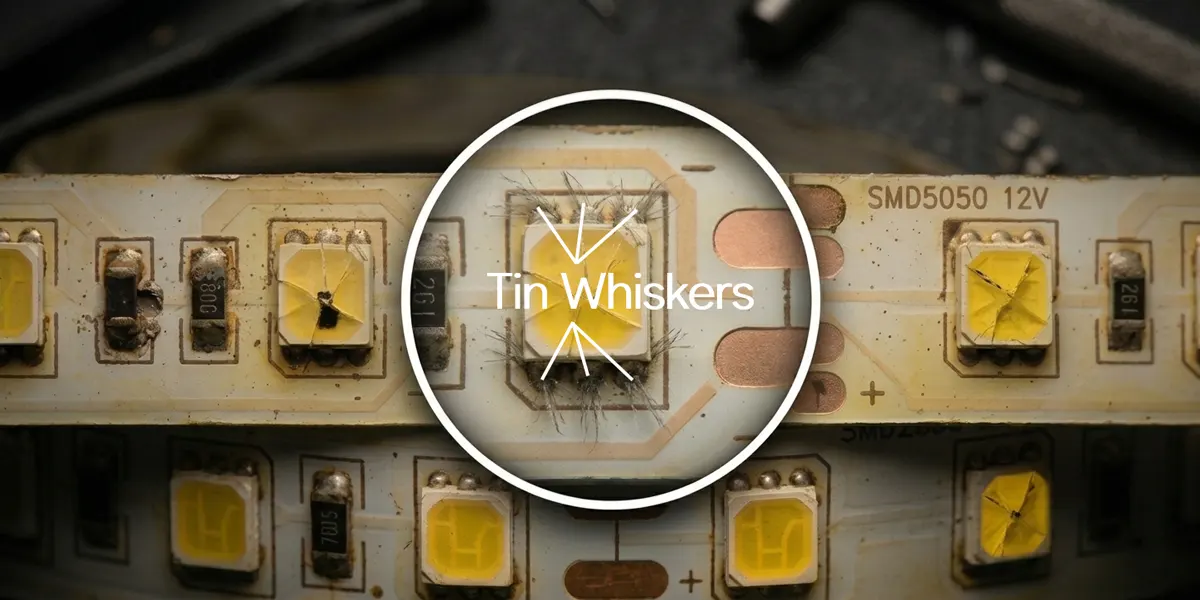
Os bigodes de estanho são cristais microscópicos semelhantes a agulhas que crescem espontaneamente em superfícies revestidas de estanho. Eles podem atingir vários milímetros de comprimento e causar curtos-circuitos entre traços de cobre bem espaçados.
Por que isso é importante para tiras de neon LED
Após a diretiva RoHS restringir o chumbo na solda, tornou-se comum o revestimento de estanho pura. Sem levar à supressão do crescimento, os bigodes de estanho causaram falhas de campo em muitas categorias de produtos eletrônicos, incluindo tiras de LED.
Em uma placa flexível, os bigodes podem crescer entre traços com passos tão pequenos quanto 0,5 mm, criando shorts intermitentes ou permanentes.
Fatores de risco:
- Revestimento de estanho de baixa qualidade
- Controles de processo inadequados
- Falta de recozimento pós-plaqueamento
- fabricação de baixo custo
Estratégias de mitigação de bigodes
| estratégia | tiras de baixo custo | Premium (signlilAlted) |
| Processo de revestimento otimizado | ❌ Não | ✅ Sim |
| Tratamento térmico pós-plaqueamento (recozimento) | ❌ Não | ✅ Sim |
| Revestimento conformado em áreas críticas | ❌ Não | ✅ Sim |
| Liga de estanho com supressores de bigode | ❌ Às vezes | ✅ Sim |
Os bigodes de estanho são um diferencial raramente discutido, mas importante, entre produtos de commodities e soluções de nível de engenharia.
Como as tiras de neon LED de alta qualidade são projetadas
Abordar os fatores de confiabilidade acima requer uma abordagem sistemática para materiais, controle de processos e design.
Resumo da seleção de material
| componente | Especificação preferida (Signlited Standard) | evitar |
| substrato | Poliimida de alto TG | PET ou Pi de baixo grau |
| cobre | Recoberto retido (Ra) | eletrodepositado (ed) |
| máscara de solda | Máscara branca flexível de alta temperatura | LPI padrão ou nenhuma máscara |
| encapsulamento | Silicone estabilizado com UV | PVC ou silicone não UV |
| chapeamento de estanho | Processo mitigado com bigode | Lata pura descontrolada |
Controles de processo de chave
| processo | Objetivo |
| Controle de espessura da máscara de solda | Previne a “soldagem virtual” (molhagem ruim) |
| Gerenciamento de perfil de refluxo | Evita pasta de solda quebradiça de baixa temperatura |
| Inspeção óptica automatizada (AOI) | Detecta defeitos de solda antes do encapsulamento |
| Validação de ciclos térmicos | Simula os balanços do mundo real (-40°C a +85°C, mais de 500 ciclos) |
Características de design ao ar livre
- Impermeabilização IP67 ou IP68 com tampas moldadas e vedações duplas
- Silicone estabilizado com UV com teste UV acelerado de 3.000 horas (equivalente a mais de 9 anos ao ar livre)
- Faixa de temperatura operacional de -40°C a +60°C
- Alívio de tensão mecânica nas entradas do cabo e entre os segmentos
Como são feitas as tiras de neon coextrudadas por LED de alta qualidade

Conclusão
A confiabilidade da tira de néon LED não é determinada pela marca LED ou pelo preço por metro. É determinado por detalhes de engenharia ocultos:
- Qualidade do substrato PCB (poliimida vs. PET)
- Tipo de cobre (RA vs. ED)
- Integridade da máscara de solda (máscara branca versus sem máscara)
- Gerenciamento de CTE
- Prevenção de bigode de estanho
- Controles de processo que a maioria dos compradores nunca vê
Ambientes externos são implacáveis. Oscilações de temperatura, exposição aos raios ultravioleta, umidade e estresse mecânico se acumulam ao longo do tempo. As tiras que parecem idênticas na compra podem divergir drasticamente em longevidade com base em escolhas de materiais que raramente são destacadas nos materiais de marketing.
Para especificadores e profissionais de iluminação, o custo inicial mais baixo raramente é o menor custo total de propriedade.
Ao avaliar as tiras de néon LED para aplicações externas ou de longa vida, olhe além do brilho e peça detalhes de engenharia. A diferença entre uma tira que falha em seis meses e uma que dura cinco anos não é encontrada nos LEDs, mas nas camadas abaixo deles.
Por que os especificadores escolhem os sinais de sinalização
| exigência | Padrão com sinal |
| substrato | Poliimida de alto TG |
| cobre | Recoberto retido (Ra) |
| máscara de solda | Máscara branca de alta temperatura |
| encapsulamento | Silicone estabilizado com UV |
| validação térmica | 500 ciclos, -40°C a +85°C |
| Mitigação do bigode | Sim (recozimento pós-prato) |
| Garantia | 5 anos limitado |
Pronto para especificar tiras de neon LED confiáveis para seu próximo projeto? Procure Signliteled Outdoor LED Neon Flex.
FAQs
Postagens relacionadas