Español
  English
  简体中文
简体中文  Deutsch
  Français
  Italiano
  日本語
日本語  한국어
한국어  Polski
  Português
  Русский
  Türkçe
  Nederlands
  Tiếng Việt
  ไทย
ไทย 
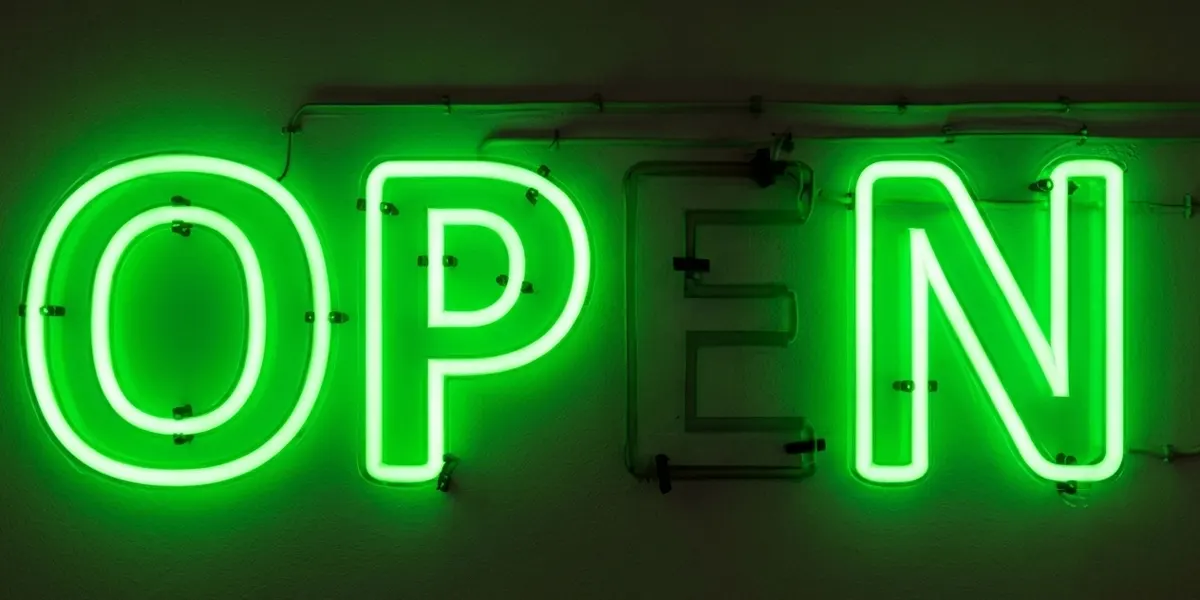
Las tiras de neón LED se han convertido en el estándar de la industria para contornos arquitectónicos, señalización comercial, iluminación de paisaje y diseño de eventos. Ofrecen el brillo continuo y uniforme del tradicional neón de vidrio sin la fragilidad o el alto voltaje.
Sin embargo, una sorprendente cantidad de tiras de neón LED fallan en el campo en meses, no porque los propios LED estén defectuosos, sino por los factores de confiabilidad ocultos que la mayoría de las hojas de datos nunca mencionan.
Estos factores incluyen:
- Calidad de sustrato de PCB
- Integridad de la máscara de soldadura
- Desajustes de expansión térmica
- Tipo de cobre (RA vs. Ed)
- Prevención de bigotes de hojala
Este artículo examina estos detalles de ingeniería y explica por qué algunas tiras de neón LED duran más de 5 años en entornos duros al aire libre, mientras que otros fracasan en una sola temporada.
Por qué fallan las tiras de neón LED en aplicaciones reales
Según los datos de análisis de fallas de la industria, los propios LED representan menos de 10% de fallas de campo. Los verdaderos culpables son el estrés térmico y mecánico.
El problema del ciclo térmico
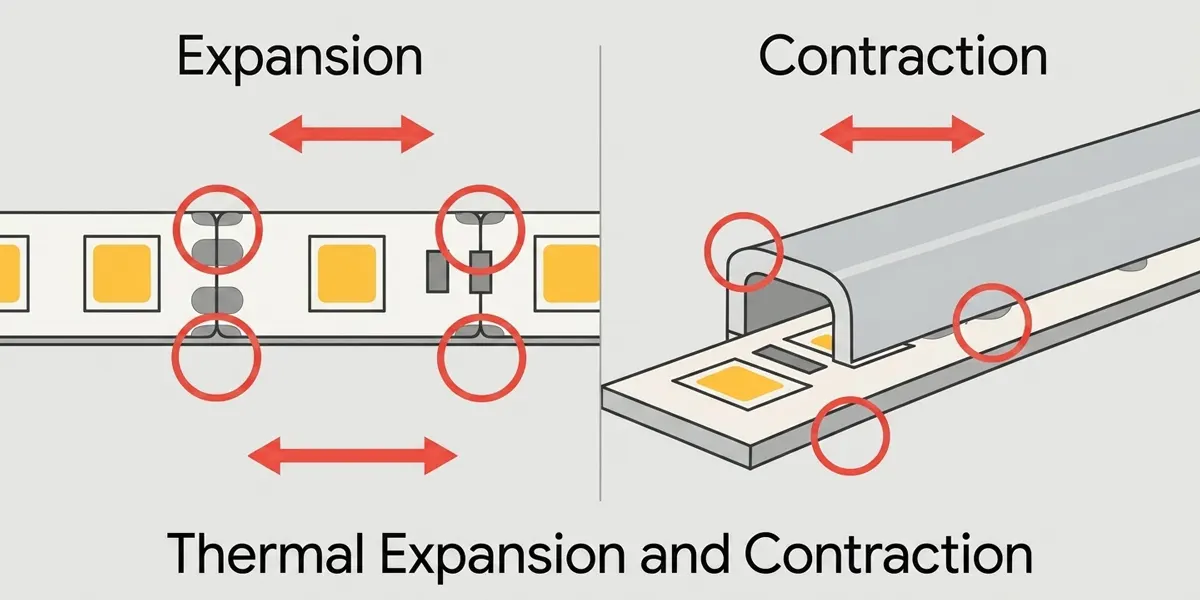
Las instalaciones exteriores se enfrentan a cambios de temperatura diarios y estacionales, desde -20°C hasta +60°C o más. Cada ciclo térmico hace que los materiales se expandan y se contraigan a diferentes velocidades.
Después de ciclos repetidos, el estrés se acumula en las interfaces materiales, lo que lleva a:
- Micro-grietas en trazas de cobre
- Soldadura de la junta de soldadura
- Delaminación entre capas de PCB
- Pérdida de la integridad de la impermeabi
Por qué las tiras flexibles son más vulnerables
Las tiras flexibles de neón LED combinan múltiples materiales con diferentes coeficientes de expansión térmica (CTE).
| Material | CTE (ppm/°C) |
| de cobre | 16-17 |
| Sustrato de poliimida | 20-30 |
| máscara de soldadura | ~50 |
| Encapsulación de silicona | 200-300 |
Cada vez que la tira se calienta o se enfría, estos materiales se expanden a diferentes velocidades. Con el tiempo, la tensión interna agrieta las uniones de soldadura y rompe las trazas de cobre, especialmente en los puntos de curvatura.
Patrones de fallas de campo comunes
| Modo de falla | causa primordial |
| Parpadeo intermitente | Microfisuras en juntas de soldadura Apertura/cierre con temperatura |
| Segmentos muertos | Rastros de cobre rotos por flexión repetida o estrés térmico |
| entrada de humedad | Grietas en silicona o a lo largo de PCB que permiten que el agua corroe las huellas |
| Cambio de color / Amarillo | Degradación UV de encapsulación de baja calidad (no los LED) |
Por qué ocurren las fallas de campo?
Los datos de la industria confirman que los chips LED cuentan para <10% de fallas. La causa raíz es el estrés térmico y mecánico de los ciclos de temperatura del mundo real.
Las condiciones exteriores exponen las tiras a -20°C a +60°C columpios diarios/estacionales. El calentamiento/refrigeración repetido crea una expansión no coincidente entre los materiales, lo que lleva a:
- Micro-grietas en trazas de cobre
- Soldadura de la junta de soldadura
- Delaminación de PCB
- Pérdida de impermeabilización
Desafío material crítico: desajuste de CTE
Las tiras de neón flexibles combinan materiales con tasas de expansión térmica muy diferentes (ppm/°C):
- Cobre: 16-17
- Poliimida: 20-30
- Máscara de soldadura: ~50
- Silicona: 200-300
Esta discrepancia genera tensión interna → grietas, rupturas y fallas de campo.
Cómo validamos la confiabilidad
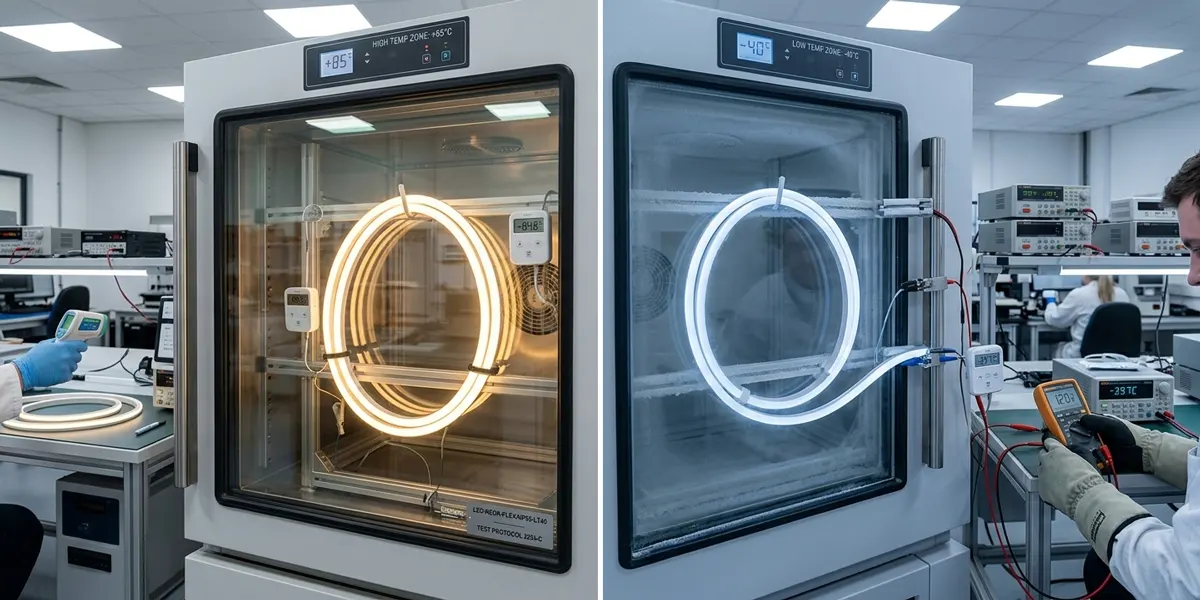
Condiciones de validación de la prueba de ciclo térmico:
- Temperatura: -40°C ↔ +85°C
- Ciclos totales: 500 ciclos
- Tiempo de permanencia: 30 min por fase
- Propósito: Simular y acelerar el estrés térmico a largo plazo
Resumen de los resultados de la prueba (después de 500 ciclos extremos)
| Artículo | éxito | escamote |
| Aspecto visual | Sin grietas, amarilleo, delaminación | ✅ Pase |
| Rendimiento eléctrico | Sin parpadeo / Segmentos muertos | ✅ Pase |
| Cambio de voltaje (ΔVF) | < 3% | ✅ Pase |
| Mantenimiento de Lumen | > 98% | ✅ Pase |
| Impermeable (IP67) | Sin entrada de humedad | ✅ Pase |
| Soldadura y rastros | Sin fatiga / micro-grietas | ✅ Pase |
Al pasar 500 ciclos de prueba térmica de -40 °C ~ + 85 °C, las tiras de neón signlited resisten el desajuste de CTE, el estrés térmico y los modos de falla común. Ofrecen un rendimiento estable y duradero incluso por debajo de -20°C ~ +60°C en condiciones de exterior.
¿Qué hay dentro de una PCB de tira de neón LED?
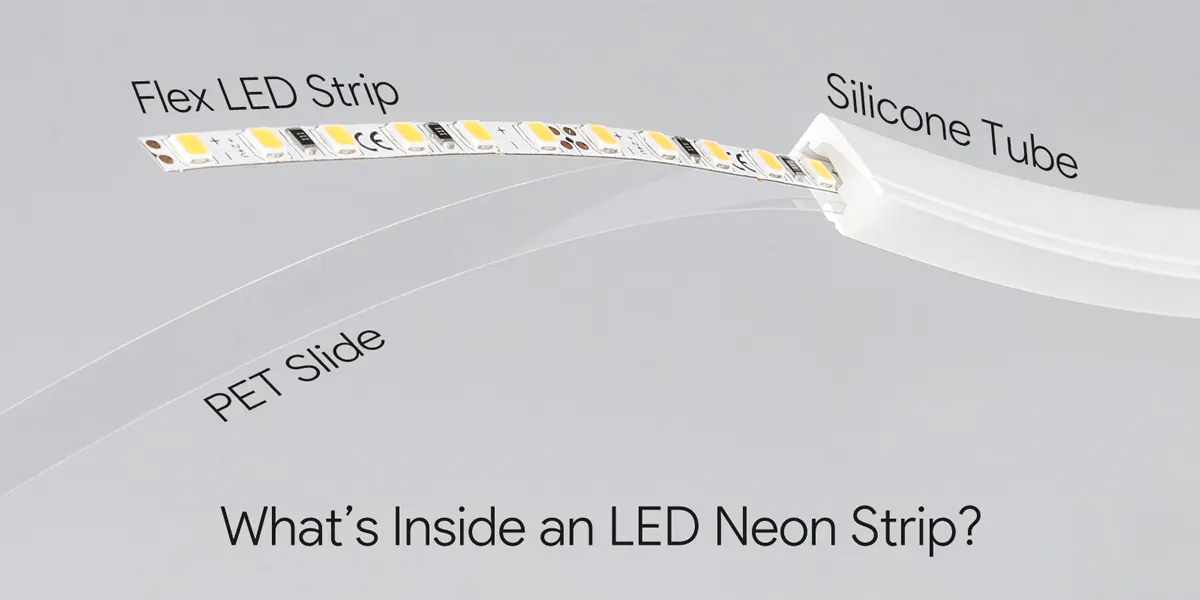
Un PCB flexible típico (FPCB) para tiras de neón LED consta de múltiples capas, cada una con una función crítica.
Estructura de capa
| estrato | Material | Función |
| sustrato | Poliimida (PI) o PET | base mecánica |
| engomado | Acrílico o epoxi | Une cobre al sustrato |
| capa de cobre | Recocido enrollado (RA) o electrodepositado (ED) | Rastros eléctricos |
| máscara de soldadura | Polímero flexible | Aislamiento y protección |
| Encapsulación de silicona | Silicona de grado óptico | Resistente a la intemperie + difusión de luz |
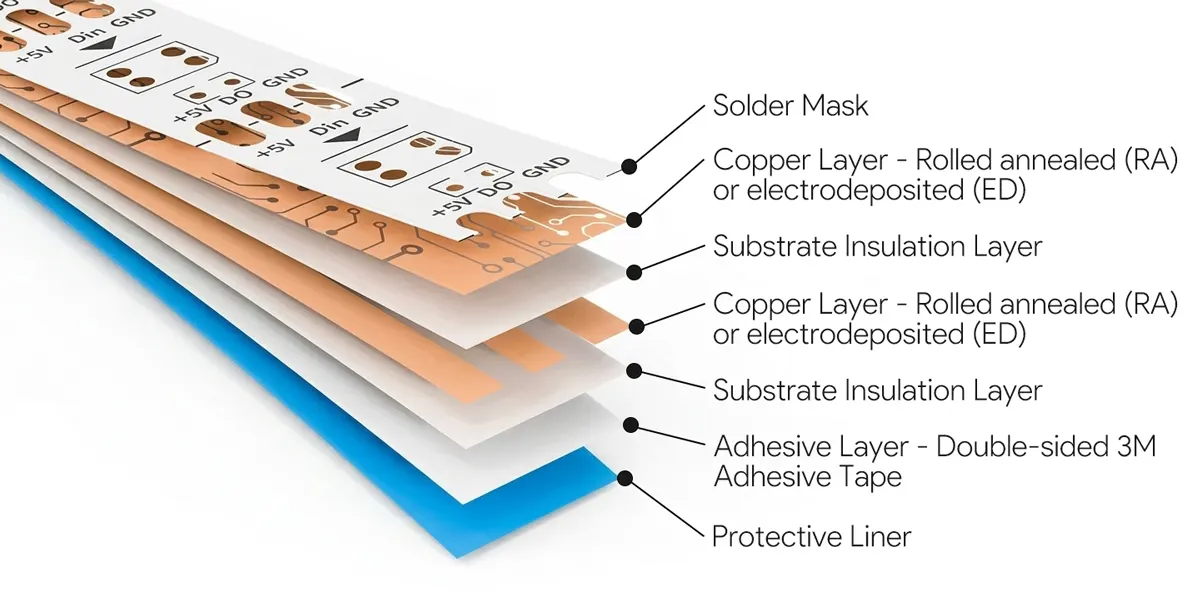
Las elecciones materiales que importan
Poliimida vs. PET:
- Poliimida (PI): Resiste hasta 400 °C durante la soldadura; duradero para uso en exteriores.
- acariciar: más barato pero menor resistencia al calor; No se recomienda para aplicaciones en exteriores.
Recocido laminado (RA) vs. Electropositado (ED) Cobre:
- real acade Ctop: más resistente a la fatiga y dúctil, ideal para tiras que se doblan durante la instalación.
- DE CsuperficieR: Propenso a agrietarse bajo flexión repetida.
- Espesor de cobre: 1 oz (35 µm) a 2 oz (70 µm). El cobre más grueso maneja una corriente más alta pero reduce la flexibilidad.
¿Qué hace realmente la máscara de soldadura?
La máscara de soldadura es una fina capa de polímero aplicada sobre trazas de cobre. En tiras de neón LED, cumple cinco funciones esenciales:
- Previene los puentes de soldadura durante la fabricación
- Protege contra la oxidación (crítica para uso en exteriores)
- Proporciona aislamiento eléctrico entre las trazas
- Actúa como barrera contra la humedad para productos con clasificación IP
- Admite la gestión térmica en aplicaciones de alta temperatura
Película seca vs. Máscara de soldadura líquida
| propiedad | filme seco | Líquido (LPSM) |
| Uniformidad de espesor | Excelente | Bien |
| Capacidad de paso fino | Bien | de pie |
| costo de producción | Más alto para carreras pequeñas | bajar a escala |
| dificultad de retrabajo | Moderado | más fácil |
| Lo mejor para | Producción consistente de alto volumen | Diseños complejos |
Ambos tipos funcionan bien cuando se aplican correctamente. Sin embargo, las tiras de bajo costo a menudo se saltan la máscara de soldadura por completo, un error para cualquier aplicación al aire libre.
Máscara de soldadura blanca vs. Máscara de soldadura
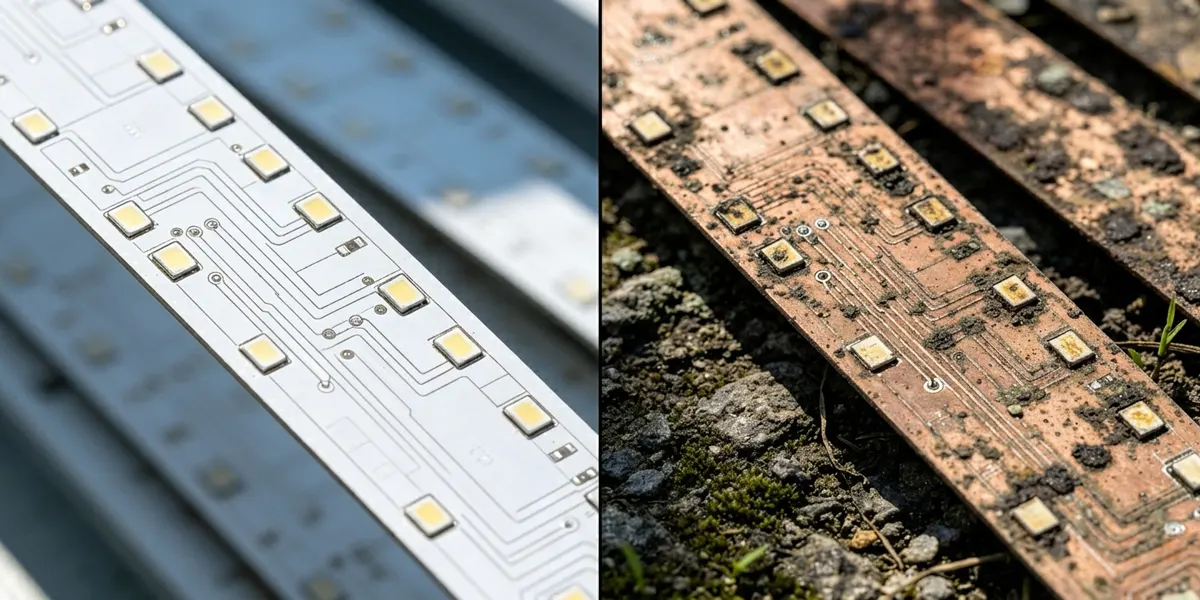
Algunas tiras de neón LED de bajo costo omiten la máscara de soldadura por completo para ahorrar dinero o reclamar una mejor disipación de calor. Este es un punto de falla crítico para aplicaciones al aire libre o de larga duración.
| Característica | Máscara de soldadura blanca | Sin máscara de soldadura |
| Protección contra la oxidación | Sí | nadie |
| Prevención de puentes de soldadura | Sí | No |
| Reflejo de luz | Alto (85-90%) | Bajo |
| Disipación térmica | Moderado | Ligeramente mejor (insignificante) |
| Confiabilidad a largo plazo | Probado (5+ años) | Muy pobre (semanas a meses) |
Por qué "Sin máscara de soldadura" es una mala compensación
El cobre expuesto se oxida en semanas en ambientes húmedos. El pequeño beneficio térmico (típicamente <5% mejora) es insignificante en comparación con el riesgo de falla inducida por la corrosión.
Para cualquier instalación profesional en exteriores, una máscara de soldadura debidamente aplicada, especialmente de soldadura blanca, no es negociable.
Las máscaras de soldadura blanca reflejan más luz hacia arriba, mejorando la eficiencia óptica en 15-20%. Sin embargo, requieren un control cuidadoso del proceso.
Fiabilidad térmica: por qué los materiales son más importantes que el precio
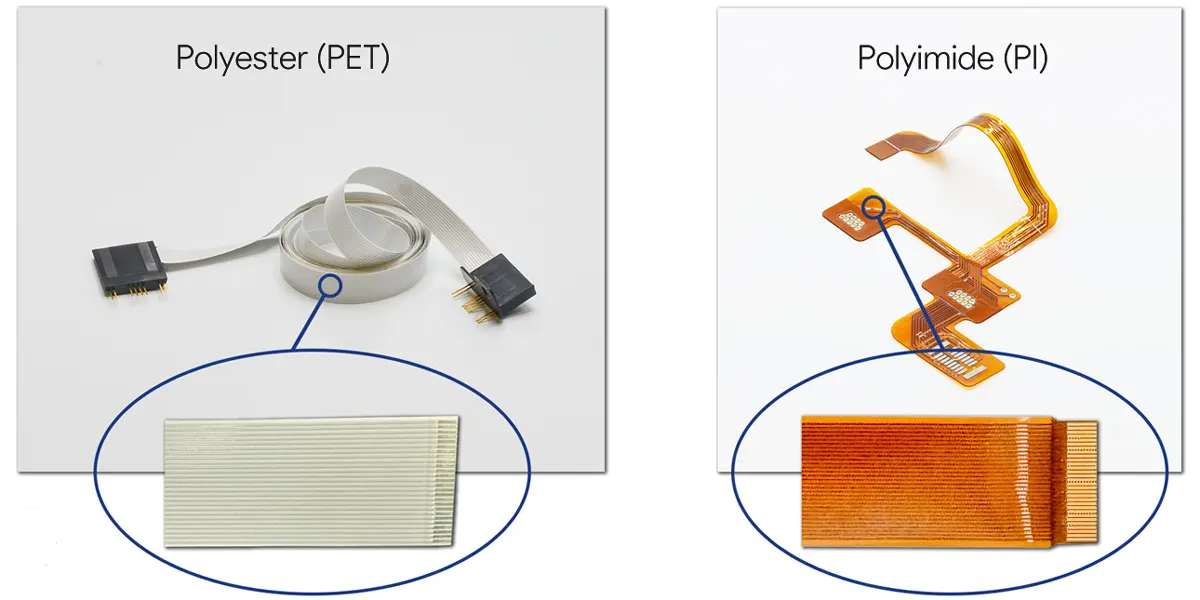
La fiabilidad térmica es el factor más subestimado en la ingeniería de tiras de neón LED. La pregunta no es si la tira funciona a temperatura ambiente, sino si todavía funciona después de 500 ciclos térmicos.
El problema de la desajuste de CTE
Cuando los materiales con diferentes CTE están unidos, los cambios de temperatura crean estrés interno en sus interfaces.
| Interfaz de material | Desajuste de CTE | Riesgo de falla |
| Cobre (17) vs poliimida (20-30) | Moderado | Micro-grietas con el tiempo |
| Máscara de soldadura (~50) vs. cobre (17) | Alta | Agrietamiento o delaminación |
| Silicona (200-300) vs. PCB | Extremo | Requiere anclaje mecánico |
Materiales de máscara de soldadura de alta temperatura
Para aplicaciones en exteriores expuestas a la luz solar directa y amplios cambios de temperatura, las máscaras de soldadura estándar fallan. Las formulaciones de alta temperatura ofrecen:
- Temperatura de transición vítrea (Tg) por encima de 130°C (algunos alcanzan 170-180°C)
- Resistencia al ciclo térmico (por ejemplo, 1000 horas desde -40°C a 125°C)
- Mejor resistencia química y UV
Costo vs. Fiabilidad: Comparación del mundo real
| nivel de calidad | Especificación de material | Vida al aire libre esperada | Punto de falla típico |
| de bajo costo / mercancía | Sustrato PET, ED Cobre, sin máscara | 3-6 meses | Grietas de soldadura o trazas de corrosión |
| de medio autónoma | Sustrato Pi, Cobre RA, Máscara líquida | 1-2 años | Delaminación de la máscara de soldadura |
| Premium (SignLiteled) | Alta TG Pi, cobre RA, máscara blanca de alta temperatura | 5-8 años | Depreciación de lumen LED (no estructural) |
La diferencia entre una franja de 6 meses y una franja de 5 años suele ser invisible en una hoja de datos, pero se vuelve obvia en el campo.
SignLiteled publica datos de validación de ciclos térmicos para cada serie de tiras de neón al aire libre. Informe de lectura → Informe de prueba de envejecimiento de tira de LED Neon: análisis de confiabilidad, decaimiento del lumen y estabilidad del color.
Desafíos de PCB flexibles en el diseño de tiras de neón
La flexibilidad es la característica definitoria de las tiras de neón LED, y también la fuente de varios modos de falla únicos.
1. Adhesión y laminación
La flexión repetida o el ciclo térmico pueden causar:
- Delaminación: separación entre la máscara de soldadura y el cobre
- Grieta en puntos de curvatura: especialmente si los componentes están cerca de las zonas de flexión
- Almohadillas levantadas: las almohadillas de soldadura se separan del sustrato
2. Límites de radio de curvatura
Cada PCB flexible tiene un radio de curvatura mínimo. Superarlo, incluso una vez, causa un daño invisible que conduce a un fracaso posterior.
| Tipo de flexión | Radio de curvatura mínimo | Ejemplo de aplicación |
| Dinámico (flexión repetida) | 100 × espesor de material | Instalaciones móviles |
| Estático (doblado una vez durante la instalación) | 10 grosores de material | Envoltura de esquina |
Mejores Prácticas: Los más rígidos debajo de los LED y las ubicaciones de las resistencias evitan que se flexionen donde se montan los componentes, al tiempo que permiten la flexibilidad entre los segmentos.
3. La compensación: flexibilidad vs estabilidad
| Enfoque de diseño | Flexibilidad | estabilidad térmica | mejor para |
| Cobre-poliimida sin adhesivo | Moderado | Excelente | Al aire libre, amplio rango de temperatura |
| base adhesivo | Alta | Moderado | Entorno interior controlado |
SignLiteled utiliza la unión adhesiva sin adhesivo para la serie clasificada en exteriores, lo que garantiza la estabilidad térmica sin sacrificar la flexibilidad.
Bigotes de estaño: el riesgo oculto en tiras LED de bajo costo
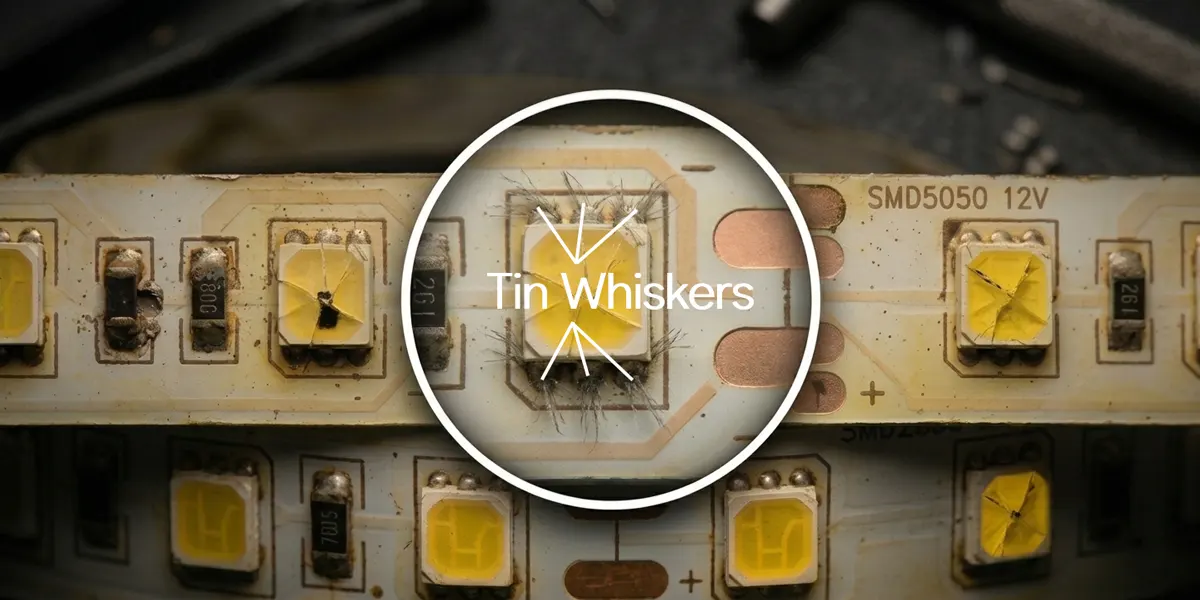
Los bigotes de estaño son cristales de metal microscópicos, similares a las agujas que crecen espontáneamente a partir de superficies chapadas en estaño. Pueden alcanzar varios milímetros de longitud y provocar cortocircuitos entre trazas de cobre muy espaciadas.
Por qué es importante esto para las tiras de neón LED
Después de la directiva de RoHS, el plomo restringido en soldadura, se volvió común el chapado en estaño puro. Sin el plomo a la supresión del crecimiento, los bigotes de estaño han causado fallas de campo en muchas categorías de productos electrónicos, incluidas las tiras de LED.
En un PCB flexible, los bigotes pueden crecer entre trazas con pasos tan pequeños como 0,5 mm, creando pantalones cortos intermitentes o permanentes.
Factores de riesgo:
- Chapado en estaño de mala calidad
- Controles de proceso inadecuados
- Falta de recocido post-plateado
- Fabricación de bajo costo
Estrategias de mitigación de bigotes
| estrategia | Tiras de bajo costo | Premium (SignLiteled) |
| Proceso de chapado optimizado | ❌ NO | ✅ Sí |
| Tratamiento térmico posterior a la placa (anneado) | ❌ NO | ✅ Sí |
| Revestimiento de conformidad sobre áreas críticas | ❌ NO | ✅ Sí |
| Aleación de estaño con supresores de bigotes | ❌ A veces | ✅ Sí |
Los bigotes de estaño son un diferenciador rara vez discutido pero importante entre los productos básicos y las soluciones de grado de ingeniería.
Cómo se diseñarán las tiras de neón LED de alta calidad
Abordar los factores de confiabilidad anteriores requiere un enfoque sistemático de los materiales, el control de procesos y el diseño.
Resumen de selección de materiales
| parte | Especificación preferida (Signlited Standard) | esquivar |
| sustrato | Poliimida de alto TG | PET o PI de baja calidad |
| de cobre | Recocido enrollado (RA) | Electropositado (ED) |
| máscara de soldadura | Máscara blanca flexible de alta temperatura | LPI estándar o sin máscara |
| encapsulación | Silicona estabilizada UV | Silicona de PVC o no UV |
| chapado en estaño | Proceso mitigado de bigotes | Estaño puro incontrolado |
Controles de proceso clave
| pene | Propósito |
| Control de espesor de máscara de soldadura | Previene la “soldadura virtual” (poco mojado) |
| Gestión de perfiles de reflujo | Evita la pasta de soldadura de baja temperatura quebradiza |
| Inspección óptica automatizada (AOI) | Detecta defectos de soldadura antes de la encapsulación |
| Validación de ciclos térmicos | Simula cambios en el mundo real (-40°C a +85°C, 500+ ciclos) |
Características de diseño listas para exteriores
- Impermeabilización IP67 o IP68 con tapas de extremo moldeados y doble sello
- Silicona estabilizada con UV con pruebas UV aceleradas de 3000 horas (equivalente a más de 9 años al aire libre)
- Rango de temperatura de funcionamiento de -40°C a +60°C
- Alivio de estrés mecánico en entradas de cable y entre segmentos
Cómo se fabrican las tiras de neón coextruidas LED de alta calidad

Conclusión
La fiabilidad de la tira de neón LED no se determina por la marca LED o el precio por metro. Está determinado por los detalles de ingeniería ocultos:
- Calidad de sustrato de PCB (poliimida vs. PET)
- Tipo de cobre (RA vs. Ed)
- Integridad de la máscara de soldadura (máscara blanca frente a ninguna máscara)
- Gestión de CTE
- Prevención de bigotes de hojala
- Controles de proceso que la mayoría de los compradores nunca ven
Los ambientes al aire libre son implacables. Los cambios de temperatura, la exposición a los rayos UV, la humedad y el estrés mecánico se acumulan con el tiempo. Las tiras que se ven idénticas en la compra pueden divergir drásticamente en la longevidad en función de las opciones de materiales que rara vez se destacan en los materiales de marketing.
Para los profesionales de la iluminación y los especificadores, el costo inicial más bajo rara vez es el menor costo total de propiedad.
Al evaluar tiras de neón LED para aplicaciones al aire libre o de larga duración, mire más allá del brillo y solicite detalles de ingeniería. La diferencia entre una tira que falla en seis meses y una que dura cinco años no se encuentra en los LED, sino en las capas debajo de ellos.
Por qué los especificadores eligen SignLiteled
| exigencia | Estándar Signlited |
| sustrato | Poliimida de alto TG |
| de cobre | Recocido enrollado (RA) |
| máscara de soldadura | Máscara blanca de alta temperatura |
| encapsulación | Silicona estabilizada UV |
| Validación térmica | 500 ciclos, -40°C a +85°C |
| Mitigación de bigotes | Sí (cobrice post-plateado) |
| Garantía | 5 años limitado |
¿Listo para especificar tiras de neón LED confiables para su próximo proyecto? Flex de neón LED para exteriores Signliteled.
Preguntas frecuentes
Publicaciones relacionadas