Español
  English
  简体中文
简体中文  Deutsch
  Français
  Italiano
  日本語
日本語  한국어
한국어  Polski
  Português
  Русский
  Türkçe
  Nederlands
  Tiếng Việt
  ไทย
ไทย 
La iluminación LED utilizada dentro de las letras de letreros iluminadas es, en casi todos los casos, módulos de letreros LED (pequeños grupos de LED montados en una placa y espaciados uniformemente dentro de la letra) apoyados por tiras de LED (incluidas tiras flexibles tipo S) para letras curvas, de escritura o de poca profundidad. Estas fuentes de bajo voltaje se sientan detrás de una cara acrílica translúcida y encienden la letra desde el interior.
La mayoría de los compradores juzgan una carta de signo por su forma, acabado y color. Lo que realmente decide si brilla uniformemente, sobrevive al clima y sigue trabajando durante años es la fuente de LED elegida en su interior.
Este artículo explica qué son las letras de letreros iluminadas, qué iluminación LED va dentro de cada tipo, las especificaciones que más importan, cuánto dura realmente la iluminación y qué impulsa el costo cuando obtiene estos componentes al por mayor de China.
¿Qué son las letras de letreros iluminadas?
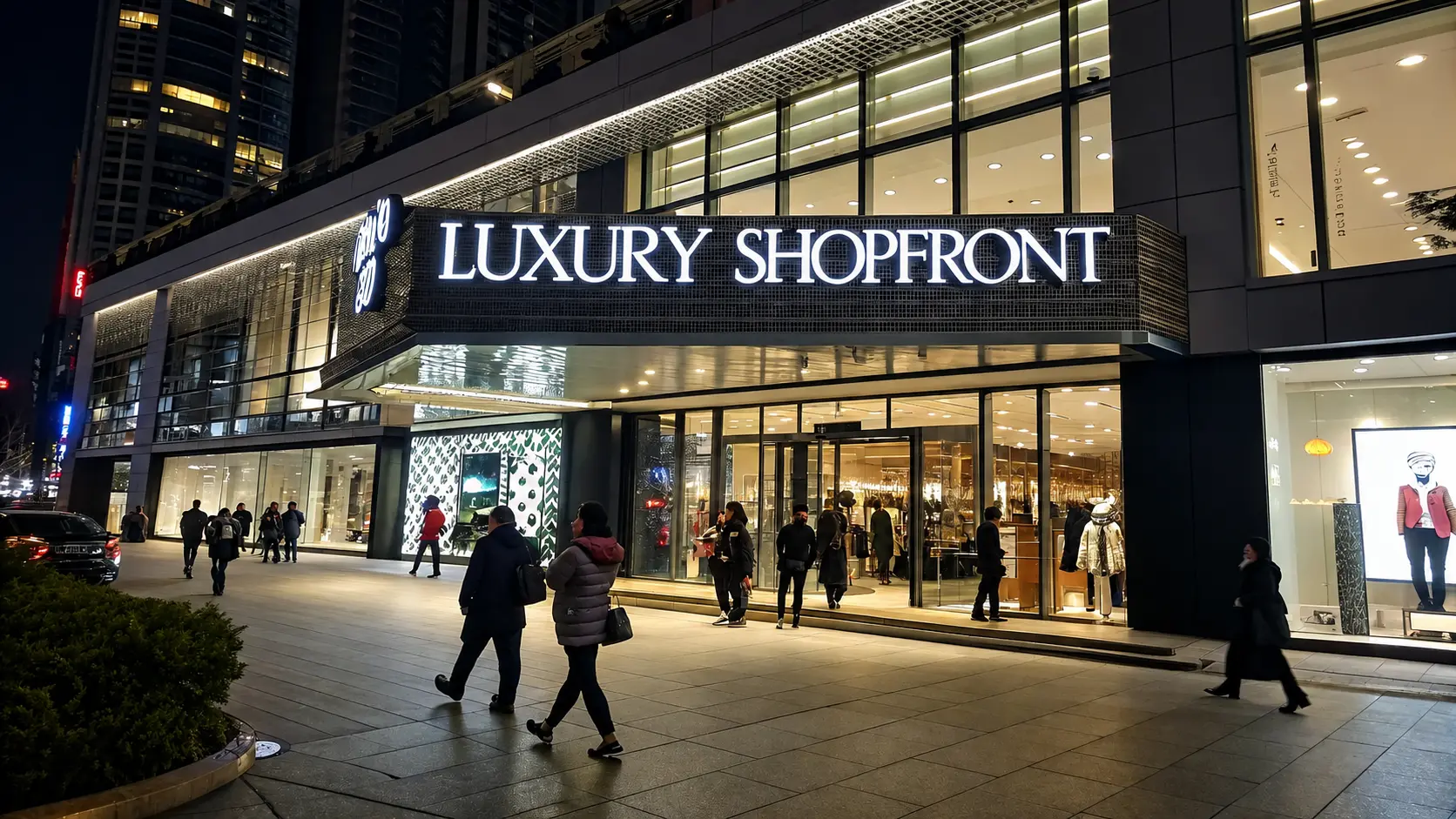
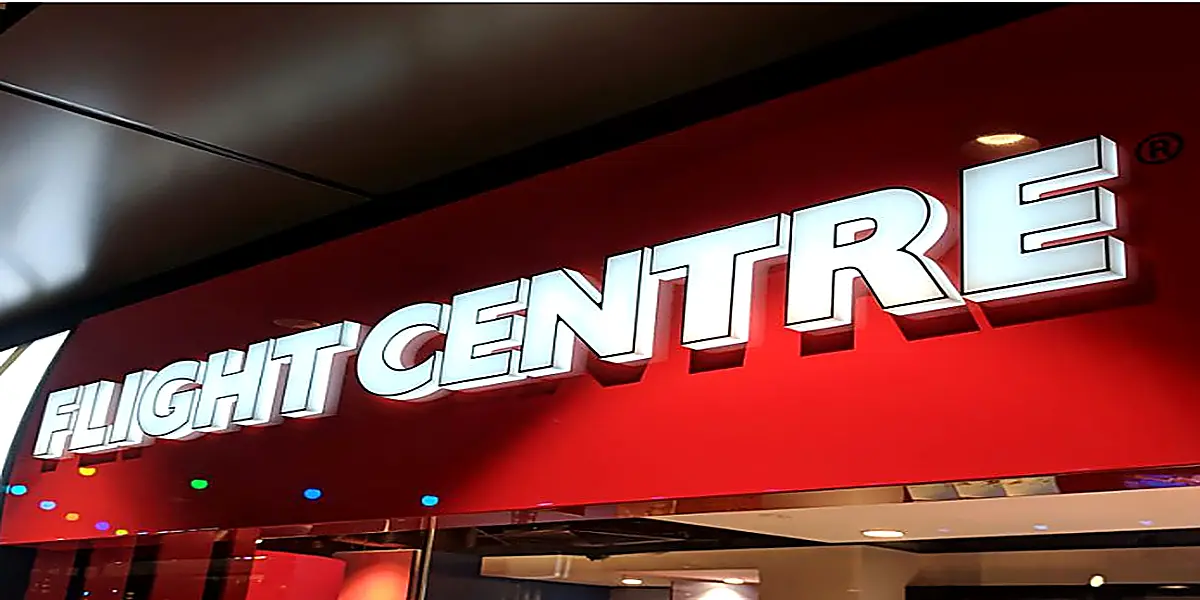
Las letras de señalización iluminadas, también llamadas letras de canal iluminadas, son letras, números o logotipos de fabricación individual en tres dimensiones que se iluminan desde el interior, generalmente con LED. Cada carácter está construido con un retorno de metal (la pared lateral) y la espalda, con mayor frecuencia de aluminio o acero inoxidable, con una cara acrílica translúcida o policarbonato generalmente de alrededor de 5 mm (3/16″) de espesor. Una tapa de ajuste termina el borde de la cara, o la letra está construida sin trim para una apariencia más limpia.
“Letras de señal iluminadas” es una categoría amplia e incluye letras de canal 3D. Las letras se pueden montar en una fascia de edificio, un canal de carreras o directamente en una pared, y se usan en escaparates, centros comerciales, restaurantes, vestíbulos corporativos y paredes de recepción. Debido a que cada personaje se ilumina individualmente, el resultado es nítido, de alto contraste y de día o de noche legibles.
Vale la pena separar dos cosas que a menudo se confunden. Una letra de señal iluminada es un carácter único dimensional iluminado desde dentro. un caja de luz (Gabinet de letreros) es una caja cerrada plana iluminada desde el interior. Utilizan diferentes hardware de iluminación interna, por lo que este artículo se enfoca solo en lo que se incluye dentro de las letras.
¿Qué iluminación LED entra dentro de una carta de letrero iluminada?
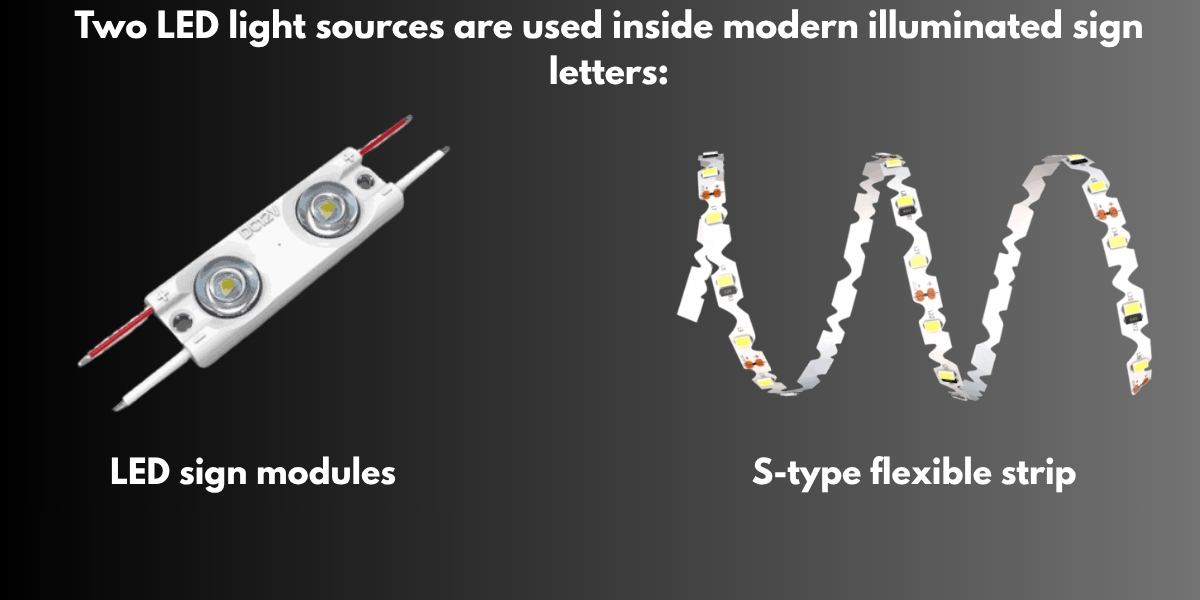
Se utilizan dos fuentes de luz LED dentro de las modernas letras de señal iluminadas:
- Módulos de signos LED: la fuente principal dominante para la gran mayoría de las letras de canal. Los módulos modernos ahora son muy compactos, por lo que pueden iluminar texto pequeño, así como letras grandes y estándar.
- Tiras de LED (incluidas las tiras flexibles tipo S): se utilizan para curvas ajustadas, fuentes de secuencias de comandos y letras pequeñas o intrincadas donde una cuadrícula de módulos no puede sentarse limpiamente.
Los módulos LED dominan porque fueron diseñados específicamente para señalización: funcionamiento de 12 V o 24 V de bajo voltaje, cableado simple, salida de luz uniforme y la flexibilidad que se coloca en cualquier lugar dentro de una letra. Han reemplazado efectivamente los tubos de neón más antiguos que una vez se usaron las letras de canal. Las tiras de LED ganan su lugar en las letras curvas y ornamentales donde una cuadrícula rígida de módulos no puede sentarse limpiamente contra la pared interior.
Tenga en cuenta que las tiras de COB, las placas de lentes rígidas y los tubos de letreros LED no se usan dentro de las letras de canales individuales: esos productos pertenecen a cajas de luz, gabinetes y grandes letreros fabricados. Dentro de las propias letras, la respuesta es primero los módulos, tiras para curvas.
Los principales tipos de letras de letreros iluminadas, y el LED que usa cada uno
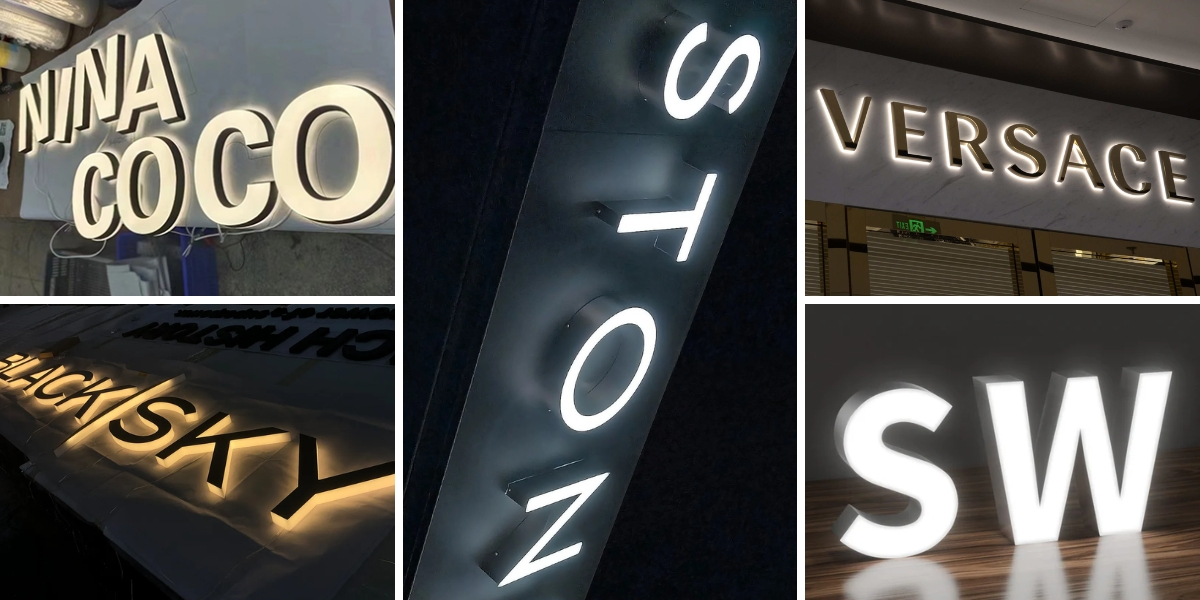
Las letras de señalización iluminadas se agrupan por donde la luz escapa de la letra. El tipo de iluminación cambia el aspecto, el montaje y qué diseño de LED necesita en el interior.
| Tipo de letra | como se enciende | Fuente LED en el interior | Lo mejor para |
| Iluminado frontal (iluminado) | La luz brilla a través de la cara translúcida | Módulos LED en una rejilla detrás de la cara | Escaparate, retail, el tipo más común |
| Retroiluminado / Halo (Iluminación inversa) | Cara opaca; la luz se derrama por la espalda sobre la pared | Módulos LED o tiras en la parte posterior, frente a la pared | Oficinas premium, vestíbulos, paredes de características |
| Combinación (delantero + trasero) | Face Glow más un halo a la vez | Dos diseños LED, a menudo dos colores | Señalización de marca de alto impacto |
| iluminado de forma de lateral | La luz se escapa a través de retornos translúcidos | Módulos o tiras a lo largo de los retornos internos | Letras decorativas y decorativas |
| Sin tripas (sin montura) | Iluminación frontal sin borde de tapa de ajuste visible | Módulos LED con espaciamiento/difusión cuidadoso | Frentes limpios, modernos y de alta gama |
La luz frontal es el estándar y el más asequible: los módulos LED blancos o de color se sientan en una rejilla dentro de la letra y empujan la luz a través de la cara acrílica. Las letras halo-lit mantienen una cara de metal sólido y montan los LED en la parte posterior abierta, arrojando un suave brillo a la pared detrás, un aspecto arquitectónico de primera calidad. Las letras combinadas hacen ambas cosas. A través de todos ellos, la fuente de luz de caballo de batalla es el módulo LED; las tiras intervienen cuando la forma de la letra exige flexibilidad.
Módulos LED: cómo en realidad encienden una carta de señalización
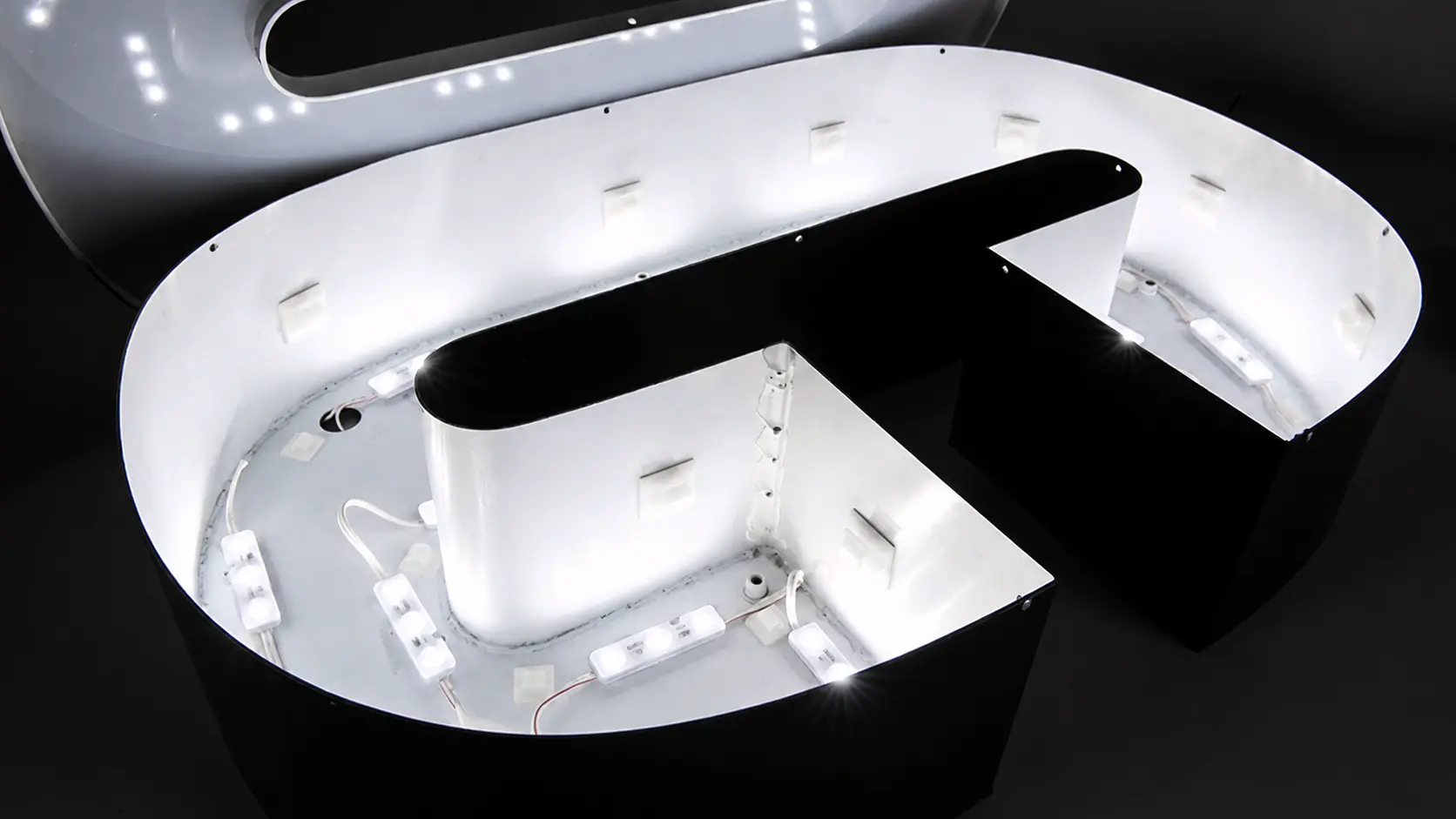
Módulos de señalización LED Son tableros cortos que llevan uno o más LED SMD (comúnmente SMD 2835, con SMD 5050 para color RGB), precableados en cuerdas y fijados dentro de la letra con respaldo adhesivo o tornillos. Funcionan con 12 V CC para letras más pequeñas y 24 V CC para señalización a gran escala donde las cadenas más largas reducen el cableado y el tiempo de instalación.
Algunos detalles de ingeniería separan un letrero que brilla uniformemente de uno cubierto de puntos oscuros y puntos calientes:
- Lente óptica / ángulo de haz. Los módulos de letras de canales con luz frontal utilizan una lente óptica amplia, de alrededor de 160°, para difundir la luz de manera uniforme en la cara, por lo que cada módulo cubre un área más grande sin un punto caliente. Una lente bien elegida significa menos módulos y una cara más uniforme.
- Paso de módulo (espacio). Una regla confiable desde el campo: mantenga el espacio entre módulos aproximadamente igual a la distancia desde los módulos hasta la cara de la señal. Espaciados demasiado separados, los LED se muestran como puntos brillantes a través del acrílico; demasiados cerca desperdician módulos y potencia. Como una figura de planificación aproximada, espere alrededor de tres módulos por pie, con letras más anchas que un trazo de 4″ que necesita más de una fila.
- Consistencia del color. Los letreros blancos exponen cualquier desajuste de color al instante: algunos parches se ven más azules, algunos más cálidos. Los módulos de calidad utilizan chips bien combinados (Macad de 3 pasos / SDCM) para que cada módulo lea el mismo blanco.
- Gestión del calor. Los módulos con un PCB de aluminio expuesto derraman calor al aire mucho mejor que los módulos completamente sellados en una carcasa de ABS, que protege el brillo y la vida útil dentro de una letra adjunta.
- Incluso el brillo de extremo a extremo. La conducción de corriente constante mantiene el primer y el último módulo en una cadena con el mismo brillo, incluso cuando la energía se alimenta de un solo extremo.
Para las letras exteriores, los módulos deben calificarse de IP65 (y de hasta IP67 para sitios costeros o de alta humedad). Los módulos de signos de SignLiteled están disponibles hasta una clasificación IP67 para exactamente estas condiciones climáticas adversas.
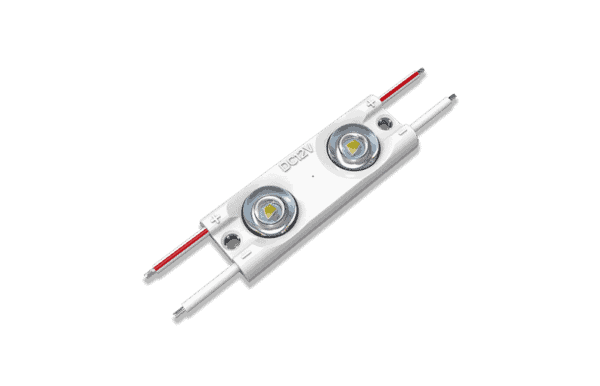
Módulo de luz LED monocolor 2LED DC12V
- Diseño de PCB expuesto para una buena disipación del calor
- Fallo de poca luz para una vida útil más larga
- Chips LED de alta potencia de 9 V para una salida más brillante y una mayor eficiencia
- Diseño de corriente constante para menor caída de voltaje
- Conectar más por cadena
- Lente de 160° para una iluminación uniforme
- Adecuado para signos delgados
Tiras de LED y tiras tipo S: para curvas, script y letras poco profundas
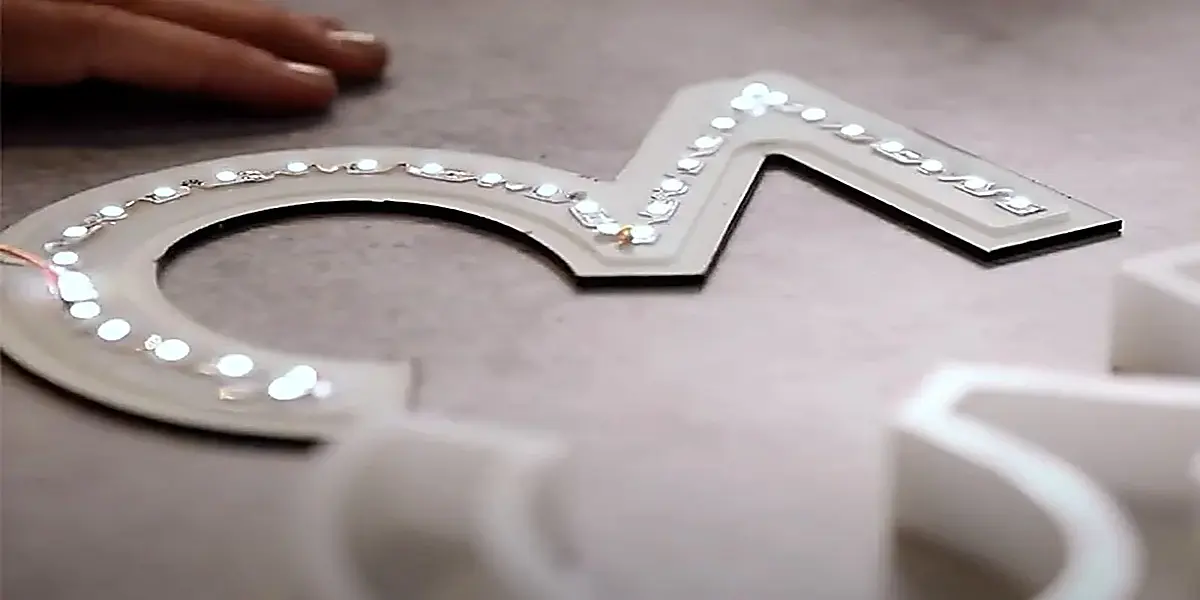
Cuando una letra tiene curvas cerradas, un guión o una fuente manuscrita, una forma de logotipo orgánico o una profundidad muy poco profunda, una cuadrícula rígida de módulos no puede reposar limpiamente contra la pared interior. Aquí es donde las tiras de LED flexibles toman el control, y el tira de tipo S está diseñado para ello.
Una tira tipo S utiliza un PCB en forma de S (zigzag) de solo 6 mm de ancho que se dobla en cualquier dirección, no solo a lo largo de un solo plano como una tira estándar. Abraza el perímetro interior de una letra curva sin encogimiento, sigue radios apretados y encaja donde los módulos no. Ejecutar continuamente, también crea menos juntas de cableado que colocar módulos individuales alrededor de una forma compleja.
Utilice módulos para letras de bloque y tiras estándar (tipo S para curvas) para secuencias de comandos, logotipos y letras poco profundas o sin bordes. El desglose completo está en la Guía de Signliteled, Todo lo que necesita saber sobre las luces de tira LED tipo S.
Especificaciones clave para hacerlo antes de realizar el pedido
Voltaje — 12 V o 24 V CC. 12 V se adapta a letras más pequeñas; 24 V es más eficiente en letras grandes y carreras largas. Haga coincidir cada componente con el mismo voltaje del sistema.
Clasificación IP: coincida con el entorno. Utilice IP65 como línea base para exteriores e IP67 para ubicaciones costeras, lluviosas o de alta humedad. Nunca coloque LED para interiores (IP20) dentro de una letra exterior: la humedad y los rayos UV los matarán rápidamente.
Grado de viruta y agrupación de colores. Los chips de calidad premium mantienen su brillo y color mucho más tiempo que los chips económicos. Igual de importante es el agrupamiento de colores ajustado: SignLiteled usa chips de macadam de 3 pasos (SDCM) para que cada módulo lea el mismo blanco, en lugar de que algunos parches se vean más azules y otros más cálidos en una letra terminada.
Ángulo de haz y difusión. Un ángulo de haz ancho más el tono del módulo correcto es lo que produce una cara uniforme sin puntos visibles. Difundir la cara es esencial en letras poco profundas.
Fuente de alimentación (conductor). Use un controlador de voltaje constante y resistente al agua y no lo cargue más allá de aproximadamente 80% de su potencia nominal; ese espacio para la cabeza es lo que evita que falle antes. signliteled especifica Controladores IP67 de la serie XLG de Well (Entrada AC100–305V, salida de 12 V/24 V, eficiencia 89–94%) para iluminación de letreros. Los componentes están certificados por UL, ETL, CE y RoHS para cumplir con los estándares regionales.
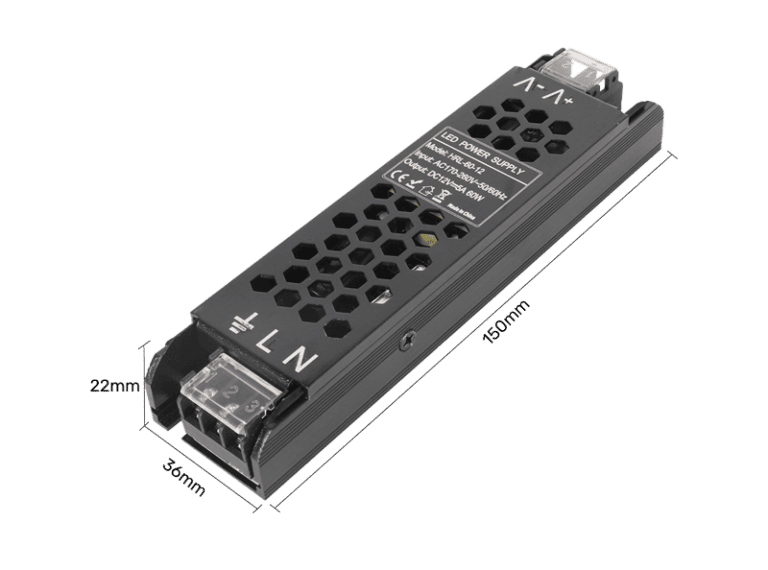
Controlador ultrafino de 12 V para tiras de luz LED
- Voltaje de entrada: AC110-260V
- Rango de frecuencia: 47-63Hz
- Factor de potencia: 0.5-0.6
- Eficiencia: >80%
- Potencia nominal: 60W
- Tensión de salida: DC12V
- Corriente nominal: 5A
- Grado de protección IP: IP20
- Garantía: 3 años
- Dimensiones: L150 × W36 × H22mm
temperatura de funcionamiento. Confirme que la fuente está calificada para el clima de instalación completo, normalmente alrededor de -20 °C a +50 °C para las letras exteriores.
¿Cuánto dura la iluminación LED dentro de una carta de letrero?
Hay dos números diferentes aquí, y confundirlos es el error más común que cometen los compradores. los Vida útil nominal de tiras y módulos de LED de calidad es de alrededor de 50.000 horas, pero eso es un l70 Figura, el punto en el que el brillo se ha desvanecido a 70% del original, no el punto de falla total. La vida útil del mundo real suele ser de 3 a 10 años, dependiendo de cuántas horas al día se ejecuta el letrero y del entorno operativo. Aproximadamente a las 8 horas del día, 50.000 horas se calculan en papel aproximadamente a los 17 años, aunque pocas señales llegan a la práctica debido al calor, el clima y las condiciones de energía.
Esta es también la razón por la que una garantía es más corta que la vida útil nominal: una garantía es un compromiso del mundo real, no una figura de laboratorio. SignLiteled respalda todos sus productos con una garantía mínima de 3 años (hasta 5 años en productos de alta gama), con el apoyo de Iluminación interna y pruebas ambientales.
En las instalaciones reales, el chip LED rara vez es la primera parte que falla: la fuente de alimentación (controlador) es el punto débil habitual, especialmente si es de tamaño inferior o funciona a plena carga. Hacer que el conductor sea correcto es más importante para la confiabilidad a largo plazo que cualquier número de brillo único.
Errores comunes que hacen los fabricantes de letreros con la fuente LED
- Usando LEDs interiores (IP20) al aire libre: fallan en cuestión de meses por humedad y UV.
- Subdimensionar la fuente de alimentación: ejecutar un controlador a una carga 100% acorta su vida útil y es el punto de falla más común.
- Módulos de espaciado demasiado separados: los espacios más anchos que la distancia de la cara crean puntos visibles y bandas oscuras en el acrílico.
- Mezclar contenedores de colores de chips: los chips no combinados hacen que un letrero blanco se vea irregular, algunas áreas más azules, algunas más cálidas.
- Saltando la difusión en letras poco profundas: sin ella, los LED individuales se muestran directamente a través de la cara.
- Forzando una tira recta alrededor de una curva: se torce y deja huecos; se hace una tira tipo S para las curvas.
- Ignorando el calor: los módulos sin respaldo de aluminio acumulan calor dentro de una letra cerrada y se atenúan antes de tiempo.
¿Qué determina el costo de los componentes LED para las letras de señas?
No existe un precio fijo único, porque el costo lo impulsa el proyecto. Los principales factores son:
- Tamaño y profundidad de las letras: las letras más altas y los trazos más anchos necesitan más LED y filas.
- Tipo de iluminación: iluminado frontal, halo o combinación cada uno de ellos usa un diseño LED diferente.
- Recuento total de LED: el número de módulos o metros de tira por carácter.
- Marca de chips y binning: chips premium frente a chips domésticos, control de color ajustado frente a suelto.
- Clasificación IP — IP65 VS IP67 Resistente a la intemperie.
- Final y complejidad de la fuente: las fuentes de script ajustadas y los acabados especiales necesitan más LED.
- Cantidad de pedido — Volumen al por mayor y OEM reduce el costo unitario.
Para obtener una figura precisa, envíe los tamaños de carta, el tipo de iluminación y la cantidad y solicite una cotización directa de fábrica en lugar de confiar en una lista de precios genérica.
A Fabricante de señalización desde 2011, SignLiteled está certificado por UL, ETL, CE y RoHS y respalda cada producto con una garantía mínima de 3 años. Explore la gama completa de iluminación de letreros LED: módulos de letreros LED y tiras de LED tipo S.

Conclusión
La iluminación LED dentro de una carta de letrero iluminada se reduce a dos fuentes: módulos de letreros LED para la gran mayoría de letras y tiras de LED (tipo S para curvas) para script, logotipo y formas poco profundas. Haga coincidir la fuente con el tipo de letra: módulos detrás de una cara translúcida para letras, módulos o tiras de luz frontal para letras de halo. Obtenga las tres especificaciones que realmente importan: la clasificación IP correcta, chips de calidad ajustados y un controlador impermeable de tamaño adecuado. Haga eso y el letrero brilla uniformemente y dura años en lugar de meses.
PREGUNTAS FRECUENTES
Publicaciones relacionadas