Português
  English
  简体中文
简体中文  Deutsch
  Español
  Français
  Italiano
  日本語
日本語  한국어
한국어  Polski
  Русский
  Türkçe
  Nederlands
  Tiếng Việt
  ไทย
ไทย 
A maioria das consultas do módulo LED segue o mesmo caminho: um comprador envia especificações, o fabricante cita e, se os números funcionarem, a produção começa. Mas quando o requisito fica fora do catálogo padrão — uma tensão não padrão, um agrupamento específico de pixels ou um protocolo de controle específico —, o sucesso do projeto geralmente depende de como esses detalhes são esclarecidos antes do início da produção.
Este estudo de caso segue um projeto real com sinalização para uma empresa de iluminação europeia que exige uma combinação não padrão: entrada 12 V DC, LEDs brancos de cor única, controle DMX e quatro LEDs agrupados como uma unidade endereçável. As seções a seguir mostram como a especificação foi esclarecida, o PCB personalizado foi desenvolvido e aprovado e os módulos foram colocados em produção e embarque.
resposta rápida
A resposta curta: uma empresa de iluminação europeia precisava de módulos de LED branco de cor única de 12 V DC personalizados com controle DMX, com todos os quatro LEDs em cada módulo operando como uma unidade endereçável. A Signliteld reprojetava o PCB para entrada de 12 V, confirmou os requisitos elétricos antes da produção e enviou o desenho do PCB ao cliente para aprovação antes da fabricação. O projeto passou da consulta inicial para o envio em aproximadamente seis semanas.
A consulta: módulos de LED branco de cor única com controle DMX
No final de julho, um designer de iluminação europeu entrou em contato com a Signliteled com um requisito claro, mas não padrão:
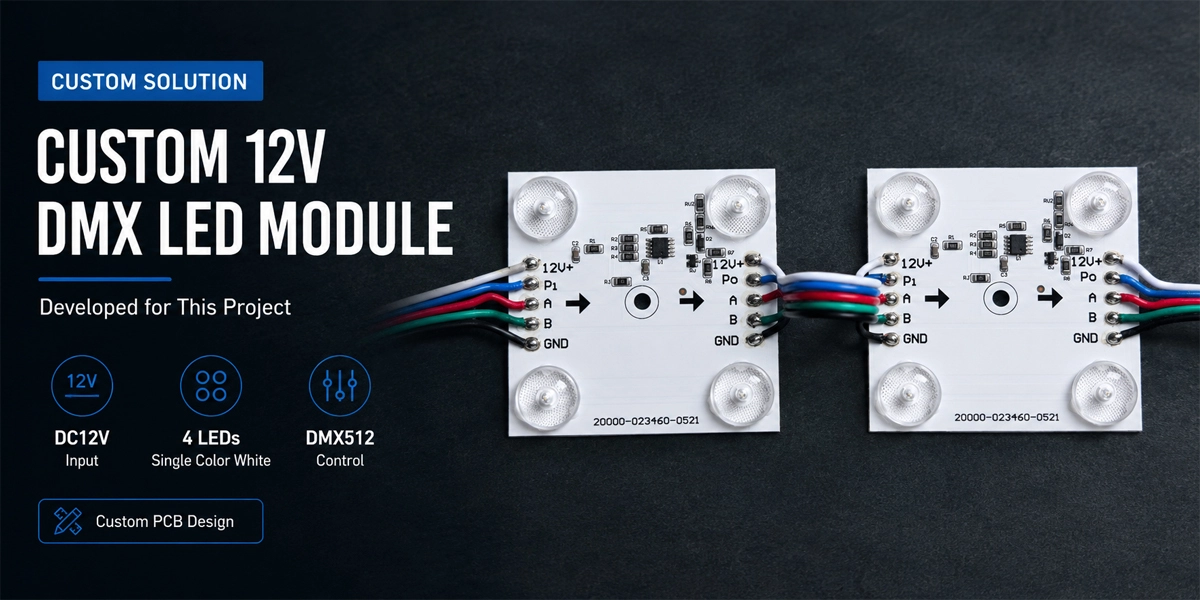
12 V DC Módulos de LED branco de cor única com controle DMX, com todos os quatro LEDs em cada módulo operando como uma unidade endereçável em vez de serem controlados individualmente.
Duas coisas destacaram essa consulta:
1. Controle DMX para um módulo branco de uma única cor
As configurações de módulos LED DMX padrão da Signliteld são projetadas principalmente para controle de cores multicanal, como RGBW ou RGGCCT. Neste projeto, no entanto, o cliente precisava apenas de uma luz branca de cor única com controle DMX. Todos os quatro LEDs brancos em cada módulo funcionariam juntos como uma unidade controlável, permitindo que o brilho de cada módulo fosse endereçado e escurecido pelo sistema DMX.
2 Entrada 12V DC em vez da plataforma padrão de 24 V
A plataforma de módulo de LED padrão da Signliteld opera em DC24V, enquanto a instalação existente do cliente exigia DC12V. Isso significava que o PCB padrão não podia ser usado como está; uma configuração dedicada de PCB de 12 V foi necessária para corresponder ao sistema elétrico do cliente.
| Tipo de módulo DMX | LEDs por módulo | Canais de controlo | lógica de controle | Uso típico |
| DMX RGBW padrão | 6 | 4 (R, G, B, W) | Controle independente do canal de cores | iluminação a cores |
| DMX padrão RGBCCCT | 6 | 5 (R, G, B, WW, CW) | Cor independente e controle de canal branco | cor + branco ajustável |
| Este projeto personalizado | 4 LEDs brancos | 1 | Todos os 4 LEDs controlados juntos como uma unidade | Até mesmo retroiluminação branca com escurecimento por módulo |
Ao controlar todos os quatro LEDs em cada módulo juntos, o design reduziu o número de canais de controle DMX necessários em comparação com o controle individual de cada LED. Isso simplificou a arquitetura de controle e correspondia aos requisitos do cliente para o escurecimento do módulo em vez de controle individual de LED.
As perguntas de especificação: obter os detalhes certos antes de citar
Em vez de se mover diretamente para a cotação, o Signlited primeiro esclareceu dois detalhes que afetariam a configuração final do módulo:
Pergunta 1 — Fita adesiva na parte de trás?
Os módulos padrão da Signliteld são fornecidos sem fita 3M pré-aplicada. Durante a discussão de especificações, o cliente confirmou que não era necessária uma fita adesiva, portanto, o projeto manteve a configuração padrão sem fita.
Pergunta 2 — Como os quatro LEDs devem ser agrupados?
Esta foi a decisão de design mais importante. Inicialmente, foi considerada uma configuração controlada individualmente, mas o cliente esclareceu que todos os quatro LEDs em cada módulo deveriam operar em conjunto:
Eu quero controlar um módulo com 4 LEDs como uma única unidade — portanto, nem cada um dos 4 LEDs em um módulo individualmente.
Este esclarecimento afetou diretamente o projeto de PCB e controle: os quatro LEDs em cada módulo de 65 x 65 mm necessários para operar juntos como uma unidade controlável e não como quatro LEDs controlados individualmente.
Para comparação, consulte nosso Página do produto do módulo de LED Para configurações de módulo padrão ou nosso Guia de módulos de LED DMX RGB Para obter mais informações sobre o controle e o endereçamento de DMX.
A verificação de tensão: confirmando 12 V DC antes do faturamento
Como a plataforma de módulo LED padrão da Signlited opera em DC24V, o requisito DC12V do cliente precisava ser confirmado antes do design personalizado avançar. A consulta original e as discussões de especificações subsequentes foram revisadas para verificar se o módulo seria usado com um sistema de 12 V DC.
Uma vez confirmada a entrada de 12 V, o PCB pode ser projetado em torno da tensão necessária, incluindo os componentes apropriados para limitar a corrente e a configuração paralela à série de LEDs. Isso exigia um layout dedicado de PCB de 12V, em vez de simplesmente usar o design padrão de 24V.
Por que isso importa: A tensão de entrada é um parâmetro fundamental de design de PCB. Um módulo projetado para operação de 24 V não é automaticamente compatível com um sistema de 12 V, portanto, a tensão necessária deve ser confirmada antes do layout do PCB e da seleção do componente serem finalizados. Neste projeto, confirmar o requisito de 12v antes da produção ajudou a evitar o reprojeto e o retrabalho desnecessário.
Para obter mais informações sobre como escolher entre os sistemas DC12V e DC24V, consulte nosso Guia de compra do módulo LED para caixas de luz e tetos, incluindo seleção e dimensionamento da fonte de alimentação.
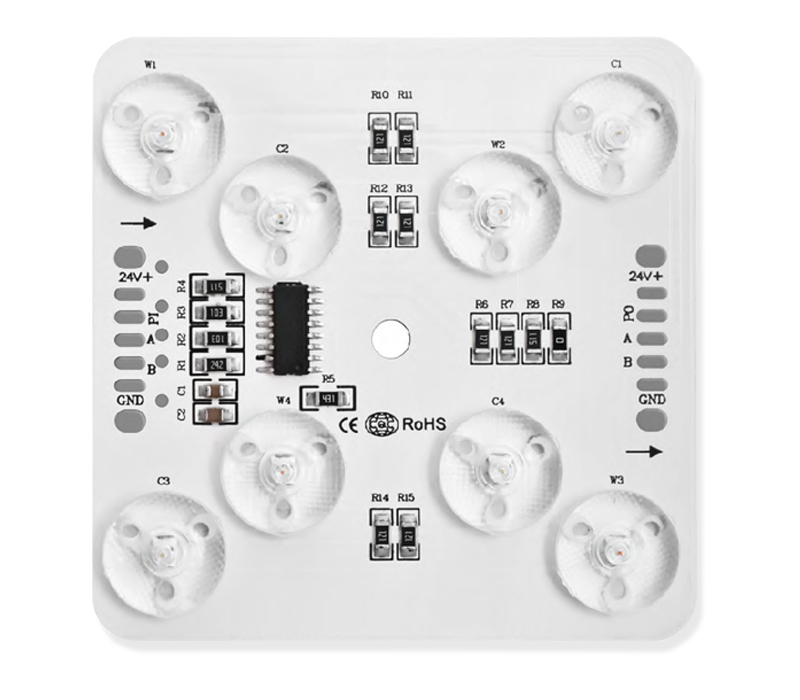
Módulos LED brancos ajustáveis DMX
- Tipo de LED: 2835 SMD
- Quantidade LED: 2*4 peças
- Potência: 2 + 4W
- Tensão: DC24V
- Eficiência: 100 lm/p
- Cor: CCT 2700-6500K
- CRI: RA90+
- Tamanho: 68 x 68 x 5,5 mm
- BIN de uma só cor, SDCM de 3 passos disponível
Da fatura à produção: o ponto de verificação do desenho do PCB
Após a confirmação das especificações, a fatura foi emitida e o pagamento foi recebido em 7 de agosto. Com o pedido confirmado, o projeto mudou para a preparação de PCBs e planejamento de produção personalizados.
Passo 1 — Desenho de PCB primeiro, segundo produção
Antes da produção avançar, a Signliteld enviou o desenho personalizado do PCB ao cliente para revisão e aprovação. Isso permitiu que os detalhes do design - incluindo dimensões da placa, tensão de entrada, layout de LED e agrupamento - fossem verificados antes da produção.
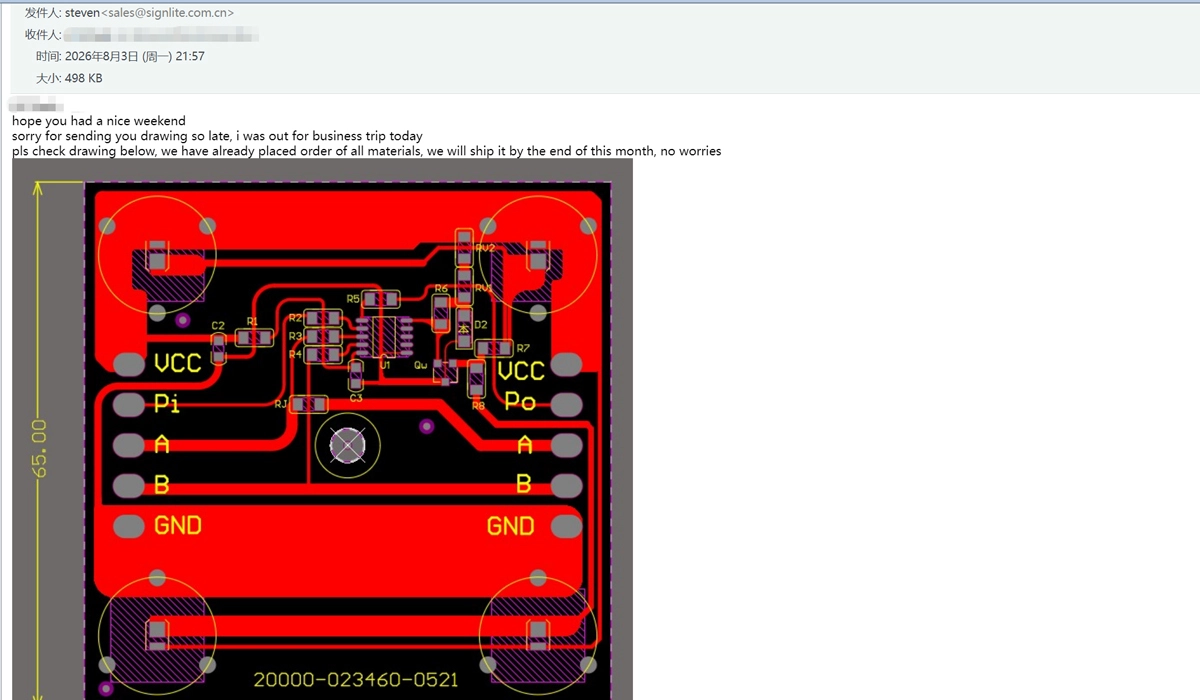
Figura: Desenho de PCB compartilhado com o cliente durante o projeto do módulo LED DMX de 12V para confirmação do projeto.
Após revisar o desenho, o cliente aprovou o design:
Sim, parece bom, você pode prosseguir com a produção.
Passo 2 — Produção organizada após a confirmação do desenho
Depois que o desenho do PCB foi aprovado, os materiais de PCB personalizados foram encomendados e o projeto foi colocado em produção. Os módulos então procederam por meio de montagem e teste antes do envio.
Etapa 3 — Remessa programada
Após a produção e teste, os módulos concluídos foram preparados para envio de acordo com o cronograma do projeto.
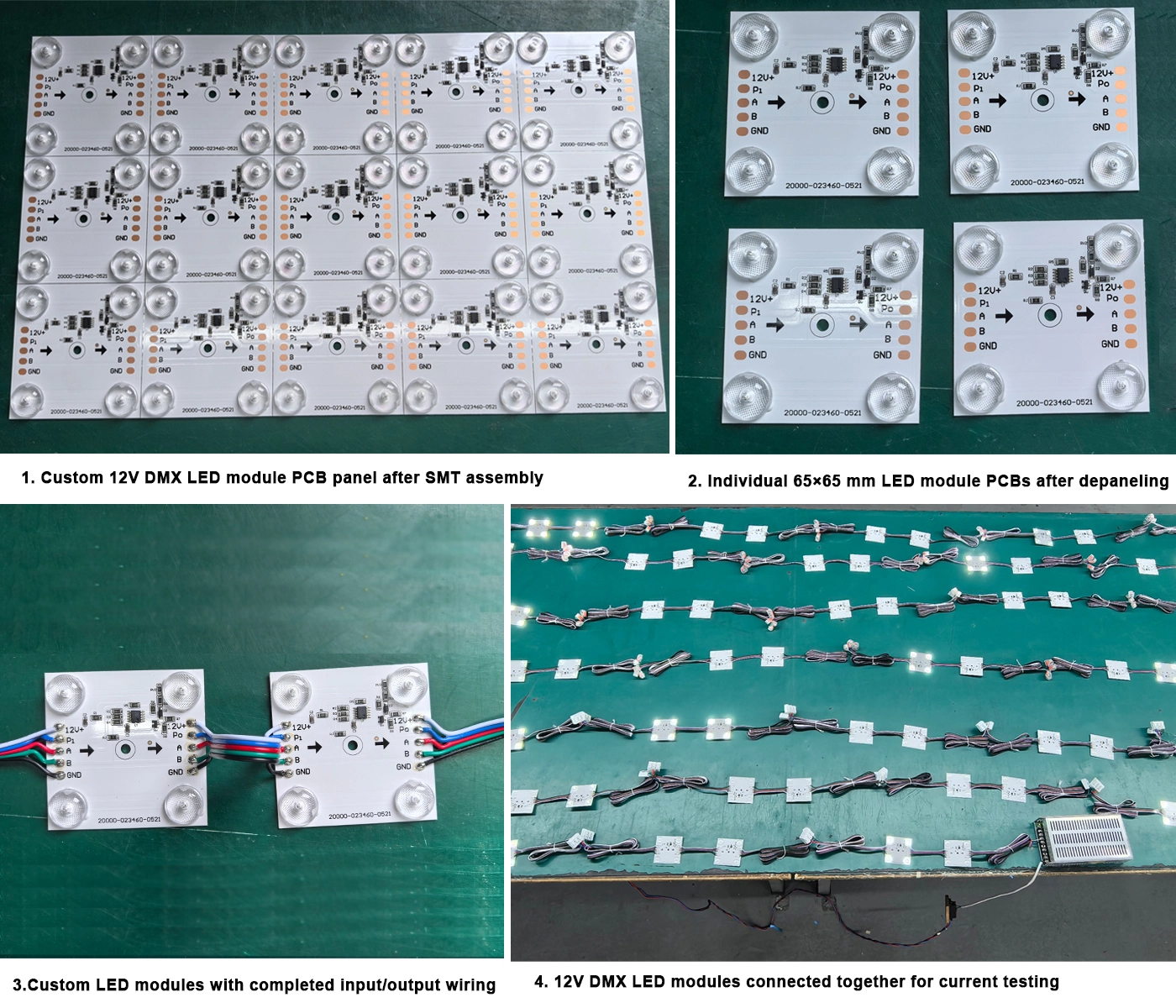
Linha do tempo do projeto em um relance
| período | Marco histórico |
| 23 de julho | A consulta inicial recebida |
| 24 a 25 de julho | Especificações clarificadas: fita adesiva, agrupamento de LEDs e entrada de 12 V confirmada |
| 26 de julho | Fatura emitida |
| 7 -agosto | Pagamento confirmado |
| 9 de agosto | Desenho de PCB enviado e aprovado |
| meados de agosto | Materiais personalizados para PCB encomendados e a produção iniciada |
| fim de agosto | carregamento |
Desde a consulta inicial até o envio, o projeto completo levou aproximadamente seis semanas.
O que este caso ensina aos compradores que solicitam módulos de LED personalizados
1. Confirme a tensão de entrada antes de finalizar o design
A tensão de entrada afeta o circuito da PCB e a seleção do componente. Se um projeto requer 12 V em vez da plataforma padrão de 24 V do fabricante, a tensão deve ser confirmada antes do design do PCB ser finalizado. Neste projeto, verificar o requisito de 12 V com antecedência ajudou a garantir que o PCB personalizado fosse projetado para o sistema elétrico existente do cliente.
2. Defina a lógica de controle, não apenas o protocolo de controle
Especificar o “controle DMX” sozinho pode não definir completamente como um módulo de LED deve operar. Os compradores também devem esclarecer se os LEDs são controlados individualmente ou agrupados. Neste projeto, o cliente exigiu especificamente todos os quatro LEDs brancos em cada módulo para operar como uma unidade controlável, o que afetou diretamente o PCB e o design do controle.
3. Use o desenho do PCB como ponto de confirmação do projeto
Para um projeto de PCB personalizado, revisar o desenho oferece a ambos os lados a oportunidade de verificar detalhes importantes, como dimensões da placa, tensão, layout do LED e agrupamento antes da produção avançar. Nesse caso, o desenho do PCB foi compartilhado com o cliente e aprovado antes da entrada dos módulos na produção.
4. O desenvolvimento personalizado nem sempre exige um longo prazo de entrega
Este projeto passou da consulta inicial para o envio em aproximadamente seis semanas, incluindo esclarecimento de especificações, preparação e aprovação de PCB, preparação de material, produção e teste. O lead time real para outros projetos personalizados dependerá do nível de customização e requisitos de produção.
Especificações do projeto em um relance
A tabela abaixo compara a plataforma de módulos LED padrão da Signlited com a configuração final desenvolvida para este projeto. Três diferenças foram particularmente importantes: o cliente exigiu DC12V em vez da plataforma DC24V padrão, uma configuração de cores simples de quatro LEDs de baixa potência e todos os quatro LEDs em cada módulo para operar em conjunto como uma unidade DMX controlável.
Esses requisitos afetaram o projeto de PCB, a configuração elétrica e a lógica de controle, tornando necessário um módulo personalizado em vez de um produto padrão pronto para uso.
| especificação | Padrão com sinal | Este projeto personalizado |
| Tipo de produto | Módulo LED RGBW/RGBCCT padrão | Módulo de LED DMX personalizado de cor única |
| Tensão de entrada | CC 24 V | DC12V |
| LEDs por módulo | 6 LEDs | 4 LEDs |
| cor clara | RGBW / RGBCCCT | Branco |
| CCT/CRI | Depende da configuração | 6500k/ra80 |
| Potência | 4–6W | 1,5W por módulo |
| Tamanho do PCB | plataforma padrão | 65×65mm |
| protocolo de controle | DMX512 | DMX512 |
| lógica de controle | Controle de cores multicanal | Todos os 4 LEDs controlados juntos como uma unidade |
| apoio adesivo | nenhum | nenhum |
| Prazo de entrega do projeto | — | Aproximadamente 6 semanas desde a consulta até o envio |
A configuração final do projeto foi baseada nos requisitos confirmados do cliente e no desenho de PCB aprovado, fornecendo uma referência clara para a produção e inspeção final.

FAQ
Conclusão
“Personalizado” não é simplesmente uma categoria de produto – é um processo. Para este projeto de módulo de LED DMX de 12V, as principais etapas foram entender os requisitos elétricos e de controle do cliente, confirmar as especificações, desenvolver o PCB personalizado, revisar o desenho do PCB e colocar o design aprovado em produção.
O projeto também mostra por que detalhes como tensão de entrada, agrupamento de LEDs, dimensões de PCB e lógica de controle devem ser esclarecidos no início de um projeto de módulo de LED personalizado. Nesse caso, a solução final combinou uma entrada de 12 V DC, quatro LEDs brancos de cor única, controle DMX512 e um PCB de 65 × 65 mm, com o projeto passando do inquérito inicial para o envio em aproximadamente seis semanas.
A Signliteld fornece soluções de módulos de LED personalizados para projetos de iluminação comercial e OEM, incluindo layouts personalizados de PCB, configurações de tensão, especificações de LED e requisitos de controle.
Se você estiver desenvolvendo um projeto de módulo de LED personalizado, Contato Signlited Com sua tensão alvo, configuração de LED, dimensões, método de controle, quantidade e requisitos de aplicativo. Nossa equipe pode revisar as especificações e discutir uma solução adequada para o seu projeto.
Auther: Steven Quan
Gestor de vendas
E-mail: sales@signlite.com.cn
Celular/Whatsapp: +86 15814478470

Postagens relacionadas