Polski
  English
  简体中文
简体中文  Deutsch
  Español
  Français
  Italiano
  日本語
日本語  한국어
한국어  Português
  Русский
  Türkçe
  Nederlands
  Tiếng Việt
  ไทย
ไทย 
Większość zapytań o moduły LED podąża tą samą ścieżką: kupujący wysyła specyfikacje, producent cytuje, a jeśli liczby działają, rozpoczyna się produkcja. Ale kiedy wymaganie wykracza poza standardowy katalog — niestandardowe napięcie, określone grupowanie pikseli lub konkretny protokół sterowania — sukces projektu często zależy od tego, jak te szczegóły zostaną wyjaśnione przed rozpoczęciem produkcji.
To studium przypadku jest zgodne z prawdziwym, sygnalizowanym projektem dla europejskiej firmy oświetleniowej wymagającej niestandardowej kombinacji: wejście 12 V DC, jednokolorowe białe diody LED, sterowanie DMX i cztery diody LED zgrupowane jako jedna jednostka adresowalna. Poniższe sekcje pokazują, w jaki sposób wyjaśniono specyfikację, niestandardową płytkę drukowaną opracowano i zatwierdzano, a moduły przeniesiono do produkcji i wysyłki.
szybka odpowiedź
Krótka odpowiedź: Europejska firma oświetleniowa potrzebowała niestandardowych jednokolorowych, jednokolorowych modułów LED 12 V DC ze sterowaniem DMX, ze wszystkimi czterema diodami LED na każdym module działającym jako jedna jednostka adresowalna. Signlited przeprojektował płytkę drukowaną na wejście 12V, potwierdził wymagania elektryczne przed produkcją i wysłał rysunek PCB do klienta do zatwierdzenia przed produkcją. Projekt przeniósł się od wstępnego zapytania do wysyłki w ciągu około sześciu tygodni.
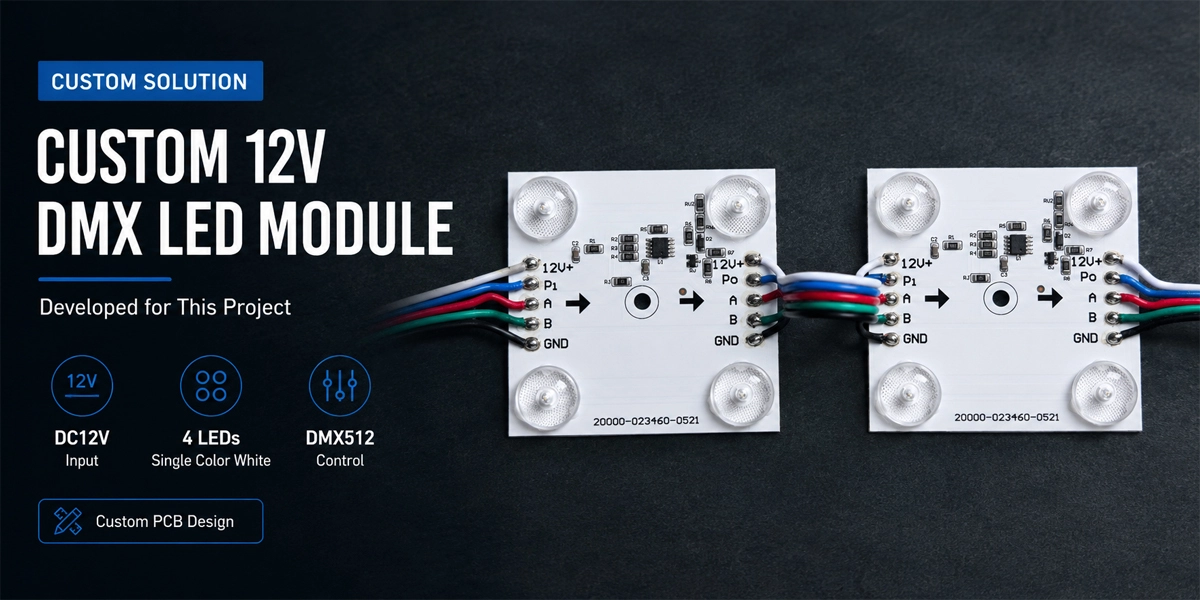
Zapytanie: jednokolorowe białe moduły LED ze sterowaniem DMX
Pod koniec lipca europejski projektant oświetlenia skontaktował się z Signlitelem z jasnym, ale niestandardowym wymogiem:
Moduły LED jednokolorowe 12V DC ze sterowaniem DMX, ze wszystkimi czterema diody LED na każdym module działające jako jedna jednostka adresowalna, a nie sterowane indywidualnie.
Dwie rzeczy wyróżniały to zapytanie:
1. Sterowanie DMX dla jednokolorowego białego modułu
Standardowe konfiguracje modułów LED DMX firmy SignLiteLed są przeznaczone przede wszystkim do wielokanałowej kontroli koloru, takiej jak RGBW lub RGBBCT. W tym projekcie jednak klient potrzebował tylko jednokolorowego białego światła ze sterowaniem DMX. Wszystkie cztery białe diody LED w każdym module działałyby razem jako jedna regulowana jednostka, umożliwiając zaadresowanie i przyciemnienie jasności każdego modułu przez system DMX.
2 Wejście 12 V DC zamiast standardowej platformy 24 V
Standardowa platforma modułu LED SignLiteleD działa na DC24V, podczas gdy istniejąca instalacja klienta wymagała DC12V. Oznaczało to, że standardowa płytka drukowana nie mogła być po prostu używana w stanie bezzwłocznym; wymagana była dedykowana konfiguracja płytki drukowanej 12 V, aby dopasować się do systemu elektrycznego klienta.
| Typ modułu DMX | Diody na moduł | Kanały sterowania | Logika kontroli | Typowe zastosowanie |
| Standardowy RGBW DMX | 6 | 4 (R, G, B, W) | Niezależna kontrola koloru-kanału | Oświetlenie w kolorze pełnym |
| Standardowy RGBBCT DMX | 6 | 5 (R, G, B, WW, CW) | Niezależna kontrola koloru i białego kanału | Kolor + przestrajalny biały |
| Ten niestandardowy projekt | 4 białe diody LED | 1 | Wszystkie 4 diody LED sterowane razem jako jedna jednostka | Nawet białe podświetlenie z ściemnianiem na moduł |
Kontrolując wszystkie cztery diody LED na każdym module razem, projekt zmniejszył liczbę wymaganych kanałów sterujących DMX w porównaniu z indywidualnie sterowaniem każdą diodą LED. Uprościło to architekturę sterowania i dopasowało się do wymagań klienta dotyczących ściemniania na poziomie modułu, a nie indywidualnej kontroli LED.
Pytania dotyczące specyfikacji: Uzyskanie szczegółów bezpośrednio przed zacytowaniem
Zamiast przechodzić bezpośrednio do cytatu, Signlited najpierw wyjaśnił dwa szczegóły, które wpłynęłyby na ostateczną konfigurację modułu:
Pytanie 1 — Taśma klejąca na plecach?
Standardowe moduły SignLiteLed są dostarczane bez wstępnie nałożonej taśmy 3M. Podczas dyskusji na temat specyfikacji klient potwierdził, że taśma klejąca nie jest wymagana, więc projekt zachował standardową konfigurację bez taśmy.
Pytanie 2 — Jak należy zgrupować cztery diody LED?
To była ważniejsza decyzja projektowa. Początkowo rozważano indywidualnie kontrolowaną konfigurację, ale klient wyjaśnił, że wszystkie cztery diody LED w każdym module powinny działać razem:
Chcę sterować modułem z 4 diodami LED jako jedną jednostką — więc nie każda z 4 diod LED w module indywidualnie.
To wyjaśnienie bezpośrednio wpłynęło na projekt PCB i sterowania: cztery diody LED na każdym module 65 × 65 mm, które były potrzebne do działania razem jako jedna sterowalna jednostka, a nie cztery indywidualnie sterowane diody LED.
Dla porównania zobacz nasz Strona produktu modułu LED dla standardowych konfiguracji modułów lub naszego Przewodnik po modułach LED DMX RGB Więcej informacji na temat sterowania i adresowania DMX.
Sprawdzanie napięcia: potwierdzające 12 V DC przed fakturowaniem
Ponieważ standardowa platforma modułu LED SignLiteled działa na DC24V, wymagania klienta DC12V muszą zostać potwierdzone, zanim niestandardowy projekt posunie się do przodu. Przejrzano oryginalne zapytania do zapytań i późniejsze specyfikacje w celu sprawdzenia, czy moduł będzie używany z systemem 12 V DC.
Po potwierdzeniu wejścia 12V płytkę drukowaną można zaprojektować wokół wymaganego napięcia, w tym odpowiednich komponentów ograniczających prąd i konfiguracji szeregowej LED. Wymagało to dedykowanego układu PCB 12 V, a nie tylko przy użyciu standardowej konstrukcji 24 V.
Dlaczego to ma znaczenie: Napięcie wejściowe jest podstawowym parametrem projektowym PCB. Moduł przeznaczony do pracy 24V nie jest automatycznie kompatybilny z systemem 12V, dlatego wymagane napięcie należy potwierdzić przed sfinalizowaniem układu PCB i doborem komponentów. W tym projekcie, potwierdzenie wymogu 12 V przed produkcją pomogło uniknąć przeprojektowania i niepotrzebnej przeróbki.
Aby uzyskać więcej informacji na temat wyboru między systemami DC12V i DC24V, zobacz nasz Przewodnik zakupu modułów LED dla świetlówek i sufitów, w tym wybór zasilania i rozmiar.
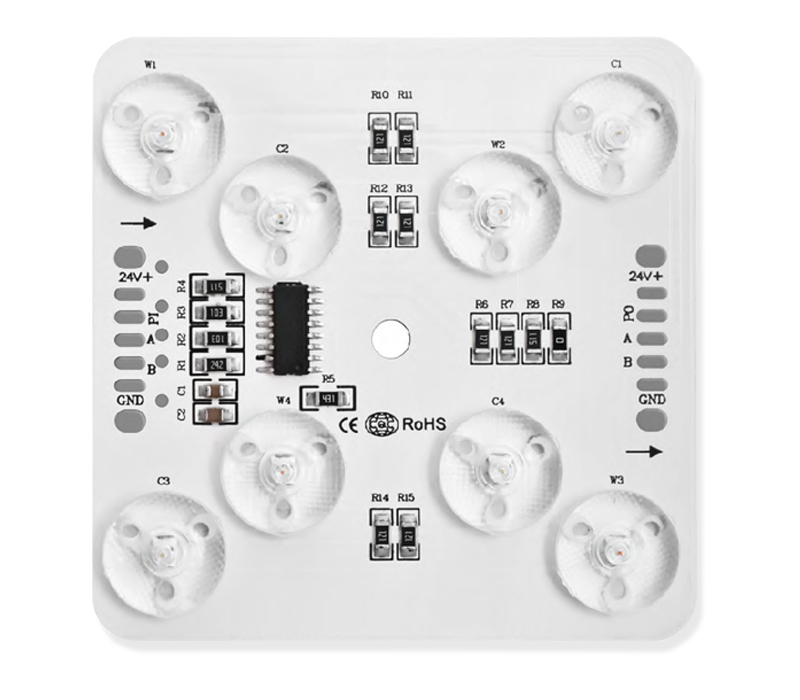
Dostrajne białe moduły LED DMX
- Typ LED: 2835 SMD
- Ilość LED: 2*4 szt.
- Moc: 2+4W
- Napięcie: DC24V
- Wydajność: 100 lm/W
- Kolor: CCT 2700-6500K
- CRI: RA90+
- Rozmiar: 68 x 68 x 5,5 mm
- Pojedynczy jednokolorowy BIN, dostępny 3-stopniowy SDCM
Od faktury do produkcji: punkt kontrolny rysunku PCB
Po potwierdzeniu specyfikacji fakturę wystawiono i płatność została otrzymana 7 sierpnia. Po potwierdzeniu zamówienia projekt przeniósł się na niestandardowe przygotowanie PCB i planowanie produkcji.
Krok 1 — Rysowanie PCB jako pierwsze, produkcja po raz drugi
Przed posunięciem się do produkcji Signliteded wysłał niestandardowy rysunek PCB do klienta w celu przejrzenia i zatwierdzenia. Pozwoliło to na zweryfikowanie kluczowych szczegółów projektu — w tym wymiarów płyty, napięcia wejściowego, układu LED i grupowania — przed produkcją.
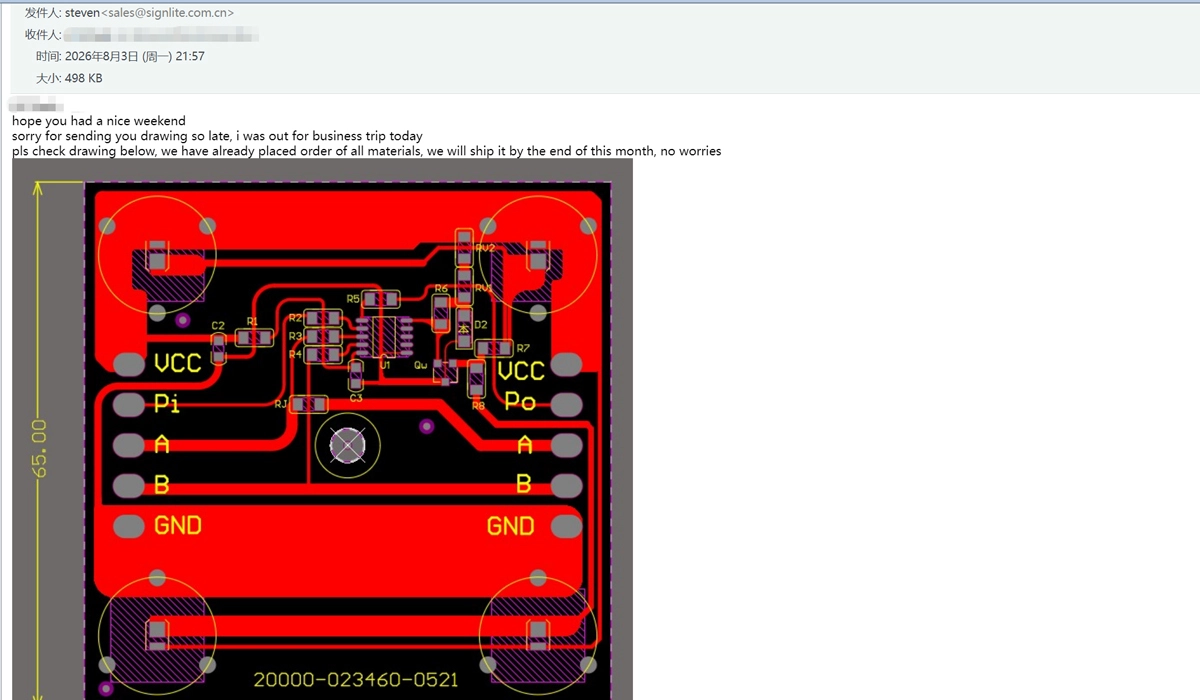
Rysunek: Rysunek PCB udostępniony klientowi podczas projektu modułu LED 12V DMX w celu potwierdzenia projektu.
Po przejrzeniu rysunku klient zatwierdził projekt:
Tak, wygląda dobrze, możesz kontynuować produkcję.
Krok 2 — Produkcja ułożona po potwierdzeniu rysowania
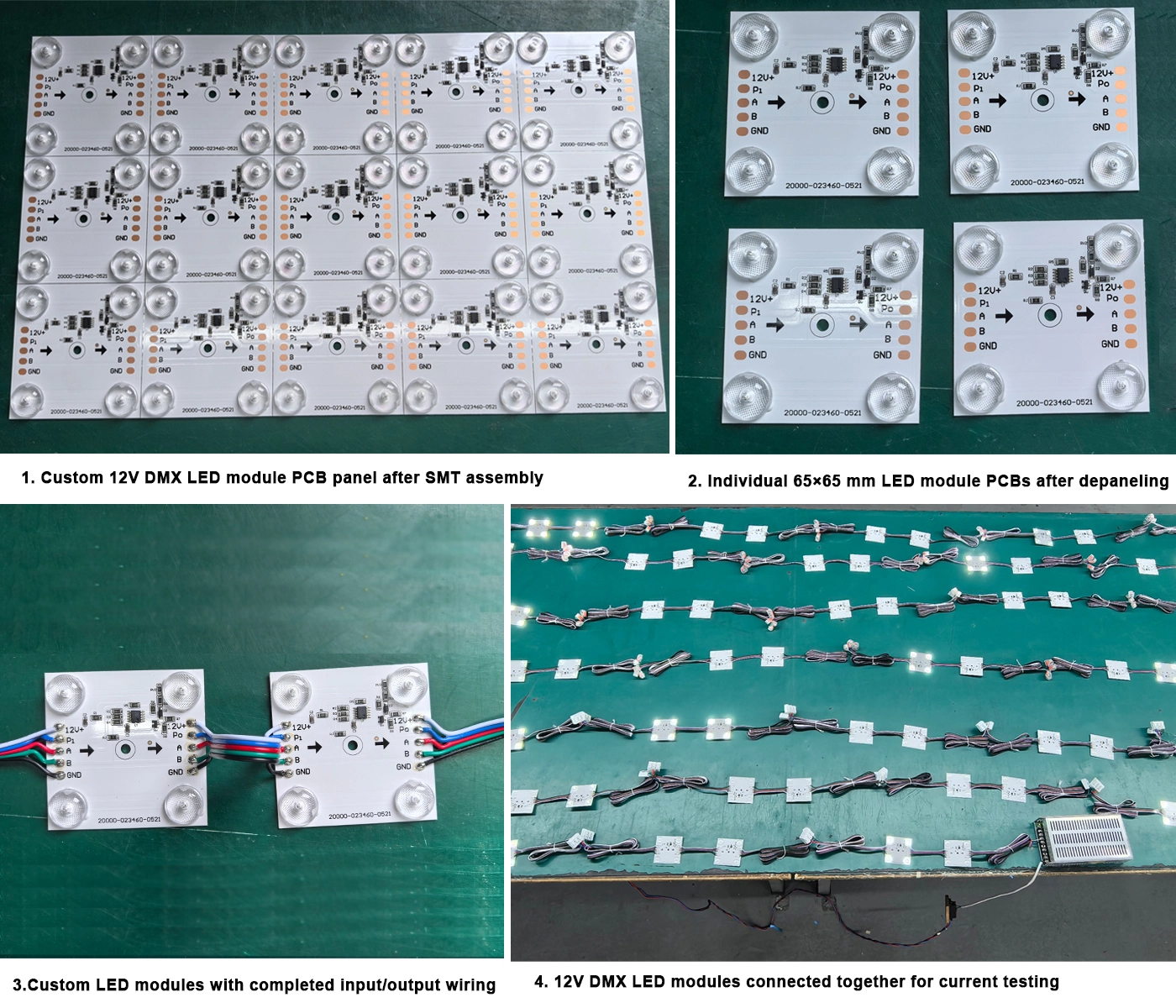
Po zatwierdzeniu rysunku PCB zamówiono niestandardowe materiały PCB i projekt przeniósł się do produkcji. Moduły następnie przeszły przez montaż i testowanie przed wysyłką.
Krok 3 — Zaplanowana wysyłka
Po wyprodukowaniu i testowaniu ukończone moduły zostały przygotowane do wysyłki zgodnie z harmonogramem projektu.
Oś czasu projektu w skrócie
| pochodzić z dane | Kamień milowy |
| 23-lip | Otrzymane wstępne zapytanie |
| 24-25 lipca | Wyjaśnienie: Taśma klejąca, grupowanie LED i wejście 12V potwierdzone |
| 26-lip | Faktura wystawiona |
| 7 7 -Aug | Płatność potwie |
| 9-siewc | Rysunek PCB wysłany i zatwierdzony |
| w połowie sierpnia | Zamówiono niestandardowe materiały PCB i rozpoczęto produkcję |
| Koniec sierpnia | fracht |
Od wstępnego zapytania do wysyłki kompletny projekt zajął około sześciu tygodni.
Czego ten przypadek uczy kupujących zamawiających niestandardowe moduły LED
1. Potwierdź napięcie wejściowe przed sfinalizowaniem projektu
Napięcie wejściowe wpływa na obwód PCB i wybór komponentów. Jeśli projekt wymaga 12V zamiast standardowej platformy 24 V producenta, napięcie należy potwierdzić przed sfinalizowaniem projektu PCB. W tym projekcie wczesne zweryfikowanie wymagań 12 V pomogło zapewnić, że niestandardowa płytka drukowana została zaprojektowana dla istniejącego systemu elektrycznego klienta.
2. Zdefiniuj logikę sterowania, a nie tylko protokół sterowania
Samo określenie „Sterowanie DMX” może nie w pełni określić, jak powinien działać moduł LED. Kupujący powinni również wyjaśnić, czy diody LED są kontrolowane indywidualnie, czy pogrupowane razem. W tym projekcie klient specjalnie wymagał wszystkich czterech białych diod LED w każdym module, aby działały jako jedna kontrola, która bezpośrednio wpływała na projekt PCB i sterowanie.
3. Użyj rysunku PCB jako punktu potwierdzenia projektu
W przypadku niestandardowego projektu PCB przeglądanie rysunku daje obu stronom możliwość zweryfikowania ważnych szczegółów, takich jak wymiary płytki, napięcie, układ LED i grupowanie przed przesunięciem produkcji do przodu. W tym przypadku rysunek PCB został udostępniony klientowi i zatwierdzony przed wejściem modułów do produkcji.
4. Niestandardowe tworzenie nie zawsze wymaga długiego czasu realizacji
Projekt ten przeniósł się od wstępnego zapytania do wysyłki w ciągu około sześciu tygodni, w tym wyjaśnienia specyfikacji, przygotowanie i zatwierdzenie PCB, przygotowanie materiałów, produkcję i testy. Rzeczywisty czas realizacji innych projektów niestandardowych będzie zależeć od poziomu dostosowania i wymagań produkcyjnych.
Specyfikacje projektu w skrócie
Poniższa tabela porównuje standardową platformę modułów LED Signliteled z ostateczną konfiguracją opracowaną dla tego projektu. Szczególnie ważne były trzy różnice: klient wymagał DC12V zamiast standardowej platformy DC24V, cztero-LEDowej konfiguracji jednokolorowej o niższej mocy i wszystkich czterech diod LED w każdym module, aby działały razem jako jedna kontrolna jednostka DMX.
Wymagania te wpłynęły na projekt PCB, konfigurację elektryczną i logikę sterowania, czyniąc niestandardowy moduł, a nie standardowy produkt gotowy.
| specyfikacja | Znakowany standard | Ten niestandardowy projekt |
| Typ produktu | Standardowy moduł LED RGBW / RGBBCT LED | Niestandardowy jednokolorowy moduł LED DMX |
| Napięcie wejściowe | Prąd stały 24 V | DC12V |
| Diody na moduł | 6 diod LED | 4 diody LED |
| jasny kolor | RGBW / RGBBCT | Biały |
| CCT / CRI | Zależy od konfiguracji | 6500K / RA80 |
| Moc | 4–6W | 1,5 W na moduł |
| Rozmiar PCB | Platforma standardowa | 65 × 65 mm |
| Protokół kontrol | DMX512 | DMX512 |
| Logika kontroli | Wielokanałowa kontrola koloru | Wszystkie 4 diody LED sterowane razem jako jedna jednostka |
| Klejowy podkład | żaden | żaden |
| Czas realizacji projektu | . | Około 6 tygodni od zapytania do wysyłki |
Ostateczna konfiguracja projektu została oparta na potwierdzonych wymaganiach klienta i zatwierdzonym rysunku PCB, zapewniając wyraźne odniesienie do produkcji i kontroli końcowej.

FAQ
Wniosek
„Niestandardowe” to nie tylko kategoria produktu — to proces. W tym projekcie modułu LED 12V DMX kluczowymi krokami było zrozumienie wymagań elektrycznych i sterowania klienta, potwierdzenie specyfikacji, opracowanie niestandardowej płytki drukowanej, przegląd rysunku PCB i przeniesienie zatwierdzonego projektu do produkcji.
Projekt pokazuje również, dlaczego szczegóły, takie jak napięcie wejściowe, grupowanie LED, wymiary PCB i logika sterowania, powinny zostać wyjaśnione na początku w niestandardowym projekcie modułu LED. W tym przypadku ostateczne rozwiązanie połączyło wejście 12 V DC, cztery jednokolorowe białe diody LED, sterowanie DMX512 i płytę drukowaną 65 × 65 mm, z przeniesieniem projektu od wstępnego zapytania do wysyłki w ciągu około sześciu tygodni.
SignLiteleD dostarcza niestandardowe rozwiązania modułów LED dla projektów oświetlenia OEM i komercyjnych, w tym niestandardowe układy PCB, konfiguracje napięcia, specyfikacje LED i wymagania sterowania.
Jeśli opracowujesz niestandardowy projekt modułu LED, Kontakt SignOlited Z twoim docelowym napięciem, konfiguracją LED, wymiarami, metodą sterowania, ilością i wymaganiami dotyczącymi aplikacji. Nasz zespół może przejrzeć specyfikacje i omówić odpowiednie rozwiązanie dla Twojego projektu.
Auther: Steven Quan
Kierownik sprzedaży
E-mail: sales@signlite.com.cn
Komórka / WhatsApp: +86 15814478470

Powiązane posty