Nederlands
  English
  简体中文
简体中文  Deutsch
  Español
  Français
  Italiano
  日本語
日本語  한국어
한국어  Polski
  Português
  Русский
  Türkçe
  Tiếng Việt
  ไทย
ไทย 
De meeste vragen over LED-modules volgen hetzelfde pad: een koper stuurt specificaties, de fabrikanten van de fabrikant en als de cijfers werken, begint de productie. Maar wanneer de eis buiten de standaardcatalogus valt - een niet-standaard spanning, specifieke pixelgroepering of een bepaald besturingsprotocol - hangt het succes van het project vaak af van hoe die details worden verduidelijkt voordat de productie begint.
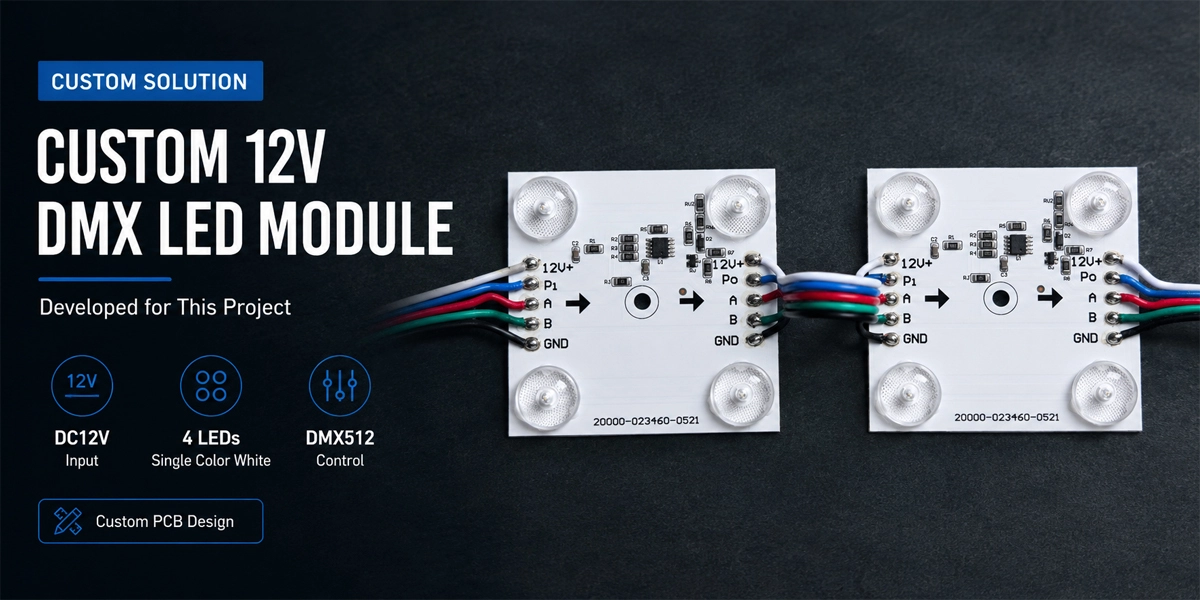
Deze casestudy volgt een echt belicht project voor een Europees verlichtingsbedrijf dat een niet-standaard combinatie vereist: 12V DC-ingang, witte LED's in één kleur, DMX-besturing en vier LED's gegroepeerd als één adresseerbare eenheid. De volgende secties laten zien hoe de specificatie werd verduidelijkt, de aangepaste PCB werd ontwikkeld en goedgekeurd en de modules werden in productie en verzending.
snel antwoord
Het korte antwoord: een Europees verlichtingsbedrijf had op maat gemaakte 12V DC-eenkleurige witte LED-modules nodig met DMX-besturing, waarbij alle vier de LED's op elke module als één adresseerbare eenheid werken. Signlitetled herontdekt de PCB voor 12V-ingang, bevestigde de elektrische vereisten vóór de productie en stuurde de PCB-tekening naar de klant voor goedkeuring voordat hij werd geproduceerd. Het project verhuisde van het eerste onderzoek naar de verzending in ongeveer zes weken.
Het onderzoek: Enkelkleurige witte LED-modules met DMX-besturing
Eind juli nam een Europese lichtontwerper contact op met Siglitetled met een duidelijke maar niet-standaard eis:
12V DC eenkleurige witte LED-modules met DMX-besturing, waarbij alle vier de LED's op elke module als één adresseerbare eenheid werken in plaats van afzonderlijk te worden bestuurd.
Twee dingen deden dit onderzoek opvallen:
1. DMX-besturing voor een eenkleurige witte module
De standaard configuraties van de LED-modules van Siglitetled zijn voornamelijk ontworpen voor meerkanaals kleurenregeling, zoals RGBW of RGBCCT. In dit project had de klant echter alleen eenkleurig wit licht nodig met DMX-besturing. Alle vier de witte LED's op elke module zouden samen als één regelbare eenheid werken, waardoor de helderheid van elke module kan worden geadresseerd en gedimd via het DMX-systeem.
2 12V DC-ingang in plaats van het standaard 24V-platform
Het standaard LED-moduleplatform van Siglitetled werkt op DC24V, terwijl de bestaande installatie van de klant DC12V vereiste, wat betekende dat de standaard PCB niet eenvoudig kon worden gebruikt; een speciale 12V-PCB-configuratie was vereist om te voldoen aan het elektrische systeem van de klant.
| Type DMX-module | LED's per module | Besturingskanalen | Besturingslogica | Typisch gebruik |
| Standaard RGBW DMX | 6 | 4 (R, G, B, W) | Onafhankelijke kleurkanaalbesturing | full colour verlichting |
| Standaard RGBCCT DMX | 6 | 5 (R, G, B, WW, CW) | Onafhankelijke kleur- en witkanaalsturing | Kleur + Tunable Wit |
| Dit aangepaste project | 4 witte LED's | 1 | Alle 4 LED's samen als één eenheid aangestuurd | Zelfs witte achtergrondverlichting met dimmen per module |
Door alle vier de LED's op elke module samen te bedienen, verminderde het ontwerp het aantal DMX-besturingskanalen dat nodig was in vergelijking met het individueel regelen van elke LED. Dit vereenvoudigde de besturingsarchitectuur en kwam overeen met de vereiste van de klant voor dimmen op moduleniveau in plaats van individuele LED-besturing.
De specificatievragen: de details krijgen voordat u citeert
In plaats van direct naar een citaat te gaan, verduidelijkte Siglitetle eerst twee details die van invloed zouden zijn op de uiteindelijke moduleconfiguratie:
Vraag 1 — Plakband op de achterkant?
De standaardmodules van Signliteled worden geleverd zonder vooraf aangebrachte 3M-tape. Tijdens de specificatiediscussie bevestigde de klant dat plakband niet nodig was, dus het project behield de standaard no-tape-configuratie.
Vraag 2 — Hoe moeten de vier LED's worden gegroepeerd?
Dit was de belangrijkste ontwerpbeslissing. In eerste instantie werd een individueel geregelde configuratie overwogen, maar de klant verduidelijkte dat alle vier de LED's op elke module samen moesten werken:
Ik wil een module met 4 LED's als een enkele eenheid besturen - dus niet elk van de 4 LED's op een module afzonderlijk.
Deze verduidelijking had een directe invloed op het ontwerp van de PCB en het besturingselement: de vier LED's op elke module van 65 × 65 mm die nodig waren om samen als één regelbare eenheid te werken in plaats van als vier individueel gestuurde LED's.
Ter vergelijking, zie onze Productpagina LED-module voor standaard moduleconfiguraties, of onze DMX RGB LED-modulesgids Voor meer informatie over DMX-besturing en adressering.
De spanningscontrole: 12V DC bevestigen voor facturering
Omdat het standaard LED-moduleplatform van Siglitetled op DC24V werkt, moest de DC12V-vereiste van de klant worden bevestigd voordat het aangepaste ontwerp vooruitging. De originele enquiry en daaropvolgende specificatiediscussies werden beoordeeld om te verifiëren dat de module zou worden gebruikt met een 12V DC-systeem.
Zodra de 12V-ingang was bevestigd, kon de PCB worden ontworpen rond de vereiste spanning, inclusief de juiste stroombeperkende componenten en LED-serie-parallelle configuratie. Dit vereiste een speciale 12V PCB-lay-out in plaats van alleen het standaard 24V-ontwerp te gebruiken.
Waarom dit ertoe doet: Ingangsspanning is een fundamentele PCB-ontwerpparameter. Een module die is ontworpen voor 24V-werking is niet automatisch compatibel met een 12V-systeem, dus de vereiste spanning moet worden bevestigd voordat de lay-out van de PCB en de componentkeuze zijn afgerond. In dit project hielp het bevestigen van de 12V-vereiste vóór de productie om herontwerp en onnodige herbewerking te voorkomen.
Voor meer informatie over het kiezen tussen DC12V- en DC24V-systemen, zie onze Led-module koopgids voor lichtbakken en plafonds, inclusief selectie van de voeding en dimensionering.
DMX Tunable witte LED-modules
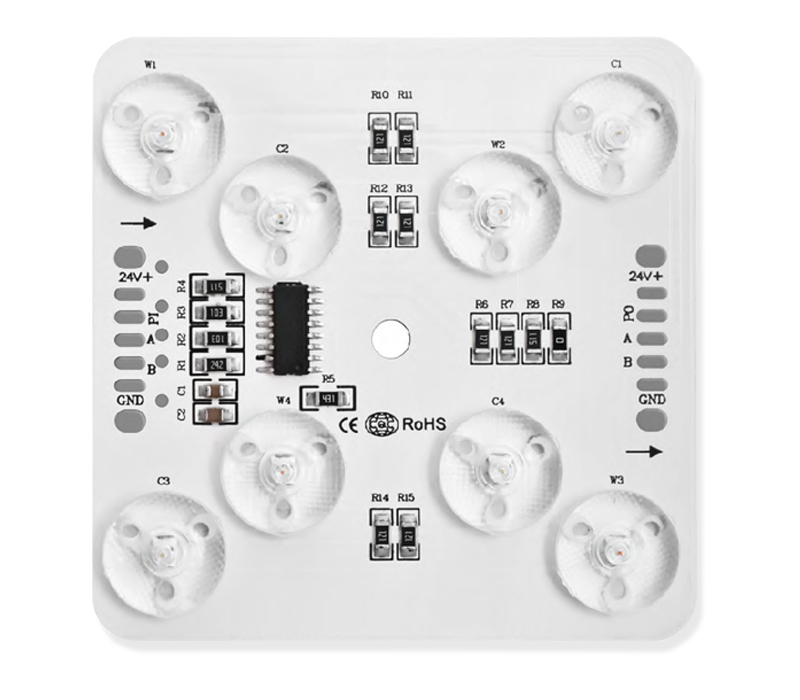
- LED-type: 2835 SMD
- LED Aantal: 2*4 stuks
- Vermogen: 2+4W
- Spanning: DC24V
- Efficiëntie: 100 lm/W
- Kleur: CCT 2700-6500K
- CRI: RA90+
- Afmetingen: 68 x 68 x 5,5 mm
- Eén kleur BIN, 3 stappen SDCM beschikbaar
Van factuur tot productie: het PCB-tekencontrolepunt
Nadat de specificaties waren bevestigd, werd de factuur uitgegeven en de betaling was op 7 augustus ontvangen. Met de bestelling bevestigd, ging het project over op een aangepaste PCB-voorbereiding en -productieplanning.
Stap 1 — PCB-tekening eerst, productie tweede
Voordat de productie vooruitging, stuurde Signlitetle de aangepaste PCB-tekening naar de klant voor beoordeling en goedkeuring. Hierdoor konden belangrijke ontwerpdetails - waaronder bordafmetingen, ingangsspanning, LED-lay-out en groepering - worden geverifieerd vóór de productie.
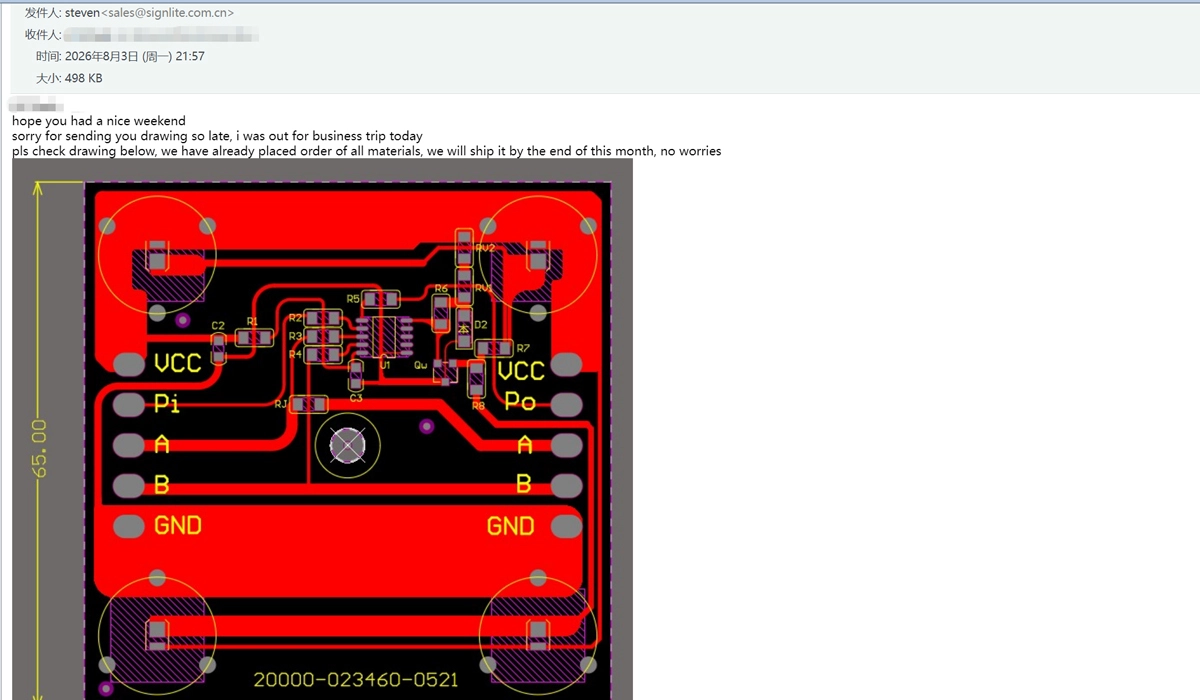
Figuur: PCB-tekening gedeeld met de klant tijdens het 12V DMX LED-moduleproject voor ontwerpbevestiging.
Na het bekijken van de tekening keurde de klant het ontwerp goed:
Ja, het ziet er goed uit, je kunt doorgaan met de productie.
Stap 2 — Productie gearrangeerd na tekeningbevestiging
Nadat de PCB-tekening was goedgekeurd, werden de aangepaste PCB-materialen besteld en werd het project in productie genomen. De modules gingen vervolgens door met assemblage en testen voor verzending.
Stap 3 — Verzending gepland
Na productie en testen werden de voltooide modules voorbereid voor verzending volgens het projectschema.
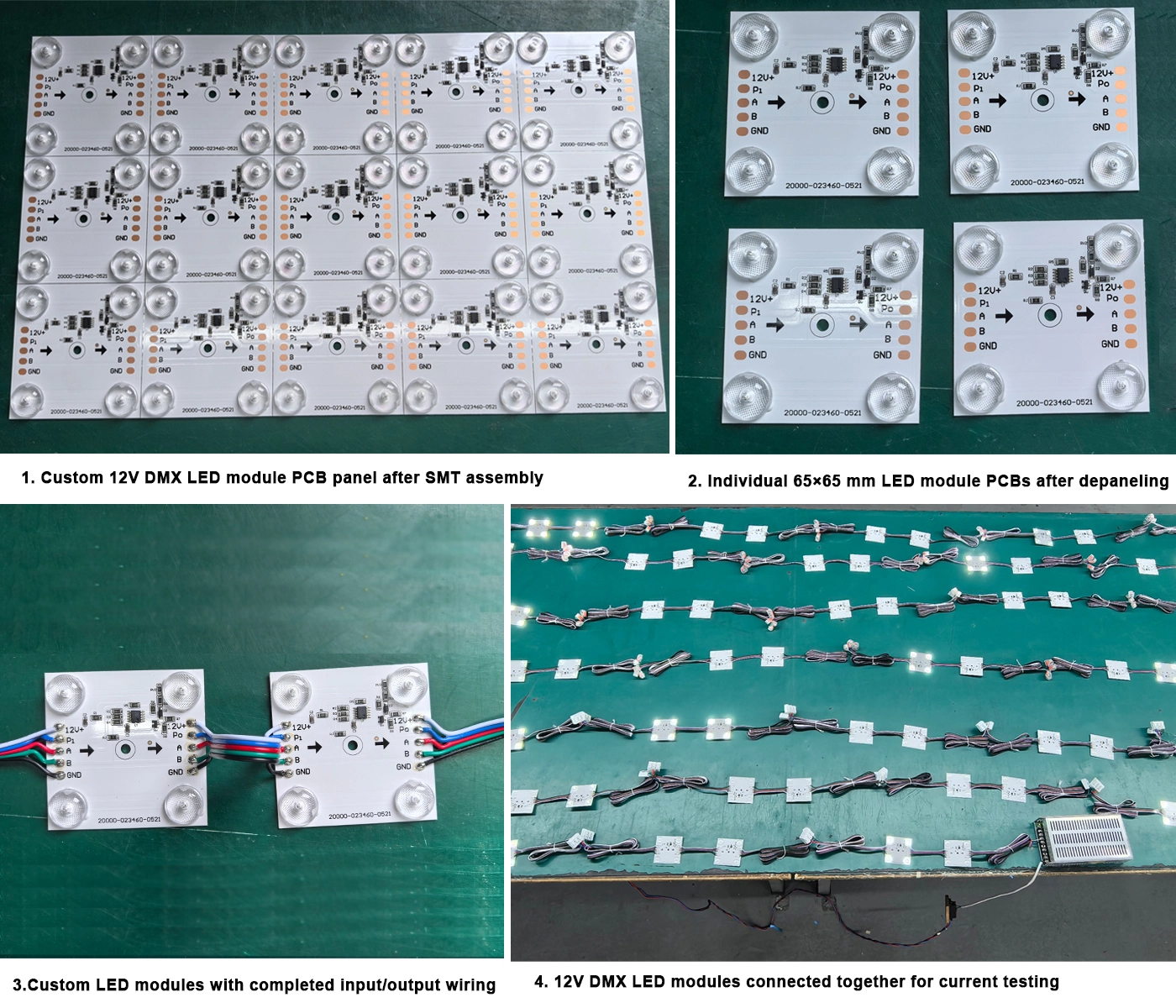
Projecttijdlijn in één oogopslag
| dateren | Mijlpaal |
| 23-Jul | Eerste aanvraag ontvangen |
| 24-25 juli | Specificaties verduidelijkt: plakband, LED-groepering en 12V-ingang bevestigd |
| 26-jul | Factuur uitgegeven |
| 7 -Graaf | Betaling bevestigd |
| 9-Aug | PCB-tekening verzonden en goedgekeurd |
| halfgroot | Op maat gemaakte PCB-materialen besteld en productie gestart |
| Eind aug | afzending |
Vanaf het eerste onderzoek tot verzending duurde het volledige project ongeveer zes weken.
Wat deze case leert kopers die aangepaste LED-modules bestellen
1. Bevestig de ingangsspanning voordat u het ontwerp afrondt
Ingangsspanning beïnvloedt de PCB-schakeling en de componentselectie. Als een project 12V vereist in plaats van het standaard 24V-platform van een fabrikant, moet de spanning worden bevestigd voordat het ontwerp van de PCB wordt afgerond. In dit project hielp het vroeg verifiëren van de 12V-vereiste ervoor te zorgen dat de aangepaste PCB was ontworpen voor het bestaande elektrische systeem van de klant.
2. Definieer de besturingslogica, niet alleen het besturingsprotocol
Het specificeren van "DMX-besturing" alleen bepaalt mogelijk niet volledig hoe een LED-module moet werken. Kopers moeten ook verduidelijken of LED's individueel worden gecontroleerd of gegroepeerd. In dit project had de klant specifiek alle vier de witte LED's op elke module nodig om als één regelbare eenheid te werken, die direct van invloed waren op het PCB- en besturingsontwerp.
3. Gebruik de PCB-tekening als een ontwerpbevestigingspunt
Voor een aangepast PCB-project geeft het bekijken van de tekening beide kanten de mogelijkheid om belangrijke details te verifiëren, zoals bordafmetingen, spanning, LED-lay-out en groepering voordat de productie vooruitgaat. In dit geval werd de PCB-tekening gedeeld met de klant en goedgekeurd voordat de modules in productie gingen.
4. Aangepaste ontwikkeling vereist niet altijd een lange doorlooptijd
Dit project verhuisde van het eerste onderzoek naar de verzending in ongeveer zes weken, inclusief specificatieverduidelijking, PCB-voorbereiding en -goedkeuring, materiaalvoorbereiding, productie en testen. De werkelijke doorlooptijd voor andere aangepaste projecten hangt af van het niveau van aanpassings- en productievereisten.
Projectspecificaties in één oogopslag
De onderstaande tabel vergelijkt het standaard LED-moduleplatform van SigliteLED met de uiteindelijke configuratie die voor dit project is ontwikkeld. Drie verschillen waren bijzonder belangrijk: de klant had DC12V nodig in plaats van het standaard DC24V-platform, een vier-LED-configuratie met een lager vermogen en alle vier de LED's op elke module om samen te werken als één regelbare DMX-eenheid.
Deze vereisten hadden betrekking op het ontwerp van de PCB, de elektrische configuratie en de besturingslogica, waardoor een aangepaste module nodig was in plaats van een standaard kant-en-klaar product.
| specificatie | SignLiteLed-standaard | Dit aangepaste project |
| Producttype | Standaard RGBW / RGBCCT LED-module | Aangepaste eenkleurige DMX LED-module |
| Ingangsspanning | DC24V | DC12V |
| LED's per module | 6 leds | 4 LED's |
| lichtkleur | RGBW / RGBCCT | Wit |
| CCT / CRI | Afhankelijk van de configuratie | 6500K / RA80 |
| Stroom | 4-6W | 1,5 W per module |
| PCB-maat | Standaard platform | 65 × 65 mm |
| Controleprotocol | DMX512 | DMX512 |
| Besturingslogica | Kleurregeling met meerdere kanalen | Alle 4 LED's samen als één eenheid aangestuurd |
| Zelfklevende rug | niet een | niet een |
| Project doorlooptijd | — | ongeveer 6 weken van onderzoek tot verzending |
De uiteindelijke projectconfiguratie was gebaseerd op de bevestigde vereisten van de klant en de goedgekeurde PCB-tekening, wat een duidelijke referentie voor productie en eindinspectie biedt.

FAQ
Conclusie
'Aangepast' is niet alleen een productcategorie - het is een proces. Voor dit 12v DMX LED-moduleproject waren de belangrijkste stappen het begrijpen van de elektrische en besturingsvereisten van de klant, het bevestigen van de specificaties, het ontwikkelen van de aangepaste PCB, het beoordelen van de PCB-tekening en het verplaatsen van het goedgekeurde ontwerp in productie.
Het project laat ook zien waarom details zoals ingangsspanning, LED-groepering, PCB-afmetingen en besturingslogica vroeg in een aangepast LED-moduleproject moeten worden verduidelijkt. In dit geval combineerde de uiteindelijke oplossing een 12V DC-ingang, vier eenkleurige witte LED's, DMX512-besturing en een 65 × 65 mm PCB, waarbij het project in ongeveer zes weken van het eerste onderzoek naar de verzending ging.
SignLiteled biedt op maat gemaakte LED-moduleoplossingen voor OEM- en commerciële verlichtingsprojecten, waaronder aangepaste PCB-lay-outs, spanningsconfiguraties, LED-specificaties en besturingsvereisten.
Als u een op maat gemaakte LED-moduleproject ontwikkelt, Neem contact op met SignLited Met uw doelspanning, LED-configuratie, afmetingen, regelmethode, hoeveelheid en toepassingsvereisten. Ons team kan de specificaties bekijken en een passende oplossing voor uw project bespreken.
Auther: Steven Quan
Verkoopmanager
E-mail: sales@signlite.com.cn
Mobiel / WhatsApp: +86 15814478470

Gerelateerde berichten