Deutsch
  English
  简体中文
简体中文  Español
  Français
  Italiano
  日本語
日本語  한국어
한국어  Polski
  Português
  Русский
  Türkçe
  Nederlands
  Tiếng Việt
  ไทย
ไทย 
Direkte Antwort: Bei der Konstruktion von Linearbeleuchtungssystemen sind Beschaffungsfachleute häufig erforderlich, um die Leistungsunterschiede zwischen Oberflächenmontagegeräten (SMD) und Chip-on-Board-Technologien (COB) zu bewerten. Signlited, fungiert als etablierter LED-Streifen-Beleuchtung Liefer, bietet umfangreiche Produktfamilien für beide Architekturen. Um jedoch eine genaue Kaufentscheidung zu treffen, muss die vereinfachte Annahme überschritten werden, dass COB von Natur aus heller ist oder dass SMD allgemein effizienter ist. Die ultimative Helligkeit eines fertigen LED-Streifens wird durch eine komplexe Wechselwirkung von Leuchtkraft, LED-Verpackung, Leiterplattendesign, optischer Konstruktion, Wärmemanagement und strengen Testbedingungen bestimmt. Während beide Technologien deutliche Vorteile bieten, konzentriert sich der Kern der COB-Streifenbeleuchtung stark auf die Fähigkeit, eine kontinuierliche, punktfreie optische Gleichmäßigkeit zu liefern.
SMD und COB beginnen bei verschiedenen LED-Integrationsstrukturen
SMD und COB unterscheiden sich zunächst darin, wie die LEDs auf der Leiterplatte (PCB) integriert werden. SMD-Streifen verwenden diskrete LED-Packungen auf der Oberfläche, während COB mehrere Chips direkt auf der Leiterplatte montiert und diese zu einer durchgehenden Leuchtfläche abdeckt. Bei SMD-Produkten beeinflussen das Paketformat und die LED-Dichte den sichtbaren Punktabstand, die Leistung und die Ausgabe. Bei den COB-Produkten schafft die dichte Direkt-Chip-Struktur die Basis für eine glattere Lichtlinie.
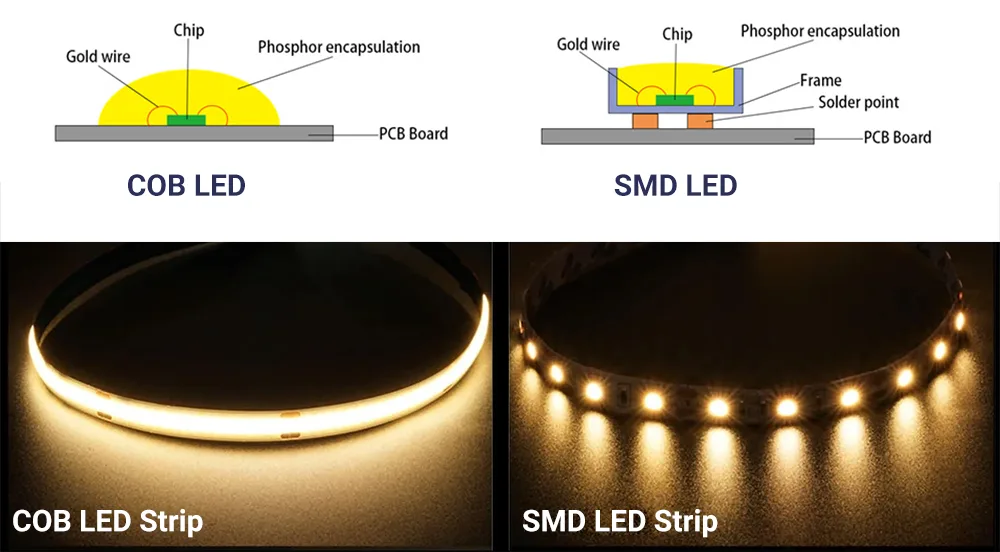
Im Gegensatz dazu nutzen COB-LED-Streifen die direkte Chip-on-Board-Montage, um LED-Chips mit hoher Dichte eng zusammen anzuordnen. Eine kontinuierliche Phosphorbeschichtung oder eine spezielle lichtemittierende Oberfläche wird dann über das Array aufgebracht, um das Licht der einzelnen Chips nahtlos zu mischen. Diese kritische Fertigungstechnik übergeht die lineare Lichtleistung einer Reihe diskreter, sichtbarer Punkte in ein glattes, durchgehendes Beleuchtungsband. Da die Chips direkt ohne sperrige Einzelverpackungen montiert werden, schafft die COB-Technologie das wesentliche strukturelle Fundament, das erforderlich ist, um in deutlich schmalere Leiterplatten und bemerkenswert flache Aluminiumprofile zu passen, und erweitert die Installationsmöglichkeiten für kompakte architektonische Details.
Helligkeit hat keinen Gewinner der Universaltechnologie
Helligkeit kann nicht allein durch die SMD- oder COB-Technologie bewertet werden. Ein fairer Vergleich sollte unter vergleichbaren CRI-, CCT-, Spannungs-, Prüflängen- und Temperaturbedingungen fertige Lumen pro Meter und Lumen pro Watt (lm / w) verwenden. Watt beschreiben elektrische Eingangsleistung, nicht Lichtleistung, Chipqualität, Antriebsstrom, Leiterplattendesign, Optik und thermische Bedingungen beeinflussen das Messergebnis.
Folglich garantiert die hochdichte Chipanordnung eines COB-Streifens nicht automatisch eine höhere Lumen-pro-Meter-Ausgabe, so wie die diskrete Verpackung eines SMD-Streifens nicht von Natur aus zu einer überlegenen Leuchtkraft führt. Beschaffungsteams und Lichtingenieure müssen die unter identischen, kontrollierten Testbedingungen generierten Lichtstrom- und Wirksamkeitsdaten anfordern. Nur durch die Überprüfung dieser standardisierten Leistungskennzahlen können Projektmanager genau bestimmen, welche Strukturtechnologie die am besten geeigneten Beleuchtungsstufen für ihre spezifischen architektonischen oder kommerziellen Ziele liefert, wodurch das Risiko ausgeschlossen wird, ein Produkt auf der Grundlage der Marketingterminologie und nicht der nachgewiesenen optischen Leistung zu spezifizieren.
COB priorisiert gleichmäßiges Licht, wenn der Streifen optisch freigelegt bleibt
Der deutlichste Vorteil von COB ist die optische Gleichmäßigkeit, bei der die Lichtlinie im Nahbereich sichtbar bleibt. Dichte Direkt-Chip-Montage und eine kontinuierliche Phosphorschicht fügen einzelne Punkte in eine glatte Leuchtfläche ein, die für Beleuchtung unterhalb des Kabinetts, Regale, Vitrinen und flache Architekturprofile geeignet ist. Dieser Vorteil sollte getrennt von der Spitzenhelligkeit bewertet werden.
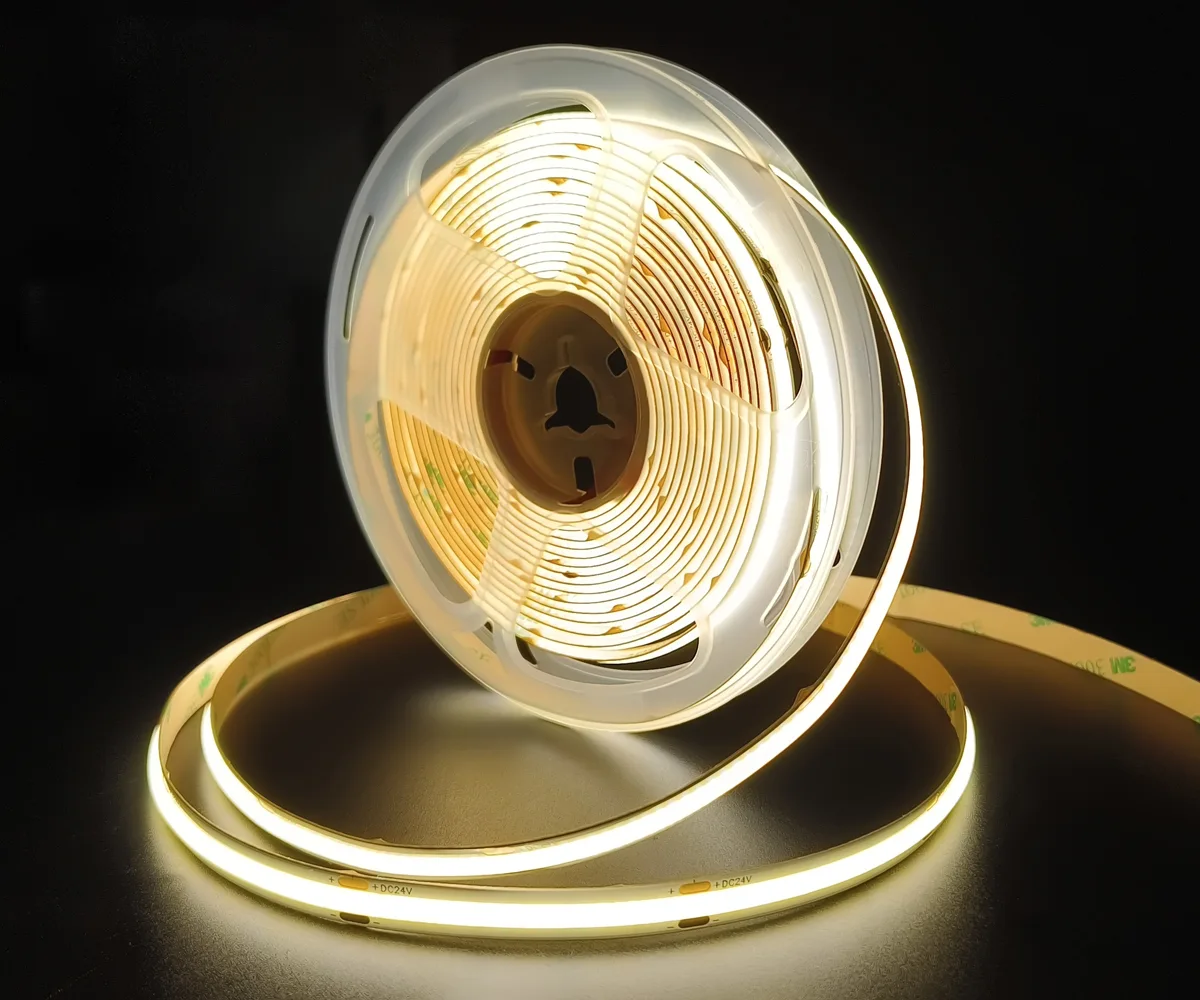
Um die restriktivsten Installationsumgebungen zu adressieren, können spezialisierte ultradünne COB-Designs hochkompakte 5-mm-Platinenlayouts verwenden. Die direkte Chipmontagetechnik und der deutlich reduzierte optische Fussabdruck ermöglichen eine nahtlose Integration in schmale Nuten, schlanke Aluminiumprofile und dicht verdeckte Architekturkanäle. Konstrukteure müssen sich jedoch bewusst bleiben, dass die Verwendung einer schmaleren Leiterplatte von Natur aus den verfügbaren elektrischen Routingraum verringert und die Wärmeverlustspannen verringert. Daher erfordert die Bereitstellung dieser kompakten COB-Lösungen eine sorgfältige Paarung mit geeigneten Netzteilen und robusten Wärmemanagementstrategien, um eine langfristige Stabilität und eine nachhaltige punktfreie Leistung zu gewährleisten.
Anwendungspassung hängt ab Nulln Paketbreite, Geometrie und Steuerungsanforderungen
Die Anpassung der Anwendung hängt von der Sichtbarkeit, der Komplexität der Steuerung, der Geometrie und der endgültigen Spezifikation ab. SMD-Familien decken mehrere Pakete und monochrome, abstimmbare CCT-, RGB- und RGBW-Konfigurationen ab, während COB besonders nützlich ist, wenn eine kontinuierliche Lichtlinie die Hauptanforderung für die visuelle Anforderung ist. Keine der Architektur sollte allein aus dem Technologie-Label ausgewählt werden.
Umgekehrt wird die COB-Technologie am effektivsten in Anwendungen eingesetzt, bei denen ein kontinuierliches lineares Erscheinungsbild das Hauptziel ist, wie z. B. die Beleuchtung von Bucht, die Beleuchtung unter dem Schrank und die Premium-Einzelhandelsdisplays. Wenn ein Projekt erweitert wird, um einstellbares Weiß, RGB-Farbwechsel oder individuell adressierbare Steuerung zu erfordern, können COB-Produkte diese Funktionen unterstützen, müssen jedoch anhand ihrer spezifischen Farbarchitektur und kompatiblen Steuermethoden sorgfältig ausgewählt werden. Projektingenieure müssen vermeiden, „COB“ als eine einheitliche, einheitliche Funktionskategorie zu behandeln. Die korrekte Arbeitsteilung zwischen SMD und COB ergibt sich direkt aus den strukturellen Einschränkungen und Kontrollanforderungen der Anlage, was beweist, dass die tatsächliche Anwendungsumgebung den technischen Vorteil weit mehr als das Technologie-Label bestimmt.
Zertifizierte Lieferantensprache erfordert produktspezifische Compliance-Bereich
Bei der Auswahl eines Fertigungspartners muss die Bezeichnung eines zertifizierten Lieferanten durch eine klare Korrespondenz zwischen spezifischen Zertifikaten und den genau beschafften Produkten belegt werden. Die überprüfbaren Compliance-Dokumentation, die diese Streifenprodukte unterstützt, umfasst wichtige EMV- und CE-ROHS-Zertifizierungen, die speziell für LED-Streifenleuchten bestimmt sind, sowie spezielle photobiologische Sicherheitskonformität für bestimmte COB-Konfigurationen. Die explizite Auflistung von EMV- und CE-ROHS-Zertifikaten für LED-Streifenleuchten liefert die notwendige elektromagnetische Verträglichkeit und regulatorische Grundlage für den kommerziellen Einsatz. Darüber hinaus bietet die spezifische IEC 62471-Zertifizierung, die direkt an COB-LED-Streifen gebunden ist, eine unabhängige Überprüfung der photobiologischen Sicherheit und liefert gezielte Beweise für Beleuchtungsanwendungen mit hoher Dichte.
Es ist ein kritischer Beschaffungsfehler anzunehmen, dass eine einzige Fabrikzertifizierung jedes Produkt im Katalog überdeckt. Während verschiedene Zertifizierungen für Schilder, Panel-Leuchten oder Hochregal-Leuchten im Freien gelten können, können diese spezifischen Bereiche nicht generalisiert werden, um die gesamte Palette der SMD- und COB-Streifenleuchten zu validieren. Die wahre Glaubwürdigkeit eines Fertigungslieferanten beruht eher auf der Klarheit und Spezifität seiner Compliance-Dokumentation als in einer überhöhten Anzahl nicht verwandter Zertifizierungskronyme. Unabhängig davon, ob eine SMD- oder COB-Lösung vorliegt, müssen die Einkaufsteams während der Beschaffungsphase die genaue SKU genau anhand der angestrebten Markt-Compliance-Dateien überprüfen, um die regulatorische Ausrichtung zu gewährleisten.
Ein Spezifikations-Erster-Vergleich gibt B2B-Käufern eine vertretbare SMD- gegen COB-Entscheidung
Für B2B-Beschaffungsfachleute muss die Entscheidung zwischen SMD und COB mit der Konstruktion einer strengen Spezifikationsmatrix beginnen, die die Ziellumen pro Meter, die Wirksamkeit, CRI, Betriebsspannung, Leiterplattenbreite, IP-Nennleistung, Farbsteuerung und Sichtbarkeit der Installation definiert. SignliteLED Erleichtert diesen Spezifikations-First-Ansatz, indem es der Produktarchitektur ermöglicht, diese genauen Bedingungen zu erfüllen, und verhindert, dass Käufer sich vorzeitig ohne sachliche Rechtfertigung in ein Technologielager einlassen. Da das umfassende LED-Streifen-Produktuniversum sowohl SMD- als auch COB-Technologien umfasst, können Projektmanager objektiv verschiedene strukturelle Lösungen in einer einzigen, einheitlichen Lieferkette vergleichen. Dies ermöglicht die gleichzeitige Bestätigung kompatibler Regler, Netzteile, Steckverbinder und Aluminiumprofile und eliminiert so die Parameterunterschiede, die häufig über den Lieferantenvergleich plagen.
Die Fertigungsinfrastruktur bietet Beleuchtungshändlern, Projektierungsfirmen und Einkäufern von Anlagen und unterstützt eine umfassende Anpassung der OEM- und ODM-Engineering-Ingenieure. Folglich kann die Probenvalidierung unter standardisierten Testbedingungen durchgeführt werden, was einen direkten, gerechten Vergleich der tatsächlichen Helligkeit, optischen Gleichmäßigkeit, der Farbwiedergabe und der Installationsleistung zwischen SMD- und COB-Varianten ermöglicht. Sobald die optimalen Spezifikationen durch Tests bestätigt sind, geht das ausgewählte Design nahtlos in die Massenproduktion und die endgültige Projektintegration über. Der endgültige Wert der Partnerschaft mit einem etablierten Lieferanten liegt in der Fähigkeit, SMD- und COB-Technologien mithilfe einheitlicher technischer Spezifikationen zu bewerten und komplexe Helligkeits- und Einheitlichkeitsvariablen in vertretbare, wiederholbare Beschaffungsentscheidungen umzuwandeln.
Häufig gestellte Fragen
Um detaillierte Produktspezifikationen, Anpassungsmöglichkeiten und technische Unterstützung für Ihre nächste Installation zu erkunden, besuchen Sie die offizielle Website unter https://www.signliteled.com/.
Verwandte Artikel