标牌和 LED 灯带工厂,始于 2011 年

SMD VS COB 条:亮度、均匀光线以及来自认证的LED灯带照明供应商SignliteLED的应用

直接回答: When engineering linear lighting systems, procurement professionals are frequently required to evaluate the performance differences between Surface-Mounted Device (SMD) and Chip-on-Board (COB) technologies. SignliteLED, functioning as an established LED Strip Lighting Supplier, provides extensive product families across both architectures. However, making an accurate purchasing decision requires moving past the simplified assumption that COB is inherently brighter or that SMD is universally more efficient. The ultimate brightness of a finished LED strip is determined by a complex interaction of luminous efficacy, LED packaging, printed circuit board design, optical construction, thermal management, and strict testing conditions. While both technologies offer distinct advantages, the core, observable benefit of COB strip lighting is heavily concentrated on its ability to deliver continuous, dot-free optical uniformity.

SMD And COB Start from Different LED Integration Structures

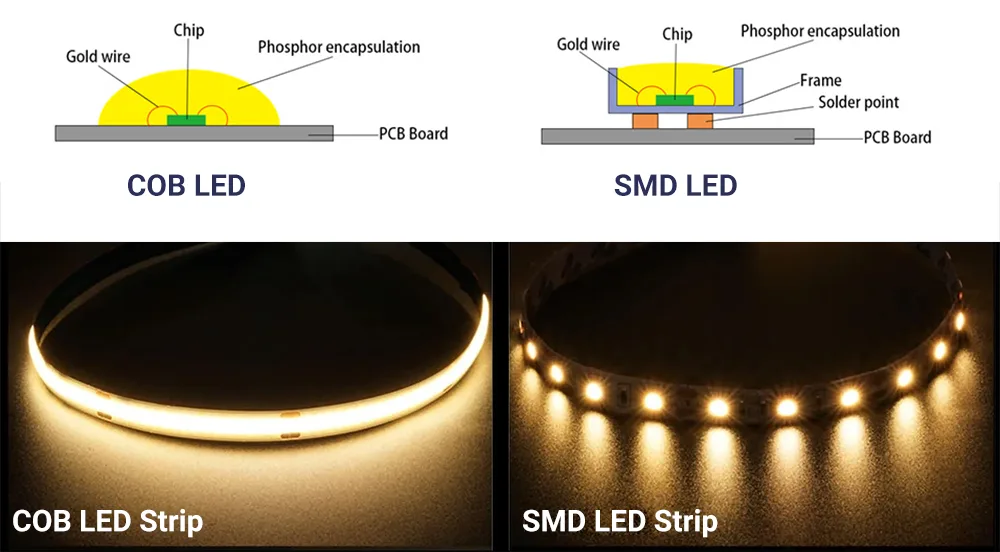
SMD and COB differ first in how the LEDs are integrated onto the printed circuit board (PCB). SMD strips use discrete surface-mounted LED packages, while COB mounts multiple chips directly on the PCB and covers them to form a continuous luminous surface. In SMD products, package format and LED density influence visible dot spacing, power, and output. In COB products, the dense direct-chip structure creates the basis for a smoother light line.

贴领导-对棒-LED

In contrast, COB LED strips leverage direct chip-on-board mounting to arrange high-density LED chips closely together. A continuous phosphor coating or specialized light-emitting surface is then applied over the array to seamlessly blend the light from the individual chips. This critical manufacturing technique transitions the linear light output from a series of discrete, visible points into a smooth, continuous band of illumination. Because the chips are mounted directly without bulky individual packaging, COB technology establishes the essential structural foundation required to fit into significantly narrower PCBs and remarkably shallow aluminum profiles, expanding the installation possibilities for compact architectural details.

Brightness Has No Universal Technology Winner

Brightness cannot be ranked by SMD or COB technology alone. A fair comparison should use finished-strip lumens per meter and lumens per watt (lm/W) under comparable CRI, CCT, voltage, test length, and temperature conditions. Watts describe electrical input, not light output; chip quality, drive current, PCB design, optics, and thermal conditions all affect the measured result.

Consequently, the high-density chip arrangement of a COB strip does not automatically guarantee a higher lumen-per-meter output, just as the discrete packaging of an SMD strip does not inherently translate to superior luminous efficacy. Procurement teams and lighting engineers must demand finished-strip luminous flux and efficacy data generated under identical, controlled testing conditions. Only by reviewing these standardized performance metrics can project managers accurately determine which structural technology delivers the most appropriate illumination levels for their specific architectural or commercial objectives, eliminating the risk of specifying a product based on marketing terminology rather than proven optical performance.

COB Prioritizes Uniform Light Where the Strip Remains Visually Exposed

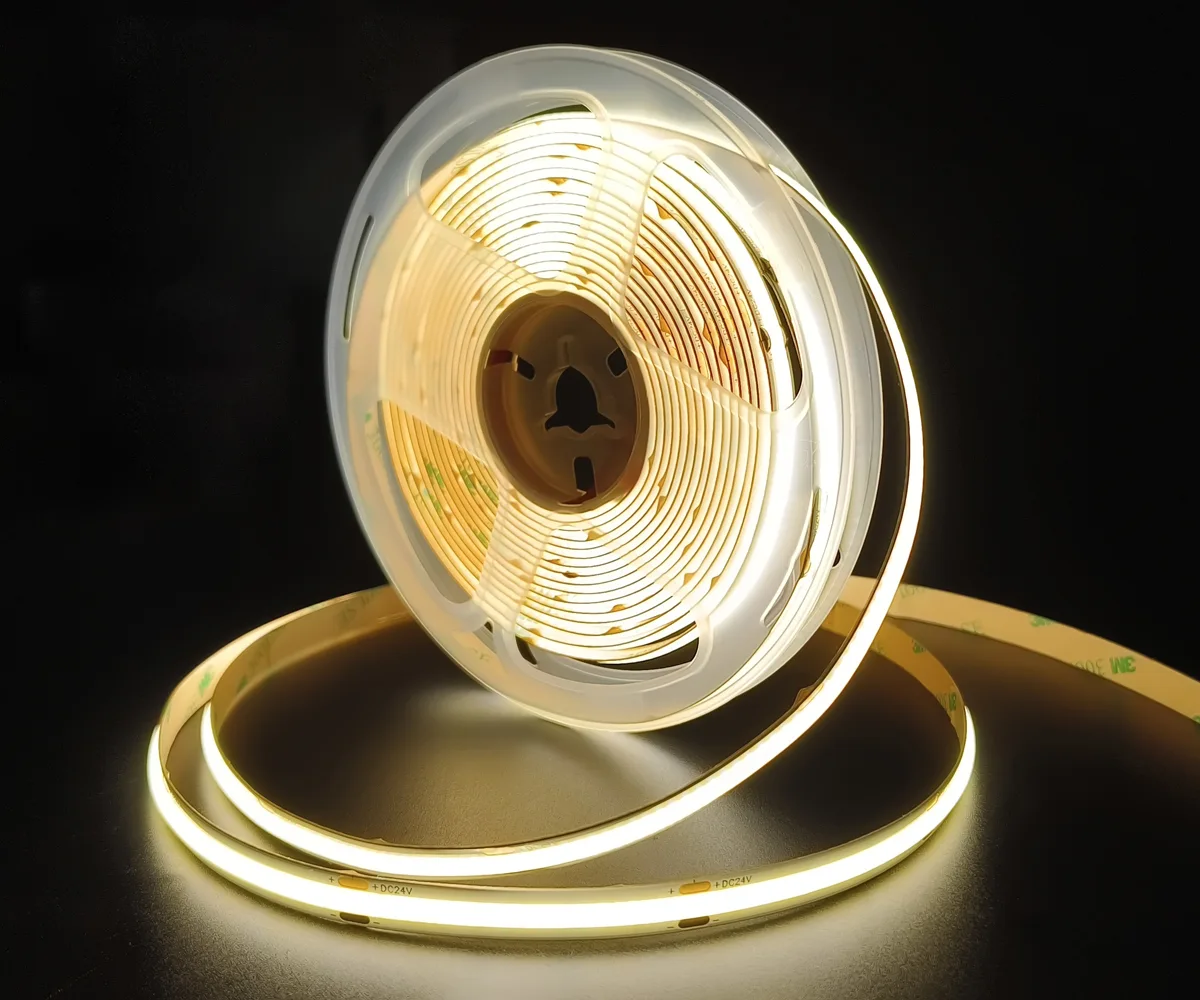
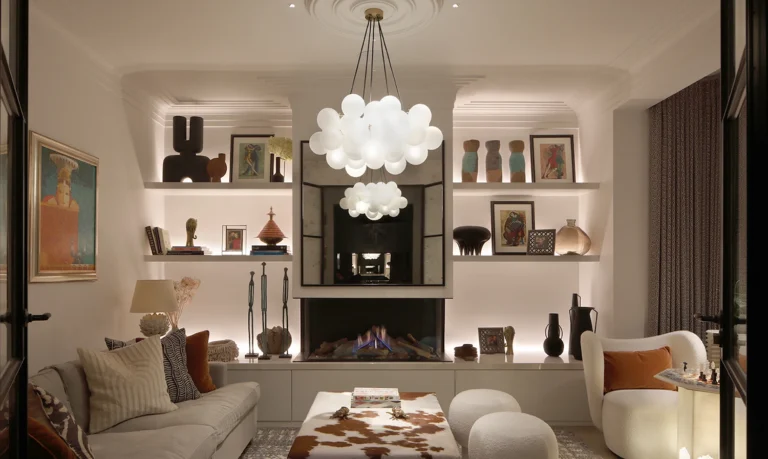
COB’s clearest advantage is optical uniformity where the light line remains visible at close range. Dense direct-chip mounting and a continuous phosphor layer blend individual points into a smooth luminous surface, which suits under-cabinet lighting, retail shelving, display cases, and shallow architectural profiles. This advantage should be evaluated separately from peak brightness.

Signliteled - 24VDC单色COB LED灯带_01

To address the most restrictive installation environments, specialized Ultra Thin COB designs can utilize highly compact 5mm PCB layouts. The direct chip mounting technique and the significantly reduced optical footprint permit these ultra-thin strips to be seamlessly integrated into narrow grooves, slim aluminum profiles, and tightly concealed architectural channels. However, designers must remain aware that utilizing a narrower PCB inherently reduces the available electrical routing space and decreases the thermal dissipation margins. Therefore, deploying these compact COB solutions necessitates careful pairing with appropriate power supplies and robust thermal management strategies to ensure long-term stability and sustained dot-free performance.

Application Fit Depends n Package Breadth, Geometry and Control Requirements

Application fit depends on visibility, control complexity, geometry, and the final specification. SMD families cover multiple packages and monochrome, tunable CCT, RGB, and RGBW configurations, while COB is particularly useful where a continuous light line is the main visual requirement. Neither architecture should be chosen from the technology label alone.

Conversely, COB technology is most effectively deployed in applications where a continuous linear appearance is the primary design objective, such as cove lighting, under-cabinet illumination, and premium retail displays. If a project expands to require tunable white, RGB color changing, or individually addressable control, COB products can support these functions, but they must be carefully selected based on their specific color architecture and compatible control methodologies. Project engineers must avoid treating “COB” as a singular, uniform functional category. The correct division of labor between SMD and COB arises directly from the structural constraints and control requirements of the installation, proving that the actual application environment dictates the engineering advantage far more than the technology label.

Certified Supplier Language Requires Product-Specific Compliance Scope

When selecting a manufacturing partner, the designation of a certified supplier must be substantiated by a clear correspondence between specific certificates and the exact products being procured. The verifiable compliance documentation supporting these strip products includes essential EMC and CE-RoHS certifications specifically designated for LED strip lights, alongside specialized photobiological safety compliance for particular COB configurations. The explicit listing of EMC and CE-RoHS certificates for LED strip lights provides the necessary electromagnetic compatibility and regulatory foundation required for commercial deployment. Furthermore, specific IEC 62471 certification tied directly to COB LED strips offers independent verification regarding photobiological safety, delivering targeted evidence for high-density lighting applications.

It is a critical procurement error to assume that a single factory certification blankets every product in the catalog. While various certifications may apply to sign tubes, panel lights, or outdoor high bay fixtures, those specific scopes cannot be generalized to validate the entire range of SMD and COB strip lights. The true credibility of a manufacturing supplier is rooted in the clarity and specificity of its compliance documentation, rather than an inflated count of unrelated certification acronyms. Whether specifying an SMD or a COB solution, purchasing teams must rigorously verify the exact SKU against the targeted market compliance files during the procurement phase to guarantee regulatory alignment.

A Specification-First Comparison Gives B2B Buyers a Defensible SMD Vs COB Decision

For B2B procurement professionals, the decision between SMD and COB must begin with the construction of a rigorous specification matrix that defines the target lumens per meter, efficacy, CRI, operating voltage, PCB width, IP rating, color control, and installation visibility. 信号灯 facilitates this specification-first approach by allowing the product architecture to fulfill these precise conditions, preventing buyers from prematurely committing to a technology camp without factual justification. Because the comprehensive LED strip product universe encompasses both SMD and COB technologies, project managers can objectively compare different structural solutions within a single, unified supply chain. This enables the simultaneous confirmation of compatible controllers, power supplies, connectors, and aluminum profiles, thereby eliminating the parameter discrepancies that often plague cross-supplier comparisons.

Catering to lighting distributors, project engineering firms, and facility buyers, the manufacturing infrastructure supports comprehensive OEM and ODM engineering customization. Consequently, sample validation can be executed under standardized testing conditions, allowing for a direct, equitable comparison of actual brightness, optical uniformity, color rendering, and installation performance between SMD and COB variants. Once the optimal specifications are confirmed through testing, the selected design seamlessly transitions into bulk production and final project integration. The definitive value of partnering with an established supplier lies in the ability to evaluate SMD and COB technologies using unified engineering specifications, transforming complex brightness and uniformity variables into defensible, repeatable procurement decisions.

常见问题

要了解下一次安装的详细产品规格、定制功能和技术项目支持,请访问官方网站: https://www.signliteled.com/.

PCB和PCBA有什么区别(更新2026)PCB和PCBA有什么区别(更新2026)
PCB和PCBA有什么区别? (更新2026)
在电子制造业中,几乎每天都在提及“PCB”和“PCBA”。 然而,这两个概念往往会引起混乱,即使在没有电子背景的硬件初创公司或采购团队中。 有些人认为它们只是同义词,其他人错误地认为PCBA只是“PCB的升级版”,一些采购人员......
声学声学
声光如何改善录音室的氛围?
声光通过同时满足两个关键要求,改善录音室的氛围:可控的声音行为和舒适的功能照明。 通过将吸音材料与精心设计的照明系统相结合,声光有助于减少不必要的混响,提高语音和音乐清晰度,并营造出视觉上的平静……
12V与24V LED带灯 – 哪个更好
在现代照明设计中,LED灯条(也称为LED带灯或LED带灯)已成为装饰和功能照明的首选。 然而,在他们简洁的线路和灵活的形式背后,是一个关键的决定,它通常决定了项目的成功:在 12V 之间进行选择...
LED 货架照明LED 货架照明
如何为你的空间选择完美的 LED 支架照明
正在寻找一种现代、节能的方式来点亮您的货架?LED 书架灯就是完美的解决方案!这些灯提供多种定制选项,安装简便,不仅能照亮您的空间,还有助于降低能源成本。 让我们来探讨一下 LED 置物架照明如何改变您的设置和...
如何定制 LED 灯条如何定制 LED 灯条
如何定制 LED 灯条
LED 灯条是一种现代的、更复杂的灯条形式,有多种类型和例外情况。可定制的 LED 灯条是您创建品牌和扩大品牌知名度的绝佳方式。 如果您正在寻找一种可定制的 LED 灯条,那您就需要了解它了。
霓虹灯的起源霓虹灯的起源
LED 柔性霓虹灯条的材料分析
霓虹灯 "的起源 诞生于 1898 年的霓虹灯是将稀有气体氖气(霓虹灯)注入真空玻璃管中,然后将密封在玻璃管两端的金属电极连接到高压电源上,在高压电源的作用下...

分享:

Facebook
叽叽喳喳
Pinterest
LinkedIn
订阅评论
提醒
来宾
0 评论
最老的
最新 最多投票
内联反馈
查看所有评论

搜索 SignliteLED 博客

类别

滚动至顶部

立即获取报价