Nederlands
  English
  简体中文
简体中文  Deutsch
  Español
  Français
  Italiano
  日本語
日本語  한국어
한국어  Polski
  Português
  Русский
  Türkçe
  Tiếng Việt
  ไทย
ไทย 
Direct antwoord: Bij het engineeren van lineaire verlichtingssystemen zijn inkoopprofessionals vaak nodig om de prestatieverschillen tussen opbouwdevice (SMD) en chip-on-board (COB)-technologieën te evalueren. signlitetled, functionerend als een gevestigde Leverancier van LED-strip, biedt uitgebreide productfamilies in beide architecturen. Het nemen van een nauwkeurige aankoopbeslissing vereist echter dat de vereenvoudigde aanname dat COB inherent helderder is, moet worden overschreden of dat SMD universeel efficiënter is. De uiteindelijke helderheid van een afgewerkte LED-strip wordt bepaald door een complexe interactie van lichtgevende werkzaamheid, LED-verpakkingen, ontwerp van printplaten, optische constructie, thermisch beheer en strikte testomstandigheden. Hoewel beide technologieën duidelijke voordelen bieden, is het waarneembare voordeel van COB-stripverlichting sterk geconcentreerd op het vermogen om continue, puntvrije optische uniformiteit te leveren.
SMD en COB starten vanuit verschillende LED-integratiestructuren
SMD en COB verschillen eerst in de manier waarop de LED's worden geïntegreerd op de printplaat (PCB). SMD-strips gebruiken discrete opbouw-LED-pakketten, terwijl COB meerdere chips rechtstreeks op de PCB monteert en deze bedekt om een continu lichtgevend oppervlak te vormen. In SMD-producten beïnvloeden pakketformaat en LED-dichtheid de zichtbare puntafstand, stroom en output. In COB-producten vormt de dichte direct-chipstructuur de basis voor een gladdere lichtlijn.
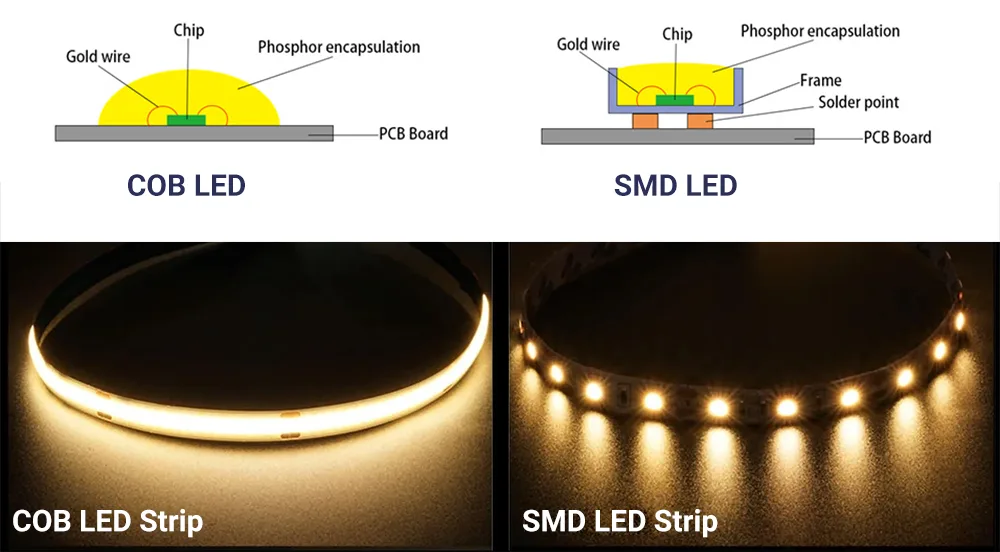
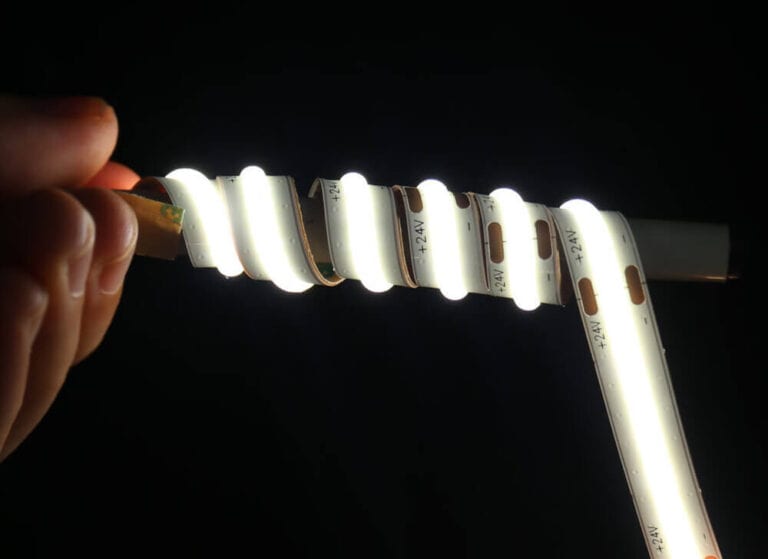
Daarentegen maken COB-LED-strips gebruik van directe chip-on-board montage om LED-chips met hoge dichtheid dicht bij elkaar te rangschikken. Vervolgens wordt een continue fosforbekleding of een gespecialiseerd lichtgevend oppervlak over de array aangebracht om het licht van de afzonderlijke chips naadloos te mengen. Deze kritische productietechniek transformeert de lineaire lichtopbrengst van een reeks discrete, zichtbare punten in een gladde, continue band van verlichting. Omdat de chips direct worden gemonteerd zonder omvangrijke individuele verpakkingen, stelt COB-technologie de essentiële structurele basis die nodig is om in aanzienlijk smallere PCB's en opmerkelijk ondiepe aluminiumprofielen te passen, waardoor de installatiemogelijkheden voor compacte architecturale details worden uitgebreid.
Brightness heeft geen winnaar van de Universal Techn
Helderheid kan niet alleen worden gerangschikt door SMD of COB-technologie. Een eerlijke vergelijking moet lumen met afgewerkte strook per meter en lumen per watt (LM/W) gebruiken onder vergelijkbare CRI-, CCT-, spannings-, testlengte- en temperatuuromstandigheden. Watts beschrijven elektrische ingang, geen lichtopbrengst; chipkwaliteit, aandrijfstroom, PCB-ontwerp, optica en thermische omstandigheden hebben allemaal invloed op het gemeten resultaat.
Bijgevolg garandeert de chipopstelling met hoge dichtheid van een COB-strip niet automatisch een hogere lumen-per-meter-output, net zoals de discrete verpakking van een SMD-strip zich niet inherent vertaalt in superieure lichtgevende werkzaamheid. Inkoopteams en lichtingenieurs moeten de afgewerkte strip lichtstroom en werkzaamheidsgegevens eisen die zijn gegenereerd onder identieke, gecontroleerde testomstandigheden. Alleen door deze gestandaardiseerde prestatiestatistieken te bekijken, kunnen projectmanagers nauwkeurig bepalen welke structurele technologie de meest geschikte verlichtingsniveaus levert voor hun specifieke architecturale of commerciële doelstellingen, waardoor het risico van het specificeren van een product op basis van marketingterminologie in plaats van bewezen optische prestaties wordt geëlimineerd.
COB geeft prioriteit aan uniform licht waar de strip visueel zichtbaar blijft
Het duidelijkste voordeel van COB is optische uniformiteit waarbij de lichtlijn van dichtbij zichtbaar blijft. Dichte direct-chipmontage en een continue fosforlaag vermengen individuele punten tot een glad lichtoppervlak, dat past bij verlichting onder de cabine, winkelrekken, vitrines en ondiepe architecturale profielen. Dit voordeel moet afzonderlijk van de piekhelderheid worden geëvalueerd.
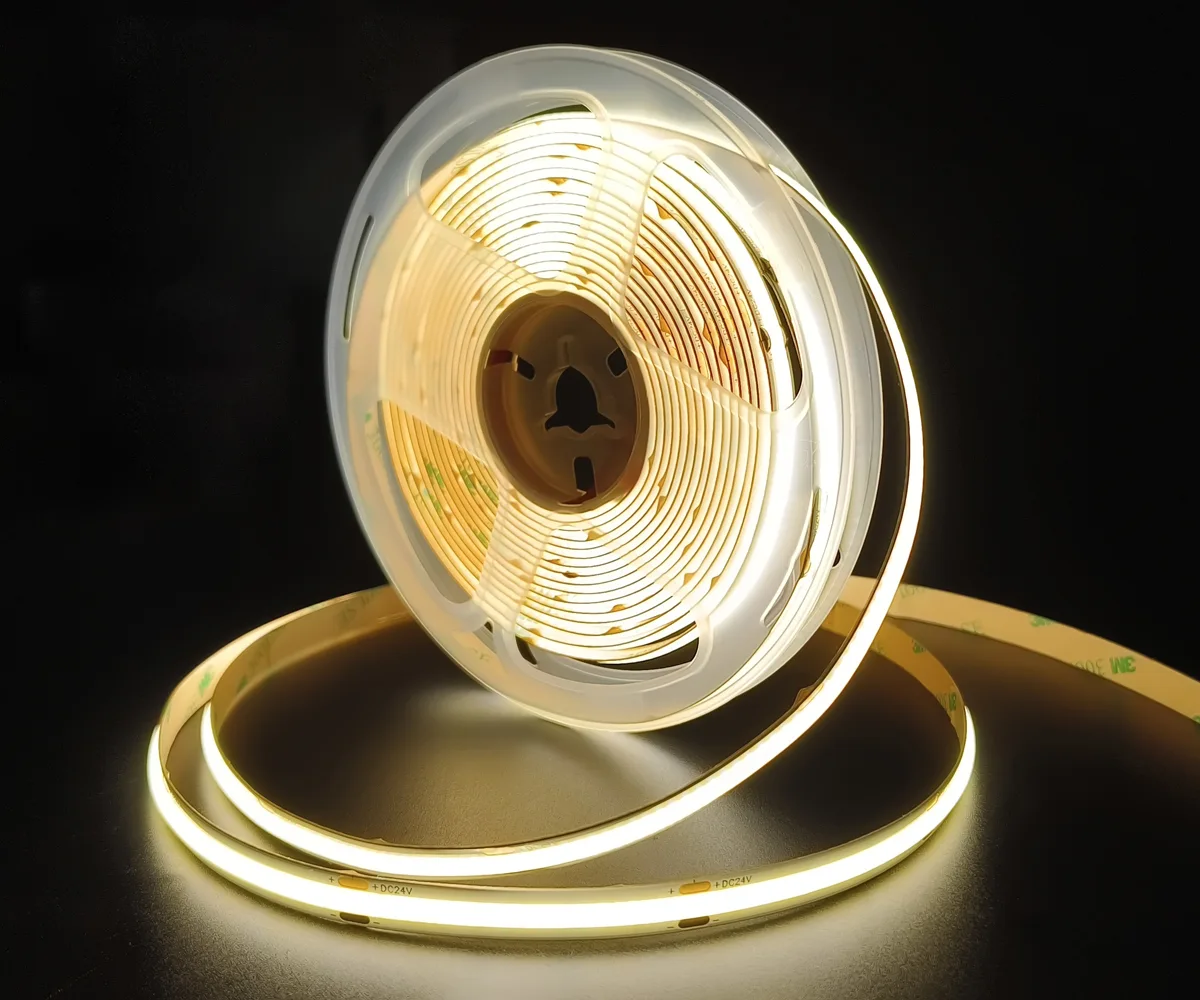
Om de meest beperkende installatieomgevingen aan te pakken, kunnen gespecialiseerde ultradunne COB-ontwerpen zeer compacte 5 mm PCB-lay-outs gebruiken. De directe chipmontagetechniek en de aanzienlijk verminderde optische voetafdruk maken het mogelijk dat deze ultradunne strips naadloos worden geïntegreerd in smalle groeven, slanke aluminium profielen en strak verborgen architecturale kanalen. Ontwerpers moeten zich er echter van bewust zijn dat het gebruik van een smallere PCB inherent de beschikbare elektrische routeringsruimte vermindert en de thermische dissipatiemarges verlaagt. Daarom vereist het inzetten van deze compacte COB-oplossingen een zorgvuldige koppeling met geschikte voedingen en robuuste thermische beheerstrategieën om stabiliteit op lange termijn en aanhoudende puntvrije prestaties te garanderen.
Aanpassing hangt af van bosn Vereisten voor de breedte, geometrie en regelaars van het pakket
De pasvorm van de applicatie hangt af van de zichtbaarheid, de complexiteit van de besturingselementen, de geometrie en de uiteindelijke specificatie. SMD-families bestrijken meerdere pakketten en monochrome, afstembare CCT-, RGB- en RGBW-configuraties, terwijl COB vooral handig is wanneer een continue lichtlijn de belangrijkste visuele vereiste is. Geen van beide architectuur mag alleen worden gekozen uit het technologielabel.
Omgekeerd wordt COB-technologie het meest effectief ingezet in toepassingen waar een continu lineair uiterlijk het primaire ontwerpdoel is, zoals cove-verlichting, verlichting onder de cabine en premium retaildisplays. Als een project zich uitbreidt om Tunable White, RGB-kleurenverandering of individueel adresseerbare controle te vereisen, kunnen COB-producten deze functies ondersteunen, maar ze moeten zorgvuldig worden geselecteerd op basis van hun specifieke kleurarchitectuur en compatibele besturingsmethoden. Projectingenieurs moeten vermijden om "koepel" te behandelen als een enkelvoudige, uniforme functionele categorie. De juiste arbeidsverdeling tussen SMD en COB komt rechtstreeks voort uit de structurele beperkingen en controlevereisten van de installatie, wat aantoont dat de werkelijke toepassingsomgeving het technische voordeel veel meer dicteert dan het technologielabel.
Gecertificeerde leverancierstaal vereist productspecifieke nalevingsscope
Bij de keuze van een productiepartner moet de aanwijzing van een gecertificeerde leverancier worden onderbouwd door een duidelijke overeenkomst tussen specifieke certificaten en de exacte producten die worden verkregen. De verifieerbare nalevingsdocumentatie die deze stripproducten ondersteunt, omvat essentiële EMC- en CE-ROHS-certificeringen die speciaal zijn bestemd voor LED-striplampen, naast gespecialiseerde fotobiologische veiligheidsnaleving voor bepaalde COB-configuraties. De expliciete lijst van EMC- en CE-ROHS-certificaten voor LED-striplampen biedt de nodige elektromagnetische compatibiliteit en regelgevende basis die nodig zijn voor commerciële inzet. Bovendien biedt specifieke IEC 62471-certificering die rechtstreeks is gekoppeld aan COB LED-strips, onafhankelijke verificatie met betrekking tot fotobiologische veiligheid, waarbij gericht bewijs wordt geleverd voor toepassingen met hoge dichtheid.
Het is een kritieke inkoopfout om aan te nemen dat een enkele fabriekscertificering elk product in de catalogus dekt. Hoewel er verschillende certificeringen van toepassing kunnen zijn op ondertekenbuizen, paneelverlichting of buitenarmaturen voor buiten hoog Bay, kunnen die specifieke scopes niet worden gegeneraliseerd om het hele bereik van SMD- en COB-strooklampen te valideren. De echte geloofwaardigheid van een productieleverancier is geworteld in de duidelijkheid en specificiteit van zijn nalevingsdocumentatie, in plaats van een opgeblazen aantal niet-gerelateerde certificeringsacroniemen. Of u nu een SMD of een COB-oplossing specificeert, inkoopteams moeten de exacte SKU tijdens de inkoopfase rigoureus verifiëren met de gerichte marktcompliance-bestanden om de afstemming van de regelgeving te garanderen.
Een specificatie-eerste vergelijking geeft B2B-kopers een verdedigbare SMD versus COB-beslissing
Voor professionals in de inkoop van B2B moet de beslissing tussen SMD en COB beginnen met de constructie van een rigoureuze specificatiematrix die de doellumen per meter, werkzaamheid, CRI, bedrijfsspanning, PCB-breedte, IP-classificatie, kleurregeling en zichtbaarheid van de installatie definieert. SignliteLED Vergemakkelijkt deze specificatie-eerste benadering door de productarchitectuur toe te staan deze precieze voorwaarden te vervullen, waardoor kopers zich niet voortijdig binden aan een technologiekamp zonder feitelijke rechtvaardiging. Omdat het uitgebreide Led Strip Product Universe zowel SMD- als COB-technologieën omvat, kunnen projectmanagers objectief verschillende structurele oplossingen binnen één enkele, uniforme supply chain vergelijken. Dit maakt de gelijktijdige bevestiging van compatibele controllers, voedingen, connectoren en aluminiumprofielen mogelijk, waardoor de parameterverschillen die vaak kruisbesparende vergelijkingen teisteren, worden geëlimineerd.
De productie-infrastructuur, die zich richt op verlichtingsdistributeurs, projectingenieursbureaus en kopers van faciliteiten, ondersteunt uitgebreide OEM- en ODM-engineeringaanpassing. Bijgevolg kan monstervalidatie worden uitgevoerd onder gestandaardiseerde testomstandigheden, waardoor een directe, billijke vergelijking van de werkelijke helderheid, optische uniformiteit, kleurweergave en installatieprestaties tussen SMD- en COB-varianten mogelijk is. Zodra de optimale specificaties zijn bevestigd door middel van testen, gaat het geselecteerde ontwerp naadloos over in bulkproductie en uiteindelijke projectintegratie. De definitieve waarde van samenwerking met een gevestigde leverancier ligt in het vermogen om SMD- en COB-technologieën te evalueren met behulp van uniforme technische specificaties, waardoor complexe helderheids- en uniformiteitsvariabelen worden omgevormd tot verdedigbare, herhaalbare inkoopbeslissingen.
Veelgestelde vragen
Bezoek de officiële website op om gedetailleerde productspecificaties, aanpassingsmogelijkheden en technische projectondersteuning voor uw volgende installatie te bekijken https://www.signliteled.com/.
Gerelateerde berichten