Türkçe
  English
  简体中文
简体中文  Deutsch
  Español
  Français
  Italiano
  日本語
日本語  한국어
한국어  Polski
  Português
  Русский
  Nederlands
  Tiếng Việt
  ไทย
ไทย 
Doğrudan cevap: Doğrusal aydınlatma sistemleri mühendisliği yaparken, tedarik uzmanlarına yüzeye monte cihaz (SMD) ve yonga-board (COB) teknolojileri arasındaki performans farklarını değerlendirmek için sıklıkla ihtiyaç vardır. işaretli, yerleşik olarak işlev gören LED Şerit Aydınlatma Tedar, her iki mimaride de kapsamlı ürün aileleri sağlar. Bununla birlikte, doğru bir satın alma kararı vermek, COB'nin doğası gereği daha parlak olduğu veya SMD'nin evrensel olarak daha verimli olduğu şeklindeki basitleştirilmiş varsayımı aşmayı gerektirir. Bitmiş bir LED şeridin nihai parlaklığı, ışık etkinliği, LED ambalajlama, baskılı devre kartı tasarımı, optik yapı, termal yönetim ve sıkı test koşullarının karmaşık bir etkileşimi ile belirlenir. Her iki teknoloji de belirgin avantajlar sunarken, COB şerit aydınlatmasının temel ve gözlemlenebilir avantajı, sürekli, noktasız optik tekdüzelik sağlama yeteneğine yoğunlaşmıştır.
SMD ve COB, farklı LED entegrasyon yapılarından başlar
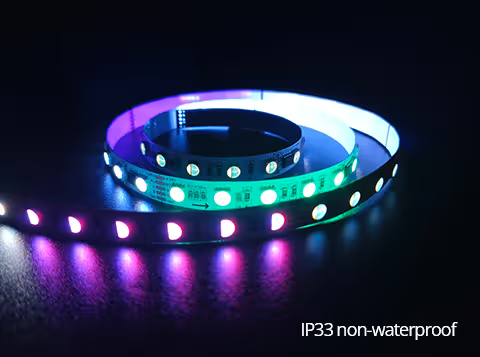
SMD ve COB, LED'lerin baskılı devre kartına (PCB) nasıl entegre edildiği konusunda ilk önce farklılık gösterir. SMD şeritleri ayrık yüzeye monte edilmiş LED paketleri kullanırken, COB birden fazla çipleri doğrudan PCB'ye monte eder ve bunları sürekli bir ışıklı yüzey oluşturmak için kapatır. SMD ürünlerinde, paket formatı ve LED yoğunluğu görünür nokta aralığını, gücü ve çıktıyı etkiler. COB ürünlerinde yoğun doğrudan çip yapısı, daha pürüzsüz bir ışık hattı için temel oluşturur.
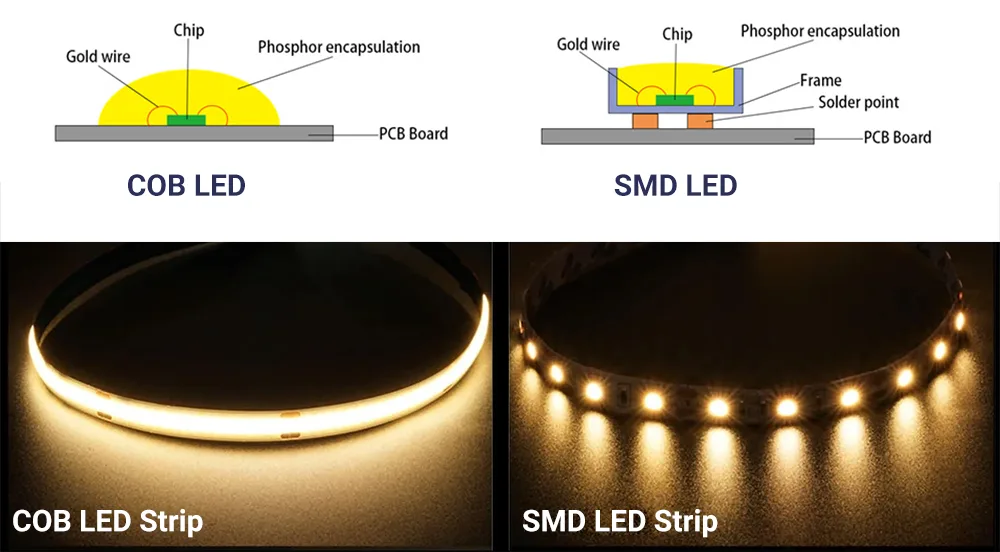
Buna karşılık, COB LED şeritler, yüksek yoğunluklu LED yongaları birbirine yakın bir şekilde düzenlemek için doğrudan yongalı montajdan yararlanır. Daha sonra, ayrı çiplerden gelen ışığı sorunsuz bir şekilde karıştırmak için dizinin üzerine sürekli bir fosfor kaplama veya özel ışık yayan yüzey uygulanır. Bu kritik üretim tekniği, bir dizi ayrık, görünür noktadan doğrusal ışık çıktısını pürüzsüz, sürekli bir aydınlatma bandına geçirir. Çipler, hacimli bireysel ambalajlar olmadan doğrudan monte edildiğinden, COB teknolojisi, önemli ölçüde daha dar PCB'lere ve dikkate değer ölçüde sığ alüminyum profillere sığdırmak için gereken temel yapısal temeli oluşturur ve kompakt mimari detaylar için kurulum olanaklarını genişletir.
Parlaklığın evrensel teknoloji kazananı yok
Parlaklık yalnızca SMD veya COB teknolojisi ile sıralanamaz. Adil bir karşılaştırma, karşılaştırılabilir CRI, CCT, voltaj, test uzunluğu ve sıcaklık koşulları altında metre başına bitmiş şerit lümenleri ve watt başına lümenleri kullanmalıdır. Watt, ışık çıkışını değil, elektrik girişini tanımlar; çip kalitesi, sürücü akımı, PCB tasarımı, optik ve termal koşulların tümü ölçülen sonucu etkiler.
Sonuç olarak, bir COB şeridinin yüksek yoğunluklu çip düzenlemesi, tıpkı bir SMD şeridinin ayrı ambalajının doğal olarak üstün ışık etkinliğine dönüşmemesi gibi, daha yüksek bir lümen-perage çıkışını otomatik olarak garanti etmez. Tedarik ekipleri ve aydınlatma mühendisleri, aynı, kontrollü test koşulları altında üretilen bitmiş şeritli ışık akısı ve etkinlik verilerini talep etmelidir. Proje yöneticileri, yalnızca bu standartlaştırılmış performans ölçütlerini gözden geçirerek, hangi yapısal teknolojinin belirli mimari veya ticari hedefleri için en uygun aydınlatma seviyelerini sağladığını doğru bir şekilde belirleyebilir ve kanıtlanmış optik performanstan ziyade pazarlama terminolojisine dayalı bir ürün belirleme riskini ortadan kaldırabilir.
COB, şeridin görsel olarak açıkta kaldığı tek tip ışığı önceliklendirir
COB'nin en net avantajı, ışık çizgisinin yakın mesafeden görünür kaldığı optik tekdüzeliktir. Yoğun doğrudan çip montajı ve sürekli bir fosfor tabakası, kabin altı aydınlatmasına, perakende raflara, vitrinlere ve sığ mimari profillere uyan, tek noktaları pürüzsüz bir ışıklı yüzeye harmanlar. Bu avantaj, en yüksek parlaklıktan ayrı olarak değerlendirilmelidir.
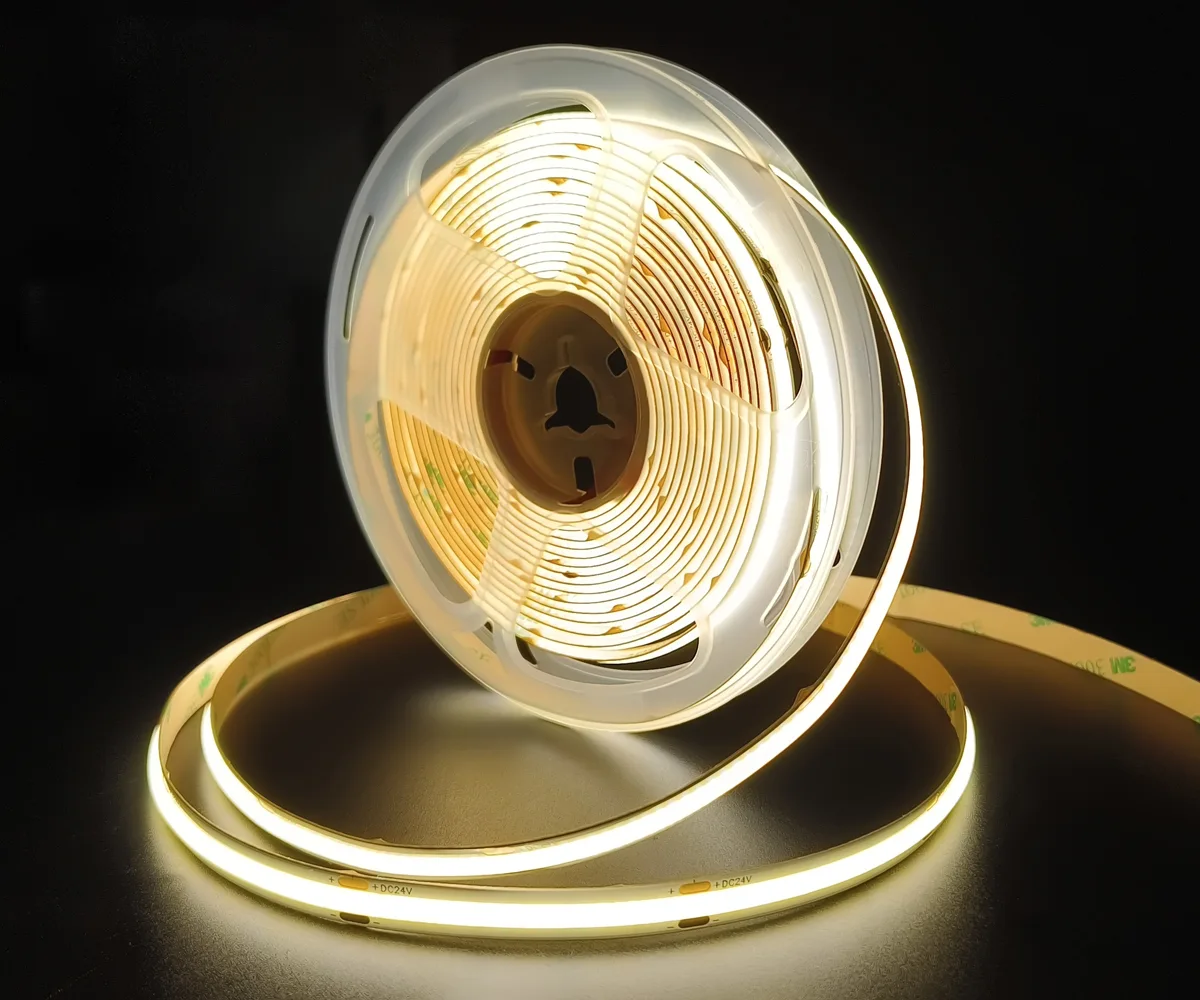
En kısıtlayıcı kurulum ortamlarını ele almak için, özel ultra ince COB tasarımları, son derece kompakt 5 mm PCB düzenlerini kullanabilir. Doğrudan çip montaj tekniği ve önemli ölçüde azaltılmış optik ayak izi, bu ultra ince şeritlerin dar oluklara, ince alüminyum profillere ve sıkıca gizlenmiş mimari kanallara sorunsuz bir şekilde entegre edilmesini sağlar. Bununla birlikte, tasarımcılar, daha dar bir PCB kullanmanın doğal olarak mevcut elektrik yönlendirme alanını azalttığını ve termal yayılma marjlarını azalttığının farkında olmalıdır. Bu nedenle, bu COB'lu çözümlerin kullanılması, uzun vadeli istikrar ve sürekli noktasız performans sağlamak için uygun güç kaynakları ve sağlam termal yönetim stratejileri ile dikkatli bir şekilde eşleşmeyi gerektirir.
Uygulama uyumu bağlıdır on Paket Genişlik, Geometri ve Kontrol Gereksinimleri
Uygulama uyumu, görünürlük, kontrol karmaşıklığı, geometri ve nihai spesifikasyona bağlıdır. SMD aileleri birden fazla paketi ve tek renkli, ayarlanabilir CCT, RGB ve RGBW konfigürasyonlarını kapsarken, COB özellikle sürekli bir ışık çizgisinin ana görsel gereksinim olduğu durumlarda kullanışlıdır. Hiçbir mimari, yalnızca teknoloji etiketinden seçilmemelidir.
Tersine, COB teknolojisi, CoBE aydınlatması, kabin altı aydınlatması ve birinci sınıf perakende ekranlar gibi sürekli doğrusal görünümün birincil tasarım hedefi olduğu uygulamalarda en etkili şekilde dağıtılır. Bir proje ayarlanabilir beyaz, RGB renk değiştirme veya ayrı ayrı adreslenebilir kontrol gerektirecek şekilde genişlerse, COB ürünleri bu işlevleri destekleyebilir, ancak bunlara özel renk mimarisi ve uyumlu kontrol metodolojilerine göre dikkatlice seçilmelidir. Proje mühendisleri, “COB”u tekil, tek tip bir işlevsel kategori olarak ele almaktan kaçınmalıdır. SMD ve COB arasındaki doğru işbölümü, doğrudan kurulumun yapısal kısıtlamalarından ve kontrol gereksinimlerinden kaynaklanır ve bu da gerçek uygulama ortamının mühendislik avantajını teknoloji etiketinden çok daha fazla belirlediğini kanıtlar.
Sertifikalı tedarikçi dili, ürüne özel uyumluluk kapsamı gerektirir
Bir üretim ortağı seçerken, sertifikalı bir tedarikçinin tanımı, belirli sertifikalar ile satın alınan tam ürünler arasındaki açık bir yazışma ile kanıtlanmalıdır. Bu Strip ürünlerini destekleyen doğrulanabilir uyumluluk belgeleri, özel COB konfigürasyonları için özel fotobiyolojik güvenlik uyumluluğu ile birlikte LED şerit ışıklar için özel olarak belirlenmiş temel EMC ve CE-ROHS sertifikalarını içerir. LED şerit ışıklar için EMC ve CE-ROHS sertifikalarının açık listelenmesi, ticari dağıtım için gerekli olan gerekli elektromanyetik uyumluluğu ve düzenleyici temeli sağlar. Ayrıca, doğrudan COB LED şeritlerine bağlı özel IEC 62471 sertifikası, yüksek yoğunluklu aydınlatma uygulamaları için hedeflenen kanıtlar sunarak fotobiyolojik güvenlik konusunda bağımsız doğrulama sunar.
Tek bir fabrika sertifikasının katalogdaki her ürünü kapladığını varsaymak kritik bir tedarik hatasıdır. İmza tüpleri, panel ışıkları veya dış mekan yüksek bölme armatürleri için çeşitli sertifikalar geçerli olsa da, bu özel kapsamlar, tüm SMD ve COB şerit ışıklarını doğrulamak için genelleştirilemez. Bir üretim tedarikçisinin gerçek güvenilirliği, şişirilmiş bir alakasız sertifika kısaltma sayısından ziyade, uyumluluk belgelerinin netliğine ve özgüllüğüne dayanmaktadır. Bir SMD veya COB çözümü belirtirken, satın alma ekipleri, düzenleyici uyumu garanti etmek için tedarik aşamasında hedeflenen pazar uyumluluk dosyalarına karşı kesin SKU'yu titizlikle doğrulamalıdır.
Bir spesifikasyon-ilk karşılaştırma, B2B alıcılarına savunulabilir bir SMD ve COB kararı verir
B2B tedarik uzmanları için, SMD ve COB arasındaki karar, metre başına hedef lümen, etkinlik, CRI, çalışma voltajı, PCB genişliği, IP derecesi, renk kontrolü ve kurulum görünürlüğünü tanımlayan titiz bir spesifikasyon matrisinin oluşturulmasıyla başlamalıdır. SignliteLED Ürün mimarisinin bu kesin koşulları yerine getirmesine izin vererek, alıcıların gerçek bir gerekçe olmaksızın bir teknoloji kampına erken bağlanmasını önleyerek bu spesifikasyon-önce yaklaşımı kolaylaştırır. Kapsamlı LED şerit ürün evreni hem SMD hem de COB teknolojilerini kapsadığından, proje yöneticileri tek bir birleşik bir tedarik zinciri içinde farklı yapısal çözümleri objektif olarak karşılaştırabilir. Bu, uyumlu kontrolörlerin, güç kaynaklarının, konektörlerin ve alüminyum profillerinin aynı anda onaylanmasını sağlar ve böylece genellikle çapraz tedarikçi karşılaştırmalarını rahatsız eden parametre tutarsızlıklarını ortadan kaldırır.
Aydınlatma distribütörlerine, proje mühendisliği firmalarına ve tesis alıcılarına hizmet veren üretim altyapısı, kapsamlı OEM ve ODM mühendislik özelleştirmesini destekler. Sonuç olarak, numune doğrulama, SMD ve COB varyantları arasında gerçek parlaklık, optik tekdüzelik, renk oluşturma ve kurulum performansının doğrudan, adil bir karşılaştırmasına izin vererek, standartlaştırılmış test koşulları altında yürütülebilir. Optimal özellikler test edilerek onaylandıktan sonra, seçilen tasarım sorunsuz bir şekilde toplu üretime ve nihai proje entegrasyonuna geçer. Yerleşik bir tedarikçiyle ortaklık kurmanın kesin değeri, birleşik mühendislik spesifikasyonlarını kullanarak SMD ve COB teknolojilerini değerlendirme, karmaşık parlaklık ve tekdüzelik değişkenlerini savunulabilir, tekrarlanabilir tedarik kararlarına dönüştürme yeteneğinde yatmaktadır.
Sıkça Sorulan Sorular
Bir sonraki kurulumunuz için ayrıntılı ürün özelliklerini, özelleştirme yeteneklerini ve teknik proje desteğini keşfetmek için resmi web sitesini ziyaret edin. https://www.signliteled.com/.
İlgili Yazılar