Français
  English
  简体中文
简体中文  Deutsch
  Español
  Italiano
  日本語
日本語  한국어
한국어  Polski
  Português
  Русский
  Türkçe
  Nederlands
  Tiếng Việt
  ไทย
ไทย 
Pour choisir un signe de lettre de canal illuminé, vous faites correspondre trois décisions à votre immeuble et à votre marque : le style d'éclairage (allumé avant pour une luminosité pleine face audacieuse, inverse/halo-lit pour une lueur flottante haut de gamme, combinaison pour un impact maximum jour et nuit, ou ouvert pour un aspect rétro) ; la méthode de montage (course, cote de couleur, et une alimentation de taille correcte) et la plupart des acheteurs ignorent la spécification des LED à l'intérieur des lettres (angle de poutre, espacement des modules, cohérence de la couleur, cote de couleur et de puissance de taille, et une dimension correcte.
Cet article explique en détail chacune de ces décisions : à quoi ressemblent réellement les principaux types d'éclairage et les coûts, quels matériaux sont les derniers, quelles sont les différences entre les trois méthodes de montage, exactement les spécifications qui ont mené à votre demande de devis et les bases des permis. Ainsi, que vous soyez propriétaire d'entreprise, concepteur de signe ou chef de projet, vous pouvez spécifier un signe qui fonctionne et dure.
Que sont les signes de lettre de canal enluminées ?
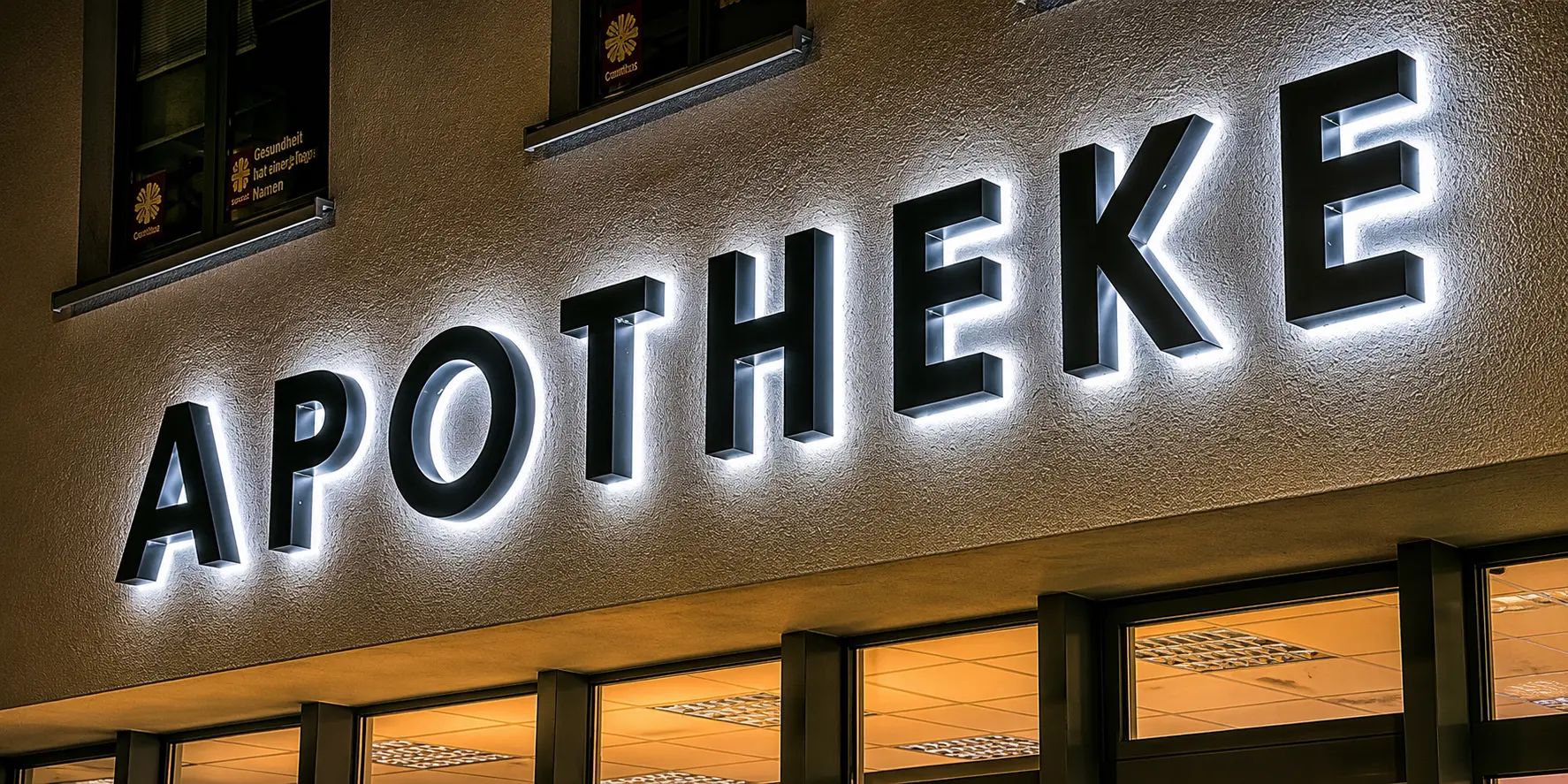
Lettres de canal enluminées sont des lettres, des chiffres ou des logos fabriqués individuellement en trois dimensions, qui sont éclairés de l'intérieur, presque toujours avec des LED. Chaque personnage est son propre petit boîtier, c'est pourquoi le résultat semble net et contrasté à la lumière du jour et après la tombée de la nuit.
Les «lettres de signes éclairées» sont une grande catégorie, et les lettres de canal 3D sont le type principal en son sein – les deux termes sont souvent utilisés de manière interchangeable, et ce guide les utilise de cette façon.
Chaque lettre de canal est construite à partir des mêmes éléments de base, et les connaître facilite le suivi du reste de ce guide :
- Retour — La paroi latérale de la lettre qui lui donne de la profondeur. Habituellement en aluminium ou en acier inoxydable pour les environnements difficiles.
- Face : la surface avant que la lumière brille à travers (lettres éclairées avant) ou qui reste solide (lettres de halo). Le plus souvent, un acrylique translucide d'environ 5 mm (3/16″) d'épaisseur.
- Arrière — Le panneau arrière. Métal solide sur les lettres éclairées sur le devant, clair ou translucide sur les lettres de halo afin que la lumière puisse s'échapper vers le mur.
- Trim Cap — Le bord qui relie le visage aux retours et donne une bordure finie. Certaines lettres sont construites sans garniture pour un look plus propre.
- Source LED — L'éclairage à l'intérieur de la lettre (modules ou bandes).
- Alimentation (pilote) — Convertit la tension secteur en courant continu basse tension. Les LED s'exécutent.
- Matériel de montage - goujons, entretoises, chemins de roulement ou bailleurs de fonds qui fixent le panneau au bâtiment.
Un détail qui vaut la peine d'être signalé tôt car cela affecte la luminosité : l'intérieur du retour est peint en blanc. Un intérieur blanc reflète beaucoup plus de lumière à travers le visage qu'un intérieur nu ou sombre, de sorte qu'il améliore directement la luminosité et même la lettre finie.
Les principaux types (par style d'éclairage)
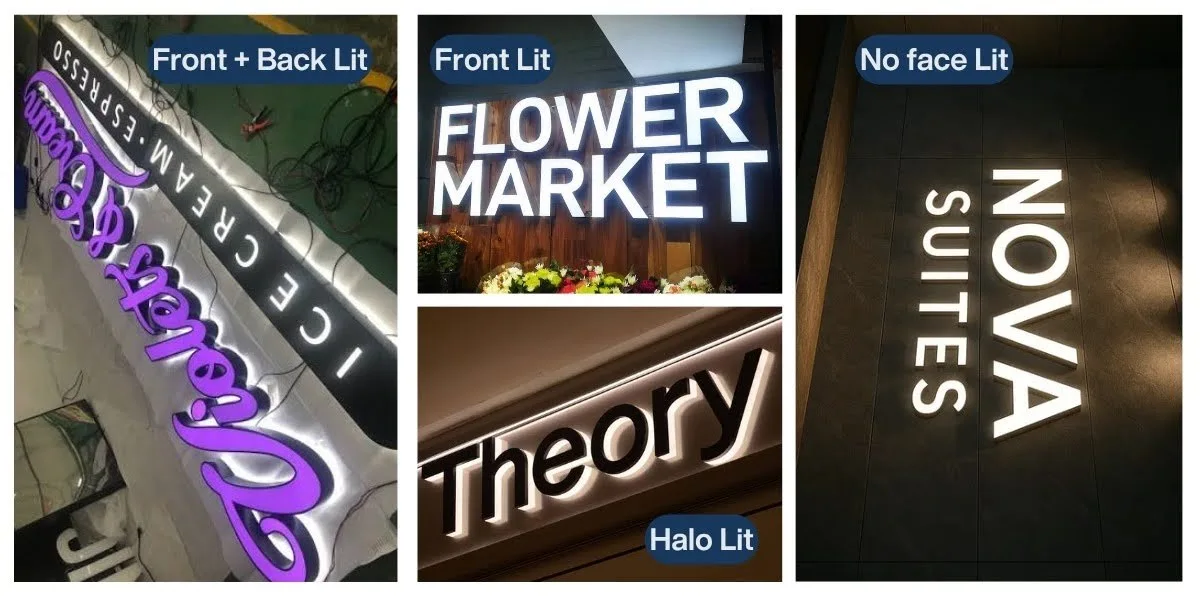
Les lettres de canal sont regroupées par l'endroit où la lumière s'échappe de la lettre, et ce choix change l'apparence, le coût, le montage et la disposition des LED dont vous avez besoin à l'intérieur. Il est payant de mener avec les compromis, pas seulement le look :
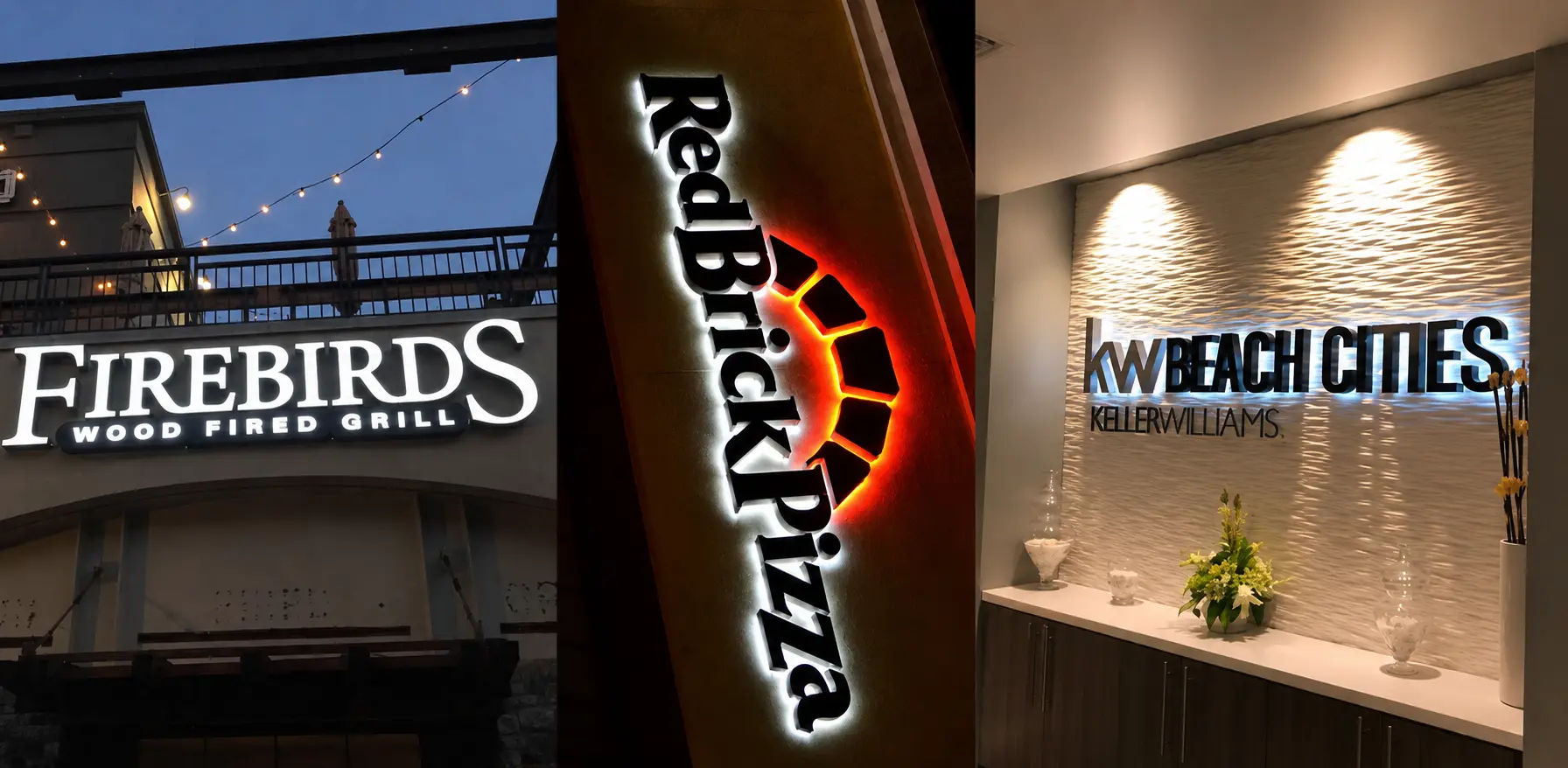
- L'avant-allumé (face-allumé) est le standard et le plus abordable. Les modules LED blancs ou colorés sont placés dans une grille à l'intérieur de la lettre et poussent la lumière à travers une face acrylique translucide. Meilleure visibilité globale pour les vitrines.
- Revers / Halo-lit garde une face métallique solide et repousse la lumière vers l'arrière sur le mur derrière, créant une douce lueur qui fait flotter les lettres. Il est élégant et haut de gamme, mais c'est un effet ambiant, donc il se lit comme moins "brillant" qu'un visage éclairé à l'avant et dépend d'un mur lisse et de couleur claire derrière. Un mur sombre ou fortement texturé absorbe ou disperse la lueur et affaiblit le halo, donc sur ces surfaces, il est le choix le plus sûr.
- La combinaison (avant + arrière) fait les deux à la fois, souvent avec deux couleurs différentes. C'est l'option la plus brillante et la plus accrocheuse, et aussi la plus chère.
- Open-face utilise un visage clair (ou aucun visage) afin que les lampes elles-mêmes soient visibles, pour un aspect rétro et exposé. Frappant et décoratif, généralement associé à une LED en simili-néon.
Deux variantes de construction que vous pouvez également voir : les lettres éclairées sur le côté, où la lumière s'échappe par des retours translucides pour une lueur de bord décorative, et des lettres sans garniture - éclairées à l'avant sans bord de garniture visible pour une face de haut de gamme plus propre.
Une note de couleur pratique qui attire de nombreux acheteurs pour la première fois : le blanc se lit mieux la nuit, et le bleu uni est le plus faible car il est proche de la couleur d'un ciel sombre. Si une couleur de marque doit être sombre, les fabricants utilisent souvent un film jour/nuit qui montre la couleur de la marque à la lumière du jour et brille en blanc après la tombée de la nuit.
Types d'éclairage comparés
| Type | Comment ça s'allume | Source LED à l'intérieur | luminosité relative | Coût — et pourquoi | Meilleur pour |
| Face avant (allumé au visage) | Lumière à travers le visage translucide | Modules LED dans une grille derrière le visage | Haut (audacieux, visage intégral) | Le plus bas des types de Lit - une couche LED | vitrines, commerces de détail - les plus courants |
| Inverser / Halo-lit | Visage solide; la lumière se répand sur le dos sur le mur | Modules ou bandes à l'arrière, orientés vers le mur | Moyenne (souple ambiant doux) | Plus haut que le devant - Face métallique solide + fixation de support | Bureaux premium, lobbies, murs de fonctions |
| Combinaison (avant + arrière) | Visage lueur plus halo ensemble | Deux mises en page LED, souvent deux couleurs | très haut | Le plus élevé : deux couches de LED, souvent deux couleurs | Flagship, signalisation de marque à fort impact |
| qui a bien trébuché | Lampes exposées derrière un visage clair/absent | LED faux-néon ou modules exposés | Haut, décoratif | Modéré — Couche de lampes exposées unique | Barres, thèmes rétro, signalétique d'accent |
Une note sur le coût. Le prix d'un signe de lettre de canal fini varie considérablement selon le marché, la taille, la finition, le type d'éclairage et l'installation, de sorte qu'un seul chiffre n'est qu'un indicateur approximatif. Ce que vous pouvez compter, ce sont les facteurs de coût : le premier éclair est le plus économique des styles et la combinaison les plus chers, et dans tous les types, les échelles de coût avec la taille et la profondeur des lettres, le nombre total de LED, la qualité de la puce, la cote IP et la quantité de commande. Lorsque vous vous approvisionnez en composants LED directement auprès d'une usine comme Signiteled, le prix est basé sur ces facteurs. Envoyez vos lettres, le type d'éclairage et la quantité pour un chiffre précis.
Matériaux et qualité de fabrication (ce qui dure)
La plupart des décisions matérielles se résument à une simple question : où vivra le signe ?
- Retours : L'aluminium (généralement autour de 0,040 à 0,063″) est la valeur par défaut - légère, résistante à la rouille et facile à former. Pour les sites côtiers, marins ou à forte pollution, l'acier inoxydable (grade 304 ou 316 pour les emplacements les plus difficiles d'air salin) résiste bien mieux à la corrosion.
- Le visage : l'acrylique translucide d'environ 5 mm (3/16″) est standard et diffuse bien la lumière. Passez au polycarbonate là où la résistance aux chocs est importante – grandes faces, panneaux au niveau du sol ou emplacements sujets au vandal.
- Arrière : aluminium massif pour lettres éclairées à l'avant ; acrylique transparent ou polycarbonate pour les lettres de halo afin que la lumière puisse passer au mur.
- Casquette ou sans garniture : un capuchon de garniture résistant aux UV donne un bord fini durable ; une construction sans garniture donne un visage plus propre et plus moderne.
Matériaux par composant
| composante | Options courantes | Spécification typique | Choisissez quand |
| Retour (mur) | Aluminium / Acier inoxydable | ~0,040–0,063″ aluminium, 304 ou 316 ss | SS pour le littoral / corrosif; aluminium pour la plupart des projets |
| se tourner | Acrylique / Polycarbonate | ~5 mm (3/16″) translucide | Polycarbonate pour les faces d'impact, de grande taille ou à tendance vandale |
| arriéré | Aluminium massif / Acrylique transparent ou PC | — | Retour clair requis pour les lettres Halo (reversée) |
| bordure | Casquette de garniture / sans garni | Capuchon en plastique résistant aux UV | Sans garniture pour un look moderne et épuré |
| LED source | Modules / Bande de type S | 12–24 V DC, IP65–IP67 | Bandes pour lettres courbes, scripts ou peu profondes |
Méthodes de montage (Raceway vs. Flush vs.
La méthode de montage est généralement déterminée par à qui appartient le bâtiment et de quoi est fait le mur.
- Montage de chemin de roulement : les lettres sont pré-montées sur une boîte métallique mince (le chemin de roulement) qui maintient le câblage et le conducteur ; l'ensemble se fixe au mur en une seule pièce. Cela nécessite le moins de trous, donc les propriétaires et les gestionnaires de propriétés le préfèrent souvent. Le chemin de roulement est peint pour correspondre à la façade afin qu'il se retire.
- Flush / montage direct : chaque lettre fixe directement sur la face du bâtiment, avec un câblage acheminé derrière la façade. Il donne le plus propre et le plus propre, mais nécessite plus de trous et un accès intérieur. Les lettres de halo utilisent cette méthode avec des entretoises de sécurité qui retiennent la lettre du mur pour créer la lueur.
- Support de support / fil de passage : les lettres reposent sur un plus grand panneau ou une armoire qui dissimule tout le câblage et peut ajouter une deuxième couche de couleur. Il est idéal pour les murs inégaux ou architecturaux complexes, ou lorsque vous souhaitez un panneau de marque unifié.
Pour les façades délicates, le montage hybride (par exemple des lettres sur un petit chemin de fer qui est ensuite fixé sur un panneau de support) combine les avantages de deux méthodes.
La maintenance vaut également la peine d'être pesée : un panneau de chemin de fer ou de support offre à un technicien un compartiment unique et accessible pour atteindre les conducteurs et le câblage, tandis que les lettres encastrées sont généralement entretenues depuis le mur, ce qui nécessite un accès intérieur.
Méthodes de montage comparées
| méthode | Pénétrations murales | Cacher le câblage | allure | Meilleur pour |
| raveil | Peu (un seul rail) | Oui (à l'intérieur du rail) | Boîte peinte subtile derrière les lettres | Espaces loués, restrictions des propriétaires |
| Rincer / directement | Beaucoup (par lettre) | Derrière la façade | Le plus propre, le plus premium | Bâtiments détenus; lettres de halo (avec impasse) |
| Support / Câble | Peu à modéré | Oui (à l'intérieur du panneau) | Panneau unifié, couche de couleur supplémentaire | Murs irréguliers/complexes, panneaux de marque |
La spécification d'éclairage qui décide réellement de la qualité
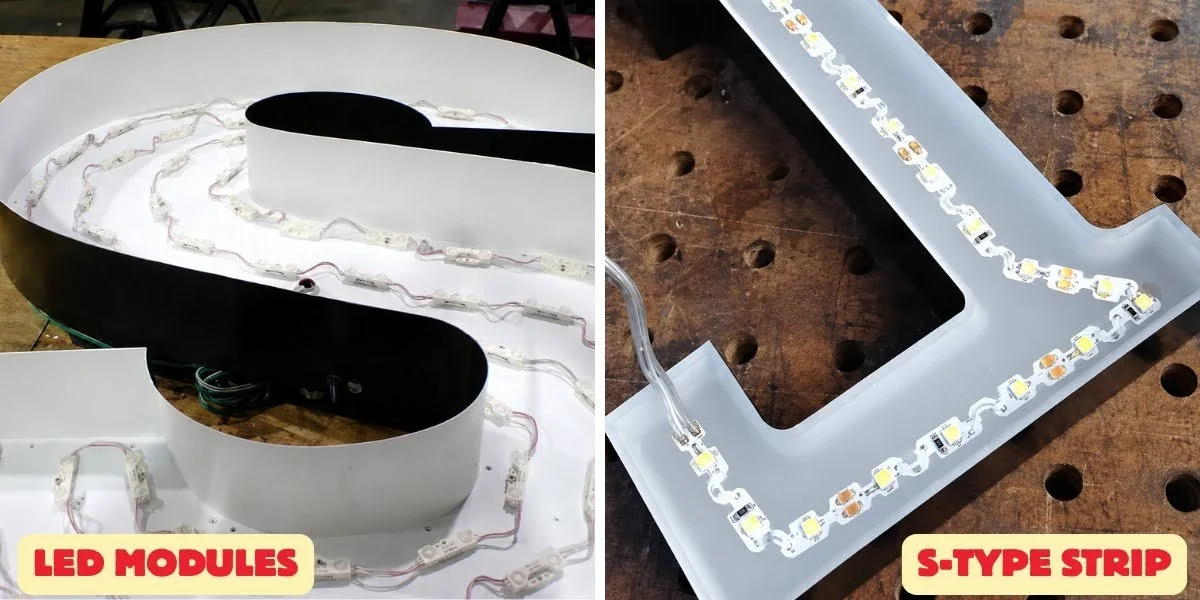
C'est la partie que les guides d'acheteurs ont le plus sautés - et c'est celui qui sépare un panneau qui brille uniformément pendant des années d'un signe qui montre les points chauds, les bandes sombres ou la couleur inégale en quelques mois. L'ingénierie complète derrière elle est couverte dans le guide compagnon de Signiteled, Quel éclairage LED est utilisé à l'intérieur des lettres de signe illuminée; voici ce que vous devez décider en tant qu'acheteur.
Quelle source de lumière : modules ou bandes
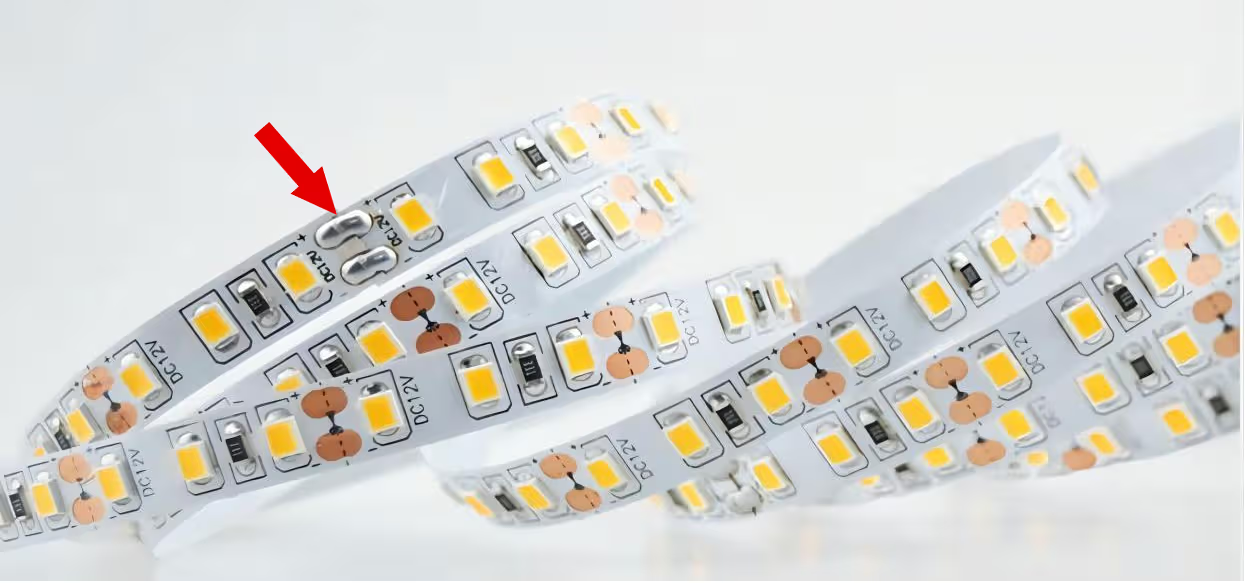
Le choix est simple : les modules de signes LED (SMD 2835 ou SMD 5050 pour RGB) sont le cheval de bataille des lettres de bloc standard, et les bandes flexibles de type S prennent le relais pour les courbes serrées, les scripts, les logos et les lettres très peu profondes où une grille rigide de modules ne reste pas propre.
ce que signifie un « bon » éclairage — et ce qu'il faut demander
Une lettre brille de manière uniforme et dure des années lorsque l'éclairage à l'intérieur coche cinq cases : un large faisceau de 160 ° à l'espacement des modules droit, des puces MacAdam (SDCM) à 3 étapes étroitement regroupées, un entraînement à courant constant, la bonne estimation IP (IP65 extérieur, IP67 Côte) et un pilote étanche correctement dimensionné chargé à ≤ 80%. Pour la décision d'achat, les deux tableaux ci-dessous transforment ce choix en un choix de module et une feuille de spécification que vous pouvez confier à une fournisseur.
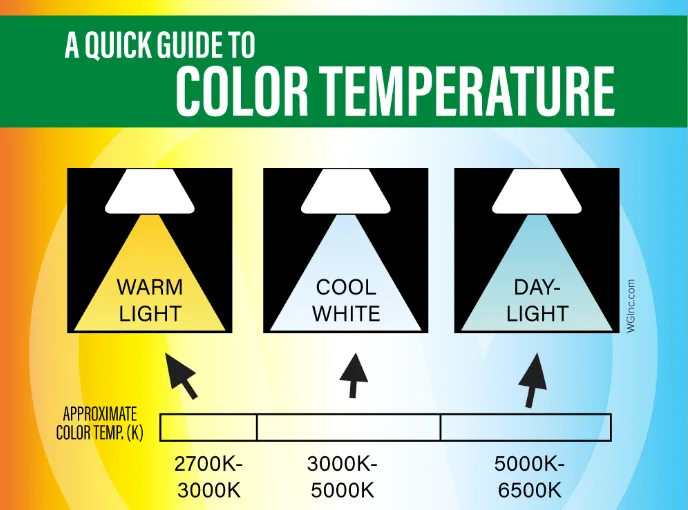
L'unique appel à l'avant est la température de couleur - 6500K blanc froid pour un look moderne et nette ou un blanc chaud 3000K pour une sensation de qualité supérieure et de qualité supérieure, et que vous ayez besoin de RGB (SMD 5050) pour des effets de changement de couleur.
Module LED / Guide de sélection de la source
| Profondeur de lettre et course | Source / optique suggérée | Modules par pied (typique) | notes |
| peu profond 2–3″, simple ≤4″ course | Module à faisceau large ou bande S ou bande de type S | ~4–6 / ft | Difficile à allumer uniformément; diffuser le visage |
| STANDARD 4–8″, ≤4″ Course | Module à faisceau large ~160°, une rangée | ~3 / pi | Un retour plus profond permet un espacement plus large |
| 4–8″, >4″ multi-stroke | Module à faisceau large, plusieurs lignes | ~3 / ft × rangées | Ajouter une ligne par ~4″ de course |
| Courbé / Script / Logo, toute profondeur | Bande flexible de type S 6 mm | course continue | Suit des rayons serrés sans vrombissement |
| Halo / Inversé-éclairé | Modules ou bandes au dos | par mise en page | même lueur sur le mur; les impasses attribuent l'écart |
Composants Signiteled recommandés
Pour les lettres de canal en particulier, ce sont les composants Signiteled à demander :
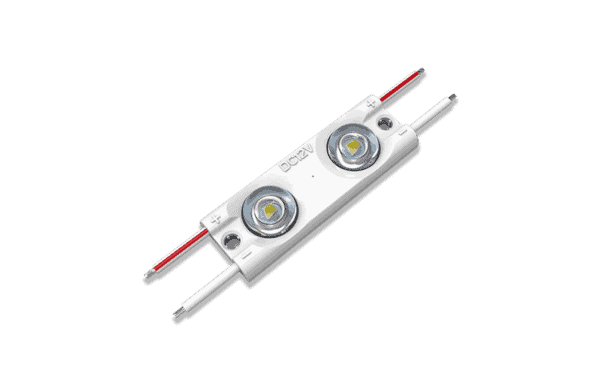
Module d'éclairage LED 2LED DC12V à couleur unique
- Conception de circuits imprimés exposés pour une bonne dissipation de la chaleur
- Faible éclairage pour une durée de vie plus longue
- Puces LED haute puissance 9V pour une sortie plus lumineuse et une efficacité supérieure
- Conception à courant constant pour moins de chute de tension
- Connectez-vous plus par chaîne
- Lentille 160° pour un éclairage uniforme
- Convient aux signes fins
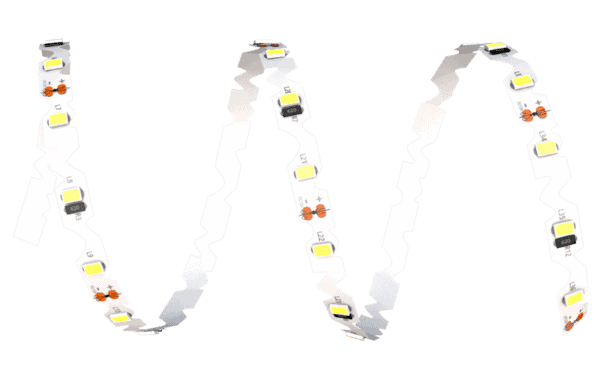
SMD2835 60LEDS 6mm Lampe LED blanche en forme de S
- Type de LED : SMD2835
- Densité LED : 60 LED/m
- Largeur du circuit imprimé : 6 mm
- Strip design : PCB flexible en forme de S
- Couleur : blanc
- Efficacité lumineuse : 220 lm/W
- Tension d'entrée : 12 V/24 V CC
- CRI (index de rendu des couleurs) : Ra ≥ 80
- Angle du faisceau : 120°.
Tous sont disponibles en usine-Direct avec une personnalisation OEM/ODM et une garantie minimale de 3 ans. Pour le signe fini complet plutôt que pour les seuls composants, Signiteled fabrique également Lettres enluminées et signes de lettre de canal à votre logo et spécifications.
Que spécifier lorsque vous demandez un devis
Déposez cette liste de contrôle directement dans votre demande de devis. Plus vous en remplissez, plus le devis est précis et moins vous surprendrez à l'installation. Chaque paramètre ci-dessous correspond à une décision réelle qui affecte l'apparence du signe ou la durée de son exécution.
Liste de contrôle des fiches techniques
| Paramètres | Exemple de valeur à demander | Pourquoi c'est important |
| Type d'éclairage | Modules blancs avant éclairés | Définit le look et le nombre de modules |
| Type de LED | SMD 2835 (blanc) / SMD 5050 (RGB) | Capacité de sortie et de couleur |
| Température de couleur | 6500K Froid / 3000K Chaud | Marque match + lisibilité jour/nuit |
| Cohérence des couleurs | Macadam ≤ 3 étapes (SDM) | Empêche les faces blanches et bleues/chaudes |
| Angle du faisceau | ~ 160° de verre large | Même remplir, moins de points chauds, moins de modules |
| Type de lecteur | courant constant | Égale luminosité bout à bout |
| Tension | 12 V DC (petit) / 24 V DC (grand) | Efficacité et câblage sur les longues courses |
| Indice de protection IP | IP65 extérieur / IP67 côtier | Survivre à la pluie, à la poussière et à l'humidité |
| Alimentation électrique | Imperméable, à tension constante, chargée ≤80% (par exemple, WELL XLG IP67) | Le conducteur est le point de défaillance habituel |
| Certifications | UL / ETL / CE / RoHS | Conformité aux importations et aux permis |
| Garantie / durée de vie de la lumine | 3 à 7 ans, ~50 000 h (L70) | Attente de cycle de vie réaliste |
| Température de fonctionnement | ~−20 °C à +50 °C | correspondre au climat d'installation |
Permis, codes et conformité
La plupart des installations de lettres de canal éclairées nécessitent deux approbations : un permis de signalisation (pour la taille, le placement et le zonage) et un permis électrique (pour le câblage). Quelques points pratiques :
- Vérifiez les codes de signe locaux avant la fabrication. De nombreuses juridictions limitent la superficie totale des signes et limitent la hauteur, le recul et même les heures d'éclairage - confirment ces limites avant la fabrication, car un panneau fini qui les brise peut devoir être reconstruit.
- Utilisez des composants reconnus par le code. Recherchez les modules et les alimentations LED répertoriés par UL / ETL; les inspecteurs et l'AHJ (autorité compétente) les attendront et ils facilitent la signature électrique.
- Les panneaux de grande taille ou de toit peuvent déclencher une révision structurelle (vent et charge), alors confirmez que le mur peut porter le panneau tôt.
- Conservez le schéma de câblage et la liste des composants dans le dossier pour inspection et entretien futur.
Étant donné que les règles varient considérablement selon la ville et le pays, considérez cela comme une liste de contrôle à soulever auprès de votre installateur ou de votre autorité locale, et non de substitut au code local.
Scénarios d'application
| mise en place | Type recommandé | Spécifications d'éclairage à demander |
| vitrines de vente au détail | à l'avant | 6500K Modules blanc froid, lentille ~160°, IP65, 12 V |
| Restaurants et bars | Ouvrir le visage ou une combinaison | Faux-néon ou 3000K chaud ; RGB où la couleur change de marque |
| Lobbies et bureaux d'entreprise | Inverser / Halo-lit (intérieur) | Blanc chaud ou neutre, même rétro-éclats; IP20–IP65 par emplacement |
| Centres commerciaux et marques multi-emplacements | Face avant, standardisée | Principe de sdcm serré en 3 étapes pour la correspondance des couleurs sur les sites ; 24 V pour les grandes séries |
La normalisation des spécifications LED dans les sites est ce qui maintient le blanc d'une marque nationale identique d'un magasin à l'autre, ce qui est exactement là où la combinaison de couleurs serrées gagne sa place.
Conclusion
Le choix d'un panneau de lettre de canal illuminé suit un chemin clair : choisissez le type d'éclairage qui correspond à la marque et au budget, choisissez les matériaux pour l'environnement, sélectionnez la méthode de montage pour le bâtiment et la propriété, et, plus important encore, obtenir la spécification LED. Cette dernière étape est de décider si le panneau est uniforme et lumineux pendant des années ou inégale en quelques mois : la bonne cote IP, les puces de qualité étroitement regroupées, un module à large faisceau à l'espacement correct et un pilote étanche correctement dimensionné.
Fabricant de signalisation et d'éclairage LED depuis 2011, Signiteled est certifié UL, ETL, CE et ROHS et soutient chaque produit avec une garantie minimale de 3 ans. A côté des modules de signalisation LED et des bandes LED de type S qui les intègrent, il fabrique des Signes de lettres illuminées Factory-Direct avec la personnalisation OEM/ODM.
Prêt à spécifier votre signe ? Envoyez vos lettres, le type d'éclairage et la quantité pour un devis direct d'usine.

FAQ
Articles Similaires