Polski
  English
  简体中文
简体中文  Deutsch
  Español
  Français
  Italiano
  日本語
日本語  한국어
한국어  Português
  Русский
  Türkçe
  Nederlands
  Tiếng Việt
  ไทย
ไทย 
Aby wybrać podświetlany znak litery kanału, dopasujesz trzy decyzje do swojego budynku i marki: styl oświetlenia (z przodu dla pogrubionej jasności pełnej twarzy, odwrócony/halo-świeci dla ekskluzywnej poświaty pływającej, połączenie dla maksymalnego wpływu na dzień i noc lub otwartej twarzy dla wyglądu odsłoniętego), metoda montażu (wysięg, kolor i powrót), oraz — część kupujących przeoczająca specyfikację — równa specyfikacja LED (gasz, ładowność, kolor, spójność, kontrola i odpowiedni poziom), oraz — co jest ustawione na poziomie kryterium — specyfikacja LED (gałka belki, ładowność, kolor i odpowiedni poziom), oraz — równanie z aktualną specyfikacją (kąstka, ładowność, zgodność z modułem, kontrola nośności i ładowanie, czy też zaawansowana wartość), a także - aktualna specyfikacja LED (gazowy kąt, ładowność, kolor i odpowiednia wartość), a także - w zależności od tego, czy jest to aktualna specyfikacja, która jest równa cierpliwość (gał krzywka, zgodność modułu, kolor i odpowiedni poziom), oraz
W tym artykule szczegółowo opisano każdą z tych decyzji: jak faktycznie wyglądają główne typy oświetlenia i kosztują, jakie materiały wytrzymują, jak różnią się trzy metody montażu, dokładnie co doprowadziło do złożenia zapytania ofertowego i jakie są podstawy zezwolenia — więc niezależnie od tego, czy jesteś właścicielem firmy, projektantem znaków, czy kierownikiem projektu, możesz określić znak, który działa i trwa.
Czym są podświetlane znaki listowe kanału?
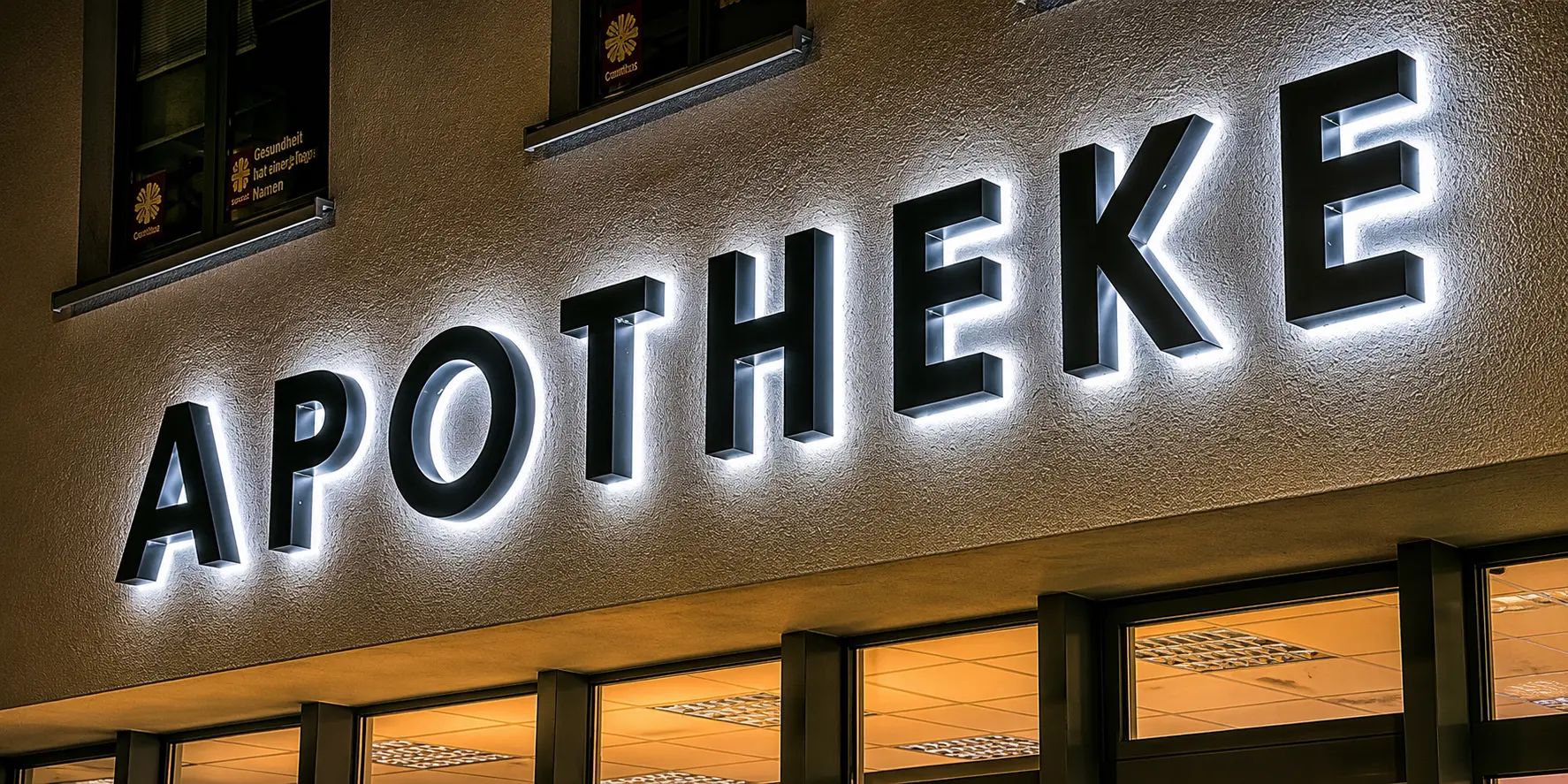
Podświetlane litery kanału to trójwymiarowe, indywidualnie wytworzone litery, cyfry lub kształty logo, które są oświetlone od wewnątrz — prawie zawsze za pomocą diod LED. Każda postać jest własną małą obudową, dlatego wynik wygląda ostry i kontrastowy zarówno w świetle dziennym, jak i po zmroku.
„Illuminated Sign Letters” to szeroka kategoria, a litery kanałów 3D są głównym typem w nim — te dwa terminy są często używane zamiennie, a ten przewodnik używa ich w ten sposób.
Każda litera kanału jest zbudowana z tych samych części podstawowych, a znajomość ich ułatwia przestrzeganie reszty tego przewodnika:
- Return — boczna ściana litery, która nadaje jej głębię. Zwykle aluminium lub stal nierdzewna do trudnych warunków.
- Twarz — przednia powierzchnia, przez którą światło prześwituje (litery z oświetleniem z przodu) lub która pozostaje solidna (litery halo). Najczęściej półprzezroczysty akryl o grubości około 5 mm (3/16 cali).
- Tył — tylny panel. Solidny metal na literach z przodu; przezroczysty lub półprzezroczysty na literach halo, aby światło mogło uciec w kierunku ściany.
- Przycinanie Cap — krawędź, która łączy twarz z zwrotami i daje ukończoną granicę. Niektóre litery są zbudowane bez trymu, aby uzyskać czystszy wygląd.
- Źródło LED — oświetlenie wewnątrz litery (moduły lub paski).
- Zasilanie (sterownik) — konwertuje napięcie sieciowe na niski poziom DC, na którym diody LED działają.
- Osprzęt montażowy — kołki, przekładki, bieżnie lub wsporniki, które mocują znak do budynku.
Jeden szczegół, który warto wcześnie zgłosić, ponieważ wpływa na jasność: wnętrze powrotu jest pomalowane na biało. Białe wnętrze odbija znacznie więcej światła z powrotem przez twarz niż gołe lub ciemne, dzięki czemu bezpośrednio poprawia wygląd jasnego i nawet gotowego listu.
Główne typy (według stylu oświetlenia)
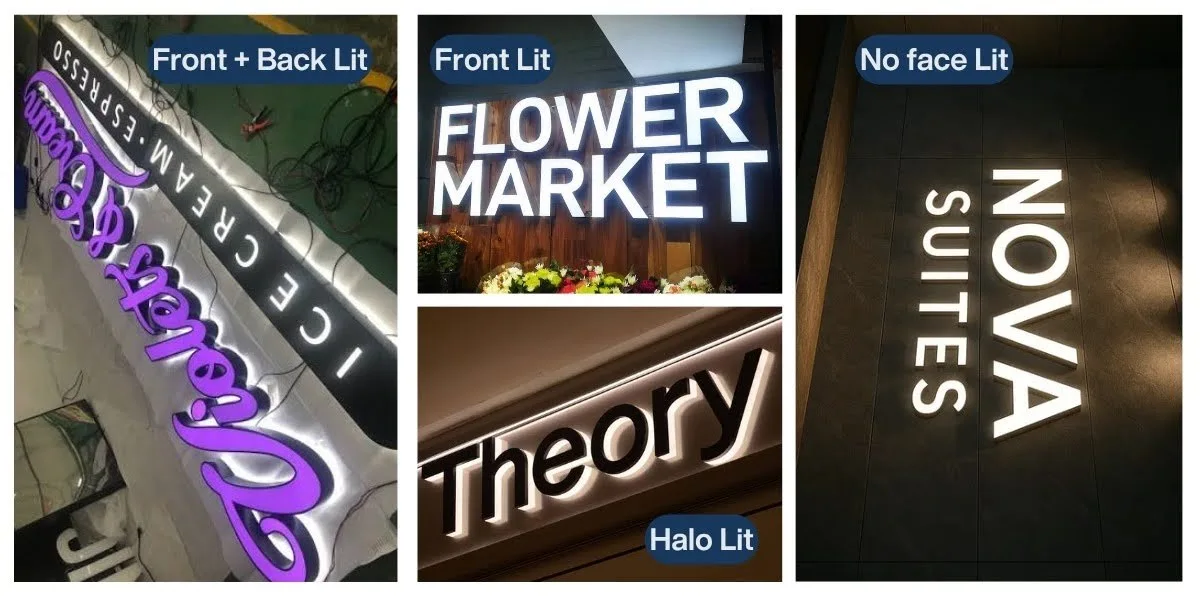
Litery kanałów są pogrupowane według miejsca, w którym światło ucieka z litery, a ten wybór zmienia wygląd, koszt, montaż i układ LED, którego potrzebujesz w środku. Opłaca się prowadzić z kompromisami, a nie tylko wyglądem:
- Podświetlany z przodu (oświetlony twarz) jest standardem i najbardziej przystępnym cenowo. Białe lub kolorowe moduły LED leżą w siatce wewnątrz litery i wypychają światło przez półprzezroczystą akrylową twarz. Najlepsza widoczność we wszystkich sklepach sklepowych.
- Reverse / Halo-Lit utrzymuje solidną metalową twarz i wypycha światło z tyłu na ścianę, tworząc miękki blask, który sprawia, że litery wydają się unosić unoszące się. Jest elegancki i premium — ale jest efektem otoczenia, więc czyta się jako mniej „jasny” niż twarz oświetlona z przodu i zależy od gładkiej, jasnej ściany za nią. Ciemna lub mocno teksturowana ściana pochłania lub rozprasza blask i osłabia aureolę, więc na tych powierzchniach oświetlony z przodu jest bezpieczniejszym wyborem.
- Kombinacja (przód + tył) robi jedno i drugie na raz, często z dwoma różnymi kolorami. Jest to najjaśniejsza i najbardziej przyciągająca wzrok opcja, a także najdroższa.
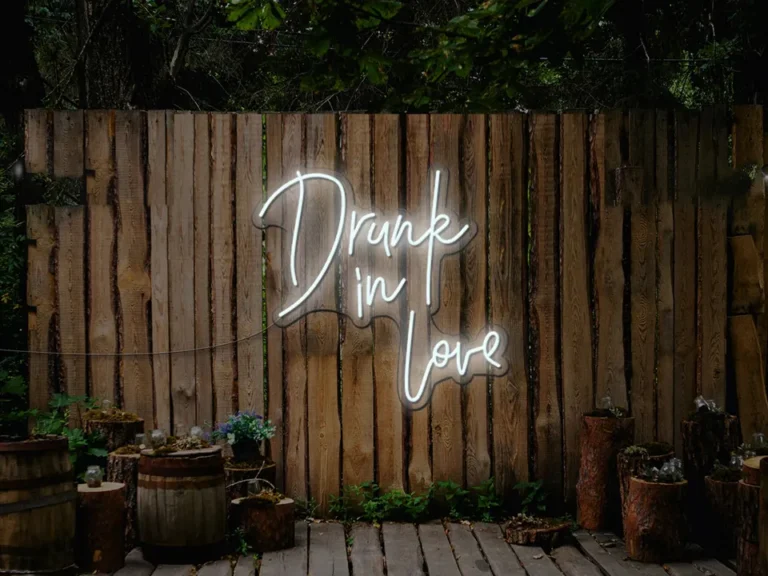
- Otwarta twarz ma czystą twarz (lub brak twarzy), więc same lampy są widoczne, aby uzyskać odsłonięty wygląd w stylu retro. Uderzające i dekoracyjne, powszechnie połączone z led ze sztucznego neonu.
Dwa warianty konstrukcyjne, które możesz również zobaczyć: litery oświetlone z boku, gdzie światło ucieka przez półprzezroczyste zwroty, aby uzyskać ozdobny blask krawędzi, oraz litery bez potwierdzeń — oświetlone z przodu bez widocznej krawędzi wykończenia dla czystszej, wysokiej klasy twarzy.
Praktyczna nuta kolorowa, która łapie wielu kupujących po raz pierwszy: biały najlepiej czyta w nocy, a jednolity niebieski jest najsłabszy, ponieważ jest zbliżony do koloru ciemnego nieba. Jeśli kolor marki musi być ciemny, producenci często używają filmu dzień/noc, który pokazuje kolor marki w świetle dziennym i świeci na biało po zmroku.
Typy oświetlenia porównane
| Typ | Jak to się świeci | źródło led wewnątrz | Względna jasność | koszt – i dlaczego | Najlepsze dla |
| Oświetlony z przodu (oświetlony twarzą) | Światło przez półprzezroczystą twarz | Moduły LED w siatce za twarzą | Wysoki (pogrubiony, pełna twarz) | Najniższy z typów zapalonych — jedna warstwa LED | Witryny sklepowe, handel detaliczny — najpopularniejszy |
| Odwrócony / oświetlony halo | Solidna twarz; światło wylewa się z tyłu na ścianę | Moduły lub paski z tyłu, skierowane do ściany | Średni (miękka aureolka otoczenia) | Wyższy niż przedni oświetlony — solidna metalowa ściana czołowa + montaż oddzielny | Biura premium, lobby, ściany z elementami |
| Kombinacja (przód + tył) | Blask twarzy plus aureola razem | Dwa układy LED, często dwa kolory | bardzo wysoki | Najwyższy — dwie warstwy LED, często dwa kolory | Flagowe, o dużym wpływie oznakowania marki |
| nieprzejmowany | Odsłonięte lampy za wyraźną/obecną twarzą | Faux-neonowe moduły LED lub odsłonięte moduły | Wysoki, dekoracyjny | Umiarkowana — pojedyncza warstwa odsłoniętej lampy | Bary, motywy retro, oznakowanie akcentowe |
Uwaga na temat kosztów. Cena gotowego znaku listu kanałowego różni się znacznie w zależności od rynku, rozmiaru, wykończenia, rodzaju oświetlenia i instalacji, więc każda pojedyncza liczba jest tylko szorstkim wskaźnikiem. To, na czym możesz polegać, to czynniki kosztowe: przednie podświetlenie jest najbardziej ekonomicznym z podświetlanych stylów i kombinacji najdroższych, a w każdym rodzaju skale kosztów z rozmiarem i głębokością liter, całkowitą liczbą LED, klasą chipową, klasą IP i ilością zamówienia. Po pozyskiwaniu komponentów LED bezpośrednio z fabryki, takiej jak Signlited, wycena jest oparta na dokładnie tych czynnikach — wyślij rozmiar litery, rodzaj oświetlenia i ilość, aby uzyskać dokładną liczbę.
Materiały i jakość wykonania (co trwa)
Większość istotnych decyzji sprowadza się do prostego pytania: gdzie będzie żyć znak?
- Zwroty: Aluminium (zazwyczaj około 0,040–0,063″) jest domyślne — odporne na rdzę i rdzy. W przypadku miejsc przybrzeżnych, morskich lub o wysokim zanieczyszczeniu stal nierdzewna (klasa 304 lub 316 dla najtrudniejszych miejsc w słonym powietrzu) znacznie lepiej odporna na korozję.
- Twarz: półprzezroczysty akryl około 5 mm (3/16 cali) jest standardowy i dobrze rozprasza światło. Przełącz się na poliwęglan, gdzie ma znaczenie odporność na uderzenia — duże powierzchnie, znaki na poziomie gruntu lub lokalizacje podatne na wandali.
- Tył: Solidne aluminium do liter oświetlonych z przodu; przezroczysty akryl lub poliwęglan do liter aureolowych, dzięki czemu światło może przejść przez ścianę.
- Nakładka na lamówkę lub trymless: stabilny UV nakładka nadaje trwały wykończony brzeg; trymowanie bez lamowania daje czystszą, bardziej nowoczesną twarz.
Materiały według komponentu
| składnik | Wspólne opcje | Typowa specyfikacja | Wybierz, kiedy |
| Powrót (ściana boczna) | Aluminium / Stal nierdzewna | ~0,040–0,063″ aluminium; 304 lub 316 SS | SS dla przybrzeżnych / żrących; aluminium dla większości projektów |
| czoło | Akryl / poliwęglan | ~5 mm (3/16″) półprzezroczysty | Poliwęglan do powierzchni uderzeniowych, dużych lub podatnych na wandały |
| plecy | Solidny aluminium / przezroczysty akryl lub PC | . | Wymagane wyczyszczenie tyłu dla liter aureolowych (odwróconych) |
| zrąb | Nakładka na lamówkę / bez | Plastikowa nasadka UV-stabilna | Bezproblemowy dla czystego, nowoczesnego wyglądu |
| Źródło LED | Moduły / Pasek typu S | 12–24 V DC, IP65–IP67 | Paski do zakrzywionych, skryptowych lub płytkich liter |
Metody montażu (Raseway vs. Flush vs. Backer)
O metodzie montażu zwykle decyduje, kto jest właścicielem budynku i z czego wykonana jest ściana.
- Mocowanie bieżni: Litery są wstępnie zamontowane na smukłym metalowym pudełku (bieżni), w której znajduje się okablowanie i sterownik; cała jednostka mocuje się do ściany jako jeden element. Wymaga to najmniejszej liczby dziur, więc właściciele i zarządcy nieruchomości często to wolą. Rowerek jest pomalowany tak, aby pasował do fasady, aby cofnął się.
- Montaż podtynkowy / bezpośredni: Każda litera mocowana jest bezpośrednio do powierzchni budynku, z okablowaniem poprowadzonym za fasadą. Daje najczystszy, najbardziej premium wygląd, ale wymaga więcej otworów i dostępu do wnętrza. Litery aureolowe Użyj tej metody z dystansami dystansowymi, które trzymają literę ze ściany, aby stworzyć blask.
- Mocowanie wspornika / przewodu: Litery znajdują się na większym panelu lub szafce, która ukrywa wszystkie okablowanie i może dodać drugą warstwę koloru. Idealnie nadaje się do nierównych lub złożonych architektonicznie ścian lub gdy potrzebujesz jednolitego markowego panelu.
W przypadku podstępnych fasad, montaż hybrydowy (na przykład litery na małej bieżni, który jest następnie mocowany do panelu wsporczego) łączy w sobie zalety dwóch metod.
Warto również ważyć: bieżni lub panele z tyłu zapewniają technikowi jeden, dostępny przedział, który może dotrzeć do kierowców i okablowania, podczas gdy litery podtynkowe są zwykle serwisowane zza ściany, która wymaga dostępu do wnętrza.
Metody montażu w porównaniu
| systematyka | Penetracje ścian | Ukrywa okablowanie | spojrzenie | Najlepsze dla |
| turniarnia się | Kilka (jedna szyna) | Tak (wewnątrz szyny) | Subtelne malowane pudełko za literami | Wynajmowane powierzchnie, ograniczenia właścicieli |
| PŁYN/BEZ | Wiele (na list) | Za fasadą | Najczystszy, najbardziej premium | Budynki posiadane; litery halo (z patami) |
| Wspierający / Przewód | Niewielu do umiarkowanych | Tak (wewnątrz panelu) | Unified Panel, dodatkowa warstwa kolorów | Nierówne/złożone ściany, markowe panele |
Specyfikacja oświetlenia, która faktycznie decyduje o jakości
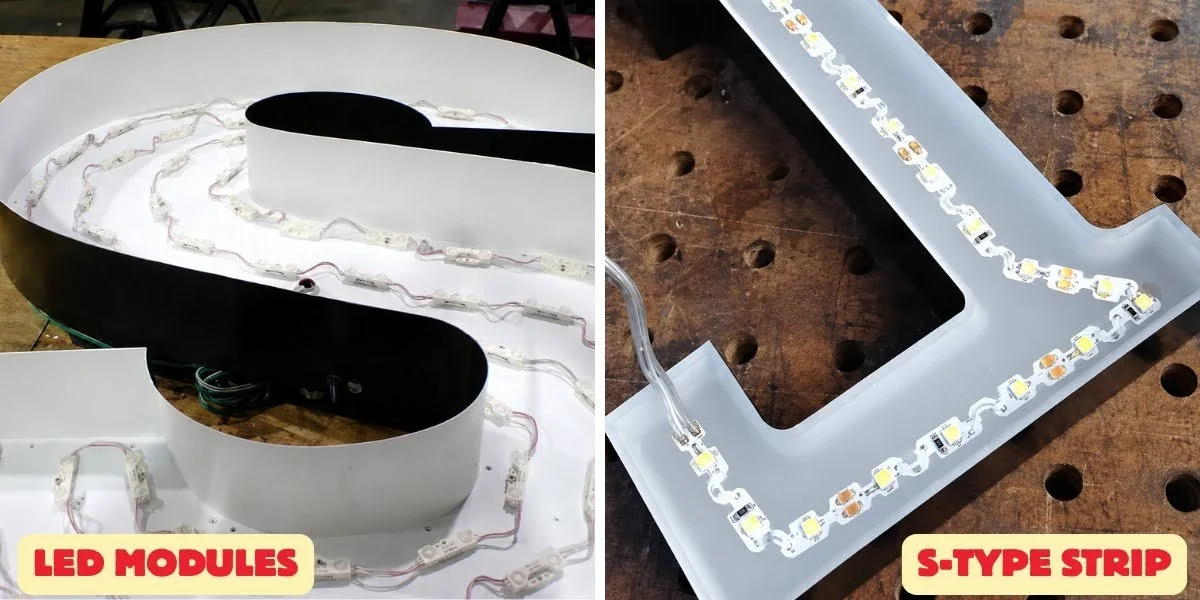
Jest to część, którą pomija większość przewodników kupujących — i jest to ta, która oddziela znak, który świeci równomiernie przez lata od takiego, który pokazuje gorące punkty, ciemne paski lub niejednolite kolor w ciągu kilku miesięcy. Pełna inżynieria za tym jest omówiona w przewodniku towarzyszącym Signliteled, Jakie oświetlenie LED jest używane wewnątrz podświetlanych liter znaków; oto co musisz zdecydować jako kupujący.
Jakie źródło światła: moduły lub paski
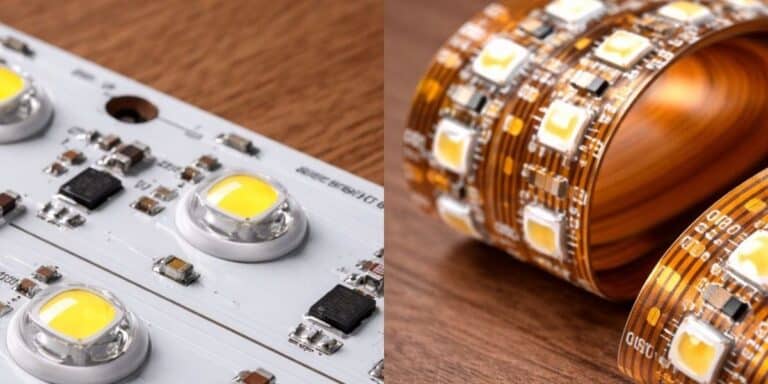
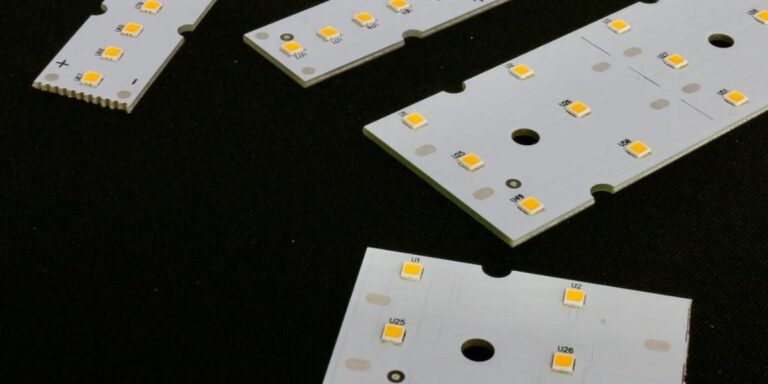
Wewnątrz liter kanału wybór jest prosty: moduły znaków LED (SMD 2835 lub SMD 5050 dla RGB) to koni roboczy dla standardowych liter blokowych, a paski typu S przejmują ciasne krzywe, skrypty, logo i bardzo płytkie litery, gdzie sztywnej siatki modułów nie będą siedzieć czysto.
Co oznacza „dobre” oświetlenie — i o co prosić
Litera świeci równomiernie i utrzymuje się przez lata, gdy oświetlenie wewnątrz zaznacza pięć pól: szeroka wiązka ~160° w prawym rozstawie modułu, szczelnie wyrzucone 3-stopniowe chipy Macadam (SDCM), napęd stały, prawidłowa klasa znamionowa IP (IP65 na zewnątrz, IP67 Coastal) i wodoodporny sterownik załadowany do ≤80%. Do decyzji o zakupie, dwa stoliki poniżej zamieniają się w ten moduł i specyfikację wodoodporną, można zaoferować do oferowania do 2.
Jedynym wezwaniem do wykonania z przodu jest temperatura barwowa — 6500K Cool White, aby uzyskać wyraźny, nowoczesny wygląd lub 3000K ciepłej bieli, aby uzyskać bardziej miękki, premium w dotyku — plus czy potrzebujesz RGB (SMD 5050) do efektów zmiany koloru.
Przewodnik wyboru modułu LED / źródła LED
| Głębokość litery i skok | Sugerowane źródło / optyka | Moduły na stopę (typowe) | notatki |
| Płytki 2-3″, pojedynczy skok ≤4″ | Niskoprofilowy moduł szeroko-wiązkowy lub pasek typu S | ~4–6 / ft | Najtrudniej jest rozjaśnić równomiernie; rozprasza twarz |
| Standardowy skok 4–8″, ≤4″ | Szeroko-wiązka ~160° moduł, jeden rząd | ~3 / ft | Głębszy powrót pozwala na szersze odstępy |
| 4-8″, >4″ wielosuwowy | Moduł szerokokątny, wiele wierszy | ~3 /ft × rzędy | Dodaj rząd na ~4″ skoku |
| Zakrzywione / skrypt / logo, dowolna głębokość | Elastyczny pasek typu S 6 mm | Bieg ciągły | Podąża za ciasnymi promieniami bez załamania |
| Halo / podświetlenie wsteczne | Moduły lub paski z tyłu | za układ | Nawet świecący na ścianie; stójki ustawiają lukę |
Zalecane komponenty SignLited
W przypadku liter kanału są to komponenty SignLited, o które należy pytać:
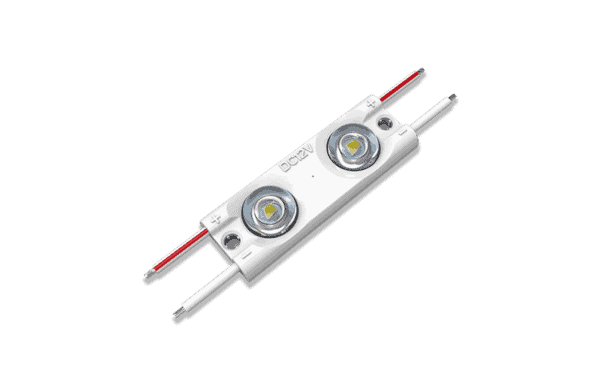
Jednokolorowe światło modułowe LED 2LED DC12V
- Odsłonięta konstrukcja PCB dla dobrego rozpraszania ciepła
- Niska awaria światła zapewnia dłuższą żywotność
- Chipy LED o dużej mocy 9V dla jaśniejszej mocy wyjściowej i wyższej wydajności
- Stały prąd projektowy dla mniejszego spadku napięcia
- Połącz więcej na łańcuch
- Obiektyw 160° do równomiernego oświetlenia
- Nadaje się do cienkich znaków
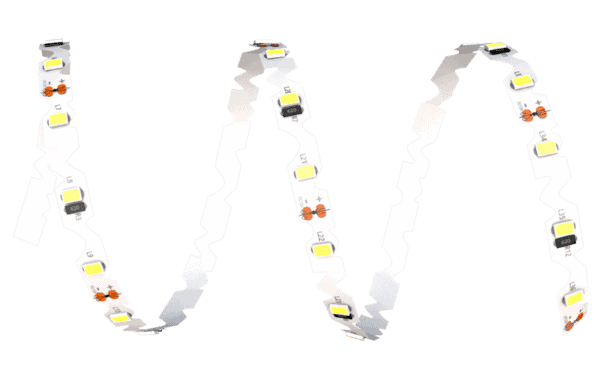
SMD2835 60LED 6mm biały pasek LED w kształcie litery S
- Typ LED: SMD2835
- Gęstość LED: 60 diod LED/m
- Szerokość płytki drukowanej: 6 mm
- Konstrukcja paska: elastyczna płytka drukowana w kształcie litery S
- Kolor: biały
- Wydajność świetlna: 220 lm/W
- Napięcie wejściowe: 12V/24V DC
- CRI (wskaźnik oddawania kolorów): Ra ≥ 80
- Kąt wiązki: 120°
Wszystkie są dostępne fabrycznie-bezpośredni z personalizacją OEM/ODM i minimum 3-letnią gwarancją. Dla kompletnego gotowego znaku, a nie samych komponentów, Signlited również produkuje Niestandardowe podświetlane litery i znaki z literami kanału do Twojego logo i specyfikacji.
Co określić, gdy poprosisz o wycenę
Upuść tę listę kontrolną bezpośrednio do swojej prośby o wycenę. Im więcej go wypełnisz, tym dokładniejszy cytat — i mniej niespodzianek podczas instalacji. Każdy poniżej parametr odwzorowuje się do prawdziwej decyzji, która wpływa na wygląd znaku lub jak długo trwa.
Lista kontrolna arkusza specyfikacji
| Parametr | Przykładowa wartość do żądania | Dlaczego to ma znaczenie |
| Typ oświetlenia | Białe moduły z podświetleniem z przodu | Ustawia wygląd i liczbę modułów |
| Typ LED | SMD 2835 (biały) / SMD 5050 (RGB) | Wyjściowe i kolorowe możliwości |
| Temperatura barwowa | 6500K chłodny / 3000K ciepły | Dopasowanie marki + czytelność w dzień/noc |
| Spójność kolorów | ≤3-etapowy makadam (SDCM) | Zapobiega niejednolitym, niebiesko-ciepłym białym twarzom |
| kąt śrutowania | Obiektyw o szerokości 160° | Nawet wypełnienie, mniej hot spotów, mniej modułów |
| Typ napędu | prąd stały | Równa jasność od końca do końca |
| Napięcie | 12 V DC (mały) / 24 V DC (duże) | Wydajność i okablowanie na długich przebiegach |
| Stopień ochrony IP | IP65 na zewnątrz / IP67 przybrzeżne | Przetrwa deszcz, kurz i wilgoć |
| Zasilanie | Wodoodporny, stały napięcie, załadowany ≤80% (np. WZORNIKA WELL XLG IP67) | Sterownik jest zwykłym punktem awarii |
| Certyfikaty | UL / ETL / CE / RoHS | Zgodność zezwoleń i import |
| Gwarancja / Żywotność lumenów | 3-7 lat; ~50 000 h (L70) | Realistyczne oczekiwania cyklu życia |
| Temperatura pracy | ~-20 °C do +50 °C | Dopasuj klimat instalacji |
Zezwolenia, kody i zgodność
Większość podświetlanych instalacji kanałowych wymaga dwóch zatwierdzeń: zezwolenia na znak (na rozmiar, rozmieszczenie i podział na strefy) oraz pozwolenie na elektryczność (na okablowanie). Kilka praktycznych punktów:
- Sprawdź lokalne kody znaków przed wykonaniem. Wiele jurysdykcji ogranicza całkowity obszar znaku i ogranicza wysokość, cofnięcie, a nawet godziny oświetlenia — potwierdzają te limity przed fabrykacją, ponieważ gotowy znak, który je łamie, może wymagać odbudowy.
- Użyj komponentów rozpoznawanych przez kod. Poszukaj modułów LED i zasilaczy z listy UL/ETL; inspektorzy i AHJ (właściwość autorytety) będą się ich spodziewać i złagodzą sygnalizację elektryczną.
- Znaki na dachu mogą spowodować przegląd strukturalny (wiatr i obciążenie), więc potwierdź, że ściana może wcześniej przenosić znak.
- Przechowuj schemat okablowania i listę komponentów w aktach do kontroli i przyszłej obsługi.
Ponieważ zasady różnią się znacznie w zależności od miasta i kraju, traktuj to jako listę kontrolną do podniesienia z instalatorem lub władzami lokalnymi, a nie zastępcą lokalnego kodu.
Scenariusze zastosowań
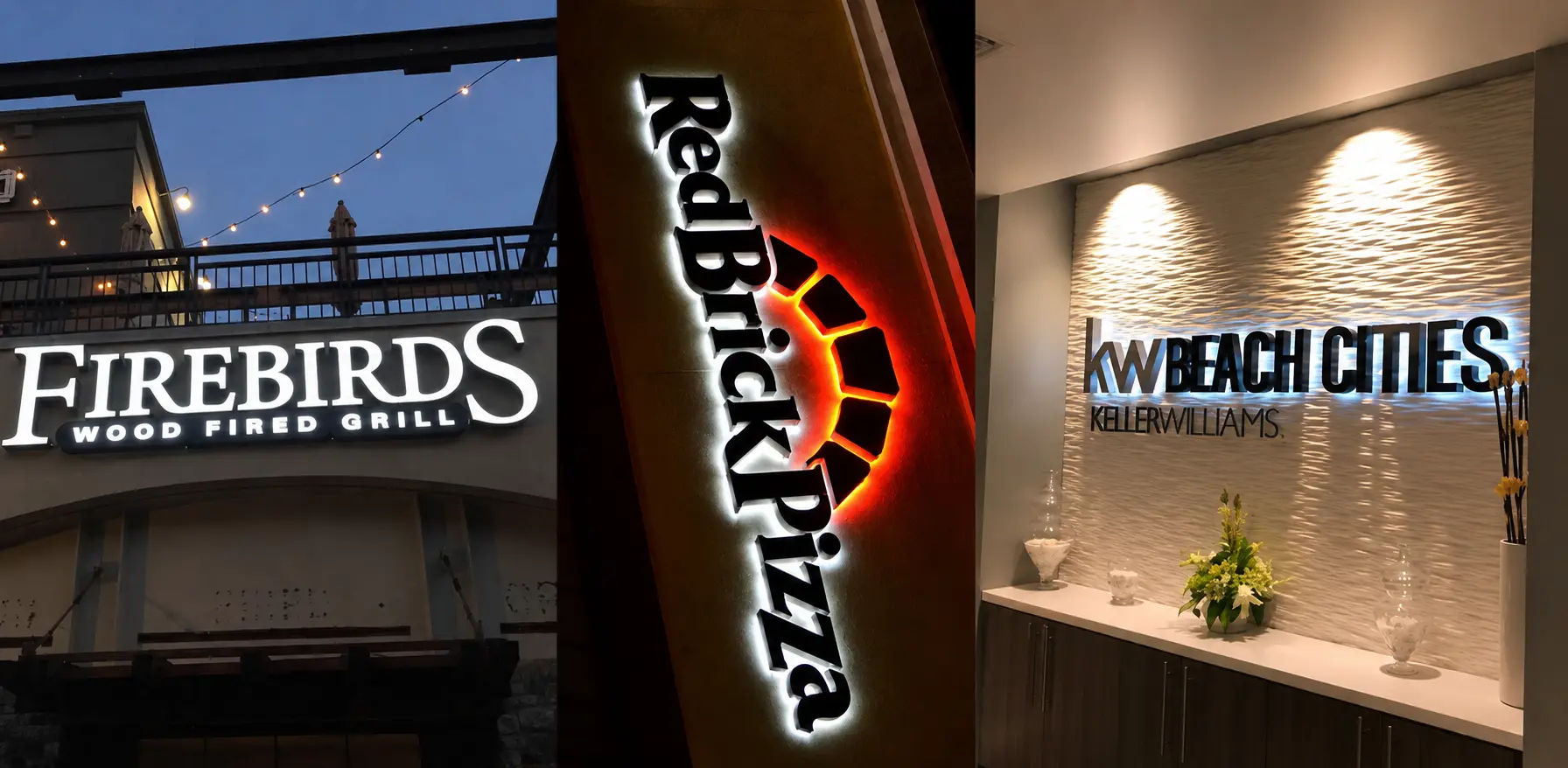
| dekoracja | Zalecany typ | Specyfikacja oświetlenia, o którą prosić |
| Witryny sklepowe | przednioświetlony | Moduły 6500K Cool White, obiektyw ~160°, IP65, 12 V |
| Restauracje i bary | otwarta twarz lub kombinacja | Faux-neon lub ciepły 3000K; RGB, gdzie zmienia się kolor marki |
| Lobby i biura korporacyjne | Rewers / oświetlony aureolą (w pomieszczeniu) | Ciepły lub neutralny biały, nawet poświata; IP20–IP65 według lokalizacji |
| Centra handlowe i marki wielolokalizacyjne | z przodu, standaryzowany | Ścisłe 3-etapowe binning SDCM do dopasowywania kolorów w różnych miejscach; 24 V dla dużych przebiegów |
Standaryzacja specyfikacji LED w różnych lokalizacjach sprawia, że biel marki narodowej wygląda identycznie od sklepu do sklepu – dokładnie tam, gdzie ciasne binning koloru zajmuje swoje miejsce.
Wniosek
Wybór podświetlanego znaku literowego kanału podąża jasną ścieżką: wybierz typ oświetlenia, który pasuje do marki i budżet, wybierz materiały do środowiska, wybierz metodę montażu budynku i własności oraz — co najważniejsze — uzyskaj odpowiednią specyfikację LED. Ten ostatni krok decyduje o tym, czy znak wygląda równo i jasno przez lata, czy niejednolicie i przyciemniony w ciągu kilku miesięcy: prawidłowa klasyfikacja IP, szczelnie wyrzucone chipy jakości, moduł szerokokadłowy w odpowiednim rozstawie i wodoodporny sterownik o odpowiednim rozmiarze.
Producent oznakowania i oświetlenia LED od 2011 roku, Signlited ma certyfikat UL, ETL, CE i ROHS i wspiera każdy produkt z minimum 3-letnią gwarancją. Obok modułów LED znaków LED i pasków LED typu S, które wchodzą do nich, produkuje kompletne Podświetlane znaki z literami Factory-Direct z dostosowywaniem OEM/ODM.
Gotowy na określenie swojego znaku? Wyślij rozmiary listu, rodzaj oświetlenia i ilość, aby uzyskać wycenę fabryczną.

Najczęstsze pytania
Powiązane posty