Русский
  English
  简体中文
简体中文  Deutsch
  Español
  Français
  Italiano
  日本語
日本語  한국어
한국어  Polski
  Português
  Türkçe
  Nederlands
  Tiếng Việt
  ไทย
ไทย 
Чтобы выбрать подсветку, вы сопоместите три решения со своим зданием и вашим брендом: стиль освещения (фанерная яркость, спереди, с задним ходом, реверс/гало-освещение для высококлассного плавающего свечения, комбинация для максимального повседневного удара или открытого вида для ретро-экспонированного вида); метод монтажа (гоночный, флеш или стекляющая для высококлассного плавающего свечения, комбинация для максимального повседневного воздействия, открытый вид для ретро-экспонированного вида); метод монтажа (гоночный, флеш или стеклятор) и — часть покупательных свечей — светодиодная спецификация внутри букв (уголок луч, колебание, непротиворечивость, маркировка и габариты и габариты).
В этой статье подробно объясняется каждое из этих решений: как на самом деле выглядят основные типы освещения и стоимость, какие материалы длятся, как различаются три метода монтажа, какие именно светодиодные характеристики помещают в ваш запрос, и основные правила разрешения — так что, являетесь ли вы владельцем бизнеса, дизайнером или менеджером проекта, вы можете указать знак, который работает и действует.
Что такое подсвеченные буквенные буквы?
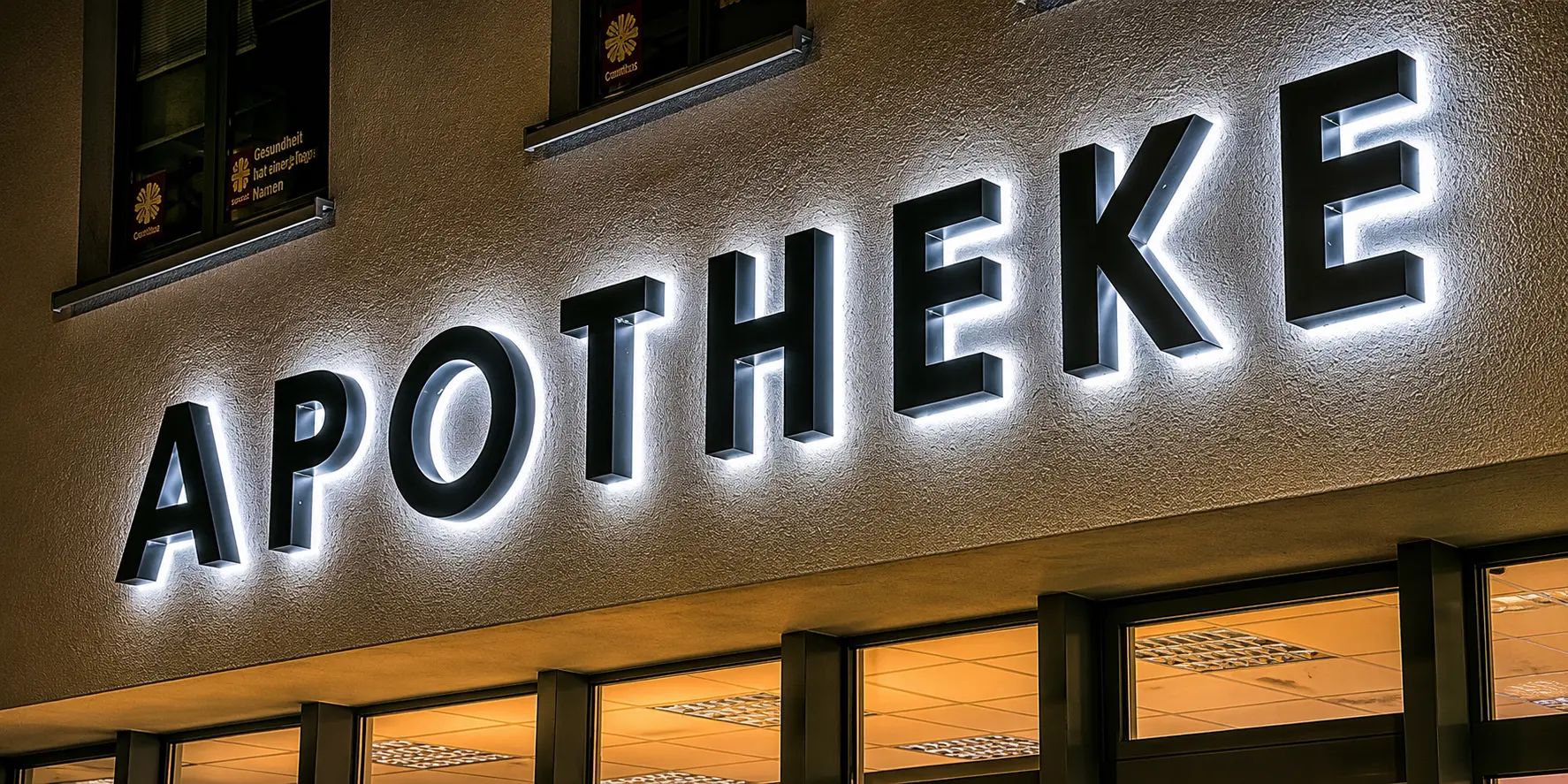
Световые буквы каналов представляют собой трехмерные, индивидуально изготовленные буквы, цифры или формы логотипа, которые освещены изнутри — почти всегда со светодиодами. Каждый персонаж — это отдельный небольшой корпус, поэтому результат выглядит резким и контрастным как при дневном, так и после наступления темноты.
«Письма с подсветкой» — это широкая категория, и 3D-канал канала — основной тип в ней — два термина часто используются взаимозаменяемо, и в этом руководстве они используются именно так.
Каждая буква канала строится из одних и тех же основных частей, и знание их облегчает остальную часть этого руководства:
- return — боковая стенка буквы, которая придает ей глубину. Обычно алюминий или нержавеющая сталь для агрессивных условий.
- Лицо — передняя поверхность, через которую светит свет (буквы спереди) или остается сплошной (буквенные буквы). Чаще всего полупрозрачный акрил толщиной около 5 мм (3/16″).
- Сзади — задняя панель. Твердый металл на буквах спереди, прозрачный или полупрозрачный на ореол, чтобы свет мог выйти к стене.
- Обрезать колпачок — край, который соединяет грань с возвратом и дает законченную границу. Некоторые буквы построены без торжественных форм для более чистого образа.
- Светодиодный источник — освещение внутри буквы (модули или полосы).
- Блок питания (драйвер) — преобразует сетевое напряжение в низковольтный DC, на светодиодах работают.
- Монтажное оборудование — шпильки, прокладки, дорожки или спонсоры, которые фиксируют знак к зданию.
Одна деталь, которую стоит пометить раньше, потому что она влияет на яркость: внутренняя часть возврата окрашена в белый цвет. Белый интерьер отражает гораздо больше света сквозь лицо, чем голый или темный, поэтому он напрямую улучшает то, как яркая и даже готовая буква выглядит.
Основные виды (по стилю освещения)
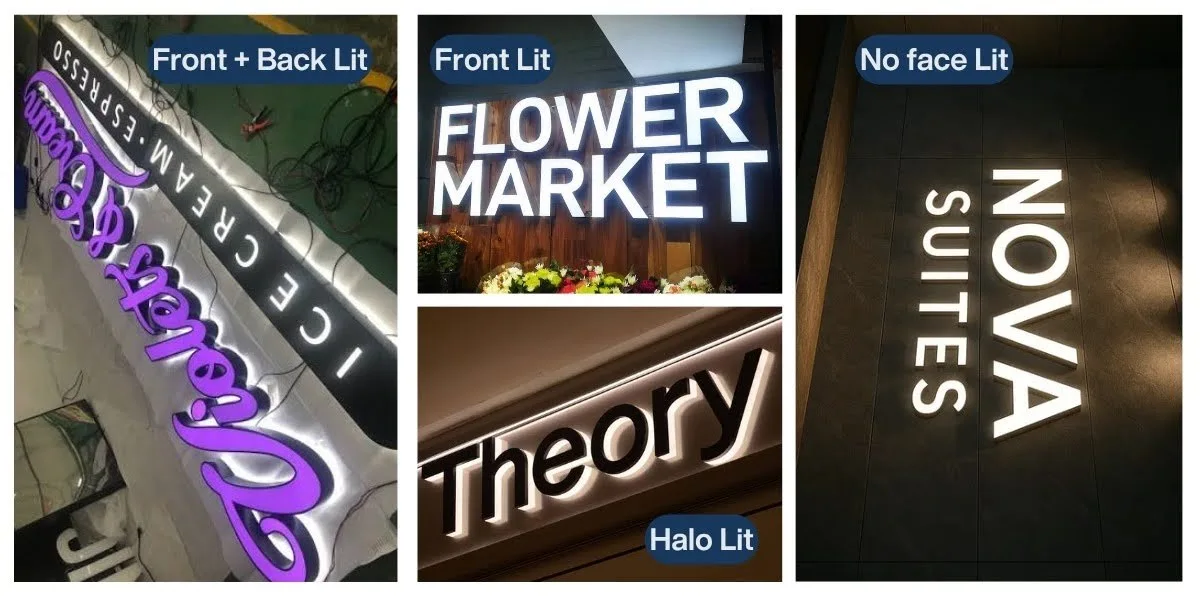
Буквы каналов сгруппированы по тому, где свет выходит из буквы, и этот выбор меняет внешний вид, стоимость, монтаж и необходимую компоновку светодиодов внутри. Стоит ли вести за компромиссы, а не только на внешний вид:
- Передняя подсветка (с подсветкой) — стандартная и самая доступная. Белые или цветные светодиодные модули находятся в сетке внутри буквы и выталкивают свет через полупрозрачную акриловую поверхность. Лучшая видимость для магазинов.
- Реверс / Halo-Lit сохраняет твердую металлическую поверхность и выталкивает свет обратно на стену сзади, создавая мягкое свечение, которое заставляет буквы казаться плавающими. Он элегантен и премиум, но это эффект окружающей среды, поэтому он выглядит менее «ярким», чем лицо с подсветкой спереди, и зависит от гладкой светлой стены за ней. Темная или сильно текстурированная стена поглощает или рассеивает свечение и ослабляет ореол, поэтому на этих поверхностях спереди освещены более безопасный выбор.
- Комбинация (спереди + зад) делает и то, и другое сразу, часто с двумя разными цветами. Это самый яркий и самый привлекательный вариант, а также самый дорогой.
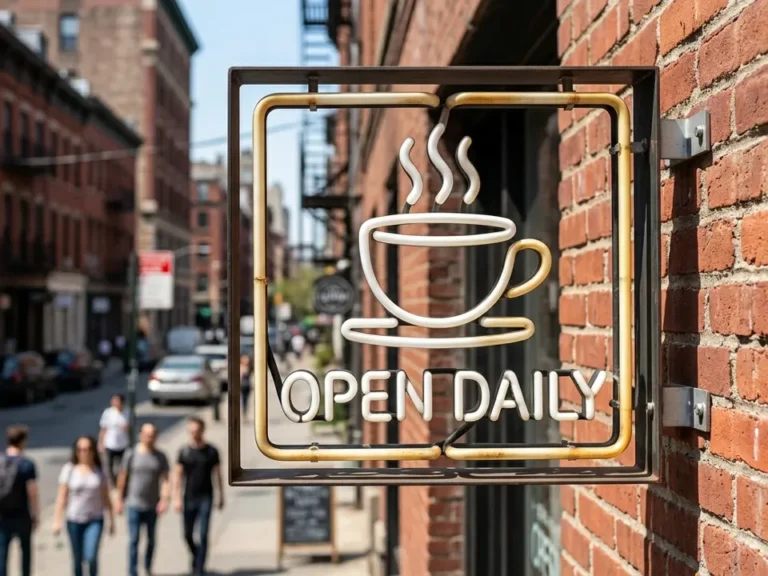
- Открытое лицо использует прозрачную грань (или нет лица), поэтому сами лампы видны, для ретро-обнаженного вида. Яркий и декоративный, обычно в паре со светодиодным искусственным неоном.
Вы также можете увидеть два варианта конструкции: буквы с боковым освещением, где свет выходит через полупрозрачные возвраты для декоративного свечения, и безраздельные буквы — спереди с подсветкой без видимых кромок триммера для более чистого и высокого уровня.
Практичное цветное примечание, которое ловит многих новых покупателей: белый цвет лучше всего читает ночью, а сплошной синий самый слабый, потому что он близок к цвету темного неба. Если цвет бренда должен быть темным, производители часто используют дневную/ночную пленку, которая показывает цвет бренда при дневном свете и светится белым после наступления темноты.
Типы освещения по сравнению
| Тип | Как он зажигается | Светодиодный источник внутри | относительная яркость | Стоимость — и почему | Лучшее для |
| Спереди освещенный (с подсветкой) | Свет через полупрозрачную грань | Светодиодные модули в сетке за гранью | Высокий (смелый, полнолицый) | Самые низкие из освещенных типов — один светодиодный слой | Магазины, розничная торговля — самые распространенные |
| Реверс / Halo-lit | твердая сторона; свет выливается сзади на стену | Модули или полоски на спине, направленные на стену | Средний (мягкий природный гало) | Выше, чем спереди, сплошная металлическая поверхность + стойка | Премиум офисы, лобби, стеновые |
| Комбинация (спереди + зад) | Сияние лица плюс гало вместе | Два светодиодных макета, часто два цвета | очень высокий | Самый высокий — два светодиодных слоя, часто два цвета | Флагман, высокоэффективные вывески бренда |
| открытый | Открытые лампы за прозрачной/отсутствующей стороной | Фальшивый светодиодный или открытый модули | Высокий, декоративный | Умеренный — один слой открытой лампы | Бары, ретро-темы, акцентные вывески |
Заметка о стоимости. Цена готового знака-канала варьируется в зависимости от рынка, размера, отделки, типа освещения и установки, поэтому любая отдельная цифра является лишь грубым показателем. На что вы можете положиться, так это на драйверы стоимости: спереди освещение является наиболее экономичным из освещенных стилей и комбинации самых дорогих, и в любом типе стоимость масштаба с буквами размером и глубиной, общим количеством светодиодов, классом чипа, рейтингом IP и количеством заказа. Когда вы получаете светодиодные компоненты непосредственно с завода, похожего на фирму, ценообразование зависит от этих факторов — отправьте размер письма, тип освещения и количество для точной цифры.
Материалы и качество сборки (что длится)
Большинство материальных решений сводятся к простому вопросу: где будет жить знак?
- Возврат: алюминий (обычно около 0,040–0,063″) по умолчанию — легкий, устойчивый к ржавчине и легко формируется. Для прибрежных, морских или высокозагрязняющих участков нержавеющая сталь (класс 304 или 316 для самых жестких мест солевого воздуха) намного лучше сопротивляется коррозии.
- Лицо: полупрозрачный акрил около 5 мм (3/16″) стандартный и хорошо рассеивает свет. Переключитесь на поликарбонат, где имеет значение ударопрочность — большие граны, знаки на уровне земли или места, подверженные вандой.
- Задняя часть: твердый алюминий для букв с подсветкой, прозрачный акрил или поликарбонат для букв ореола, чтобы свет мог проходить через стену.
- Крышка отделки или без триммера: УФ-устойчивая кепка обеспечивает прочный обработанный край; безтривиальная конструкция дает более чище и современное лицо.
Материалы по компонентам
| составляющий | Общие варианты | Типичная спецификация | Выбирайте, когда |
| Возврат (боковая стенка) | Алюминий / нержавеющая сталь | ~0,040–0,063 дюйма алюминий, 304 или 316 SS | SS для прибрежных / коррозионных алюминиевых для большинства проектов |
| грань | Акрил/поликарбонат | ~5 мм (3/16″) полупрозрачный | Поликарбонат для ударных, больших или склонных к вандалам лиц |
| зад | Твердый алюминий / прозрачный акрил или ПК | --- | Требуется Clear Back для букв Halo (обратная подсветка) |
| бордюр | Триммер / без стрижки | УФ-стабильный пластиковый колпачок | Безразличие для чистого современного образа |
| светодиодный источник | Модули / полоса типа S | 12–24 В пост. тока, IP65–IP67 | Полоски для изогнутых, скриптовых или мелководных букв |
Методы монтажа (гоночный путь против флеш против спонсора)
Метод крепления обычно определяется тем, кто владеет зданием и из чего сделана стена.
- Крепление для гоночной трассы: буквы предварительно установлены на тонком металлическом ящике (дорожке гоночной трассы), который держит проводку и драйвер; все устройство крепится к стене как одна деталь. Для этого требуется наименьшее количество дыр, поэтому арендодатели и управляющие недвижимостью часто предпочитают его. Гвозная дорожка окрашена в соответствии с фасадом, чтобы она отступила.
- Смыв/прямое крепление: каждая буква фиксируется непосредственно на фасаде здания, провод провода за фасадом. Он дает самый чистый и самый премиальный вид, но требует большего количества отверстий и доступа к интерьеру. В ореоле используются этот метод со стойкими прокладками, которые удерживают букву от стены для создания свечения.
- Крепление спонсора / проволоки: буквы расположены на панели большего размера или шкафу, который скрывает всю проводку и может добавлять второй цветной слой. Он идеально подходит для неровных или архитектурно сложных стен или когда вам нужна единая фирменная панель.
Для хитрых фасадов гибридный монтаж (например, буквы на небольшой дорожке, который затем фиксируется на башке) объединяет преимущества двух методов.
Стоит также взвесить и удобство: рейзовая дорожка или панель спонсора дают технику единый доступный отсек для достижения водителей и проводки, в то время как буквы заподлицо обычно обслуживаются из-за стены, что требует доступа к внутреннему дому.
Методы монтажа по сравнению
| метод | Проникновение стен | Скрывает проводку | взгляд | Лучшее для |
| дорожка для бега | Мало (одна рельс) | Да (внутри рельса) | Тонкая расписная коробка за буквами | арендованные помещения, ограничения арендодателя |
| Флэш / Прямо | Многие (на письмо) | За фасадом | Самый чистый, самый премиальный | Собственные здания; Halo Letters (с стойками) |
| Спонсор / проволочная | Мало или умеренно | Да (внутри панели) | Единая панель, дополнительный цветной слой | Неровные/сложные стены, фирменные панели |
Спецификация освещения, которая на самом деле определяет качество
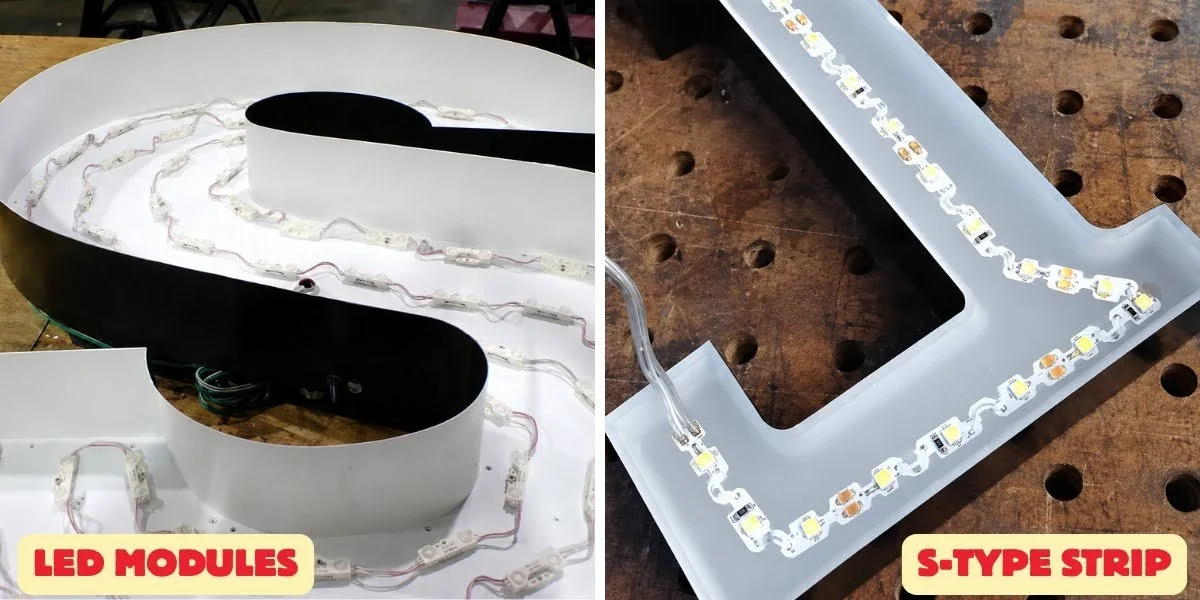
Это та часть, которую пропускают большинство путеводителей покупателя, и именно она отделяет вывеску, которая в течение многих лет светится равномерно, от горячих точек, темных полос или пятен в течение нескольких месяцев. Полная техника, стоящая за ним, описана в сопроводительном руководстве SignLiteled, Какое светодиодное освещение используется внутри подсвечиваемых вывесок;Вот что вам нужно решить как покупатель.
Какой источник света: модули или полосы
Внутри канала Channel Choice выбор прост: модули светодиодных знаков (SMD 2835 или SMD 5050 для RGB) — рабочая лошадка для стандартных печатных букв, а гибкие полосы S-типа берут верх для узких кривых, скрипт, логотипы и очень мелкие буквы, где жесткая сетка модулей не будет сидеть чисто.
Что означает «хорошее» освещение и что просить
Буква светится равномерно и продолжается в течение многих лет, когда освещение внутри ставит пять квадратов: широкая луч ~ 160° при правильном расстоянии модуля, плотно бинированные 3-ступенчатые микросхемы MACADAM, привод с постоянным током, правильный IP65 наружный, IP67 и водонепроницаемый драйвер, загруженный до ≤80%. Для решения покупки, чтобы купить эти две таблицы ниже, превратили это в выбор модуля и специальную схему.
Один звонок для создания — это цветовая температура — 6500K холодно-белый для четкого современного вида или 3000K теплого белого цвета для более мягкой и премиальной ощущения — плюс нужен ли вам RGB (SMD 5050) для эффектов изменения цвета.
Светодиодный модуль/Исправление по выбору
| Глубина письма и инсульт | Предлагаемый источник / оптика | Модули на фут (типично) | банкноты |
| Неглубокий 2–3″, одиночный ≤4″ такт | Низкопрофильный широкополый модуль или полоска типа S | ~4–6 / фут | труднее всего светиться равномерно, диффундировать лицо |
| Стандартный 4–8″, ≤4″ такт | Широкий луч ~ 160°, один ряд | ~3 / фут | Более глубокий возврат позволяет увеличить расстояние |
| 4–8″, >4″ многотактный | Широкий луч, несколько рядов | ~3 / фут × ряды | Добавьте строку на ~4″ штриха |
| Изогнутый / скрипт / логотип, любая глубина | S-тип 6 мм гибкая лента | непрерывный запуск | Следует за узкими радиусами без перекручивания |
| Halo / реверс-освещение | модули или полосы на спине | по макету | Даже светящаяся стена; стойки устанавливают зазор |
Рекомендуемые компоненты с значком
Для писем каналов именно эти компоненты, на которые стоит обратить внимание:
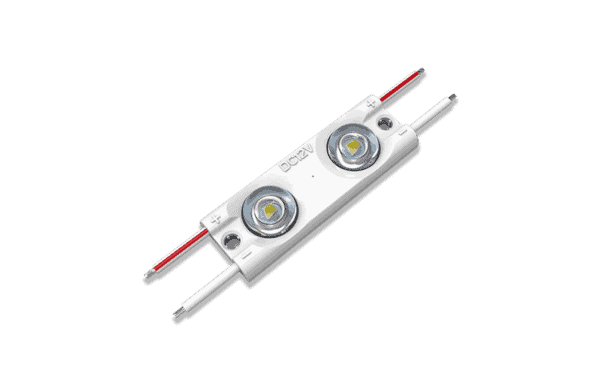
Свет модуля СИД одиночного цвета 2LED DC12V
- Открытая конструкция печатной платы для хорошего теплоотвода
- Сбой в условиях низкой освещенности для более длительного срока службы
- 9 В чипы высокой мощности светодиодные чипы для более яркой производительности и более высокой эффективности
- Конструкция постоянного тока для меньшего падения напряжения
- Подключить больше на цепочку
- 160° объектив для ровного освещения
- Подходит для тонких знаков
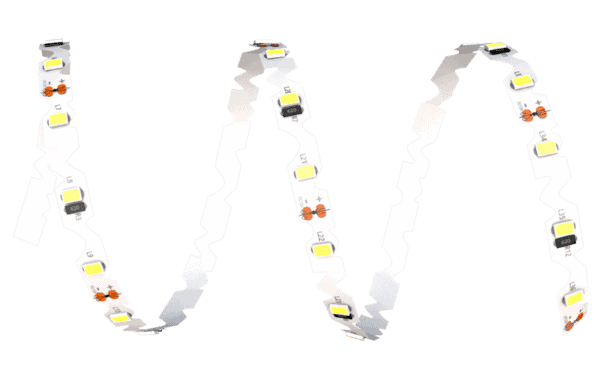
SMD2835 60LEDS 6 мм S-образный белый светодиодный светильник
- Тип светодиода: SMD2835
- Плотность светодиодов: 60 светодиодов/м
- Ширина печатной платы: 6 мм
- Дизайн полосы: S-образная гибкая печатная плата
- Цвет: белый
- Световая эффективность: 220 лм/Вт
- Входное напряжение: 12В/24В постоянного тока
- CRI (индекс цветопередачи): RA ≥ 80
- Угол луча: 120°
Все доступны с заводскими прямыми вещами с настройкой OEM/ODM и гарантией минимум 3 года. Для полного готового знака, а не только для компонентов, Signleteled также производит Пользовательские буквы с подсветкой и буквенные знаки к вашему логотипу и спецификациям.
Что указывать при запросе цитаты
Вставьте этот контрольный список прямо в свой запрос на цитату. Чем больше вы заполняете, тем точнее цитата — и тем меньше сюрпризов при установке. Каждый ниже параметр соответствует реальному решению, которое влияет на то, как выглядит знак или как долго он длится.
Контрольный список спецификаций
| Параметр | Пример значения для запроса | Почему это важно |
| тип освещения | Модули с подсветкой спереди | Устанавливает внешний вид и количество модулей |
| Светодиодный тип | SMD 2835 (белый) / SMD 5050 (RGB) | Выход и цвет |
| Цветовая температура | 6500K прохладно / 3000K теплая | Брендовый матч + дневная/ночь разборчивость |
| Консистенция цвета | ≤3-шаговый щебет (SDM) | Предотвращает неоднородные, синие/теплые белые лица |
| Угол луча | ~ 160° ширина объектива | Даже заливать, меньше горячих точек, меньше модулей |
| Тип привода | постоянный ток | Равная яркость от начала до конца |
| Напряжение | 12 В пост. тока (маленький) / 24 В пост. тока (большой) | Эффективность и проводка при длительных пробегах |
| Степень защиты IP | IP65 на открытом воздухе / IP67 прибрежный | Переживает дождь, пыль и влажность |
| Электропитание | Водонепроницаемость, постоянное напряжение, нагруженная ≤80% (например, средние колодцы, IP67) | Драйвер — обычная точка отказа |
| Сертификаты | UL/ETL/CE/ROHS | Разрешение и соответствие импорта |
| Гарантия / Срок службы люмен | 3–7 лет; ~ 50 000 ч (170) | Реалистичное ожидание жизненного цикла |
| Рабочая температура | ~20 °C до +50 °C | соответствовать установочным климатам |
Разрешения, коды и соответствие
Большинство установок с подсветкой каналов требуют двух разрешений: разрешение на вывеску (на размер, размещение и зонирование) и разрешение на электричество (для проводки). Несколько практических моментов:
- Перед изготовлением проверьте локальные коды знаков. Многие юрисдикции ограничивают общую площадь знака и ограничивают высоту, отступление и даже часы освещения — подтверждают эти ограничения перед изготовлением, поскольку готовый знак, который их нарушает, возможно, придется перестроить.
- Используйте компоненты, признанные кодом. Ищите светодиодные модули и блоки питания, внесенные в список UL/ETL; инспекторы и AHJ (власть, имеющие юрисдикцию) будут ожидать их, и они облегчают электрическую ставку.
- Большие знаки или знаки на крыше могут вызвать структурный обзор (ветров и нагрузки), поэтому убедитесь, что стена может нести вывеску раньше.
- Сохраните схему подключения и список компонентов в файле для проверки и последующего обслуживания.
Поскольку правила сильно различаются в зависимости от города и страны, рассматривайте это как контрольный список, который нужно поднять с помощью вашего установщика или местных властей, а не замены местного кода.
Сценарии применения
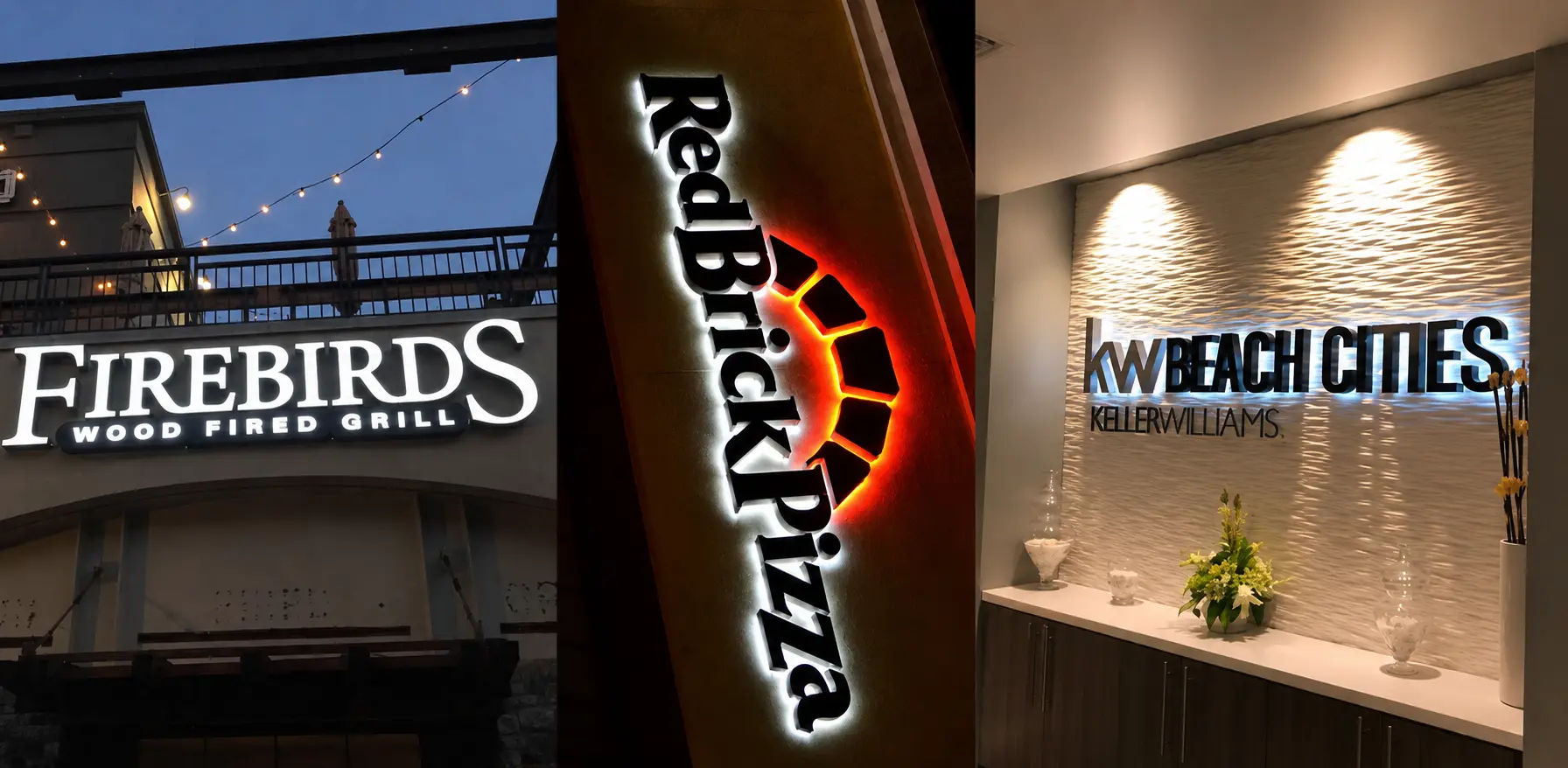
| став | Рекомендуемый тип | Спецификация освещения, чтобы запросить |
| Розничные магазины | спереди | 6500K Cool White Modules, ~160° объектив, IP65, 12 В |
| Рестораны и бары | открытый или комбинация | Фальшивый неон или теплые 3000K; RGB, где меняется цвет бренда |
| Корпоративные вестибюли и офисы | Реверс / Halo-Lit (внутри) | Теплый или нейтральный белый, даже задний свет; IP20–IP65 по местоположению |
| Торговые центры и многоместные бренды | Спереди освещенный, стандартный | Плотное трехэтапное биннинг SDM для соответствия цвета на разных сайтах; 24 В для больших прогонов |
Стандартизация светодиодных спецификаций в разных местах — это то, что делает белый национальный бренд идентичным от магазина к магазину, где именно здесь стоит тесный цветной биннинг.
Заключение
Выбор подсвеченного писем-буквы следует по четкому пути: выберите тип освещения, который соответствует бренду и бюджету, выбирайте материалы для окружающей среды, выбирайте способ монтажа для здания и собственности, а главное — правильно устанавливайте светодиодные спецификации. Этот последний шаг решает, выглядит ли знак ровным и ярким в течение многих лет или неоднородным и тусклым в течение нескольких месяцев: правильный рейтинг IP, плотно бинированные чипы, широкая лучевая модель с правым расстоянием и водонепроницаемый драйвер правильного размера.
Производитель вывесок и светодиодного освещения с 2011 года, подразумевает сертификацию UL, ETL, CE и RoHS и поддерживает каждый продукт с гарантией минимум 3 года. Наряду со светодиодными знаками и светодиодными лентами S-типа, которые проходят внутри них, он производит полный Подсветка буквенных знаков Фабрика-директ с кастомизацией OEM/ODM.
Готовы указать свой знак? Отправьте размер письма, тип освещения и количество для прямых цитат.

часто задаваемые вопросы
Похожие посты