Deutsch
  English
  简体中文
简体中文  Español
  Français
  Italiano
  日本語
日本語  한국어
한국어  Polski
  Português
  Русский
  Türkçe
  Nederlands
  Tiếng Việt
  ไทย
ไทย 
110V LED-Leuchtstreifen sind Hochspannungs-LED-Streifen, die für lange, kontinuierliche Beleuchtungsläufe ausgelegt sind. Sie werden über einen Gleichrichter oder einen fahrerlosen Strom über einen 110-V-Wechselstromeingang betrieben und ermöglichen es großen Projekten, weniger Netzteile und weniger Stromeinspritzpunkte zu verwenden.
Sie werden häufig für Gebäudeumrisse, Beschilderung im Freien, Fassadenbeleuchtung und andere kommerzielle oder architektonische Anwendungen verwendet. Im Vergleich zu 24-V-LED-Streifen sind 110-V-Streifen besser für lange Laufstrecken im Freien, während 24-V-Streifen sicherer und flexibler für kurze Innenbeleuchtung oder präzises Dimmen sind. Diese Anleitung erklärt, wie 110-V-LED-Leuchten funktionieren, wo sie verwendet werden, wie sie mit 12-V- und 24-V-Streifen verglichen werden und wie man ein sichereres, hochwertigeres Produkt auswählt.
Was sind 110V LED-Streifen?
110-V-LED-Leuchtmittel, auch als Hochspannungs-LED-Leuchtstreifen oder AC-LED-Leuchtmittel bezeichnet, sind flexible Beleuchtungsprodukte, die für den Betrieb von Netzstrom über ein Gleichrichtersystem ausgelegt sind. Wenn Sie eine tiefere technische Grundierung wünschen, hat Signlited auch eine entsprechende Anleitung zu Hochspannungs-LED-Streifenlicht.
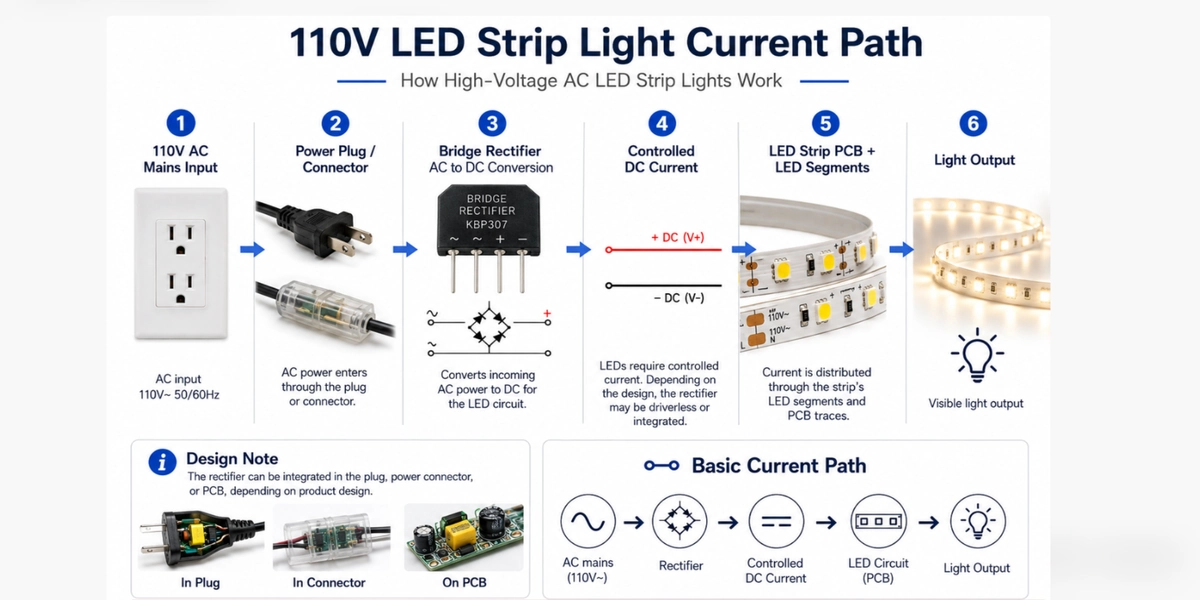
Der Schlüssel ist die AC-to-DC-Wandlung. LEDs benötigen einen kontrollierten Strom, so dass in einem 110-V-Streifensystem der ankommende Wechselstrom durch einen Gleichrichter oder eine treiberlose Schaltung umgewandelt wird, bevor die LED-Schaltung erreicht wird. Je nach Ausführung kann der Gleichrichter in den Stecker, den Netzstecker oder die Leiterplatte eingebaut werden.
Hier ist der grundlegende aktuelle Pfad:
Vorteile von 110V LED-Streifen
Der Wert von 110V LED-Leuchtstreifen ist nicht auf längere Läufe oder einfachere Installation beschränkt. In Engineering-Projekten ist jedes Merkmal von Bedeutung, da es Arbeitszeit, Wartungskosten, Systemzuverlässigkeit und Installationsrisiko beeinflusst.
| Merkmal | Projektvorteil |
| Langfristigkeit | Reduziert die Einspritzpunkte und vereinfacht die Verdrahtung über große Flächen. |
| Direkter Wechselstromeingang | Macht die Ferninstallation weniger abhängig von vielen separaten LED-Treibern. |
| Weniger Fahrer | Erstellt weniger Ausfallpunkte und kann Wartungsarbeiten nach der Installation reduzieren. |
| niedrigerer Spannungsabfall | Hilft bei längeren Läufen die Helligkeit konsistenter zu halten. |
| Outdoor-Eignung | Funktioniert gut für Beschilderungen, Fassadenumrisse und Außenbeleuchtung mit ordnungsgemäßer Abdichtung. |
| Skalierbares Systemdesign | Einfacher zu planen für große Gebäude, Einkaufszentren, Hotels und öffentliche Raumprojekte. |
Bei kleinen Regalleuchten können die oben genannten Vorteile geringfügig erscheinen. Wenn sie jedoch die Fassade eines 50 bis 60 Meter langen Gebäudes umreißen, werden sie unerlässlich.
Niemand will ein Projekt, bei dem die ersten zehn Meter rein und sauber aussehen, während das ferne Ende stumpf, vergilbt und leblos erscheint. Ebenso möchte niemand zehn Netzteile, die in Ecken versteckt sind, die fast unmöglich sind.
Aus diesem Grund haben 110-V-LED-Streifen mit ihren einzigartigen Vorteilen eine unersetzliche Rolle in solchen Anwendungen gemacht.
110 V VS 12 V VS 24 V LED Streifen
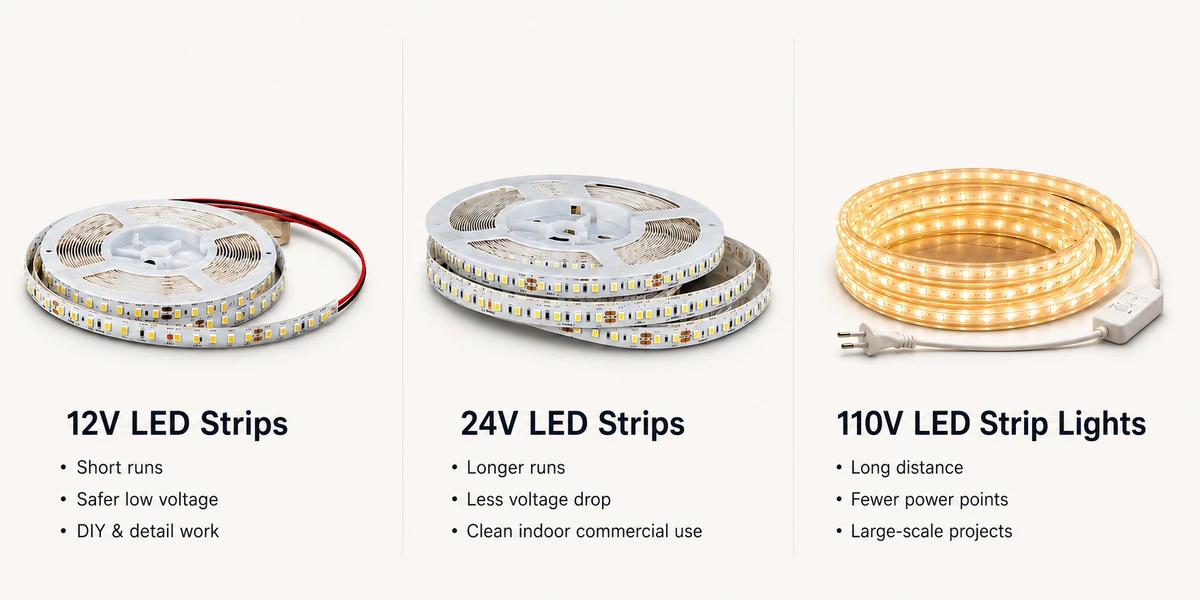
Dies ist wahrscheinlich der Vergleich, den den meisten Benutzern wirklich wichtig ist: Sollten Sie 12V, 24V oder 110V LED-Streifenleuchten wählen?
Ehrlich gesagt hängt es von fünf Faktoren ab: Installationsdistanz, Installationsumgebung, Sicherheitsanforderungen, Dimmanforderungen und der Umfang der Wartung, die Sie in Zukunft bereit sind.
Für eine umfassendere Diskussion über die Spannungsauswahl können Sie auch diesen Signlited-Artikel lesen. LED-Streifen mit niedriger Spannung und Hochspannung.
Wann wählen Sie 12V LED-Streifen
Wählen Sie 12V LED-Streifen für kurze, berührbare, detailreiche Bereiche: unter Schränken, Regalen, kleinen Schildern oder Heimwerkerprojekten. Die Spannung ist sicherer zu handhaben, Zubehör ist leicht zu finden und Schnittintervalle sind in der Regel für enge Layouts freundlich.
Wann wählen Sie 24V LED-Streifen
Wählen Sie 24-V-LED-Streifen, wenn Sie einen saubereren kommerziellen Innenlauf benötigen, ohne in Hochspannung zu springen. Sie sind beliebt in Hotelbuchten, Einzelhandelsausstellungslinien, Deckenschlitzen und Möbelbeleuchtung. Im Vergleich zu 12-V-Streifen handhaben 24-V-Streifen normalerweise längere Läufe mit weniger Spannungsabfall.
Wann wählen Sie 110V LED-Streifen
Wählen Sie 110V LED-Leistescheinwerfer, wenn Distanz und Maßstab das Projekt dominieren. Baustellenbeleuchtung, lange Korridorakzente und große Fassadenbeleuchtung sind typische Beispiele. Der Vorteil ist nicht nur die Helligkeit, sondern die System-Einfachheit. Sie reduzieren die Anzahl der Stellen, an denen etwas schief gehen kann.
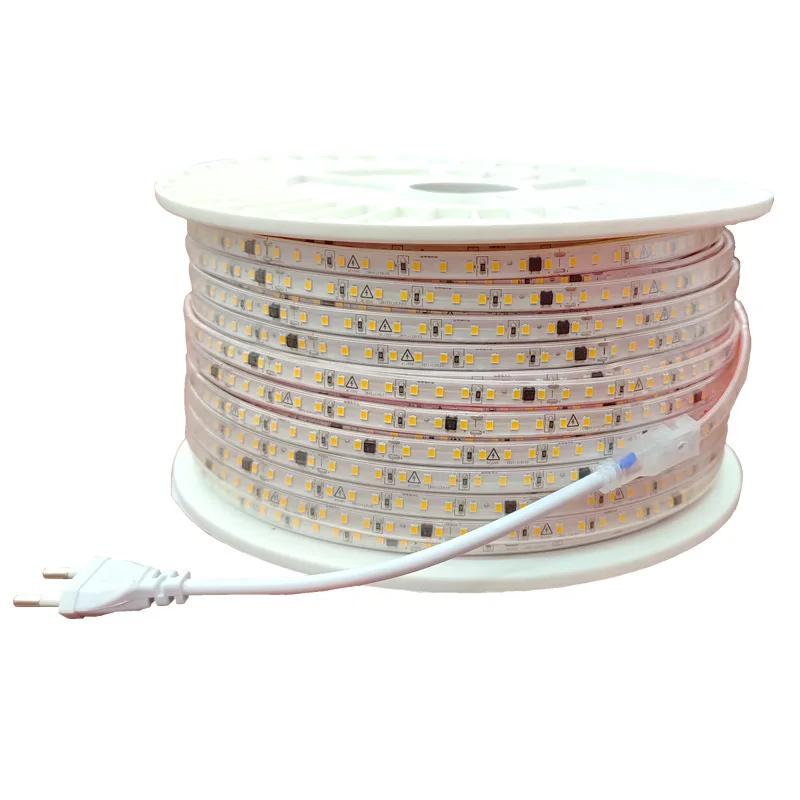
110V/220V AC Hochspannungs-LED-Streifenleuchten ohne Treiber
Treiberlose Hochspannungs-LED-Streifen sind LED-Streifen, die mit einer höheren Spannung betrieben werden als die Standard-Niederspannung, die in den meisten LED-Streifen verwendet wird. Da sie mit Wechselstrom betrieben werden, werden sie auch als AC-LED-Streifen bezeichnet, z. B. AC110V/120V/230V/240V-LED-Streifen.
Hauptmodell: EQW10T120G
LED-Typ: SMD2835/SMD5050
LED-Anzahl pro Meter: 60/80/120@SMD2835, 60@SMD5050
PCB Breite: 10mm/12mm
Länge: 50 m
Eingangsspannung: AC120V/AC220V
Leistung pro Meter: 10W/7W
Farbtemperatur: 2700K/3000K/4000K/5000K/6500K/RGB
Schutzart: IP67/IP68
Garantie: 3 Jahre
Die Funktion oben unterstützt die Anpassung.
Beste Anwendungen für 110V LED-Streifenleuchten
Die beste Anwendung für 110V LED-Leuchten ist nicht einfach irgendein Outdoor-Projekt. Sie sind am stärksten, wenn der Lauf lang ist, der Zugang schwierig ist und weniger Strompunkte, was die Installation sicherer und pflegeleichter machen kann. Typische Anwendungen sind Baustellenbeleuchtung, Brücken- und Tunnelprojekte, Gebäudeumrisse, Fassadenbeleuchtung und ausgewählte große Gewerbeflächen. Die Beschilderung im Freien kann nur für bestimmte langgrenze Designs in Betracht gezogen werden, ist jedoch normalerweise nicht die Hauptanwendung.
| Anmeldung | Empfehlung | Warum |
| Baustellenbeleuchtung | Ausgezeichnet | Unterstützt lange temporäre oder semi-permanente Läufe für Hauptbeleuchtung und Sicherheitswarnzonen. |
| Brücken- und Tunnelbau | Ausgezeichnet | Nützlich für die kontinuierliche Beleuchtung und Warnführung über lange, schwer zugängliche Arbeitsbereiche. |
| Gebäude-Umrissbeleuchtung | Ausgezeichnet | Lange Läufe und gleichbleibende Helligkeit sind erforderlich. |
| Kommerzielle Fassaden | Ausgezeichnet | Reduziert die Komplexität der Verkabelung über große Höhen. |
| Hotel Cove Beleuchtung | Gut | Nützlich, wenn lange kontinuierliche Durchläufe benötigt werden. |
| Einkaufszentrum Dekoration | Gut | Geeignet für großflächige kommerzielle Beleuchtungszonen. |
| Beleuchtung der Landschaft | Gut | Funktioniert gut, wenn das Abdichten und Abdichten richtig ausgelegt ist. |
| Aussenschild | begrenzt | Keine primäre Verwendung; nur für bestimmte lange Grenz- oder Perimeterbeleuchtung in Betracht ziehen. |
| Wohnraumunterschrankbeleuchtung | Nicht empfohlen | Niederspannungsstreifen sind in der Regel sicherer und einfacher. |
| Kurze dekorative Beleuchtung | Nicht ideal | 12V- oder 24V-Streifen sind in der Regel praktischer. |
Baustellenbeleuchtung
Baustellenbeleuchtung ist eine der praktischen Anwendungen für 110V LED-Leuchtstreifen. Im Brückenbau, Tunnelbau, Straßenarbeiten und temporären Baustellen im Freien wird häufig eine lange kontinuierliche Beleuchtung für die Hauptbeleuchtung, Warnbeleuchtung, Routenführung und Sicherheitsmarkierung benötigt.
Mit 110-V-LED-Leuchtstreifen können Installateure die wiederholte Energieeinspritzung reduzieren, die temporäre Verkabelung vereinfachen und längere Bereiche wie Tunnelwände, Brückenführungsschienen, Gerüste, temporäre Zäune und Zufahrtsstraßen abdecken.
Gebäude-Umrissbeleuchtung
Dies ist einer der stärksten Anwendungsfälle. Lange Dachlinien, Wandkanten, Brückenumrisse und Konturen von Gewerbegebäuden benötigen eine kontinuierliche Beleuchtung. Mit 110-V-LED-Leuchtstoffen können Installateure wiederholte Einspritzung reduzieren und das Layout sauberer halten.
Beleuchtung des Hotels und Einzelhandelsbucht
Für lange Buchtfahrten in Hotels, Einkaufszentren und Einzelhandelsräumen können 110-V-Streifen die Energieplanung vereinfachen. Wenn das Projekt jedoch sehr präzise Dimmung, kurze Schnittlängen oder berührungssichere Niederspannungsbetriebe benötigt, ist 24 V möglicherweise die bessere Option.
wo 110V LED-Streifen nicht empfohlen werden
Vermeiden Sie 110-V-LED-Streifen für kurze dekorative Teile, kleine Heimwerkerarbeiten, Bereiche, an denen Menschen häufig den Streifen berühren, oder Installationen, die sehr kurze Abstände benötigen. Größer ist nicht immer besser. Manchmal ist ein Niederspannungsstreifen das intelligentere Werkzeug.
Projektbeispiel 1: Baustellenbeleuchtung
Häufige Probleme mit 110V LED-Streifen
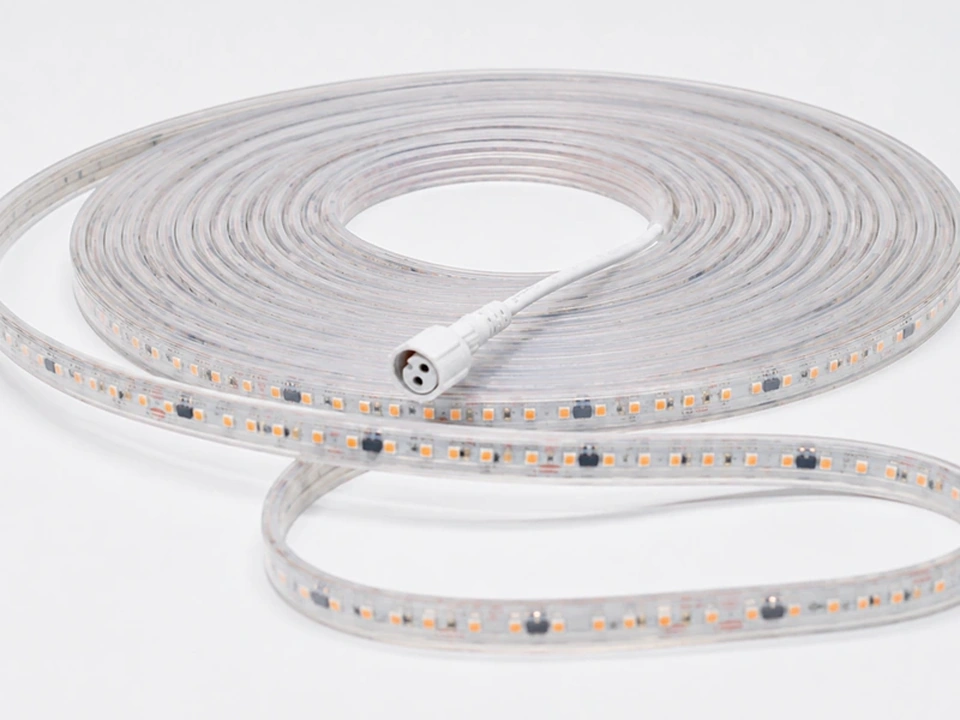
In realen Projekten kommen häufige Fehler normalerweise von schwachen Materialien, schlechter Dichtung, Gleichrichtern von geringer Qualität, unzuverlässigen Steckern oder der Verwendung eines falschen Produkts für die Umwelt. Die meisten dieser Probleme können durch Überprüfung der vollständigen Beleuchtungsanlage vor der Installation verhindert werden.
| Problematik | Gemeinsamkeit | Wie man es vermeidet |
| Flimmern | Gleichrichter oder Schaltungsdesign | Wählen Sie ein flimmerfreies Gleichrichtersystem und testen Sie Proben vor dem Großauftrag. |
| Vergilbung | minderwertige PVC-Mantel oder schlechte UV-Beständigkeit | Verwenden Sie UV-beständiges PVC oder Silikon für Outdoor-Projekte. |
| Überhitzung | Schlechte Leiterplatte, Überlastung oder schwache Wärmeableitung | Überprüfen Sie die Kupferdicke, die Leistung und die Betriebstemperatur. |
| unsichere Anschlüsse | Lose oder nicht zertifizierte Verbindungsdesign | Verwenden Sie geformte, wasserdichte und projektbestimmte Steckverbinder. |
| Wasserdichter Ausfall | Schwache Abdichtung an Schnitten, Endkappen oder Steckverbindern | Verwenden Sie Spritzguss-Endkappen und ordnungsgemäße Versiegelung. |
| Inkonsistente Helligkeit | Spannungsabfall, schlechte LED-Binning oder überlasteter Lauf | Wählen Sie die richtige Lauflänge, das LED-Binning und das Installationslayout. |
Flimmern ist oft das erste Warnzeichen. Es kann ein Schild nicht sofort ruinieren, aber es sagt Ihnen, dass der Gleichrichter oder das Schaltungsdesign möglicherweise schwach ist. Das Vergilben ist ein weiterer langsamer Fehler. Ein Streifen kann im ersten Monat gut aussehen, dann wird die Jacke nach langer UV-Bestrahlung trüb. Wasserdichter Ausfall ist noch schwerwiegender, da Wasser selten durch einen gut gemachten Streifen eindringt und sich normalerweise durch Schnittpunkte, Endkappen oder Steckverbinder schleicht.
Deshalb sollte sich die Qualitätskontrolle auf das gesamte System konzentrieren, nicht nur die LED-Chips. Ein Streifen ist wie eine Kette über einem Gebäude. Wenn ein Connector ausfällt, kann die gesamte visuelle Linie brechen.
Sind 110V LED-Leuchten sicher?
Ja, 110-V-LED-Leuchten können sicher sein, wenn sie ordnungsgemäß konstruiert, isoliert, zertifiziert und installiert sind. Da sie bei einer höheren Spannung als 12V oder 24V-Streifen arbeiten, benötigen sie einen stärkeren Schutz und eine sorgfältigere Handhabung.
Um die Sicherheit zu gewährleisten, müssen Sie zunächst die elektrische Isolierung überprüfen. Außenleuchten mit 110 V LED-Leuchten sollten mit einer starken Schutzhülle, zuverlässigen Endkappen und einem sicheren Verbindungssystem ausgestattet sein. Suchen Sie bei öffentlichen Engineering-Projekten nach relevanten Zertifizierungszeichen oder anderen Genehmigungen, die vom Zielmarkt und den örtlichen Vorschriften gefordert werden. Signlited bietet Produkte mit Zertifizierungen wie UL, ETL, CE und RoHS an, was es zu einer vertrauenswürdigen Wahl für die Projektbeschaffung macht.
Die Installation sollte strengen Regeln folgen: Schneiden Sie den Streifen niemals während des Einschaltens, überschreiten Sie niemals die maximale Lauflänge, verwenden Sie nur kompatibles Zubehör, versiegeln Sie jeden Schnittpunkt und befolgen Sie die örtlichen elektrischen Vorschriften. Für große kommerzielle Projekte wird eine professionelle Installation dringend empfohlen.
Wie man hochwertige 110V LED-Leuchtstreifen wählt
Bei der Auswahl von 110-V-LED-Leuchten sollten Sie sich nicht nur auf den Preis pro Meter konzentrieren. Für kommerzielle und Outdoor-Projekte kommt der wahre Wert von zuverlässigen Komponenten, darunter eine hochwertige Leiterplatte, stabile LED-Chips, ein flimmerfreier Gleichrichter, UV-beständiges PVC oder Silikon, wasserdichte Anschlüsse und sachgerechte Zertifizierungen wie UL, ETL, CE oder RoHS.
Ein ausgezeichneter Lieferant wie Signlited unterstützt auch benutzerdefinierte Längen, Farbtemperaturen, IP-Werte und Steckverbinderoptionen, sodass das Produkt besser an die tatsächliche Installationsumgebung angepasst und zukünftige Wartungsrisiken verringert wird. Damit kann das Produkt der tatsächlichen Installationsumgebung entsprechen und zukünftige Wartungsrisiken verringert werden.
Wählen Sie einen Hersteller mit Projektunterstützung
Ein zuverlässiger Lieferant sollte Ihnen bei der Auswahl der Spannung, der Bestimmung der IP-Bewertung, der Auswahl des Steckertyps, der Farbtemperaturanpassung und der Installationsplanung helfen. Wenn Ihr Projekt auch eine Niederspannung betrifft COB LED-Streifen oder SMD LED-StreifenWeitere Informationen finden Sie schnell auf der Produktseite von Signlited. Für dynamische Hochspannungs-RGB-Beleuchtungseffekte können Sie sich auch im Handbuch von Signlited beziehen auf 110V und 220 V AC adressierbare RGB LED-Streifen.
Abschluss
110V LED-Leuchtstreifen sind für die Waage gebaut. Wenn Sie eine lange, kontinuierliche Beleuchtung für Gebäudeumrisse, Beschilderungen, Fassaden, Landschaften, Hotels oder kommerzielle Projekte benötigen, können sie den Spannungsabfall reduzieren, die Verdrahtung vereinfachen und die Anzahl der Power-Injection-Punkte verringern. Das ist ein echter Projektvorteil, nicht nur ein Produktmerkmal.
Aber das richtige Produkt zählt. Schauen Sie über den Preis hinaus und überprüfen Sie die Leiterplatte, den Gleichrichter, die LED-Chips, wasserdichte Materialien, die Steckverbinder, die Zertifizierungen und den Support des Lieferanten. Ein starkes 110-V-LED-Streifensystem sollte hell, stabil, versiegelt, sicher und pflegeleicht sein.
Benötigen Sie Hilfe bei der Auswahl von 110-V-LED-Streifen für ein Gebäude mit Umrissen, Beschilderungen oder kommerziellen Beleuchtungsprojekten? Wenden Sie sich an das Signlited-Team, um Produktempfehlungen, benutzerdefinierte Spezifikationen, Abdichtungsoptionen und Projektunterstützung zu erhalten.
FAQs
Verwandte Artikel