Italiano
  English
  简体中文
简体中文  Deutsch
  Español
  Français
  日本語
日本語  한국어
한국어  Polski
  Português
  Русский
  Türkçe
  Nederlands
  Tiếng Việt
  ไทย
ไทย 
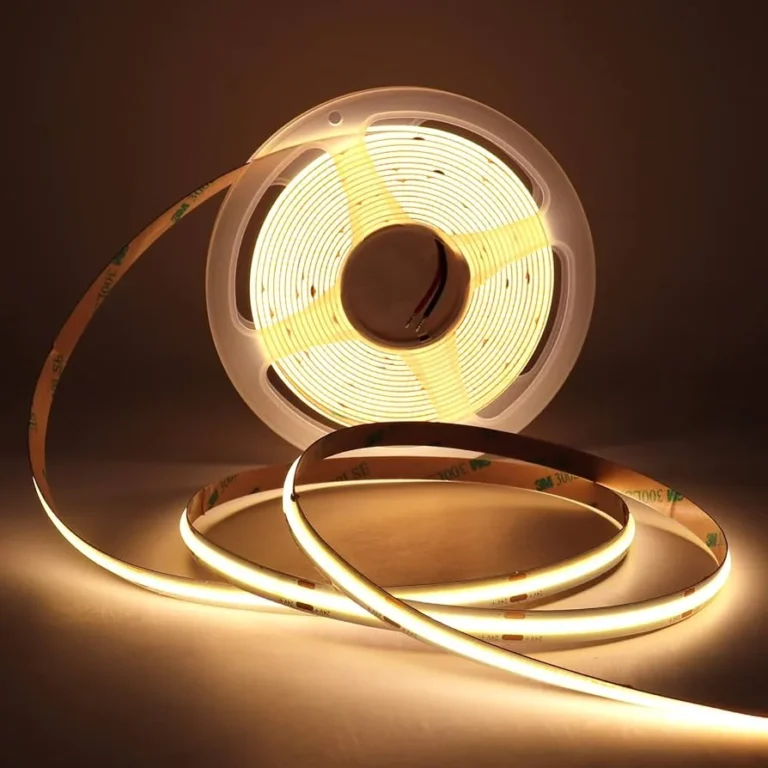
Le luci a strisce a LED da 110 V sono strisce LED ad alta tensione progettate per lunghe e continue illuminazione. Alimentati da un ingresso CA a 110 V tramite un raddrizzatore o un circuito senza driver, consentono a grandi progetti di utilizzare meno alimentatori e meno punti di iniezione di potenza.
Sono comunemente usati per contorni di edifici, segnaletica esterna, illuminazione per facciate e altre applicazioni commerciali o architettoniche. Rispetto alle strisce LED da 24 V, le strisce da 110 V sono migliori per lunghe corse all'aperto, mentre le strisce da 24 V sono più sicure e più flessibili per l'illuminazione interna corta o l'attenuazione precisa. Questa guida spiega come funzionano le luci a strisce a LED da 110 V, dove usarle, come si confrontano con le strisce da 12 V e 24 V e come scegliere un prodotto più sicuro e di qualità superiore.
Cosa sono le lampade a LED da 110 V?
Le luci a strisce a LED da 110 V, chiamate anche luci a strisce a LED ad alta tensione o luci a LED CA, sono prodotti di illuminazione flessibili costruiti per funzionare da alimentazione CA a livello di rete attraverso un sistema di raddrizzatore. Se desideri un primer tecnico più profondo, SignLiteled ha anche una guida correlata Luce a strisce LED ad alta tensione.
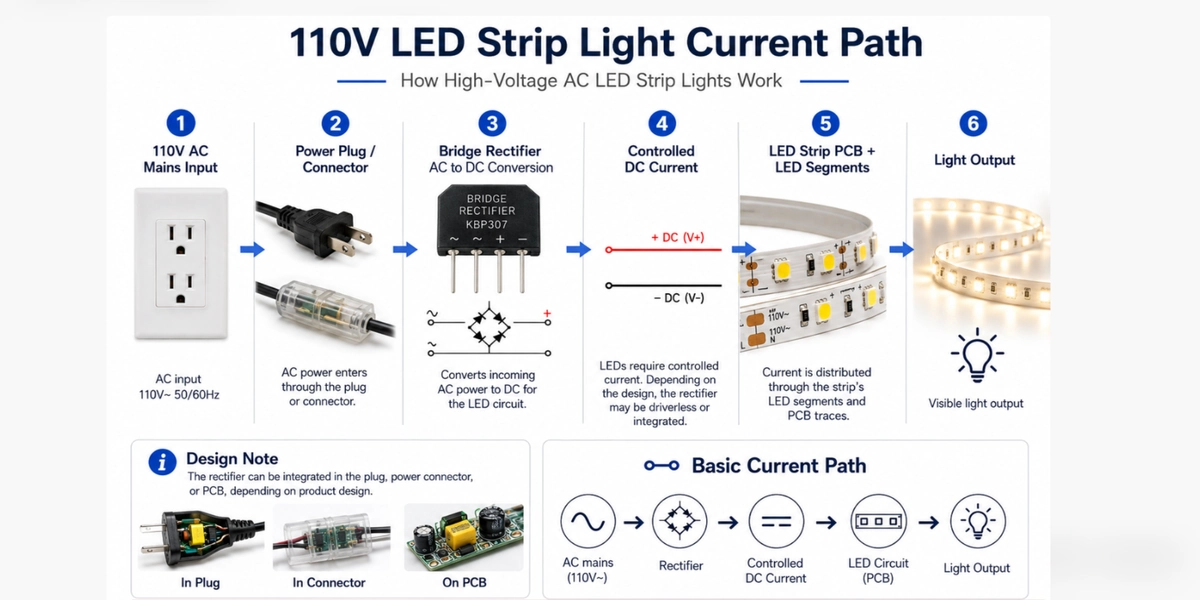
La chiave è la conversione da AC a DC. I LED necessitano di una corrente controllata, quindi in un sistema a strisce da 110 V, l'alimentazione CA in entrata viene convertita da un raddrizzatore o da un circuito senza driver prima di raggiungere il circuito LED. A seconda del design, il raddrizzatore può essere integrato nella spina, nel connettore di alimentazione o nella PCB.
Ecco il percorso di base corrente:
Vantaggi delle luci a strisce a LED da 110 V
Il valore delle luci a strisce a LED da 110 V non è limitato a corse più lunghe o all'installazione più semplice. Nei progetti di ingegneria, ogni caratteristica è importante perché influisce sul tempo di lavoro, sui costi di manutenzione, sull'affidabilità del sistema e sul rischio di installazione.
| Caratteristica | Beneficio del progetto |
| Capacità di lungo periodo | Riduce i punti di iniezione di potenza e semplifica il cablaggio su vaste aree. |
| Ingresso CA diretto | Rende l'installazione a lunga distanza meno dipendente da molti driver LED separati. |
| Meno driver | Crea meno punti di guasto e può ridurre i lavori di manutenzione dopo l'installazione. |
| Caduta di tensione inferiore | Aiuta a mantenere la luminosità più coerente su tutte le corse più lunghe. |
| idoneità all'aperto | Funziona bene per segnaletica, contorni della facciata e illuminazione esterna con un'adeguata impermeabilizzazione. |
| Progettazione scalabile | Più facile da pianificare per grandi edifici, centri commerciali, hotel e progetti di spazi pubblici. |
Per i piccoli apparecchi di illuminazione a scaffale, i vantaggi sopra menzionati possono sembrare minori. Ma quando viene utilizzato per delineare la facciata di un edificio lungo da 50 a 60 metri, diventano essenziali.
Nessuno vuole un progetto in cui i primi dieci metri sembrano puri e puliti, mentre l'estremità più lontana appare opaca, ingiallita e senza vita. Allo stesso modo, nessuno vuole che dieci adattatori di alimentazione nascosti negli angoli a cui è quasi impossibile accedere.
Ecco perché le luci a strisce a LED da 110 V, con i loro vantaggi unici, hanno stabilito un ruolo insostituibile in tali applicazioni.
110 V vs 12 V vs 24 V LED Strip Lights
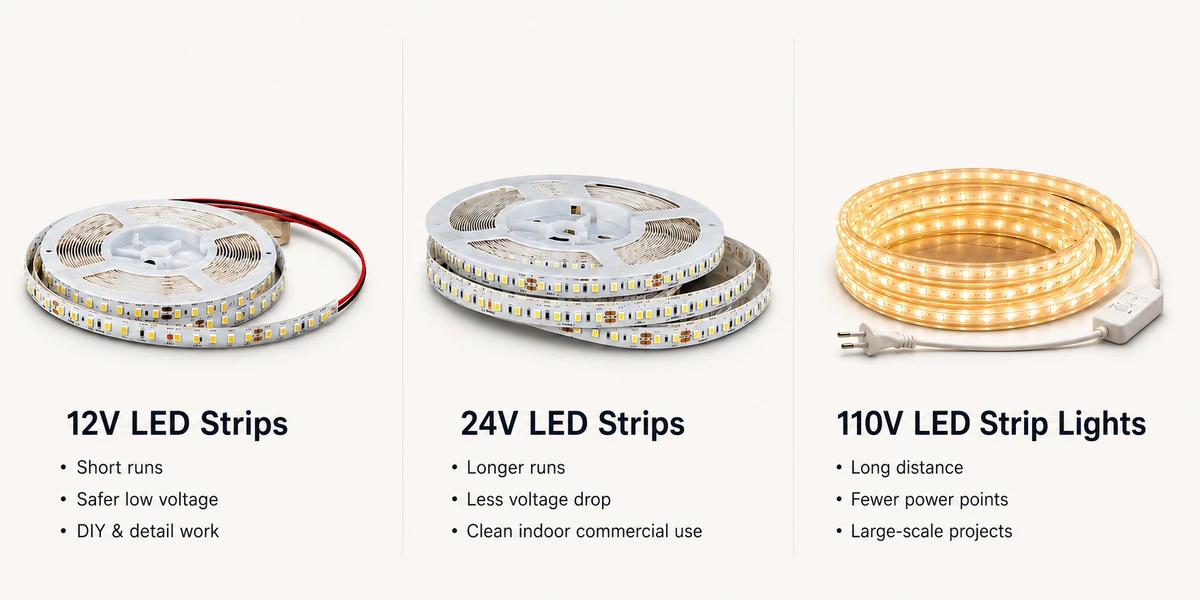
Questo è probabilmente il confronto a cui la maggior parte degli utenti si preoccupa veramente: dovresti scegliere le luci a strisce a 12V, 24V o 110V?
Francamente, dipende da cinque fattori: distanza di installazione, ambiente di installazione, requisiti di sicurezza, esigenze di regolazione e quantità di manutenzione che sei disposto a gestire in futuro.
Per una discussione più completa sulla selezione della tensione, puoi anche leggere questo articolo su SignLite Strip lampade a LED ad alta tensione e bassa tensione.
Quando scegliere strisce LED da 12 V
Scegli strisce LED da 12 V per aree brevi, toccabili e ricche di dettagli: sotto armadi, scaffali per espositori, piccoli insegne o progetti fai-da-te domestici. La tensione è più sicura da maneggiare, gli accessori sono facili da trovare e gli intervalli di taglio sono generalmente amichevoli per layout stretti.
Quando scegliere strisce LED da 24 V
Scegli strisce LED da 24 V quando hai bisogno di una corsa commerciale interna più pulita senza saltare in alta tensione. Sono popolari nelle calette degli hotel, nelle linee di visualizzazione al dettaglio, nelle fessure per soffitto e nell'illuminazione dei mobili. Rispetto alle strisce da 12 V, le strisce da 24 V di solito gestiscono corse più lunghe con una minore caduta di tensione.
Quando scegliere strisce LED da 110 V
Scegliere le luci a strip LED da 110 V quando la distanza e la scala dominano il progetto. L'illuminazione del cantiere, gli accenti di corridoi lunghi e l'illuminazione della facciata di grandi dimensioni sono esempi tipici. Il vantaggio non è solo la luminosità, è la semplicità del sistema. Stai riducendo il numero di posti in cui qualcosa può andare storto.
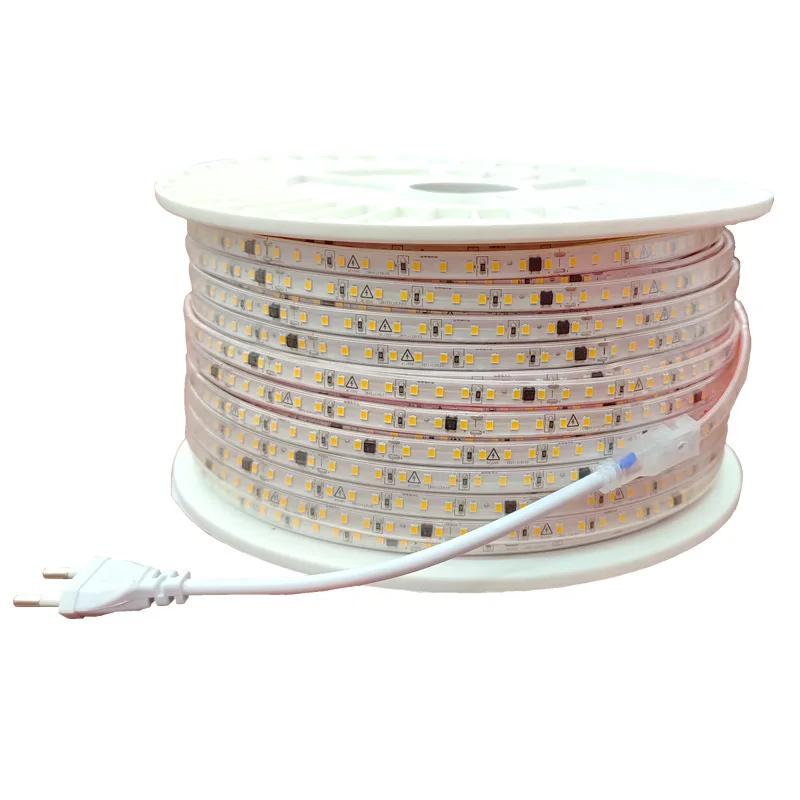
110V/220V AC Striscia di luci LED senza conducente ad alta tensione
Le strisce LED senza driver ad alta tensione sono strisce LED che funzionano a una tensione superiore rispetto alla bassa tensione standard utilizzata nella maggior parte delle strisce LED. Essendo alimentate da corrente alternata, sono note anche come strisce LED AC, come ad esempio le strisce LED AC110V/120V/230V/240V.
Modello principale: EQW10T120G
Tipo di LED: SMD2835/SMD5050
Q.tà di LED per metro: 60/80/120@SMD2835, 60@SMD5050
Larghezza PCB: 10 mm/12 mm
Lunghezza: 50 m
Tensione di ingresso: AC120V/AC220V
Potenza per metro: 10W/7W
Temperatura colore: 2700K/3000K/4000K/5000K/6500K/RGB
Grado IP: IP67/IP68
Garanzia: 3 anni
Sopra la funzione supporta la personalizzazione.
Le migliori applicazioni per lampade a strisce a LED da 110 V
La migliore applicazione per le luci a strisce a LED da 110 V non è semplicemente un progetto all'aperto. Sono più forti dove la corsa è lunga, l'accesso è difficile e meno punti di alimentazione, che possono rendere l'installazione più sicura e più facile da mantenere. Le applicazioni tipiche includono l'illuminazione da cantiere, i progetti di ponti e tunnel, i contorni degli edifici, l'illuminazione della facciata e i grandi spazi commerciali selezionati. La segnaletica esterna può essere considerata solo per specifici progetti di confine lungo, ma di solito non è l'applicazione principale.
| Applicazione | raccomandazione | Perché |
| Illuminazione in cantiere | Eccellente | Supporta corse lunghe temporanee o semipermanenti per le zone di illuminazione e di sicurezza principali. |
| Costruzione di ponti e tunnel | Eccellente | Utile per l'illuminazione continua e la guida di avviso in aree di lavoro lunghe e di difficile accesso. |
| Illuminazione del contorno | Eccellente | Sono necessarie lunghe corse e una luminosità costante. |
| Illuminazione per facciate commerciale | Eccellente | Riduce la complessità del cablaggio su grandi quote. |
| Illuminazione della baia dell'hotel | Buono | Utile quando sono necessarie lunghe corse continue. |
| Decorazione del centro commerciale | Buono | Adatto per zone di illuminazione commerciale su larga scala. |
| Illuminazione del paesaggio | Buono | Funziona bene quando l'impermeabilizzazione e la sigillatura sono progettate correttamente. |
| segnaletica esterna | limitato | Non è un uso primario, considera solo per illuminazione specifica del bordo lungo o perimetrale. |
| Illuminazione residenziale sotto il mobile | sconsigliato | Le strisce a bassa tensione sono generalmente più sicure e più facili. |
| Illuminazione breve | non ideale | Le strisce da 12V o 24V sono generalmente più pratiche. |
Illuminazione in cantiere
L'illuminazione da cantiere è una delle applicazioni pratiche per le luci a strisce a LED a 110 V. Nella costruzione di ponti, nella costruzione di tunnel, nei lavori stradali e nei cantieri temporanei all'aperto, spesso è necessaria una lunga illuminazione continua per l'illuminazione principale, l'illuminazione di avvertimento, la guida del percorso e la marcatura di sicurezza.
Con le luci a LED a 110 V, gli installatori possono ridurre l'iniezione di corrente ripetuta, semplificare il cablaggio temporaneo e coprire aree più lunghe come pareti a tunnel, guardrail di ponti, impalcature, recinzioni temporanee e strade di accesso.
Illuminazione di contorno dell'edificio
Questo è uno dei casi d'uso più forti. Lunghi linee di tetto, bordi di pareti, contorni di ponti e contorni di edifici commerciali necessitano di un'illuminazione continua. Con le luci a strisce a LED da 110 V, gli installatori possono ridurre l'iniezione di potenza ripetuta e mantenere il layout più pulito.
Illuminazione per alberghi e negozi
Per le lunghe corse di calette in hotel, centri commerciali e interni al dettaglio, le strisce da 110 V possono aiutare a semplificare la pianificazione dell'energia. Tuttavia, se il progetto necessita di un'attenuazione molto precisa, lunghezze di taglio corto o operazioni a bassa tensione per touch-safe, 24V potrebbe essere l'opzione migliore.
dove le strisce LED da 110 V non sono consigliate
Evita le strisce LED da 110 V per brevi pezzi decorativi, piccoli lavori fai-da-te domestici, aree in cui le persone toccano frequentemente la striscia o installazioni che necessitano di intervalli di taglio molto corto. Più grande non è sempre meglio. A volte una striscia a bassa tensione è lo strumento più intelligente.
Esempio di progetto 1: illuminazione da cantiere
Problemi comuni con lampade a strisce a LED da 110 V
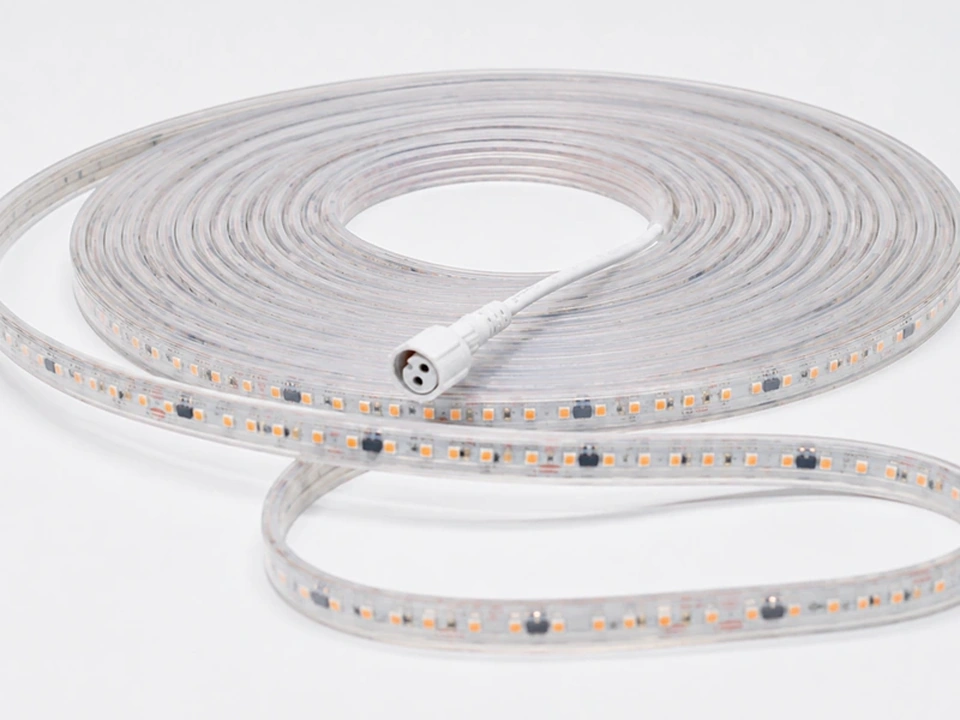
Nei progetti reali, i guasti comuni di solito derivano da materiali deboli, sigillatura scadente, raddrizzatori di bassa qualità, connettori inaffidabili o utilizzando il prodotto sbagliato per l'ambiente. La maggior parte di questi problemi può essere evitata controllando il sistema di illuminazione completo prima dell'installazione.
| affare | causa comune | Come evitarlo |
| Sfarfallio | Raddrizzatore o design di circuiti di bassa qualità | Scegli un sistema di raddrizzatore senza sfarfallio e testa i campioni prima dell'ordine di massa. |
| Ingiallimento | Giacca in PVC di bassa qualità o scarsa resistenza ai raggi UV | Utilizzare PVC o silicone resistente ai raggi UV per progetti all'aperto. |
| surriscaldamento | Scarsa PCB, sovraccarico o debole dissipazione del calore | Controllare lo spessore, la potenza e la temperatura di esercizio del rame. |
| Connettori non sicuri | Progettazione di connessione allentata o non certificata | Utilizzare connettori stampati, impermeabili e approvati dal progetto. |
| Guasto impermeabile | Sigillatura debole a tagli, tappi terminali o connettori | Utilizzare tappi terminali stampati ad iniezione e procedure di tenuta adeguate. |
| Luminosità incoerente | Caduta di tensione, scarsa binning LED o corsa sovraccarica | Scegli la lunghezza di esecuzione corretta, il binning LED e il layout di installazione. |
Lo sfarfallio è spesso il primo segnale di avvertimento. Potrebbe non rovinare immediatamente un segno, ma ti dice che il raddrizzatore o il design del circuito potrebbe essere debole. L'ingiallimento è un altro fallimento lento. Una striscia può sembrare a posto nel primo mese, quindi la giacca diventa torbida dopo una lunga esposizione ai raggi UV. Il fallimento dell'impermeabilità è ancora più grave perché l'acqua entra raramente attraverso il centro di una striscia ben fatta; di solito si intrufola attraverso punti di taglio, tappi terminali o connettori.
Ecco perché il controllo di qualità dovrebbe concentrarsi sull'intero sistema, non solo sui chip LED. Una striscia è come una catena attraverso un edificio. Se un connettore si guasta, l'intera linea visiva può rompersi.
Le luci di striscia a LED da 110 V sono sicure?
Sì, le luci a strisce a LED da 110 V possono essere sicure quando sono adeguatamente progettate, isolate, certificate e installate. Poiché funzionano a una tensione superiore a strisce a 12 V o 24 V, richiedono una protezione più forte e una maneggevolezza più attenta.
Per garantire la sicurezza, il primo passo è controllare l'isolamento elettrico. Le luci di striscia a LED da esterno da 110 V devono essere dotate di una robusta custodia protettiva, tappi terminali affidabili e un sistema di connessione sicuro. Per i progetti di ingegneria pubblica, cercare i marchi di certificazione pertinenti o altre approvazioni richieste dal mercato di riferimento e dalle normative locali. SignLiteled fornisce prodotti con certificazioni come UL, ETL, CE e RoHS, rendendolo una scelta affidabile per l'approvvigionamento di progetti.
L'installazione deve seguire regole rigorose: non tagliare mai la striscia mentre è accesa, non superare mai la lunghezza massima nominale nominale, utilizzare solo accessori compatibili, sigillare ogni punto di taglio e seguire i codici elettrici locali. Per grandi progetti commerciali, si consiglia vivamente l'installazione professionale.
Come scegliere luci a LED da 110 V di alta qualità
Quando si scelgono le luci a strisce a LED da 110 V, non si concentra solo sul prezzo al metro. Per i progetti commerciali e all'aperto, il vero valore deriva da componenti affidabili, tra cui un PCB di alta qualità, chip LED stabili, un raddrizzatore senza sfarfallio, PVC o silicone resistente ai raggi UV, connettori impermeabili e certificazioni adeguate come UL, ETL, CE o RoHS.
Un eccellente fornitore come SignLiteled supporta anche lunghezze personalizzate, temperature del colore, valutazioni IP e opzioni di connettore, aiutando il prodotto a abbinare meglio l'ambiente di installazione effettivo e ridurre i rischi di manutenzione futuri. In modo che il prodotto possa corrispondere all'ambiente di installazione effettivo e ridurre i rischi di manutenzione futuri.
Scegli un produttore con supporto di progetto
Un fornitore affidabile dovrebbe essere in grado di assisterti con la selezione della tensione, la determinazione della valutazione IP, la selezione del tipo di connettore, la corrispondenza della temperatura del colore e la pianificazione del layout dell'installazione. Se il tuo progetto prevede anche la bassa tensione Luci di striscia a LED COB o SMD Strisce LED, puoi visitare rapidamente la pagina del prodotto di SignLiteled per maggiori dettagli. Per gli effetti di luce RGB ad alta tensione dinamica, puoi anche fare riferimento alla guida di SignLiteled su 110V e 220 V AC indirizzabile a strisce RGB LED.
Conclusione
Le luci di striscia a LED da 110 V sono costruite per la scala. Quando hai bisogno di una lunga illuminazione continua per contorni di edifici, segnaletica, facciate, paesaggi, hotel o progetti commerciali, possono ridurre la caduta di tensione, semplificare il cablaggio e ridurre il numero di punti di iniezione di potenza. Questo è un vero vantaggio di progetto, non solo una caratteristica del prodotto.
Ma il prodotto giusto è importante. Guarda oltre il prezzo e controlla PCB, raddrizzatore, chip LED, materiali impermeabili, connettori, certificazioni e supporto del fornitore. Un robusto sistema di strisce LED da 110 V dovrebbe essere luminoso, stabile, sigillato, sicuro e di facile manutenzione.
Hai bisogno di aiuto per selezionare le luci di striscia a LED da 110 V per un progetto di illuminazione, segnaletica o progetto di illuminazione commerciale? Contatta il team SignLiteled per consigli sui prodotti, specifiche personalizzate, opzioni di impermeabilizzazione e supporto per il progetto.
Domande frequenti
Post correlati