日本語
日本語  English
  简体中文
简体中文  Deutsch
  Español
  Français
  Italiano
  한국어
한국어  Polski
  Português
  Русский
  Türkçe
  Nederlands
  Tiếng Việt
  ไทย
ไทย 
110V LED ストリップ ライトは、長時間連続照明用に設計された高電圧 LED ストリップです。 110V AC 入力を利用して、整流器または無人回路を介して、大規模なプロジェクトが使用する電源装置を減らし、電力注入点を減らすことができます。
一般的には、建物の輪郭、屋外の看板、ファサード照明、およびその他の商業的または建築的アプリケーションに使用されます。 24V LED ストリップと比較して、110V ストリップは屋外での長時間の走行に適しています。一方、24V ストリップは、室内での短い照明や正確な調光に安全で柔軟性があります。 このガイドでは、110V LED ストリップ ライトの仕組み、使用場所、12V および 24V ストリップとの比較方法、およびより安全で高品質な製品の選び方について説明します。
110V LED ストリップ ライトとは何ですか?
高電圧 LED ストリップ ライトまたは AC LED ストリップ ライトとも呼ばれる 110V LED ストリップ ライトは、主電源レベルの AC 電源から整流システムを介して動作するように構築されたフレキシブル ライティング製品です。 より深いテクニカル プライマーが必要な場合は、SignLiteLED に関連するガイドもあります。 高電圧 LED ストリップ ライト.
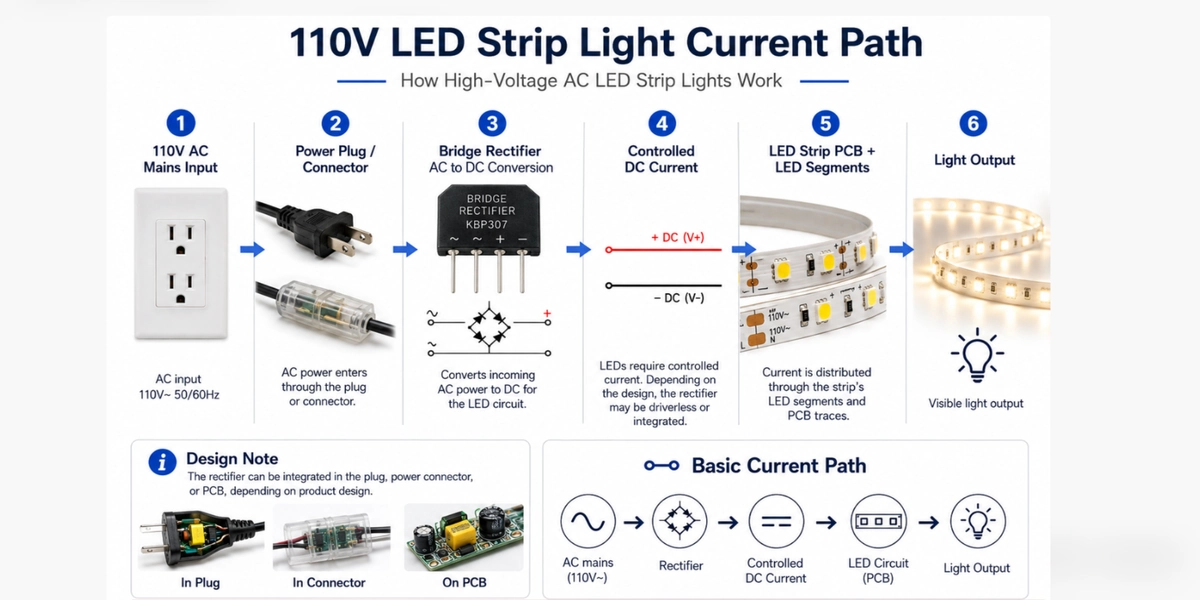
AC から DC への変換が重要です。 LED には電流制御が必要であるため、110V ストリップ システムでは、入力 AC 電源が LED 回路に到達する前に、整流器または無人回路によって変換されます。 設計によっては、整流器をプラグ、電源コネクタ、または PCB に組み込むことができます。
これが現在の基本的なパスです。
110V LED ストリップ ライトの利点
110V LED ストリップ ライトの値は、より長い実行やより簡単な取り付けに制限されません。 エンジニアリング プロジェクトでは、すべての機能が重要です。これは、労力時間、メンテナンス コスト、システムの信頼性、およびインストール リスクに影響を与えるからです。
| 特徴 | プロジェクトのメリット |
| 長期的な機能 | 電力注入点を減らし、広い範囲の配線を簡素化します。 |
| 直接交流入力 | 長距離インストールは、多くの個別の LED ドライバーへの依存度を下げます。 |
| ドライバーが少ない | 障害点が少なくなり、インストール後のメンテナンス作業を減らすことができます。 |
| 低電圧降下 | より長い実行で明るさをより一貫性に保つのに役立ちます。 |
| 屋外での適合性 | 標識、ファサードの輪郭、および適切な防水を備えた外部照明に適しています。 |
| スケーラブルなシステム設計 | 大きな建物、モール、ホテル、公共空間プロジェクトの計画が容易になります。 |
小さな棚照明器具の場合、上記の利点はマイナーに見える場合があります。 しかし、長さ 50 ~ 60 メートルの建物のファサードの概要を説明するために使用すると、それらは不可欠になります。
最初の 10 メートルが純粋できれいに見えるプロジェクトを望んでいるわけではありません。一方、遠端はくすんでいて、黄ばんでいて、活気がないように見えます。 同様に、アクセスがほぼ不可能なコーナーに 10 個の電源アダプターを隠したいとは誰も望んでいません。
これが、110V LED ストリップ ライトが独自の利点を備えているため、このようなアプリケーションでかけがえのない役割を確立した理由です。
110V と 12V と 24V LED ストリップ ライト
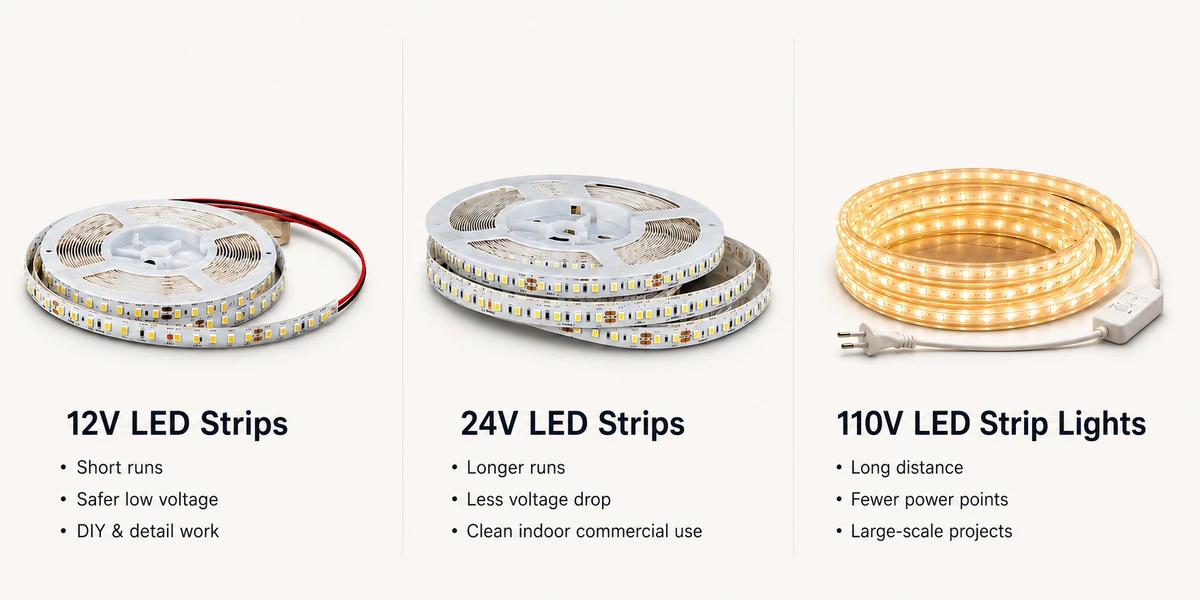
これは、ほとんどのユーザーが本当に気にかけている比較です。12V、24V、または 110V の LED ストリップ ライトを選ぶべきですか?
率直に言って、それは、設置距離、設置環境、安全要件、調光の必要性、将来のメンテナンス量の 5 つの要因に依存します。
電圧選択に関するより包括的な議論については、次の Signlite 記事もお読みください。 低電圧および高電圧 LED ストリップ ライト.
12V LED ストリップを選択するタイミング
12V LED ストリップを選択して、短く、触れることができる、詳細が重い領域: キャビネットの下、ディスプレイ シェルフ、小さな看板、またはホーム DIY プロジェクト。 電圧はより安全に扱え、アクセサリーは見つけやすく、カット間隔は通常、タイトなレイアウトに適しています。
24V LED ストリップを選ぶとき
高電圧に飛び込むことなく、よりクリーンな屋内の商用ランが必要な場合は、24V LED ストリップを選択してください。 ホテルの入り江、小売店の展示ライン、天井のスロット、家具の照明で人気があります。 12V ストリップと比較して、24V ストリップは通常、電圧降下の少ない長時間の実行を処理します。
110V LED ストリップを選ぶとき
距離とスケールがプロジェクトを支配する場合は、110V LED ストリップ ライトを選択します。 建設現場の照明、長い廊下のアクセント、大きなファサード照明が代表的な例です。 メリットは明るさだけでなく、システムのシンプルさです。 何か問題が発生する可能性のある場所の数を減らしています。
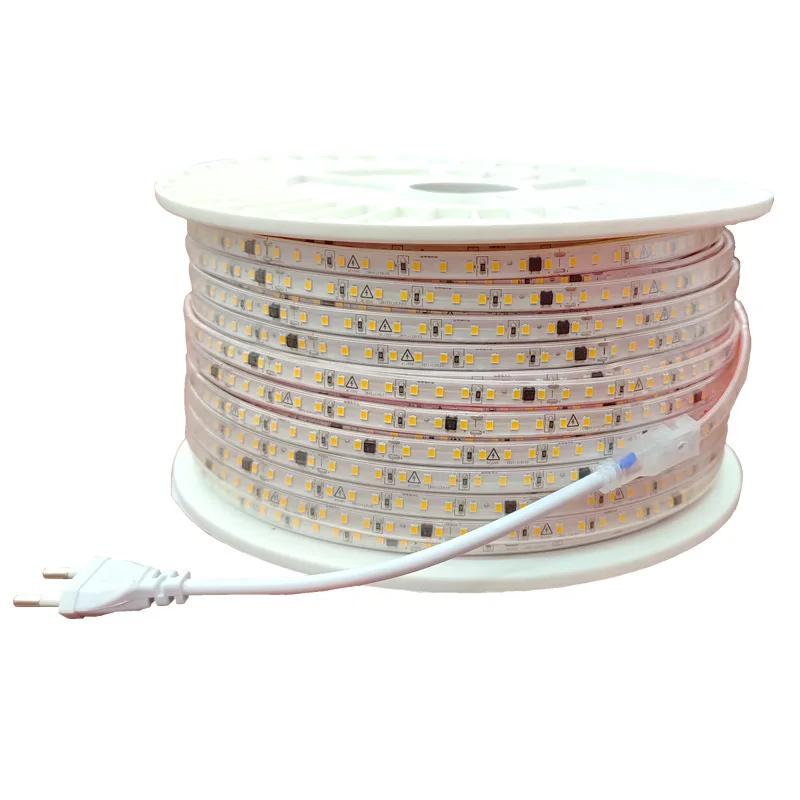
110 V/220 V AC 高電圧ドライバーレス LED ストリップ ライト
高電圧ドライバーレスLEDストリップは、ほとんどのLEDストリップで使用されている標準的な低電圧よりも高い電圧で動作するLEDストリップである。交流で駆動するため、AC110V/120V/230V/240V LEDストリップライトなど、AC LEDストリップとも呼ばれる。
主なモデルEQW10T120G
LEDタイプSMD2835/SMD5050
LED数量/メートル:60/80/120@SMD2835、60@SMD5050
PCB幅:10mm/12mm
長さ:50m
入力電圧AC120V/AC220V
メーターあたりの電力:10W/7W
色温度:2700K/3000K/4000K/5000K/6500K/RGB
IP等級: IP67/IP68
保証期間:3年
上記の機能はカスタマイズに対応している。
110V LED ストリップ ライトに最適なアプリケーション
110V LED ストリップ ライトに最適なアプリケーションは、単なる屋外プロジェクトではありません。 実行が長く、アクセスが困難で、電源ポイントが少なくなるため、設置がより安全で保守的にも容易な場合に最も強くなります。 典型的なアプリケーションには、建設現場の照明、橋とトンネルのプロジェクト、建物の輪郭、ファサード照明、および選択された大規模な商業スペースが含まれます。 屋外の標識は、特定の長い国境の設計でのみ考慮することができますが、通常は主要なアプリケーションではありません。
| 申し込み | 推薦 | なぜ |
| 建設現場の照明 | 素晴らしい | メインの照明と安全警告ゾーンの一時的または半永久的な実行をサポートします。 |
| 橋とトンネルの建設 | 素晴らしい | アクセスが困難な、長い作業エリアでの継続的な照明と警告のガイダンスに役立ちます。 |
| 建物の概要照明 | 素晴らしい | 長時間の実行と一貫した明るさが必要です。 |
| 商業ファサード照明 | 素晴らしい | 大きな標高での配線の複雑さを軽減します。 |
| ホテル コーブの照明 | グッド | 長時間連続実行が必要な場合に役立ちます。 |
| ショッピングモールの装飾 | グッド | 大規模な商業照明ゾーンに適しています。 |
| 景観照明 | グッド | 防水と密閉が適切に設計されている場合にうまく機能します。 |
| 屋外の看板 | 限られた | 主な用途ではありません。特定の長い境界線または周囲の照明のみを考慮してください。 |
| 住宅のキャビネット照明 | おすすめしない | 低電圧ストリップは通常、より安全で簡単です。 |
| 短い装飾照明 | 理想的ではない | 通常、12V または 24V ストリップの方が実用的です。 |
建設現場の照明
建設現場の照明は、110V LED ストリップ ライトの実用的なアプリケーションの 1 つです。 橋の建設、トンネル工事、道路工事、屋外の一時的な作業現場では、主照明、警告照明、ルート案内、および安全マーキングに、長時間連続照明が必要になることがよくあります。
110V LED ストリップ ライトを使用すると、設置者は電力注入を繰り返し、一時的な配線を簡素化し、トンネルの壁、橋梁ガードレール、足場、一時的なフェンス、アクセス道路などの長い領域をカバーできます。
建物の概要照明
これは、最も強力なユースケースの 1 つです。 長いルーフライン、壁の端、橋の輪郭、および商業ビルの輪郭には、継続的な照明が必要です。 110V LED ストリップ ライトを使用すると、インストーラーは繰り返しの電力注入を減らし、レイアウトをよりクリーンに保つことができます。
ホテルと小売りの入り江の照明
ホテル、モール、小売店の長いコーブのランニングでは、110V ストリップを使用すると、電力計画が簡素化されます。 それでも、プロジェクトが非常に正確な調光、ショートカット長、またはタッチセーフな低電圧動作を必要とする場合は、24V の方が良いでしょう。
110V LED ストリップはお勧めしません
短い装飾品、小さな家庭用 DIY 作業、人々が頻繁に触れる場所、非常に短い間隔が必要な設備には 110V LED ストリップを避けてください。 大きいほど良いとは限りません。 場合によっては、低電圧ストリップがよりスマートなツールになることがあります。
プロジェクト例 1: 建設現場の照明
110V LED ストリップ ライトの一般的な問題
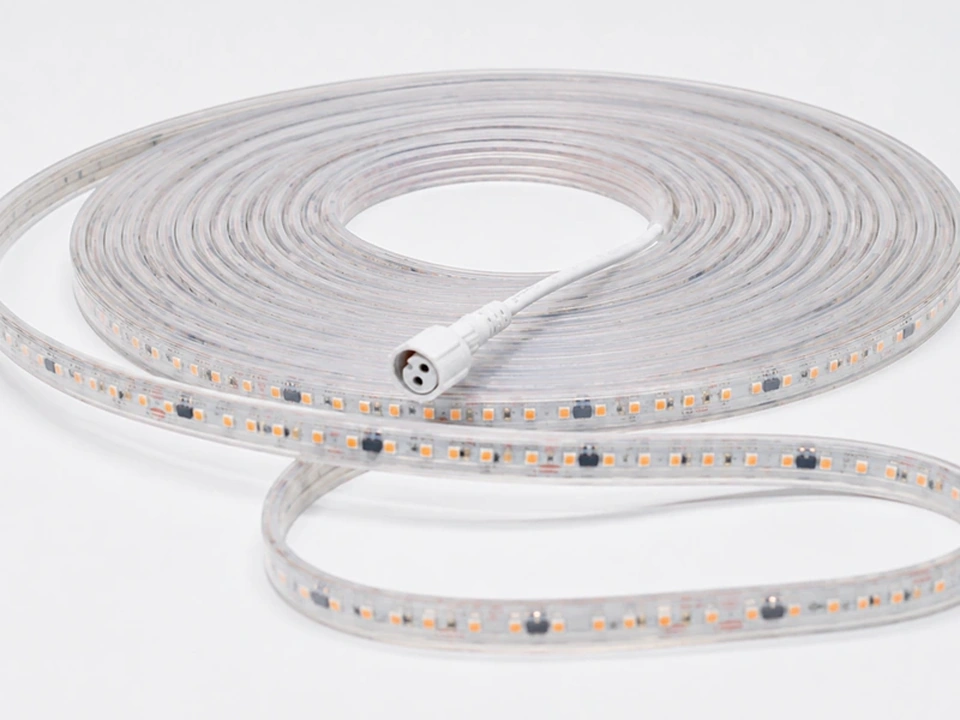
実際のプロジェクトでは、通常、一般的な障害は、材料が弱い、シールが不十分で、品質が低い整流器、信頼性の低いコネクタ、または環境に誤った製品を使用することが原因です。 これらの問題のほとんどは、設置前に完全な照明システムを確認することで防止できます。
| 問題 | よくある原因 | どうやって回避するか |
| フリッカー | 低品質の整流器または回路設計 | ちらつきのない整流器システムを選択し、一括注文する前にサンプルをテストします。 |
| 黄変 | 低グレードの PVC ジャケットまたは UV 耐性の低い | 屋外でのプロジェクトには、紫外線耐性の PVC またはシリコンを使用してください。 |
| 過熱 | PCB の不良、過負荷、または弱い放熱 | 銅の厚さ、ワット数、および動作温度を確認してください。 |
| 安全でないコネクタ | 接続の設計が緩いか、または認証されていない | 成形、防水、プロジェクト承認済みのコネクタを使用します。 |
| 防水故障 | カット、エンド キャップ、またはコネクタのシールが弱い | 射出成形エンド キャップと適切なシール手順を使用してください。 |
| 明るさが一貫していない | 電圧降下、LED ビニングの不良、または過負荷の実行 | 適切な実行長、LED ビニング、およびインストール レイアウトを選択します。 |
多くの場合、フリッカーは最初の警告サインです。 すぐに標識を台無しにしないかもしれませんが、整流器や回路設計が弱い可能性があることを示しています。 黄変は、もう 1 つのゆっくりとした失敗です。 ストリップは最初の 1 か月できれいに見える場合がありますが、その後、長時間の紫外線にさらされると、ジャケットが曇ります。 防水性の破損は、よくできたストリップの真ん中に水が入ることはほとんどなく、さらに深刻で、通常、カットポイント、エンドキャップ、またはコネクターから侵入します。
そのため、品質管理は LED チップだけでなく、システム全体に集中する必要があります。 ストリップは、建物を横切るチェーンのようなものです。 1 つのコネクターに障害が発生すると、全体の視線が破損する可能性があります。
110V LED ストリップ ライトは安全ですか?
はい、110V LED ストリップ ライトは、適切に設計、絶縁、認定、取り付けられている場合に安全に使用できます。 12V または 24V ストリップよりも高い電圧で動作するため、より強力な保護とより慎重な取り扱いが必要です。
安全を確保するため、最初のステップは電気絶縁をチェックすることです。 屋外 110V LED ストリップ ライトには、強力な保護スリーブ、信頼性の高いエンド キャップ、および安全な接続システムを装備する必要があります。 公共のエンジニアリング プロジェクトの場合は、対象の市場や地域の規制で必要とされる関連する認証マークまたはその他の承認を探します。 SignLiteLED は、UL、ETL、CE、RoHS などの認証を提供する製品を提供するため、プロジェクトの調達に信頼できる選択肢となります。
取り付けは厳格な規則に従う必要があります。電源を入れている間はストリップをカットしないでください。定格の最大ランレングスを超えないようにしてください。互換性のあるアクセサリのみを使用し、すべてのカット ポイントをシールし、ローカルの電気コードに従ってください。 大規模な商用プロジェクトの場合は、専門家によるインストールを強くお勧めします。
高品質の 110V LED ストリップ ライトの選び方
110V LED ストリップ ライトを選択するときは、1 メートルあたりの価格だけに注目しないでください。 商業および屋外プロジェクトの場合、真の価値は、高品質の PCB、安定した LED チップ、ちらつきのない整流器、紫外線耐性 PVC またはシリコン、防水コネクタ、および UL、ETL、CE、または RoHS などの適切な認証など、信頼できるコンポーネントから得られます。
SignLiteLED のような優秀なサプライヤーは、カスタムの長さ、色温度、IP 定格、およびコネクタ オプションもサポートし、製品が実際の設置環境によく合い、将来のメンテナンス リスクを軽減します。これにより、製品が実際の設置環境に合わせて、将来のメンテナンス リスクを軽減できます。
プロジェクト サポートのあるメーカーを選択してください
信頼できるサプライヤーは、電圧選択、IP 定格決定、コネクタ タイプの選択、色温度のマッチング、および設置レイアウトの計画を支援できる必要があります。 プロジェクトの場合、低電圧も含まれています 穂軸LEDストリップライト または SMD LED ストリップ ライト、詳細については、SignLiteLED の製品ページにすぐにアクセスできます。 ダイナミックな高電圧 RGB 照明効果については、SignLiteLED のガイドも参照してください。 オン 110V および 220V AC アドレス指定可能な RGB LED ストリップ ライト.
結論
110V LED ストリップ ライトは、スケールのために作られています。 建物の輪郭、看板、ファサード、ランドスケープ、ホテル、または商業プロジェクトに長い連続照明が必要な場合、電圧降下を減らし、配線を簡素化し、電力注入点の数を減らすことができます。 これは、単なる製品機能ではなく、真のプロジェクトの利点です。
しかし、適切な製品が重要です。 価格以外に見て、PCB、整流器、LED チップ、防水材、コネクタ、認証、サプライヤーのサポートを確認してください。 強力な 110V LED ストリップ システムは、明るく安定していて、密閉されていて、安全で、メンテナンスが簡単です。
建物の概要、看板、または商業用照明プロジェクト用に 110V LED ストリップ ライトを選択するのに助けが必要ですか? 製品の推奨事項、カスタム仕様、防水オプション、およびプロジェクト サポートについては、SignLiteLed チームにお問い合わせください。
よくある質問
関連記事