标牌和 LED 灯带工厂,始于 2011 年

标牌和 LED 灯带工厂,始于 2011 年

全光谱LED灯:技术、成本和购买指南

Full spectrum LED strip lights are becoming an increasingly popular option for lighting applications where light quality, color accuracy, and natural-looking illumination are important. Unlike LED strips designed primarily around brightness, efficiency, or color temperature, full spectrum LED lighting focuses more on the quality and distribution of the emitted light, making it suitable for a wide range of commercial, architectural, retail, display, and interior lighting projects.

But what makes an LED strip truly “full spectrum,” and how does it compare with conventional LED strip lights or 高CRI LED灯条? This guide explores the technology behind full spectrum LED strip lights, their spectral characteristics, key specifications, benefits, and applications. It also explains the differences between full spectrum, high CRI, RGB, and RGBW LED strips and provides practical guidance for selecting the right solution for different lighting requirements.

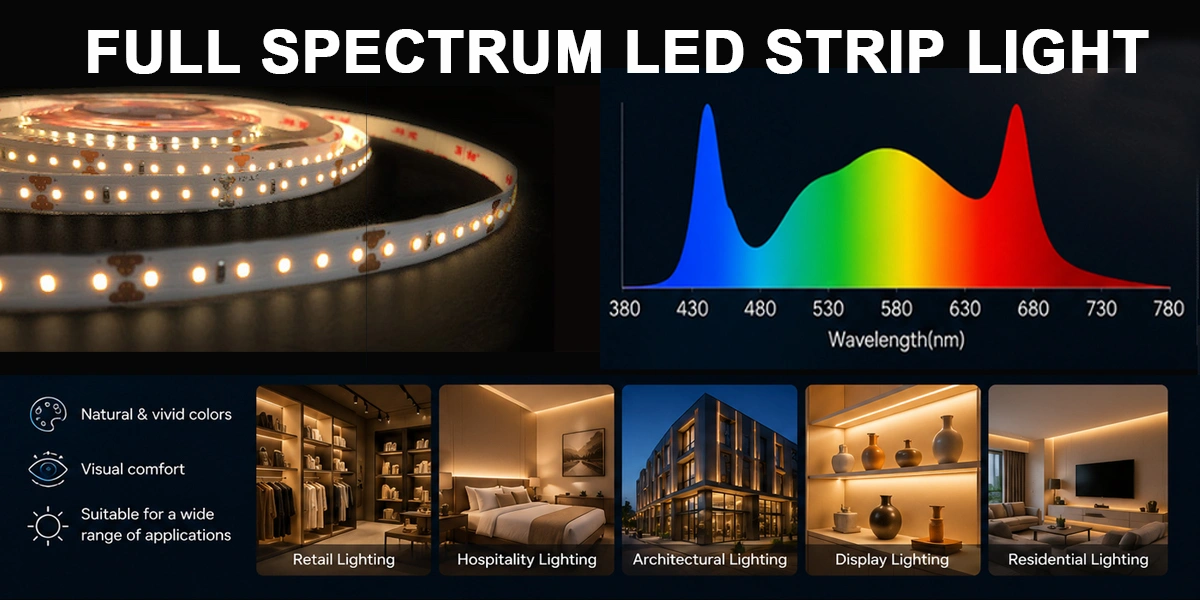
Full Spectrum LED Strip Light

What Are Full Spectrum LED Strip Lights?

Full spectrum LED strip lights are flexible LED strips designed to produce a broad range of visible wavelengths, providing a balanced spectral distribution and natural-looking illumination. The term “full spectrum” generally describes the spectral characteristics of the light source rather than a specific LED strip structure, chip type, or color temperature. A well-designed full spectrum LED strip aims to deliver light with a broad and relatively continuous distribution across the visible spectrum.

Unlike conventional LED strip lights that may have a more concentrated spectral distribution, full spectrum LED strips are designed to cover a broader range of wavelengths within the visible light spectrum. This broader distribution can contribute to more natural color appearance and consistent visual quality, particularly in environments where accurate color perception is an important part of the lighting design.

Full spectrum LED lighting is often associated with high CRI, but the two terms describe different characteristics. CRI measures how accurately a light source renders colors compared with a reference light source, while full spectrum refers more broadly to the distribution of wavelengths produced by the light source. Therefore, a full spectrum LED strip can also have a high CRI rating, but a high CRI LED strip is not automatically a full spectrum LED strip.

The actual performance of a full spectrum LED strip depends on factors such as LED technology, spectral distribution, CRI, R9 value, CCT, LED density, and overall optical design. These specifications should be evaluated together when selecting full spectrum LED strip lights for commercial, architectural, retail, display, or other color-sensitive lighting applications.

The spectral distribution below illustrates the broad and relatively continuous range of visible wavelengths typically associated with full spectrum LED lighting.

full-spectrum-led-spectral-distribution

Figure caption: Typical spectral distribution of a full spectrum LED light source across the visible wavelength range.

How Is Full Spectrum LED Lighting Achieved?

The key to full spectrum LED technology lies in controlling how different wavelengths are generated and combined within the light source. LED chip selection and phosphor technology play an important role in shaping the resulting spectral power distribution (SPD), allowing manufacturers to fill gaps between wavelength ranges and create a broader, more balanced spectrum.

One widely used approach is phosphor conversion. An LED chip emits light at a specific wavelength, and phosphor materials absorb part of this energy and re-emit it at longer wavelengths. By selecting different phosphor materials and carefully controlling their composition and ratios, manufacturers can extend the spectral output beyond the original emission of the LED chip and fine-tune the overall color and spectral distribution.

Different phosphor materials can contribute to different regions of the spectrum. By combining blue, green, amber, red, or other wavelength-converting components with an appropriate LED chip, the resulting light can achieve more complete spectral coverage and reduce pronounced peaks or gaps. The exact combination depends on the target CCT, color rendering requirements, efficiency, and intended application.

Some full spectrum LED technologies also use multiple LED chips or integrated multi-chip configurations to provide additional control over the spectral output. In these designs, different chips can contribute specific wavelength ranges, while phosphor materials further shape the final spectrum.

The result is not simply a light source that contains more wavelengths. The goal is to create a well-controlled spectral power distribution with balanced coverage across the visible range while maintaining high color rendering, suitable R9 performance, color consistency, and practical luminous efficacy.

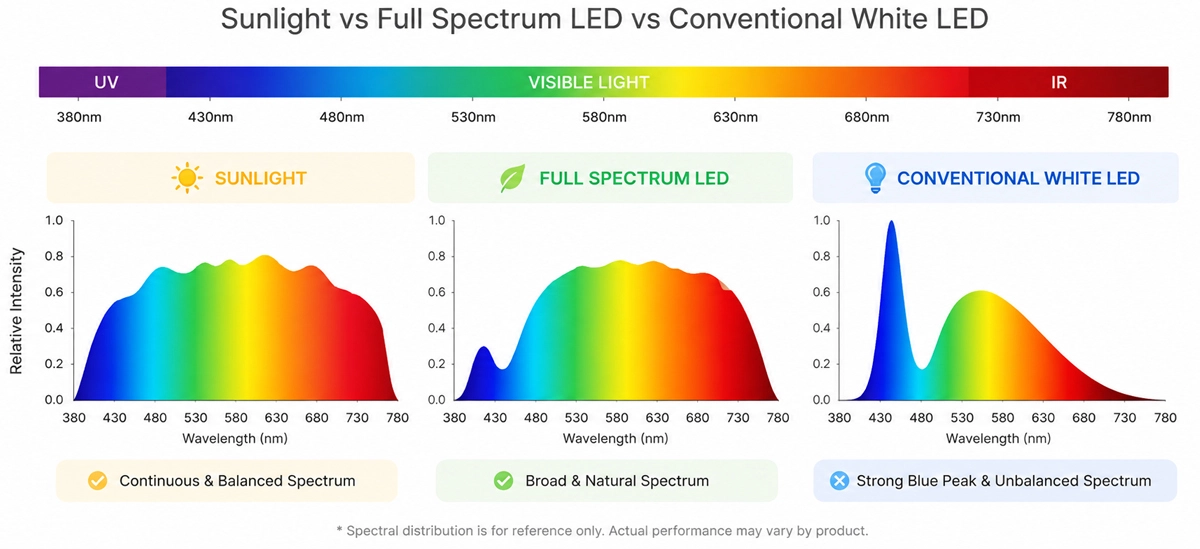
sunlight-vs-full-spectrum-led-vs-conventional-led-spectrum

Figure: Comparison of typical spectral distributions of sunlight, full spectrum LED lighting, and conventional white LED lighting.

Full Spectrum vs. High CRI and Standard LED Strip

Full spectrum, high CRI, and standard LED strip lights are not interchangeable terms. They describe different aspects of LED lighting performance and design. Full spectrum primarily concerns the distribution and coverage of wavelengths produced by the light source, while CRI evaluates how accurately colors are rendered. Standard LED strip lights, meanwhile, refer more broadly to conventional LED strip products that may be optimized for general illumination, efficiency, brightness, color temperature, or cost.

Full Spectrum vs. High CRI LED Strip Lights

Full spectrum and high CRI describe different characteristics of LED light, although they are often associated with each other. Full spectrum primarily refers to the breadth and distribution of wavelengths produced by a light source, while CRI (Color Rendering Index) measures how accurately the light source reveals colors compared with a reference light source.

A high CRI LED strip is designed to reproduce colors more accurately, typically with a CRI of 90 or higher for applications where good color quality is important. However, a high CRI rating alone does not describe the complete spectral distribution of the LED. Two LED strips can have similar CRI ratings while producing noticeably different spectral profiles.

A full spectrum LED strip, on the other hand, focuses more broadly on the distribution of visible wavelengths. When the spectrum is well balanced and relatively continuous, the light can provide natural-looking illumination and strong color rendering. For this reason, many high-quality full spectrum LED strips are also designed with high CRI and strong R9 performance.

Quick Comparison: Full Spectrum vs. High CRI

特点全光谱LED灯带高CRI LED灯带
Primary focusSpectral distribution色彩渲染准确性
Main measurementSpectral Power Distribution (SPD)CRI / Ra
Visible wavelength coverageBroad and balancedNot necessarily broad
中国国际广播电台Can be highTypically high
R9 performanceCan be optimizedDepends on LED design
Spectrum continuityAn important considerationNot defined by CRI alone
Can they overlap?

The two concepts are therefore not mutually exclusive. A full spectrum LED strip can also be a high CRI LED strip, and this combination can be particularly valuable for applications where both spectral quality and accurate color reproduction are important.

CRI should therefore not be considered in isolation when evaluating full spectrum LED lighting. Looking at the spectral power distribution together with CRI, R9, CCT, luminous efficacy, and color consistency provides a more complete picture of the light source’s performance.

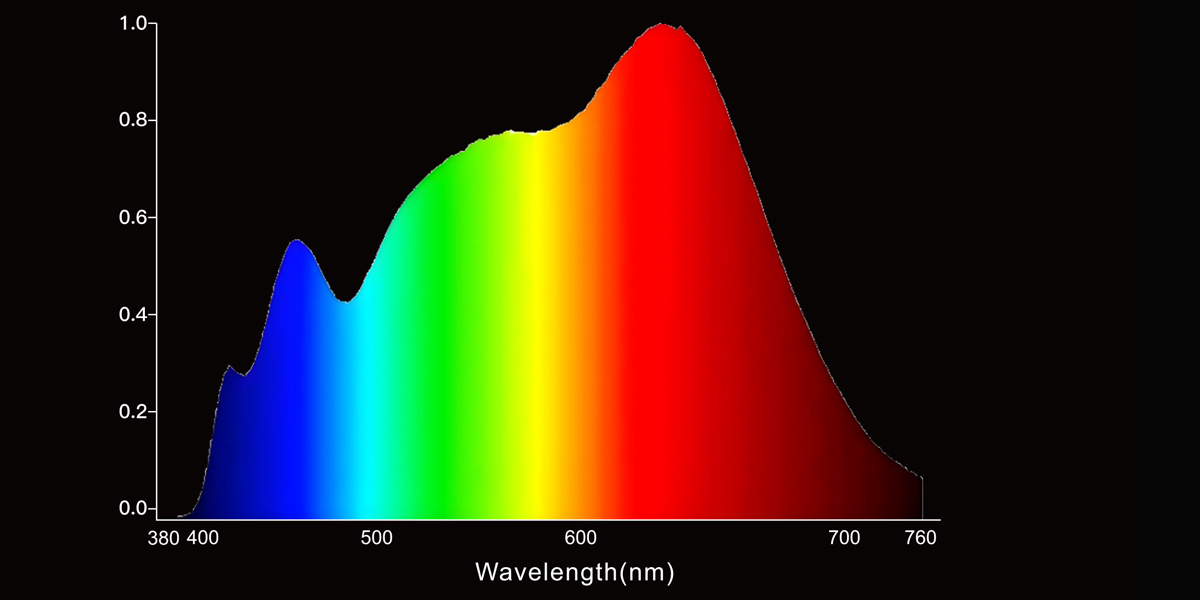
full-spectrum-vs-high-cri-led-spectrum

Example of the spectral distribution and color rendering characteristics of a high CRI LED strip.

For a visual introduction to CRI and color rendering, the video below explains how CRI is measured and why higher CRI can contribute to more accurate color appearance.

YouTube 视频

Full Spectrum vs. Standard LED Strip Lights

Standard LED strip lights are generally designed around practical lighting requirements such as brightness, energy efficiency, color temperature, product cost, and general illumination. Their spectral characteristics can vary significantly depending on the LED chip, phosphor formulation, and overall product design.

Full spectrum LED strip lights place greater emphasis on spectral quality and wavelength distribution. Their spectral design aims to provide broader and more balanced coverage across the visible range, which can contribute to more natural-looking color appearance and consistent visual perception.

This does not mean that standard LED strips provide poor-quality light. Many conventional LED strip lights can offer excellent efficiency, reliable performance, and good color rendering. The main difference is the design priority: a standard LED strip may be optimized primarily for general illumination, efficiency, or cost, while a full spectrum LED strip places greater emphasis on the quality and distribution of the emitted spectrum.

Quick Comparison: Full Spectrum vs. Standard LED

特点全光谱LED灯带标准LED灯带
Design prioritySpectral quality and wavelength distribution普行照明
Spectral distributionBroad and balancedDepends on LED design
中国国际广播电台Often available in high CRI versionsVaries by product
Color appearanceDesigned for natural-looking illuminationDepends on LED and phosphor design
效率Can be highOften a major design consideration
费用May be higherWider price range
典型应用Color-sensitive and premium lightingGeneral commercial and residential lighting

Neither type is universally better. Full spectrum LED strip lights are worth considering when spectral quality, color appearance, and visual consistency are important, while standard LED strips can be a practical choice when general illumination, efficiency, and cost are the primary priorities.

Ultimately, the right LED strip depends on the project’s lighting requirements rather than the product label alone. For applications where color accuracy and spectral quality are critical, reviewing the SPD, CRI, R9, CCT, and other technical specifications can provide a more reliable basis for comparison.

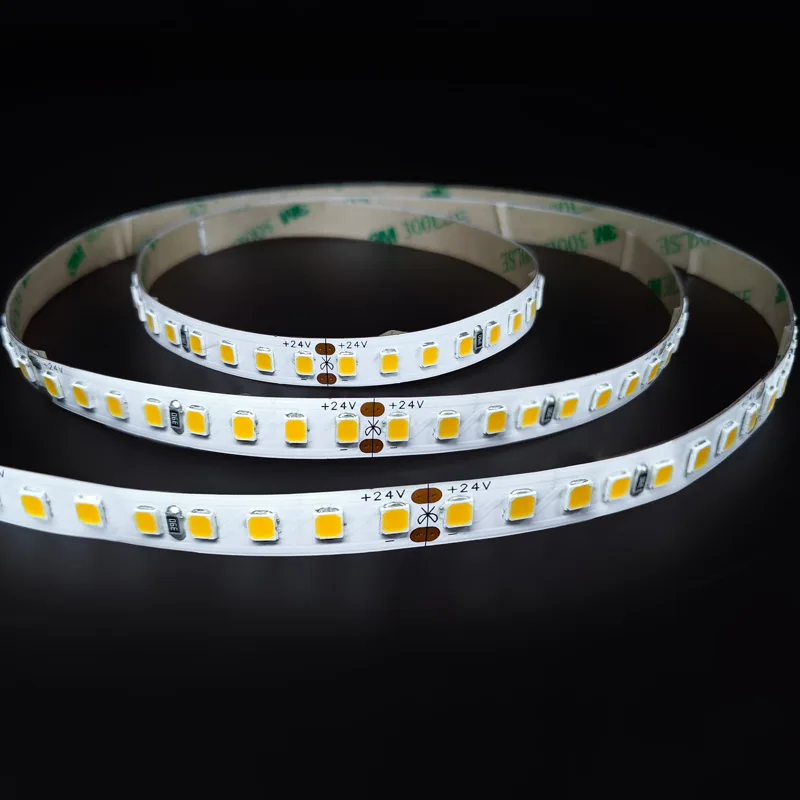
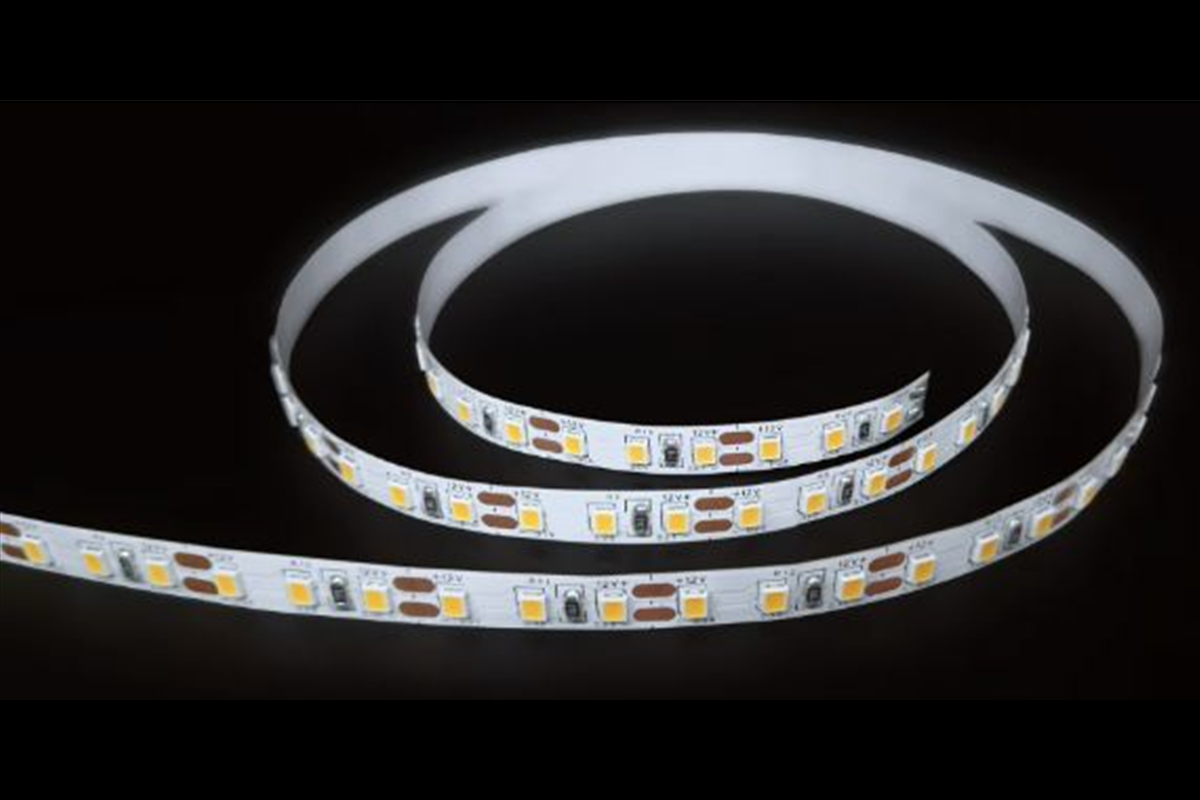
高效率 128LEDs-m SMD2835 LED 灯条
  • 每米 128 个 SMD2835 LED
  • 10 毫米 PCB 宽度
  • CRI 80/ 90/ 98
  • 高达 200lm/W 的高效率
  • 完全可调光
  • 强力双面 3M 胶带
  • 可选 3000K、4000K 和 6500K 色温
  • 单色 BIN,3 步 SDCM 可选
  • 可进行 OEM/ODM 和定制

COB 条形灯_COB-480LED-8MM_01_240628

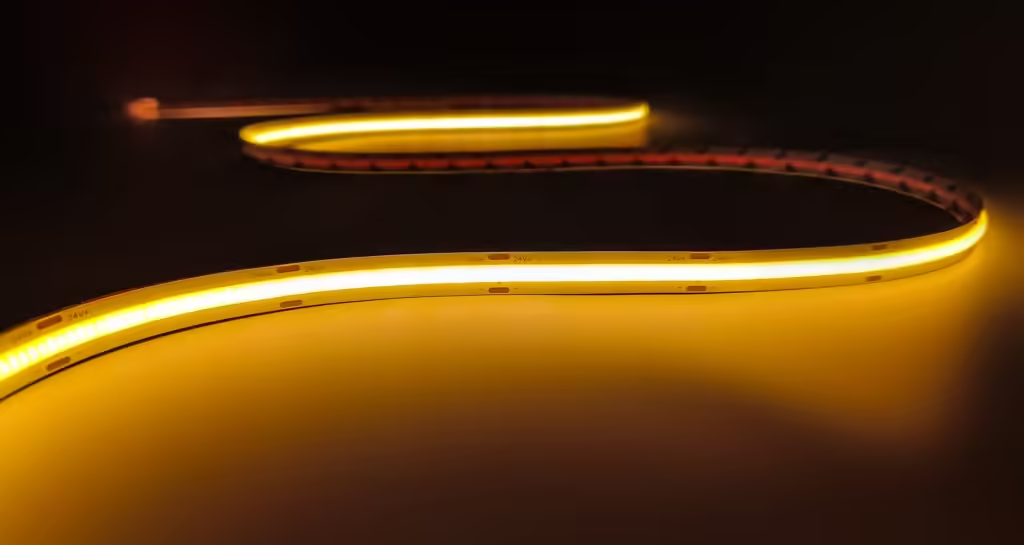
用于装饰照明的 480 芯片 LED COB 灯条

  • 480 芯片/米、100lm/W、无光点
  • 色温范围为 2700K 至 6500K
  • 可调光
  • 180 度光束角
  • CRI 80/ 90/ 98
  • 无焊接、卷对卷技术

Key Specifications of Full Spectrum LED Strip Lights

When comparing full spectrum LED strip lights, buyers should look beyond the “full spectrum” label and consider the specifications that affect light quality, installation, and overall performance.

1. Spectral Power Distribution (SPD)

A well-designed full spectrum LED strip should provide broad and relatively balanced coverage across the visible wavelength range. When comparing products, review the spectral power distribution (SPD) curve rather than relying only on terms such as “full spectrum” or “sunlight-like.”

2. CRI (Color Rendering Index) and R9

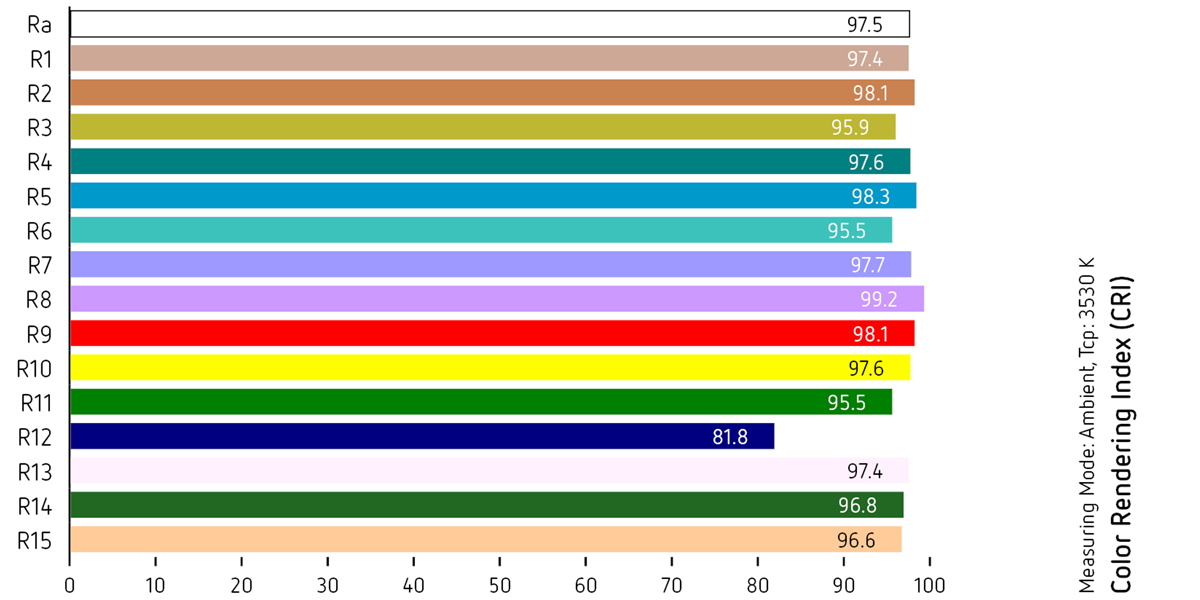
CRI indicates how accurately colors are rendered, while R9 provides additional information about saturated red rendering. For commercial and color-sensitive applications, CRI 90+ is generally a practical starting point, with higher CRI and strong R9 performance preferred for applications requiring greater color accuracy.

YouTube 视频

The video provides a simple explanation of CRI, including how it differs from CCT and how CRI affects perceived color quality.

3. CCT (Correlated Color Temperature)

CCT determines whether the light appears warm, neutral, or cool. Full spectrum LED strips can be produced in different color temperatures, commonly including 2700K, 3000K, 4000K, 5000K, and 6000K, with custom CCT options available for specific projects.

4. LED Density and Uniformity

LED density affects illumination uniformity and the appearance of dark spots. Higher-density LED strips can provide smoother light, particularly in shallow profiles, display cabinets, and applications where the strip is installed close to the illuminated surface.

5. Power and Efficacy

Power consumption is typically specified in watts per meter (W/m) and should be considered together with light output and luminous efficacy. The appropriate power level depends on the required brightness, energy consumption, thermal conditions, and application requirements.

6. Voltage

Full spectrum LED strip lights are commonly available in 12V and 24V configurations. For longer runs, 24V is often preferred because it can help reduce voltage drop and maintain more consistent illumination along the strip.

7.IP 等级

The appropriate IP rating depends on the installation environment. IP20 is generally suitable for dry indoor applications, while IP65, IP67, or IP68 may be required for applications exposed to moisture, dust, or outdoor conditions.

规范需要考虑什么
Spectral DistributionLook for broad and balanced coverage across the visible spectrum.
CRI & R9CRI 90+ is commonly preferred for quality lighting; higher R9 can improve red color rendering.
CCTSelect the color temperature according to the application, such as warm white, neutral white, or daylight.
LED 密度Higher LED density can provide more uniform illumination and reduce visible hotspots.
Power & EfficacyBalance brightness, energy consumption, and thermal performance.
电压12V and 24V configurations are commonly available; 24V is often preferred for longer runs.
IP 等级Choose the appropriate protection level for indoor, damp, or outdoor environments.

For projects with specific photobiological safety requirements, buyers should also consider IEC 62471 compliance and blue light hazard classification when evaluating LED strip lighting.

For commercial and OEM projects, other specifications such as PCB width, cut length, dimming method, connector type, and reel length may also need to be customized according to the installation requirements.

Applications and Benefits of Full Spectrum LED Strip Lights

Full spectrum LED strip lighting is particularly useful in applications where color appearance, visual consistency, and light quality are important. Compared with general-purpose LED strips, its value becomes more apparent when the lighting itself can influence how products, materials, artwork, or interior finishes are perceived.

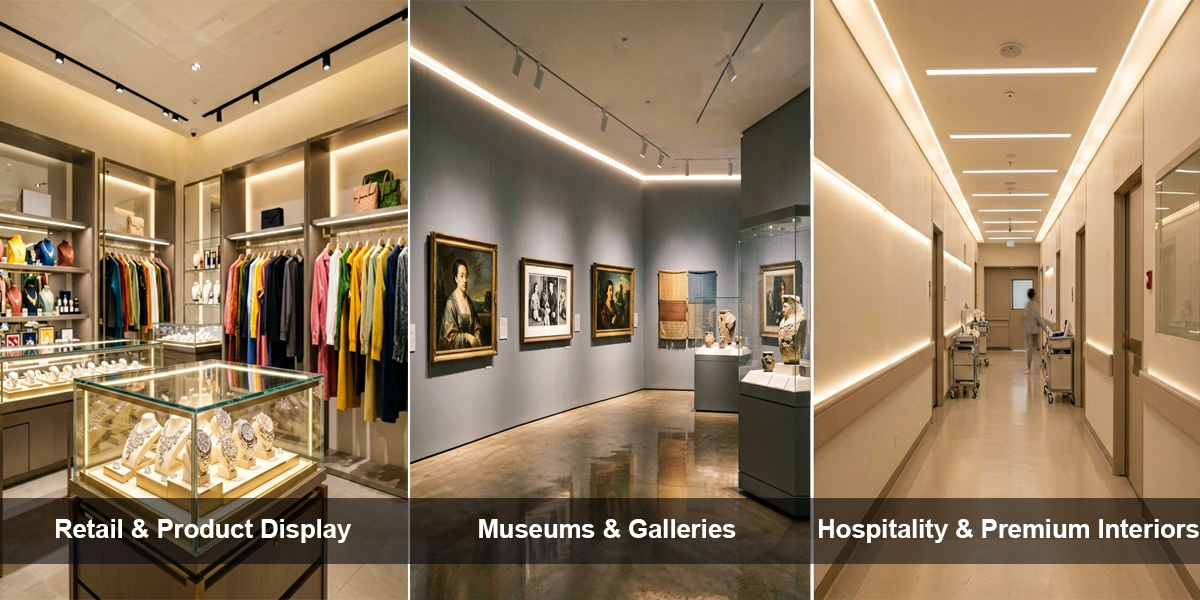
1. Retail and Product Display Lighting

Full spectrum LED strip lights are well suited for retail stores, display cabinets, shelving, and product showcases, where lighting directly affects how merchandise appears. They can help present the colors and details of clothing, cosmetics, jewelry, food, and other products more naturally, making spectral quality an important consideration alongside brightness and energy efficiency.

2. Museums, Galleries, and Artwork Display

Museums, galleries, and artwork displays require careful control of lighting quality because paintings, photographs, textiles, and other objects can contain subtle colors and surface details. Full spectrum LED strip lighting can support a natural visual appearance, but factors such as illuminance, UV/IR content, heat, and conservation requirements should also be evaluated before selecting a lighting solution.

3. Hospitality and Premium Interior Lighting

Hotels, restaurants, showrooms, and premium interiors can use full spectrum LED strips for cove lighting, cabinet lighting, shelving, wall details, and indirect illumination. When combined with an appropriate CCT and color rendering performance, they can help maintain a consistent appearance across furniture, fabrics, wood, stone, and other decorative finishes.

Choosing the Right Application

Full spectrum LED strip lights are not necessarily the best choice for every project. They are most valuable when color quality and visual appearance are important to the application. For general-purpose lighting where brightness, efficiency, installation requirements, and cost are the main priorities, a conventional high-CRI LED strip may provide a more practical solution.

Full-Spectrum-LED-Strip-Lights-applications

How Much Do Full Spectrum LED Strip Lights Cost?

The price of full spectrum LED strip lights can vary considerably depending on LED technology, spectral performance, CRI, R9, power, LED density, construction, certification, and order quantity.

As a general market reference, premium full spectrum and ultra-high-CRI LED strip lights are commonly priced from around $5 to $15+ per meter in retail and small-quantity markets, while specialized products with advanced spectral designs, higher output, certifications, or custom configurations can cost more. B2B factory pricing is typically lower, particularly for larger production quantities.

However, there is no single standard price for full spectrum LED strip lights because products marketed under this category can have significantly different spectral and electrical specifications.

Product LevelIndicative Market Price*Typical Positioning
Standard full spectrum / high CRI$3–$6/m一般商业照明
High CRI 90+$5–$10/m零售、酒店、建筑照明
Ultra-high CRI 95+$8–$15/mDisplay, artwork, premium interiors
Specialized / custom spectrum$10–$20+/mColor-critical and OEM projects

*Indicative market ranges for reference only. Actual B2B pricing varies according to specifications, quantity, certifications, customization, and supplier.

What Determines the Price?

The main cost differences come from the LED package, spectral design, component quality, and manufacturing requirements.

A full spectrum LED strip designed for high CRI and strong R9 performance may require more specialized LED components and tighter production control than a standard LED strip. Higher LED density, greater power output, custom PCB designs, certifications, and additional testing can further increase the cost.

Order quantity also has a major impact on unit price. A 5-meter sample or small retail order generally has a much higher per-meter cost than a production order of hundreds or thousands of meters because manufacturing setup, testing, packaging, and logistics costs are distributed across fewer units.

Custom Full Spectrum LED Strip Pricing

For OEM and ODM projects, buyers may request a custom full spectrum LED strip instead of selecting a standard product. Custom requirements such as spectral performance, CCT, CRI/R9 target, PCB width, LED density, voltage, cut length, IP rating, connectors, and packaging can all affect the final quotation.

For this reason, buyers should compare products based on the same specifications and quantity rather than using price per meter as the only purchasing criterion.

A manufacturer may offer a lower unit price for a high-volume project, while a small custom order may have a higher initial cost but provide the exact spectral and mechanical configuration required by the application.

常见问题

结论

Full spectrum LED strip lights are a strong choice for projects that require more than basic illumination, particularly where color quality, natural-looking light, and consistent visual performance are important. Choosing the right product, however, requires matching its performance and configuration to the specific application rather than relying on the “full spectrum” label alone.

For buyers looking for a full spectrum LED strip manufacturer in China, working directly with a factory can provide greater flexibility in product customization, production quantities, pricing, lead times, and OEM packaging. This can be especially valuable for commercial lighting projects, retail displays, architectural applications, and other projects with specific product requirements.

信号灯 is a China LED strip manufacturer providing custom LED strip lighting solutions for global B2B customers. We support full spectrum LED strips, high-CRI LED strips, OEM and ODM production, custom specifications, and project-based requirements, helping customers move from product development and sampling to mass production and delivery.

Looking for a reliable full spectrum LED strip manufacturer in China? Contact SignliteLED to discuss your application, specifications, quantity, and OEM requirements.

作者 朱伊莱恩
General Manager at 信号灯

Technically reviewed by Jason Chen
R&D Leader, SignliteLED
电子邮件: info@signliteled.com

相同瓦数 不同亮度相同瓦数 不同亮度
为什么两个相同瓦数的LED灯条具有完全不同的亮度
采购经理比较了同一个商业照明项目的两个 LED 灯条。 两种产品的额定功率为每米 20W,在 24V 下运行,而一种产品每米可提供约 2,200 流明,而另一种产品每米可产生 3,000 多流明。 其声明的功耗几乎相同,...
LED 显色的终极指南:CRI、R9、TM-30 和高 CRI LED 灯条
你有没有注意到一些LED灯让新鲜的肉看起来是棕色的,人的皮肤看起来很苍白,或者木制家具失去了它的自然温暖? 问题往往不是亮度——它是差的显色。 在现代LED照明中,色彩质量与流明输出和能量一样重要。
LED线性模块与LED灯带灯并排比较商业照明LED线性模块与LED灯带灯并排比较商业照明
LED 线性模块与 LED 灯条:哪个更适合商业照明?
对于商业照明,LED 线性模块通常优于 LED 灯带。 它们提供卓越的热管理、更长的使用寿命、更高的可靠性和标准化的安装选项。 LED灯带灯虽然灵活且装饰性强,但主要适用于重点、住宅和低功耗应用。 这两种技术都使用LED芯片和低压电源系统,...
各种LED铝型材和LED灯条一起显示,包括U型、V形、带和不带扩散器的角槽各种LED铝型材和LED灯条一起显示,包括U型、V形、带和不带扩散器的角槽
如何为不同的LED灯条选择正确的LED配置文件
选择正确的 LED 铝型材对于最大限度地提高 LED 灯条的性能、使用寿命和外观至关重要。 正确的轮廓取决于条带宽度、瓦数、安装方法和照明效果。 散热、扩散器类型和安装位置等因素都会影响 LED 通道或挤出的...
LED 灯条LED 灯条
LED灯带灯的耐用性和最大长度的终极指南(2026年更新)
LED灯带的耐久性和最大可实现的长度通过压降物理、热管理效率和组件质量基本相互连接。 采用现代高压DC48V系统,专业设计的LED灯带灯可实现高达50米的单次连续运行,同时保持稳定的电流传输和一致的发光...
为什么LED灯条中的色彩质量很重要
在商业和住宅照明项目中,色彩质量和视觉舒适度与能源效率一样重要。 随着LED技术的不断发展,照明设计师和工程师们正在更加关注CRI、R9、蓝光发射和全光谱输出等先进的光学性能指标。 这些因素...

分享:

Facebook
叽叽喳喳
Pinterest
LinkedIn
订阅评论
提醒
来宾
0 评论
最老的
最新 最多投票
内联反馈
查看所有评论

搜索 SignliteLED 博客

类别

滚动至顶部

立即获取报价