标牌和 LED 灯带工厂,始于 2011 年

标牌和 LED 灯带工厂,始于 2011 年

如何安全安装户外LED霓虹灯标志

Outdoor LED neon signs are designed to withstand various weather conditions—but only if they are installed correctly. The signs themselves rarely fail first. The first components to fail are almost always wiring points with the wrong connectors, driver enclosures without gaskets, or back panels installed directly against the wall (without a drainage gap).

This article provides a comprehensive guide to the safe installation of 户外LED霓虹灯标志, covering everything from pre-installation planning and tool preparation to installation methods, waterproof wiring, driver placement, drainage, and ventilation, as well as common mistakes that lead to early failures. For businesses and installers seeking reliable outdoor signage, this article serves as your technical manual.

Plan Ahead Before Starting Installation

Plan Ahead Before Starting Installation LED Neon Signs

Setting aside 15 minutes for a pre-installation inspection before drilling can save hours of rework. Before mounting the sign on the wall, be sure to verify the mounting surface, power supply, the sign’s weight, and its IP protection rating. The vast majority of installation failures stem from skipping the pre-installation check, rather than from quality issues with the sign itself.

Required Tools and Hardware

Outdoor installations have strict specifications for every component. Professional installers use the following configuration:

工具/项目Required Spec or Type为何重要
钻头+砌体钻头M6 6mm — M8 锚杆 8mm尺寸过小的孔降低了砌体中的锚拔出强度
罗尔螺栓锚M6 10kg以下- 10-20kg持续风振动下,错误等级松动
桶式支架垫片20–25mm 长度无支架=无排水间隙=被困在板后的冷凝水
IP68 防水连接器凝胶填充或热收缩式没有 IP68 密封的每个户外接头点都是未来的故障
紫外线级波纹管聚丙烯 — 非标准 PVC2-3年内紫外线下标准黑色PVC裂纹
GFCI 保护的户外插座天气等级的外插座任何湿区电路都需要 — 非可选

Additionally, you will need: a level (600 mm or longer), wire strippers (for 12–24 AWG), self-fusing tape, and clear exterior silicone sealant.

安装前检查表

检查什么寻找什么Risk of Skipping
IP rating of neon flexMinimum IP67 silicone-jacketed水到达内部焊点 — LED 故障
连接器的 IP 等级每个户外路口的 IP68低额定连接器在一个雨季内腐蚀
总功率带宽/米×总计+ 20% 头部空间过热并在标志发生之前失败
安装面砖、砌体、带背衬的金属螺柱、结构木材负载下错误的锚类型松动
GFCI 出口邻近在计划的导管电缆运行中不受保护的长时间运行会产生冲击风险和电压下降
本地许可证要求店面或商业门面标牌规则可以订购未经许可的商业标志
安装前的标志测试在地面运行 15-20 分钟安装后发现故障意味着重新安装

Understand Your Sign Specifications

Before using an electric drill, please confirm the following four parameters—they determine all subsequent hardware and wiring decisions.

  • Minimum outdoor flexible tube rating: IP67 silicone-sheathed SMD2835, 120 LEDs/meter.
  • 输入电压: DC 12V or DC 24V—It is strictly prohibited to connect the LED flexible tube directly to AC mains power.
  • Power consumption: Approximately 10W/meter (8×16 mm silicone neon tube).
  • Backplate: Pre-drilled acrylic sheet—Do not drill holes yourself near the LED channels.

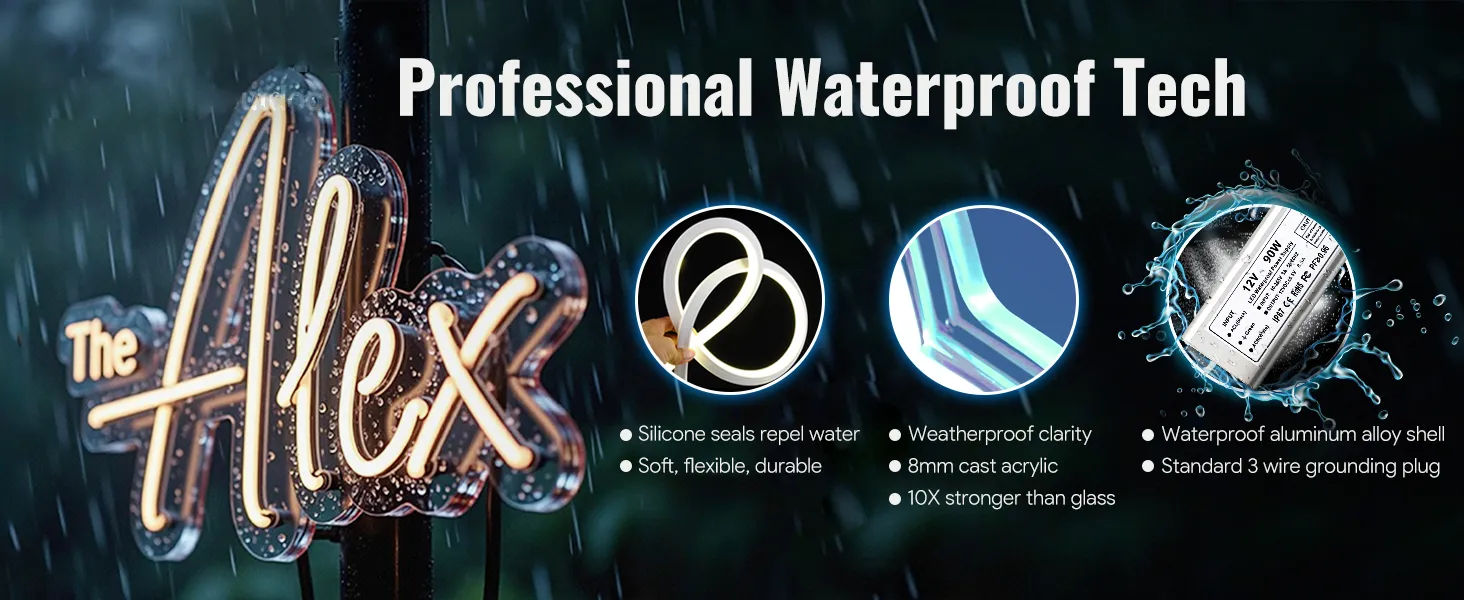
To ensure quality, the IP67-rated waterproof neon strip and its materials possess the necessary protective properties to meet the demands of long-term outdoor use in rain, snow, and humid coastal environments.

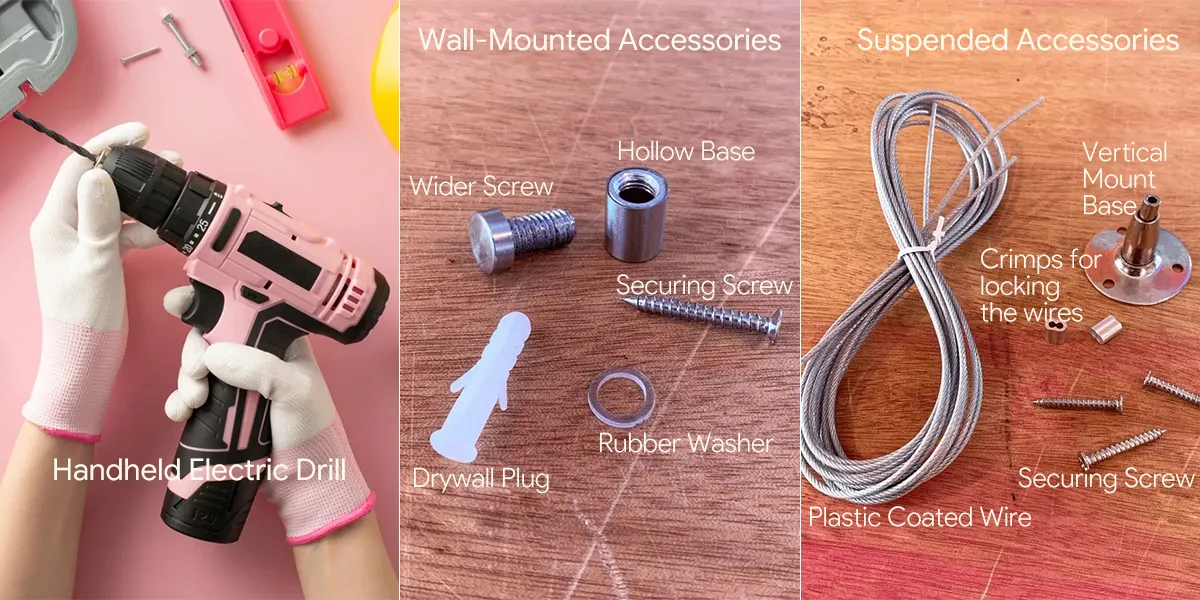
Wall-Mounted vs. Suspended Installation: Which Option Is Right for Your Outdoor Installation

Outdoor LED Neon Signs Wall-Mounted vs. Suspended Installation

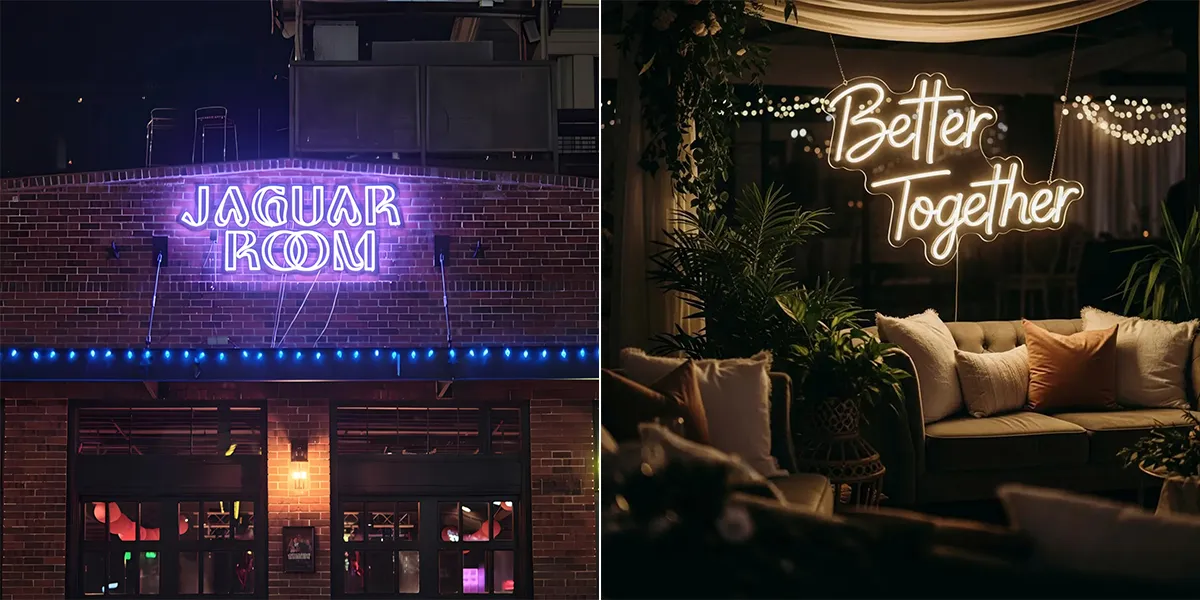
Choosing between wall-mounted and suspended installation affects structural requirements, weather resistance, and long-term reliability.

The table below compares the two methods:

系数壁挂Hanging / Suspended Mount
最适合Permanent facade signage, storefronts, brick/masonry wallsUnder-eave installations, awnings, covered walkways, interior-adjacent outdoor spaces
Structural requirementSolid wall surface with appropriate anchor typeCeiling joists, beam, or reinforced overhead structure
Weather protectionSign exposed to direct rain and sun — requires full IP67/IP68 ratingNatural overhang provides some shielding — but full outdoor rating still required
Wind load resistanceExcellent — sign fastened directly to structureModerate — hanging hardware must be rated for wind-induced sway
Drainage requirementCritical — must use standoff spacers (20–25mm) to create air gapGravity assists drainage, but sign body still needs weep holes
Installation complexityModerate — drill, anchors, standoffsHigher — requires overhead access, load rating verification
Aesthetic effectClean, flush appearance with subtle floating look via standoffs“Floating” effect — sign appears suspended in space

Wall-Mounted Installation: Recommended for Most Outdoor Settings

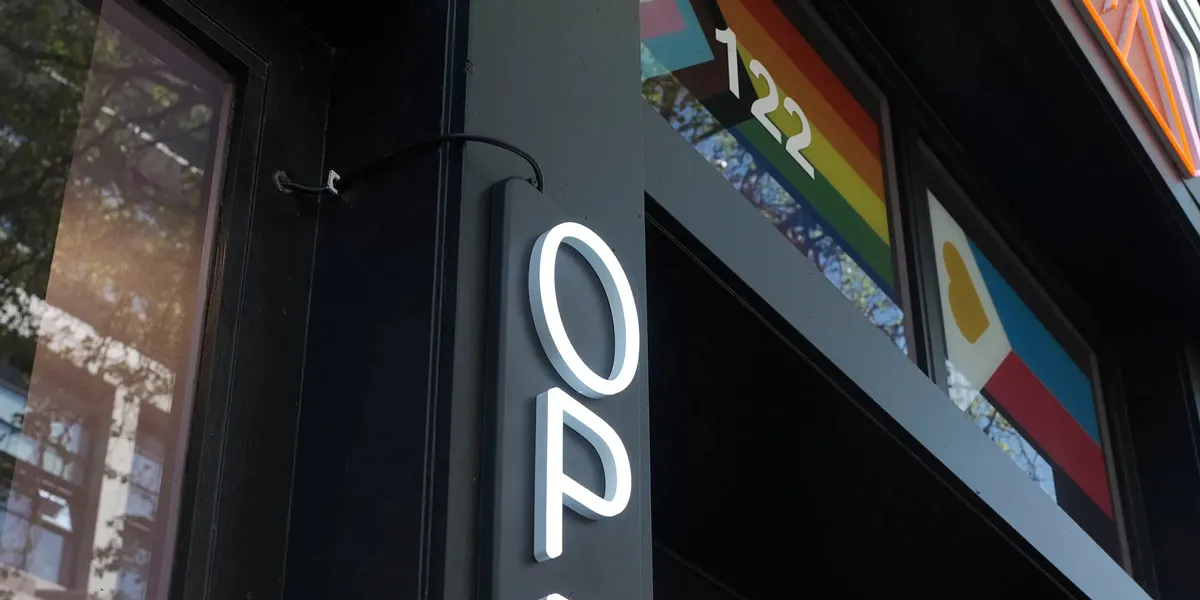
Wall-mounted installation is the preferred method for permanent outdoor signs on brick walls, concrete, or metal-framed exterior walls of commercial buildings. It offers superior resistance to wind loads, which is critical for unobstructed locations. Be sure to use barrel-shaped standoffs (20–25 mm) to create an air gap between the acrylic backplate and the wall—without this gap, condensation will become trapped and seep into the LED channels.

Suspended Installation: Suitable for Sheltered Outdoor Locations

Suspended installation is suitable for locations such as canopies, porches, recessed entrance porches, or covered balconies. Overhead shelter reduces direct moisture intrusion, but the sign itself must still have a protection rating suitable for humidity and splashing water. Please consider using heavy-duty suspension cables with sufficient load-bearing capacity (at least twice the weight of the sign) and stainless steel hardware.

If you wish to achieve a “floating” aesthetic under a canopy, porch, or covered outdoor setting (such as a beer garden or a hotel driveway canopy), a suspended installation can deliver the desired effect without compromising durability. Be sure to verify the load-bearing capacity of the overhead structure before installation. For coastal environments with high humidity, specify stainless steel suspension hardware rather than standard galvanized hardware.

Waterproof Wiring: This Is the Step Most People Get Wrong

Outdoor LED Neon Signs Waterproof Wiring

This is the step most people skip, and it is precisely the root cause of condensation problems that occur within the first year.

Why Standard PVC Conduit Fails

Standard black PVC conduit is not treated with UV stabilizers. After 2–3 years of exposure to direct sunlight, it becomes brittle and cracks, exposing the internal cables to moisture. Please use UV-resistant polypropylene (PP) corrugated tubing for all external cable runs.

Connector Water Resistance: IP67 Is Insufficient for Outdoor Connections

IP67 connectors can withstand temporary submersion (1 meter underwater for 30 minutes). However, for permanent outdoor connections subjected to repeated cycles of rain, condensation, and thermal expansion and contraction, IP68 connectors are the minimum acceptable standard.

Two proven and reliable methods:

作法应用性能
Gel-filled IP68 connectorsPre-terminated factory assembliesHighest reliability — gel self-heals around conductors
Heat-shrink with adhesive lining + silicone sealantField splices and repairsRequires heat gun and clean prep — apply silicone at both ends of tubing

Connector seal failure accounts for approximately 70% of electrical faults in outdoor signage. For every outdoor connection point, use self-fusing tape + UV-resistant electrical tape during installation, or use an IP68-rated waterproof junction box with a cable gland.

Safe Power Cable Installation

Use UV-resistant polypropylene corrugated tubing to route power cables—cables left unprotected and directly exposed on exterior walls will age rapidly. Use cable glands at all entry points into the sign’s backplate or driver enclosure. The conduit path should slope slightly toward the exit to prevent water accumulation.

Key Electrical Safety Requirements: All outdoor wiring must be protected by a GFCI (ground fault circuit interrupter) outlet or circuit breaker—this is a requirement of NEC (National Electrical Code) Article 600 for signs in damp locations.

Driver Placement: Where to Place the Power Supply for Longer Lifespan

Outdoor LED Neon Signs Driver Placement

司机(LED 电源) is the component in outdoor neon signs that is most sensitive to heat. Proper placement can significantly extend the lifespan of the entire system.

Golden Rule

Please place the driver in a well-ventilated location, avoid direct exposure to harsh weather conditions, and avoid direct sunlight.

Driver Placement Options — Comparison

Placement Location优点缺点最适合
Inside building (through-wall)No weather exposure, excellent heat dissipationRequires wall penetration and conduitCommercial storefronts, any climate
Ventilated outdoor enclosure (shaded wall)Keeps AC/DC conversion close to signEnclosure must be IP65/IP66 rated with ventilationModerate climates
Inside sign backboard (sealed)Cleanest appearance, no external boxTraps heat — shortens driver life significantlyNOT recommended for outdoor use

Heat Dissipation Requirements

LED drivers generate a significant amount of heat during operation. The standard operating temperature range for power supplies is -40°C to +55°C; however, if the operating temperature exceeds the optimal range by 10°C, the driver’s service life will be reduced by approximately 50%.

  • To ensure adequate ventilation: Install the power supply without an additional enclosure whenever possible.
  • Never install the driver inside a sealed metal enclosure mounted on a wall exposed to direct sunlight.
  • When using a light-sensitive switch or timer, ensure the power is cut off during daylight hours—higher daytime temperatures and unnecessary operation will shorten the driver’s lifespan.

Best Practices for Thermal Management

When the driver must be placed outdoors, use an IP65 or IP66 ventilated enclosure and install it in a shaded location (under a canopy, on a north-facing wall, or inside a lockable electrical cabinet). For high-temperature environments (desert climates, areas with severe western exposure), consider using enclosures with active cooling or thermoelectric cooling.

Power Capacity Guidelines

Select a driver with a rated power that is at least 20% higher than the calculated total power (LED tube power in W/m × total length in meters × 1.2). For tubes longer than 10 meters, use dual-end or parallel power feeding to prevent voltage drops—voltage drops over long DC lines can cause dimming at the far end.

Drainage and Ventilation: Two Easily Overlooked Design Requirements

Outdoor LED Neon Signs Drainage and Ventilation

Condensation is the silent killer of outdoor signs. When a warm sign cools down at night, any moisture trapped inside the backplate cavity condenses into liquid water. Without proper drainage and ventilation, this water accumulates, corrodes connectors, and travels into the LED tubing via capillary action, leading to premature failure.

Drainage—The Necessity of Spacer Stands

The most common drainage mistake: installing the backplate flush against the wall. Never do this. Use barrel-shaped spacer stands that are at least 20–25 mm long, and install them between the backplate and the mounting surface.

Drainage Holes—Requirements of Electrical Codes

NEC Article 600.9(D) stipulates that signs and outline lighting systems installed in damp locations must be weatherproof and must have drainage holes. For any sign enclosure installed outdoors—even under a canopy or roof—drainage holes with a diameter of 1/4 to 1/2 inch (6–12 mm) must be provided at each lowest point or isolated low-lying area.

Drainage hole checklist:

  • Locate drainage holes at the lowest points of the backplate cavity.
  • Ensure no external objects (mounting hardware, sealant, or trim) block the drainage path.
  • Include at least 2 drainage holes; increase the number for large signs or those with multiple low-lying areas.
  • Avoid placing drainage holes directly above electrical components or exposed conductors.

Ventilation—Preventing Heat-Induced Damage

Heat accelerates LED lumen depreciation, silicone sheath ageing, and damage to driver capacitors. Avoid using sealed enclosures that trap heat, and ensure adequate ventilation. For acrylic backplate designs without ventilation slots, consider incorporating (mesh-covered) vents at the top and bottom to promote convective cooling.

Ventilation best practices:

  • Maintain an air gap behind the sign (achieved using spacer columns).
  • Avoid mounting the sign on heat-absorbing dark-coloured surfaces (dark-coloured bricks and black metal panels).
  • Provide vents at the top to allow hot air to escape.
  • For large or high-power signs (500W or more), consider forced ventilation.

UV Protection and Maintenance

Silicone sleeves are more UV-resistant than PVC, but all plastics exposed to the outdoors will age over time.

Annual inspection checklist:

  • Check the silicone sleeves for surface cracking or chalking.
  • Check the corrugated tubing for UV-induced brittleness—replace it if cracked.
  • Confirm that the spacer columns are secure and that drainage paths are unobstructed.
  • Clear debris and insect nests from drainage holes.

Common Installation Errors Leading to Early Failures

Outdoor LED Neon Signs Common Installation Errors Leading to Early Failures

Professional installers repeatedly encounter the same failures. The following eight errors are the primary causes of failures in outdoor neon signs within the first year:

犯错Why It Fails修复
Skipping GFCI protectionOutdoor wet-location circuit without GFCI creates electrocution hazardUse GFCI-protected outlet or breaker — code required
Flush mounting (no standoffs)Condensation trapped behind sign → water ingress → corrosion20–25mm barrel standoffs on all mounting points
Using standard PVC conduit outdoorsBlack PVC cracks under UV in 2–3 years → exposed wiringUV-rated polypropylene conduit only
Undersized driver (no headroom)Driver runs at 100% continuously → overheats → premature failureAdd 20% headroom to calculated wattage
No drain holes in backboardAccumulated water has no exit path → pooling and connector failureAdd weep holes at all low points (1/4–1/2″)
Using indoor-rated connectors outdoorsNon-IP68 connectors corrode within one wet seasonIP68 gel-filled or heat-shrink connectors at every splice
Drilling new holes in acrylic backboardCracks propagate from drill points → structural failure → sign fallsUse factory pre-drilled mounting holes only
Hanging sign from LED tubing directlyTubing not load-bearing → splits at silicone jacketAlways mount via acrylic backboard or chassis

Supplementary Notes on Electrical Codes

For installations in North America, NEC Article 600 (Electric Signs and Contour Lighting) specifies the following key requirements:

  • The branch circuit supplying power to the sign must not exceed a rated current of 30A.
  • All outdoor conduit must be weatherproof.
  • Transformers and power supplies must be equipped with overcurrent protection.
  • All outdoor electrical connections must use listed weatherproof enclosures.

For installations in Europe, equivalent requirements follow IEC 60529 (IP Protection Ratings) and local building codes—please consult your electrical inspector before finalizing your installation plan.

Guide to Outdoor Environmental Protection Ratings

When selecting, purchasing, or inspecting outdoor neon signs, it is crucial to fully understand IP protection ratings:

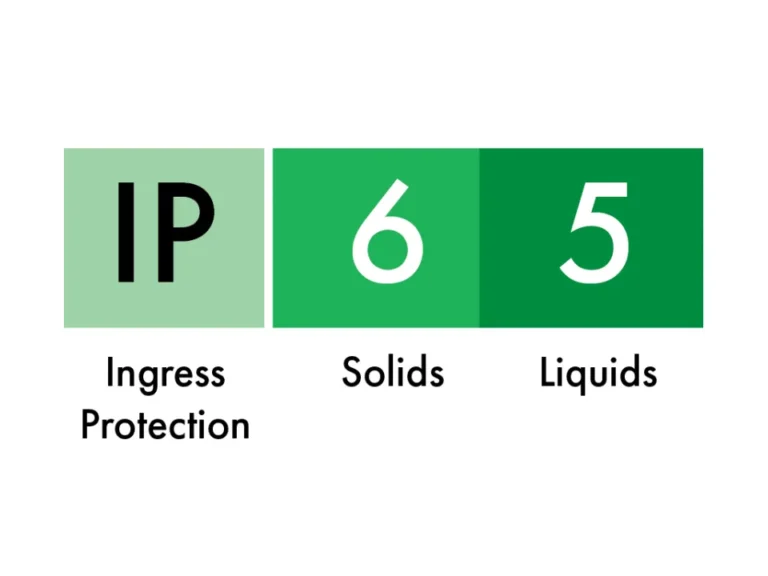
IP 等级防尘水资源保护适合
IP44Protected >1mm solidsSplashing water from any directionCovered patios, indoor-adjacent areas only — NOT fully outdoor
IP65尘土不教低压水射流Wall-mounted under eaves, limited direct rain exposure
IP67尘土不教Temporary immersion (1m for 30 min)Most outdoor signage — rain, snow, hose-directed cleaning
IP68尘土不教连续浸入(超出 1m)Extreme exposure — fountains, coastal splash zones, submerged applications

For permanent outdoor signs exposed to rain, snow, and significant seasonal temperature fluctuations, IP67-rated silicone-sheathed flexible neon light strips are the industry’s minimum standard; if the application involves a risk of water accumulation, requires direct cleaning with a high-pressure water jet, or is located in a coastal environment, IP68-rated products are recommended.

Post-Installation Maintenance Schedule

Once installation is complete, please follow the annual maintenance schedule below to maximize the product’s service life:

  • 月刊杂志: Visual inspection—check for dimming, flickering, or dead LED sections.
  • 每季的: Clean silicone jacket with mild soap and water — remove accumulated dirt that traps heat.
  • Biannually: Inspect drain holes—clear any debris or insect nests. Check conduit for UV damage.
  • 每年: Verify standoff spacer torque; inspect sealant around all entry points; check driver enclosure for water ingress.

结论

Installing outdoor LED neon signs safely isn’t complicated—but it is a technical task. Whether a sign lasts five years or breaks down after six months depends on a few key details: the correct protection rating (minimum IP67 for neon tubing and IP68 for connectors), barrel-shaped isolation columns to create a drainage air gap, UV-resistant corrugated tubing, careful placement of drivers to ensure ventilation and protection from direct sunlight, and the installation of drainage holes in every low-lying area.

For project managers, facilities professionals, and business owners who need to purchase outdoor neon signs, these technical requirements should be clearly confirmed before purchase, rather than improvising solutions during installation. Be sure to ask your supplier:

  • What is the IP rating of the neon tubing itself? What is the rating of the pre-assembled connectors?
  • Based on the total length of the sign, what is the recommended power margin for the driver?
  • Does the sign include factory-pre-drilled mounting holes and provisions for isolation posts?
  • Are drainage holes already incorporated into the backplate design?

When you receive specific answers to these questions backed by technical documentation—rather than general verbal assurances—you are working with a supplier who truly understands outdoor sign engineering—not just a vendor selling illuminated tubing.

对于 custom outdoor LED neon signs that meet IP67/IP68 standards, feature factory-tested driver matching, and incorporate pre-designed drainage structures, SignliteLED can provide technical documentation and direct project consultation for commercial installation projects worldwide.

常见问题

为什么户外LED霓虹灯随着时间的推移变黄为什么户外LED霓虹灯随着时间的推移变黄
为什么户外LED霓虹灯随着时间的推移变黄
您已经为您的店面、餐厅橱窗或建筑项目投资了一个漂亮的 LED 霓虹灯标志。 六个月后,曾经纯净的白色或鲜艳的颜色变得暗淡、模糊,并明显变黄。 如果这种情况听起来很熟悉,那么您遇到了户外LED霓虹灯标志最常见和令人沮丧的问题之一:...
户外LED霓虹灯标志户外LED霓虹灯标志
如何安全安装户外LED霓虹灯标志
户外 LED 霓虹灯标志是为处理天气而建造的,但前提是它们背后的安装正确。 符号本身通常是最后失败的事情。 首先出错的总是用错误的连接器密封的接线接头,驾驶员坐在一个盒子里...
户外LED霓虹灯-IP65与IP67与IP68户外LED霓虹灯-IP65与IP67与IP68
户外LED霓虹灯标志:IP65与IP67与IP68——商业买家的完整技术指南
在为商业建筑立面、餐厅天井或建筑照明项目采购户外 LED 霓虹灯标志时,一项技术规范成为每次讨论的焦点:入口保护 (IP) 评级。 然而,许多买家错误地认为“防水霓虹灯”遵循单一的通用标准——但事实并非如此......
完整的LED色温谱图显示了1500K深橙色至2700K至中性白色、5000K-6000K日光、高达7500K–20000K 蓝色和紫外线的16个色温样本 — 了解LED照明应用中使用的全系列开尔文色温的视觉参考指南完整的LED色温谱图显示了1500K深橙色至2700K至中性白色、5000K-6000K日光、高达7500K–20000K 蓝色和紫外线的16个色温样本 — 了解LED照明应用中使用的全系列开尔文色温的视觉参考指南
LED灯条色温导向(2700K–6500K):暖白与冷白,如何选择正确的CCT(2026)
LED 色温定义了光线的外观和感觉——选择正确的 CCT (2700K–6500K) 是在任何空间中实现舒适度、生产力和可见性之间完美平衡的关键。 2700K–3000K → 暖白(放松、家居、热情好客) 变态 4000K → 中性白(平衡、办公、商业) 变态 de 感情 sere 3000K–6500K → 冷白(明亮、工业、户外)的方式,如果您想要...
建筑LED照明建筑LED照明
现代建筑建筑LED照明系统的完整指南
建筑照明是将照明系统集成到建筑设计中,以改善功能、美学和空间感知。 它超越了基本的照明,在塑造空间的外观和感觉方面发挥着关键作用。 在现代项目中,LED技术因其提供高效、灵活的安装、...
防眩光低UGR-LED-Linear-Light防眩光低UGR-LED-Linear-Light
抗 - 适合舒适的商业空间的眩光低UGR LED线性灯
想象一下走进办公室或购物中心,感觉立刻舒适——多亏了防眩光的低UGR LED线性灯——不斜眼看刺眼的灯光,不会被刺眼的反射所分散注意力。 在当今的商业空间中,照明不再只是亮度。 低UGR LED照明(UGR≤19),眩光...

分享:

Facebook
叽叽喳喳
Pinterest
LinkedIn
订阅评论
提醒
来宾
0 评论
最老的
最新 最多投票
内联反馈
查看所有评论

搜索 SignliteLED 博客

类别

滚动至顶部

立即获取报价