Signage & LED Strip Lighting Factory Since 2011

LED Backlighting for Lightboxes, Stretch Ceilings & Stone

Compare LED Modules, Flexible Sheets & Backlight Bars

Plan LED backlighting around the surface you want to light. For fabric lightboxes, check the depth behind the graphic and the room for even rows. For stretch ceiling lighting, account for membrane joints, framing and changes in cavity depth. For translucent stone, test the actual slab at its finished thickness. Compare LED module lights, flexible LED sheet lights and rigid backlight bars, then share your dimensions, face material and available depth for a layout recommendation.

What Makes a Backlit Surface Look Even?

The LEDs should disappear behind the lit surface. Three things determine whether they do: how much the face diffuses the light, the gap behind it and the spacing between LEDs. A layout can look even in the middle and still show dark edges or bright seams. Include a corner or joint when you test the actual face material. View the lit sample from the distance people will see it in use.

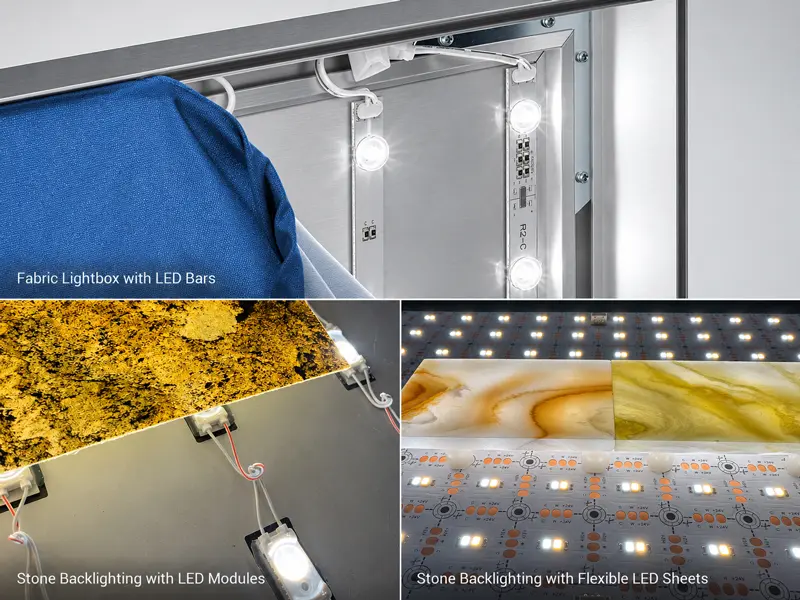
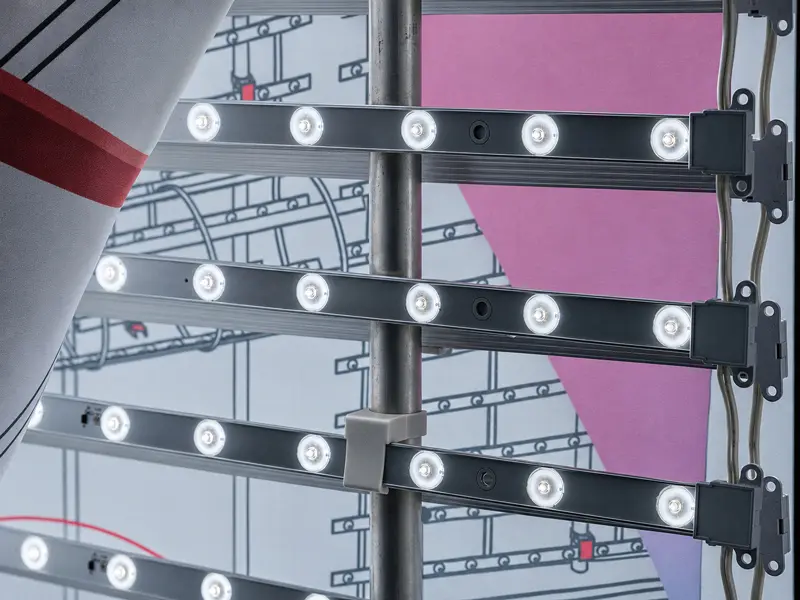
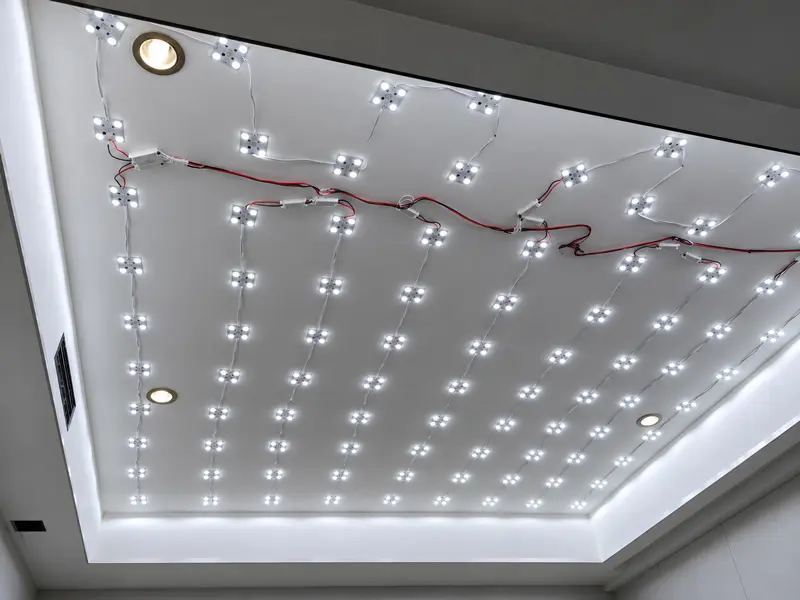
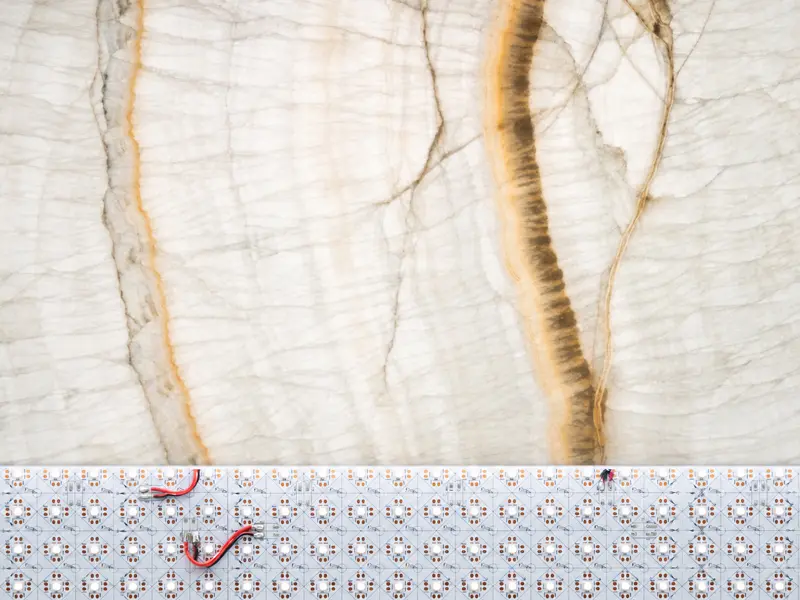
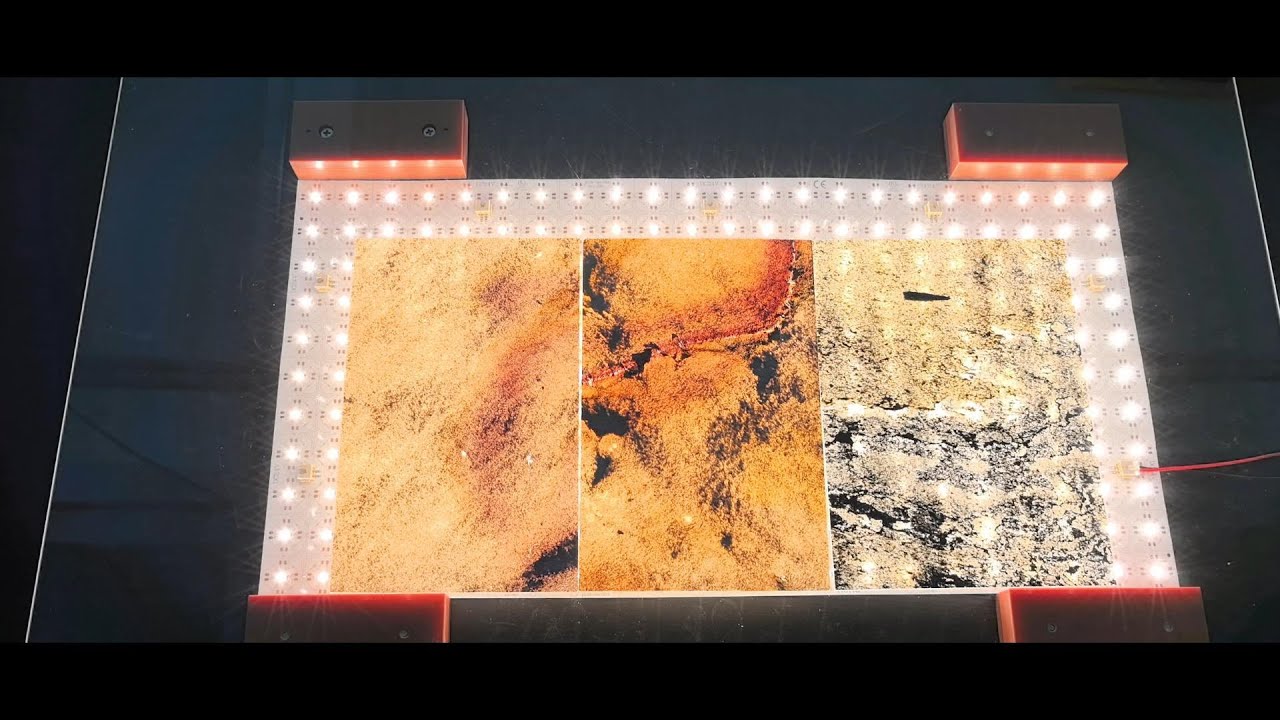
Fabric lightbox with LED bars and translucent stone backlit with LED modules and flexible LED sheets

Facing Material

Printed graphics, stretch ceiling membranes and translucent stone each transmit and scatter light differently. Test the actual material at the specified thickness and finish. With natural stone, include both a light area and a heavily veined area in the sample to see how the pattern reads when lit.

Light Mixing Distance

Measure from the LED’s emitting surface or lens to the back of the visible panel. This gap gives neighboring beams room to overlap before they reach the face. If the cavity is shallow, test a denser LED layout or a wider beam angle in a mock-up at the actual installation depth.

LED Spacing & Edge Setback

Check the center-to-center spacing across the layout, especially at sheet seams, corners and cutouts. Include the distance from the first row of LEDs to the edge of the illuminated area. Test at least one corner as well as the center to catch dark borders or bright seams before production.

LED Backlighting Product Series

Choose a light source based on depth, geometry and wiring. Flexible LED sheets cover broad surfaces in a shallow cavity. Individual LED modules let you adjust spacing around supports and openings. Rigid LED backlight bars suit long, straight runs. For retrofits, check the selected model against the existing supply voltage and controller before ordering. Compare the dimensions, power and control options in each product tab.

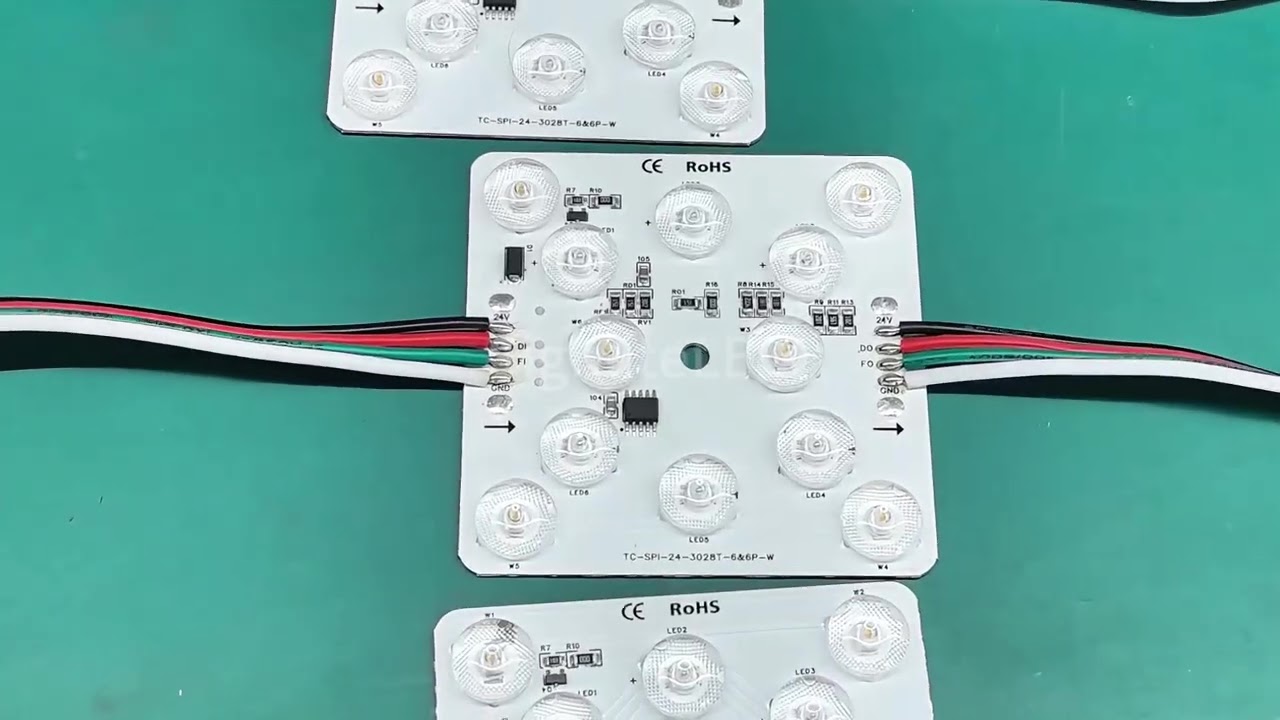
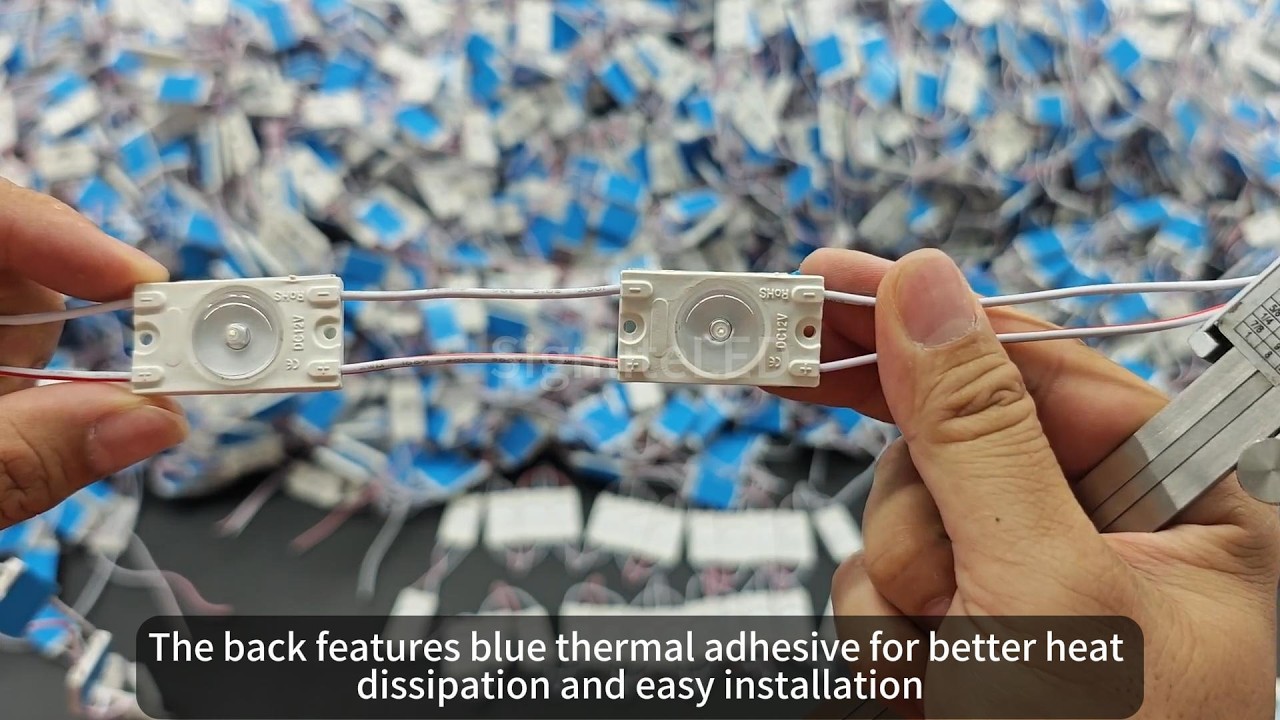
LED module lights let you adjust spacing around supports, curves and irregular openings in backlit stretch ceilings, fabric light boxes and signage. Compare fixed white, tunable white and RGBW modules below. For moving effects on an LED pixel wall, confirm whether the selected model supports SPI or DMX512 and how the modules will be addressed. For an initial layout, mark the shallowest part of the cavity and check module spacing at edges, joints and cutouts. Test those areas behind the specified membrane or graphics before estimating quantities.

Static
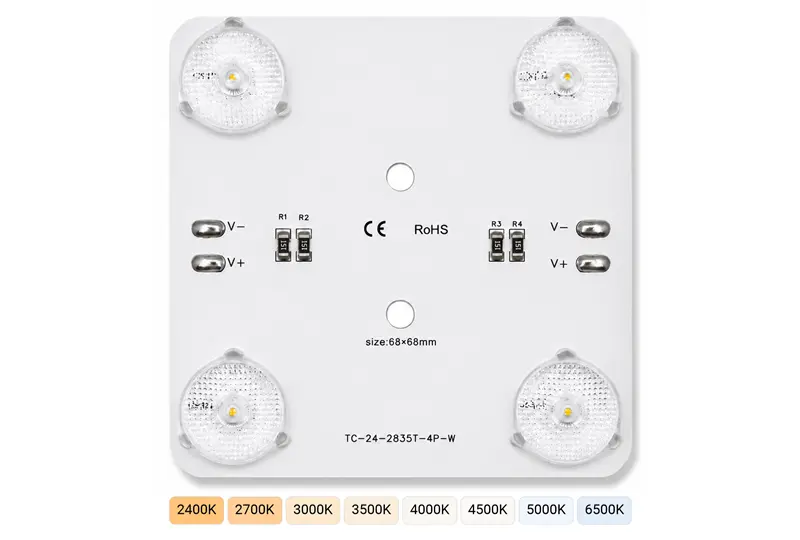
Fixed White Four Lens LED Module
Single Color LED Modules

Fixed-white modules for signs and ceiling panels where the LED grid needs to work around framing or openings.

LED Type2835 SMD
LED Count4
Power4 W
Voltage24 V DC
Efficiency100 or 150 lm/W
Color3000 / 4000 / 6500 K
CRIRa90+ or Ra97+
Size68 × 68 × 5.5 mm
Static
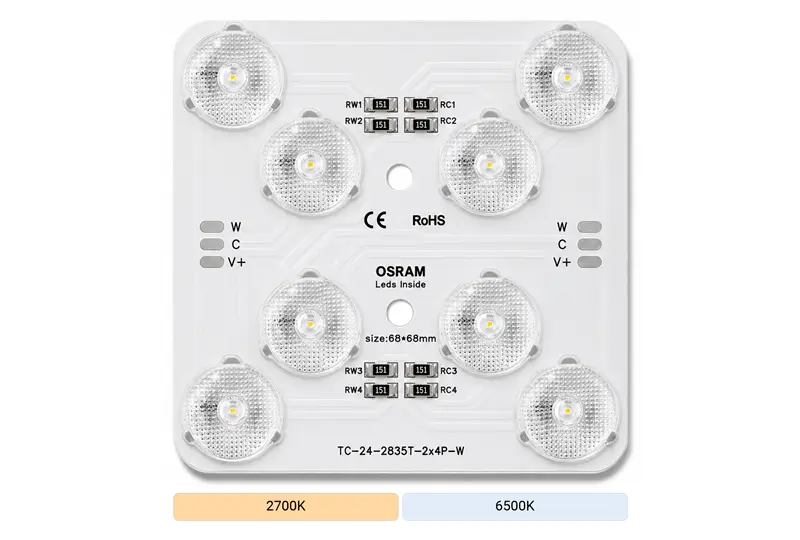
Warm To Cool White LED Module
Tunable White LED Modules

A compatible CCT controller lets one ceiling shift from warm to cool white as the room’s use changes.

LED Type2835 SMD
LED Count2 × 4
Power4 + 4 W
Voltage24 V DC
Efficiency100 lm/W
Color2700–6500 K
CRIRa90+ or Ra97+
Size68 × 68 × 5.5 mm
Multi-color
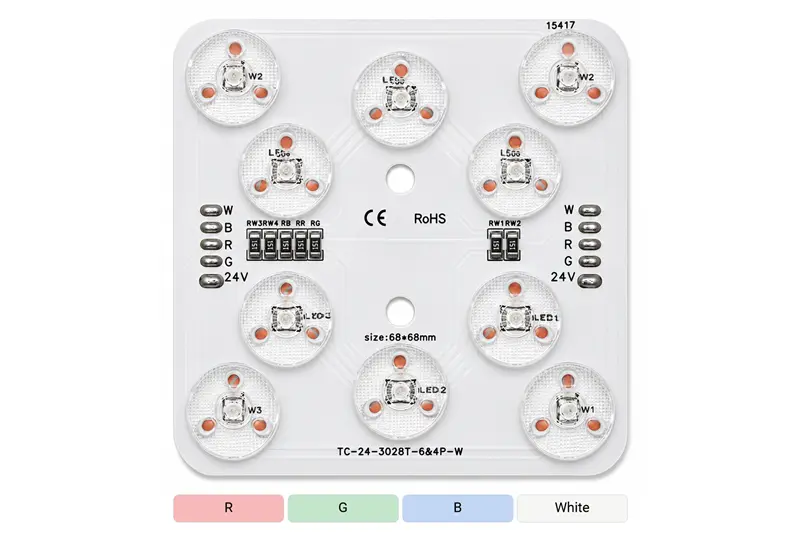
RGB Plus White LED Module
RGBW LED Modules

Run RGB scenes on a sign or feature wall, with a dedicated white channel for its everyday lighting setting.

LED Type3030 + 2835 SMD
LED Quantity6 RGB + 4 white
Power4 + 4 W
Voltage24 V DC
ColorRGB + white
CRI (white)Ra90+
ControlRGBW controller
Size68 × 68 × 5.5 mm
Multi-color
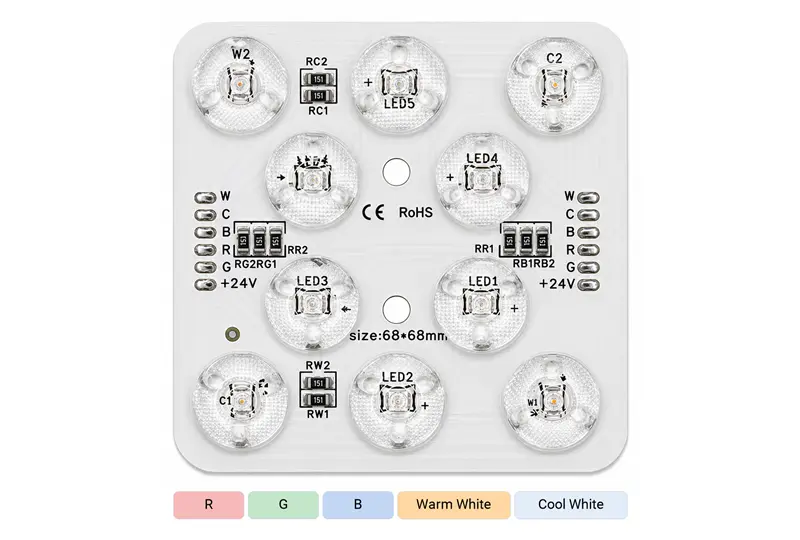
RGB And Tunable White LED Module
RGBCW (5-in-1) LED Modules

For displays that need colored scenes and a choice of white tones. Separate warm and cool white channels let you adjust the mix.

LED Type3030 + 2835 SMD
LED Count6 × 4
Power4 + 4 W
Voltage24 V DC
Efficiency80 lm/W (CW)
ColorRGB + cool / warm white
CRIRa90+ (CW)
Size68 × 68 × 5.5 mm
SPI
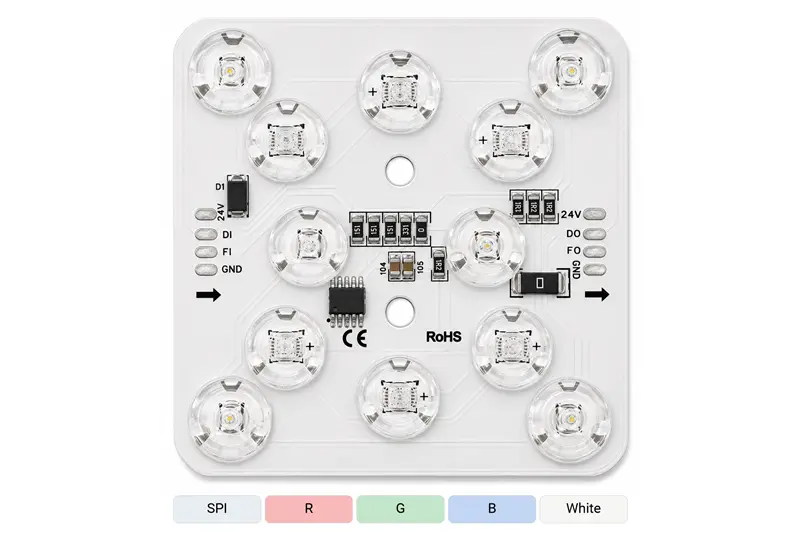
SPI Addressable LED Module RGB Plus White
SPI RGBW LED Modules

Use SPI to move color patterns across a display. The dedicated white channel gives the same installation a white-light setting.

LED Type3030 + 2835 SMD
LED Count6 × 6
Power4 W
Voltage24 V DC
Efficiency90 lm/W (W)
ColorRGB + white
CRIRa90+ (W)
Size68 × 68 × 5.5 mm
SPI
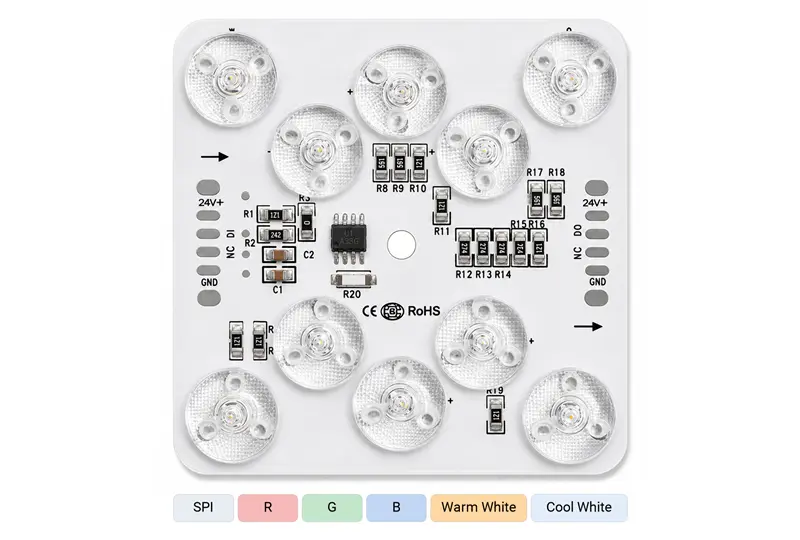
SPI Addressable LED Module RGB And Tunable White
SPI RGBCW (5-in-1) LED Modules

Choose this SPI module when a display needs addressable color patterns and a warm-to-cool white range between shows.

LED Type3030 + 2835 SMD
LED Count6 × 6
Power6 W
Voltage24 V DC
Efficiency90 lm/W (CW)
ColorRGB + cool / warm white
CRIRa90+ (CW)
Size68 × 68 × 5.5 mm
DMX
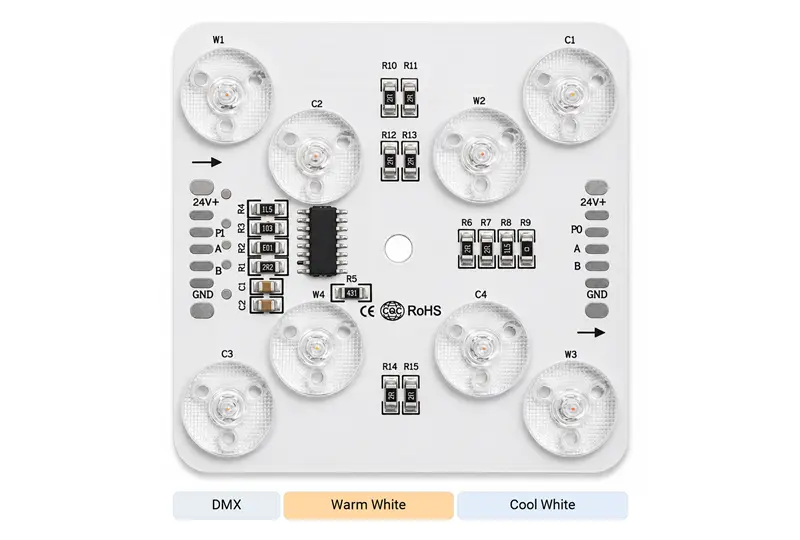
DMX LED Module Adjustable White
DMX Tunable White LED Modules

Use DMX512 to coordinate dimming and shift from warm to cool white across ceiling or wall zones as lighting needs change throughout the day.

LED Type2835 SMD
LED Count2 × 4
Power2 + 4 W
Voltage24 V DC
Efficiency100 lm/W
Color2700–6500 K
CRIRa90+
Size68 × 68 × 5.5 mm
DMX
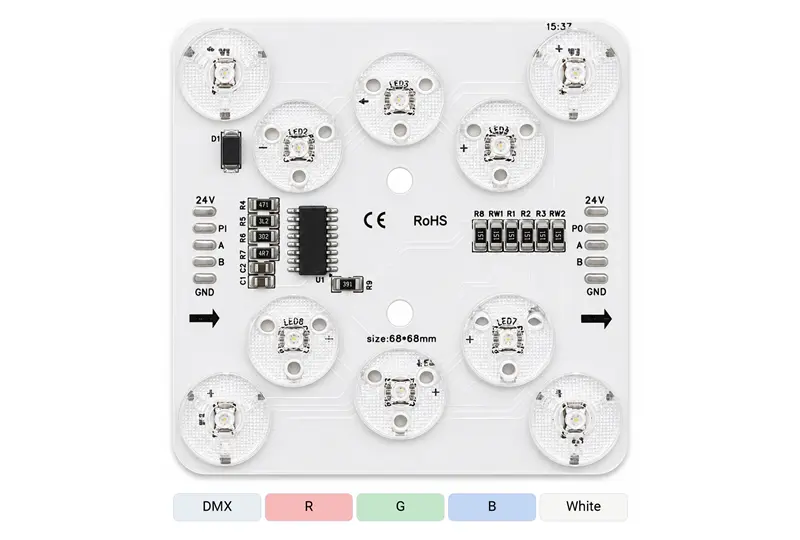
DMX LED Module RGB Plus White
DMX RGBW LED Modules

Cue color changes across a stage backdrop or feature wall via DMX512. Use the dedicated white channel in scenes that call for white light.

LED Type3030 + 2835 SMD
LED Count6 × 4
Power6 + 4 W
Voltage24 V DC
Efficiency90 lm/W (W)
ColorRGB + white
CRIRa90+ (W)
Size68 × 68 × 5.5 mm
DMX
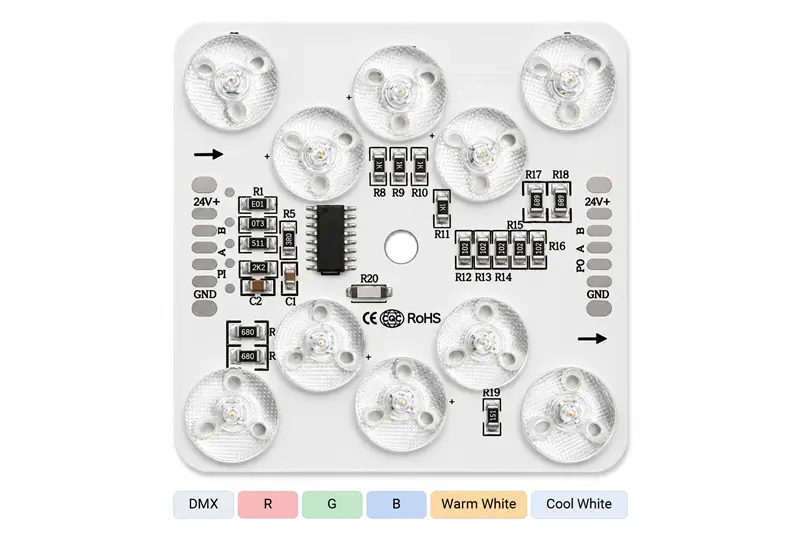
DMX LED Module RGB And Tunable White
DMX RGBCW (5-in-1) LED Modules

For DMX512 scenes that combine colored cues with different shades of white. Specify this version when white color temperature needs to change too.

LED Type3030 + 2835 SMD
LED Count6 × 4
Power6 + 4 W
Voltage24 V DC
Efficiency90 lm/W (CW)
ColorRGB + cool / warm white
CRIRa90+ (CW)
Size68 × 68 × 5.5 mm

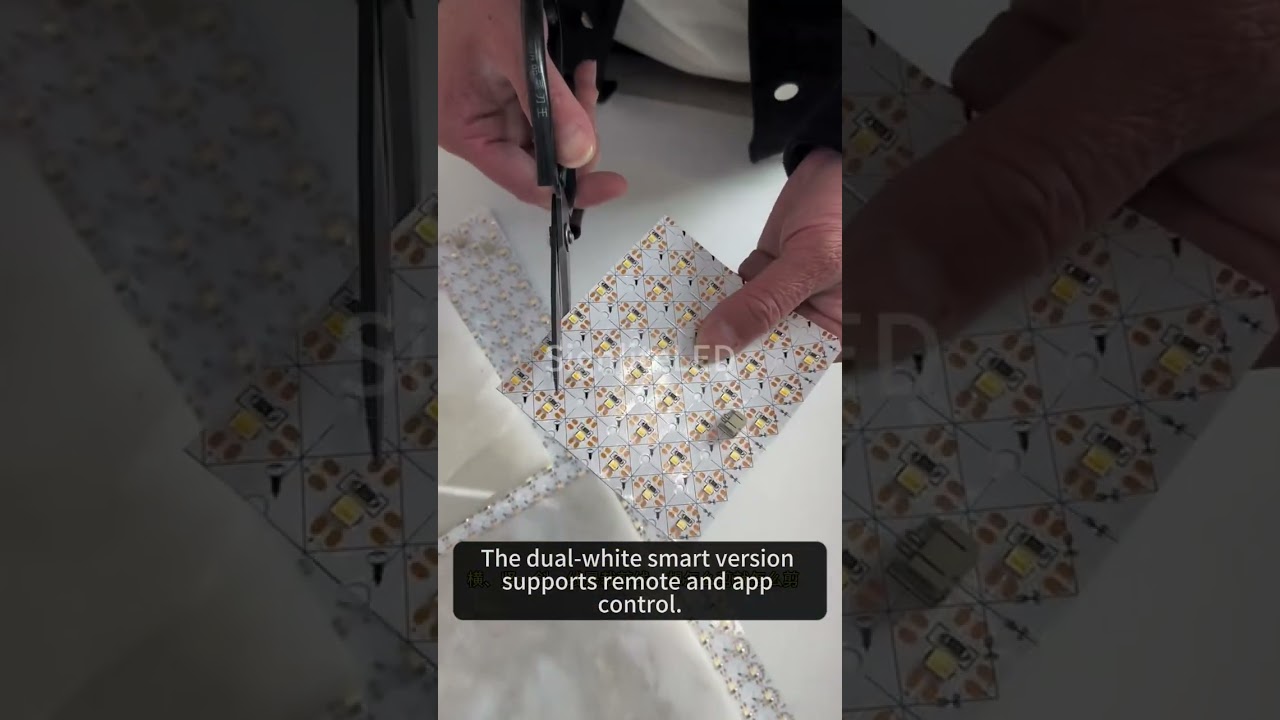
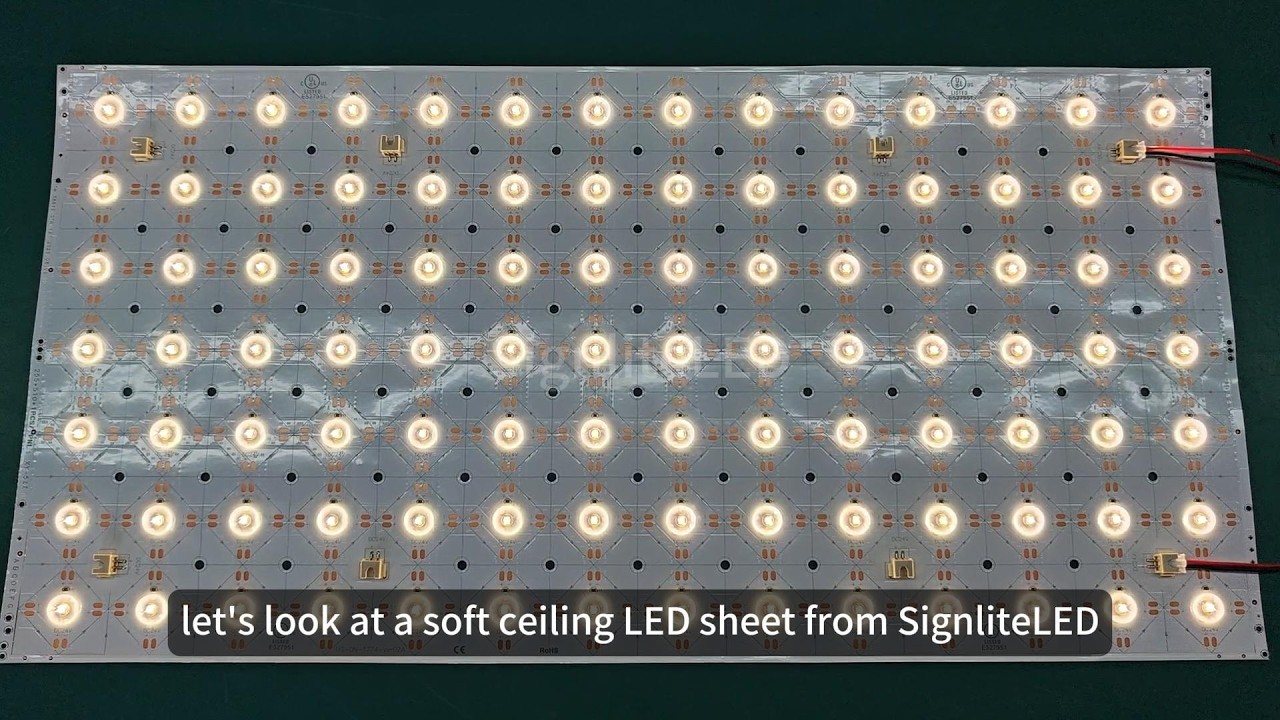
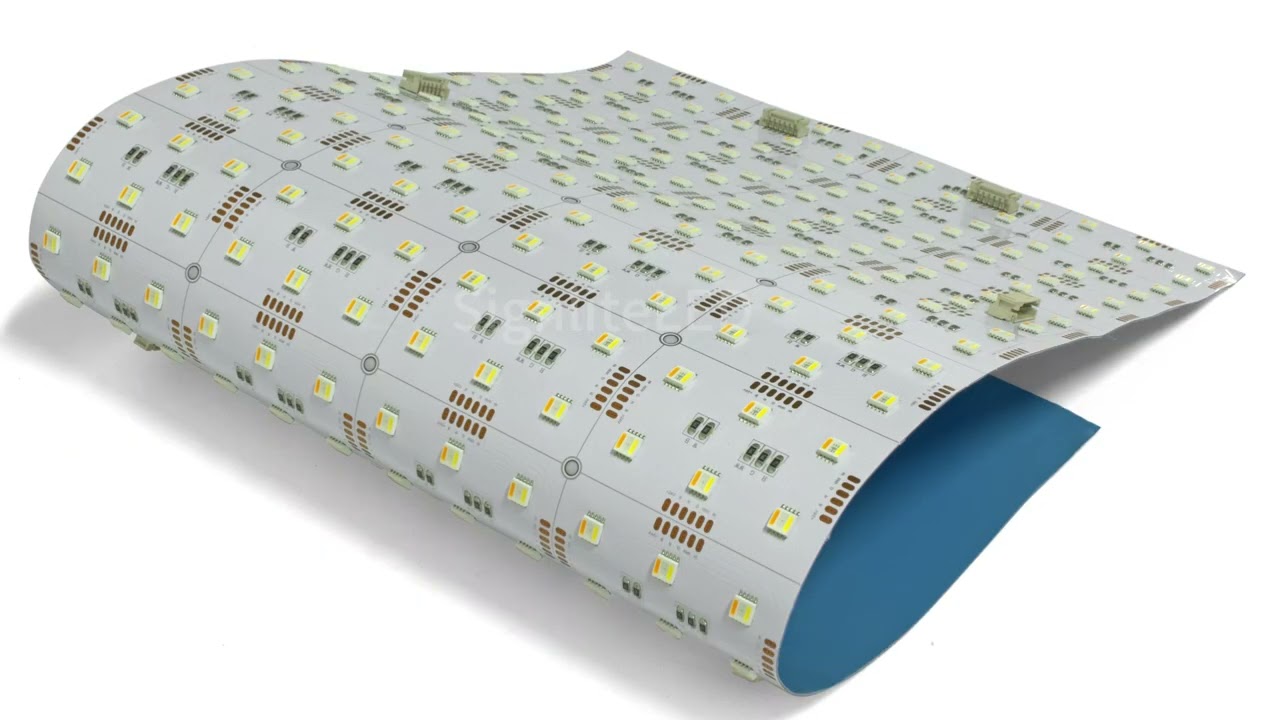
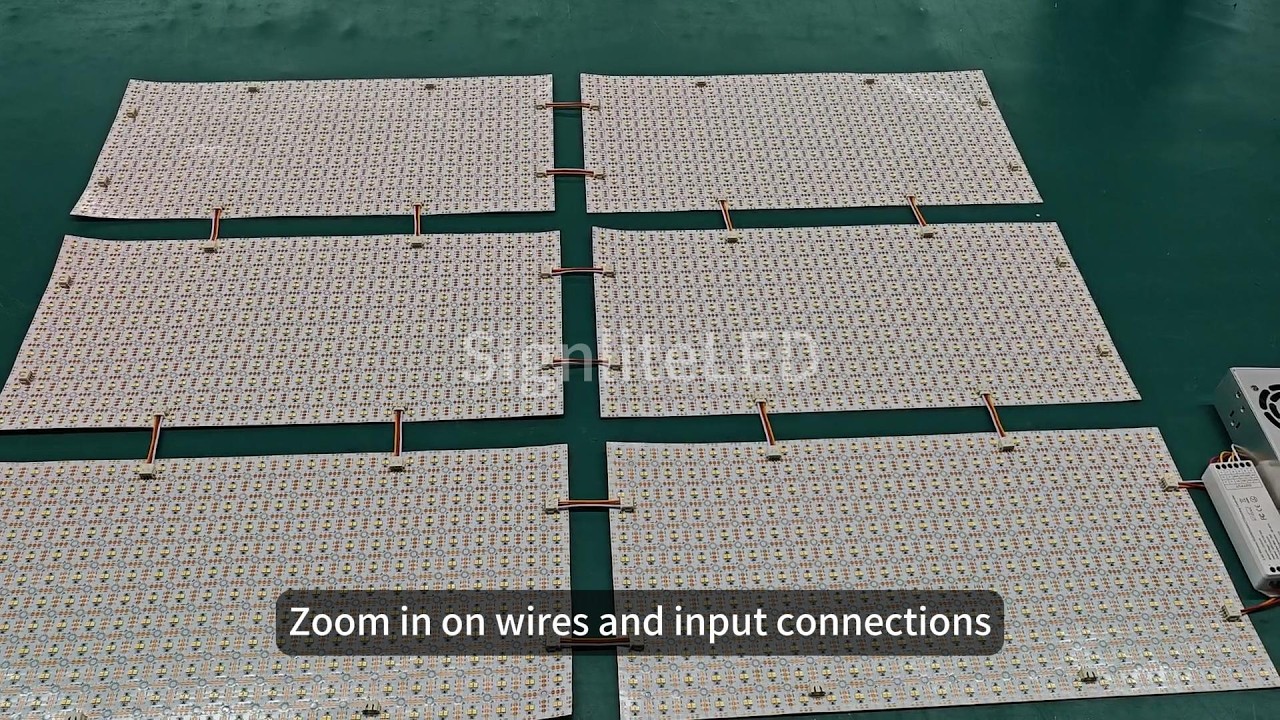
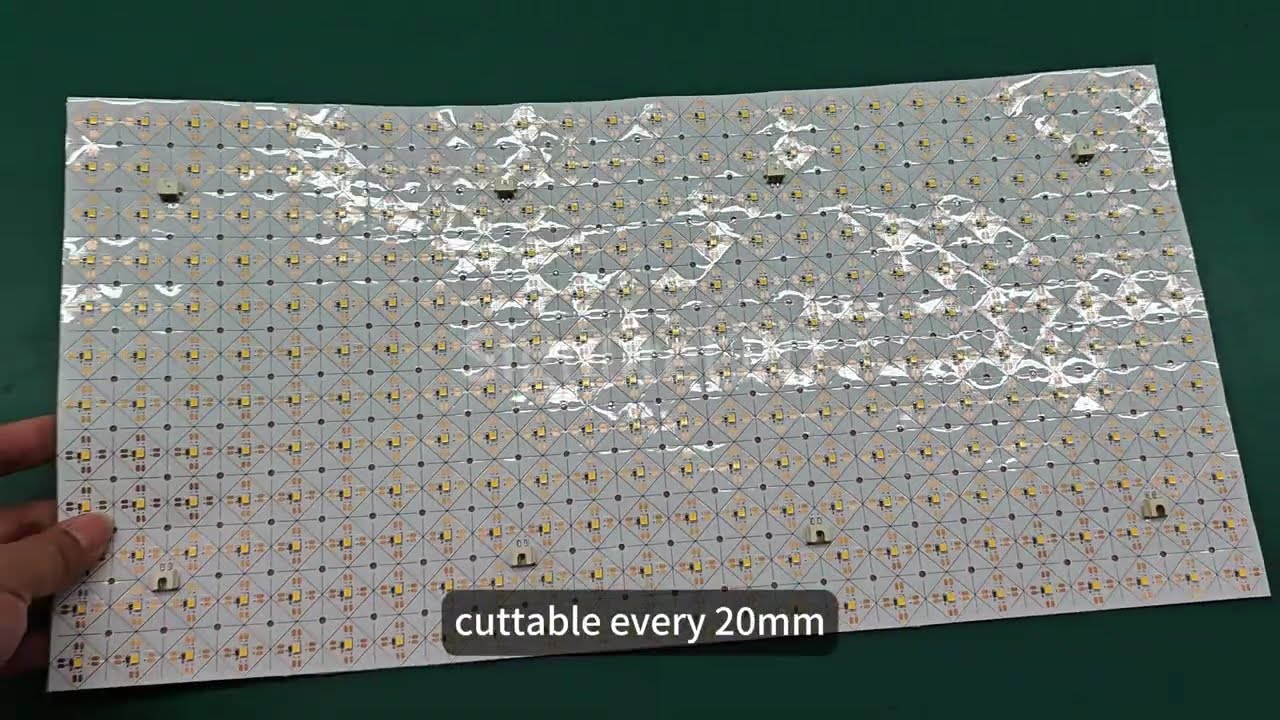
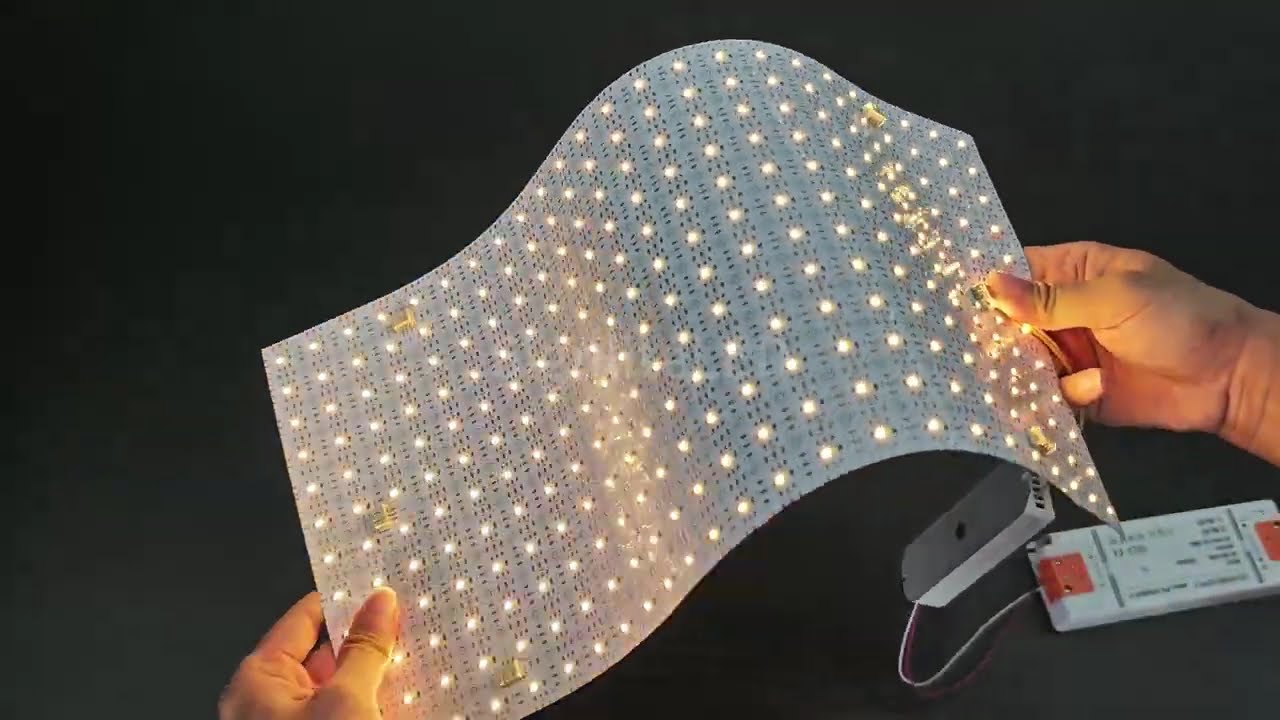
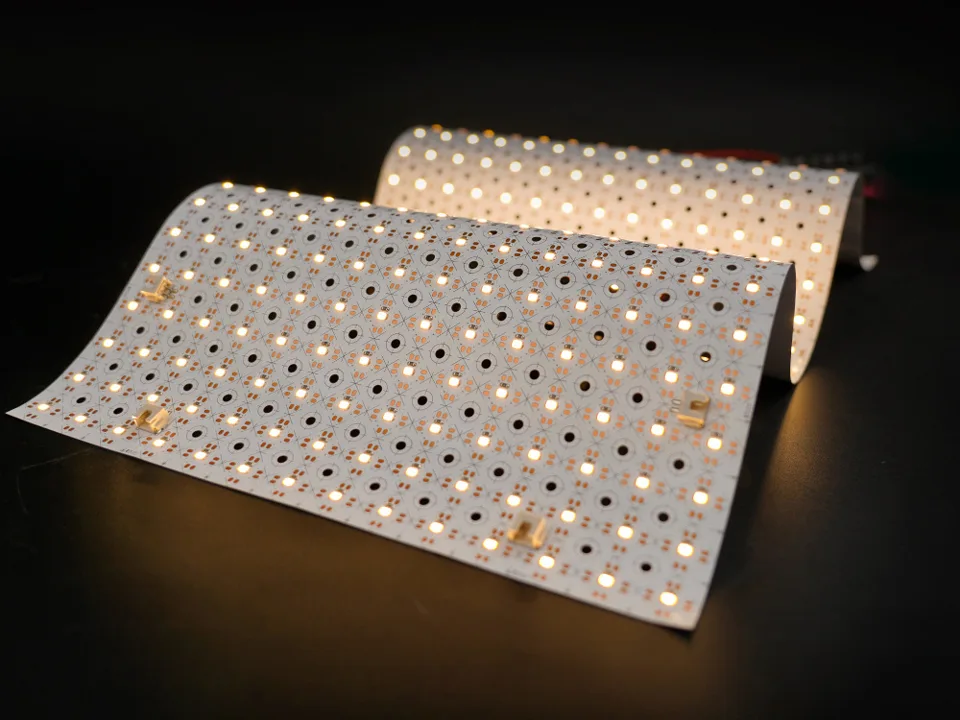
Flexible LED sheet lights provide broad surface coverage in shallow cavities behind translucent stone, fabric graphics and ceiling panels. For backlit onyx, marble or quartzite, map the sheet seams and cut lines around openings, and test the actual slab at the available depth. For dynamic walls or ceilings, compare addressable models and check pixel spacing across sheet joints. For a preliminary quote, send the illuminated dimensions, the cutout locations and the available depth so the sheet sizes and connections can be planned.

Fixed White
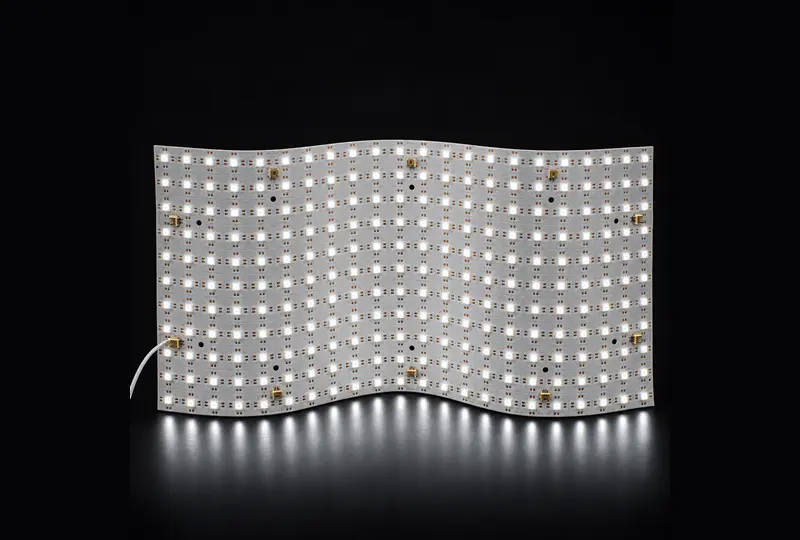
Fixed White Flexible LED Sheet Wave
Single Color LED Sheets

Dimmable fixed white for printed graphics and translucent panels. Pick the sheet size and color temperature before planning your cuts.

Size250 × 250 / 490 × 245 mm
LED Type2835 SMD
LED Count100 / 242
Color2700 / 3000 / 4000 / 6500 K
Voltage24 V DC
Power12 / 28 W
Luminous Flux1200 / 2800 lm
CRIRa >80
DimmableYes
Beam Angle120°
Cut Increment25 × 25 / 22.3 × 22.3 mm
IP RatingIP20 / IP54
Warranty3 years
Tunable White
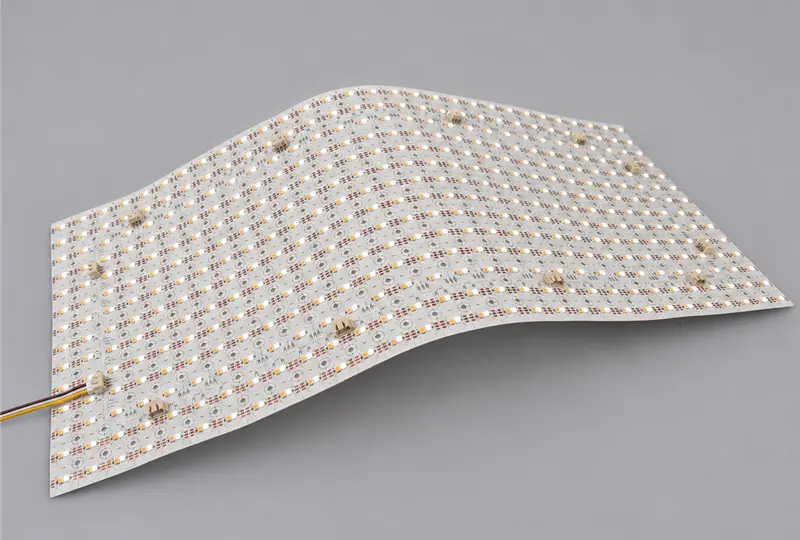
Curved Flexible LED Sheet For Tunable White
Tunable White LED Sheets

Adjust the white tone behind a retail display or translucent wall. Test warm and cool settings through the specified facing material.

Size250 × 250 / 490 × 245 mm
LED Type2835 SMD
LED Count200 / 484
Color2700–6500 K
Voltage24 V DC
Power16 / 40 W
Luminous Flux1600 / 3800 lm
CRIRa >90
DimmableYes
Beam Angle120°
Cut Increment25 × 25 / 22.3 × 22.3 mm
IP RatingIP20 / IP54
Warranty3 years
Multi-color
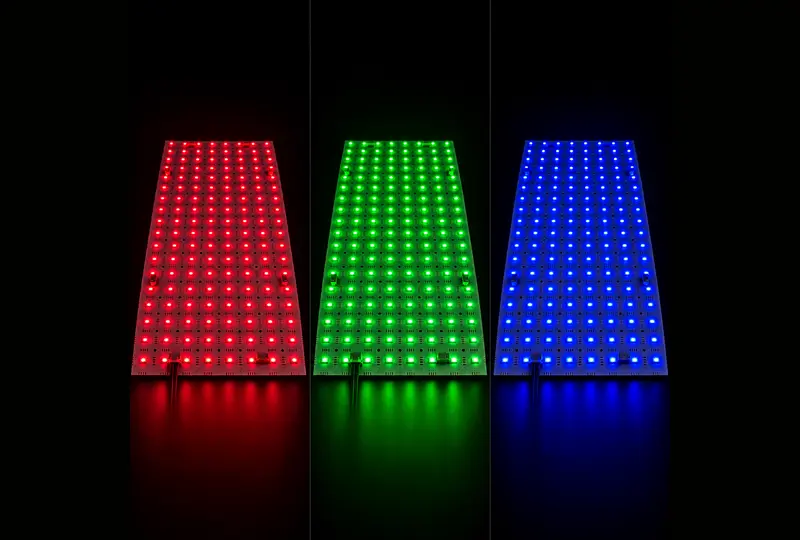
Flexible RGB LED Sheet Color Modes
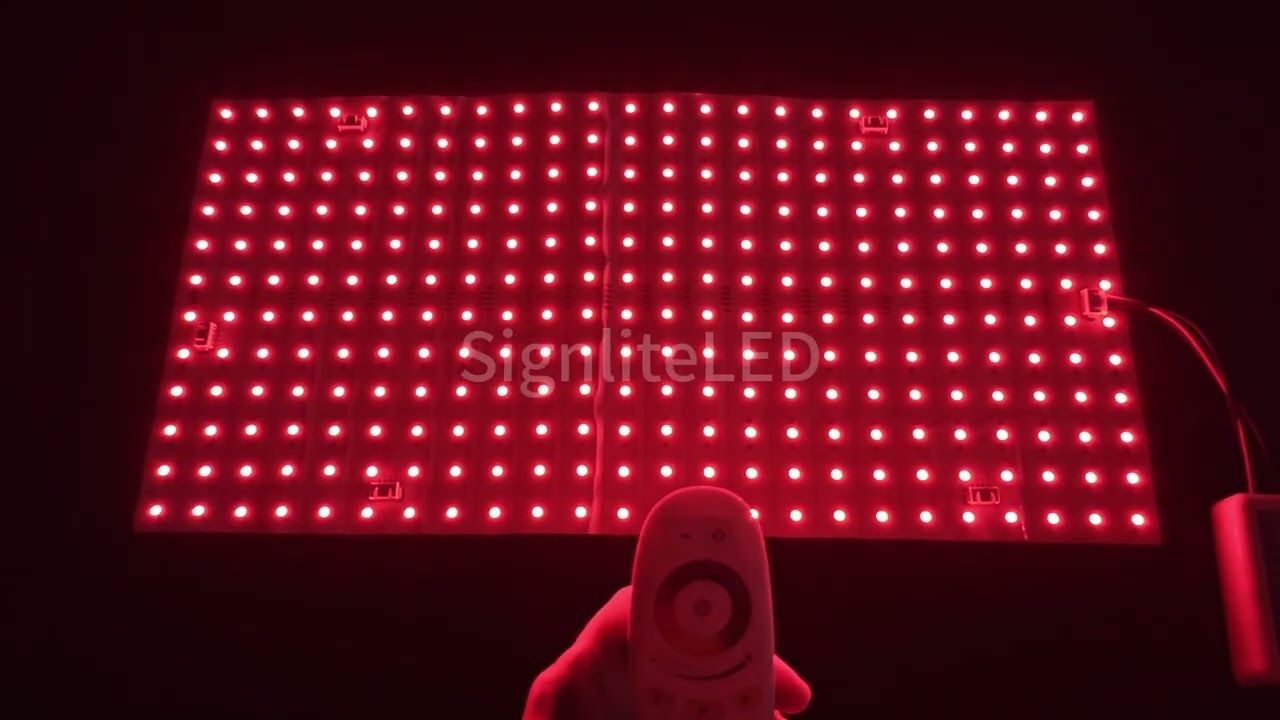
RGB LED Sheets

Use this RGB LED sheet to backlight retail displays with solid colors or smooth fades across each zone. Pair it with a compatible RGB controller.

Size490 × 245 mm
LED Type5050 SMD
LED Count128
ColorRGB
Voltage24 V DC
Power45 W
DimmableYes
Beam Angle120°
Cut Increment39.6 mm
IP RatingIP20 / IP54
Lifespan>35,000 hours
Warranty3 years
Multi-color
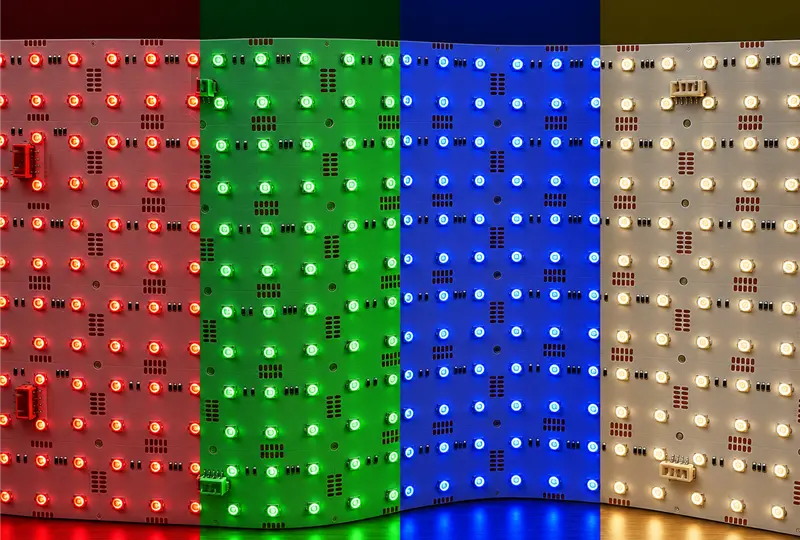
Flexible LED Sheet RGB Plus White Modes
RGBW LED Sheets

Use RGB for color scenes and a dedicated white channel for everyday display lighting. Choose the white color temperature when ordering.

Size250 × 250 / 490 × 250 mm
LED Type5050 RGBW 4-in-1 SMD
LED Count150 / 288
ColorRGB + 3000 / 4000 / 6500 K
Voltage24 V DC
Power24 / 48 W
Efficacy90 lm/W
DimmableYes
Beam Angle120°
Cut Increment50 × 50 / 20.4 × 122.5 mm
IP RatingIP20 / IP54
Warranty3 years
Multi-color
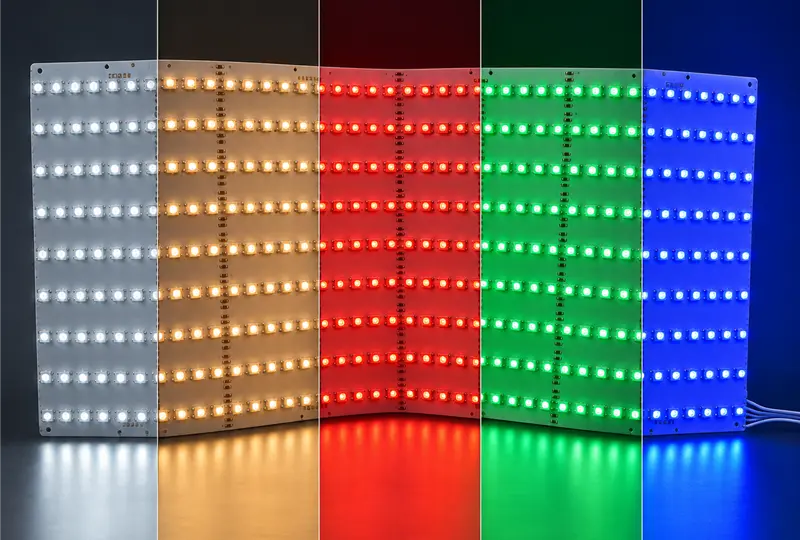
Flexible LED Sheet RGB And Dual White
RGB+CCT LED Sheets

For displays that switch between RGB effects and adjustable white. Useful when the white tone needs to match the surrounding lighting.

Size490 × 245 / 500 × 245 mm
LED Type2835 SMD / 5050 SMD
LED Count640 / 360
ColorRGB + tunable white
Voltage24 V DC
Power50 / 60 W
Luminous Flux1800 / 2160 lm
CRIRa >80
DimmableYes
Beam Angle120°
Cut Increment30.6 × 30.6 mm / 125 mm
IP RatingIP20 / IP54
Warranty3 years
Addressable
RGB Pixel LED Sheet Lit Grid
Addressable LED Sheets

Built-in WS2812 ICs let a compatible controller change each pixel independently. Create moving color gradients and chase effects across a backlit display.

Size250 × 250 mm
LED Type5050 SMD
LED Quantity100 per sheet
IC TypeBuilt-in WS2812
IC Quantity100 per sheet
ColorDigital RGB (RGBIC)
Voltage12 V DC
Power13 W
Luminous Flux20 lm/LED
Beam Angle120°
IP RatingIP20 / IP54
Lifespan>35,000 hours
Warranty3 years
Optical Lens
Flexible LED Sheet With Illuminated Lenses
Optical Lens LED Sheets

Integrated wide-beam lenses spread fixed white behind a diffuser. Test the actual face material at the planned mounting depth.

Size500 × 250 × 8 mm
LED Type2835 SMD
LED Count98
Color2700 / 3000 / 4000 / 6500 K
Voltage24 V DC
Power20 W
Luminous Flux1800 lm
CRIRa >90
Beam Angle180°
Cut Increment1 LED
IP RatingIP20
Lifespan>35,000 hours
Warranty3 years
Addressable
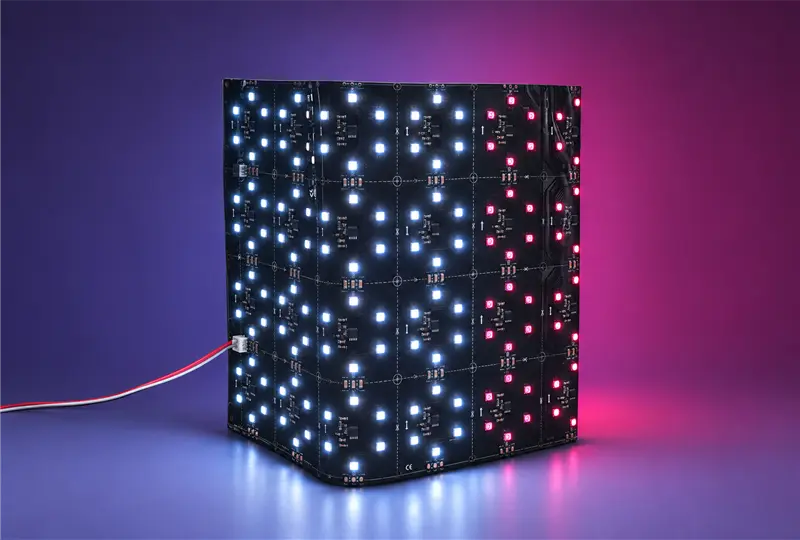
Curved Black Addressable LED Sheet
Black PCB Addressable LED Sheets

Plan moving effects in groups of six LEDs. A compatible SPI controller can change each of the sheet’s 32 groups independently.

Size490 × 250 mm
LED Type5050 SMD
LED Count192
IC TypeSM16703
IC Count32
ColorDigital RGB
Voltage24 V DC
Power42 W
Beam Angle120°
Cut Increment6 LEDs / 61.25 × 61.25 mm
PCB ColorBlack
IP RatingIP20 / IP54
Warranty3 years

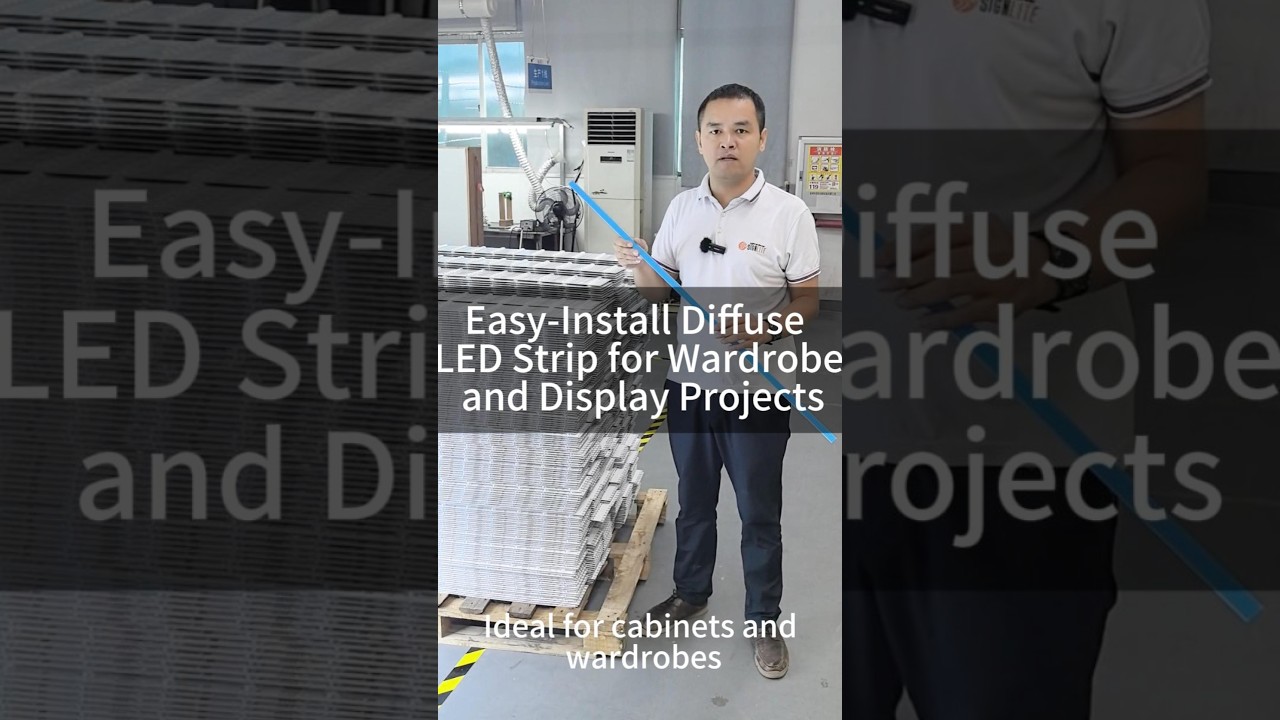
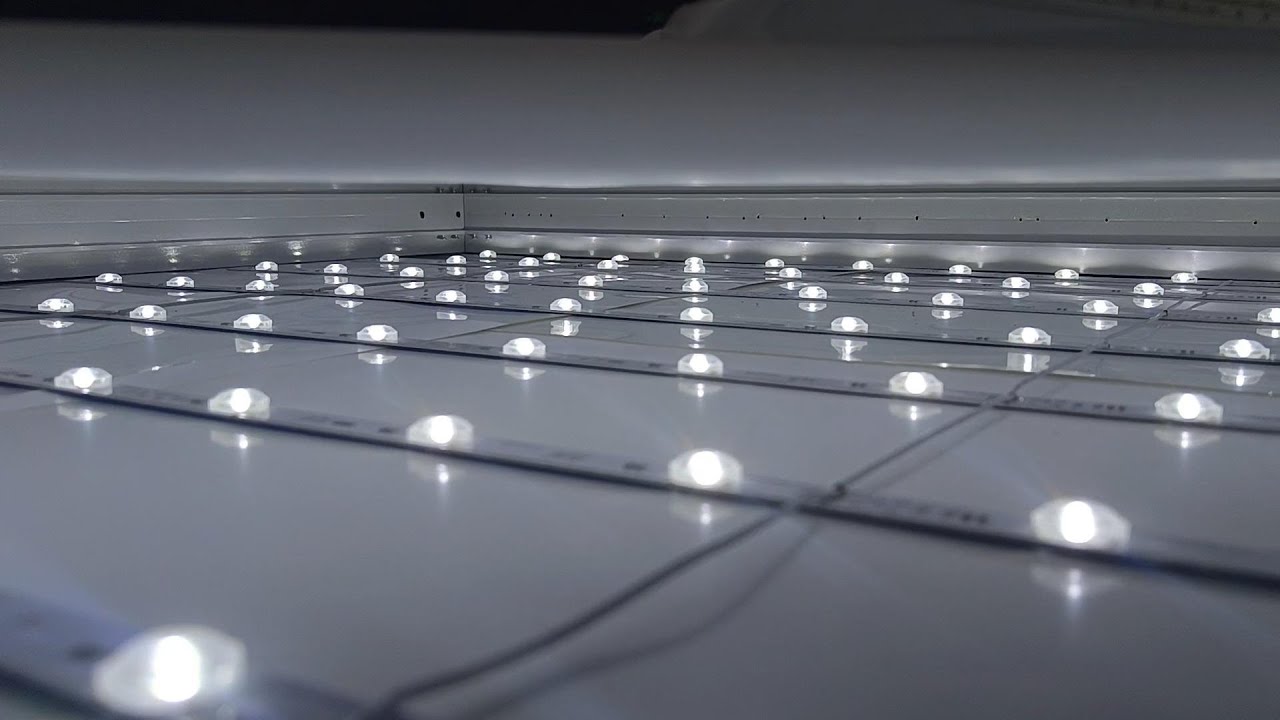
Diffuse reflection rigid LED backlight bars work well in straight, evenly spaced rows behind fabric lightboxes, sign cabinets and luminous stretch ceilings. Their wide-angle lenses spread light across the graphic, sign face or ceiling membrane. Choose bar lengths to fit the mounting area, and set row spacing based on the distance from the lenses to the illuminated surface. Allow clearance around framing, supports and access openings, and plan where power will enter each section. Confirm the input voltage, wiring and IP rating for the selected model. Test the layout with the specified face material in place, checking for bright bands or dark edges at row ends, joints and along the perimeter.

Fixed White
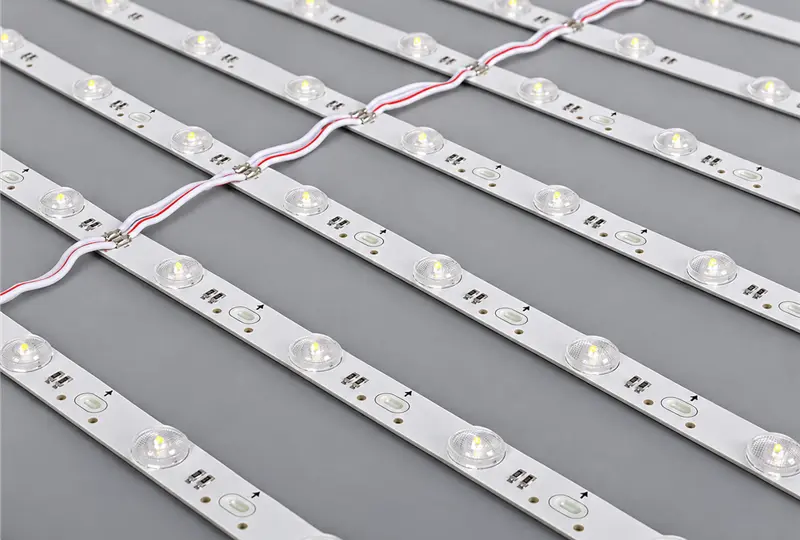
Linked LED Bars For Diffuse Backlighting
IP20 Diffuse Backlight LED Bar

Mount fixed-white LED bars in straight rows inside an indoor sign cabinet. Test the row spacing with the final printed face in place and check for visible bands.

Input Voltage12 / 24 V DC
Length480 / 960 mm
LED Chips12 / 24 LEDs, 1W SMD2835
Power5 / 10 W
Efficacy150 lm/W
CCT3000 / 4000 / 5000 / 6500 K
CRI>80
Beam Angle170°
Connector18 AWG wire or 5557 connectors
WiringDaisy chain
IP RatingIP20
Cut Section80 / 160 mm
Lifespan30,000 hours
Warranty3 years
CertificationsCE, RoHS
Tunable White
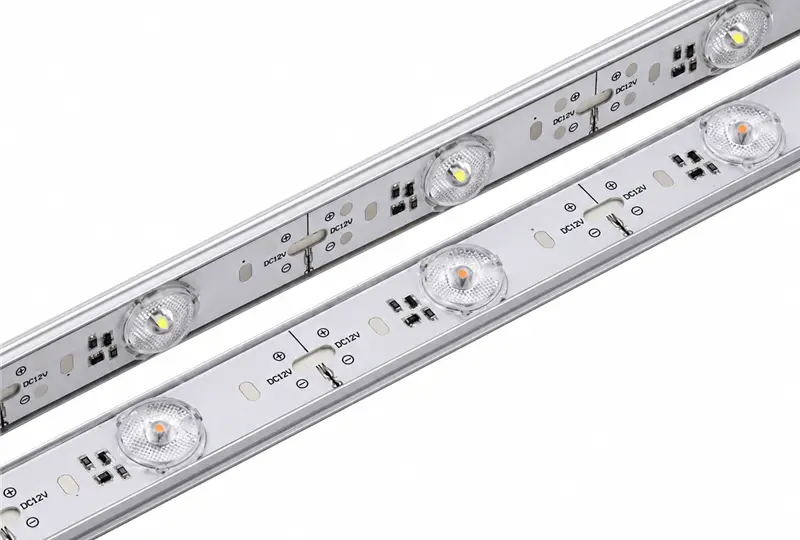
IP65 Diffuse Backlight LED Bars
IP65 Diffuse Backlight LED Bar

Adjust white tone in sign cabinets that require an IP65-rated light source. Check the protection of connectors and cable entries separately.

Input Voltage12 / 24 V DC
Length480 / 960 mm
LED Chips12 / 24 LEDs, 1W SMD2835
Power5 / 10 W
Efficacy150 lm/W
CCT2700–6500 K, tunable white
CRI>80
Beam Angle170°
Connector18 AWG wire or 5557 connectors
WiringDaisy chain
IP RatingIP65
Cut Section80 / 160 mm
Lifespan30,000 hours
Warranty3 years
CertificationsCE, RoHS
Tunable White
Tunable White LED Bars With Diffusion Lenses
Tunable White Backlight LED Bar

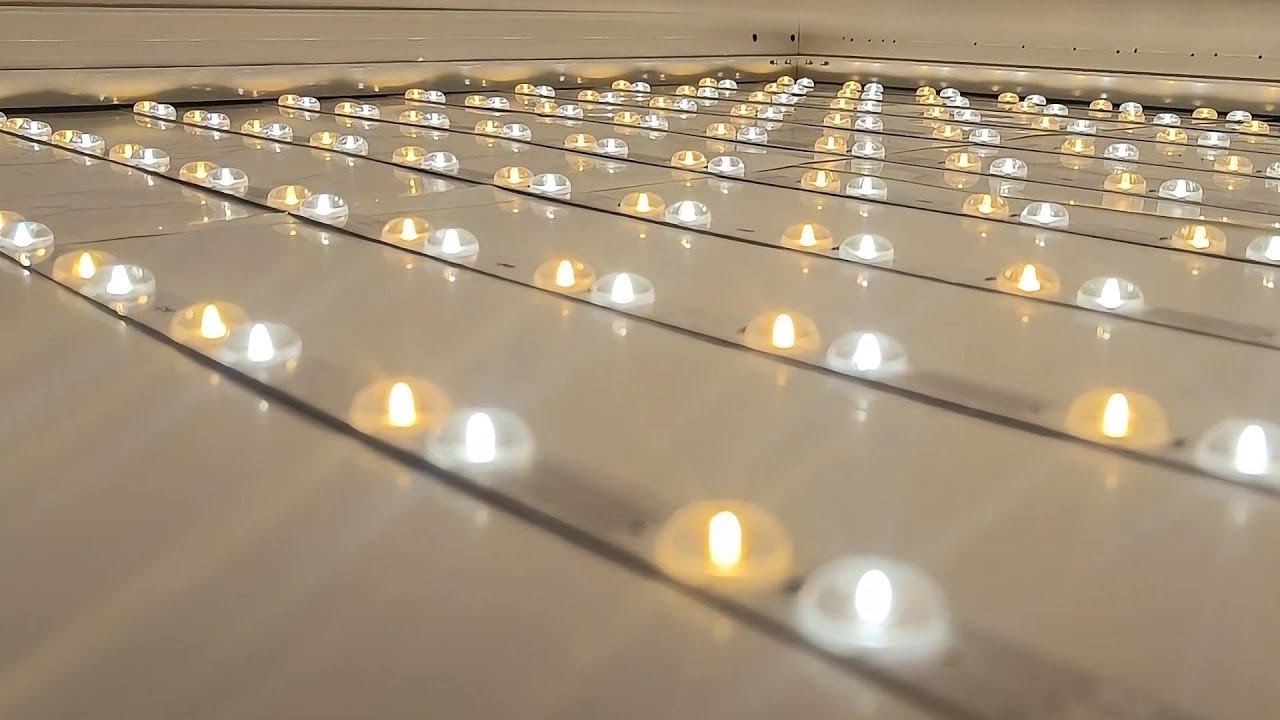
For indoor backlighting where the white tone needs to shift from warm to cool. The image shows the lens and wiring layout for reference.

Input Voltage12 / 24 V DC
Length480 / 960 mm
LED Chips24 / 48 LEDs, 1W SMD2835
Power10 / 20 W
Efficacy150 lm/W
CCT2700–6500 K, tunable white
CRI>80
Beam Angle170°
Connector18 AWG wire or 5557 connectors
WiringDaisy chain
IP RatingIP20
Cut Section80 / 160 mm
Lifespan30,000 hours
Warranty3 years
CertificationsCE, RoHS
Flexible
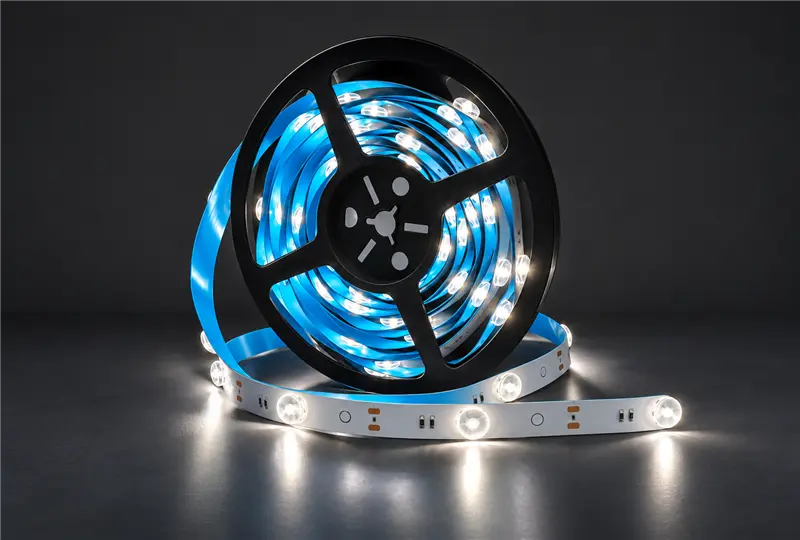
Fixed White Diffuse Lens LED Strip Reel
Single Color Flex Diffuse LED Strip

Use this fixed-white strip where a rigid bar cannot follow an irregular sign face or curved display. Check spacing through the finished face.

Input Voltage12 / 24 V DC
Length5000 mm
LED Chips12 LEDs/m, 1W SMD2835
Power12 W
Efficacy110 lm/W
CCT3000 / 4000 / 5000 / 6500 K
CRI>80
Beam Angle170°
IP RatingIP20
Cut Section83.3 / 166.7 mm
Lifespan30,000 hours
Warranty3 years
CertificationsCE, RoHS
Flexible
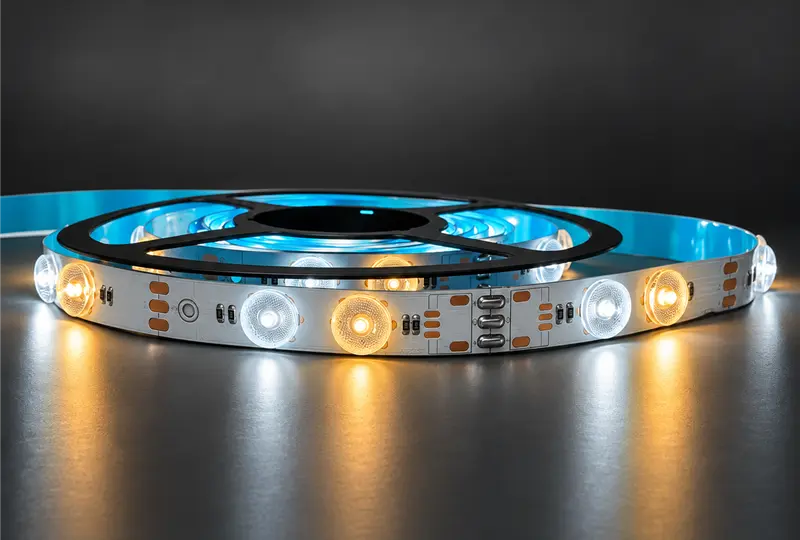
Dual White Diffuse Lens LED Strip Coil
Tunable White Flex Diffuse LED Strip

Use this tunable white LED strip to backlight curved displays and stretch ceiling details. Shift from warm to cool white to suit the surrounding lighting.

Input Voltage12 / 24 V DC
Length5000 mm
LED Chips24 LEDs/m, 1W SMD2835
Power12 W
Efficacy110 lm/W
CCT2700–6500 K, tunable white
CRI>80
Beam Angle170°
IP RatingIP20
Cut Section83.3 / 166.7 mm
Lifespan30,000 hours
Warranty3 years
CertificationsCE, RoHS
Compare Three LED Backlight Sources

Start with the available depth and the shape of the surface. Flexible LED sheet lights cover broad areas in shallow cavities behind stone or graphics. LED module lights let you adjust spacing around supports, curves and openings. Rigid LED backlight bars suit straight runs in fabric lightboxes and sign cabinets. Compare spacing, wiring and control options below, then test the layout with the actual face material.

Lit LED modules spaced across a recessed ceiling
Flexible LED sheet laid across a backing board and folded over its edge
Parallel rigid LED bars mounted on an open frame
LED Backlight Modules
Flexible LED Sheets
LED Backlight Bar
Best suited to
Layouts that need flexible spacing around obstacles or independently controlled zones.
Shallow cavities and surfaces that need a custom-cut outline.
Regular backboards that can accommodate straight, repeated rows.
Check before ordering
Module pitch, edge setback, wiring routes and the required controller.
Cut increments, seams, cutouts and distance to the illuminated face.
Bar length, row spacing, mounting points and distance to the illuminated face.
Lighting and control
Fixed white, tunable white and RGBW. SPI or DMX512 on selected models.
Fixed white, tunable white, RGB, RGBW, RGB+CCT and addressable options.
Fixed-white and tunable-white options.

LED Backlighting Solutions

Choose the solution that matches your project. For luminous stretch ceilings and irregular walls or ceilings, check whether the mounting depth changes at joints, curves or corners. For fabric lightboxes and sign cabinets, test the printed face for bright bands and dark edges. For backlit onyx, marble or quartzite bars and reception desks, test the actual slab and mark any illuminated waterfall ends. For front-lit channel letters, check the narrowest strokes. For programmable ceilings, wall lightboxes or LED pixel walls, decide which zones or pixels need independent control and confirm the controller for the selected LEDs.

Luminous Stretch Ceilings

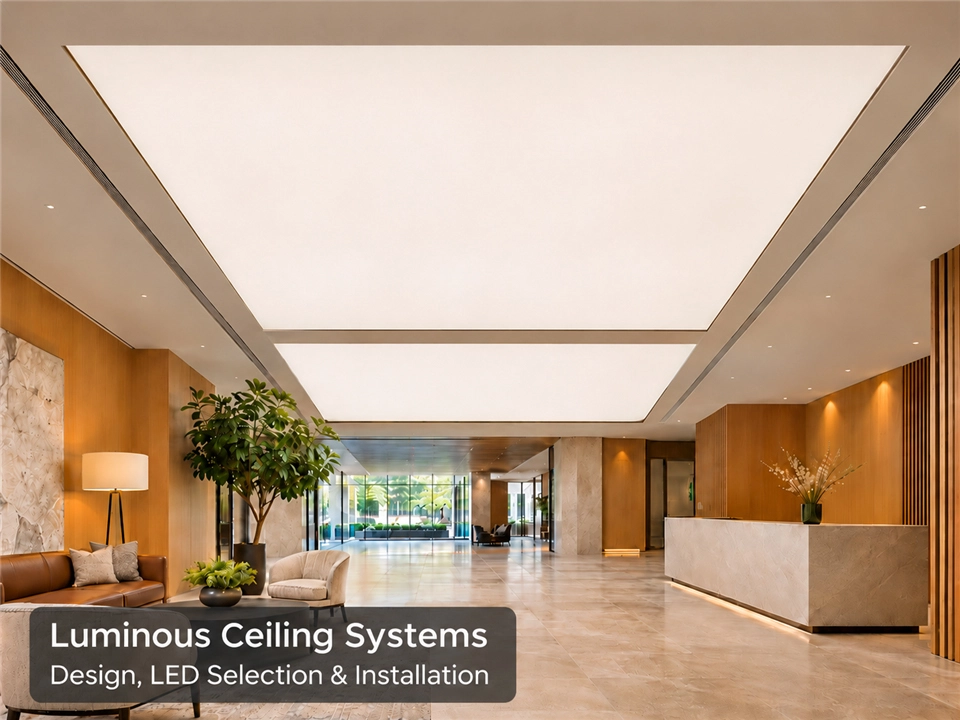
For backlit stretch ceilings, choose the LED layout around the available mounting surface and the distance to the membrane. Use individual LED modules where framing, vents, or curved edges interrupt the layout. Consider flexible LED sheets for broad, continuous mounting surfaces and rigid LED backlight bars for straight, evenly spaced rows. Before finalizing the layout, compare LED modules and flexible LED sheets for stretch ceilings. Before choosing a layout, compare LED modules and flexible LED sheets for stretch ceilings.

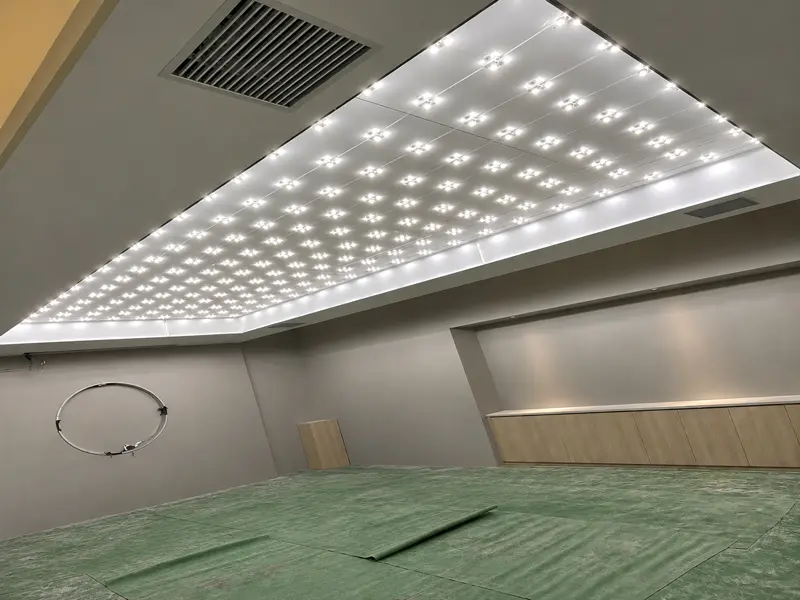
Individual four-LED modules and wiring on a recessed ceiling before the membrane is fitted.

LED Backlight Modules

When to use it
Choose individual modules when framing divides the ceiling into bays, or when downlights, sprinklers and access panels interrupt the grid. Lay out a regular grid in each bay, then adjust individual positions around the obstructions.

Installation checks
Check module spacing and the distance from the outermost modules to the membrane edge. Compare the spacing across framing lines so the bays read evenly. Plan the cable routes and keep drivers accessible for service.
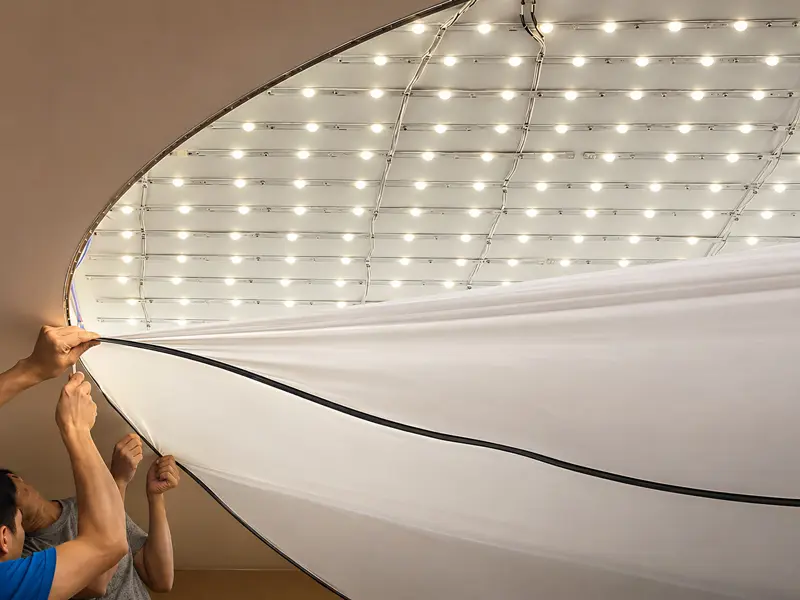
Rows of rigid LED bars exposed as installers stretch the translucent ceiling membrane.

Diffuse Reflection LED Backlight Bars

When to use it
Choose rigid bars for long, unobstructed runs. Set the row direction from the ceiling plan and check how many full bars fit in each bay before setting the fixing points.

Installation checks
Check bar length, row spacing and clearance at both ends for connectors and wiring. Review the gaps at row ends, cross-members and lighting-zone boundaries, where a dark band can become visible through the membrane.
Test the specified membrane. Build a small mock-up with the specified membrane at the planned distance from the LEDs. Include an edge and a typical joint. Review the lit sample for hotspots, dark edges and brightness changes between bays. If the project uses dimming or tunable white, check the intended settings before finalizing the layout.

Flexible LED Sheets are another option for shallow cavities with enough flat mounting area. Check the permitted cut lines, connector clearance and how adjacent sheets meet.

Application Examples

Printed luminous ceiling above auditorium seating

Printed luminous ceiling above auditorium seating

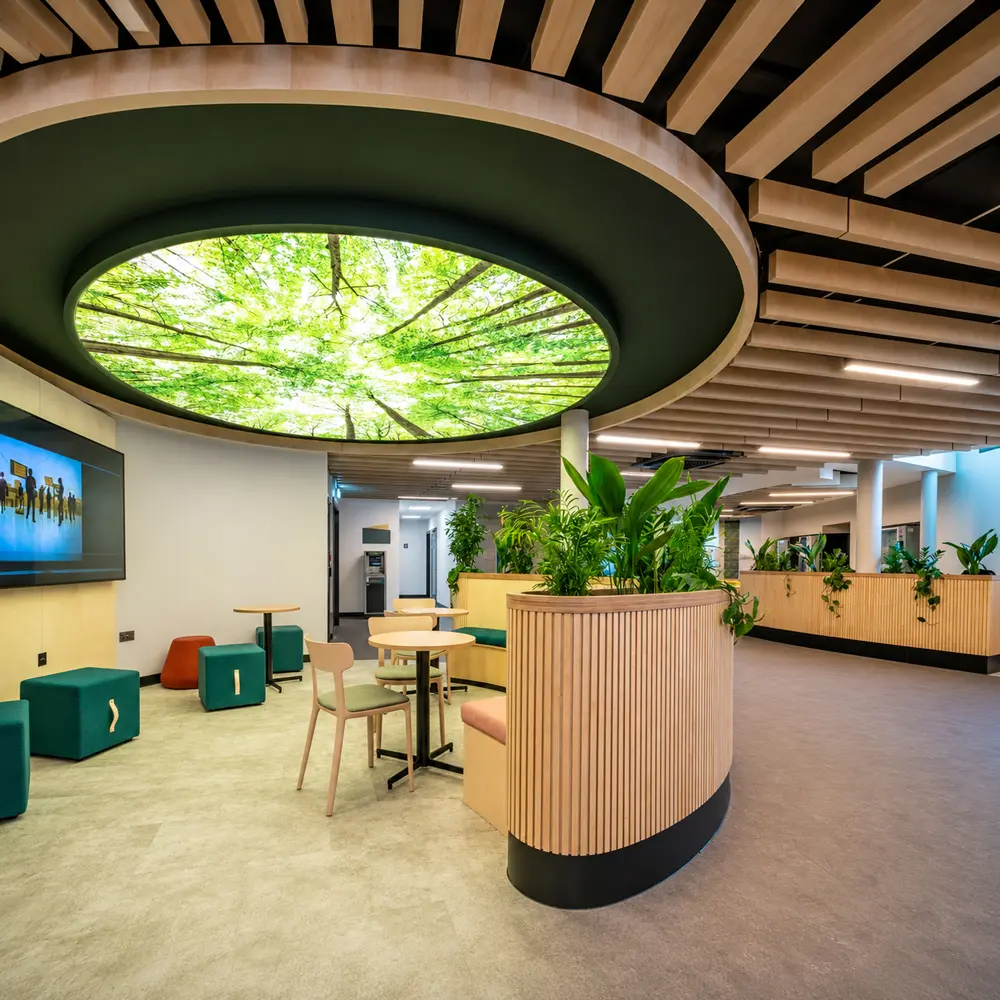
Circular printed luminous ceiling in a lounge

Circular printed luminous ceiling in a lounge

Continuous white luminous ceiling in a long interior
Continuous white luminous ceiling in a long interior

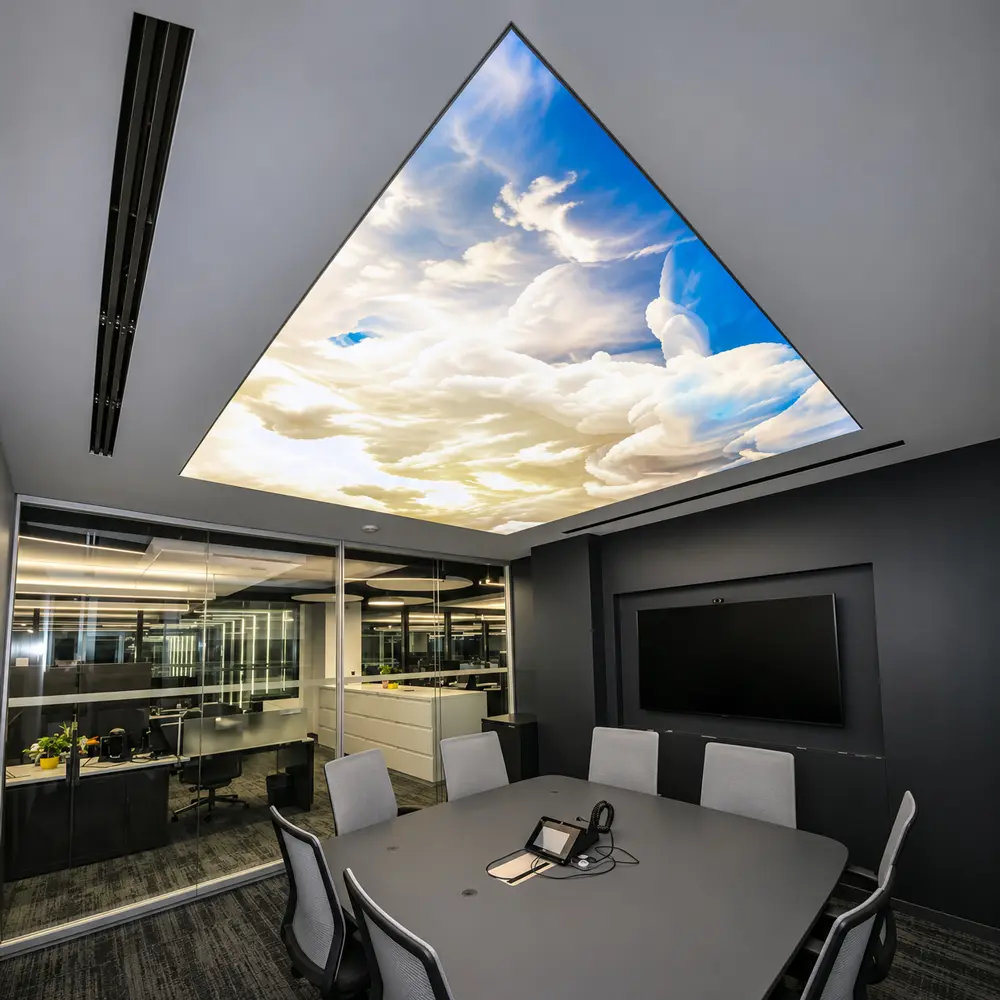
Printed luminous ceiling over a meeting table

Printed luminous ceiling over a meeting table

Framed luminous ceiling along a corridor

Framed luminous ceiling along a corridor

White luminous ceiling in a gallery

White luminous ceiling in a gallery

Fabric Lightboxes & Sign Cabinets
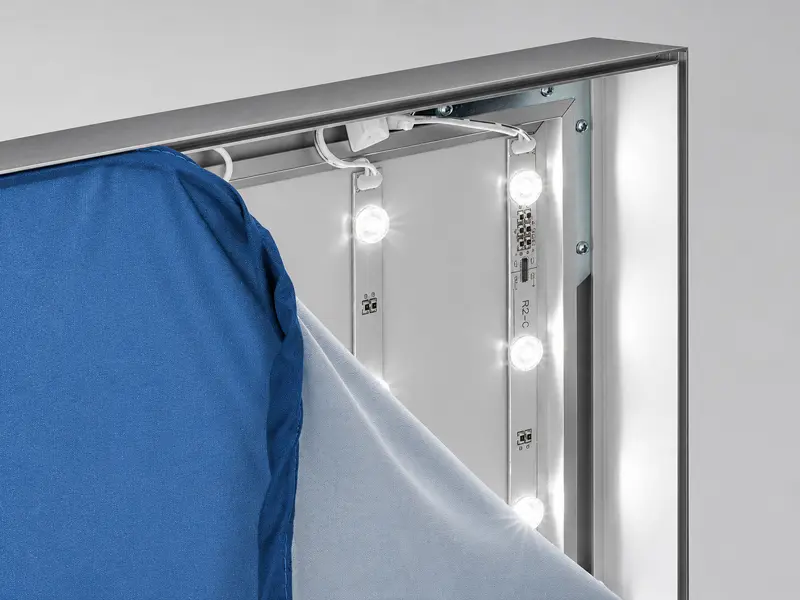
Plan the LED layout around the usable backboard and the distance to the printed face. Use rigid bars for long, regular runs and individual modules where framing interrupts the layout.

Fabric pulled back to reveal vertical rigid LED bars inside a lightbox

Diffuse Reflection LED Backlight Bars

When to use it
Use parallel rows of rigid bars on a rectangular backboard with long, uninterrupted runs. Choose a bar length that leaves room for connectors, cable bends and mounting hardware.

Installation checks
Set row spacing against the distance from the LEDs to the finished face. Review gaps at row ends and across frame members. Confirm enclosure conditions, power feed locations and driver access.

Installer wiring four-point LED modules in an open wall lightbox

LED Backlight Modules

When to use it
Use individual modules where braces, access openings or irregular edges interrupt the backboard. Start with a regular grid and adjust individual positions where the structure requires clearance.

Installation checks
Check module spacing and the setback from the perimeter, especially at corners and around obstructions. Keep wiring clear of the fabric and leave the drivers accessible for service.

Test the finished face at the planned depth. Build a lit sample with the actual printed fabric or sign face. Include a corner and a representative joint or frame member. Look for visible LED points, dark edges and brightness changes across the graphic.

Application Examples

Fabric campaign lightboxes in an apparel store
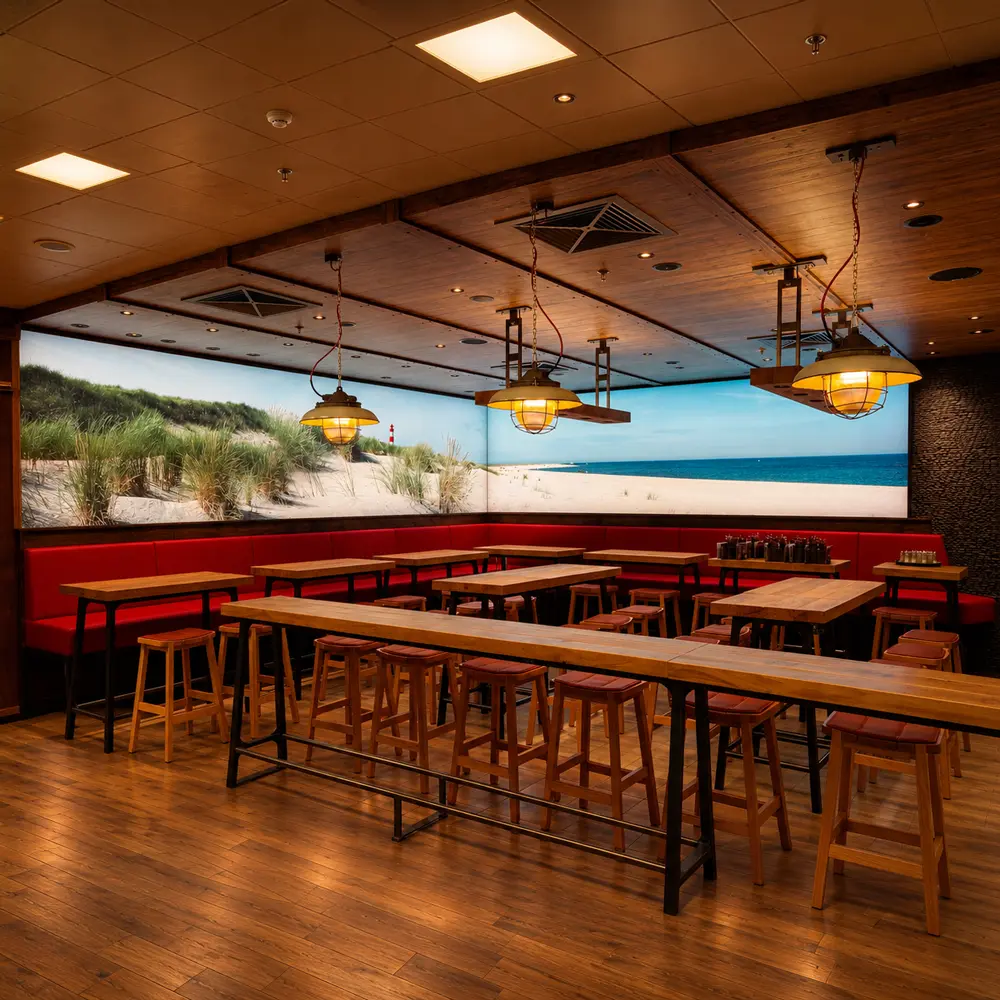
Fabric campaign lightboxes in an apparel store

Panoramic fabric lightboxes around a restaurant corner

Panoramic fabric lightboxes around a restaurant corner

Wall-mounted airport advertising lightboxes
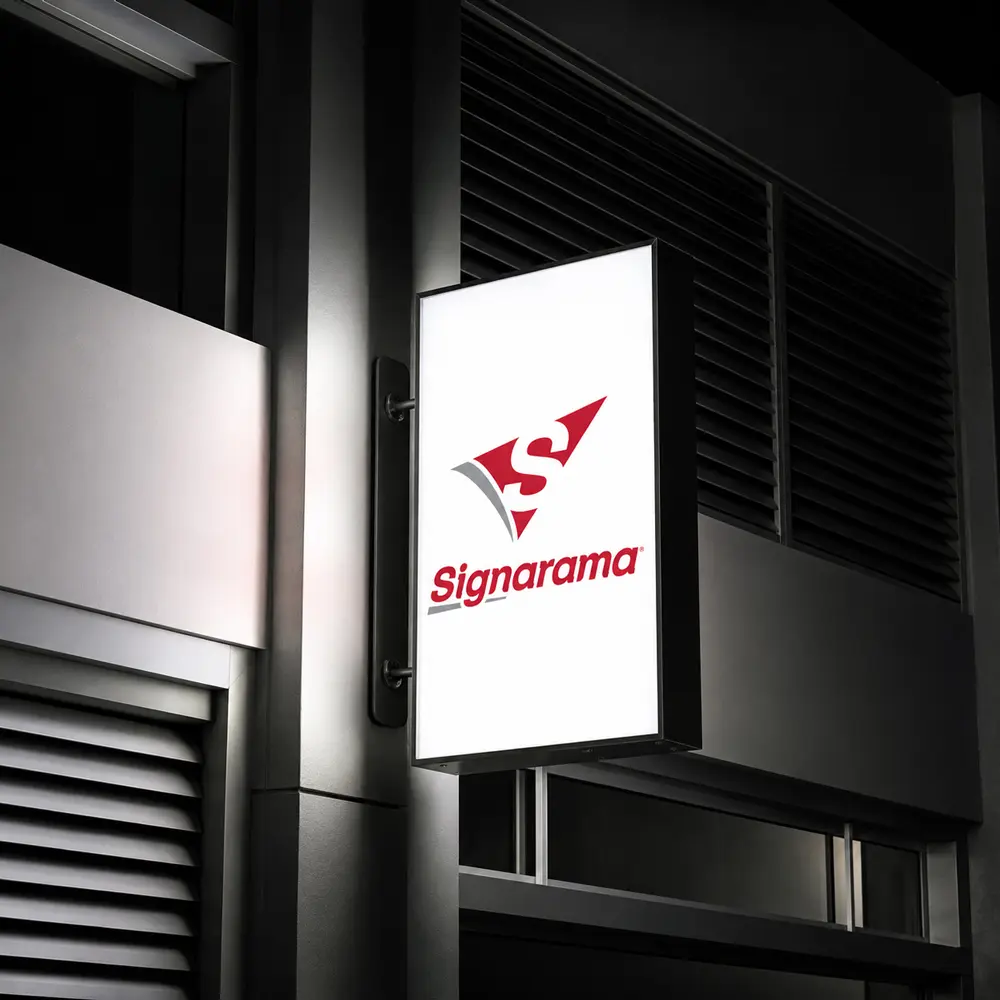
Wall-mounted airport advertising lightboxes

Projecting lightbox sign on a storefront

Projecting lightbox sign on a storefront

Backlit menu boards above a food-service counter

Backlit menu boards above a food-service counter

Outdoor fascia lightbox above a storefront

Outdoor fascia lightbox above a storefront

LED Stone Backlighting for Bars & Reception Desks

Plan the backlighting around the actual stone, the available cavity depth and the shape of the counter. Check the front, countertop and side returns together so the light reads evenly across each face. See how to backlight stone with LED sheets.

Exposed flexible LED sheet and wiring beneath a backlit translucent stone sample

Flexible LED Sheets

When to use it
Use cuttable sheets on shallow counter fronts and side returns where a continuous mounting surface is available.

Installation checks
Cut along the marked lines and plan connector clearance around supports and joins. Test brightness on both faces of each return and leave access to the drivers.

Two partially exposed four-lens LED modules with wiring below translucent stone

LED Backlight Modules

When to use it
Use individual modules where framing interrupts the mounting area and the cavity has enough depth for adjacent beams to overlap.

Installation checks
Check module spacing around obstructions and at the edges. Route the wiring clear of the stone supports and test for visible hotspots before closing the assembly.

Test the stone and backing together. Light a sample of the specified slab and backing at the planned LED-to-stone distance. Compare lighter areas with dense veins, then check seams and edges at the intended white-light setting.

Application Examples

Backlit stone reception desk in a lobby
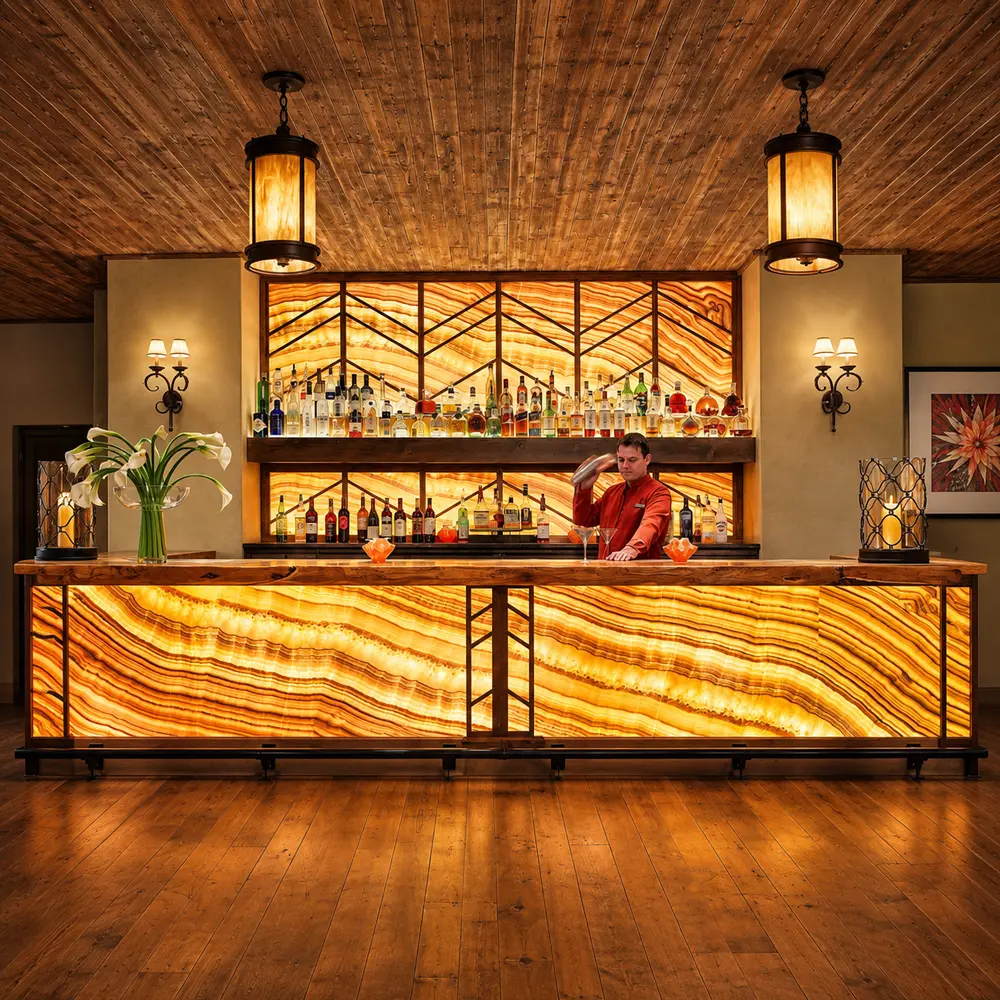
Backlit stone reception desk in a lobby

Amber backlit stone bar front

Amber backlit stone bar front

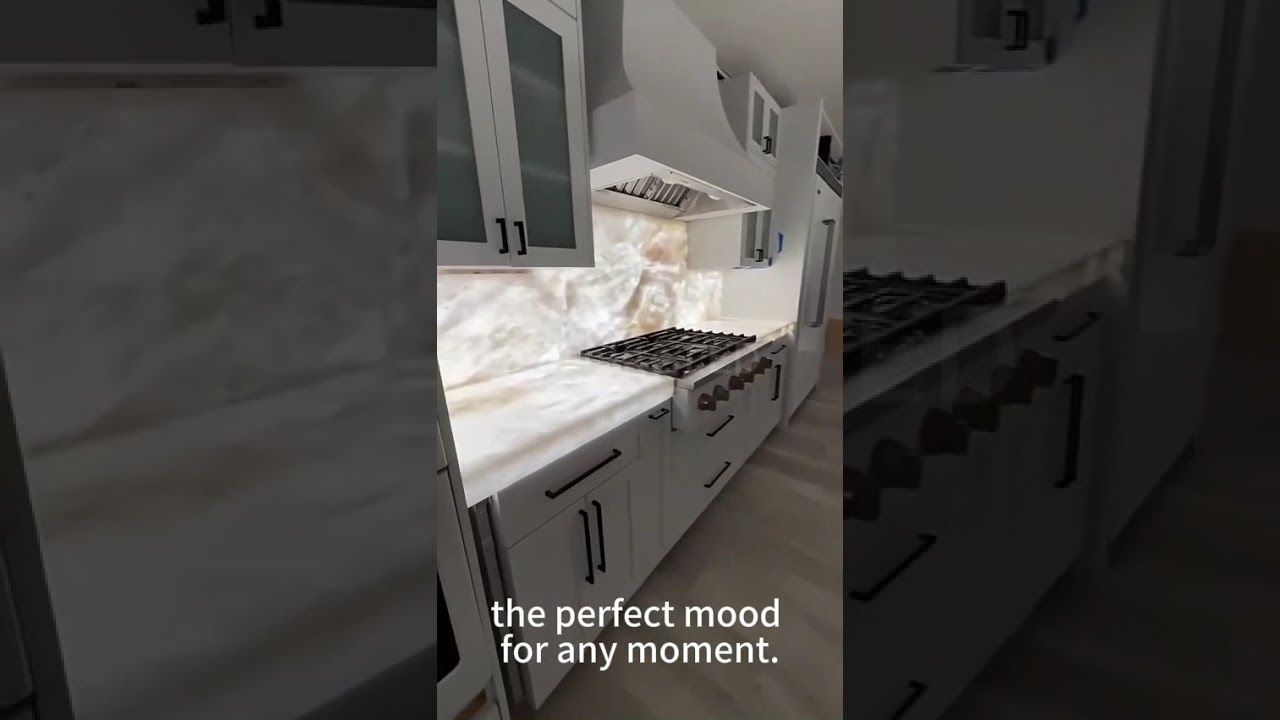
Backlit stone kitchen island

Backlit stone kitchen island

Backlit stone surround at a service opening
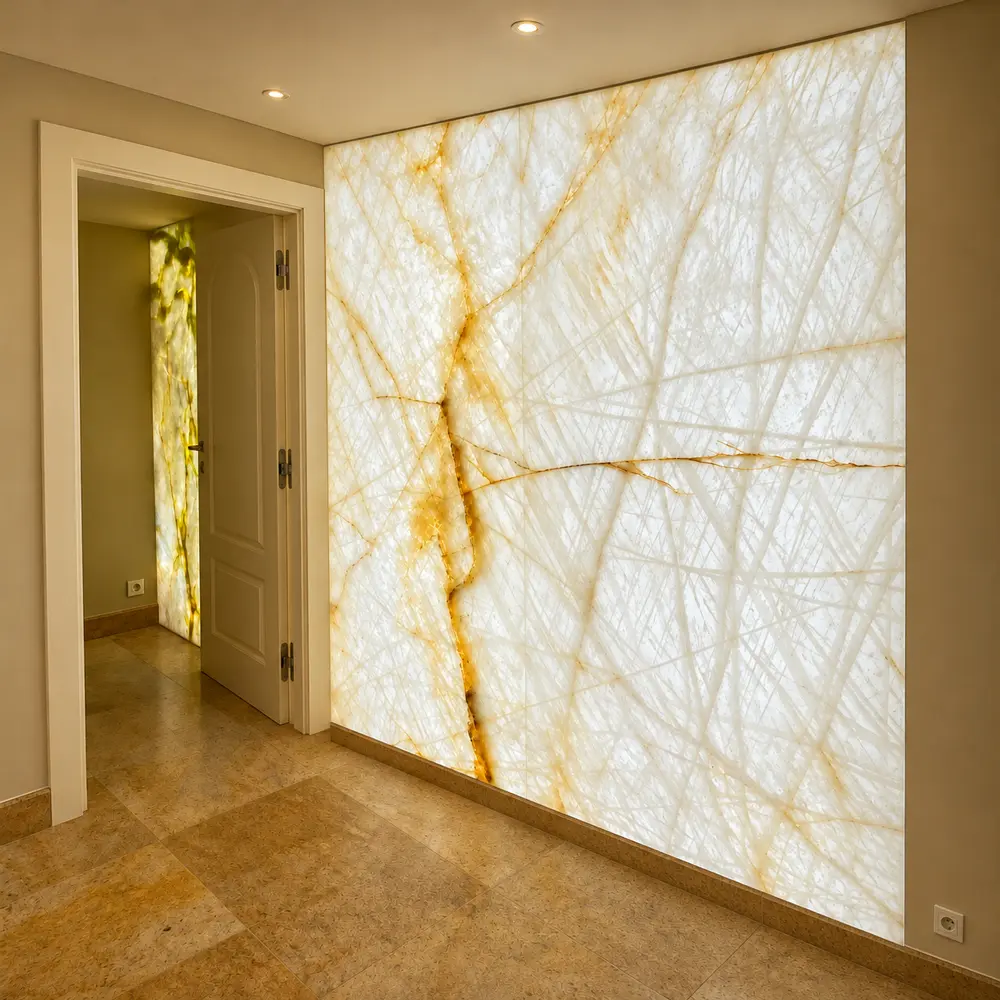
Backlit stone surround at a service opening

Flush backlit stone corridor wall
Flush backlit stone corridor wall

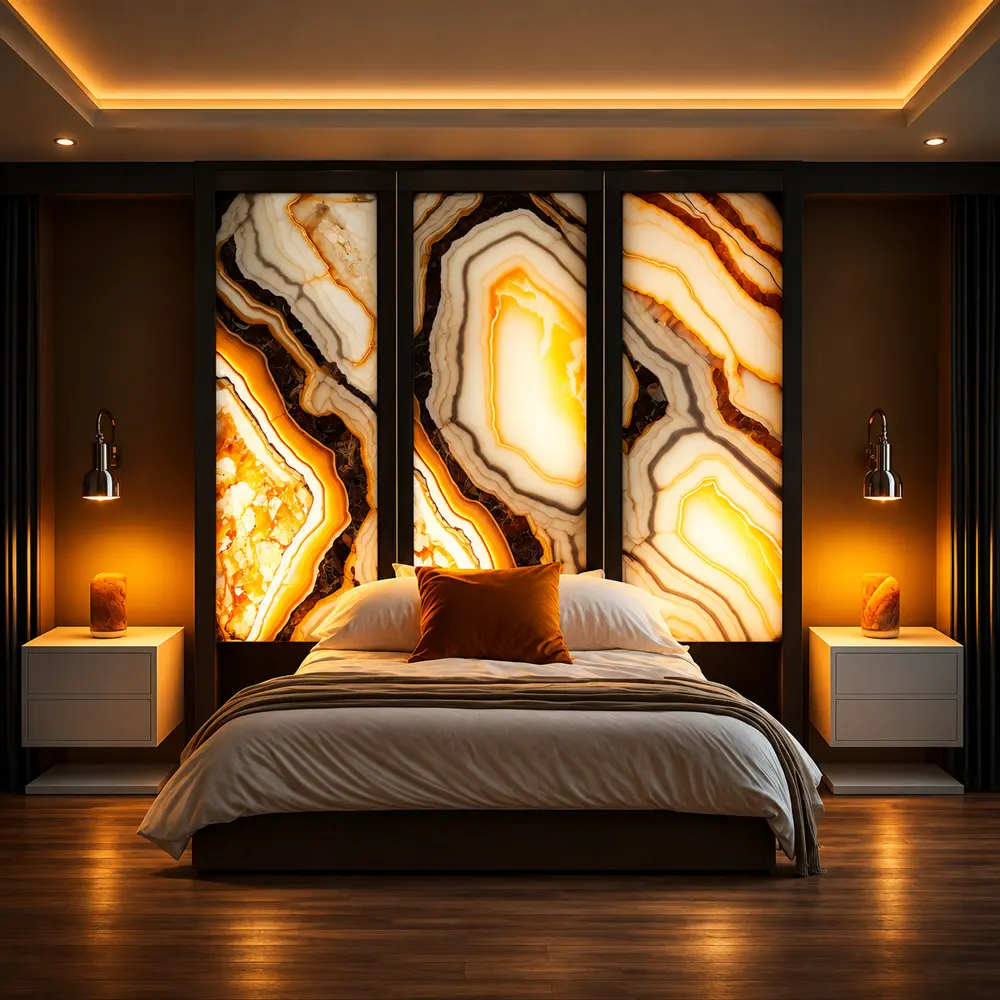
Backlit stone feature wall behind a bed

Backlit stone feature wall behind a bed

Illuminated Channel Letters
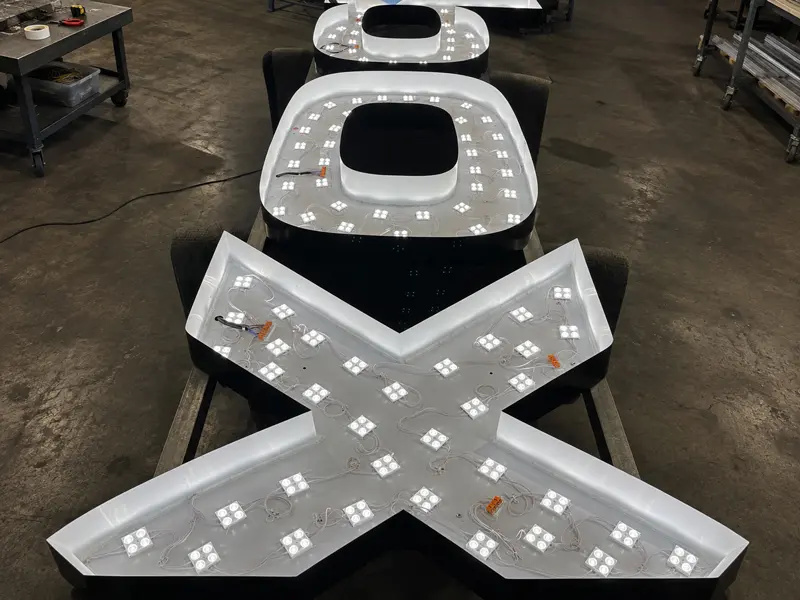
Light the translucent faces of large channel letters and logos from inside the housing. Plan each letter around its stroke width, return depth and face material so curves, corners and broad areas light evenly. See the guide to LED module spacing for channel letters.

Square four-lens LED modules and wiring inside open channel letter housings

Blockchain LED Backlight Modules

When to use it
Use square four-lens modules in large letters with strokes wide enough for the module body and its wiring. Adjust the layout around curves, inside corners and changes in stroke width.

Installation checks
Verify module spacing and edge setbacks at the planned depth. Check the fit at the narrowest stroke, leave clearance for wiring and confirm driver access before fitting the face.

Flexible LED sheets cut and fitted inside a curved metal channel letter

Flexible LED Sheets

When to use it
Consider cuttable sheets for broad, shallow letter strokes or logos with a flat backplate. Lay the cut grid over the artwork to see how closely the usable sections follow the outline.

Installation checks
Cut only on the marked lines. Check the gaps between sections, connector clearance and wiring paths around tight curves. Confirm that the selected sheet suits the installation environment.

Test a representative letter before production. Use the specified acrylic, including any color film, and the intended return depth. Check for visible LED points, dark tips and brightness changes between wide and narrow strokes. Compare adjacent letters at the intended viewing distance.

Application Examples

Blue front-lit rooftop letters at NOVARES

Blue front-lit rooftop letters at NOVARES

Front-lit rooftop letters at The Sign Hotels

Front-lit rooftop letters at The Sign Hotels

White front-lit letters at the DR. CHEN medical center

White front-lit letters at the DR. CHEN medical center

Red front-lit channel letters at Regal Cinemas

Red front-lit channel letters at Regal Cinemas

White front-lit storefront letters at GUESS

White front-lit storefront letters at GUESS

Front-lit restaurant lettering at Social Burger

Front-lit restaurant lettering at Social Burger

Irregular-Shaped Walls & Ceilings

Plan the backlighting around the shape of the finished surface. Curved walls, angled lightboxes and freeform stretch ceilings can have different cavity depths along the same face.

Four-LED modules and wiring mounted inside curved exhibition wall panels

Blockchain LED Backlight Modules Use individual modules when curves, corners or structural ribs require local changes in spacing. Mark the panel outline, joints and openings on the backboard drawing. Lay out the modules along each section and check the distance from the LEDs to the finished face wherever the depth changes. Check transitions before closing the face Build a sample with the specified diffuser or stretch membrane at the planned depth. Include a tight curve or corner and a typical joint. Look for visible LED points, dark edges and changes in brightness across adjoining sections, then adjust the module spacing as needed. Plan for wiring and maintenance Route cables around supports and keep connectors and drivers accessible after the face is fitted.

Application Examples

These examples show how finished backlit surfaces can follow curves, angled edges and freeform outlines.

Illuminated perfume advertising wrapped around a duty-free retail column

Cylindrical duty-free advertising lightbox
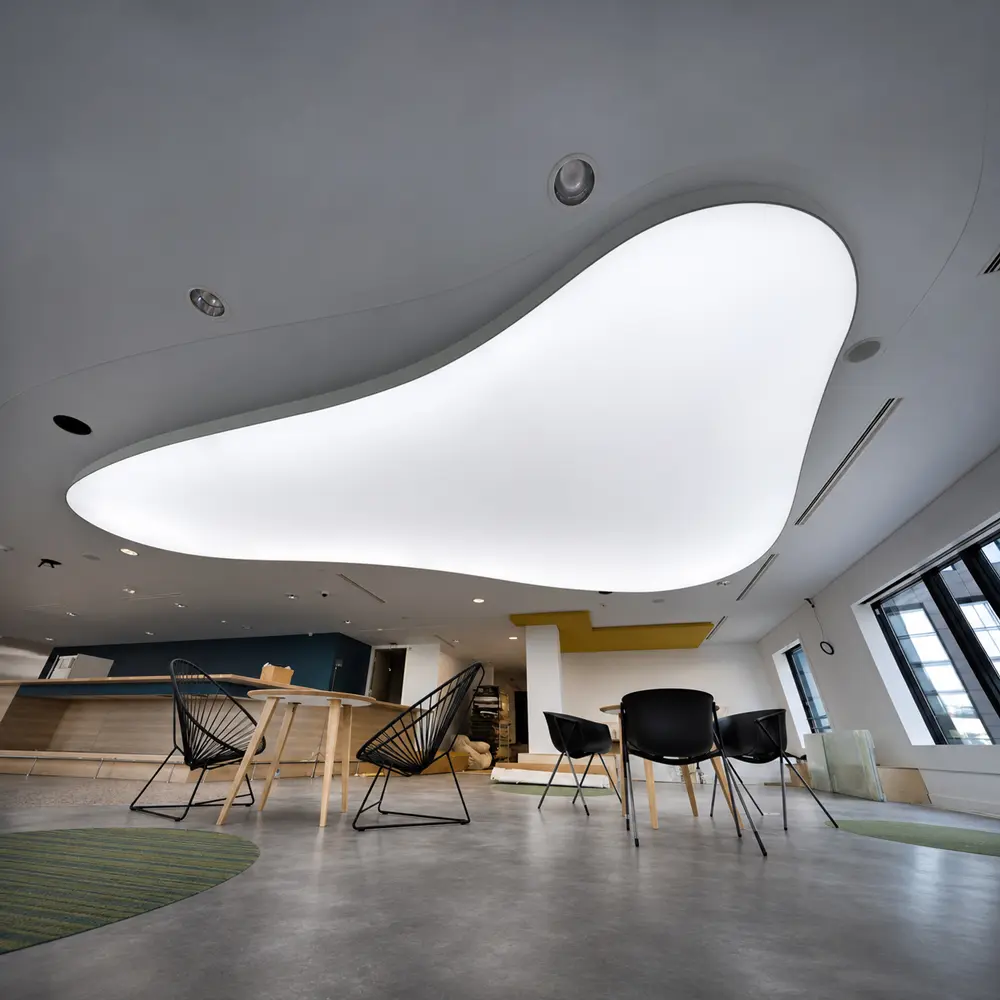
Asymmetrical white backlit stretch ceiling over lounge seating

Asymmetrical stretch ceiling in a lounge

White freeform illuminated wall curving behind gallery sculptures

Freeform illuminated gallery wall

Organic warm-white stretch ceiling above retail displays

Organic stretch ceiling in a retail showroom
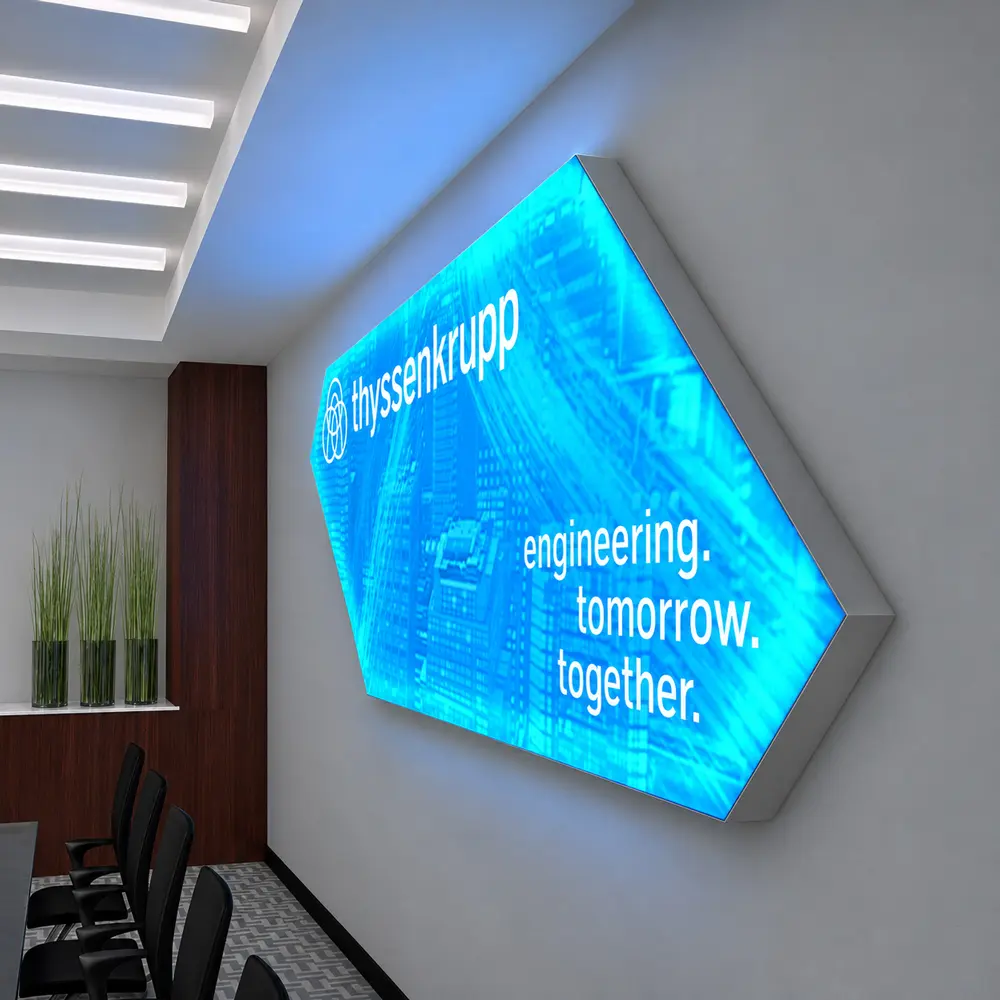
Blue geometric fabric lightbox mounted on a conference room wall

Geometric wall-mounted fabric lightbox

Oversized white luminous ceiling panels reflected on a shopping mall floor

Shaped luminous ceiling panels in a shopping mall

Programmable Ceiling Lighting & Wall Lightboxes

Use programmable LED backlighting to create color gradients, moving patterns and coordinated scenes across stretch ceilings and wall-mounted lightboxes. Plan the lighting layout around how each effect should travel across the finished surface.

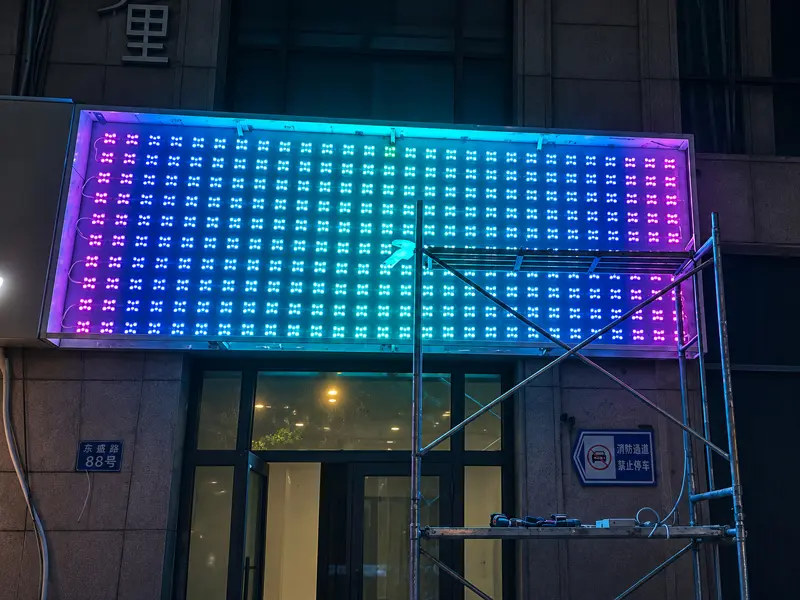
Four-LED Blockchain Backlight Modules lit in blue and violet inside a storefront lightbox before the face is fitted

Blockchain LED Backlight Modules Use individually positioned modules where frames, supports or openings interrupt the layout. Mark where each color zone starts and ends, then map the wiring order and pixel addresses so effects run in the intended direction across the ceiling or lightbox. Flexible LED Sheets For an LED pixel wall or programmable stretch ceiling, consider addressable LED sheet lights where you have a broad mounting surface. Check the cut lines around openings and keep pixel spacing consistent across sheet joints. Share the pixel map and confirm the controller, protocol and addressing plan for the selected model. For a closer look at controller matching, see the guide to DMX512 and SPI addressable LED sheet lights. Test color transitions through the finished face Build a sample at the planned mounting depth with the specified membrane, diffuser or printed face. Run a solid color and a moving gradient across a seam or zone boundary. Look for visible LED points, dark bands and abrupt changes in color before closing the ceiling or lightbox.

Application Examples

These examples show how color gradients and zoned lighting look on finished ceilings, lightboxes and illuminated columns.

Rainbow LED Stretch Ceiling in a Lounge Bar

Rainbow LED Stretch Ceiling in a Lounge Bar

Suspended fabric ceiling lightbox glowing cyan, violet and pink in a showroom

RGBW Stretch Fabric Ceiling Lightbox in a Showroom
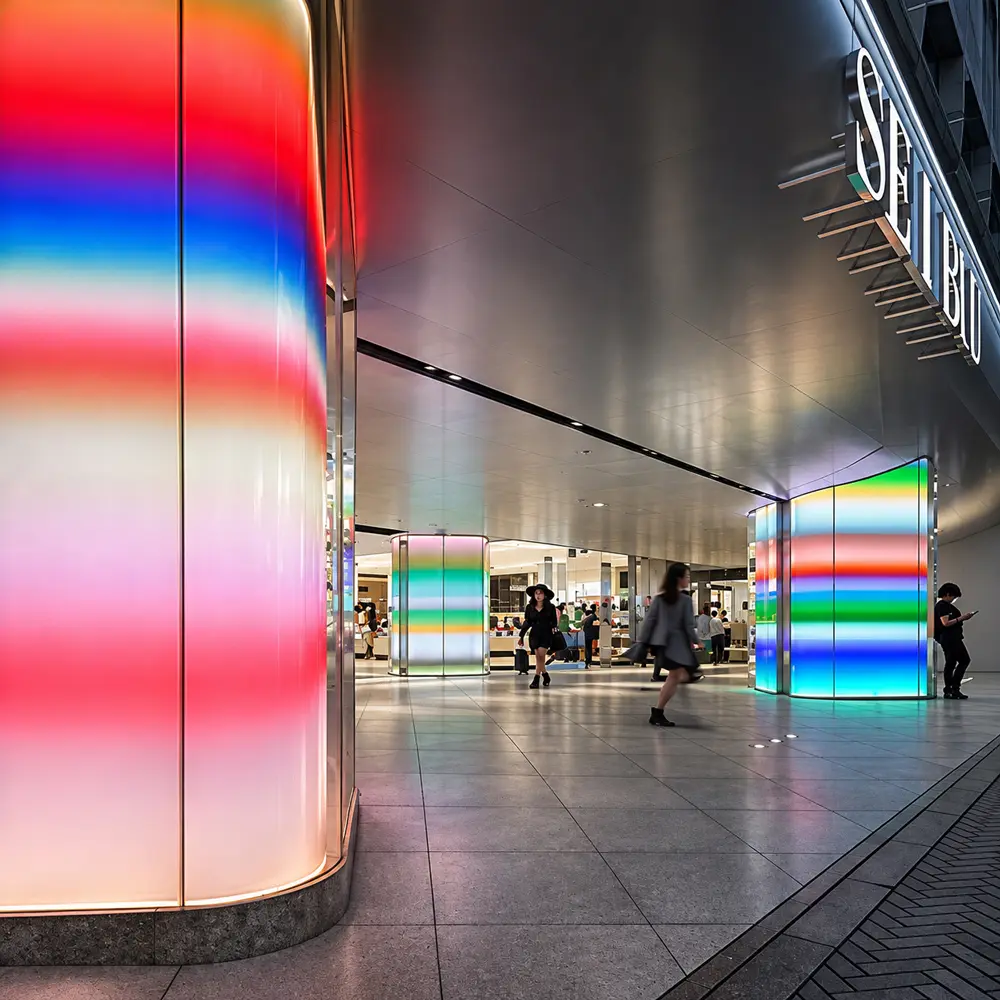
Horizontal bands of colored light across curved storefront columns

RGB Backlit Columns at a Retail Entrance

Pink and blue luminous ceiling above an angular reception desk

Color Changing Stretch Ceiling above a Reception Desk
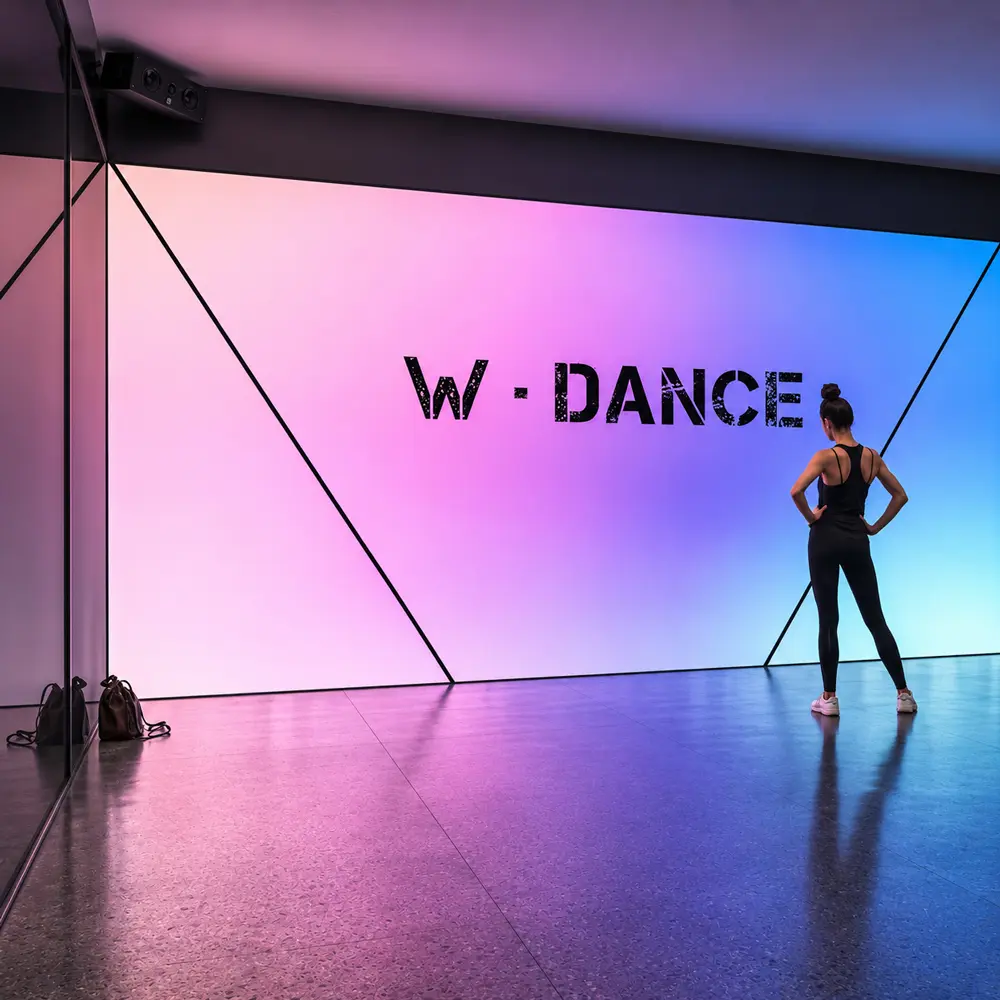
Pink and blue wall lightbox with diagonal seams in a dance studio

RGB Gradient Wall Lightbox in a Dance Studio

Exposed four LED modules beside finished circular and rectangular gradient lightboxes

RGB Exhibition Lightboxes with Exposed LED Backlight Modules
Lighting Effects & Control Options

Choose the lighting effect before you specify the controls. Tunable white changes the correlated color temperature (CCT). RGB creates color scenes, and RGBW adds a dedicated white channel. For a digital feature wall with moving patterns, map the individually controlled zones or pixels and confirm the SPI or DMX512 control path for the selected LEDs. For a DALI-controlled ceiling, specify the required dimming or tunable-white functions. Test the effect through the actual diffuser or membrane.

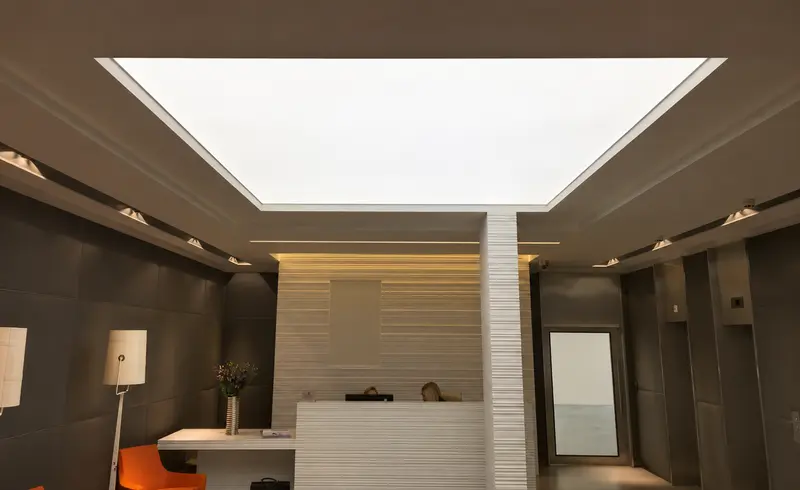
White light fills the recessed ceiling lightbox
Fixed White

Best for Lightboxes, channel letters and backlit stone with a consistent white tone. Specify Target color temperature, required brightness and dimming method, if applicable. Check a lit sample with the actual printed fabric, acrylic or stone to see how the material affects the white tone.

The ceiling lightbox shifts between warm and cool white
Tunable White

Best for Luminous ceilings and reception areas that use different white-light scenes. Specify Warm and cool endpoints, the zones that need independent adjustment, and a compatible controller. Check brightness at both endpoints and at an intermediate setting, where the two white channels are mixed.
The ceiling lightbox cycles through white, rose pink and cyan blue
RGBW

Best for Feature walls and lightboxes that alternate between color and white light. Specify White-channel color temperature, the surfaces or zones that should change together, and a compatible RGBW controller. Check the dedicated white setting and a saturated color through the finished face, especially near frame edges and seams.
Pink and cyan gradients move across the ceiling lightbox
Addressable / Pixel Control

Best for Dynamic ceilings, wall lightboxes and exhibition displays. Specify Control per pixel or group, the order and direction of the addresses, and SPI or DMX512 compatibility for the selected LED model. Test a moving gradient across a seam or zone boundary to check for visible steps or dark bands.

If the same installation needs color scenes and adjustable white light, specify a model with separate warm-white and cool-white channels and confirm that the controller supports both. The animated previews are lighting simulations.

LED Backlighting Projects

Flip each photo to compare the exposed LED layout with the finished backlit surface. See how two tiers of LED bars fit inside a fabric lightbox, how individual modules follow custom-shaped ceiling openings, and how flexible LED sheets fit around a sink cutout beneath a quartzite countertop. Each case also explains what to check on a sample before fitting the face material.

Backlit Restaurant Advertising Lightbox

LED Bar Layout

The Green Tea Restaurant lightbox uses two tiers of vertical LED bars mounted directly on the backboard. In the finished view, the printed fabric conceals the bars, wiring and power supplies. The installation view makes the horizontal break between tiers visible, a useful place to check for a brightness change before fitting the graphic.

What to Check on a Sample

Test the final print at the cabinet’s installed depth. Compare brightness between adjacent bars, along the horizontal gap between tiers, and around the perimeter. Use those checks to refine spacing before fitting the fabric.

Planning a Similar Fabric Lightbox

Send the internal frame width and height, the distance from the LED mounting surface to the fabric, and the positions of any braces or cable entries. These details help determine the usable bar length, number of rows and where to leave access to the power supplies.

Custom-Shaped Printed Ceiling Panels

LED Module Layout

Four-point modules are arranged in rows inside ceiling openings that widen and taper. The finished sky graphics show how the translucent face diffuses the individual light points across openings of different sizes. The installation view shows how individual modules can follow curved edges while leaving room for the ceiling fittings between panels.

What to Check on a Sample

Test the narrow end and a broad section with the same printed membrane and mounting depth. Check for visible LED points, dark tips and uneven bands, then adjust the spacing or distance from the edge where needed.

Planning a Similar Backlit Ceiling

Provide the outline and depth of each opening, plus the locations of vents, access panels and framing. Mark any ceiling panels that need separate dimming. A layout review can then check where the module rows need to change as the openings taper.

Backlit Quartzite Countertop

LED Sheet Layout

Flexible LED sheets cover the countertop backing around the rectangular sink opening. Short jumpers connect adjacent sheet sections before the slab goes in. Once installed, the quartzite transmits warm light through its translucent veins. The two views show where the light sheets terminate at the sink and how the finished slab carries light to the exposed edge.

What to Check on a Sample

Test a sample from the selected slab at the planned mounting depth. Look for visible LED points or dark bands over sheet seams and along the sink cutout and exposed edge. Confirm access to the power supplies and connections before fixing the slab.

Planning a Similar Backlit Stone Countertop

Provide a plan showing the sink and tap cutouts, slab thickness, exposed edges and any illuminated waterfall ends. Mark the surfaces that need light so sheet sizes, cut lines and connections can be planned before the stone is fitted.

See LED Backlighting in Action

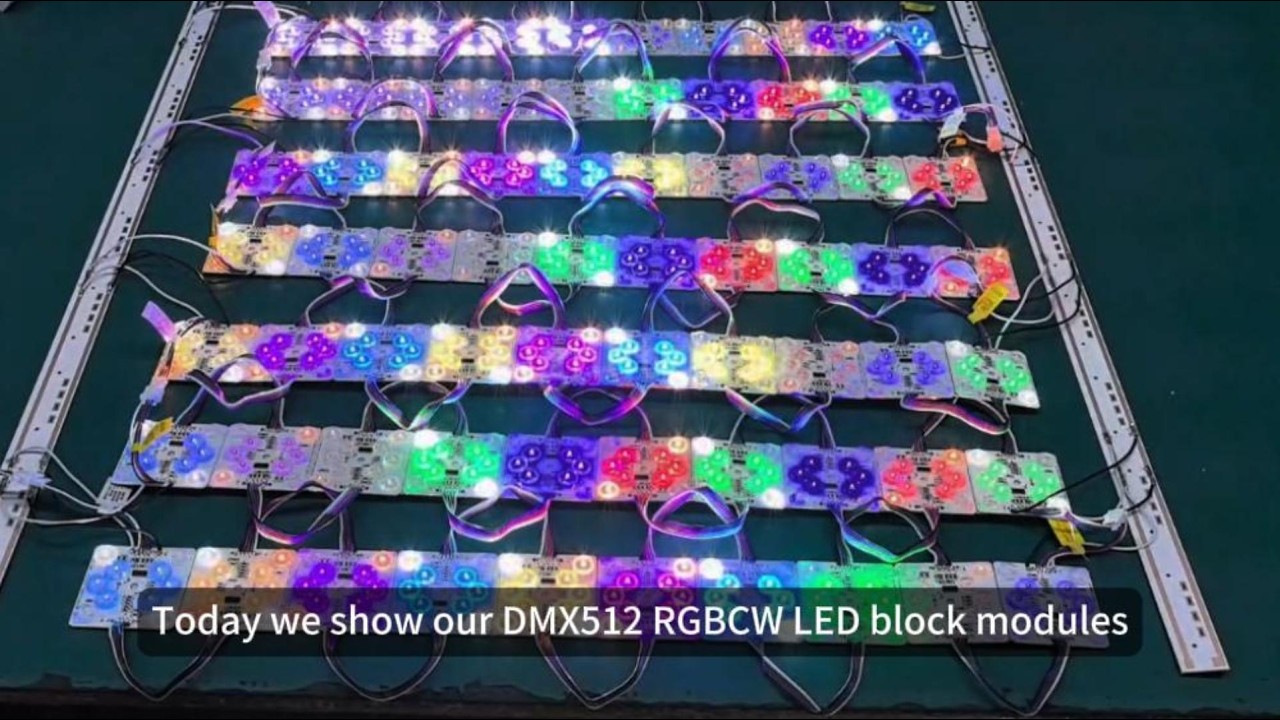
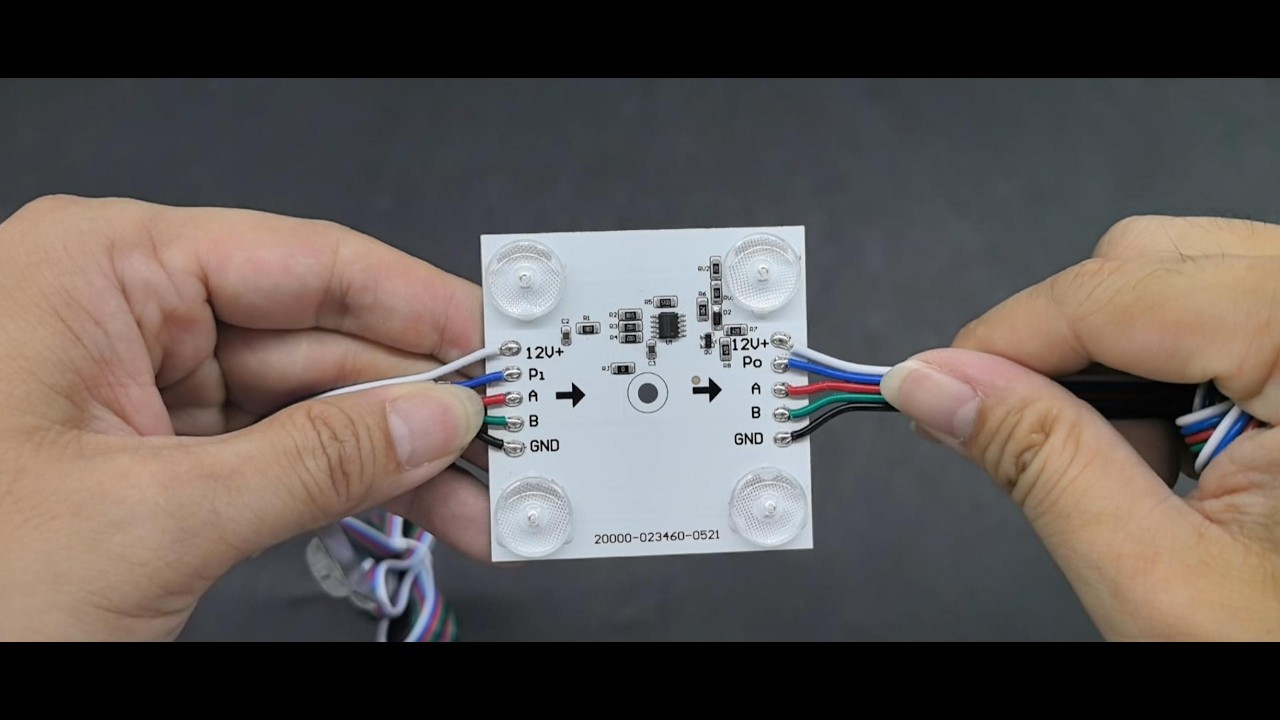
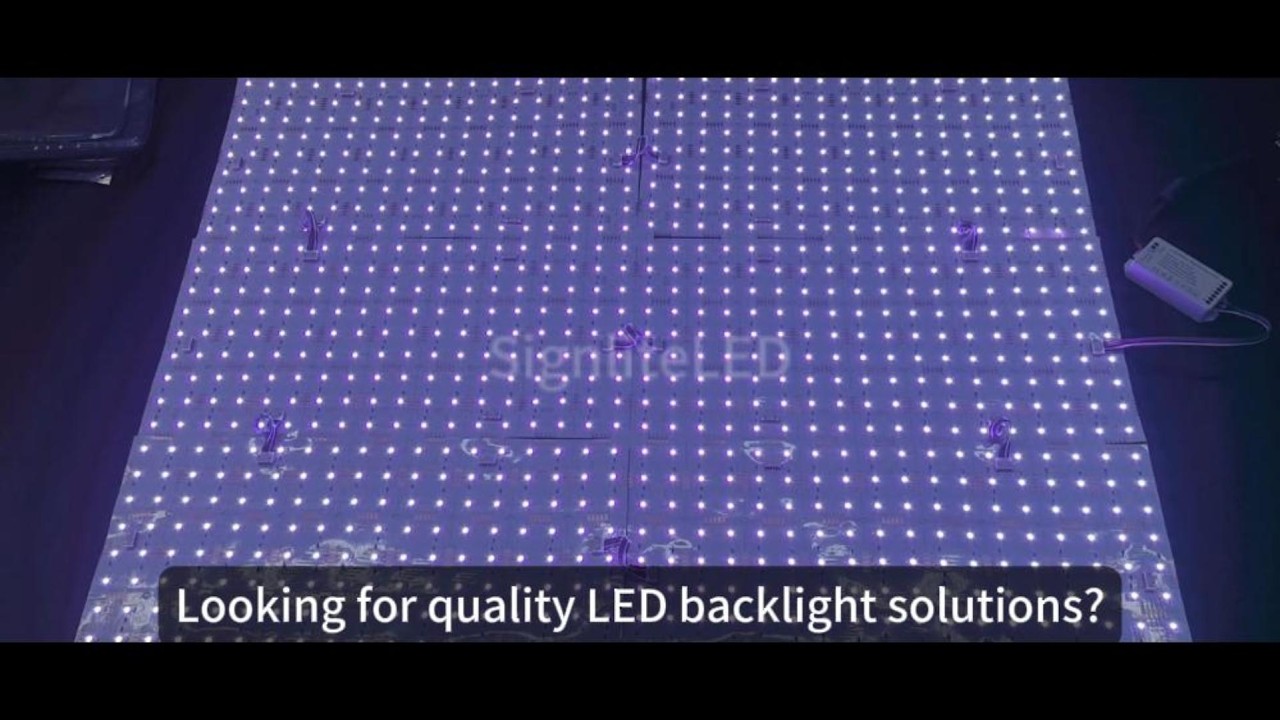
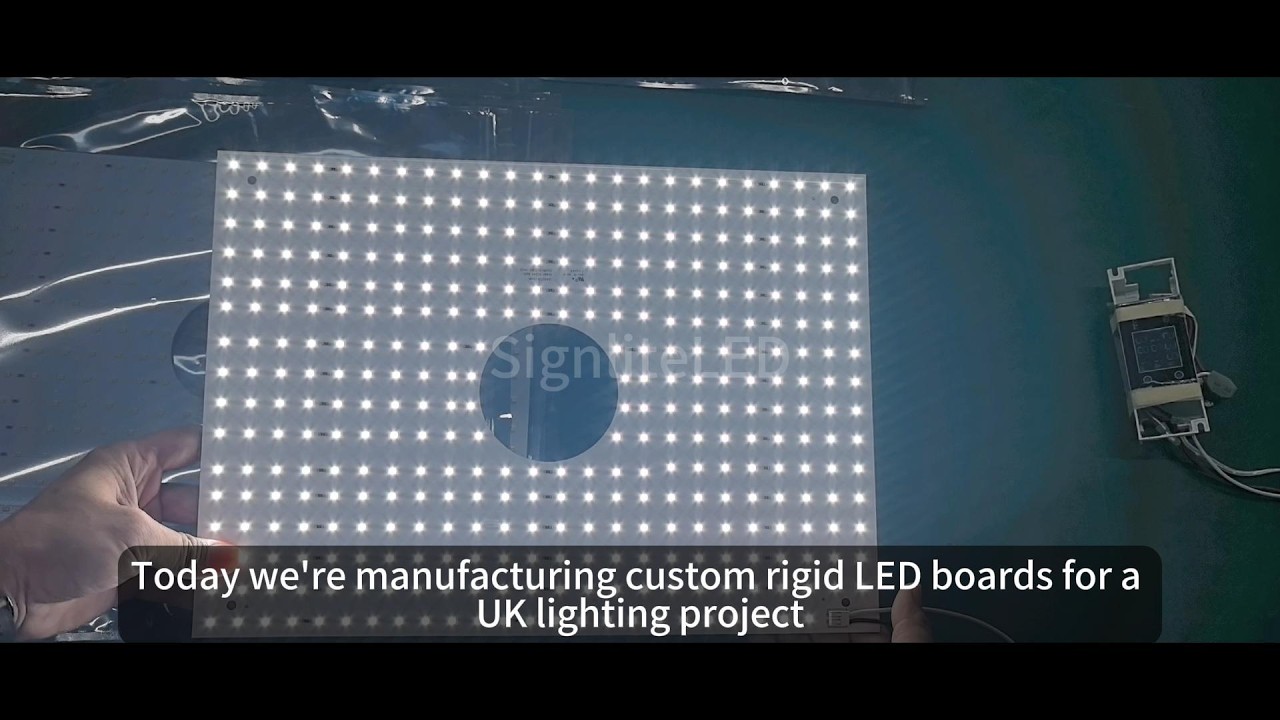
Watch the stone backlighting clips to see how light brings out the veining in a finished surface. Use the ceiling and display clips to see how separate groups of LEDs can change color across the same installation. The longer demonstrations show how DMX-controlled modules are laid out and how that layout relates to the finished effect.

Playlist

23 Videos

From Project Drawing to Backlighting Quote

Send a photo or drawing showing the illuminated dimensions, face material and available installation depth. If the project is still at the concept stage, approximate dimensions and a note on the intended effect are enough to start the discussion. We use the available details to assess LED format, estimate quantities and identify what needs a sample check before finalizing the quote.

Green Tea Restaurant lightbox line drawing showing illuminated width and height, with a vertical dimension from the inside of the fabric face to the mounting backboard in Section A–A.

What to mark on your drawing

Dimension each illuminated face separately, including both sides of a double-sided lightbox or each lit waterfall end of a countertop. Mark joints, framing, supports and cutouts, and note the shallowest point if the available depth varies.

Include the face material and its thickness if known. Mark zones that need independent dimming or color control. For retrofits, include the existing supply voltage and controller model if available.

What we’ll check for your quote

We’ll review which LED format fits the available space, estimate the quantities for each illuminated face, and identify compatible power supplies, connectors and controls for the selected model. If the face material or depth is still undecided, include the options you’re considering so we can flag what needs a mock-up before quantities are finalized.

LED Backlight Modules Module spacing, edge setbacks and lighting zones.
Flexible LED Sheets Sheet size, cut increments and seams.
LED Backlight Bar Bar length, row spacing, IP rating and wiring.

Tell Us About Your Backlighting Project

Tell us what you want to backlight and give the approximate illuminated dimensions, face material and mounting depth if known. For a quote on LED module lights, LED sheet lights or backlight bars, include the model and estimated quantity if known. If the project specifies 24 V DC, a CCT range, RGBW or a control protocol, include that in your message.

What to include in your message

Tell us about any project constraints that could affect the layout or quote. For a retrofit, mention which parts of the existing installation you plan to keep. If you need a sample before placing a full order, let us know when you plan to test it.

Choosing a light source? Tell us what the light will shine through, such as a stretch ceiling membrane, a printed graphic or translucent stone. Include approximate dimensions and the space behind the surface if you know them.

Requesting a quote? Share the product model and estimated quantity, if available. Mention any lighting or control requirements already on your drawing.

LED Backlighting FAQs

Find answers to common specification and ordering questions for LED backlighting. Learn what affects sheet quantities under a backlit stone countertop, how to measure depth for a lightbox or stretch ceiling, and where to check for hotspots and dark edges. The answers also cover power supply sizing, 24 V options and how to choose between DMX512, SPI and DALI control.

Can flexible LED sheets backlight onyx, quartzite or marble?

Yes, if the specific slab transmits enough light at its finished thickness. Test a sample with the proposed LEDs and backing, and view it from the front under the room’s normal lighting. Check whether the veins, reinforcement and adhesive show through.

How many LED sheets do I need for a countertop with waterfall ends?

Calculate the top and each illuminated end separately, then lay out the sheets on a dimensioned drawing. A 3,000 × 900 mm top and two 900 × 900 mm ends cover 4.32 m² before cutouts. The order quantity depends on sheet size, marked cut lines, seam placement and whether offcuts can be reused.

How do I estimate LEDs and power for an 8 m² backlit stone wall?

Start with the wall’s width and height, slab joints and openings. For a fixed-white design, lay out the selected sheets, modules or bars on the drawing, then total the wattage of the installed pieces by zone. Two walls with the same area can require different quantities because their proportions, joints and cutouts differ.

How much depth do I need for an LED lightbox or stretch ceiling?

Measure from the emitting face of the LED or lens to the inside face of the graphic or membrane. The required distance depends on the LED optics, spacing and how the material diffuses light. Test the proposed spacing at the available depth before fixing the layout.

How do I prevent LED hotspots, dark edges and visible seams?

Check the spacing between LEDs, the distance from the last row to the edge, and the spacing across sheet joints. Use the actual face material in a mockup that includes an edge, a corner and a seam. Check it at the planned viewing distance and dimming levels.

Should I use flexible LED sheets, backlight modules or rigid bars?

Use flexible LED sheets as a starting point for dense coverage or a cut-to-shape surface. Consider individual modules when spacing needs to change around obstructions or between zones. Rigid backlight bars suit regular backboards where you can run straight, evenly spaced rows.

Can I use LED backlight bars in a stretch ceiling?

Yes, when the backboard accommodates straight rows and there is enough room for the light to blend before it reaches the membrane. Check row spacing and the perimeter in a mockup. Individual modules give you more freedom to work around access panels or an irregular ceiling outline.

How do I light both faces of a double-sided lightbox?

Check the total internal depth and the clearance to each face. Consider a compatible edge-lighting system or separate LED layouts facing each graphic, depending on the cabinet size and available space. Test both graphics for brightness and uniformity. Compare LED lighting options for double-sided lightboxes.

How many LED sheets, modules or bars can one power supply run?

Match the supply voltage to the LED model, then total the maximum wattage of the pieces on each circuit. Check the power supply’s usable output, the controller’s per-channel current limit, wiring voltage drop and the product’s maximum run length. A single power supply can feed several branches where the design allows.

Can I get both RGB colors and tunable white in the same backlight?

Look for an RGB+CCT or RGBCW model with separate warm-white and cool-white channels, and pair it with a compatible controller. Standard RGBW adds one dedicated white channel. Tunable white adjusts white color temperature and does not provide RGB colors.

Can I control my LED backlight with both a handheld remote and a phone?

Yes, if the selected controller supports both interfaces and matches the LED model, voltage and channel configuration. Confirm whether phone control requires Bluetooth, Wi-Fi or a gateway, and whether you need one zone or independent control of the top and waterfall ends.

Can I use DMX512, SPI or DALI for LED backlighting?

For DMX512, confirm whether the LED model takes DMX directly or needs a decoder. For SPI pixel control, match the controller to the LED chipset and addressing plan. If the project calls for DALI tunable white, confirm compatible DT8(Tc) control gear and the required CCT range.

Can I specify 24 V high-CRI LEDs for a luminous stretch ceiling?

Specify 24 V and ask for the color rendering data for the exact model and white color temperature. If red rendering matters, request the R9 value separately from the general CRI (Ra). Check the result through the actual membrane, which can change the appearance of the light.

Can I get IP65 backlighting for a countertop or lightbox?

Confirm the rating for the specific LED model and the exposure at the mounting location. Selected flexible sheets list IP20 or IP54, and an IP65 backlight bar is available in the bar series. Include cut edges, connectors and cable entries when reviewing protection for the assembly.

What should I send for an LED backlighting quotation?

Send a dimensioned drawing or marked-up photo showing each lit face, openings and available depth. Include the face material and thickness, desired white color temperature or color effects, control requirements and any moisture exposure. Share the project quantity and note whether you need pricing for the LEDs, power supplies, controls or all three.

Learn More with Related Blogs

Use these guides when you need to work out a detail before choosing a product. Compare LED modules and flexible LED sheets for stretch ceiling lighting, check module spacing in lightboxes and channel letters, or review how to backlight translucent stone. For moving color effects, see the guide to DMX512 and SPI addressable LED sheet lights.

luminous-ceiling-systems
Luminous Ceiling Design: LED Stretch Ceiling Guide
A luminous ceiling transforms part or all of a ceiling into a broad, diffused light surface. Instead...
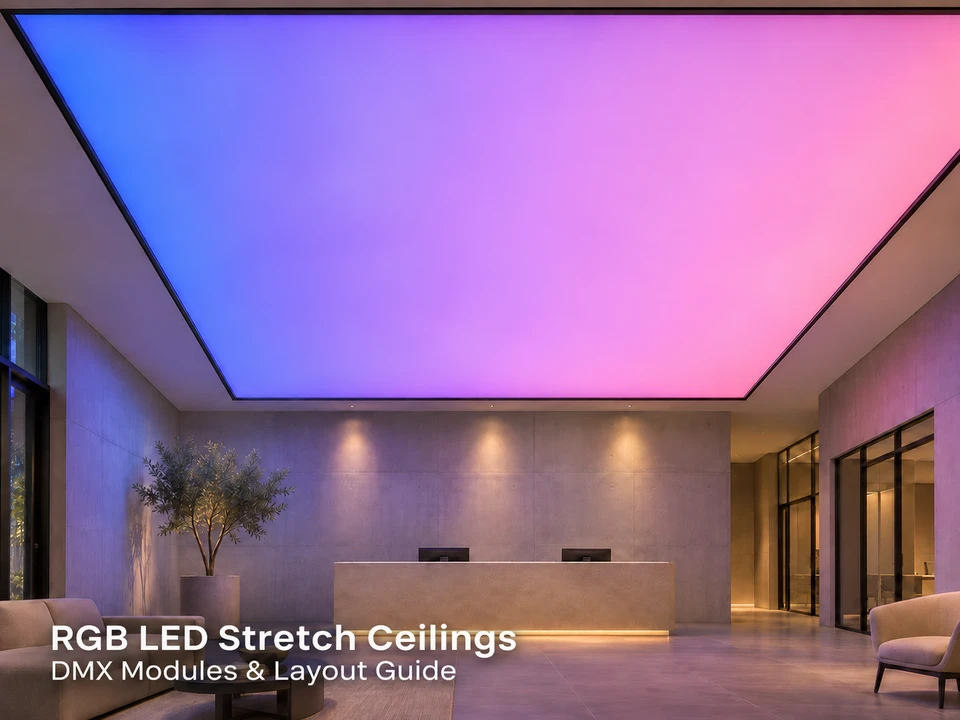
RGB LED Stretch Ceiling
RGB LED Stretch Ceiling Lighting: DMX Modules, Layout & Control
An RGB LED stretch ceiling places color-changing LED modules behind a translucent membrane. It turns...
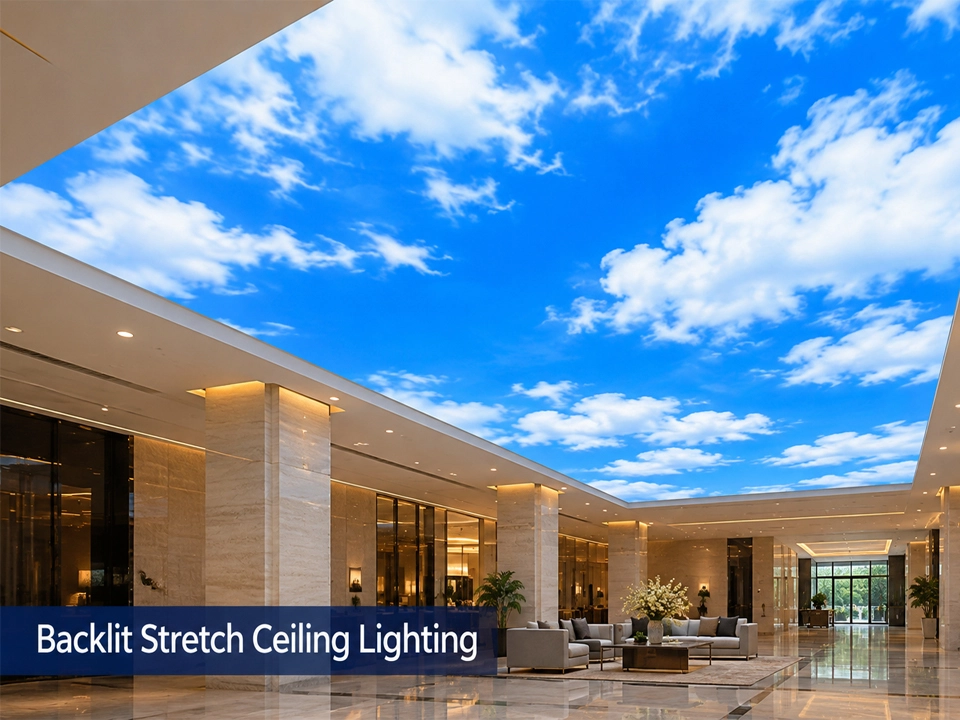
Backlit-Stretch-Ceiling-Lighting
Backlit Stretch Ceiling Lighting: LED Module Lights vs Flexible LED Light Sheets
Backlit stretch ceiling lighting turns a translucent membrane into a large, diffused light surface. The...
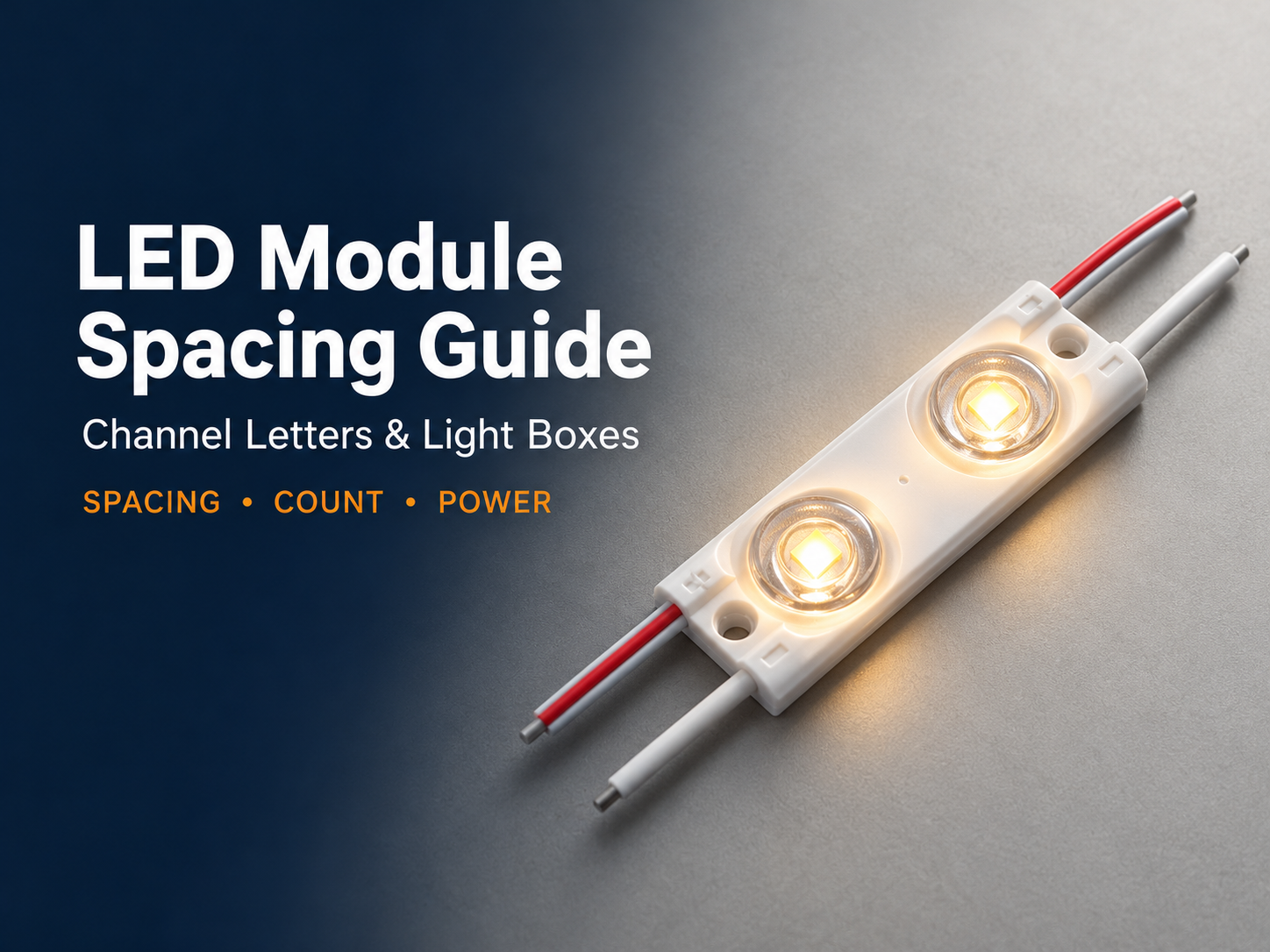
LED Module Spacing Guide
LED Module Spacing Guide: How Many Modules Do Channel Letters and Light Boxes Need?
There is no single LED module spacing that fits every sign. Spacing comes from your module’s...
led-light-box-lighting-guide-retail-exhibition-display
How to Choose LED Lights for Light Boxes: A Complete Selection Guide
The best LED lights for a light box depend on the cabinet depth, size, shape, lighting direction and...
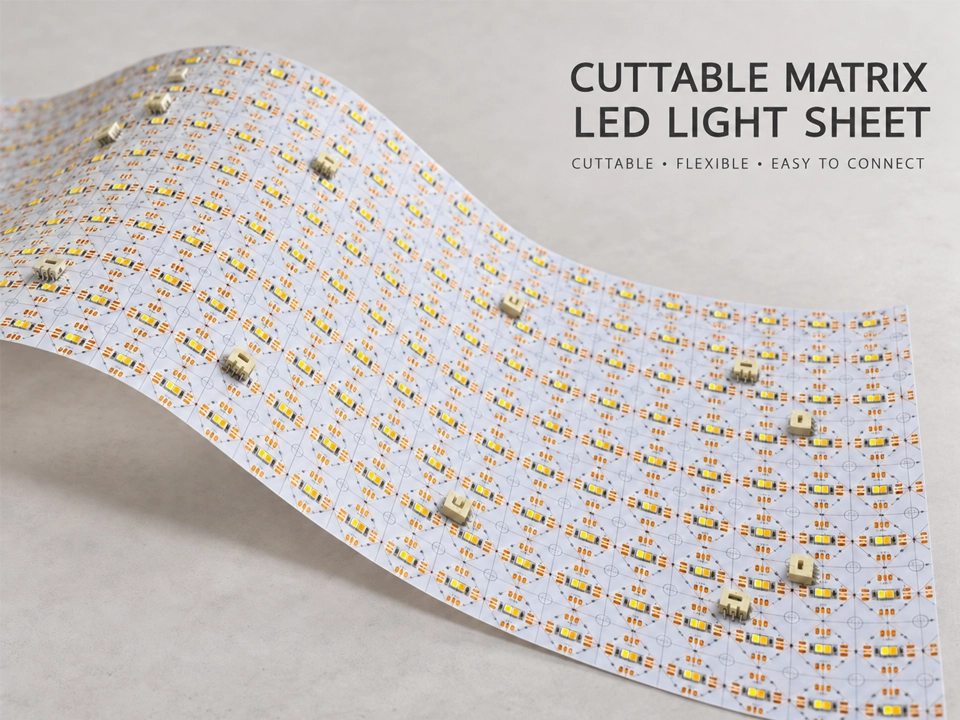
cuttable-matrix-led-light-sheet
Cuttable Matrix LED Light Sheet: Specifications, Cutting and Buyer’s Guide
A cuttable matrix LED light sheet, also commonly described as a cuttable LED light sheet, is a thin,...
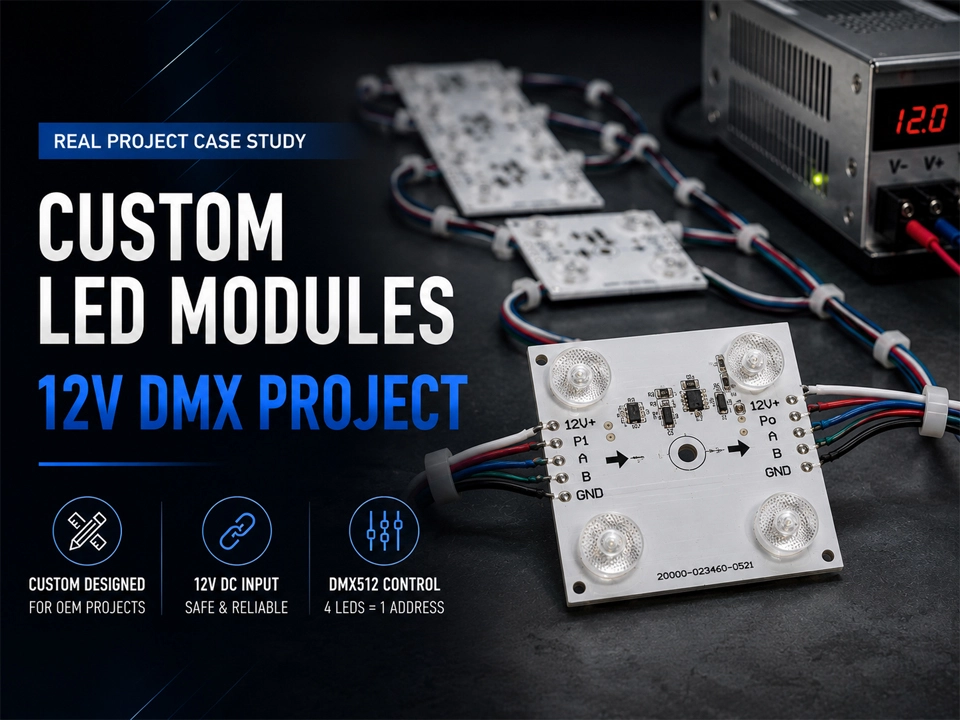
custom-12v-dmx-led-modules-case-study
Custom LED Modules Case Study: A 12V DMX Project from Enquiry to Shipment
Most LED module enquiries follow the same path: a buyer sends specifications, the manufacturer quotes,...
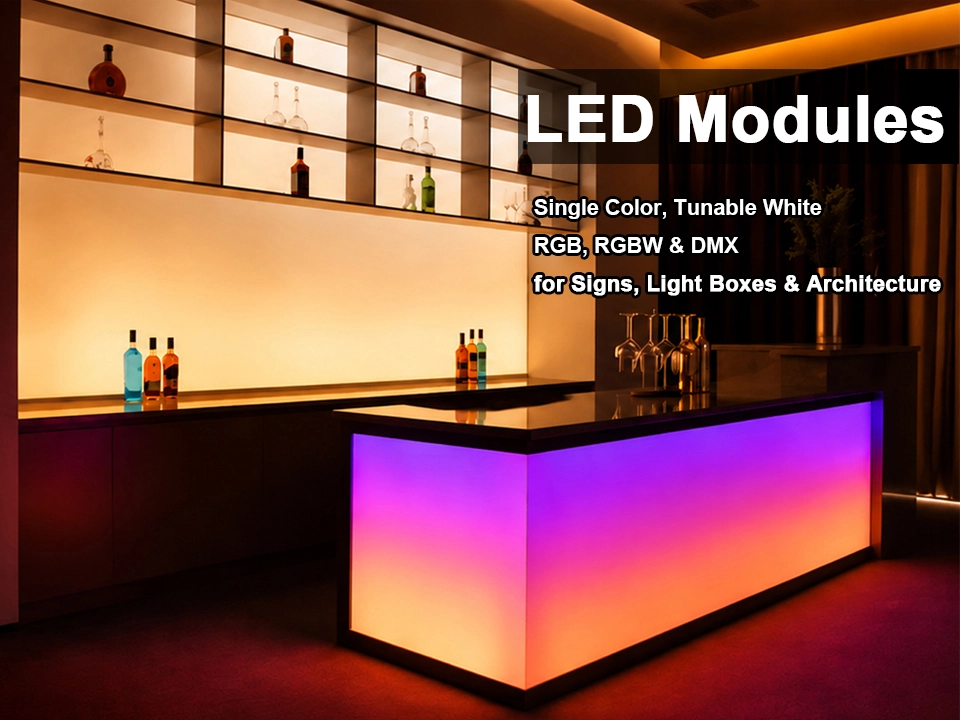
led-modules-for-light-boxes-and-ceiling-lighting
How to Choose LED Modules for Light Boxes & Ceiling Lighting
Choosing the right LED modules for light boxes and ceiling lighting comes down to five engineering decisions:...
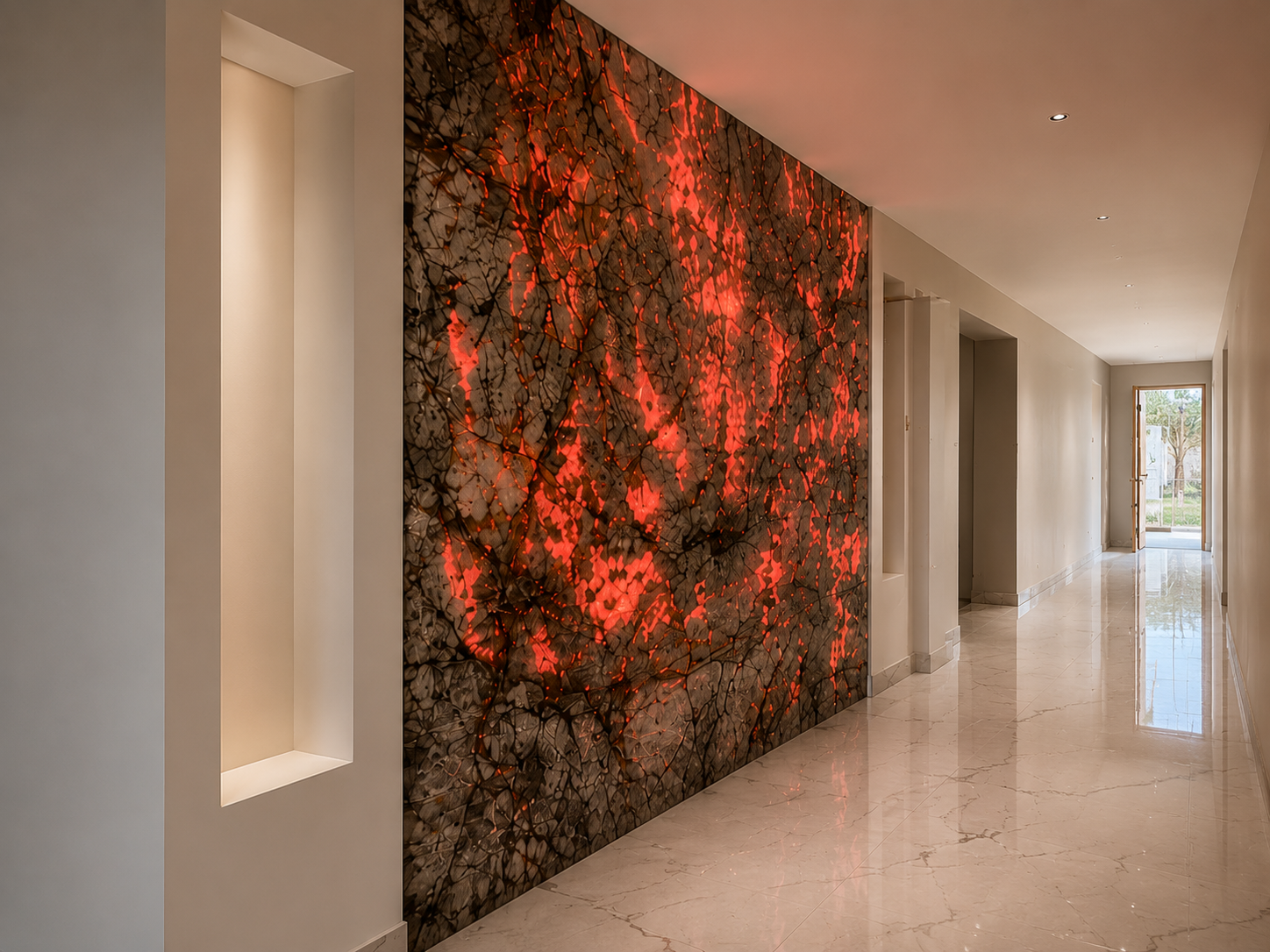
architectural-backlit-stone-wall-flexible-led-sheet-lighting-project
How to Backlight Stone with LED Sheets: Real Project Guide
Direct answer: The LED sheet light is an ultra-thin, cuttable PCB panel with dense 2835/5050 SMD arrays...
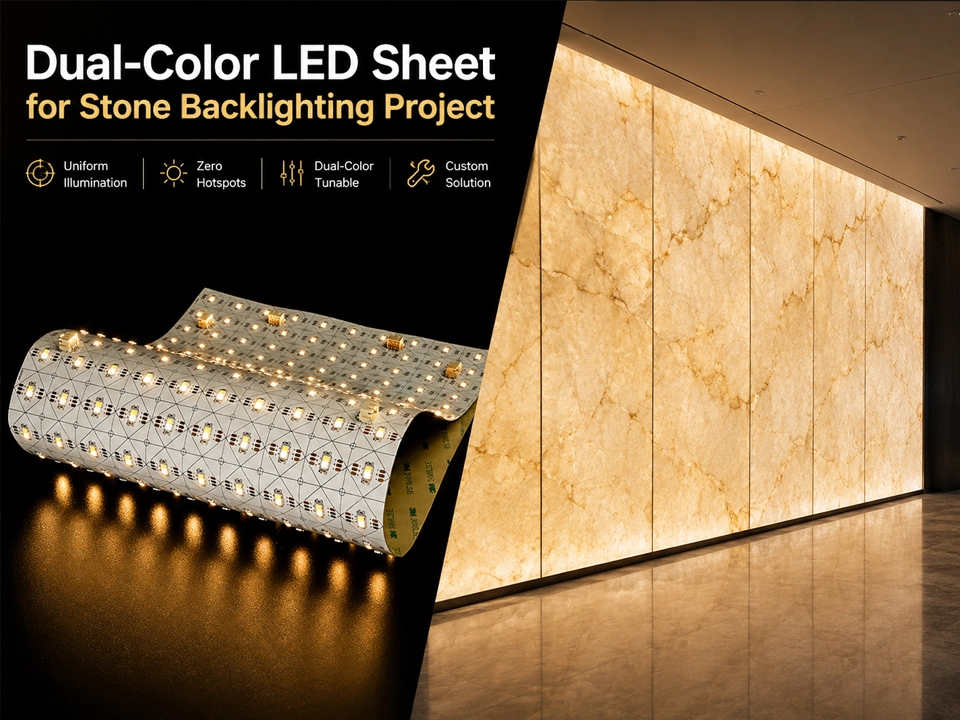
Dual-color LED for architectural lighting
Stone Backlighting LED Sheet Case Study: Casambi-Controlled Architectural Lighting System
Introduction Stone backlighting projects require more than just a light source — they demand a carefully...
led light sheet
Bulk Buying Guide: What to Look for in a B2B LED Sheet Light Supplier
Bulk purchasing a LED light sheet is not simply a sourcing decision. It is a structured risk assessment...
led light sheet
Labor Cost Comparison: LED Sheets vs LED Modules for Signage
The primary labor difference between LED sheets and LED modules is installation density and wiring repetition. In...
custom led sheet lighting
Backlit Marble Using LED Light Sheets: Design Guide for Hotels and Luxury Retail
Backlit marble using LED sheet lighting is a controlled architectural lighting system where thin, translucent...
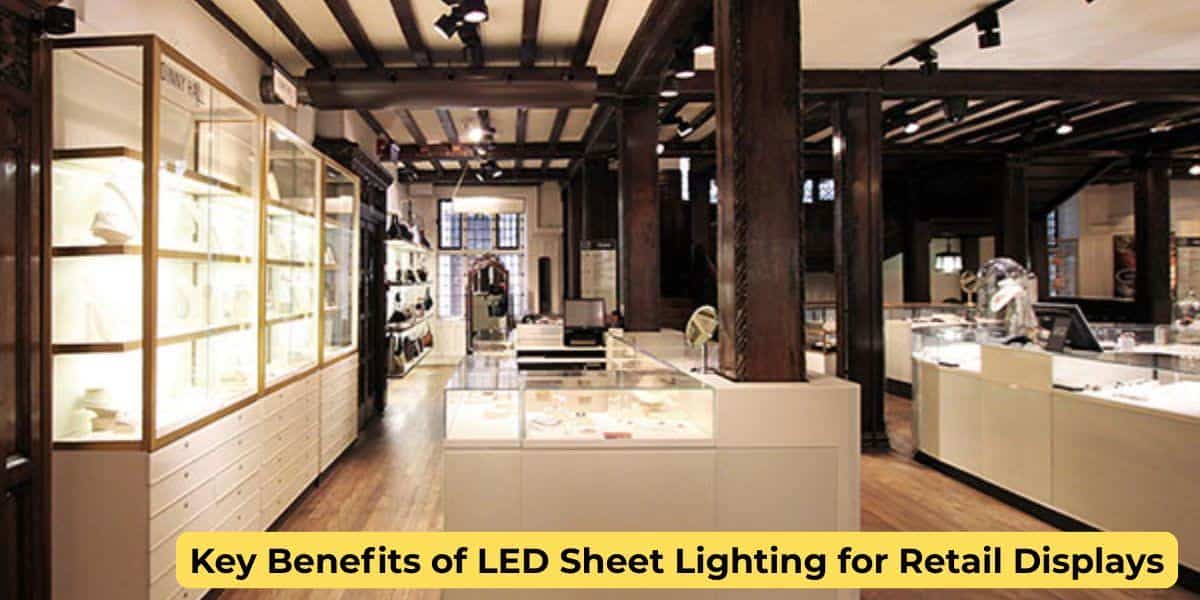
led sheet lighting
Using LED Light Sheets for Display Cabinets and Shop Windows
LED sheet lighting has become a practical solution for display cabinets and shop windows because it delivers...
led sheet lights
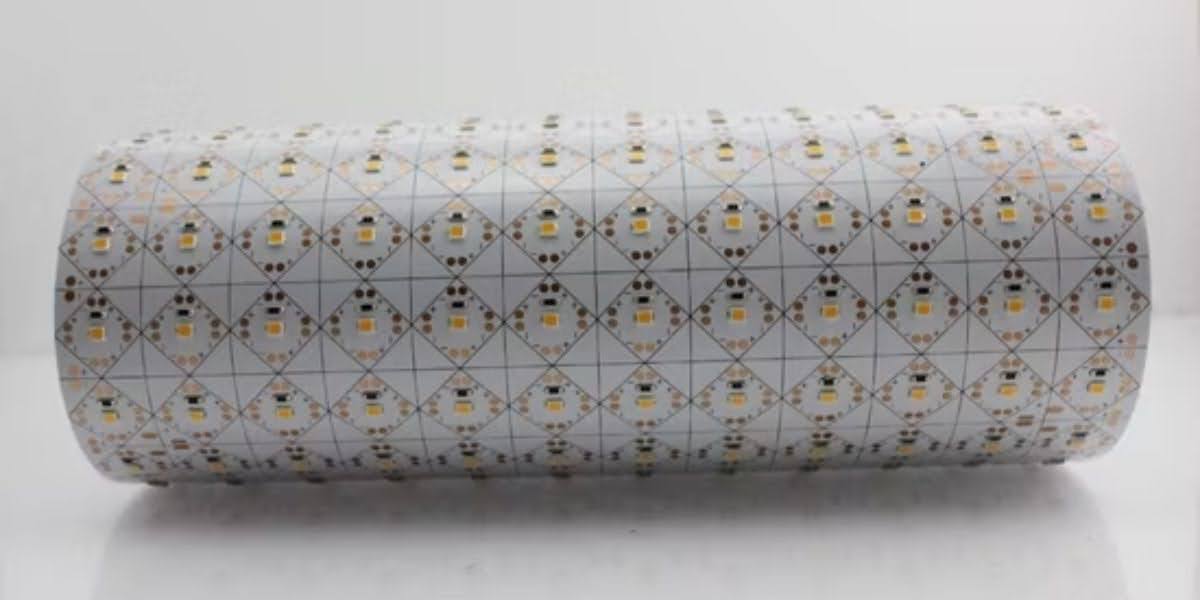
How to Evaluate LED Light Sheet Suppliers: From Samples to Mass Production
Evaluating suppliers of LED sheet lights requires a structured verification process that begins with...
led light sheet
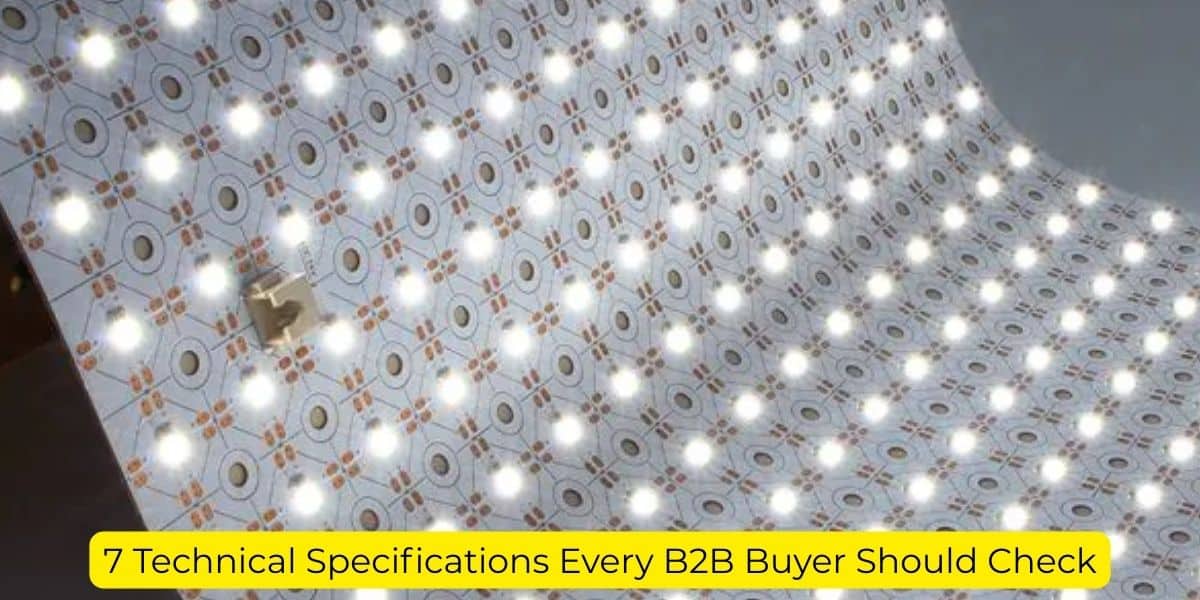
LED light sheet Buyer’s Guide: 7 Technical Specs Every B2B Buyer Should Check
Commercial lighting procurement is not a design decision. It is a risk decision. Illumination performance,...
led light sheet
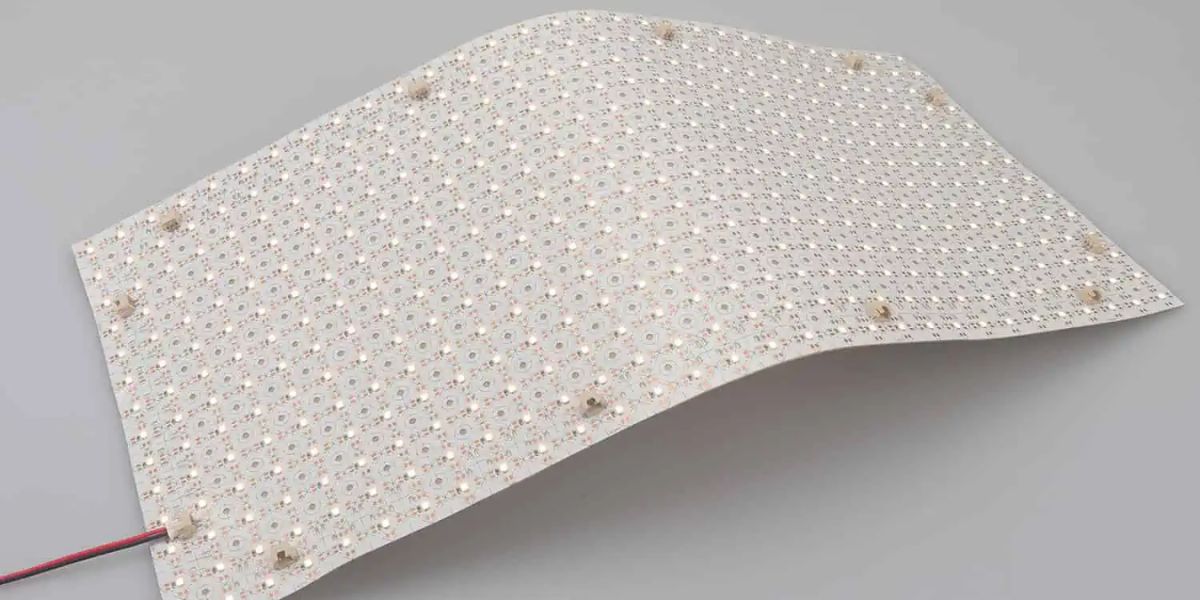
How to Choose LED Light Sheets for Commercial Lighting Projects
Choosing the right LED light sheet for a commercial lighting project requires evaluating measurable technical...
custom led sheet lighting
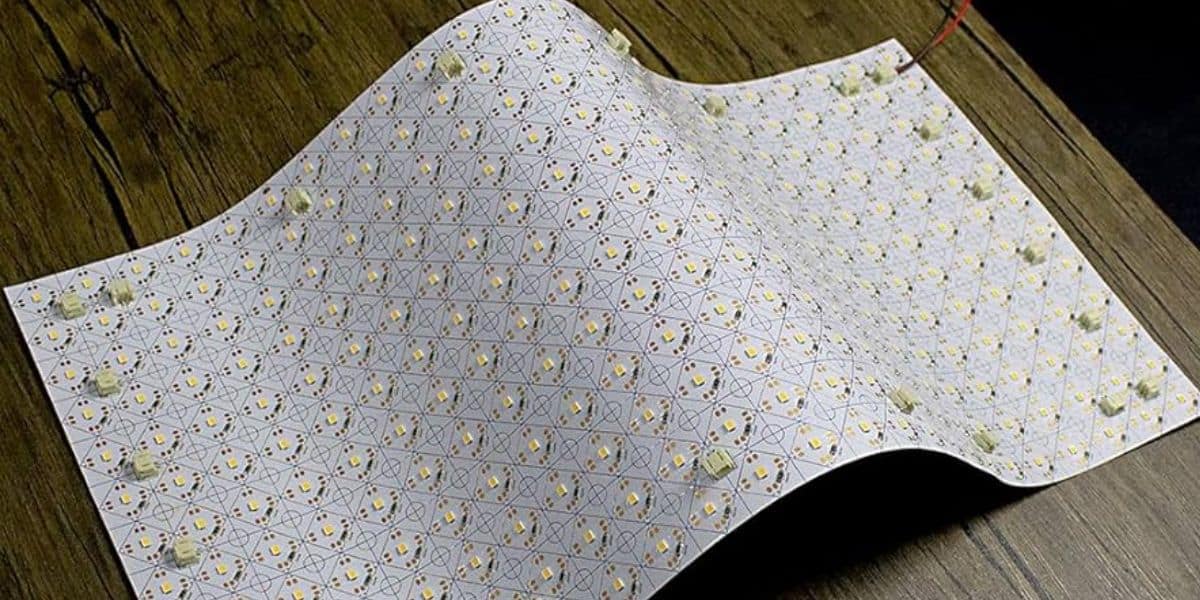
Can LED Sheet Lights Be Customized for Different Designs?
Yes, LED sheet lights can be customized for different designs, and this flexibility is one of the main...
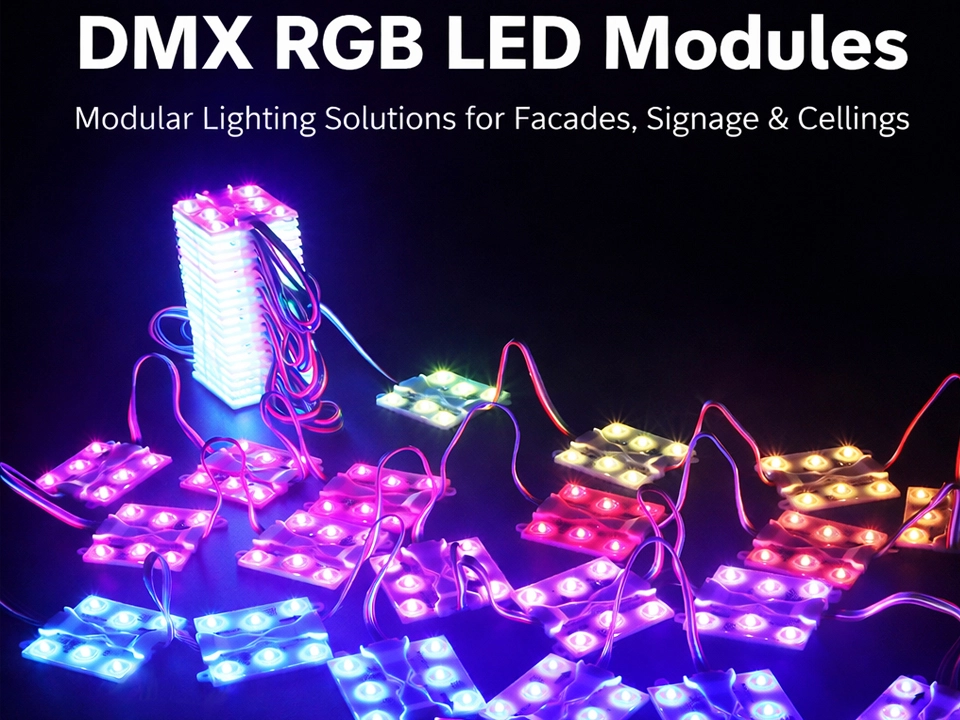
dmx-rgb-led-modules-facade-signage-ceiling
RGB LED Modules for Facades, Signage &Ceilings with SPI / DMX / DALI Control Options
Imagine a building facade coming to life under the night sky, with signage colors shifting with the seasons...
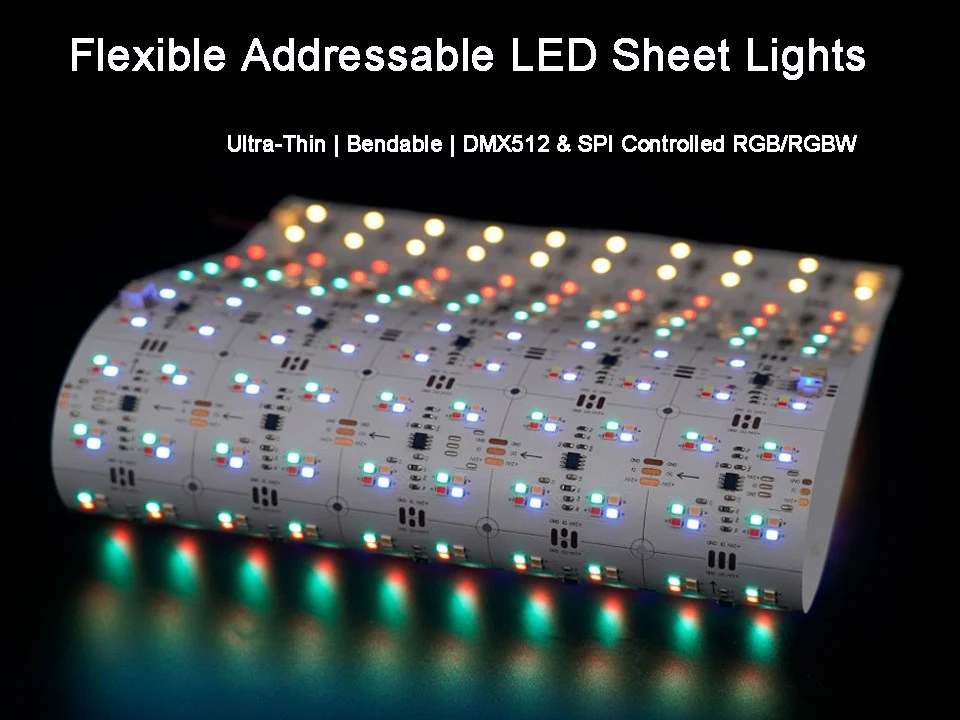
Flexible Addressable LED Sheet Lights
Flexible LED Sheet Lights Addressable Pixel with DMX512 and SPI RGB/RGBW for Architectural Lighting
Imagine walking into a modern gallery, a sleek office lobby, or a cutting-edge exhibition space where...
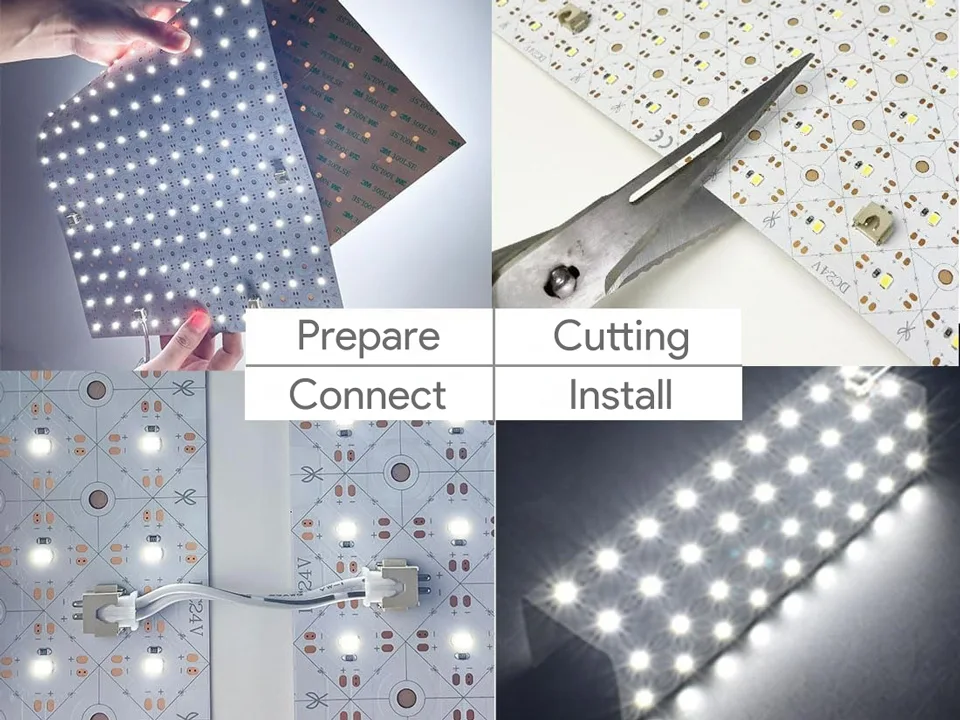
How to Cut, Install, and Set Up LED Sheet Lights
In commercial and architectural lighting projects, LED sheet lights are gradually replacing traditional...
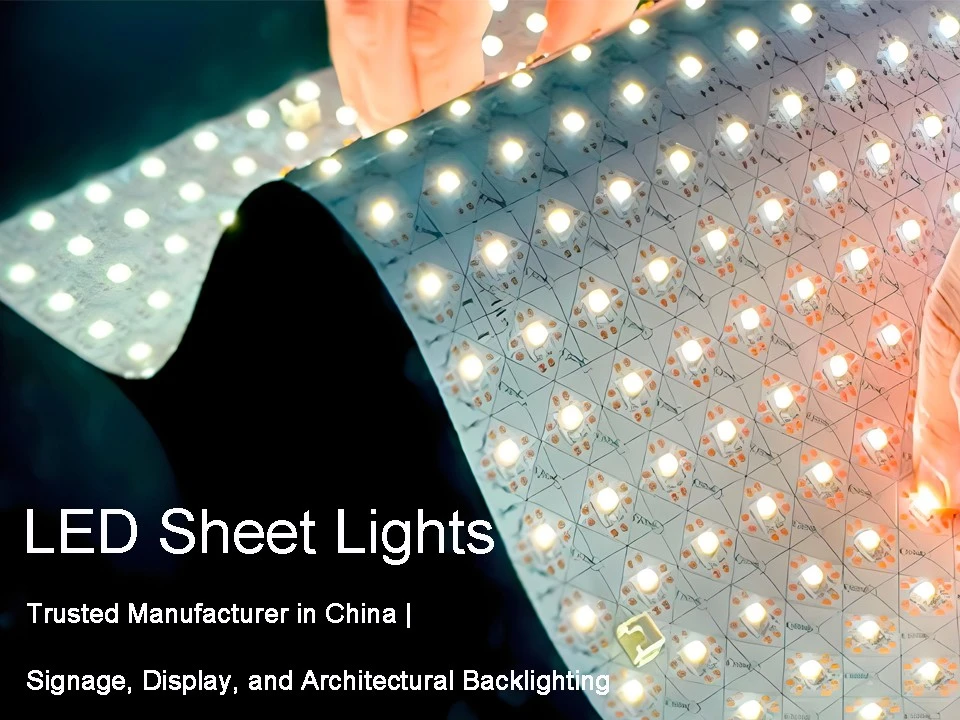
LED Sheet Lights
Architectural Backlighting Projects with LED Sheet Lights
Architectural backlighting has become a hallmark of contemporary design, enriching spaces from hotel...
Complete Guide LED Sheet Lights for Projects and Buyers
LED Sheet Lights—Complete Guide for Projects and Buyers
Over the past decade, LED lighting technology has advanced rapidly, with market demand continuously growing...
Stretch-ceilings-for-commercial-environments
Learn about Stretch Ceiling Lighting
A versatile interior decorative lighting solution that can revolutionize any space while offering a myriad...
滚动至顶部

Get a Quote Now