English
 简体中文
 Deutsch
 Español
 Français
 Italiano
 日本語
 한국어
 Polski
 Português
 Русский
 Türkçe
 Nederlands
 Tiếng Việt
 ไทย

A cuttable matrix LED light sheet, also commonly described as a cuttable LED light sheet, is a thin, flexible backlighting panel built around a grid-based circuit. It can be trimmed along model-specific marked cutting cells to fit shallow or irregular spaces without rebuilding the layout from separate LED strips.
The 500 × 233 mm series is available in single-color, CCT-adjustable, RGB, RGBW and digital RGB configurations for static white, tunable-white and programmable color lighting. This guide uses a 24V CCT model with 840 SMD2835 LEDs and a 33.33 × 33.33 mm cutting grid as its main specification example. Other versions use different LEDs, voltages and circuit layouts.
The matrix distributes light across broad surfaces, making the sheet suitable for light boxes, signs, retail displays, illuminated counters and backlit stone. It is a flexible backlight source, not a flexible video display.
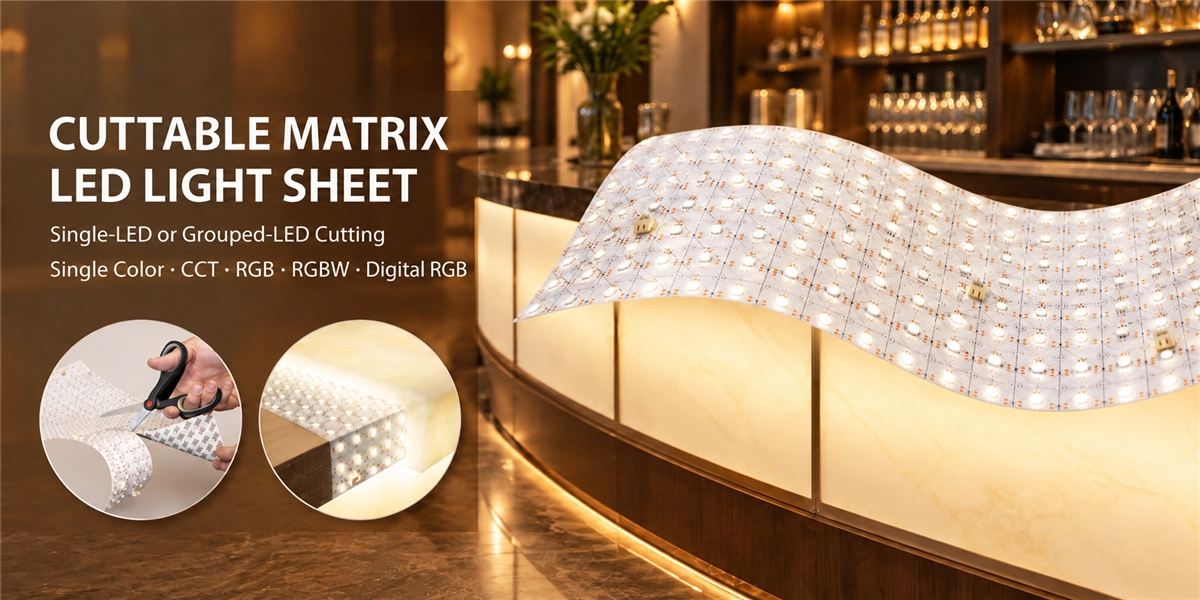
What Is a Cuttable Matrix LED Light Sheet?
A cuttable LED light sheet is a type of matrix LED light sheet that arranges LEDs and conductive paths across a flexible printed circuit board. Unlike a conventional LED strip, which concentrates LEDs along a narrow line, the sheet distributes light over a broad surface and can be trimmed along the cutting cells defined by its circuit layout.
This structure creates a wide-area backlight that can fit behind acrylic, fabric, translucent stone, graphics and other facing materials. It is especially useful when a rigid LED panel will not fit or when separate LED strips would require excessive cutting, spacing and manual wiring.
Each marked cell indicates a permitted cutting boundary. Cutting along these boundaries allows the sheet to be reduced or adapted to selected shapes while keeping the remaining circuits operational. Cutting freedom, minimum usable section and connection points vary by circuit design.
The product family includes several lighting configurations:
| Configuration | Typical purpose |
| Single Color | Fixed white or colored backlighting |
| CCT Adjustable | Tunable white lighting |
| RGB | Synchronized full-color effects |
| RGBW | RGB effects plus a dedicated white channel |
| Digital RGB | Addressable pixels and programmed color effects |
The 500 × 233 mm format is available in several configurations, but voltage, LED type, LED quantity, power, cutting cells and control requirements remain model-specific.
For that reason, this article uses the CCT-adjustable version as a consistent technical reference rather than presenting its specifications as universal values for the entire series.
How the Matrix Structure Changes Backlighting
The most noticeable difference between a matrix sheet and a standard LED strip is the distribution of light.
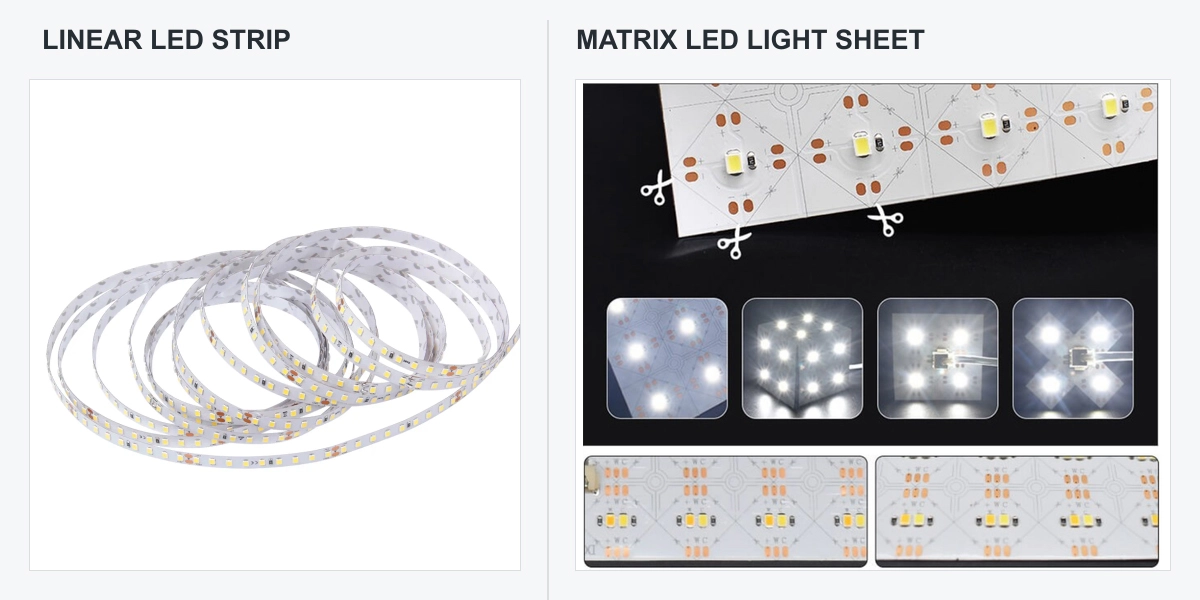
With LED strips, the installer decides the distance between each row. Incorrect spacing can create bright lines, dark bands or uneven corners. More wiring is also required because individual strip sections need to be connected.
A matrix LED light sheet already distributes LEDs across a defined grid. Once the correct LED density and installation depth are selected, the light is easier to spread evenly across a broad surface.
This does not mean that every sheet automatically produces a perfectly uniform result. The final appearance still depends on:
- Distance between the LEDs and the facing material
- LED density and beam angle
- Transmission rate of the acrylic, fabric or stone
- Interior surface reflectivity
- Brightness required from the finished product
- Shape and depth of the illuminated structure
A sample test using the actual facing material gives more useful information than comparing LED quantity alone. A dense sheet installed too close to a highly transparent surface may still show visible light points. A lower-density sheet can perform well when the structure provides enough diffusion depth.
Light Color and Control Options
The first product decision is the lighting effect required by the finished application. The 500 × 233 mm series is available in single-color, CCT-adjustable, RGB, RGBW and digital RGB configurations. Their voltage, LED package, LED quantity, power and control requirements vary by model.
Single-Color Light Sheets
A single-color sheet produces one fixed light color. It is the simplest option for static light boxes, illuminated graphics and architectural backlighting where color adjustment is unnecessary.
The referenced 24V version uses 105 SMD2835 LEDs. It can also be paired with a compatible constant-voltage dimmer when brightness adjustment is required.
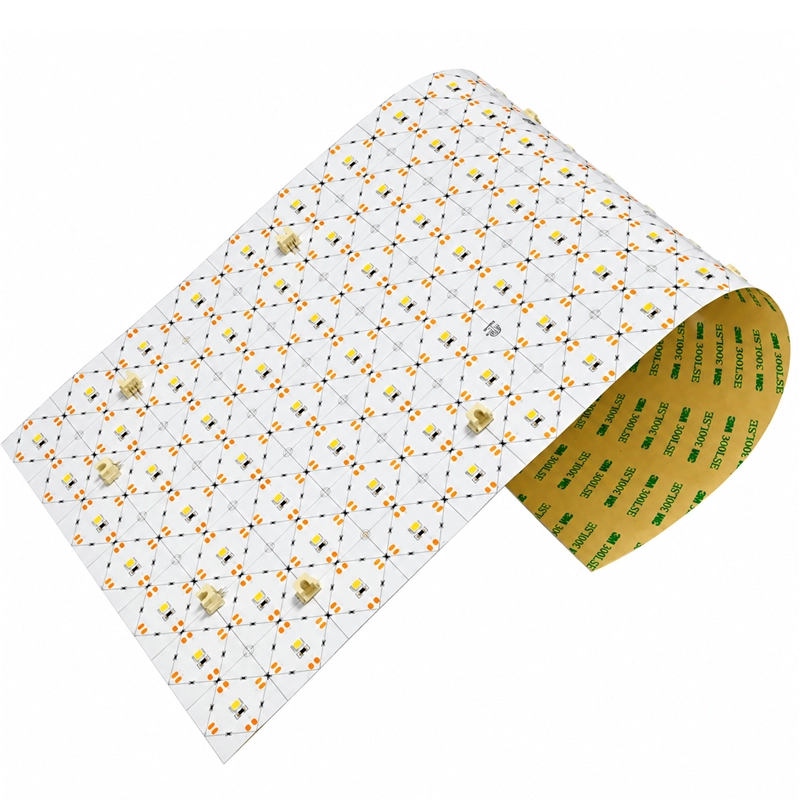
Single Color Matrix Led Light Sheet
- Input Voltage: DC24V
- Watt: 12W/pcs
- LED QTY: 105pcs
- LED Type: 2835 SMD
- Color: 3000K/4000K/6500K/R/G/Y/B
- CRI : Ra 80/ 90 @3000K/4000K/6500K
- Luminous flux: 120lm/W
- IP Grade: IP33
- Beam Angle: 120°
CCT-Adjustable Light Sheets
A CCT-adjustable sheet combines warm-white and cool-white LEDs. A two-channel controller changes the balance between them, allowing the output to move from warm white to cool white.
The referenced 24V version uses 840 SMD2835 LEDs and covers 2700K to 6500K. It suits retail, hospitality and backlit-stone projects where the preferred white tone may change with the material or surrounding environment.
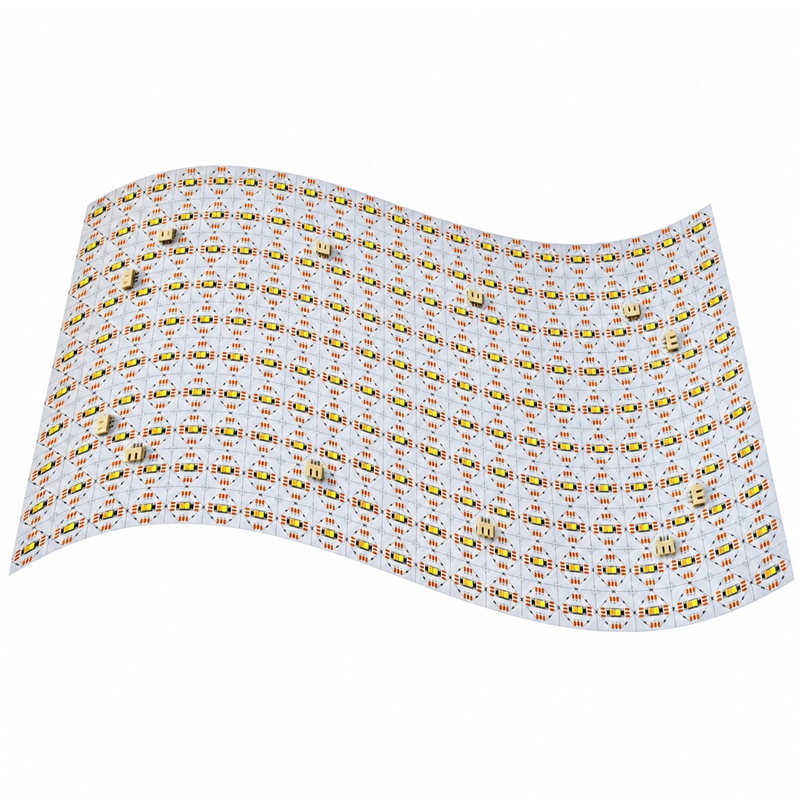
CCT-adjustable Matrix Led Light Sheet
- Input Voltage: DC24V
- Watt: 24W/pcs
- LED QTY: 840pcs
- LED Type: 2835 SMD
- Color: 3000K/4000K/6500K/R/G/Y/B
- CRI : Ra 80/ 90 @3000K/4000K/6500K
- Luminous flux: 120m/W
- IP Grade: IP33
- Beam Angle: 120°
RGB and RGBW Light Sheets
RGB combines red, green and blue channels for synchronized color-changing effects. RGBW adds a dedicated white channel, producing a cleaner white output alongside decorative colors.
The referenced 24V RGB and RGBW versions use 420 SMD5050 LEDs per sheet. They are commonly selected for branded interiors, display fixtures, reception areas and decorative architectural features.
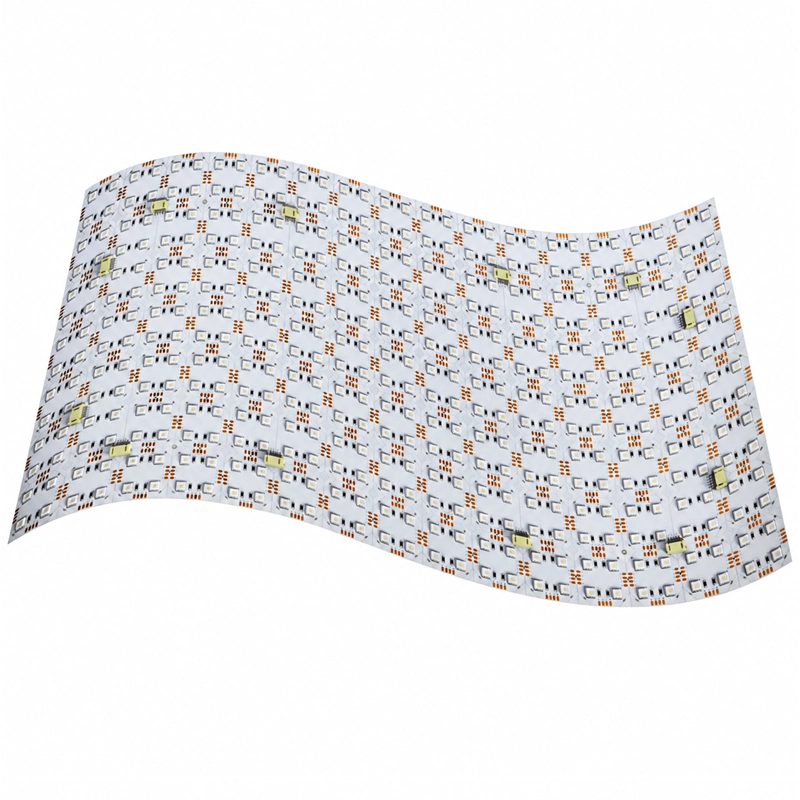
RGB/ RGBW Cuttable Matrix LED Light Sheet
- Input Voltage: DC24V
- Watt: 36W/pcs@RGB, 48W/pcs@RGBW
- LED QTY: 420pcs
- LED Type: 5050 SMD
- Color: RGB/ RGBW
- IP Grade: IP33
- Beam Angle: 120°
Digital RGB Light Sheets
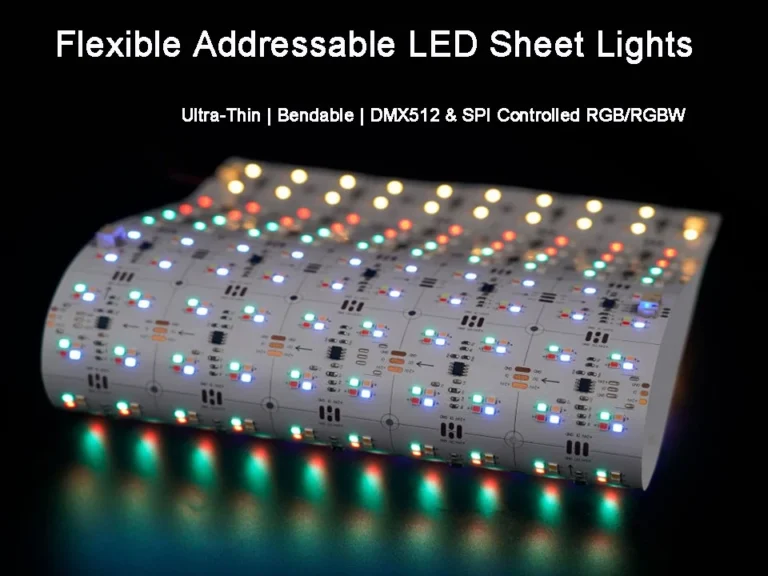
A digital RGB sheet uses addressable LEDs that allow individual pixels or defined pixel groups to display programmed colors and effects.
The referenced 5V version uses 105 WS2812B LEDs. It supports chasing effects, gradients and animated color sequences, but it remains a decorative backlight rather than a flexible video display.
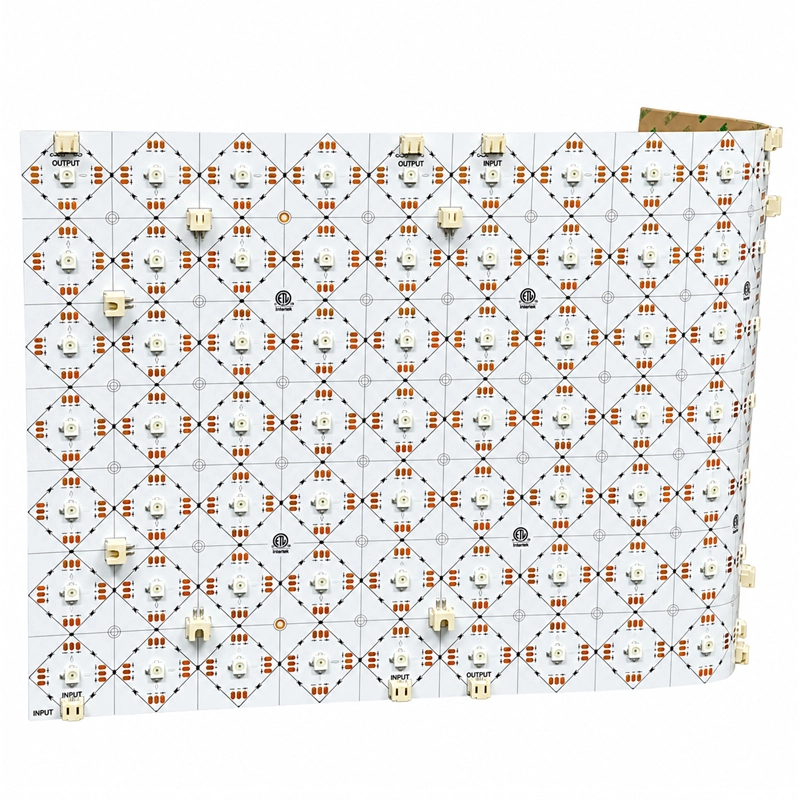
Digital RGB Cuttable Matrix LED Light Sheet
- Input Voltage: DC24V
- Watt: 21W/pcs
- LED QTY: 105pcs
- IC Type: WS2812B
- LED Type: 5050 SMD
- Color: RGB/ RGBW
- IP Grade: IP33
- Beam Angle: 120°
What Does “Cuttable” Actually Mean?
A cuttable LED light sheet cannot be trimmed at any random position. “Cuttable” means that the panel can be separated only at the locations permitted by its circuit design.
In a matrix LED light sheet, the PCB contains printed cutting marks that identify the boundaries designed to be separated. Depending on the model, one cutting cell may contain a single LED or a group of LEDs. The permitted cutting direction and the electrical paths retained by the remaining section also depend on the circuit layout.
A more accurate product description is therefore:
Single-LED or grouped-LED cutting options are available, depending on the model.
This is more accurate than claiming that every LED sheet can be cut freely in any direction.
Before cutting, check three things:
- The cutting-cell dimensions shown on the datasheet
- The position of the printed cutting marks
- The wiring and power-entry points required by the remaining shape
For the reference CCT model, the stated cutting grid is 33.33 × 33.33 mm. Do not apply that grid to the single-color, RGB, RGBW or digital version unless the corresponding drawing confirms it.
Cutting through an LED, component, connector or unmarked conductive path can disable part of the sheet. Any exposed copper or cut edge may also require insulation, depending on the installation environment.
Where Matrix LED Light Sheets Work Best
Cuttable matrix sheets are used for many of the same projects as conventional flexible LED sheets. Their main advantage appears when the illuminated area is wide, shallow, curved or irregular.
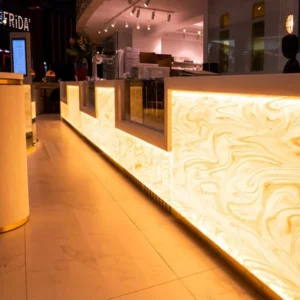
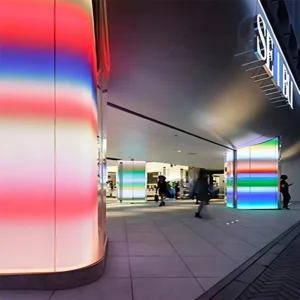
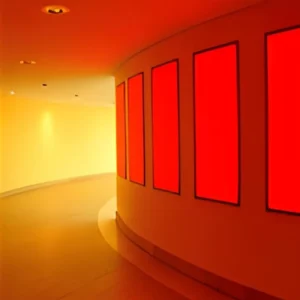
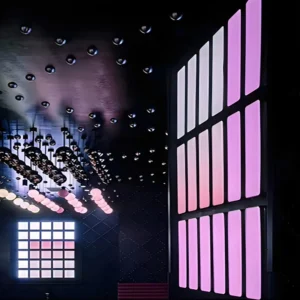
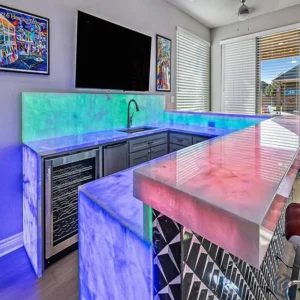
Common applications include shallow light boxes, retail display fixtures, illuminated counters, reception desks, exhibition stands, decorative wall panels, channel-letter backgrounds, backlit graphics and translucent stone.
In a rectangular light box, the sheet can reduce the time spent aligning multiple strip rows. In a curved counter, the flexible PCB follows the supporting surface more easily than a rigid LED panel. For an irregular sign shape, marked cutting cells allow unused areas to be removed with less rewiring.
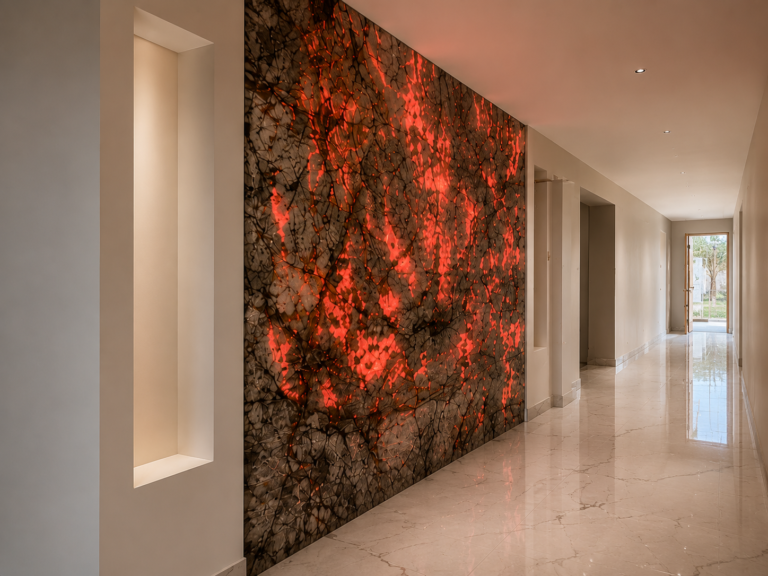
Backlit stone requires additional testing. Natural and artificial stone panels differ in thickness, color and light transmission. A layout that works behind white acrylic may not create the same result behind onyx, quartz or another translucent surface.
The sample should therefore reproduce the actual installation depth and facing material as closely as possible.



Which Specifications Matter Most?
Long specification lists can make comparison harder. In practice, a few items have the greatest effect on the finished result.
Sheet Size and Cutting Grid
The complete sheet size shows how much area one panel covers. The cutting grid shows how precisely it can follow the required shape.
A smaller cutting cell gives more control around curves, corners and narrow sections. It may also involve a denser and more complicated circuit.
Compare the drawing of the illuminated area with the cutting grid before ordering. This quickly reveals whether the sheet can follow the required boundary without leaving large unlit sections.
Voltage, Power and Control
The reference single-color, CCT, RGB and RGBW sheets operate at 24V, while the digital RGB version operates at 5V. This difference affects cable size, voltage drop, controller selection and the number of sheets that can share one power feed.
The control system must match the lighting version. Single-color sheets use a constant-voltage power supply and optional dimmer. CCT requires warm-white and cool-white channels, RGB and RGBW need compatible multi-channel controllers, and digital RGB adds a data signal for pixel control.
Before ordering, confirm the connector positions, wire lengths, total wattage, controller capacity and maximum recommended run. Larger 5V digital layouts may require additional power injection. Do not apply the CCT model’s wiring diagram to another version without checking its datasheet.
LED Density and Installation Depth
A higher LED quantity can reduce the distance between light points, but quantity alone does not guarantee uniform lighting.
The useful comparison is how the complete optical system performs at the available depth. This includes LED spacing, beam angle, diffuser transmission and internal reflection.
If the project has very little space between the sheet and the facing material, request a lighting test before confirming production.
CRI and White-Light Consistency
CRI matters when the light illuminates surfaces or materials whose colors need to appear natural. CRI 80 is adequate for many sign and decorative-lighting projects. CRI 90 is more suitable for premium retail, hospitality and material-display applications.
For larger projects, also confirm the color-temperature tolerance and binning standard. Two sheets described as 4000K can still show a visible difference when installed side by side if they come from different production batches.
Installation Considerations
The rear 3M 300LSE adhesive helps position the sheet on a clean substrate, but the tape should not be treated as the only mechanical support for every project. Dust, oil, textured surfaces, high temperatures and repeated movement can reduce adhesion. For the complete process, see our guide on how to cut, install and set up LED sheet lights.
Avoid sharp folds when fitting the sheet around a curve or corner. A flexible PCB can follow a gradual bend, but a tight crease may damage the copper paths, solder joints or LED packages. Complete a temporary layout and lighting test before removing the adhesive liner.
Heat also needs somewhere to escape. Although LED sheets are efficient, a large illuminated surface still generates heat. Mount the sheet on a suitable substrate, avoid trapping heat inside an undersized enclosure and select an LED power supply that matches the sheet voltage and total connected load.
For CCT, RGB, RGBW and digital RGB installations, use a compatible LED controller and confirm its channel type, output capacity and signal format. In damp locations, exposed connectors, solder joints and cut edges also require suitable protection. A bare flexible LED sheet should not automatically be treated as waterproof.
From Sample Evaluation to Production
For a new application, I would begin with the actual drawing and facing material rather than choosing a sheet from LED quantity alone.
A useful sample test reproduces:
- The planned lighting depth
- The final acrylic, fabric or stone
- The required brightness and color
- The intended dimming or control method
- Representative cut sections
- The proposed power and cable arrangement
Run the sample long enough to observe temperature, brightness stability and color consistency. Check both the center and edges of the illuminated area.
For RGB, RGBW and digital versions, test the real controller and programmed effects as well. A product may look correct with static white light but behave differently during dimming, color mixing or fast animation.
Once the sample has been approved, retain the tested configuration as the production reference. Changing the diffuser, mounting depth, LED version or controller after approval may change the visual result.
Custom options may include PCB layout, sheet dimensions, wire length, connectors, LED density, color temperature and control configuration. Feasibility and MOQ depend on how far the requested design differs from an existing circuit.

Information to Include in an RFQ
A short but specific RFQ produces a more useful quotation than a request for “a flexible LED sheet” alone.
Include:
- Overall illuminated dimensions
- Drawing of the required shape
- Facing material and thickness
- Available lighting depth
- Required light color or effect
- Input voltage preference
- Indoor or outdoor installation
- Estimated order quantity
- Required wire and connector positions
- Dimming or controller requirements
- Target completion date
For an irregular project, send a dimensioned PDF, DXF or CAD file if available. The supplier can then compare the shape with the cutting grid and identify unsuitable narrow sections before the sample is made.
Frequently Asked Questions
Conclusion
A cuttable matrix LED light sheet provides a practical way to illuminate broad, shallow, curved and irregular surfaces. Its distributed LED layout can reduce strip spacing and wiring work, while its marked cutting cells allow the sheet to fit more closely around the required shape.
The product family covers fixed-color, tunable-white and dynamic-color projects. Begin with the lighting effect, installation depth and facing material, then compare the voltage, LED density, cutting grid, power requirement and control method of the corresponding model.
The reference CCT sheet in this guide measures 500 × 233 mm, operates at 24V and uses 840 SMD2835 LEDs, but those values should not be applied to every version. Single-color, RGB, RGBW and digital RGB sheets use different circuit layouts.
For project evaluation, send the illuminated dimensions, facing material, available depth and required lighting effect to Signlite. We can help identify the appropriate LED sheet light solution and prepare a sample specification for testing.
Related Posts